
Dramatic Significance What does this MEAN What is
- Slides: 20
Dramatic Significance What does this MEAN? !
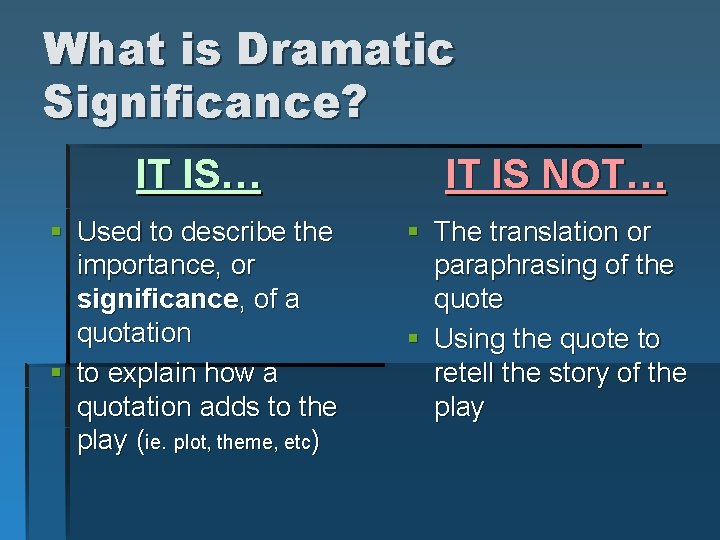
What is Dramatic Significance? IT IS… § Used to describe the importance, or significance, of a quotation § to explain how a quotation adds to the play (ie. plot, theme, etc) IT IS NOT… § The translation or paraphrasing of the quote § Using the quote to retell the story of the play
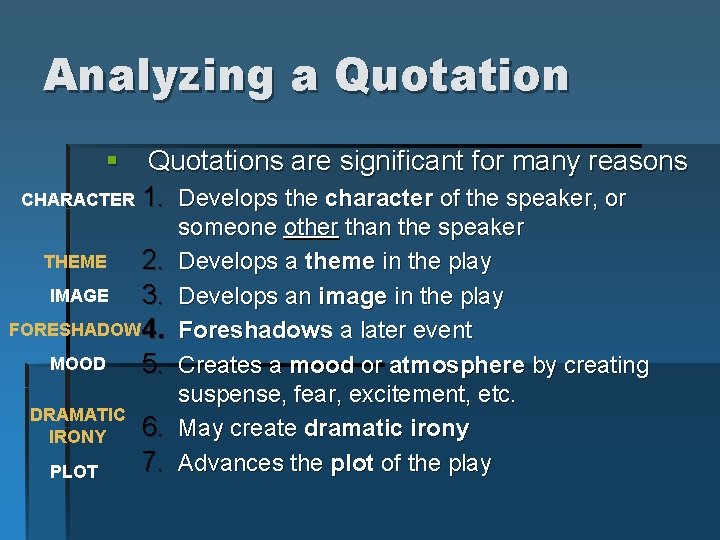
Analyzing a Quotation § Quotations are significant for many reasons CHARACTER 1. Develops the character of the speaker, or 2. IMAGE 3. FORESHADOW 4. MOOD 5. THEME DRAMATIC IRONY PLOT 6. 7. someone other than the speaker Develops a theme in the play Develops an image in the play Foreshadows a later event Creates a mood or atmosphere by creating suspense, fear, excitement, etc. May create dramatic irony Advances the plot of the play
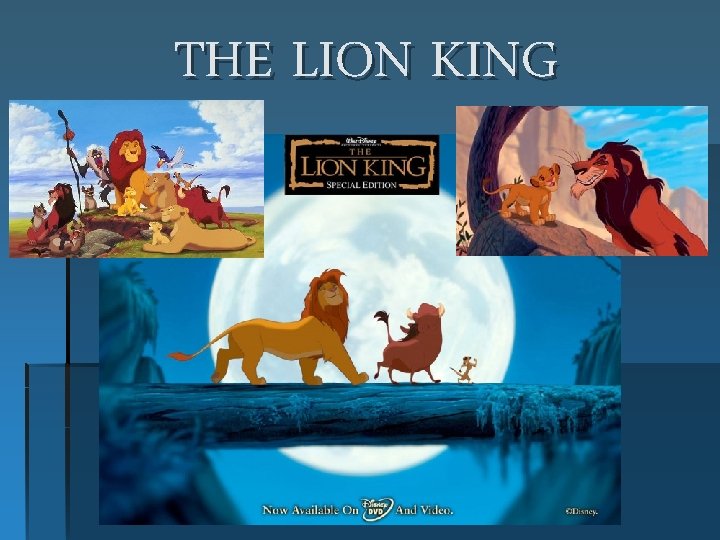
THE LION KING
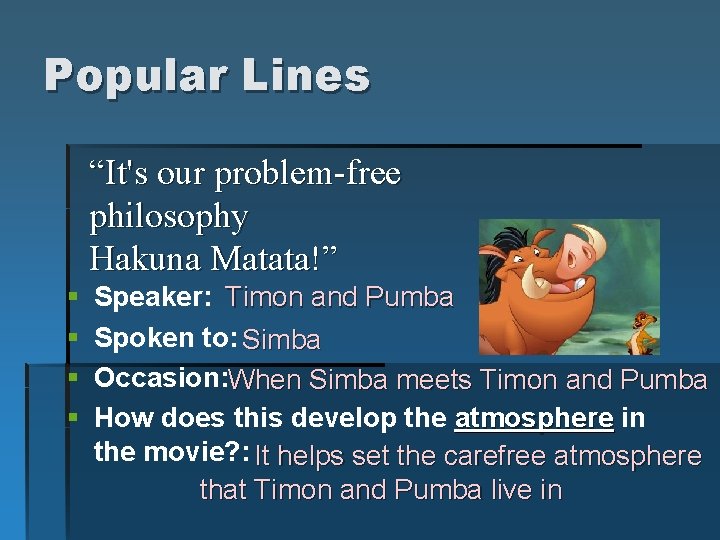
Popular Lines “It's our problem-free philosophy Hakuna Matata!” § § Speaker: Timon and Pumba Spoken to: Simba Occasion: When Simba meets Timon and Pumba How does this develop the atmosphere in the movie? : It helps set the carefree atmosphere that Timon and Pumba live in
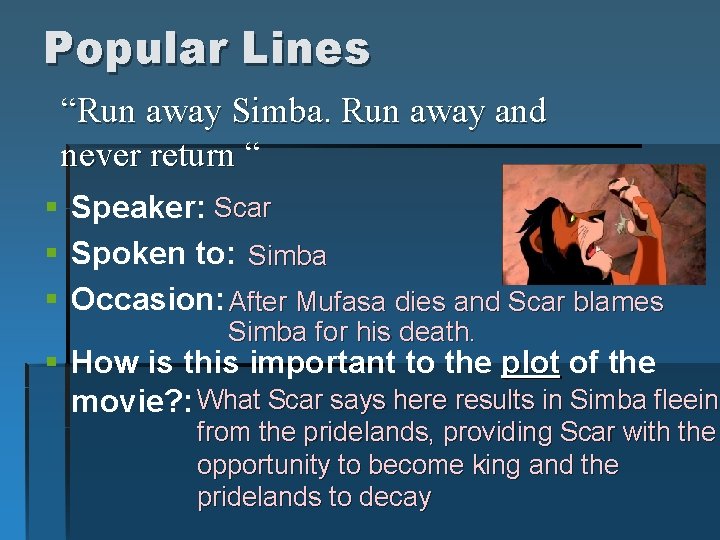
Popular Lines “Run away Simba. Run away and never return “ § Speaker: Scar § Spoken to: Simba § Occasion: After Mufasa dies and Scar blames Simba for his death. § How is this important to the plot of the fleein movie? : What Scar says here results in Simba fleeing from the pridelands, providing Scar with the opportunity to become king and the pridelands to decay
Analyzing Quotations
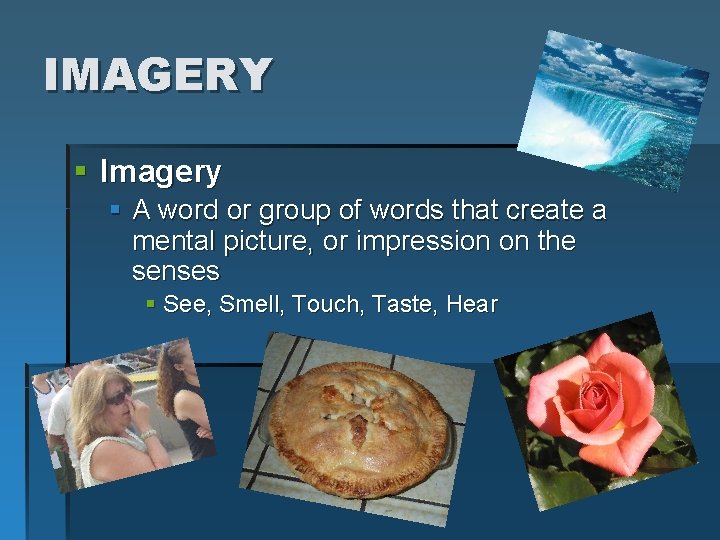
IMAGERY § Imagery § A word or group of words that create a mental picture, or impression on the senses § See, Smell, Touch, Taste, Hear
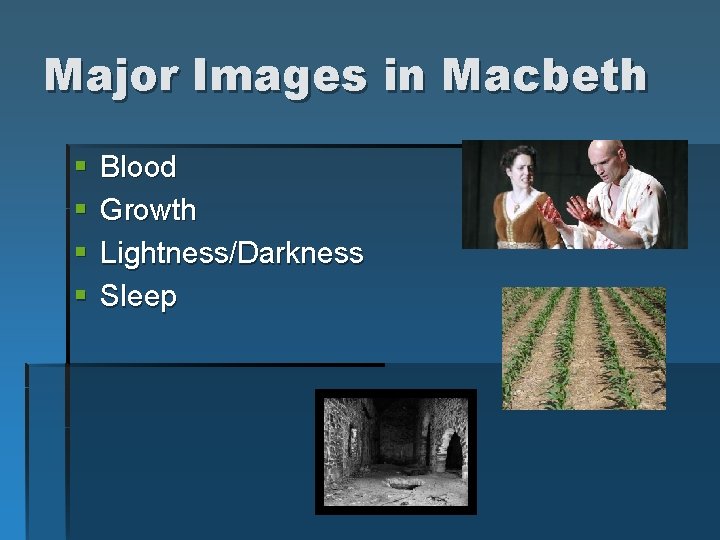
Major Images in Macbeth § § Blood Growth Lightness/Darkness Sleep
THEME § Frequently, a passage is important for this reason § Theme § the perception about life or human nature that the writer shares with the reader
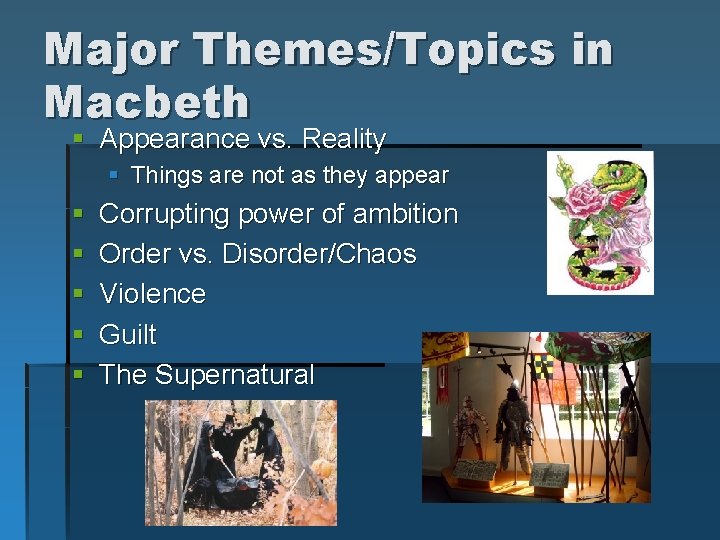
Major Themes/Topics in Macbeth § Appearance vs. Reality § Things are not as they appear § § § Corrupting power of ambition Order vs. Disorder/Chaos Violence Guilt The Supernatural
Plot No more that Thane of Cawdor shall deceive Our bosom interest. Go pronounce his death, And with his former title greet Macbeth. (I. ii. 63 -65) § Speaker: King Duncan § Spoken to: Ross § Occasion: This occurs when King Duncan receives reports about the status of the battles. § Significance: King Duncan’s actions allow the first prediction made by the Three Witches for Macbeth to come true.
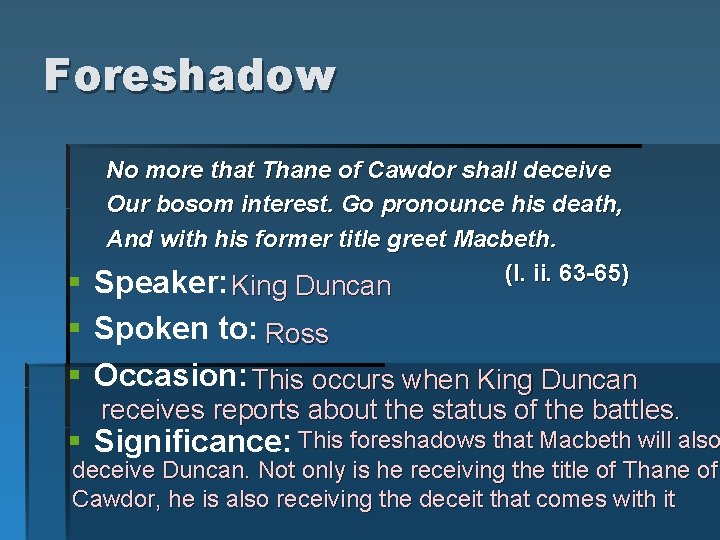
Foreshadow No more that Thane of Cawdor shall deceive Our bosom interest. Go pronounce his death, And with his former title greet Macbeth. (I. ii. 63 -65) Speaker: § King Duncan § Spoken to: Ross § Occasion: This occurs when King Duncan receives reports about the status of the battles. § Significance: This foreshadows that Macbeth will also deceive Duncan. Not only is he receiving the title of Thane of Cawdor, he is also receiving the deceit that comes with it
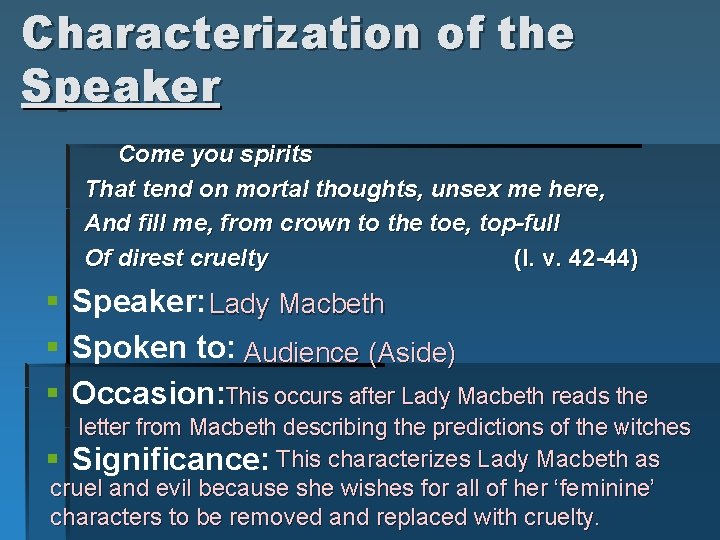
Characterization of the Speaker Come you spirits That tend on mortal thoughts, unsex me here, And fill me, from crown to the toe, top-full Of direst cruelty (I. v. 42 -44) § Speaker: Lady Macbeth § Spoken to: Audience (Aside) § Occasion: This occurs after Lady Macbeth reads the letter from Macbeth describing the predictions of the witches § Significance: This characterizes Lady Macbeth as cruel and evil because she wishes for all of her ‘feminine’ characters to be removed and replaced with cruelty.
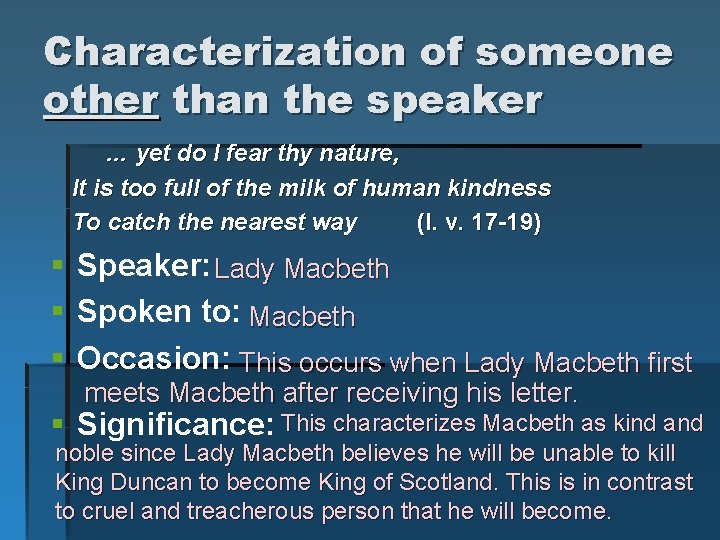
Characterization of someone other than the speaker … yet do I fear thy nature, It is too full of the milk of human kindness To catch the nearest way (I. v. 17 -19) § Speaker: Lady Macbeth § Spoken to: Macbeth § Occasion: This occurs when Lady Macbeth first meets Macbeth after receiving his letter. § Significance: This characterizes Macbeth as kind and noble since Lady Macbeth believes he will be unable to kill King Duncan to become King of Scotland. This is in contrast to cruel and treacherous person that he will become.
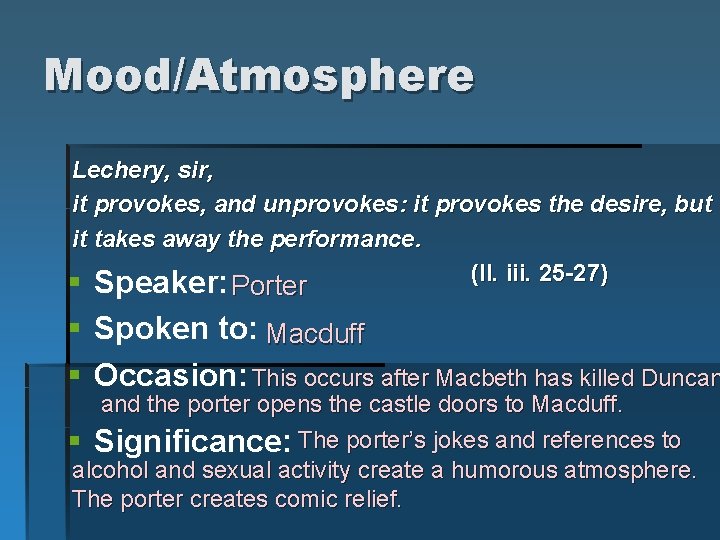
Mood/Atmosphere Lechery, sir, it provokes, and unprovokes: it provokes the desire, but it takes away the performance. (II. iii. 25 -27) § Speaker: Porter § Spoken to: Macduff § Occasion: This occurs after Macbeth has killed Duncan and the porter opens the castle doors to Macduff. § Significance: The porter’s jokes and references to alcohol and sexual activity create a humorous atmosphere. The porter creates comic relief.
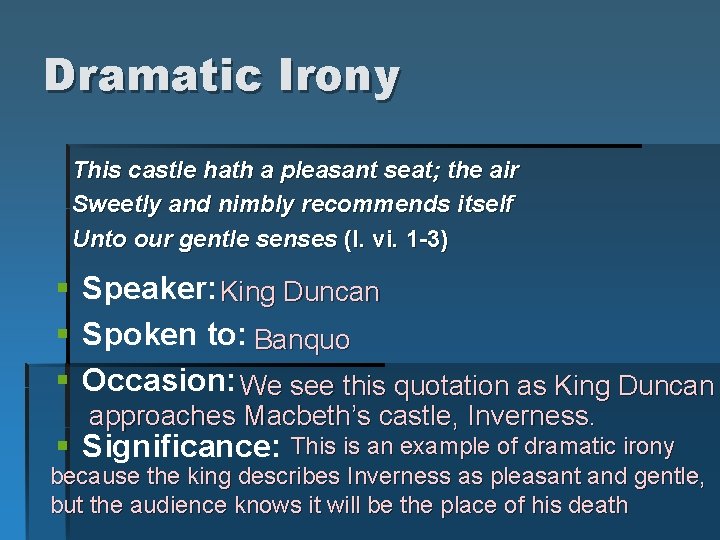
Dramatic Irony This castle hath a pleasant seat; the air Sweetly and nimbly recommends itself Unto our gentle senses (I. vi. 1 -3) § Speaker: King Duncan § Spoken to: Banquo § Occasion: We see this quotation as King Duncan approaches Macbeth’s castle, Inverness. § Significance: This is an example of dramatic irony because the king describes Inverness as pleasant and gentle, but the audience knows it will be the place of his death
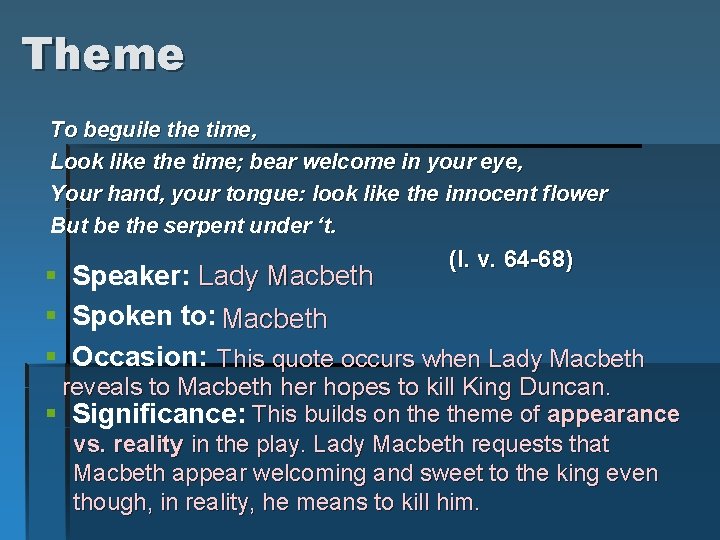
Theme To beguile the time, Look like the time; bear welcome in your eye, Your hand, your tongue: look like the innocent flower But be the serpent under ‘t. (I. v. 64 -68) § Speaker: Lady Macbeth § Spoken to: Macbeth § Occasion: This quote occurs when Lady Macbeth reveals to Macbeth her hopes to kill King Duncan. § Significance: This builds on theme of appearance vs. reality in the play. Lady Macbeth requests that Macbeth appear welcoming and sweet to the king even though, in reality, he means to kill him.
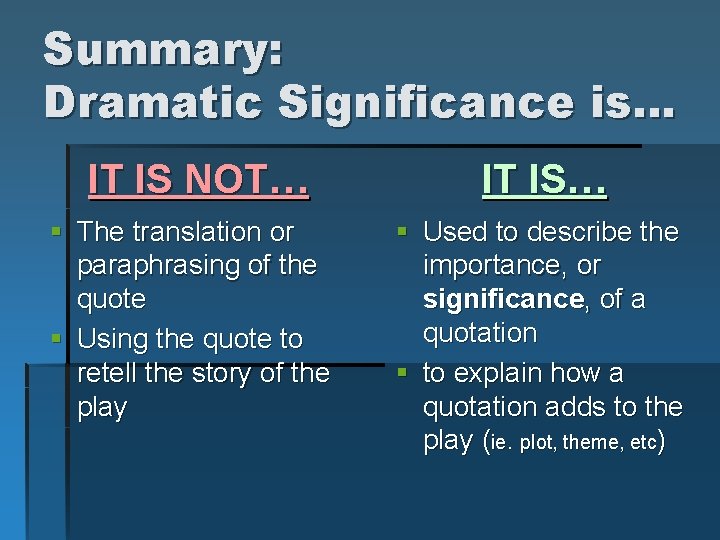
Summary: Dramatic Significance is… IT IS NOT… § The translation or paraphrasing of the quote § Using the quote to retell the story of the play IT IS… § Used to describe the importance, or significance, of a quotation § to explain how a quotation adds to the play (ie. plot, theme, etc)
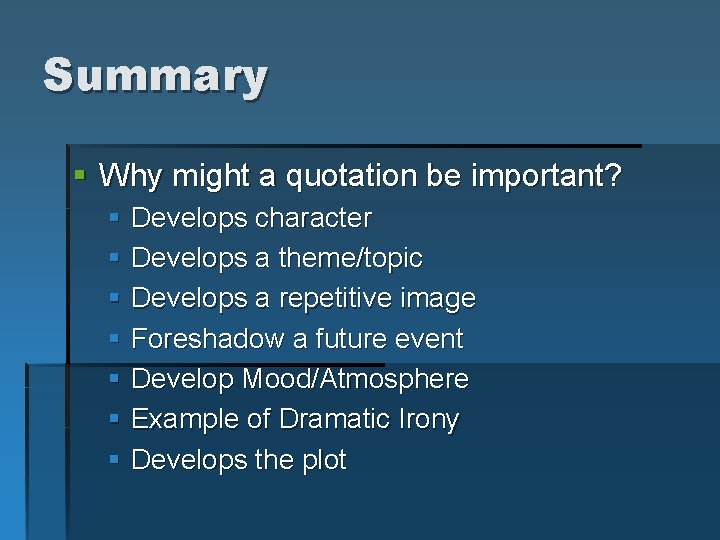
Summary § Why might a quotation be important? § Develops character § Develops a theme/topic § Develops a repetitive image § Foreshadow a future event § Develop Mood/Atmosphere § Example of Dramatic Irony § Develops the plot