
Drama Year 7 Why Study Drama Drama Year

- Slides: 15
Drama: Year 7 Why Study Drama?
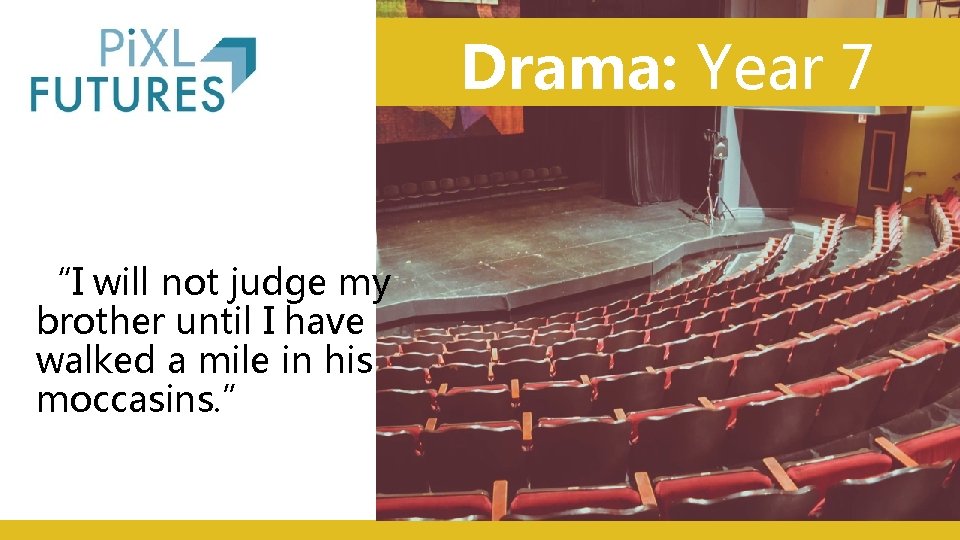
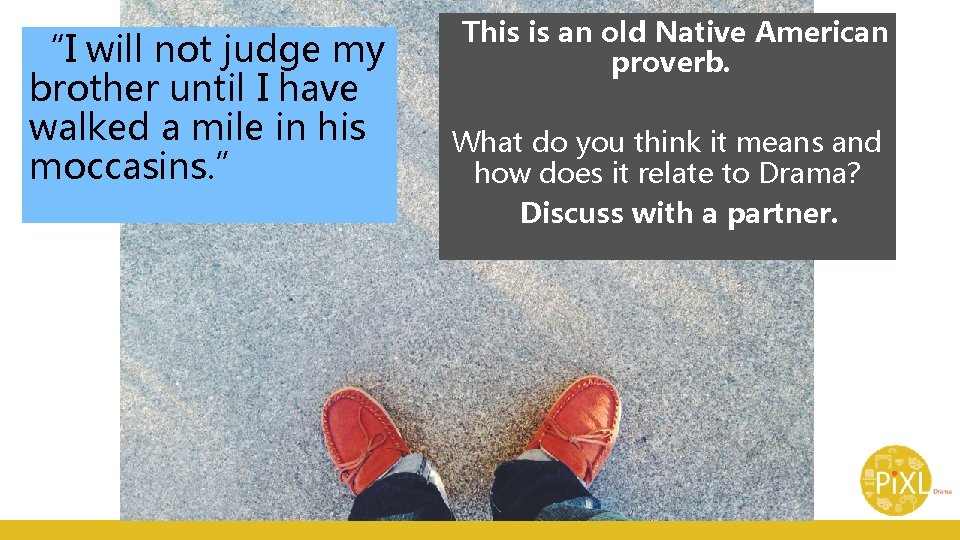
Drama: Year 7 “I will not judge my brother until I have walked a mile in his moccasins. ”
What is Drama? TASK: In groups of 5 or 6 (preferably from different primary schools) discuss… - What do you think Drama is? - What experience do you have of Drama at your primary school (if any)? - If Drama is a new subject for you, what would you expect to be doing when it says ‘Drama’ on your timetable?
Did you list any of the following? “Drama is about doing the school play. ” “You pretend to be other people. ” “It’s about acting. ” “We did it as a club after school. ” “Singing and dancing. ” “People came in from a theatre company to do a play and worked with us afterwards. It was fun. ” “Movement to music in the hall. ” “We only did Drama when we had a trainee teacher. ”
So what is Drama and why does it appear on your timetable?
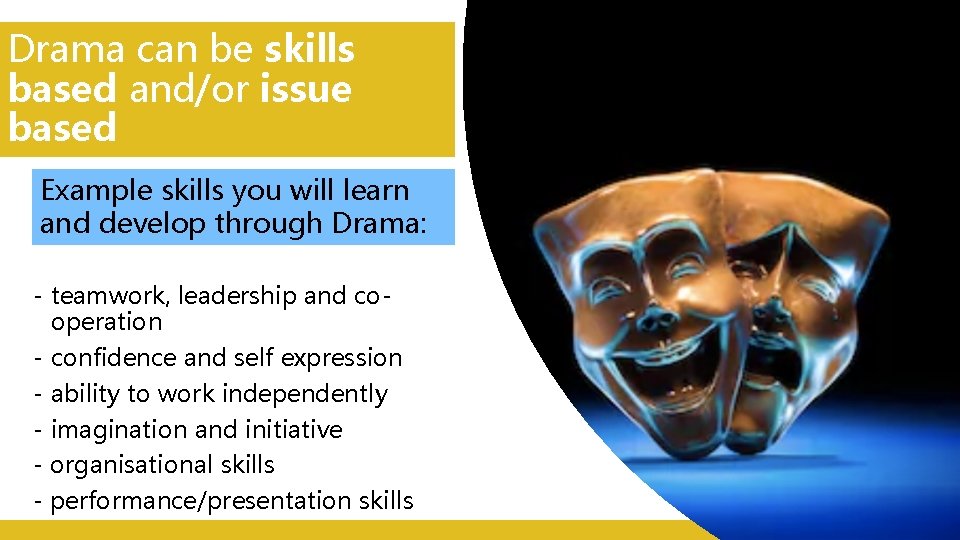
Drama can be skills based and/or issue based Example skills you will learn and develop through Drama: - teamwork, leadership and cooperation - confidence and self expression - ability to work independently - imagination and initiative - organisational skills - performance/presentation skills
In Drama, you will sometimes be working on your own, sometimes with a partner but often in a group or team. TASK: - with a partner, divide a sheet of paper into two columns. - in the left hand column, list the qualities which make a good team player. - in the right hand column, list the things which make a poor team player.
So what are the features of a good team player? • Gets involved • Offers ideas • Listens to others • Offers leadership if needed • Accepts leadership from others • Behaves sensibly • Stays on task and focused • Can work independently of the teacher
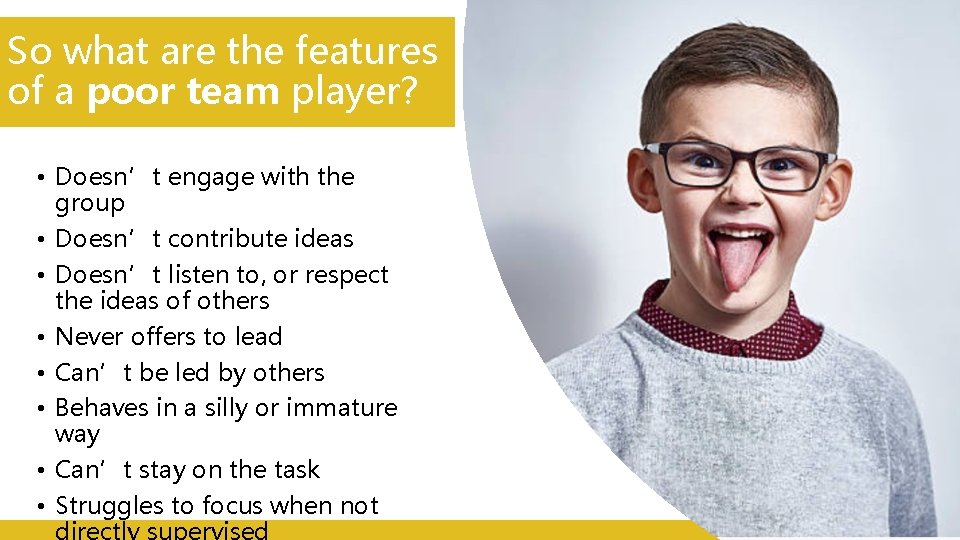
So what are the features of a poor team player? • Doesn’t engage with the group • Doesn’t contribute ideas • Doesn’t listen to, or respect the ideas of others • Never offers to lead • Can’t be led by others • Behaves in a silly or immature way • Can’t stay on the task • Struggles to focus when not
“I will not judge my brother until I have walked a mile in his moccasins. ” This is an old Native American proverb. What do you think it means and how does it relate to Drama? Discuss with a partner.
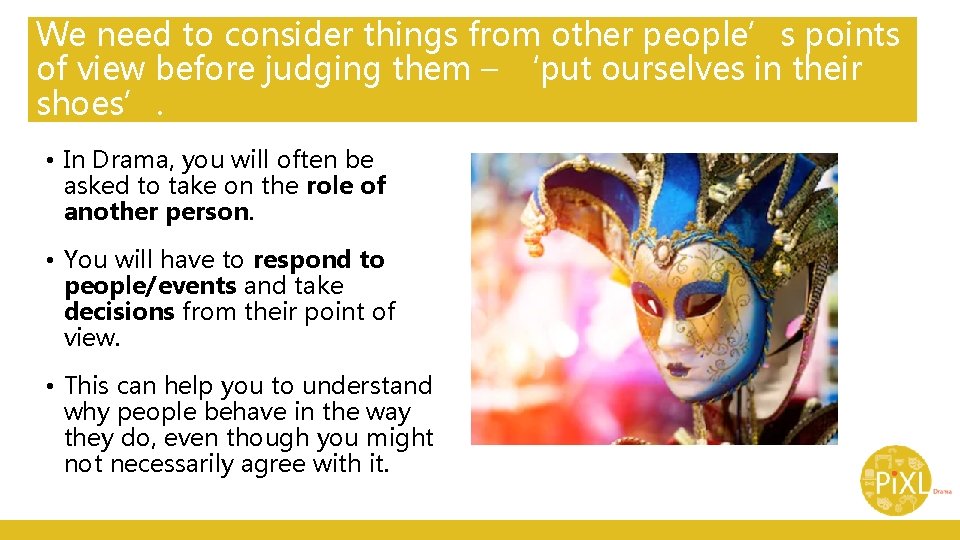
We need to consider things from other people’s points of view before judging them – ‘put ourselves in their shoes’. • In Drama, you will often be asked to take on the role of another person. • You will have to respond to people/events and take decisions from their point of view. • This can help you to understand why people behave in the way they do, even though you might not necessarily agree with it.
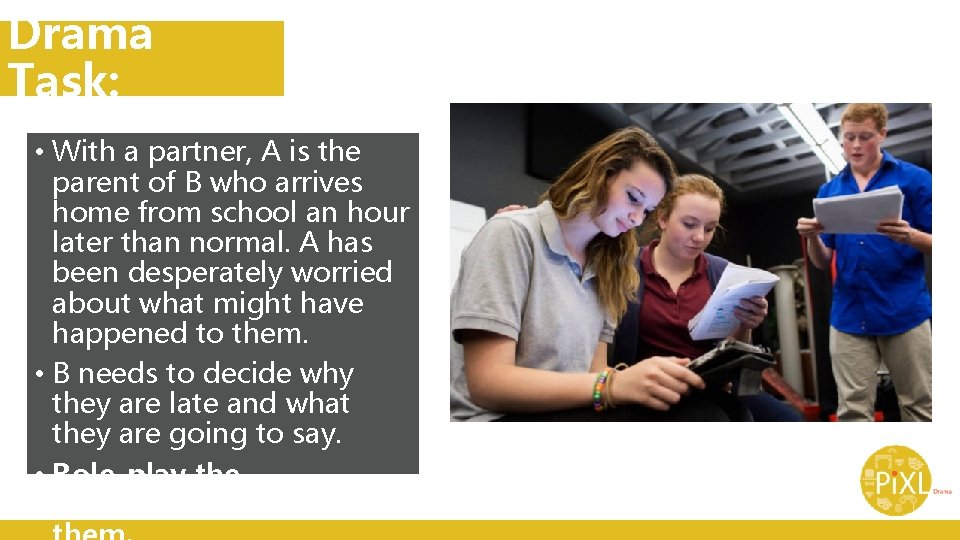
Drama Task: • With a partner, A is the parent of B who arrives home from school an hour later than normal. A has been desperately worried about what might have happened to them. • B needs to decide why they are late and what they are going to say. • Role-play the conversation between
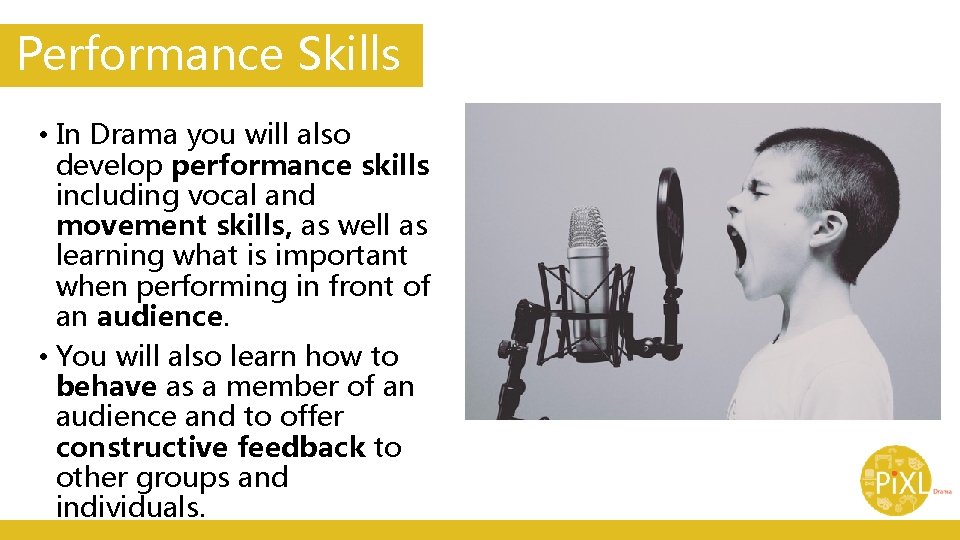
Performance Skills • In Drama you will also develop performance skills including vocal and movement skills, as well as learning what is important when performing in front of an audience. • You will also learn how to behave as a member of an audience and to offer constructive feedback to other groups and individuals.
So, to summarise, how does Drama help you build the skills you will need for work in the future? • It gives you the confidence you need to succeed in the world of work. • It develops teamwork, leadership and communication which are important life skills. • It can improve your movement and co-ordination. • It helps to develop empathy and your ability to take initiative. • It will develop your vocal skills and ability to address an audience.
So how can Drama help you to succeed in the world of work? Jobs directly related to Drama: Acting, community arts, theatre in education, dancing, drama/music therapy, theatre directing. Jobs connected with Drama: Primary, secondary and f. e. teaching, arts administration, broadcasting, writing, stage management, technician. Other jobs where Drama skills might help: Law, public relations, sales, video editing, counselling, journalism. In fact, Drama can give you the confidence you need for almost any job and the skills necessary to succeed in an interview to begin with!