
Drama Notes Types of Acting Roles l 1
- Slides: 29
Drama Notes
Types of Acting Roles l 1. Leading roles— main/major characters. l 2. Supporting roles—minor characters
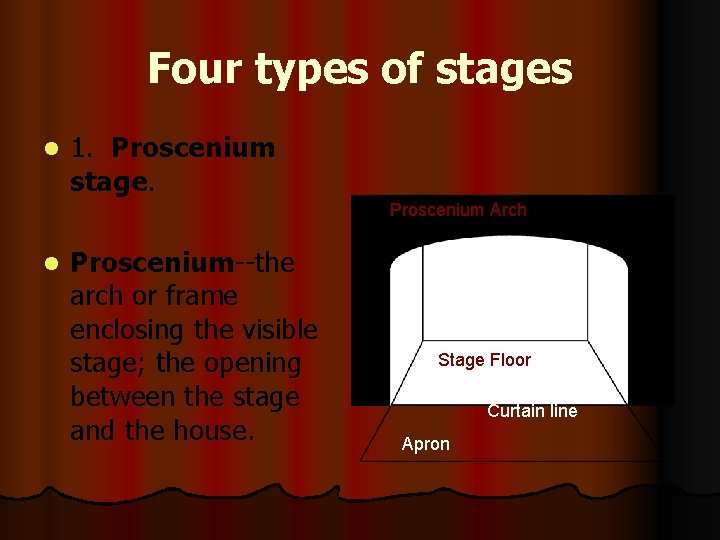
Four types of stages l 1. Proscenium stage. Proscenium Arch l Proscenium--the arch or frame enclosing the visible stage; the opening between the stage and the house. Stage Floor Curtain line Apron
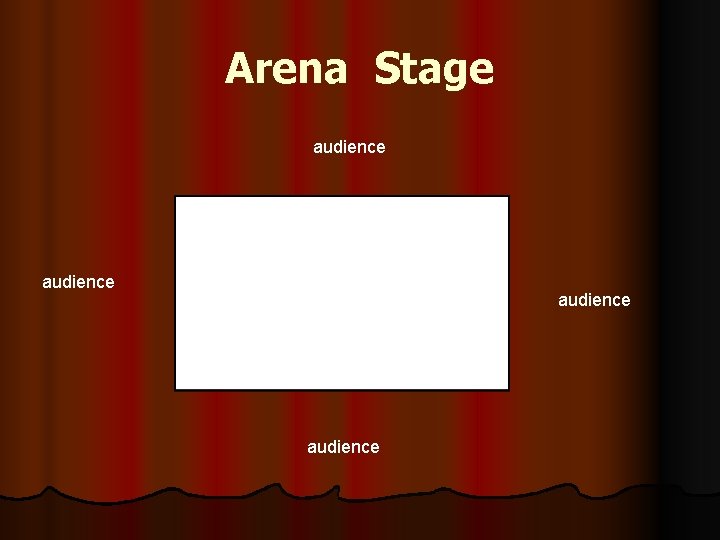
Arena Stage audience
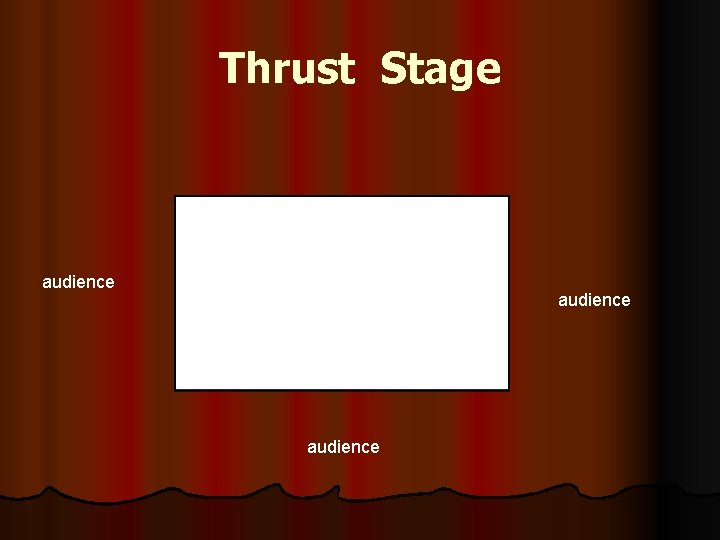
Thrust Stage audience
Stage directions l. Stage directions – instructions in parentheses ( ) that show emotion or action
Common Stage Directions lenter- -coming on stage lexit- -leaving the stage lcross—moving from one side of the stage to the other
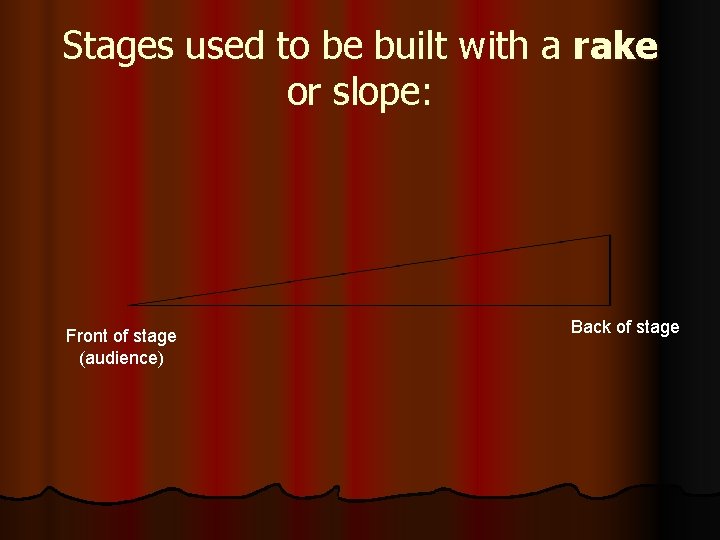
Stages used to be built with a rake or slope: Front of stage (audience) Back of stage
l. Why would they need a rake? So the whole audience could see the stage
l. Do most stages have a rake today? Why not? No; the audience is raked (sloped) instead.
l l Today, upstage is the direction away from the audience. Downstage is towards the audience. Stage left and stage right are set to the actors’ perspective. The area in which the audience sits is called the house.
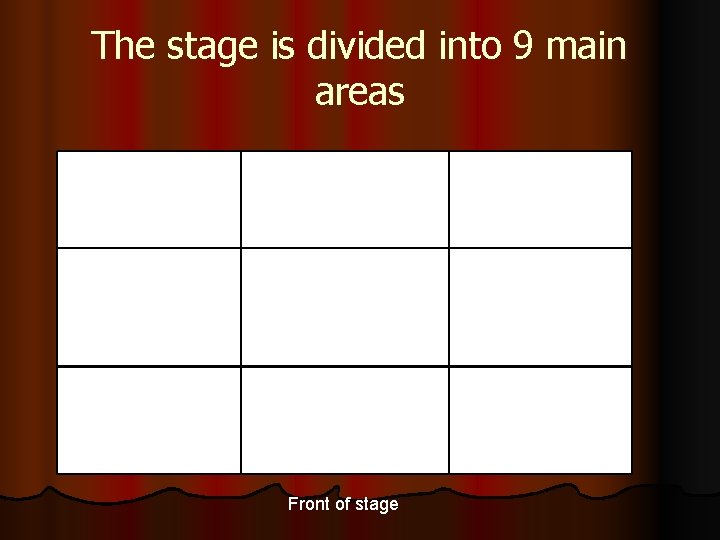
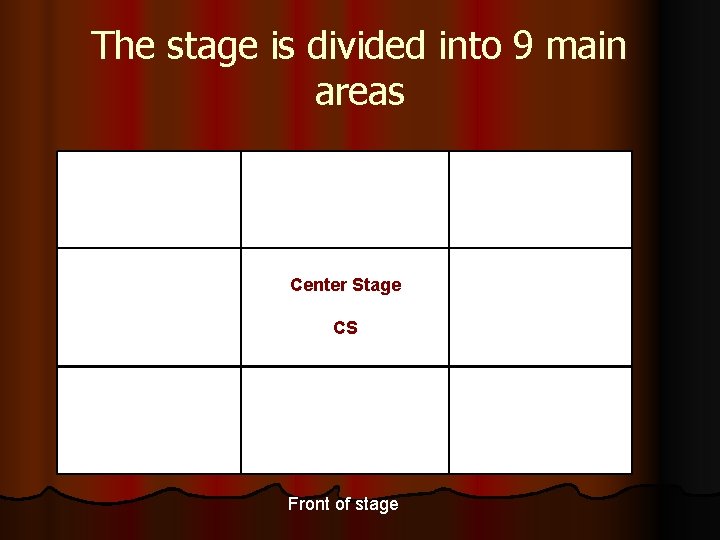
The stage is divided into 9 main areas Front of stage
The stage is divided into 9 main areas Center Stage CS Front of stage
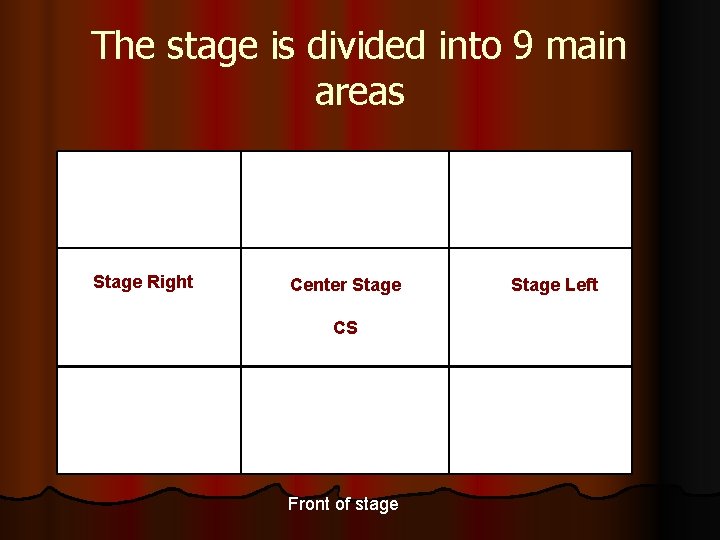
The stage is divided into 9 main areas Stage Right Center Stage CS Front of stage Stage Left
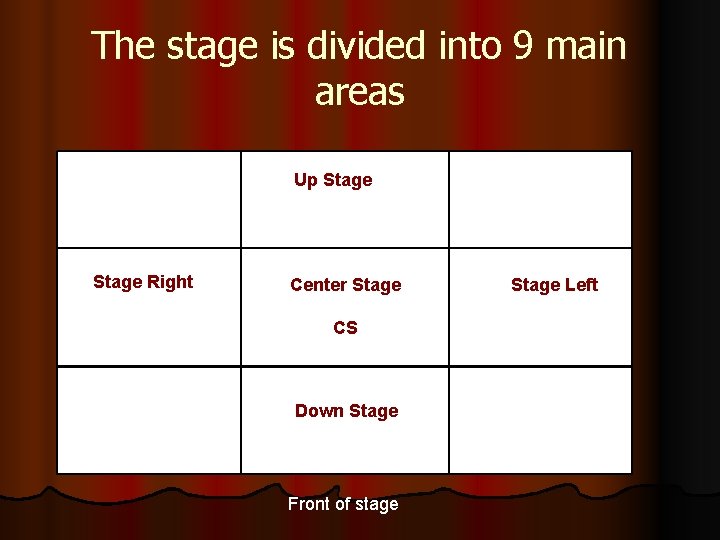
The stage is divided into 9 main areas Up Stage Right Center Stage CS Down Stage Front of stage Stage Left
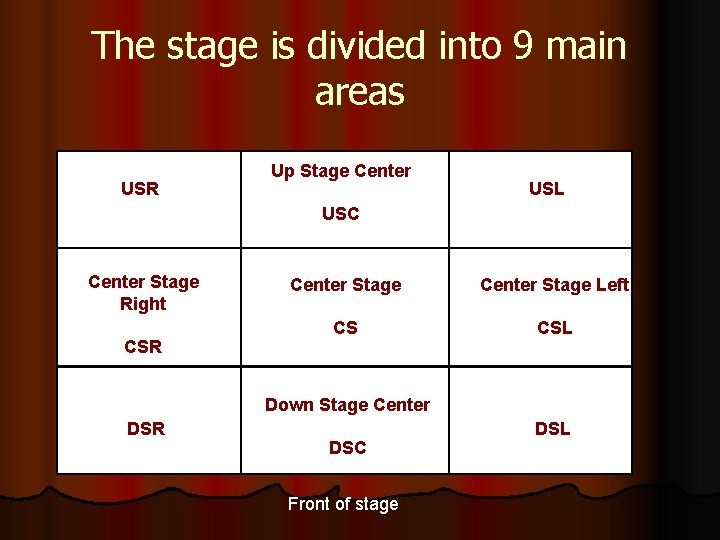
The stage is divided into 9 main areas USR Up Stage Center USL USC Center Stage Right CSR Center Stage Left CS CSL Down Stage Center DSR DSC Front of stage DSL
Two Main Types of Drama l. Comedies are light, humorous stories with happy endings. l. Tragedies are serious stories that often end in the downfall or deaths of major characters.
What do the two masks often seen as a symbol of drama represent? l. They represent comedy (smiling mask) and tragedy (sad mask).
l. Mood is the feeling a story or perfomance conveys.
What rescources can you use to create mood on stage? l Lighting l Sound l Set/Scenery l Props l Costumes l Makeup and Hair
l Costumes—clothes actors wear, appropriate to their characters l Make-up—can be used to enhance facial features or to change actors’ appearances l Props--items carried on stage l Set—backdrop and scenery for a play, movie, or similar performance.
Information ranging from specific details to general references to costuming, props, and set can often be found in the stage directions, but must be interpreted by designers.
Set Design Basics l Curved lines and round shapes are usually found in comedies. l Straight lines and sharp angles are usually found in tragedies.
Color and Emotions l. Happiness—yellow, orange…
Color and Emotions l. Anger—red, black….
Color and Emotions l. Sadness—gray, blue…
Color and Emotions l. Calmness—light blues greens,
Color and Emotions l. Life—green, yellow…
Color and Emotions l. Death—black…