
Drains Ostomies and Wound Products By Mark Vance
Drains, Ostomies and Wound Products. By Mark Vance RN WCC Multicare Home Health, Hospice And Palliative Care.
Types of Drains Active Drains Use negative pressure to remove fluids from wound. Passive Drains Use pressure from within wound and gravity to remove fluids from wound.

Types of Active Drains Use close sealed system under negative pressure to remove fluids Ø Most common is pleurx chest tube. Ø There is also Jackson Pratt and Hemovac. These systems use negative pressure to draw out fluid from wound. Dressing changes need to be sterile.
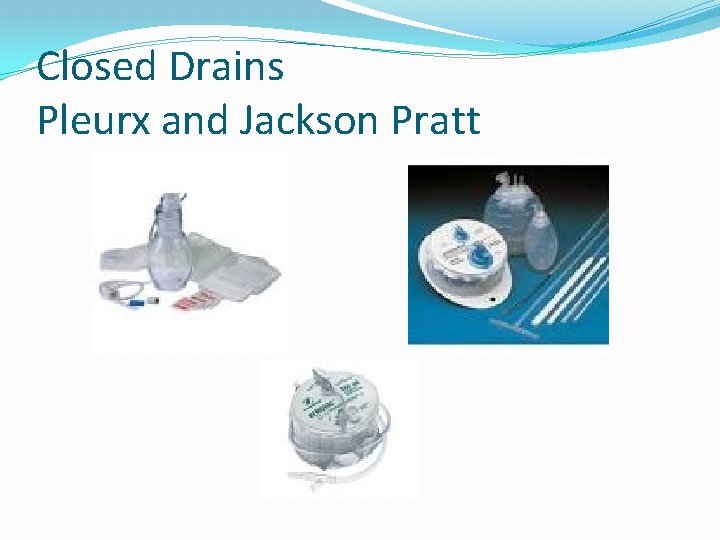
Closed Drains Pleurx and Jackson Pratt
Dressing Changes for Drains Closed active drains; Dressing change should be sterile and per MD orders. Typically 3 to 4 times a week or as needed for excessive drainage. Open passive drains; Dressing change is aseptic and need to be completed as needed for soilage of dressing. Need to pay attention to periwound tissue.
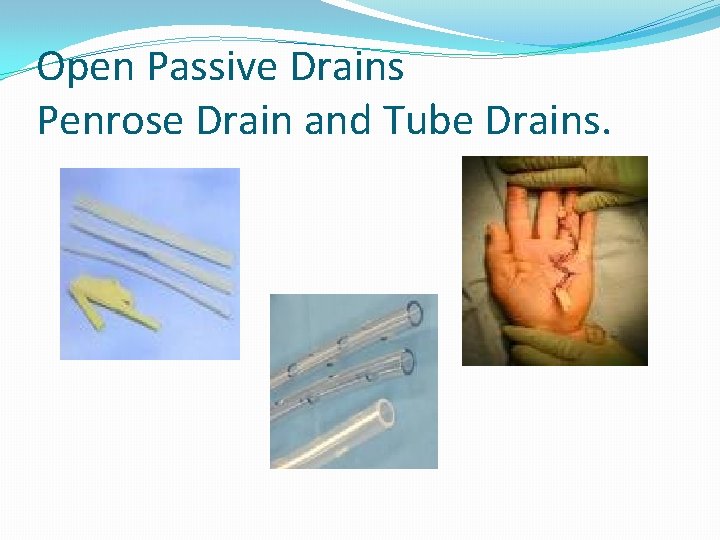
Open Passive Drains Penrose Drain and Tube Drains.
Ostomy Care Ostomy care in hospice patients can be easy to manage or difficult to manage. Majority of hospice patients have long term ostomy appliance and manage ostomy change well. There are times that due to illness they are no longer able to manage own appliance and need help from nurses.

Changes With Ostomy Patients Change in abdomen due to either ascities or severe weight loss. 2. Changes in nutrition and stool consistency. 3. Inability to manage own appliance and inability of family to manage appliance. 4. Increase in peristomal skin issues. 1.
Different Options to Help with Ostomy Care. Consider changing appliance type. If using 2 piece consider switching to 1 piece. 2. Reinforce teaching with client’s and caregivers on proper skin care. 1. Crusting technique. b. Use of skin prep and adhesive remover. c. Use of warm water to clean skin. a.

Crusting Technique Ø Clean skin with warm water and dry well. Ø Sprinkle irritated peristomal skin with stoma powder or miconazole antifungal powder. Ø Dab or spray powdered skin with skin prep consider use of no-sting skin prep. Ø Repeat 2 -3 times. Ø Let skin prep dry well before applying appliance.
High Draining Wounds and Fistulas �Some wounds and fistulas are high flow and it is difficult to manage drainage. 1. There are several different pouches available from Eakin, Hollister, and Coloplast have pouches available. 2. Also available are high absorbancy wound care products that absorb drainage. Examples are: ABD pads, Exudry, Xstrasorb, use of kerlix fluff gauze.

Wound Pouches
Seek Help Ostomy Companies �Hollister Secure Start Program: � 1 -847 -918 -5257 � 1 -888 -808 -7456 ext 1735 �www. hollister. com
Ostomy Companies Continued �Coloplast Ostomy Care Program �Call 1 -877 -858 -2656 to enroll, fax the patient enrollment form to 1 -800 -501 -8533, or email your request to samples@coloplast. com
Ostomy Companies Continued �Convatec � 1 -800 -422 -8811 �www. convatec. com �Nu Hope � 1 -800 -899 -5017 USA/Canada 1 -818 -899 -7711 Fax: 818 -899 -2079 �http: //nu-hope. com
Wound Care Products And How to Use Them � Keep wound care simple. �If wound moist, dry it up. �If wound dry, moisturize it.
Dressing Categories �Transparent Film �Hydrocolloid �Composite �Collagen �Hydrogel �Calcium Alginate �Hydrofiber Aquacel �Foam �Silver �Other specialty dressings.
Transparent Film (Tegaderm) �Description: Polyurethane with porous adhesive layer �Indications: �Primary & Secondary dressing �Stage 1 & II ulcers �Non-draining �Advantages: �Ready wound inspection �Water tight �Prevents or reduces friction �Change every 5 -7 days �Disadvantages: �May adhere to wound �Non-absorptive �May adhere to wound
Hydrocolloid (Duoderm CGF) �Description: Hydrophilic colloid particles bound to polyurethane foam �Indications: �Stage I to IV ulcers �Partial & full thickness �Necrotic wounds �Preventive for high-risk friction areas �Secondary dressing or under taping procedures �Advantages: �Facilitate autolytic debridement �Impermeable �Conformable �Absorptive, minimal to moderate drainage �Disadvantages: �May be hard to remove �Shears off easily �Not recommended for heavy drainage
Hydrogel (Curasol/wound gel) �Description: Water or glycerin based sheet or gel. Available with silver (Silva. Sorb Gel) �Indications: �Stage II to IV ulcers �Partial & full thickness �Painful wounds �Radiation-damaged tissue �Dermabrasion �Advantages: �Nonadherent �Rehydrates wound bed �Reduces wound pain �Can use with topical meds �Disadvantages: �May require secondary dressing �Surrounding skin maceration
Calcium Alginate (Curasorb/Sorbsan) �Description: Nonwoven composite of fibers from calcium-sodium alginate (seaweed) �Indications: �Partial & full thickness � Moderate to heavy drainage �Stage III or IV ulcers �Dehisced wounds �Sinus tracts, tunnels or cavities �Infected wounds �Advantages: �Absorbent & nonocclusive �Trauma-free removal �Use with infected wounds �Reduces change frequency �Sheets & ropes available �Disadvantages: �Not with dry eschar, burns, heavy bleeding �Need secondary dressing �May produce odor �Possible bed damage
Hydrofiber (Aquacel) �Description: Sodium carboxymethylcellulose that interacts with wound exudate. Also in silver �Indications: �Partial to full-thickness �Moderate to heavy drainage �Donor sites �Dehisced wounds �Stage III to IV ulcers �Sinus tracts, tunnels or cavities �Advantages: �Highly absorptive �Trauma-free removal �Disadvantages: �Not with dry eschar, nonexudating wounds, 3 rd degree burns or heavy bleeding �Requires secondary dressing to secure
Composites (All dress, viasorb, stratasorb) �Description: Combination of 2 distinct products made as a single dressing; may include absorptive layer, foam, hydrocolloid. �Indications: �Partial to full thickness �Stage I to IV ulcers �Minimal to heavy drainage �Surgical incisions �Advantages: �Facilitates autolytic debridement �Conformable �Multiples shapes and sizes �Easy to apply and remove �Most have adhesive border �Disadvantages: �Adhesive border may limit use on fragile skin �Wound damage if not properly used & monitored
Collagen (Fibercol, Promogran matrix, Silver Prisma matrix) �Advantages: �Description: Major body �Absorbent, nonadherent protein; stimulates cellular migration and contributes to �Forms biodegradable gel new tissue development and �Conforms well wound debridement �Use with topical agents �Indications: �Change every 1 -3 days �Partial and full thickness �Use for minor slough �Stage III and some IV �Disadvantages: ulcers rd degree burns � Not for 3 �Dermal ulcers �Not for necrotic wounds �Donor sites �Needs secondary �Surgical wounds dressing
Foam (Allevyn) �Description: A hydrophilic, polyurethane film coated foam, non-occlusive nonadherent absorptive �Indications: �Partial to full thickness �Minimal to heavy drainage �Stage II to IV ulcers �Surgical wounds �Ulcers �Infected & non-infected wounds �Advantages: �Nonadherent �Trauma-free removal �Absorbs min to heavy �Easy to apply and remove �Change every 3 -5 days �Disadvantages: �Not for non draining or dry eschar �Second dressing to secure �May macerate surrounding skin if not changed
Silver Dressings �Description: Immediate and sustained release of ionic silver; effective barrier to bacterial penetration. �Indications: �All wounds except: Stage I ulcer, 3 rd degree burns and non-draining �Infected wounds �Highly colonized wounds �Over grafts or skin substitutes �Under compression �Advantages �Inhibits growth of bacteria, especially antibioticresistant strains �Effective up to 7 days �Disadvantages �Secondary dressing required �Incompatible with oilbased products �Possible sensitivity to silver
Specialty Dressings Medihoney Description: Made from Manuka Honey. Comes in several products. Product balances the PH in wound bed to lower PH level and moisturize the wound. Also helps with debriding wounds. Wound types: Partial to full thickness wounds. Stage 2 , 3 and 4 pressure ulcers. Product types: Medihoney Gel, Medihoney Paste, Medihoney alginate, Medihoney HCS.
Hydrofera Blue Description: A foam dressing containing two organic pigments, methylene blue and gentian violet, in opencelled polyurethane foam. Uses: Pressure ulcers, venous stasis ulcers, diabetic foot wounds, abrasions, lacerations, surgical wounds. Advantages: Up to 7 day wear time, antimicrobial, non- cytotoxic, cheaper than other antimicrobial dressings. Available in variety of sizes. Disadvantages: Needs secondary dressing to hold in place. Wear time varies. Can stick to wounds.
Remember … �Use the right product for the right wound. �If not sure, ask your Wound Certified nurses or read the product insert. �Be conscious of wound care costs. �Have fun with wound care … it can be challenging but rewarding when products are effective and wounds heal quickly.

Now Lets Look At Some Pictures.
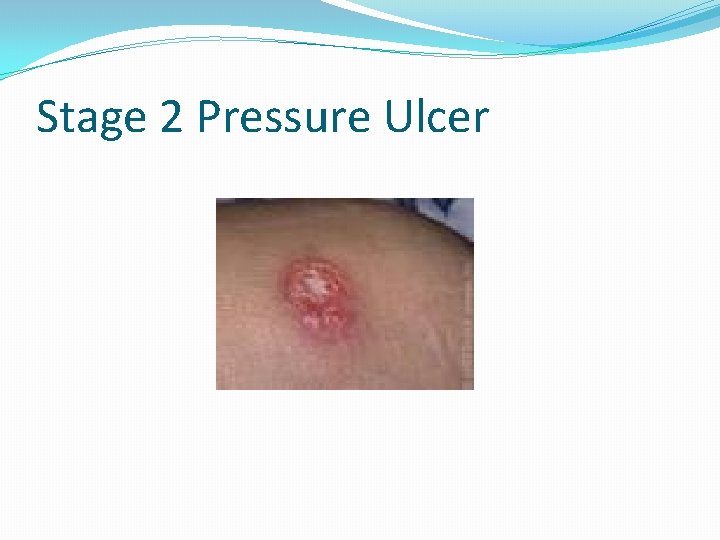
Stage 2 Pressure Ulcer

Stage 2 Pressure Ulcer
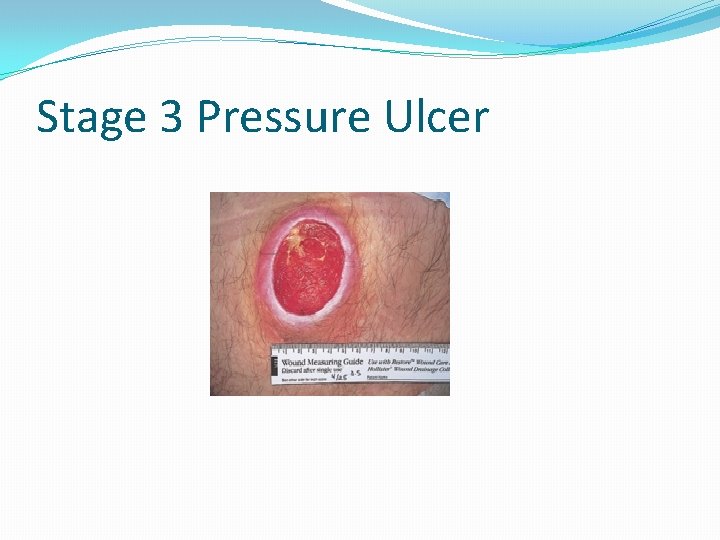
Stage 3 Pressure Ulcer
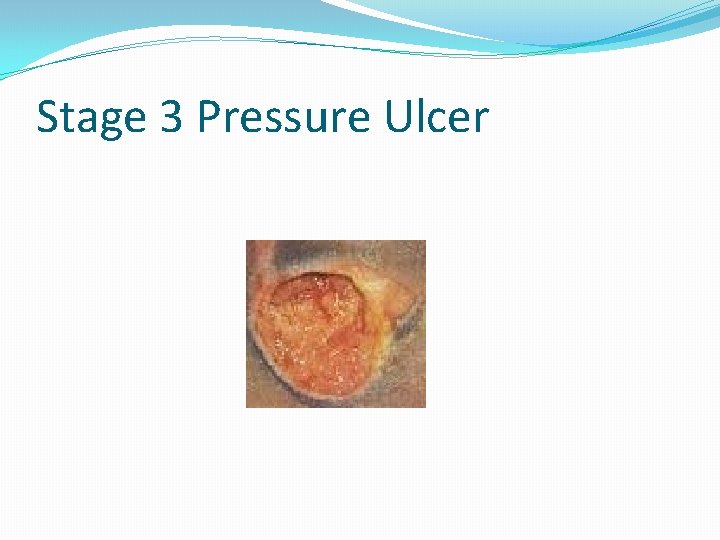
Stage 3 Pressure Ulcer
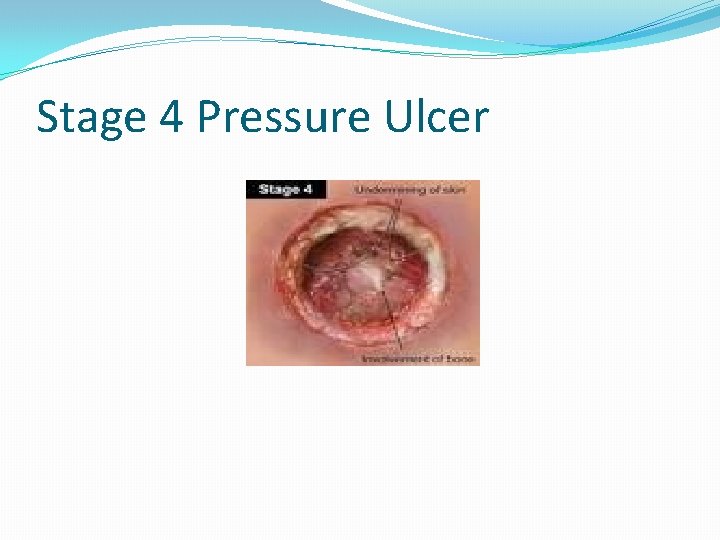
Stage 4 Pressure Ulcer
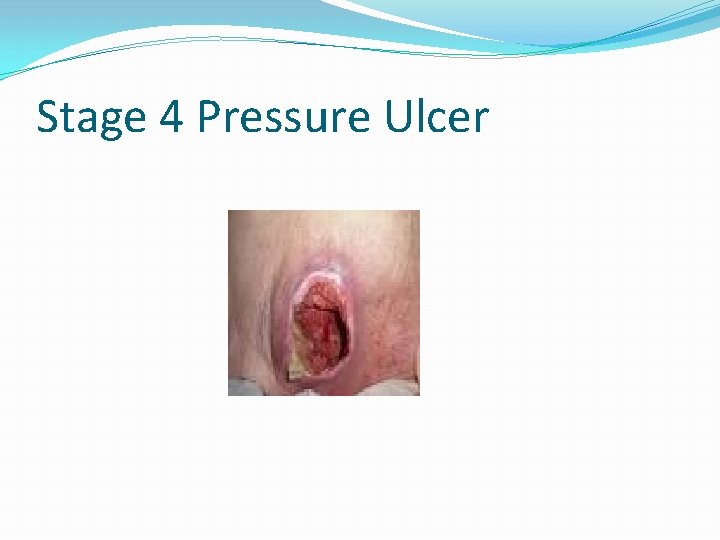
Stage 4 Pressure Ulcer
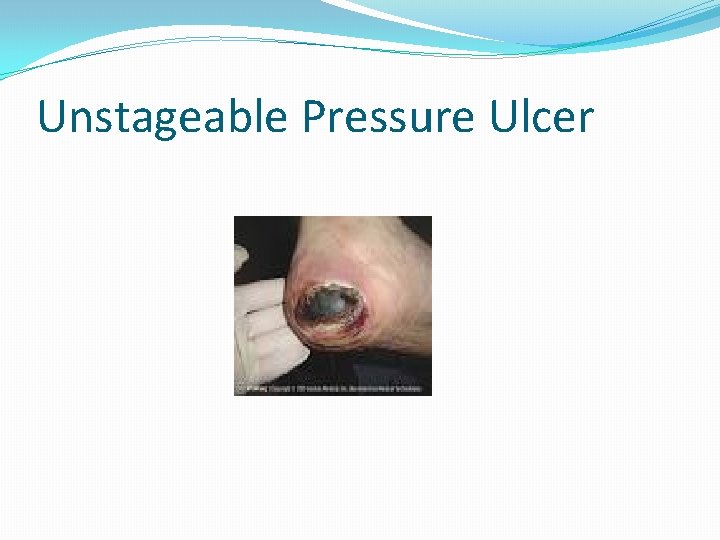
Unstageable Pressure Ulcer

Unstageable Pressure Ulcer
References Bryant, Ruth A. , and Denise Nix P. Acute & Chronic Wounds: Current Management Concepts. 4 th ed. St. Louis, MO: Elsevier/Mosby, 2012. Print. Carmel, Jane, Janice Colwell, and Margaret Goldberg T. Wound, Ostomy and Continence Nurses Society Core Curriculum. N. p. : n. p. , n. d. Print. Doughty, Dorothy Beckley, and Laurie Mc. Nichol L. Wound, Ostomy, and Continence Nurses Society Core Curriculum. N. p. : n. p. , n. d. Print. Vuolo, Junlie, BA, RN. "Current Options for Managing the Problem of Excess Wound Exudate. " Nursing Times. EMAP Publishing Limited Company, 1 June 2004. Web. 11 Sept. 2016.
- Slides: 39