
Drainage Management for Water Quality and Crop Production
- Slides: 38
Drainage Management for Water Quality and Crop Production Benefits Don Pitts Agricultural Engineer NRCS USDA Champaign, IL
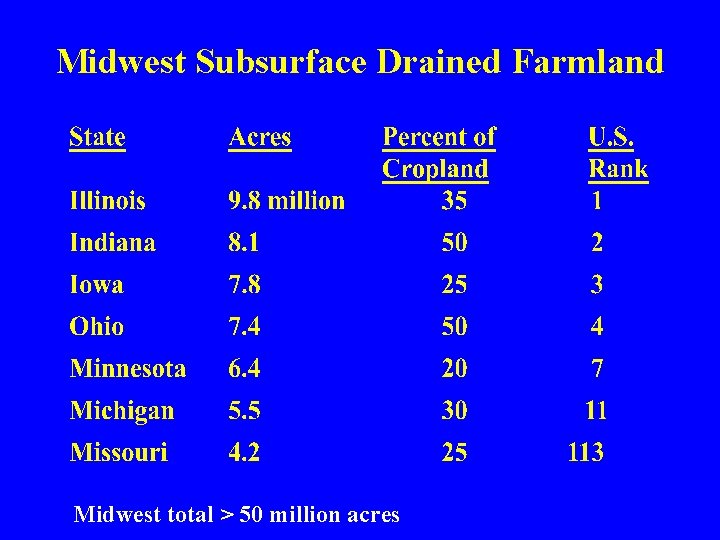
Midwest Subsurface Drained Farmland Midwest total > 50 million acres
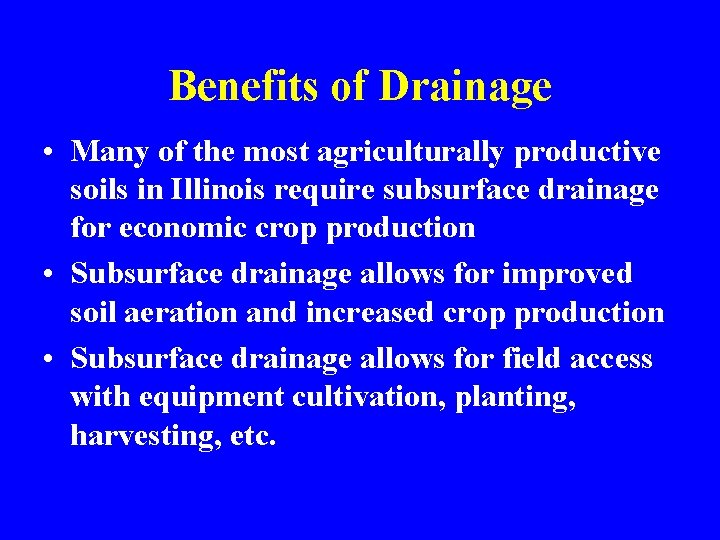
Benefits of Drainage • Many of the most agriculturally productive soils in Illinois require subsurface drainage for economic crop production • Subsurface drainage allows for improved soil aeration and increased crop production • Subsurface drainage allows for field access with equipment cultivation, planting, harvesting, etc.
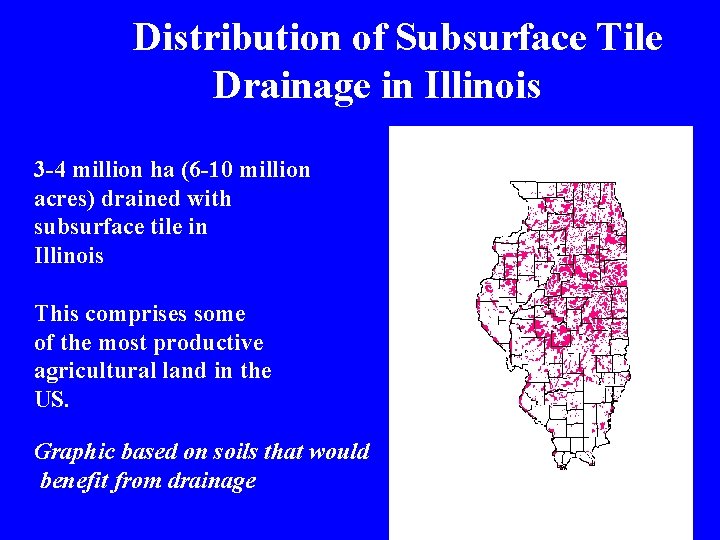
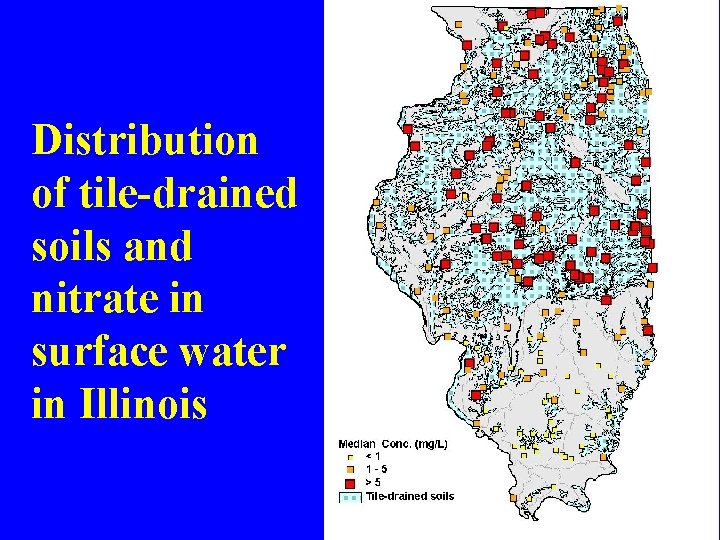
Distribution of Subsurface Tile Drainage in Illinois 3 -4 million ha (6 -10 million acres) drained with subsurface tile in Illinois This comprises some of the most productive agricultural land in the US. Graphic based on soils that would benefit from drainage
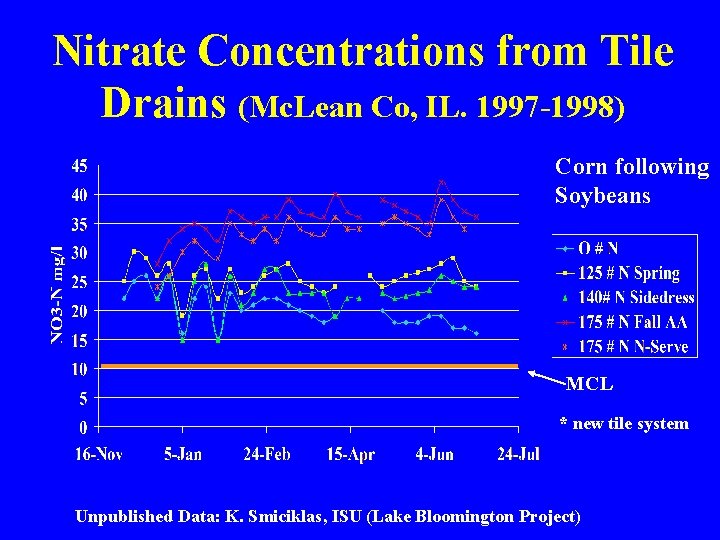
Nitrate Concentrations from Tile Drains (Mc. Lean Co, IL. 1997 -1998) Corn following Soybeans MCL * new tile system Unpublished Data: K. Smiciklas, ISU (Lake Bloomington Project)
Distribution of tile-drained soils and nitrate in surface water in Illinois
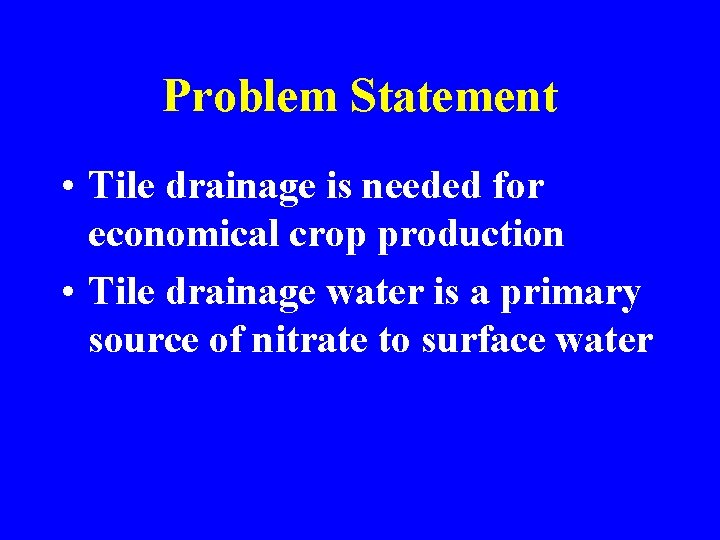
Problem Statement • Tile drainage is needed for economical crop production • Tile drainage water is a primary source of nitrate to surface water
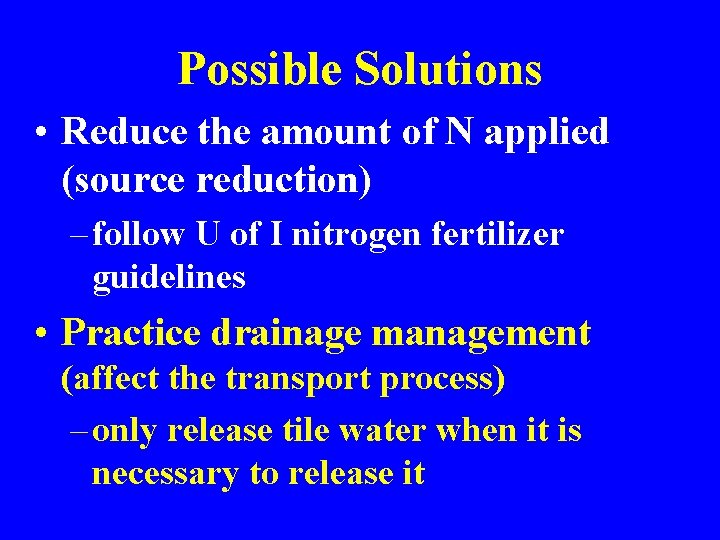
Possible Solutions • Reduce the amount of N applied (source reduction) – follow U of I nitrogen fertilizer guidelines • Practice drainage management (affect the transport process) – only release tile water when it is necessary to release it
Why is drainage needed? • Due to high water tables, many soils in Illinois need drainage for economical crop production: – to insure trafficable field conditions – to minimize crop stress from excess water
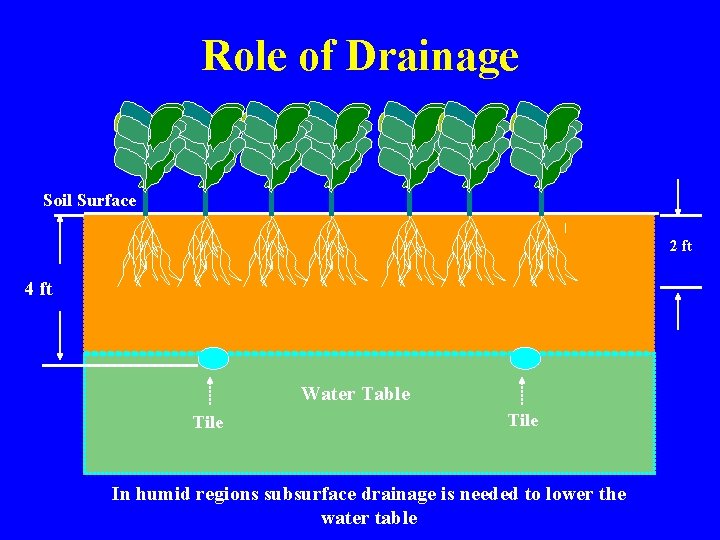
Role of Drainage Soil Surface 2 ft 4 ft Water Table Tile In humid regions subsurface drainage is needed to lower the water table
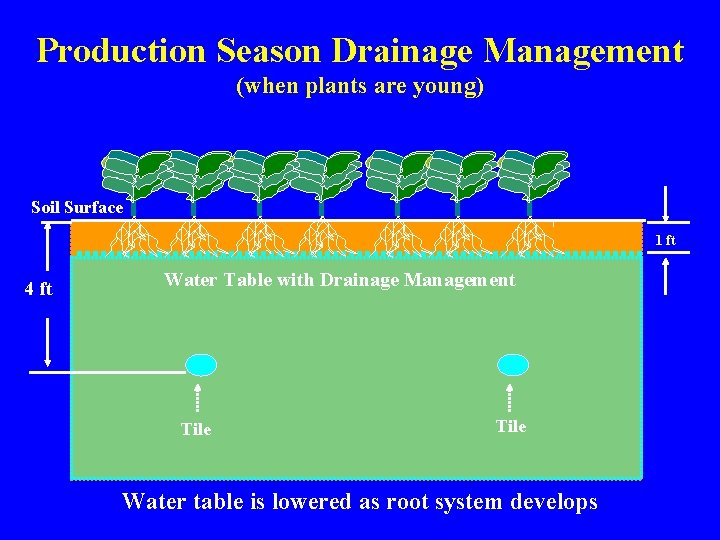
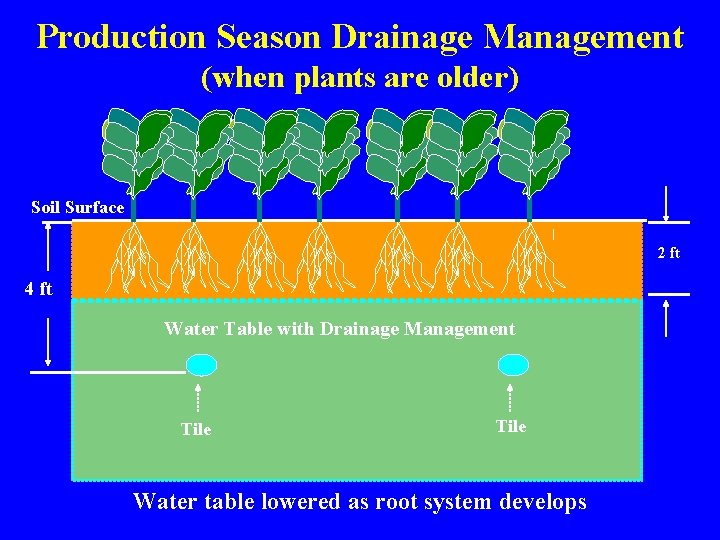
When is drainage not needed? • During the fallow season • During growing season – in dry periods – after planting when the plant root system is small
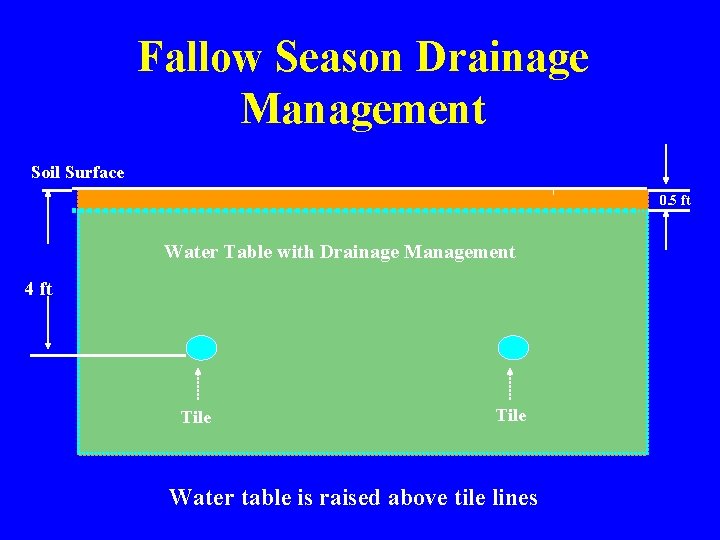
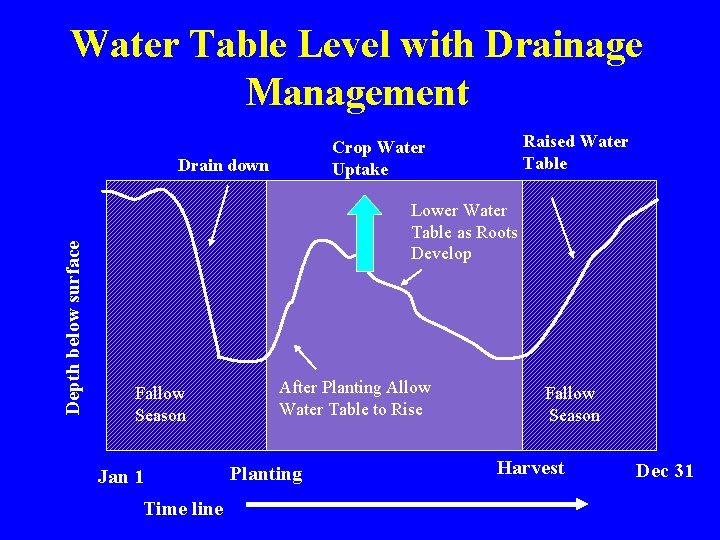
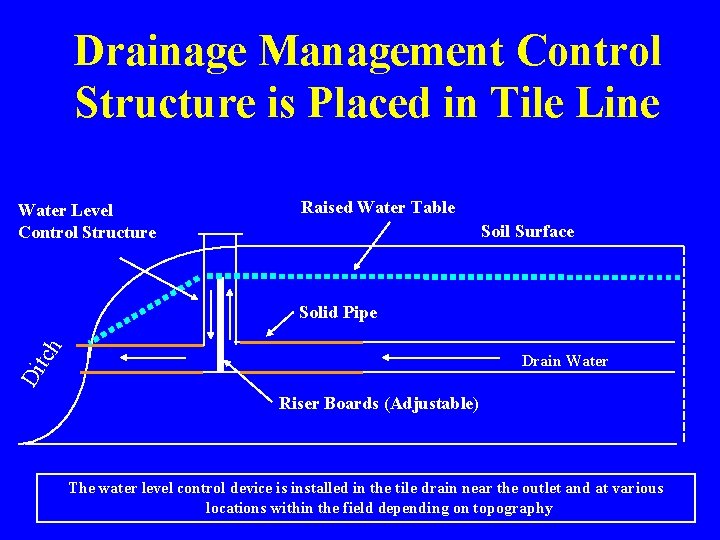
What is Drainage Management? • Allows for changing the elevation of drainage outlet • Raising the water table can reduce the amount of nitrate discharged from the field through the tile lines • Raising the water table after planting can keep water and nutrients available for plant use during the growing season
Fallow Season Drainage Management Soil Surface 0. 5 ft Water Table with Drainage Management 4 ft Tile Water table is raised above tile lines
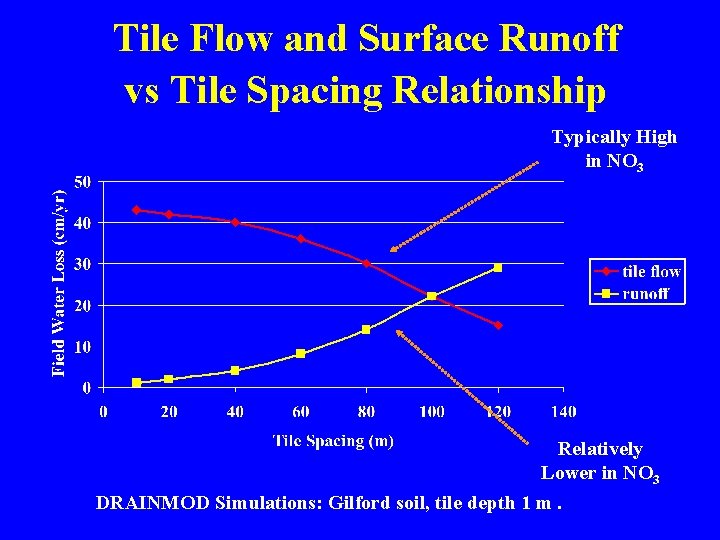
Tile Flow and Surface Runoff vs Tile Spacing Relationship Typically High in NO 3 Relatively Lower in NO 3 DRAINMOD Simulations: Gilford soil, tile depth 1 m.
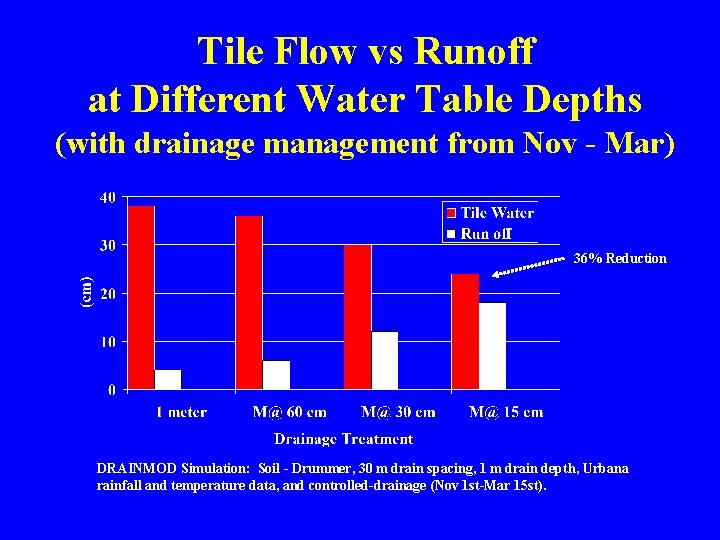
Tile Flow vs Runoff at Different Water Table Depths (with drainage management from Nov - Mar) 36% Reduction DRAINMOD Simulation: Soil - Drummer, 30 m drain spacing, 1 m drain depth, Urbana rainfall and temperature data, and controlled-drainage (Nov 1 st-Mar 15 st).
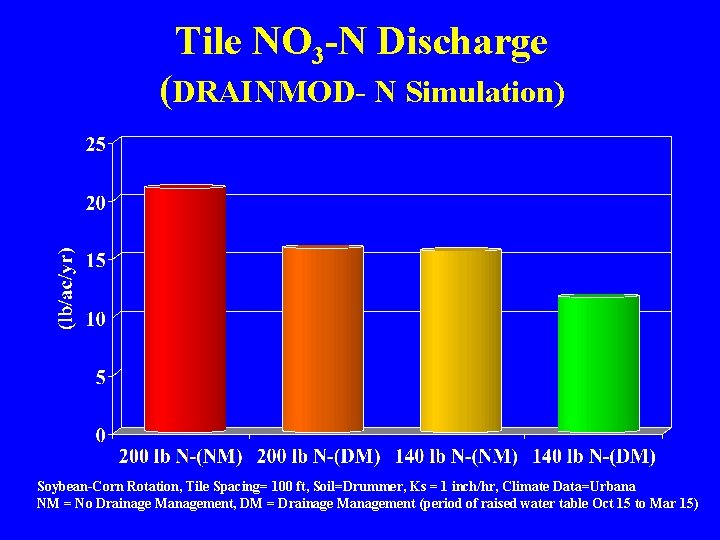
Tile NO 3 -N Discharge (DRAINMOD- N Simulation) Soybean-Corn Rotation, Tile Spacing= 100 ft, Soil=Drummer, Ks = 1 inch/hr, Climate Data=Urbana NM = No Drainage Management, DM = Drainage Management (period of raised water table Oct 15 to Mar 15)
Production Season Drainage Management (when plants are young) Soil Surface 1 ft 4 ft Water Table with Drainage Management Tile Water table is lowered as root system develops
Production Season Drainage Management (when plants are older) Soil Surface 2 ft 4 ft Water Table with Drainage Management Tile Water table lowered as root system develops
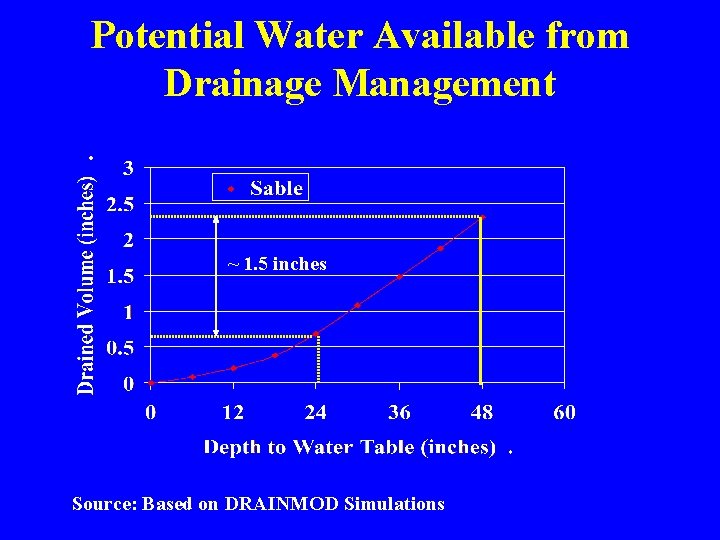
Potential Water Available from Drainage Management ~ 1. 5 inches Source: Based on DRAINMOD Simulations
Water Table Level with Drainage Management Drain down Depth below surface Raised Water Table Crop Water Uptake Lower Water Table as Roots Develop Fallow Season Jan 1 Time line After Planting Allow Water Table to Rise Planting Fallow Season Harvest Dec 31
Drainage Management Control Structure is Placed in Tile Line Water Level Control Structure Raised Water Table Soil Surface h Solid Pipe Di tc Drain Water Riser Boards (Adjustable) The water level control device is installed in the tile drain near the outlet and at various locations within the field depending on topography
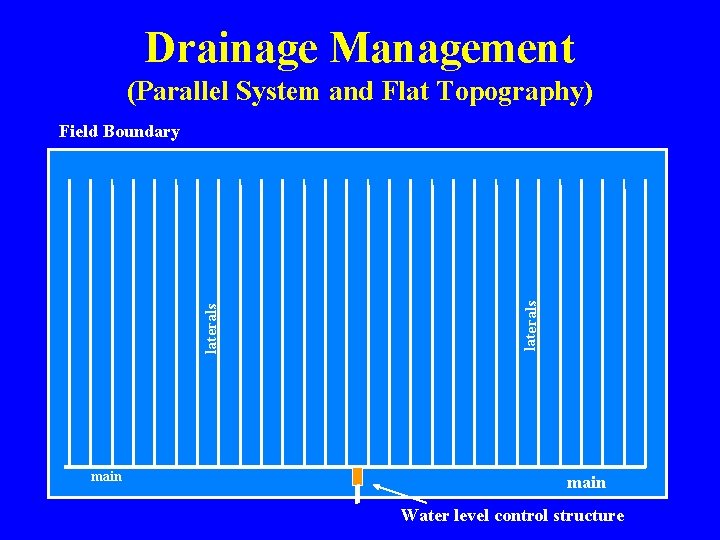
Drainage Management (Parallel System and Flat Topography) main laterals Field Boundary main Water level control structure
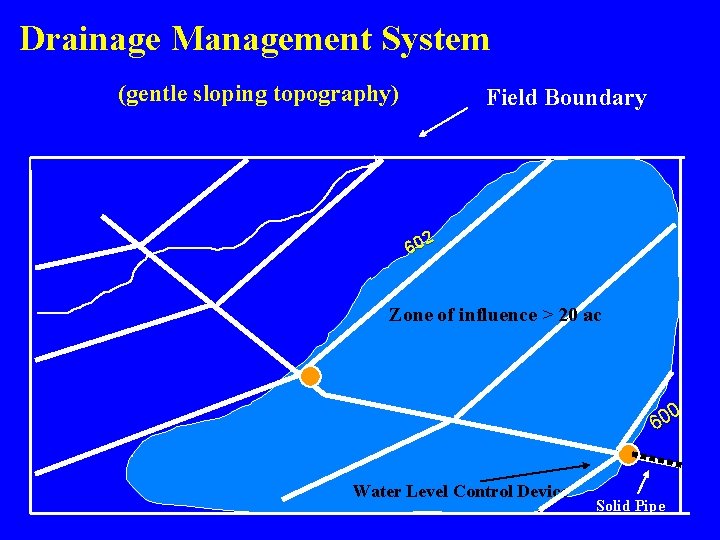
Drainage Management System (gentle sloping topography) Field Boundary 2 60 Zone of influence > 20 ac 0 60 Water Level Control Device Solid Pipe
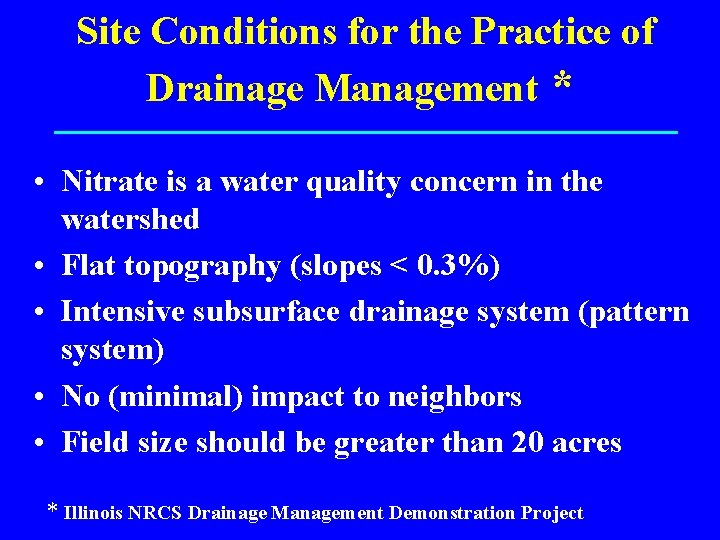
Site Conditions for the Practice of Drainage Management * • Nitrate is a water quality concern in the watershed • Flat topography (slopes < 0. 3%) • Intensive subsurface drainage system (pattern system) • No (minimal) impact to neighbors • Field size should be greater than 20 acres * Illinois NRCS Drainage Management Demonstration Project
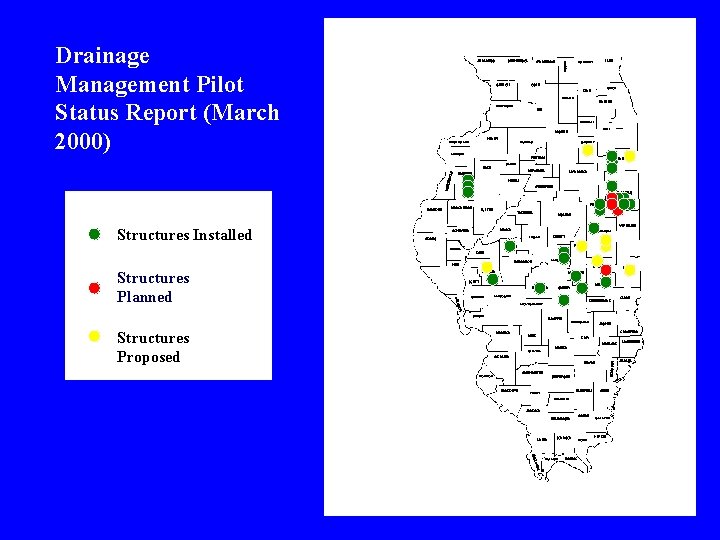
Drainage Management Pilot Status Report (March 2000) Structures Installed Structures Planned Structures Proposed
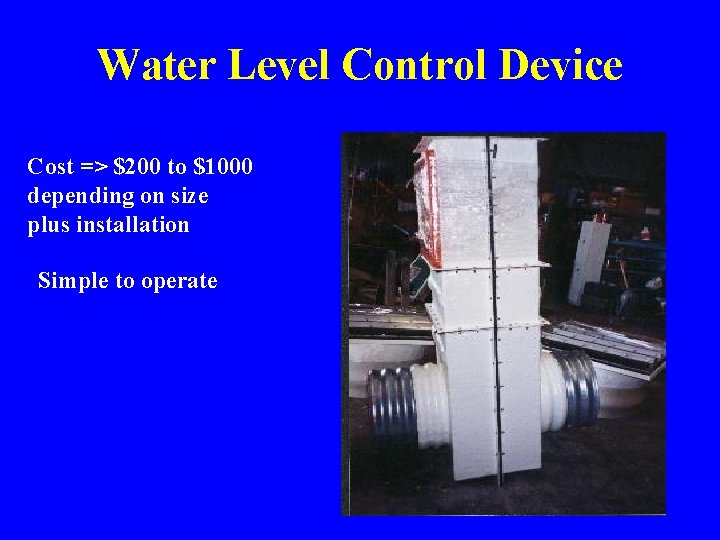
Water Level Control Device Cost => $200 to $1000 depending on size plus installation Simple to operate
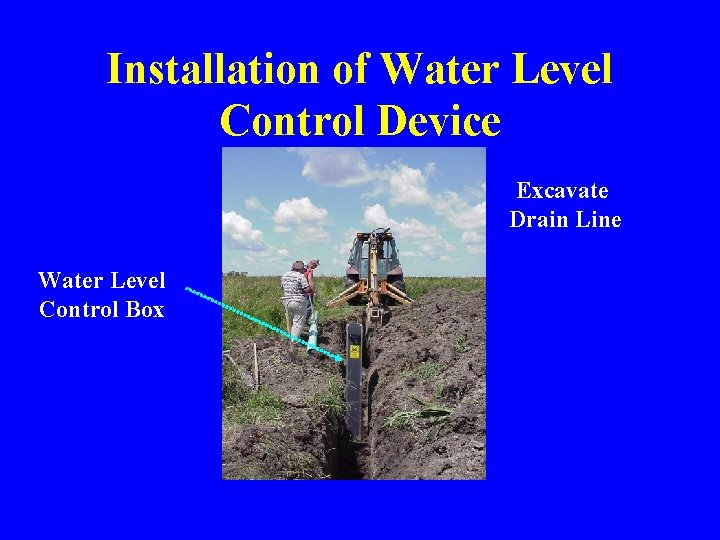
Installation of Water Level Control Device Excavate Drain Line Water Level Control Box
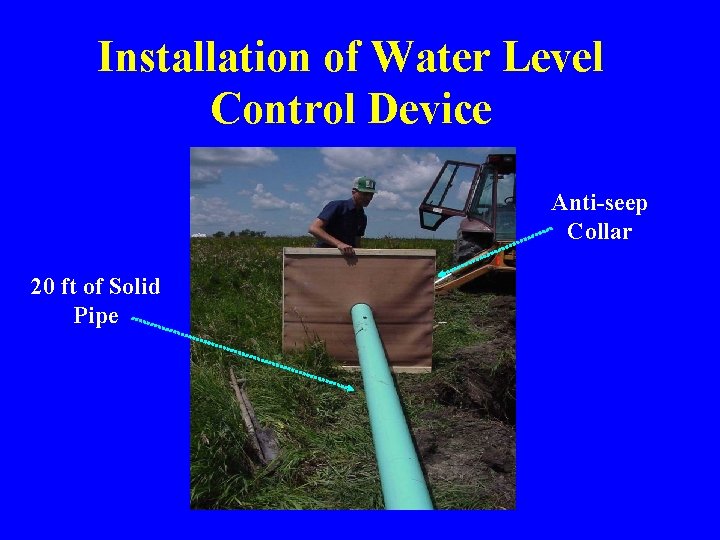
Installation of Water Level Control Device Anti-seep Collar 20 ft of Solid Pipe
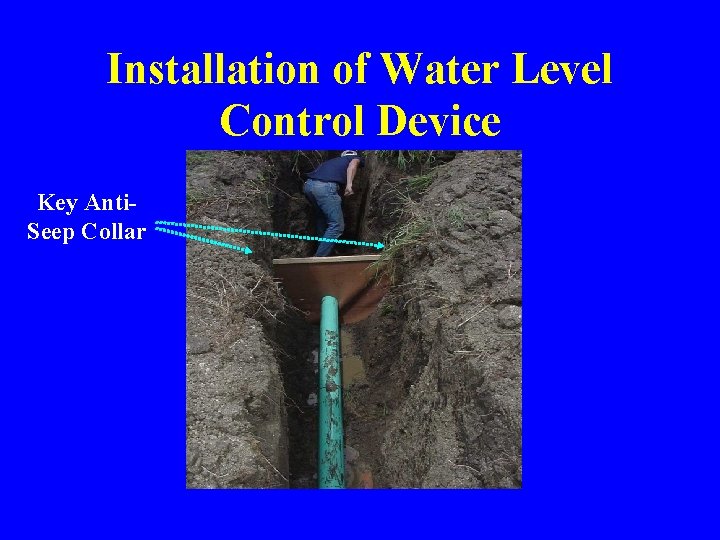
Installation of Water Level Control Device Key Anti. Seep Collar
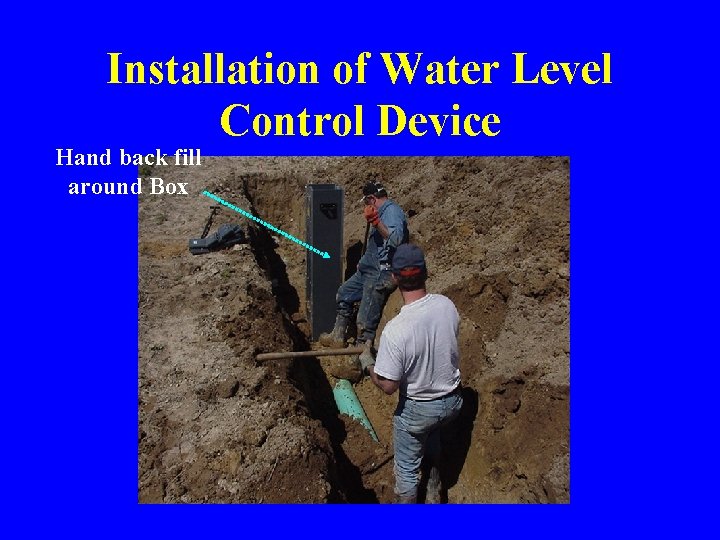
Installation of Water Level Control Device Hand back fill around Box
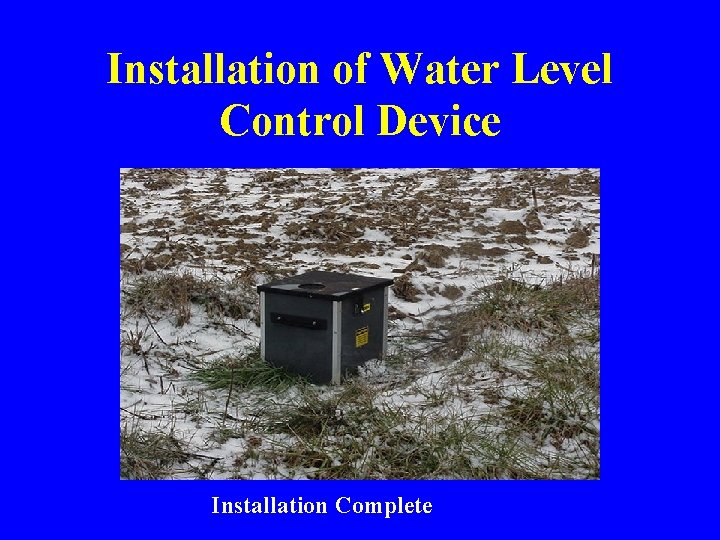
Installation of Water Level Control Device Installation Complete
Production Season Drainage Management Considerations • Principle 1. Only release water sufficient to allow for the soil to dry for field access with equipment and to keep the water table out of the root zone. – Any water released in excess of these two requirement is water and nutrients lost from production.
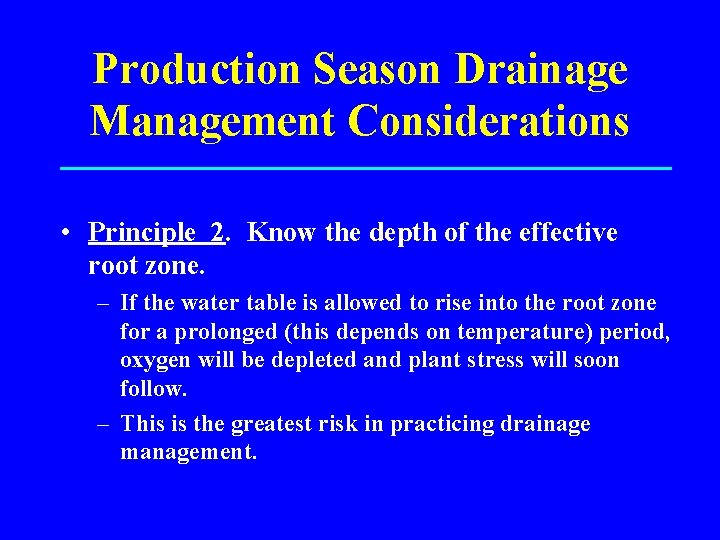
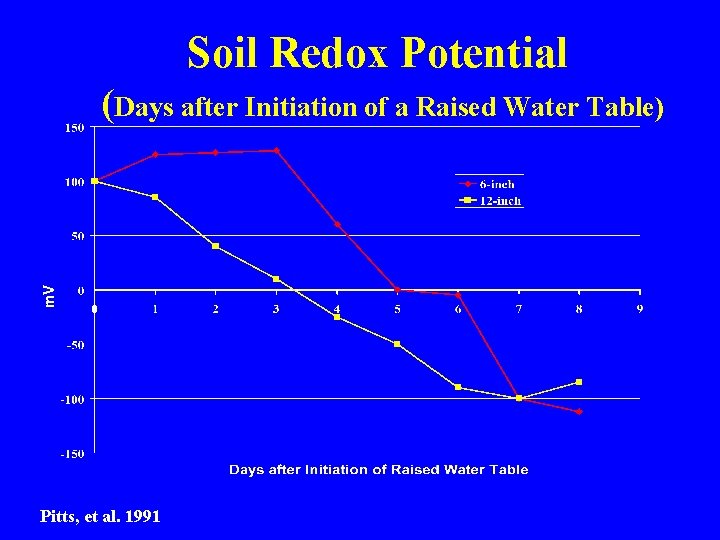
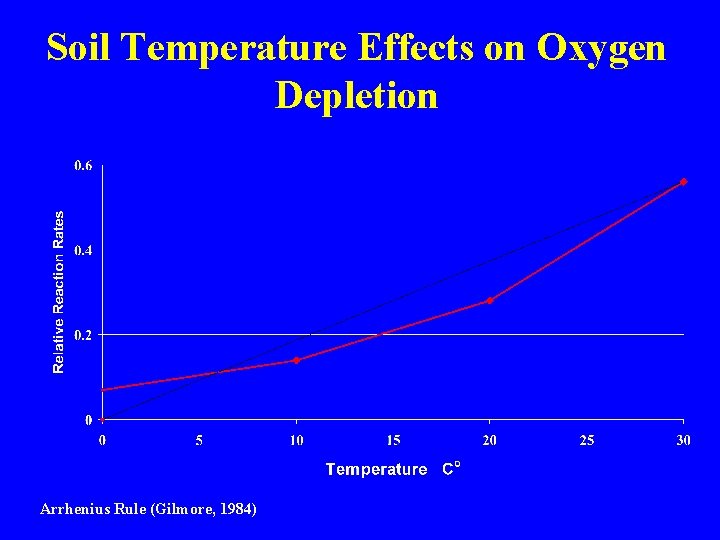
Production Season Drainage Management Considerations • Principle 2. Know the depth of the effective root zone. – If the water table is allowed to rise into the root zone for a prolonged (this depends on temperature) period, oxygen will be depleted and plant stress will soon follow. – This is the greatest risk in practicing drainage management.
Soil Redox Potential (Days after Initiation of a Raised Water Table) Pitts, et al. 1991
Soil Temperature Effects on Oxygen Depletion Arrhenius Rule (Gilmore, 1984)
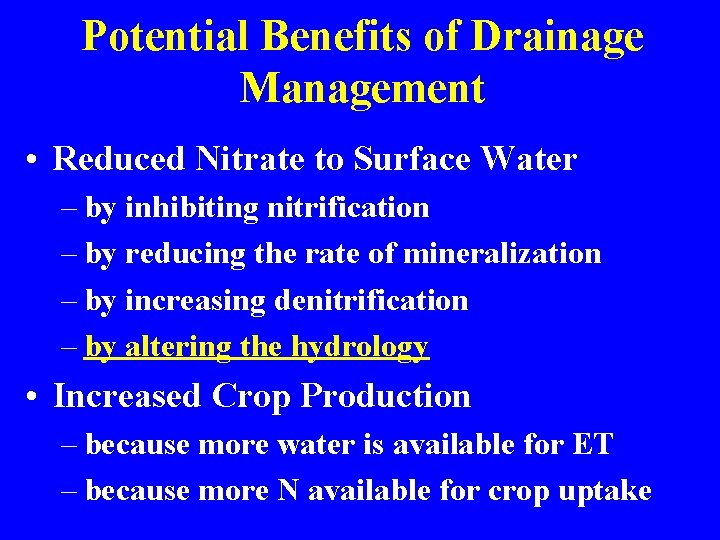
Potential Benefits of Drainage Management • Reduced Nitrate to Surface Water – by inhibiting nitrification – by reducing the rate of mineralization – by increasing denitrification – by altering the hydrology • Increased Crop Production – because more water is available for ET – because more N available for crop uptake
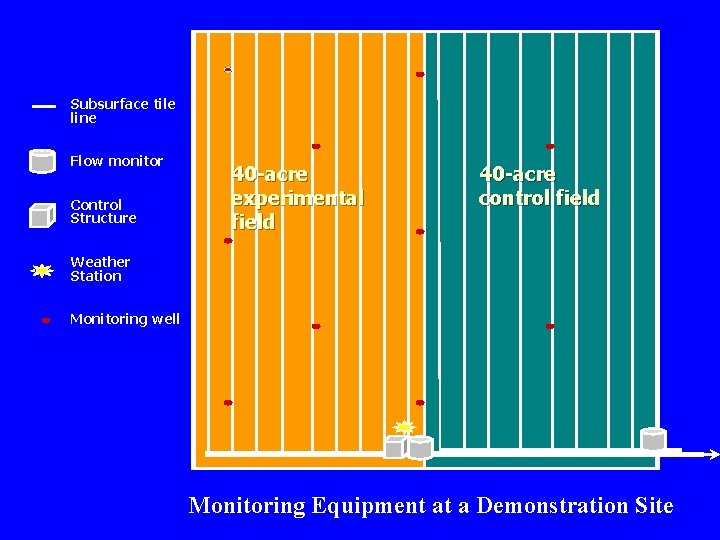
Subsurface tile line Flow monitor Control Structure 40 -acre experimental field 40 -acre control field Weather Station Monitoring well Monitoring Equipment at a Demonstration Site
Golden Rule of Drainage • Only release the amount water necessary to insure trafficable conditions for field operations and to provide an aerated crop root zone – any drainage in excess of this rule likely carries away nitrate and water that is no longer available for crop uptake