
Drainage and Wastewater System Planning Leslie Webster Program
Drainage and Wastewater System Planning Leslie Webster Program Manager DWW System Planning CDWAC-WSAC meeting August 10, 2016
Presentation Agenda • • • 2 Background Planning Drivers Program Elements Wastewater Master Plan Questions
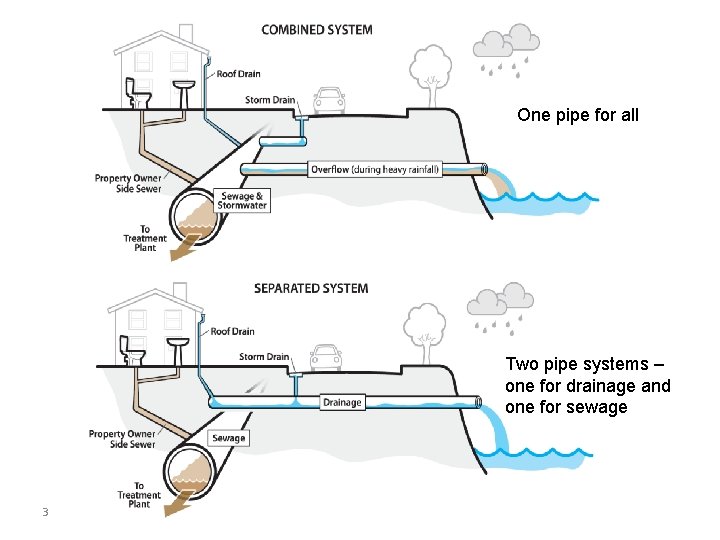
One pipe for all Two pipe systems – one for drainage and one for sewage 3
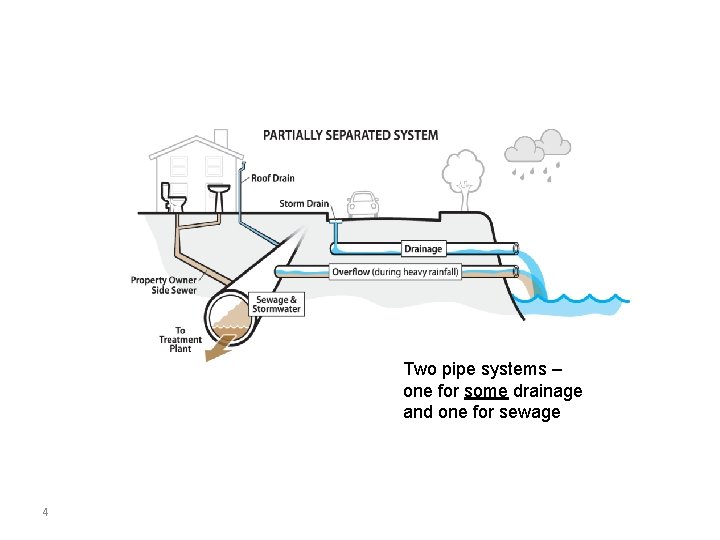
Two pipe systems – one for some drainage and one for sewage 4
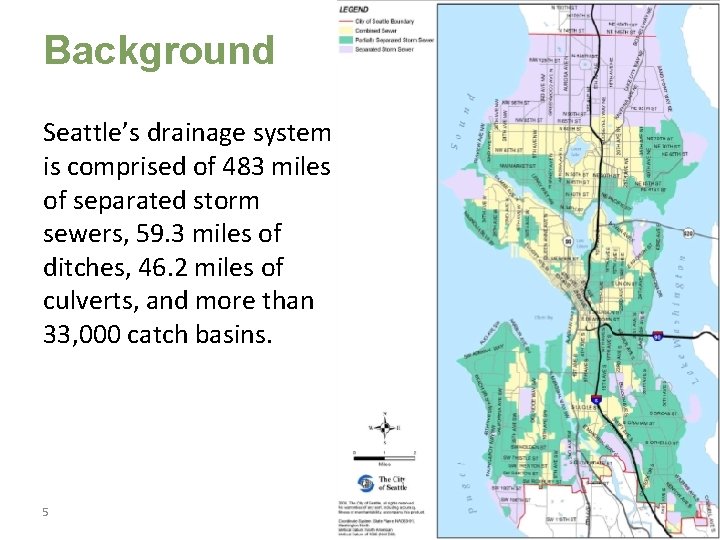
Background Seattle’s drainage system is comprised of 483 miles of separated storm sewers, 59. 3 miles of ditches, 46. 2 miles of culverts, and more than 33, 000 catch basins. 5
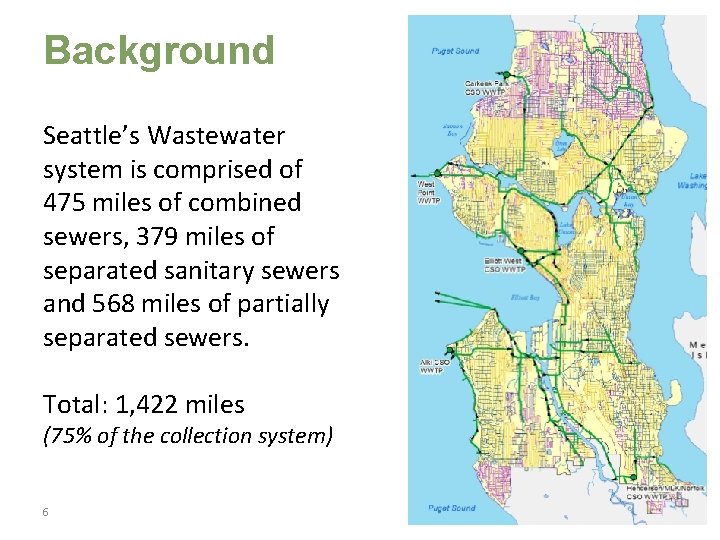
Background Seattle’s Wastewater system is comprised of 475 miles of combined sewers, 379 miles of separated sanitary sewers and 568 miles of partially separated sewers. Total: 1, 422 miles (75% of the collection system) 6
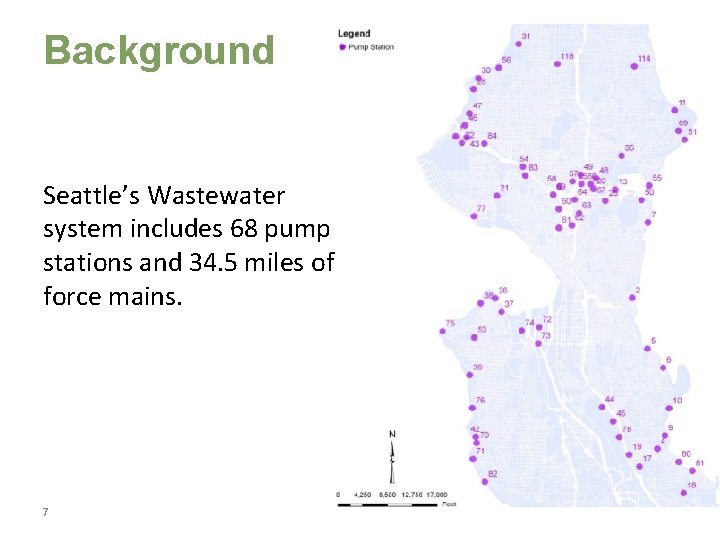
Background Seattle’s Wastewater system includes 68 pump stations and 34. 5 miles of force mains. 7
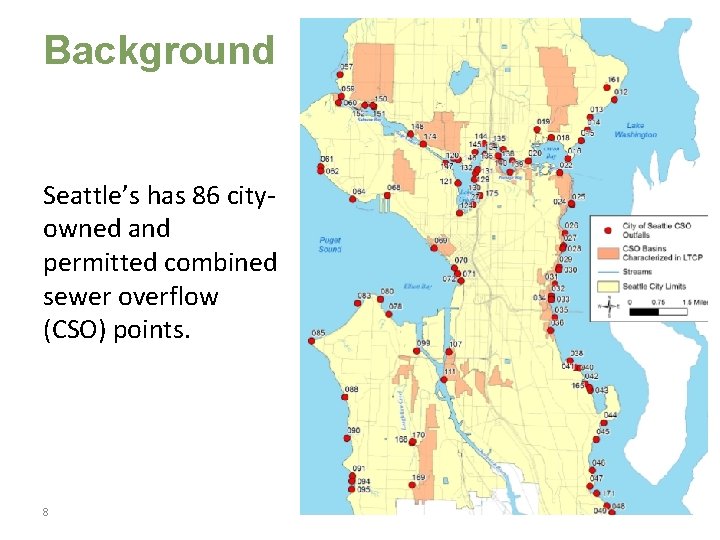
Background Seattle’s has 86 cityowned and permitted combined sewer overflow (CSO) points. 8
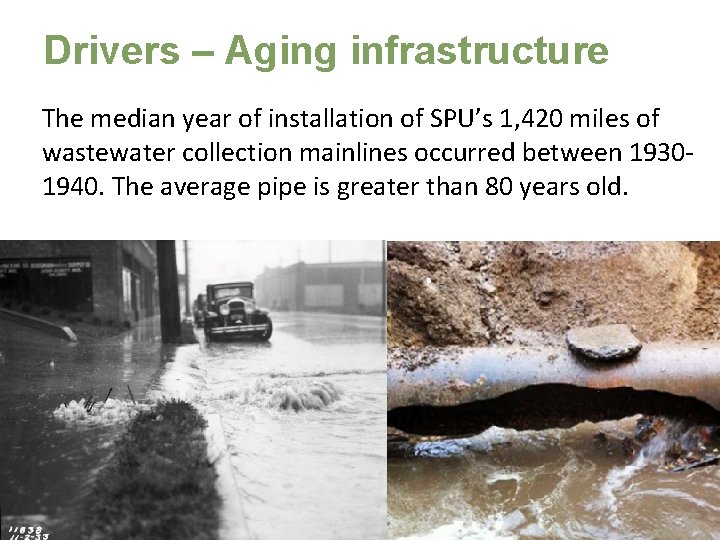
Drivers – Aging infrastructure The median year of installation of SPU’s 1, 420 miles of wastewater collection mainlines occurred between 19301940. The average pipe is greater than 80 years old. 9
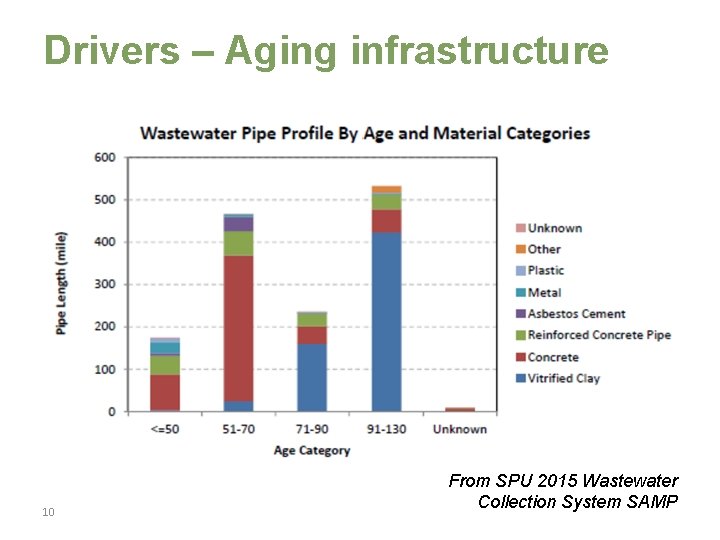
Drivers – Aging infrastructure 10 From SPU 2015 Wastewater Collection System SAMP
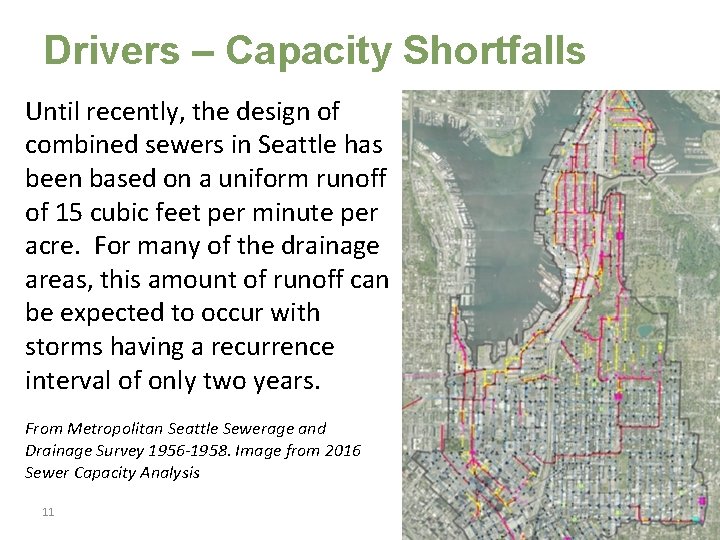
Drivers – Capacity Shortfalls Until recently, the design of combined sewers in Seattle has been based on a uniform runoff of 15 cubic feet per minute per acre. For many of the drainage areas, this amount of runoff can be expected to occur with storms having a recurrence interval of only two years. From Metropolitan Seattle Sewerage and Drainage Survey 1956 -1958. Image from 2016 Sewer Capacity Analysis 11
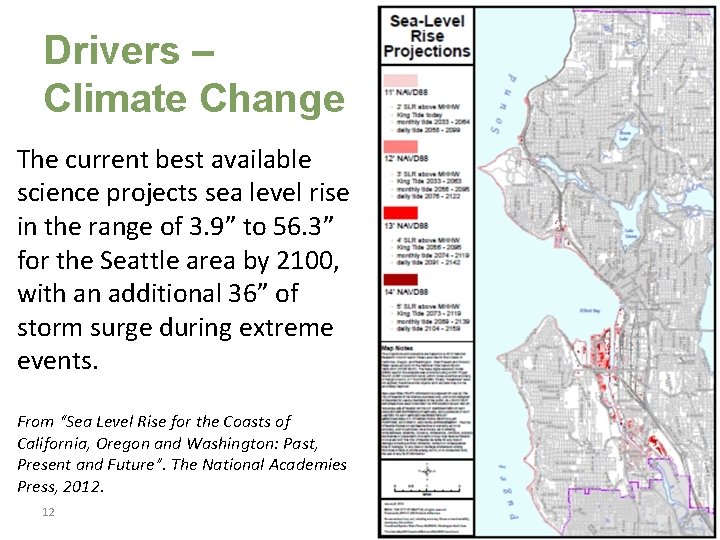
Drivers – Climate Change The current best available science projects sea level rise in the range of 3. 9” to 56. 3” for the Seattle area by 2100, with an additional 36” of storm surge during extreme events. From “Sea Level Rise for the Coasts of California, Oregon and Washington: Past, Present and Future”. The National Academies Press, 2012. 12
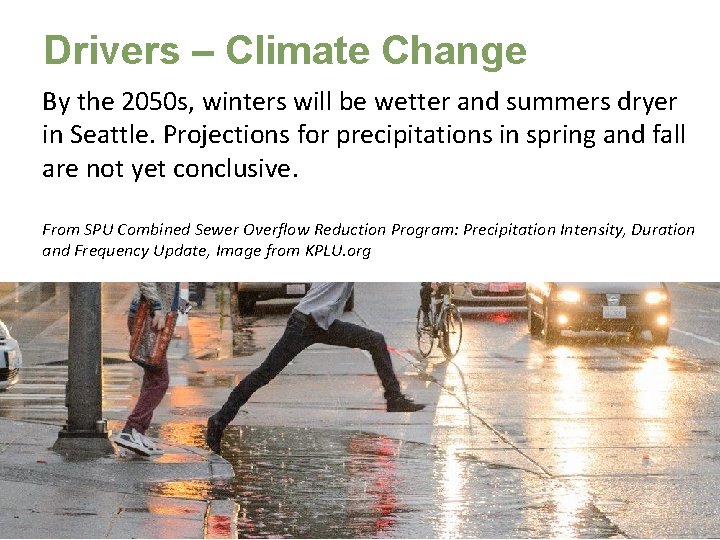
Drivers – Climate Change By the 2050 s, winters will be wetter and summers dryer in Seattle. Projections for precipitations in spring and fall are not yet conclusive. From SPU Combined Sewer Overflow Reduction Program: Precipitation Intensity, Duration and Frequency Update, Image from KPLU. org 13
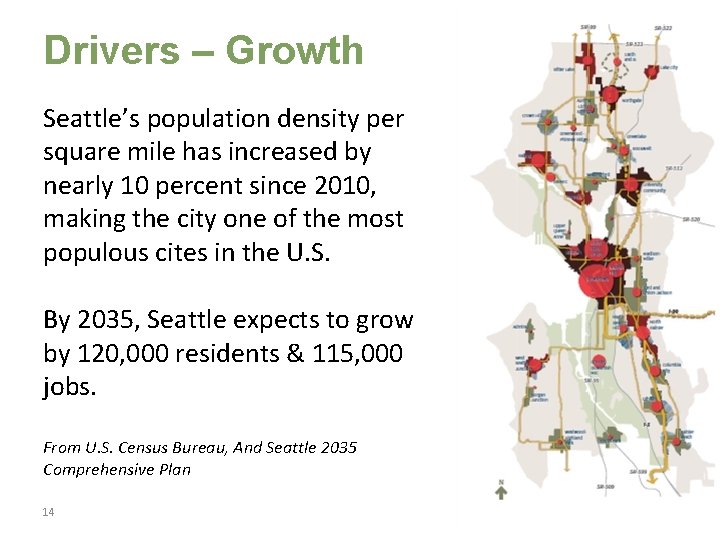
Drivers – Growth Seattle’s population density per square mile has increased by nearly 10 percent since 2010, making the city one of the most populous cites in the U. S. By 2035, Seattle expects to grow by 120, 000 residents & 115, 000 jobs. From U. S. Census Bureau, And Seattle 2035 Comprehensive Plan 14
Drivers – ‘One City’ SPU and SDOT ‘One City’ principles (April, 2016): “Each department will explicitly seek the opportunity to jointly work on plans, schedule, projects, and public engagement for the benefit of both departments and the community, where partnering would prove more economical and efficient” 15
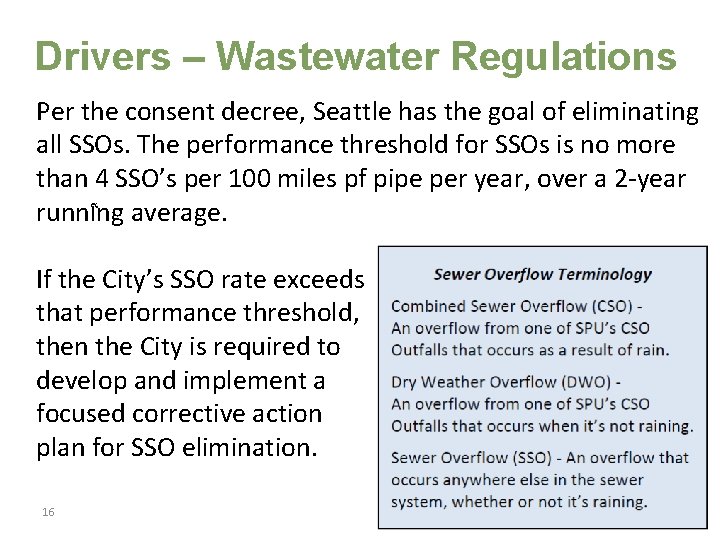
Drivers – Wastewater Regulations Per the consent decree, Seattle has the goal of eliminating all SSOs. The performance threshold for SSOs is no more than 4 SSO’s per 100 miles pf pipe per year, over a 2 -year “ running average. If the City’s SSO rate exceeds that performance threshold, then the City is required to develop and implement a focused corrective action plan for SSO elimination. 16
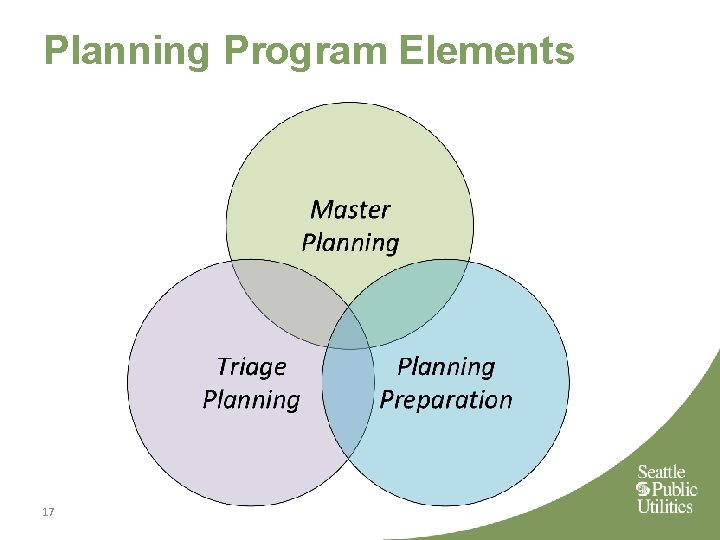
Planning Program Elements 17
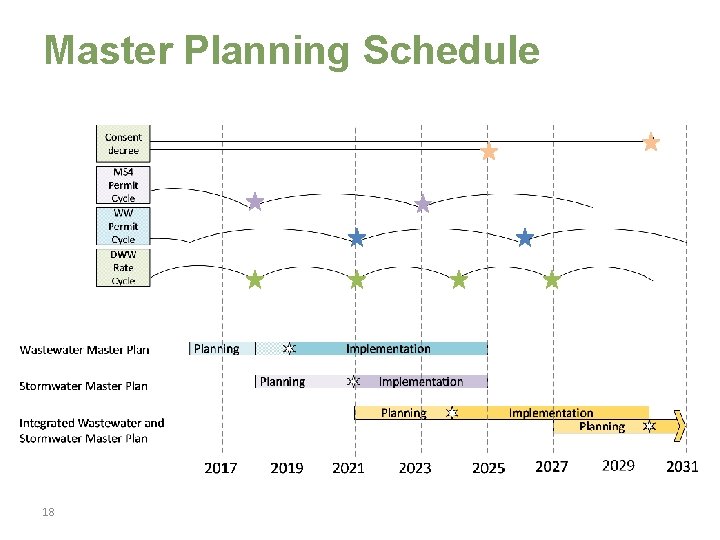
Master Planning Schedule 18
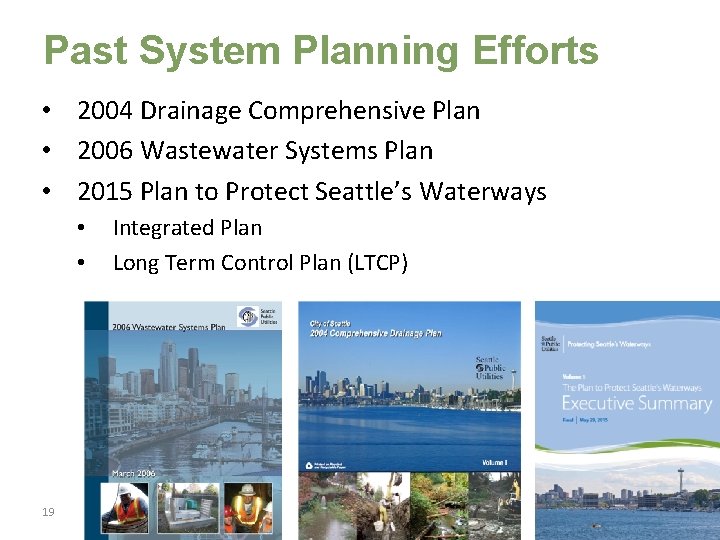
Past System Planning Efforts • 2004 Drainage Comprehensive Plan • 2006 Wastewater Systems Plan • 2015 Plan to Protect Seattle’s Waterways • • 19 Integrated Plan Long Term Control Plan (LTCP)
Wastewater Master Plan Objectives Identify & understand WW system problems …so that we can. . . Set a transparent and consistent method to prioritize those WW system problems …so that we can. . . Find the most effective set of solutions for those problems. 20
Project Objectives Identify & understand WW system problems by: • • • 21 Setting levels of service (LOS) that are consistent with SPU’s economic realities, customer values, and SPU risk tolerance. Incorporating appropriate projections for growth and development, climate change, and regulatory mandates. Furthering our knowledge of the contribution of Inflow and Infiltration (I&I) to capacity problems. Furthering our knowledge of the condition of the WW system. Improving the wastewater system models to better understand capacity problems.
Project Objectives Set a transparent and consistent method to prioritize those WW system problems by: • • • 22 Applying appropriate criteria to prioritize SPU investments in system improvements and partnership projects. Incorporating equity, social and environmental justice into those criteria. Linking those criteria back to the SPU Strategic Business Plan priorities.
Project Objectives Find the most effective set of solutions for those problems that: • • 23 Balances near-term and long-term actions. Balances recommendations for projects, policies and programs. Includes a sequenced six-year CIP list. Reduces the impact of I&I on the wastewater system. Optimizes O&M and asset reinvestment in capacity constrained areas. Analyzes financial sustainability and affordability. Analyzes potential new sources of revenue. Leverages major public and private projects to incrementally improve SPU’s WW system over time.
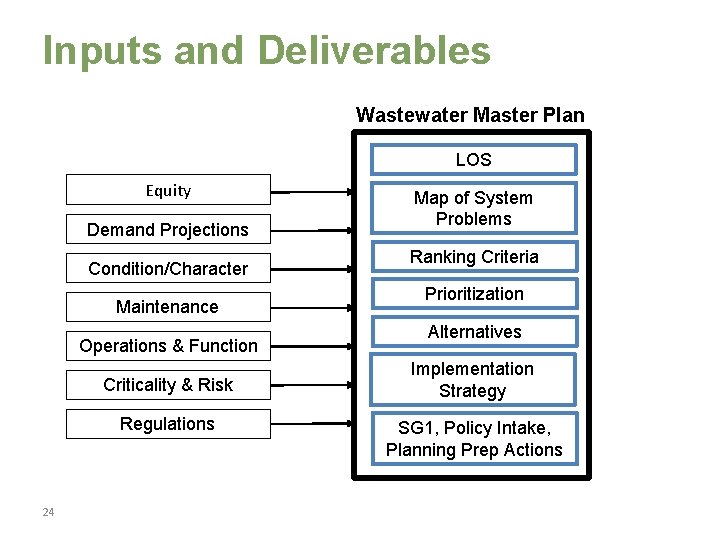
Inputs and Deliverables Wastewater Master Plan LOS Equity Demand Projections Condition/Character Maintenance Operations & Function Criticality & Risk Regulations 24 Map of System Problems Ranking Criteria Prioritization Alternatives Implementation Strategy SG 1, Policy Intake, Planning Prep Actions
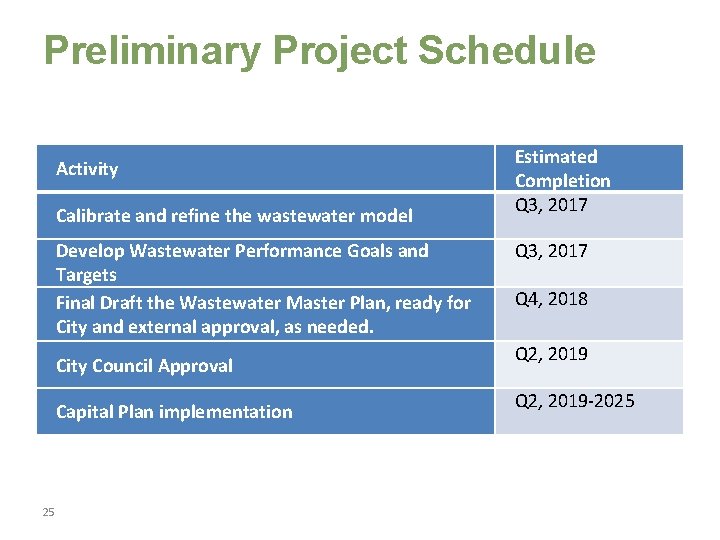
Preliminary Project Schedule Activity Calibrate and refine the wastewater model Develop Wastewater Performance Goals and Targets Final Draft the Wastewater Master Plan, ready for City and external approval, as needed. City Council Approval Capital Plan implementation 25 Estimated Completion Q 3, 2017 Q 4, 2018 Q 2, 2019 -2025
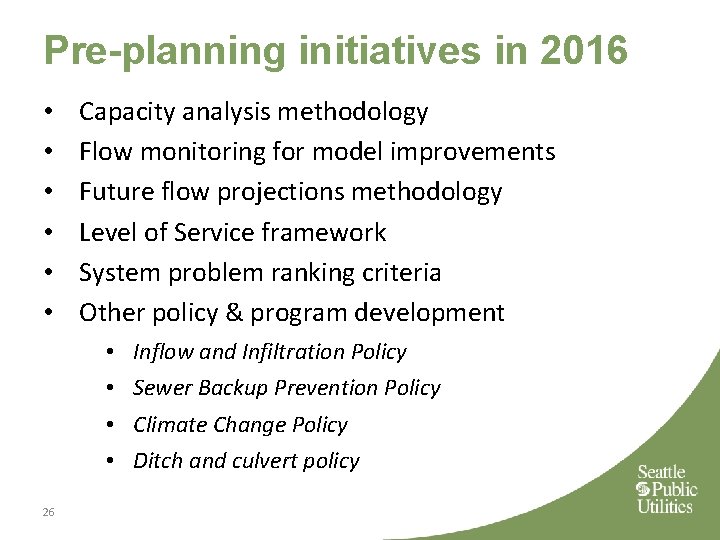
Pre-planning initiatives in 2016 • • • Capacity analysis methodology Flow monitoring for model improvements Future flow projections methodology Level of Service framework System problem ranking criteria Other policy & program development • • 26 Inflow and Infiltration Policy Sewer Backup Prevention Policy Climate Change Policy Ditch and culvert policy
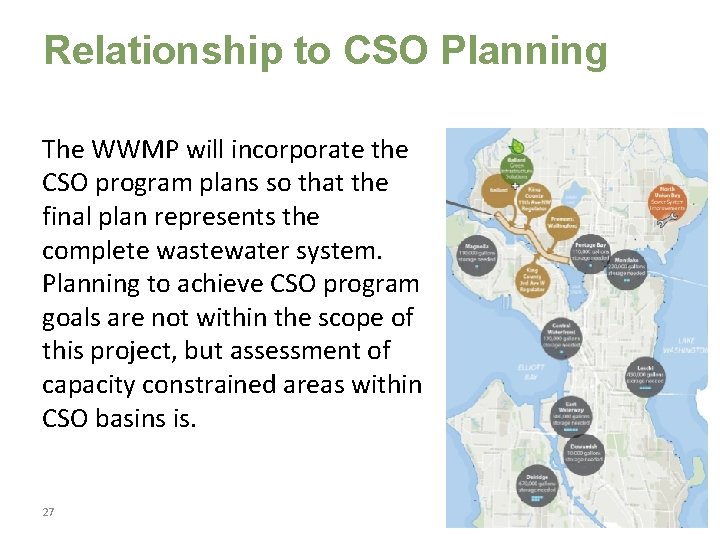
Relationship to CSO Planning The WWMP will incorporate the CSO program plans so that the final plan represents the complete wastewater system. Planning to achieve CSO program goals are not within the scope of this project, but assessment of capacity constrained areas within CSO basins is. 27
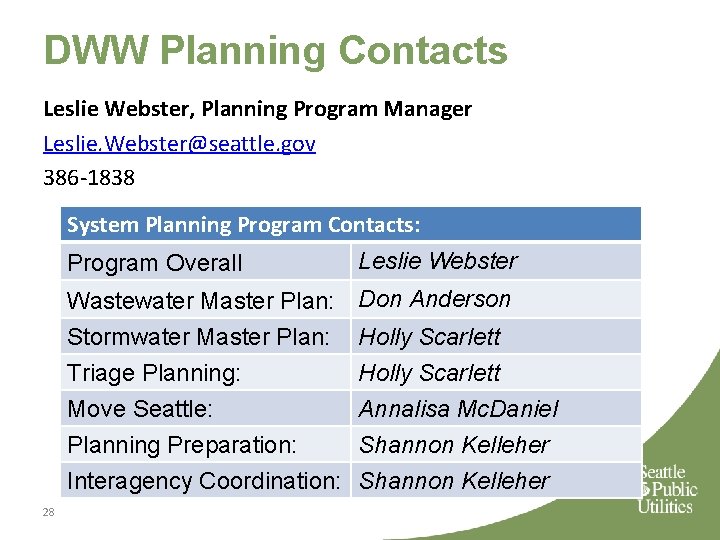
DWW Planning Contacts Leslie Webster, Planning Program Manager Leslie. Webster@seattle. gov 386 -1838 System Planning Program Contacts: Program Overall Leslie Webster Wastewater Master Plan: Don Anderson Stormwater Master Plan: Triage Planning: Move Seattle: Planning Preparation: Holly Scarlett Annalisa Mc. Daniel Shannon Kelleher Interagency Coordination: Shannon Kelleher 28
- Slides: 28