
Drag Essential Questions What is Drag How does



- Slides: 43
Drag
Essential Questions • What is Drag? • How does Drag impact flight?
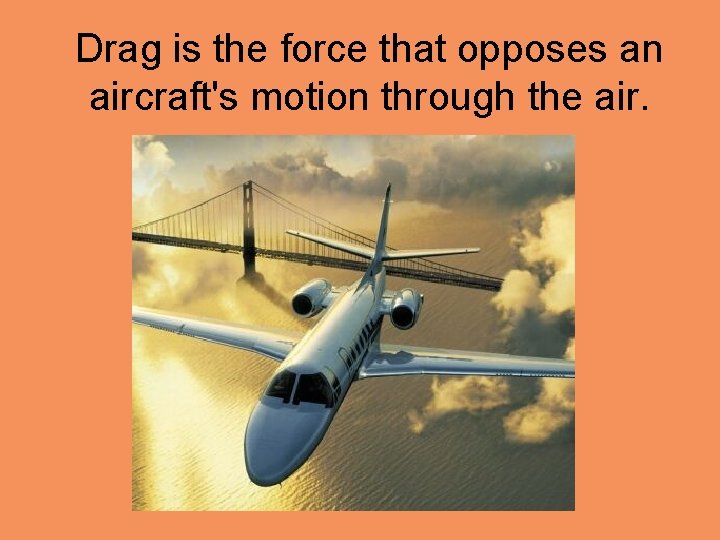
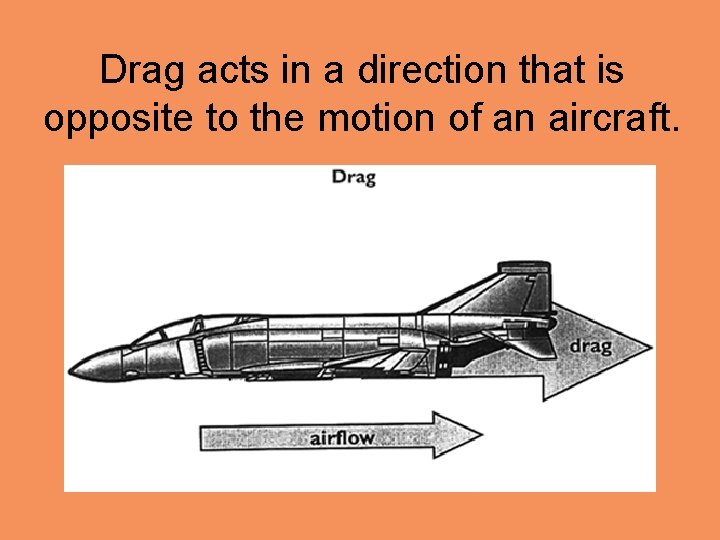
Drag is the force that opposes an aircraft's motion through the air.
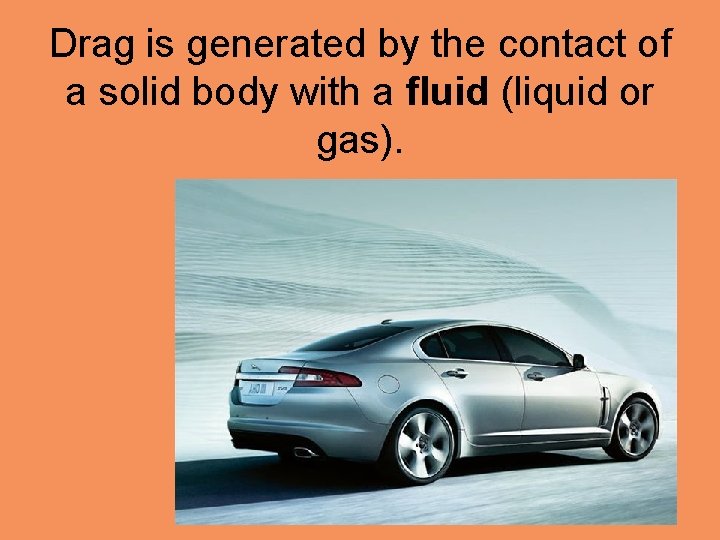
Drag is generated by the contact of a solid body with a fluid (liquid or gas).
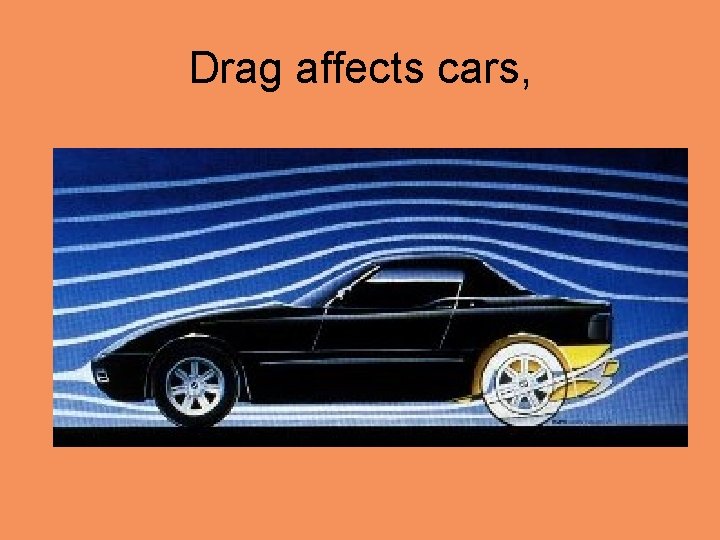
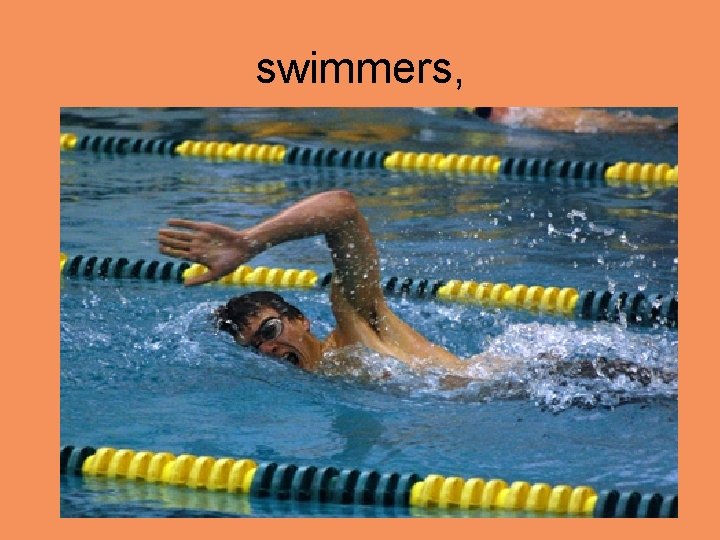
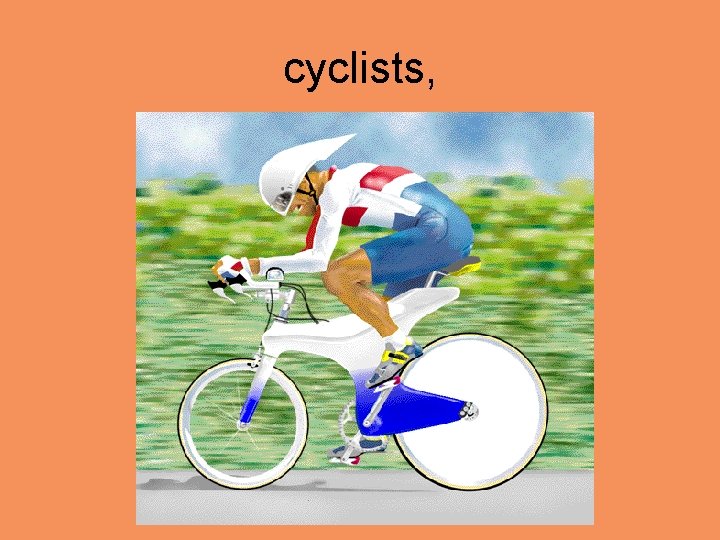
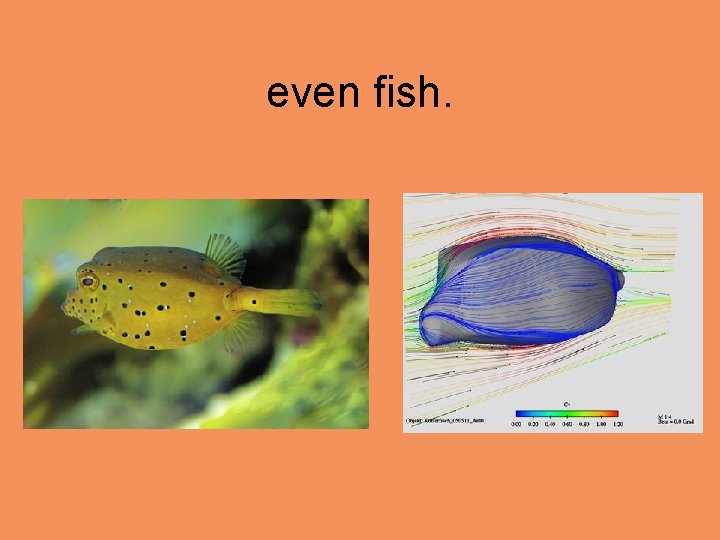
Drag affects cars,
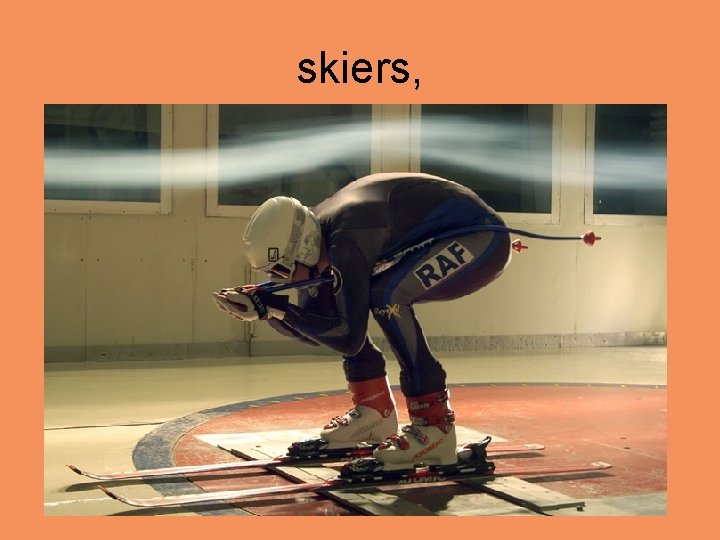
skiers,
swimmers,
cyclists,
even fish.
Drag acts in a direction that is opposite to the motion of an aircraft.
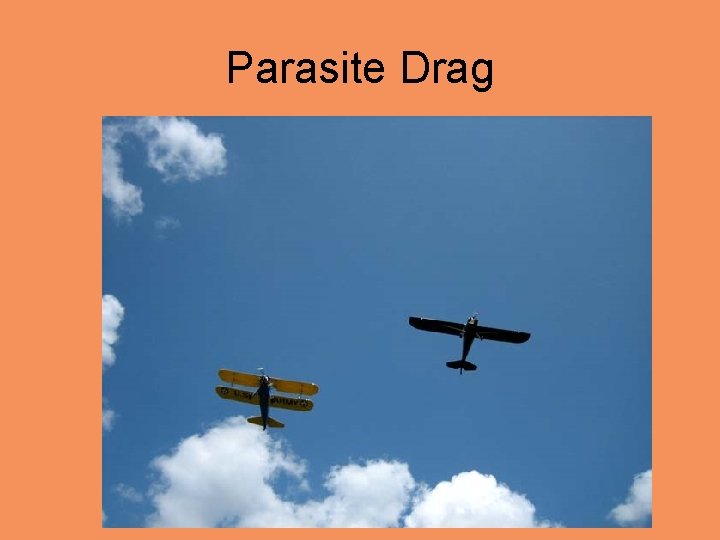
There are two categories of drag which affect aircraft: 1. Induced Drag 2. Parasite Drag
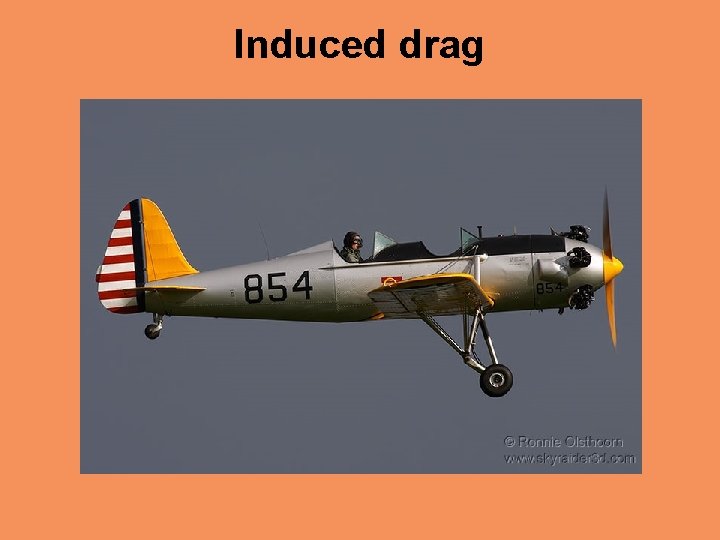
Induced drag
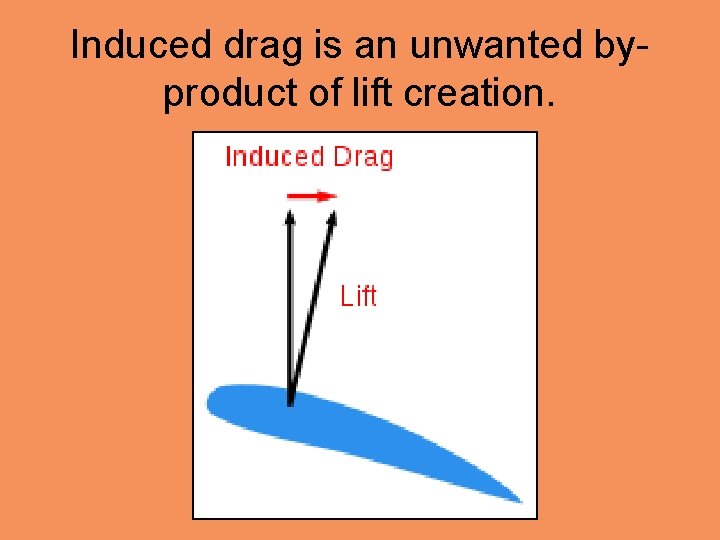
Induced drag is an unwanted byproduct of lift creation.
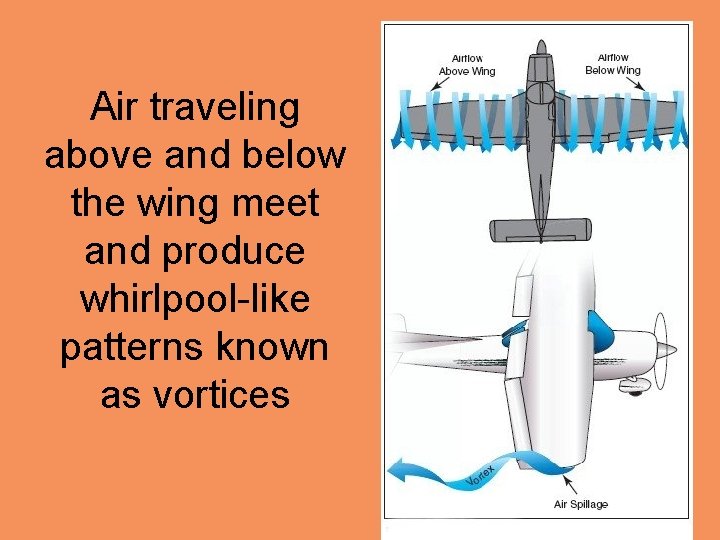
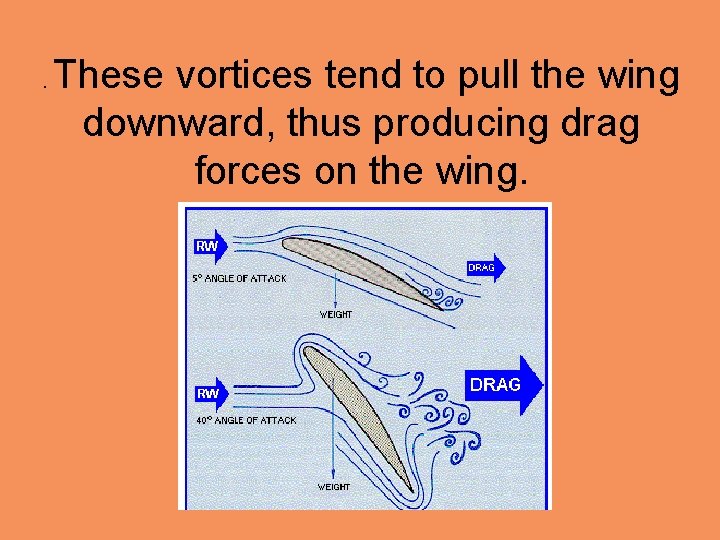
Air traveling above and below the wing meet and produce whirlpool-like patterns known as vortices
. These vortices tend to pull the wing downward, thus producing drag forces on the wing.
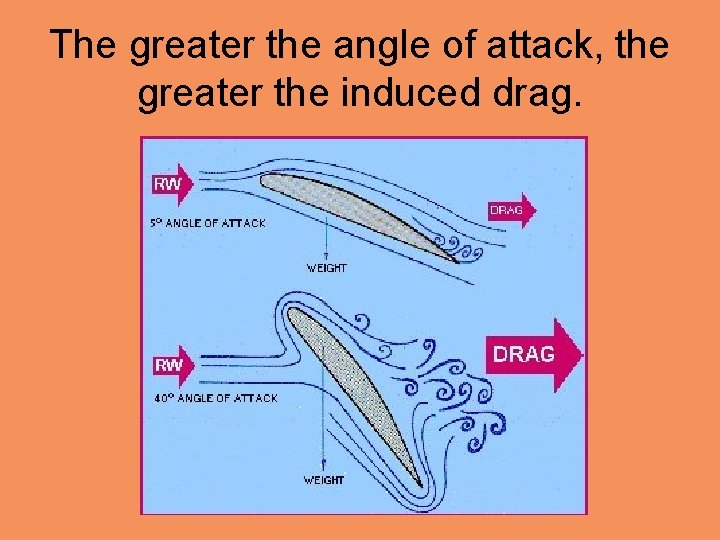
The greater the angle of attack, the greater the induced drag.
Parasite Drag
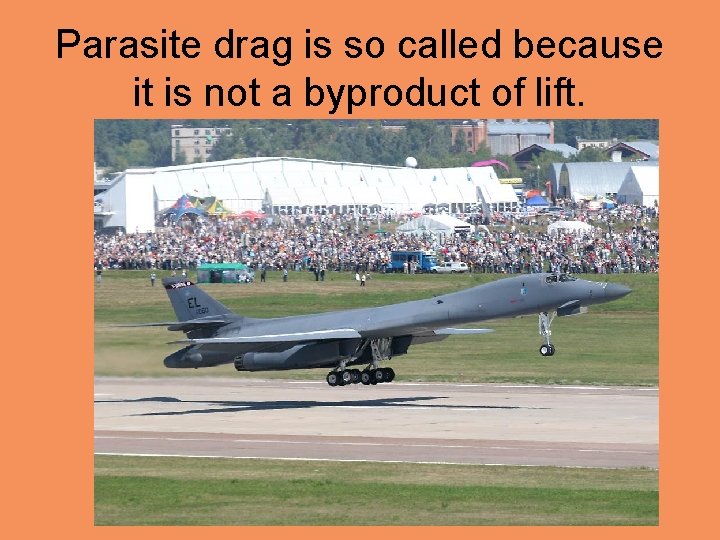
Parasite drag is so called because it is not a byproduct of lift.
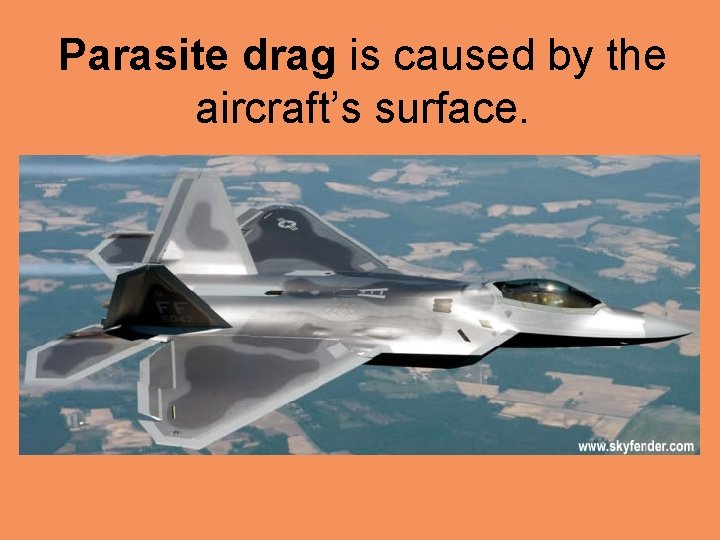
Parasite drag is caused by the aircraft’s surface.
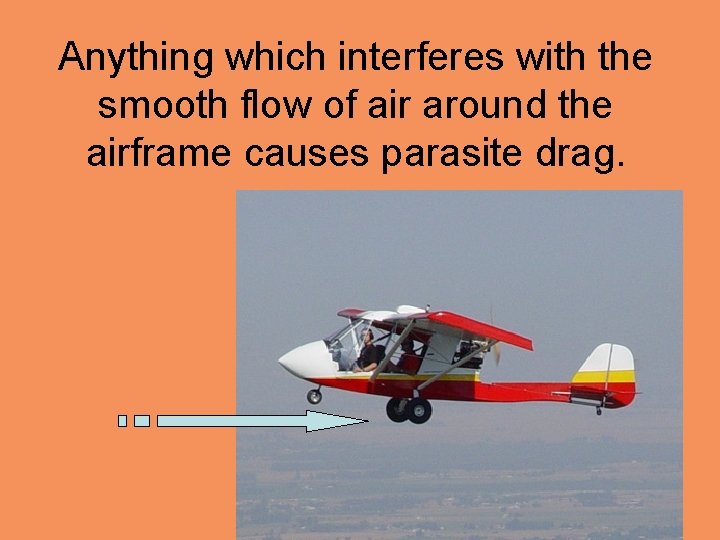
Anything which interferes with the smooth flow of air around the airframe causes parasite drag.
There are 3 types of parasite drag: • Skin Friction Drag • Form Drag • Interference Drag
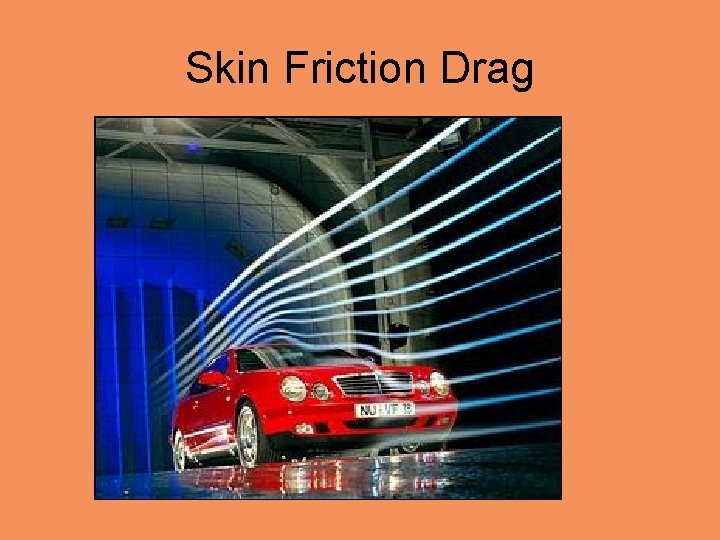
Skin Friction Drag
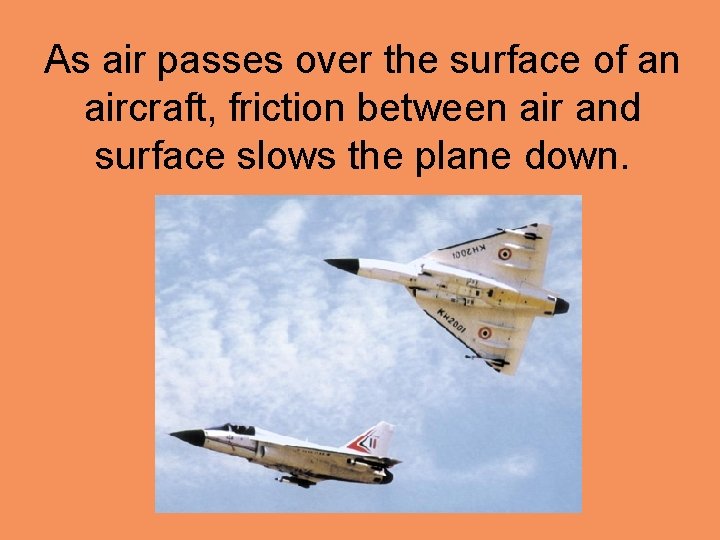
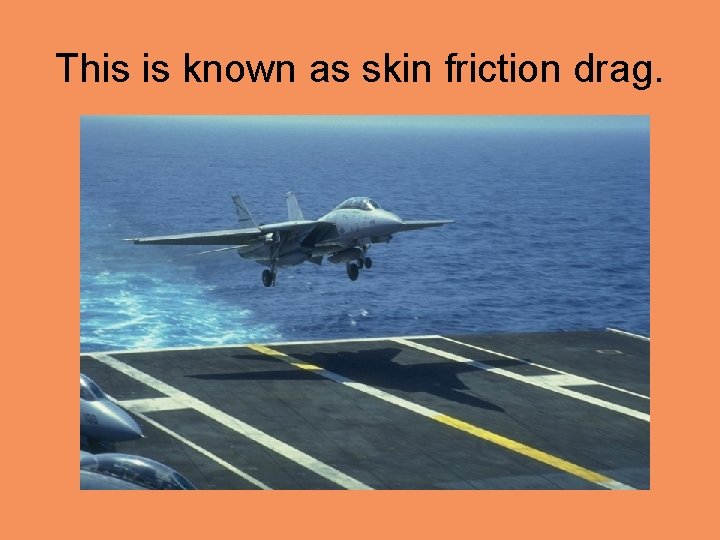
As air passes over the surface of an aircraft, friction between air and surface slows the plane down.
This is known as skin friction drag.
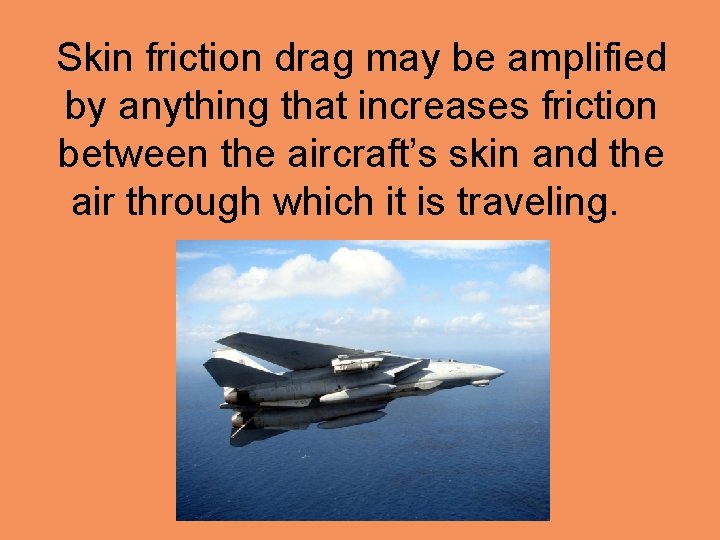
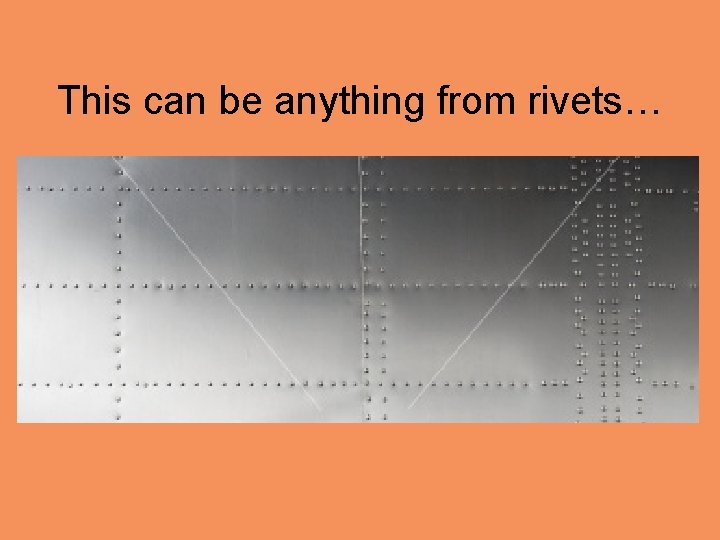
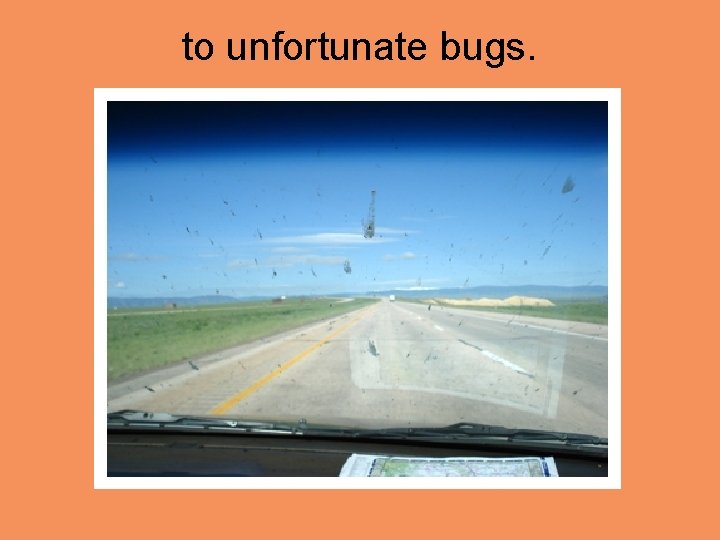
Skin friction drag may be amplified by anything that increases friction between the aircraft’s skin and the air through which it is traveling.
This can be anything from rivets…
to unfortunate bugs.
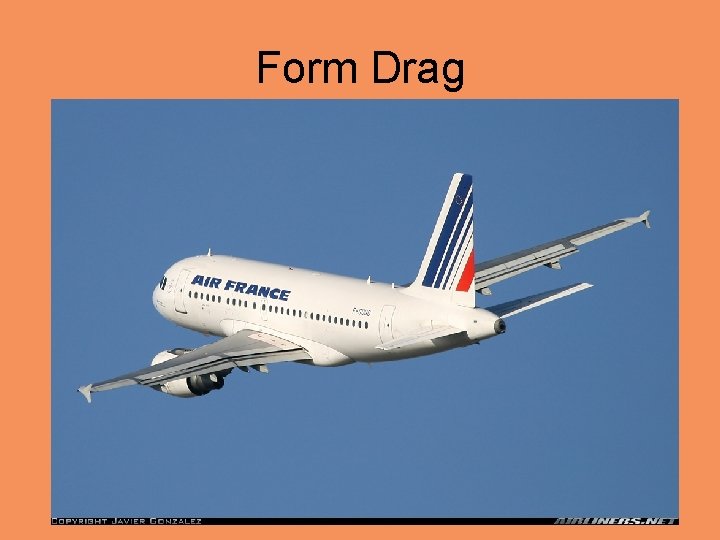
Form Drag
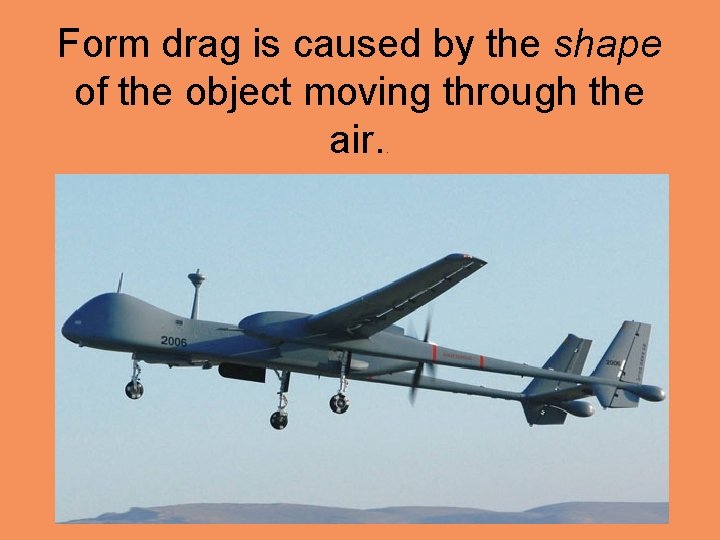
Form drag is caused by the shape of the object moving through the air. .
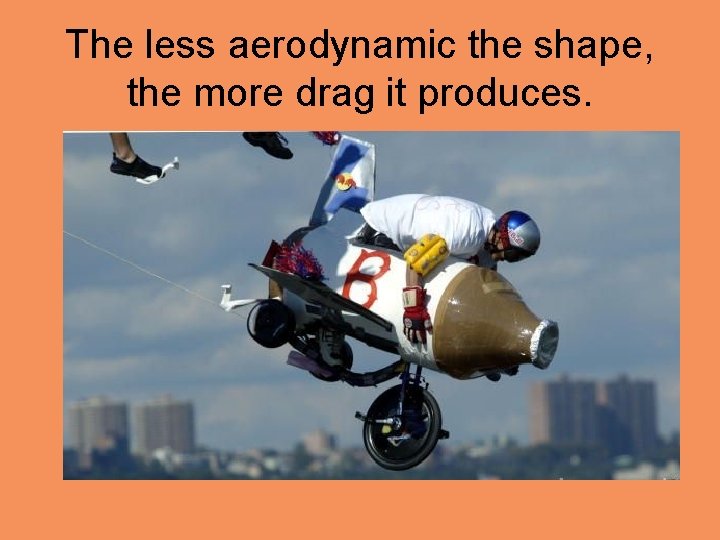
The less aerodynamic the shape, the more drag it produces.
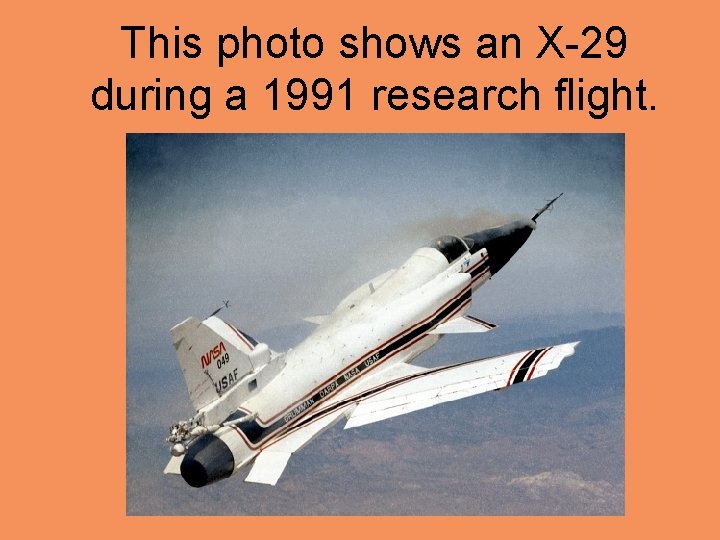
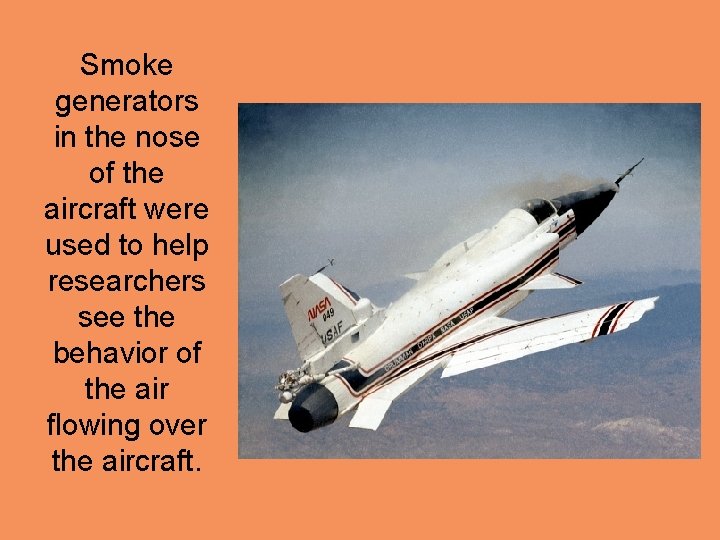
This photo shows an X-29 during a 1991 research flight.
Smoke generators in the nose of the aircraft were used to help researchers see the behavior of the air flowing over the aircraft.
Interference Drag
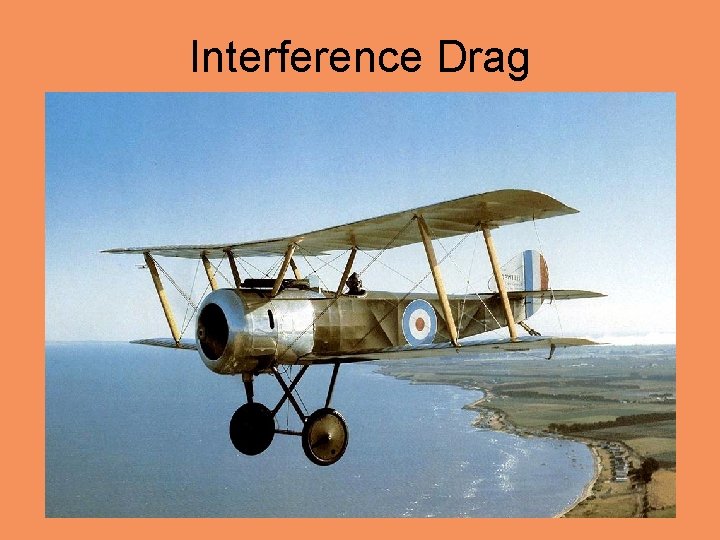
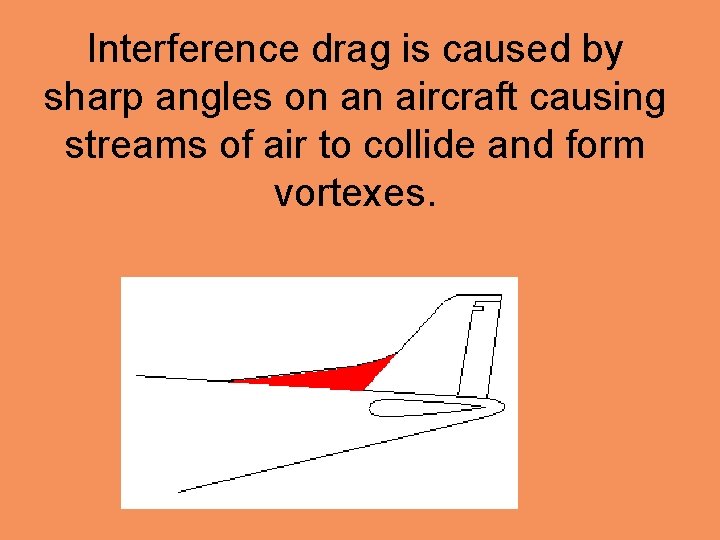
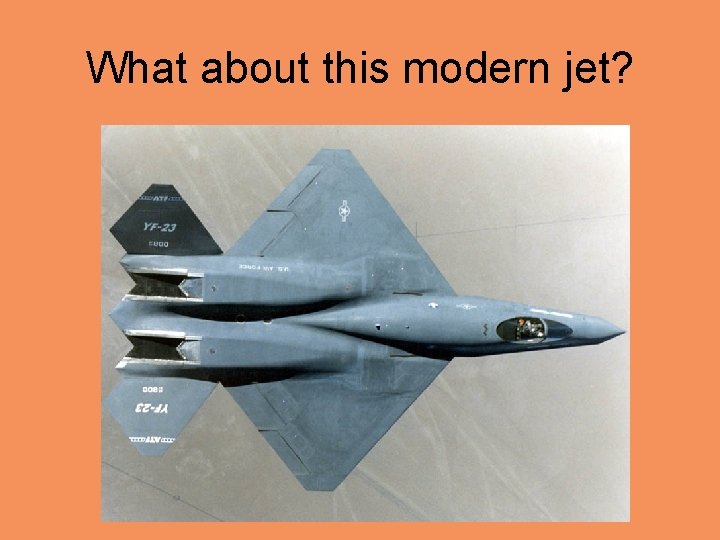
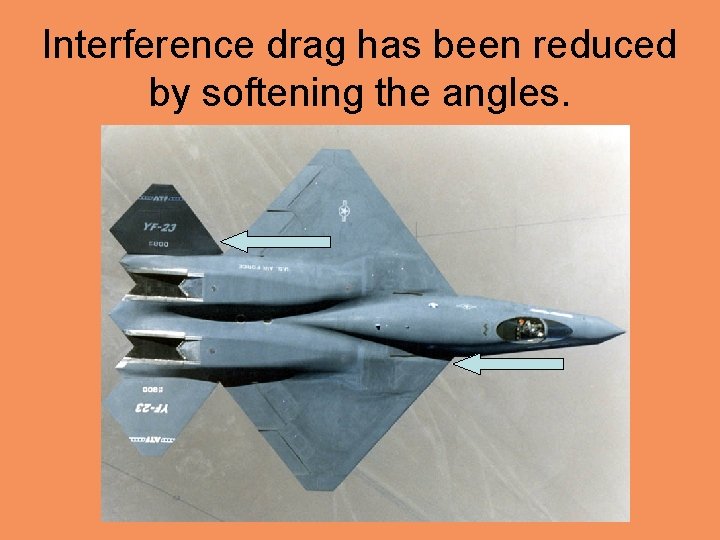
Interference drag is caused by sharp angles on an aircraft causing streams of air to collide and form vortexes.
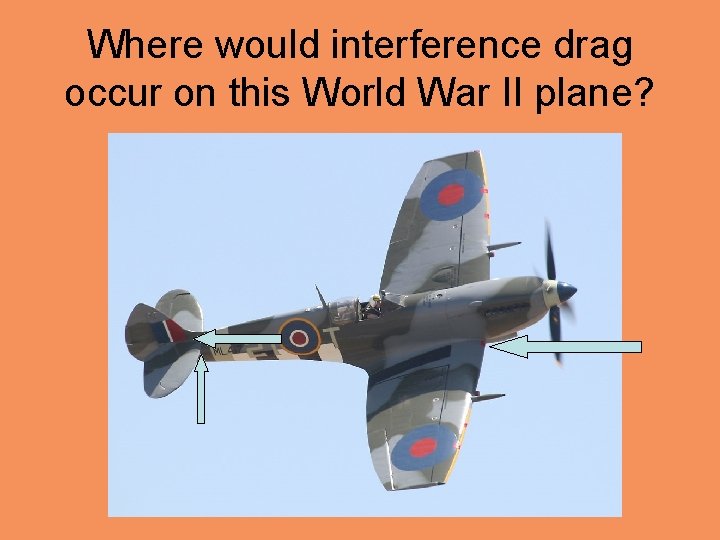
Where would interference drag occur on this World War II plane?
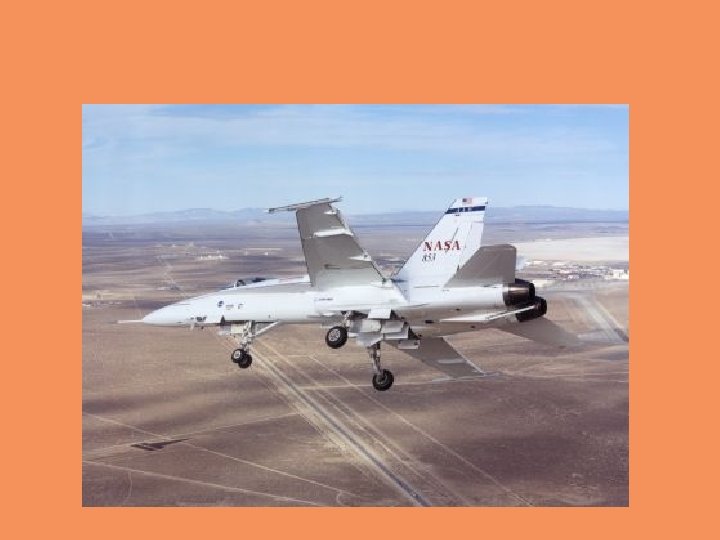
What about this modern jet?
Interference drag has been reduced by softening the angles.
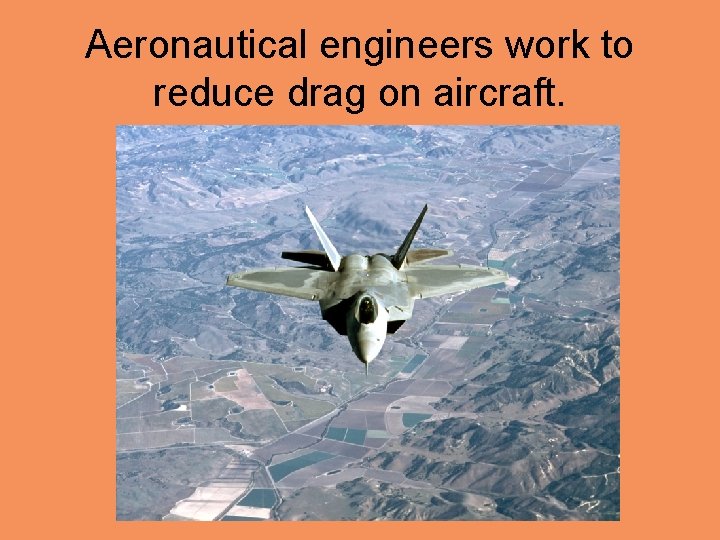
Aeronautical engineers work to reduce drag on aircraft.
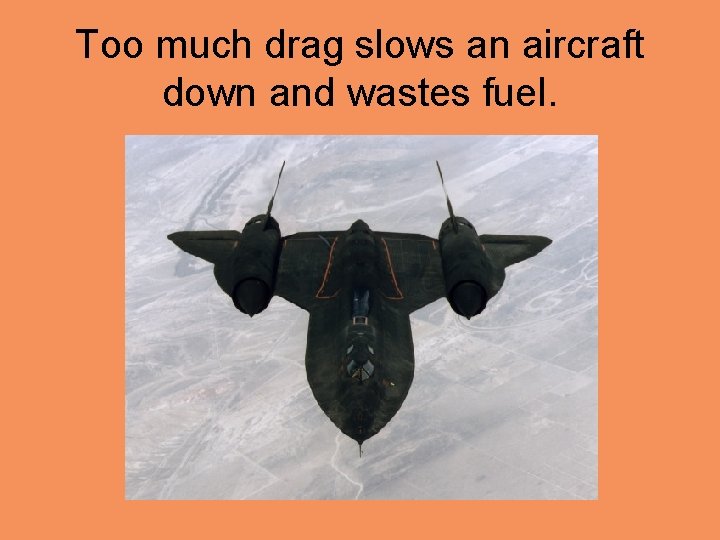
Too much drag slows an aircraft down and wastes fuel.
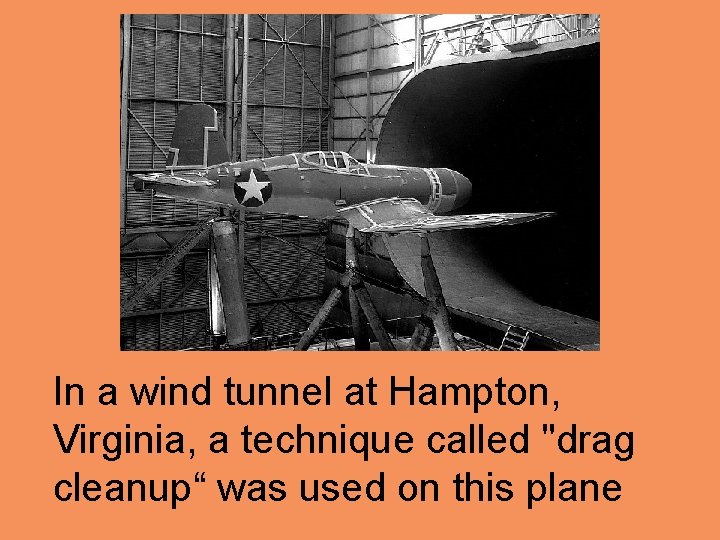
In a wind tunnel at Hampton, Virginia, a technique called "drag cleanup“ was used on this plane
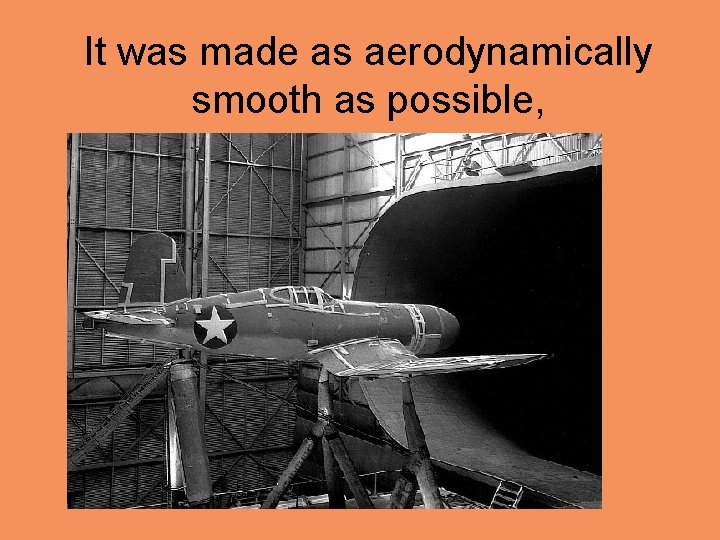
It was made as aerodynamically smooth as possible,
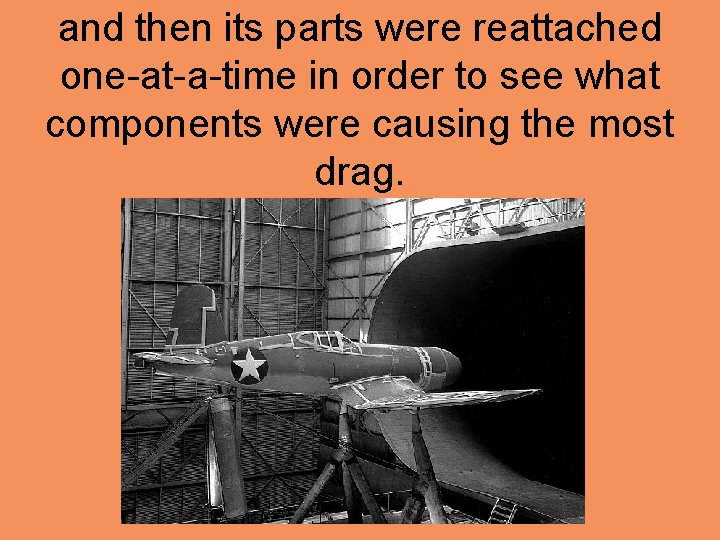
and then its parts were reattached one-at-a-time in order to see what components were causing the most drag.