
DRAFT FAR NORTH QUEENSLAND REGIONAL WASTE INFRASTRUCTURE PLAN
- Slides: 13
DRAFT FAR NORTH QUEENSLAND REGIONAL WASTE INFRASTRUCTURE PLAN Julian Chan Department of Environment and Science
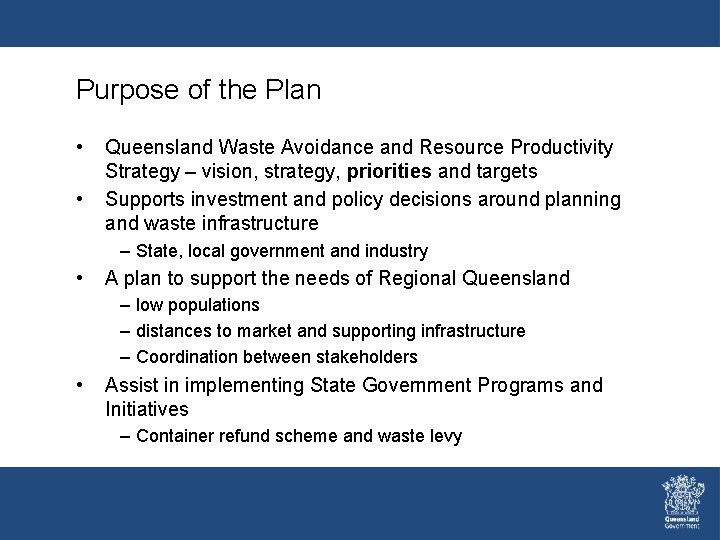
Purpose of the Plan • • Queensland Waste Avoidance and Resource Productivity Strategy – vision, strategy, priorities and targets Supports investment and policy decisions around planning and waste infrastructure – State, local government and industry • A plan to support the needs of Regional Queensland – low populations – distances to market and supporting infrastructure – Coordination between stakeholders • Assist in implementing State Government Programs and Initiatives – Container refund scheme and waste levy
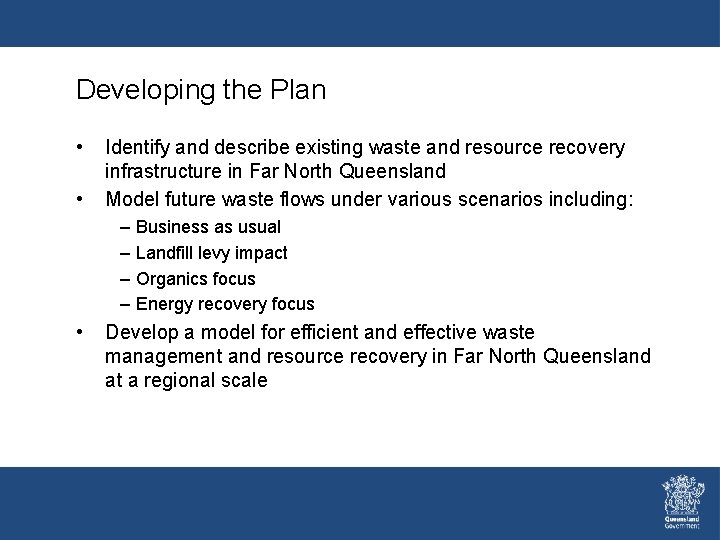
Developing the Plan • • Identify and describe existing waste and resource recovery infrastructure in Far North Queensland Model future waste flows under various scenarios including: – Business as usual – Landfill levy impact – Organics focus – Energy recovery focus • Develop a model for efficient and effective waste management and resource recovery in Far North Queensland at a regional scale
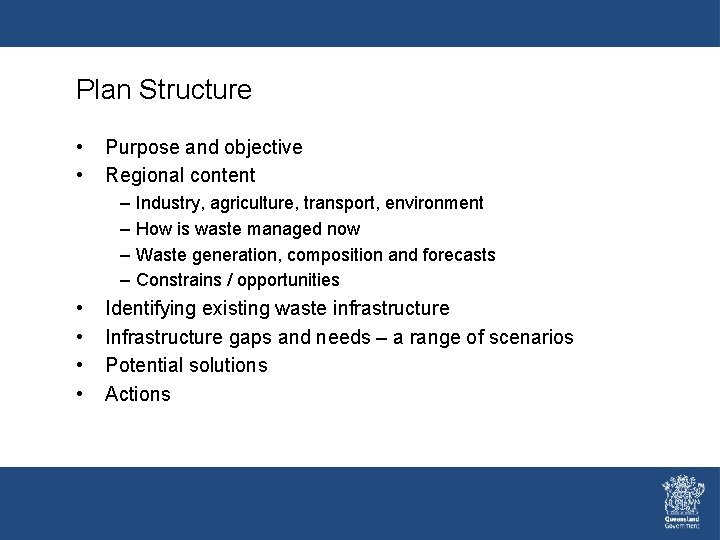
Plan Structure • • Purpose and objective Regional content – Industry, agriculture, transport, environment – How is waste managed now – Waste generation, composition and forecasts – Constrains / opportunities • • Identifying existing waste infrastructure Infrastructure gaps and needs – a range of scenarios Potential solutions Actions
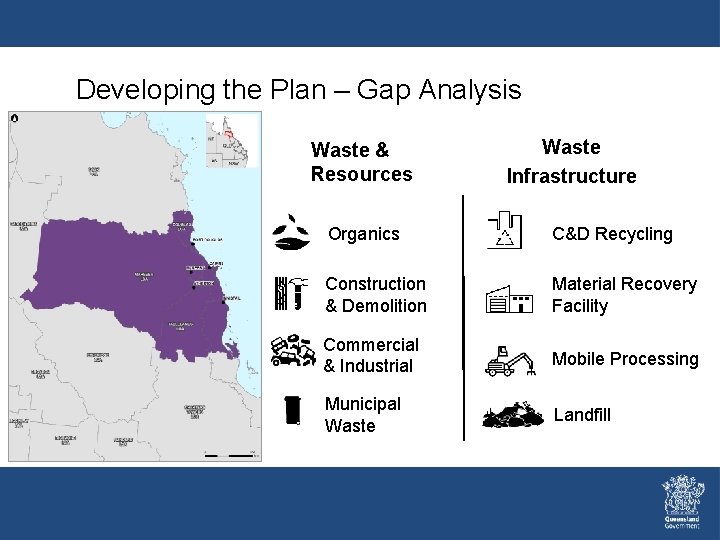
Developing the Plan – Gap Analysis Waste & Resources Waste Infrastructure Organics C&D Recycling Construction & Demolition Material Recovery Facility Commercial & Industrial Mobile Processing Municipal Waste Landfill
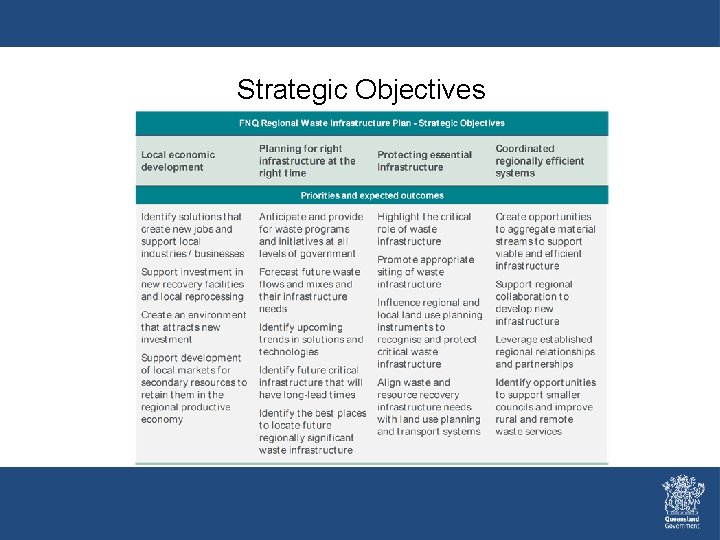
Strategic Objectives
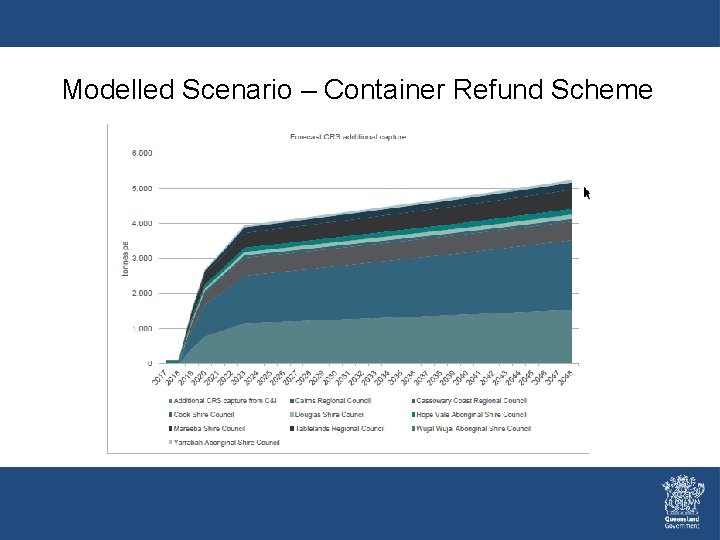
Modelled Scenario – Container Refund Scheme
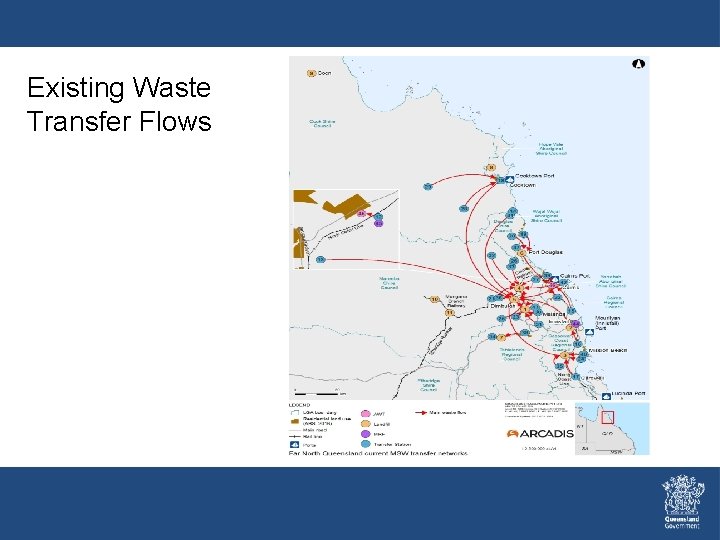
Existing Waste Transfer Flows
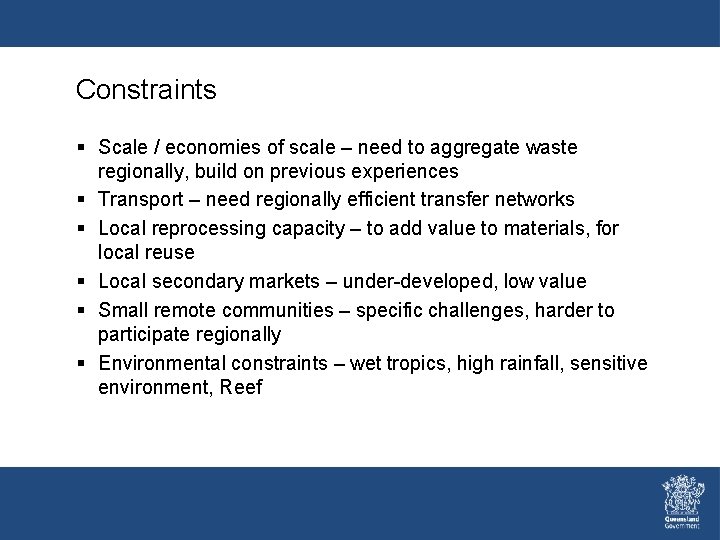
Constraints § Scale / economies of scale – need to aggregate waste regionally, build on previous experiences § Transport – need regionally efficient transfer networks § Local reprocessing capacity – to add value to materials, for local reuse § Local secondary markets – under-developed, low value § Small remote communities – specific challenges, harder to participate regionally § Environmental constraints – wet tropics, high rainfall, sensitive environment, Reef
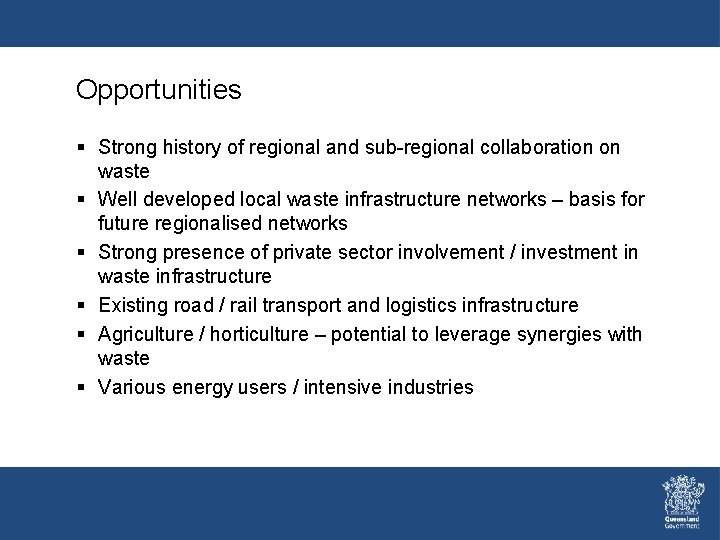
Opportunities § Strong history of regional and sub-regional collaboration on waste § Well developed local waste infrastructure networks – basis for future regionalised networks § Strong presence of private sector involvement / investment in waste infrastructure § Existing road / rail transport and logistics infrastructure § Agriculture / horticulture – potential to leverage synergies with waste § Various energy users / intensive industries
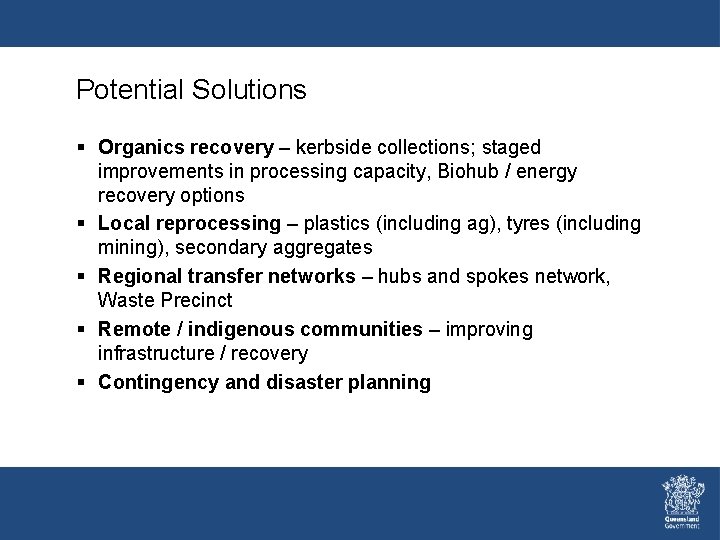
Potential Solutions § Organics recovery – kerbside collections; staged improvements in processing capacity, Biohub / energy recovery options § Local reprocessing – plastics (including ag), tyres (including mining), secondary aggregates § Regional transfer networks – hubs and spokes network, Waste Precinct § Remote / indigenous communities – improving infrastructure / recovery § Contingency and disaster planning
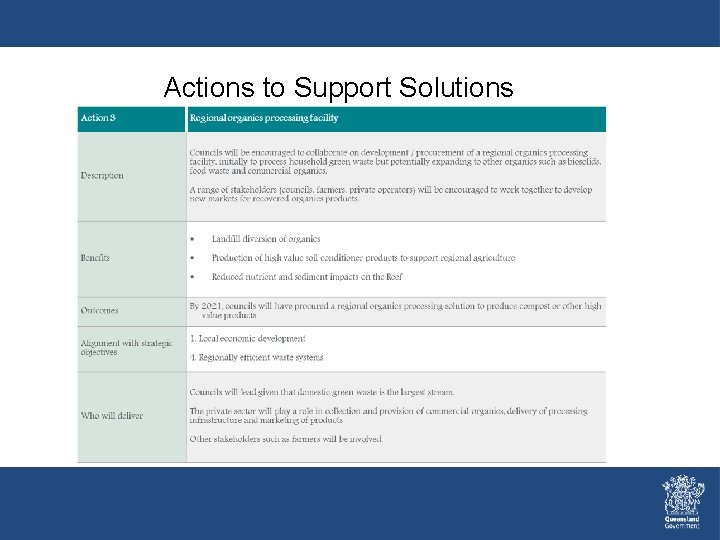
Actions to Support Solutions
Where to from here? Early 2019 Review, finalise and release FNQ Plan Contact Julian Chan Phone – 3330 5782 Email – Julian. chan@des. qld. gov. au