
Dr Wayne Atkinson Yorta Elder Senior Fellow Coordinator
- Slides: 18
Dr Wayne Atkinson, Yorta Elder Senior Fellow, Coordinator Oncountry Learning Subject-POLS 30028 School of Social & Political Science University of Melbourne http: //waynera. wordpress. com/ OUT OF THE LECTURE THEATRE & INTO THE BUSH: ONCOUNTRY LEARNING
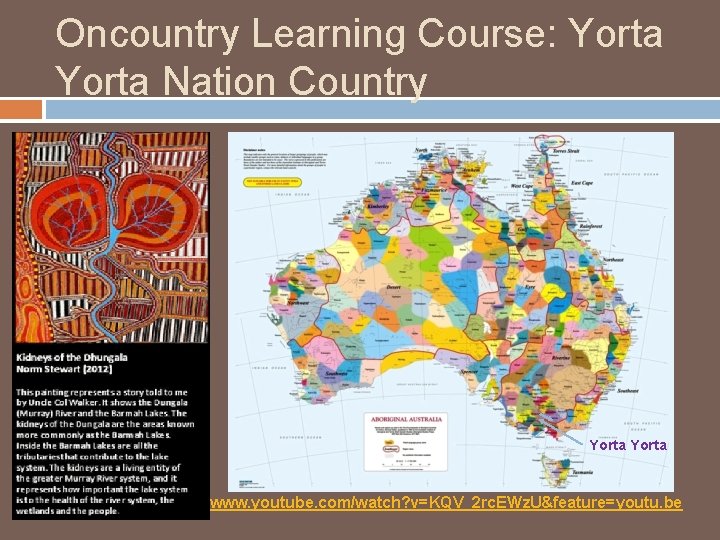
Oncountry Learning Course: Yorta Nation Country Yorta https: //www. youtube. com/watch? v=KQV_2 rc. EWz. U&feature=youtu. be
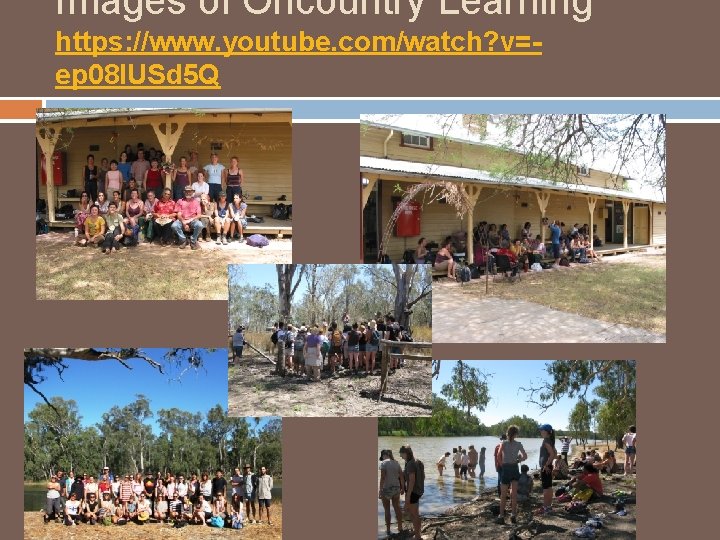
Images of Oncountry Learning https: //www. youtube. com/watch? v=ep 08 IUSd 5 Q
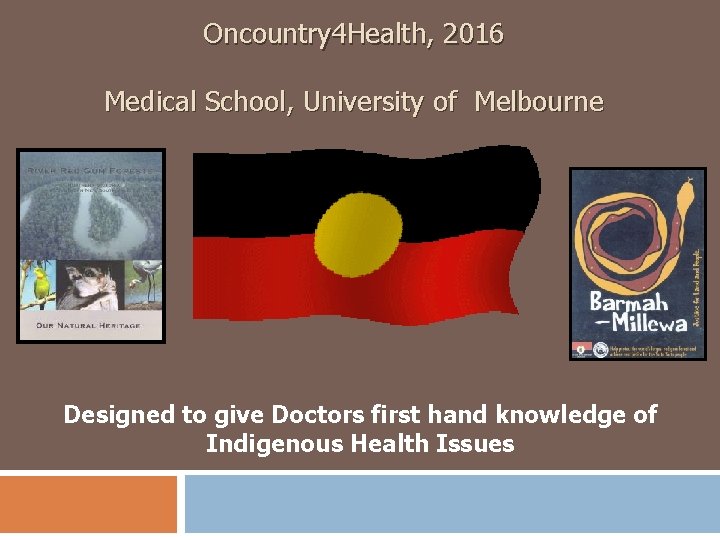
Oncountry 4 Health, 2016 Medical School, University of Melbourne Designed to give Doctors first hand knowledge of Indigenous Health Issues
Subject Structure: The Indigenous Studies Oncountry Learning course is a community based education program taught by Yorta people in their ancestral lands on the Murray River (Dhungala) in February each year. The subject is fully accredited towards a BA Degree within the School of Social and Political Science : Arts Faculty of the University of Melbourne. Oncountry 4 Health program is taught as a field based program for Doctors completing their medical training. Now seeking to gain accreditation for Medical Students
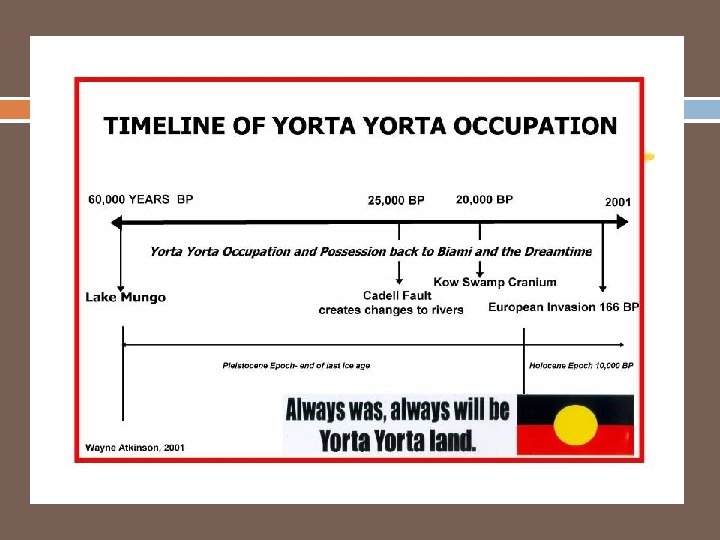
Course Outline The Oncountry course gives students a deeper understanding of Yorta connections with the ancestral lands and their ongoing struggle to achieve land justice and the protection of their cultural heritage. Once a timeline of Yorta occupation is established, students are then introduced to the diversity of programs and service delivery organisations that operate in the region. Students gain a deeper insight into the roles and functions of community based organisations and the diversity of programs that they deliver and the difficulties that organisations face in maintaining these programs in regional Australia.
Focus of Course Course focuses on range of relevant Indigenous political and historic themes covering: Indigenous Occupation past and present. colonisation & reserve history government policies & administration land, & cultural heritage protection Yorta struggle for land justice & self determination.
Course Content & Teaching Style q q q The course is unique in its teaching style-pedagogy. It draws on the rich repository of oral knowledge and storylines of Yorta History and Culture. This is supplemented by the disciplines of Archaeology, History, Politics, Legal studies and Natural Resource Management. Subjects taught are Indigenous rights based issues, focusing on land, water, cultural heritage, natural resource management, and the environmental issues.
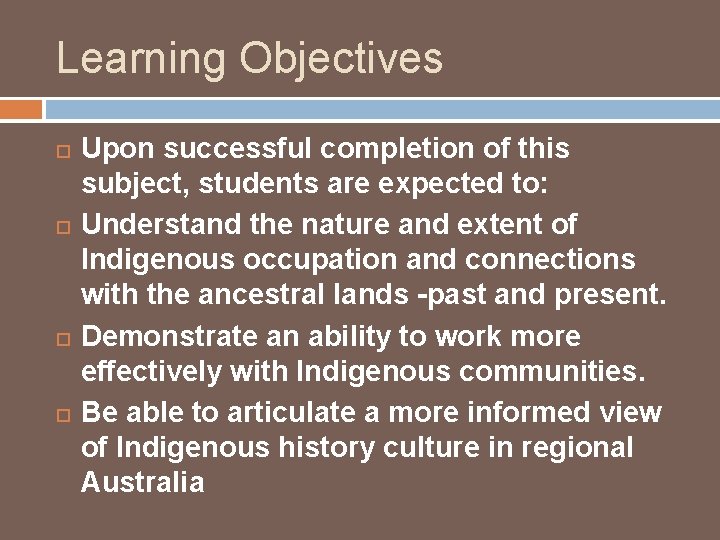
Learning Objectives Upon successful completion of this subject, students are expected to: Understand the nature and extent of Indigenous occupation and connections with the ancestral lands -past and present. Demonstrate an ability to work more effectively with Indigenous communities. Be able to articulate a more informed view of Indigenous history culture in regional Australia
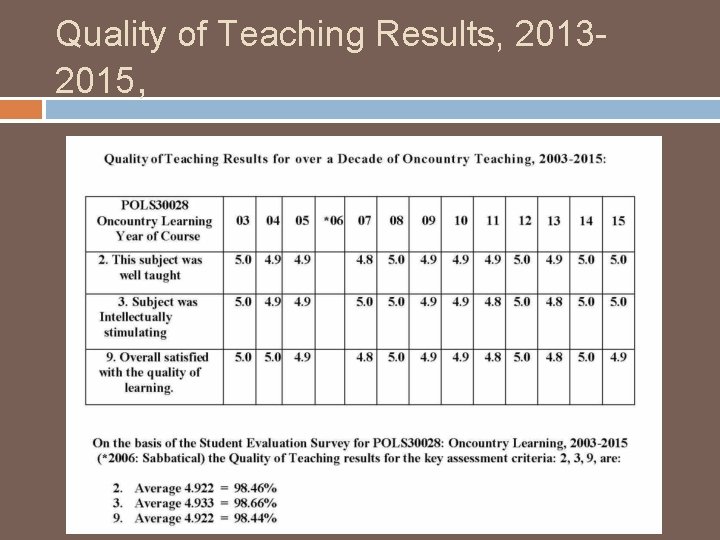
Quality of Teaching Results, 20132015,
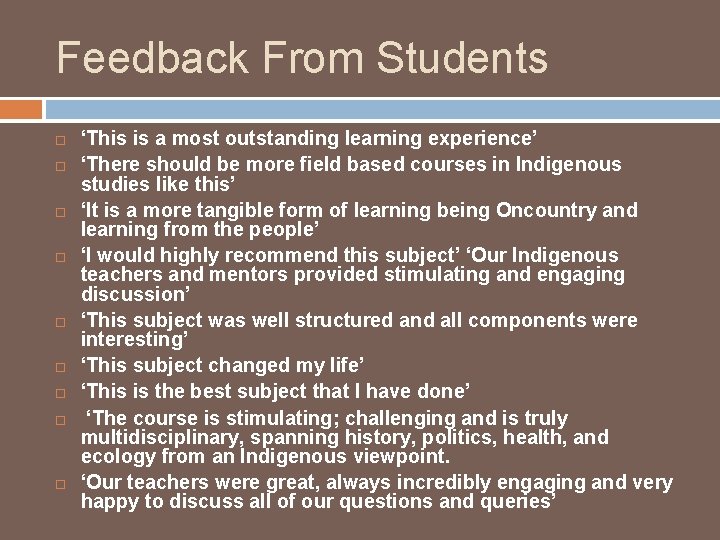
Feedback From Students ‘This is a most outstanding learning experience’ ‘There should be more field based courses in Indigenous studies like this’ ‘It is a more tangible form of learning being Oncountry and learning from the people’ ‘I would highly recommend this subject’ ‘Our Indigenous teachers and mentors provided stimulating and engaging discussion’ ‘This subject was well structured and all components were interesting’ ‘This subject changed my life’ ‘This is the best subject that I have done’ ‘The course is stimulating; challenging and is truly multidisciplinary, spanning history, politics, health, and ecology from an Indigenous viewpoint. ‘Our teachers were great, always incredibly engaging and very happy to discuss all of our questions and queries’
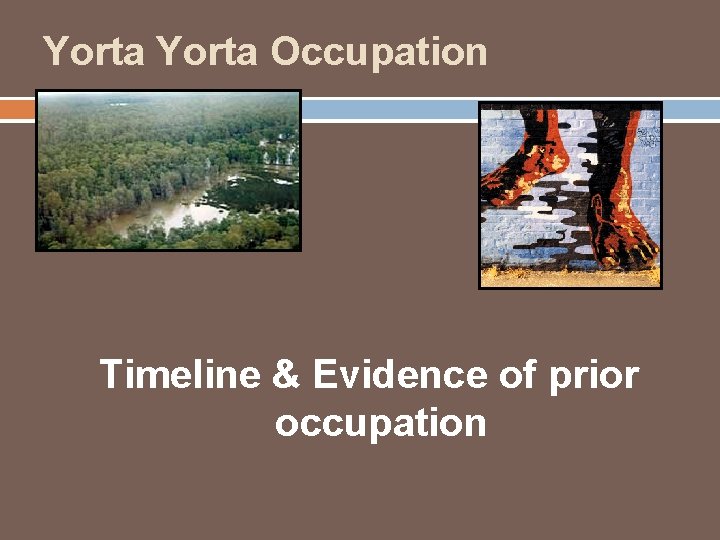
Yorta Occupation Timeline & Evidence of prior occupation
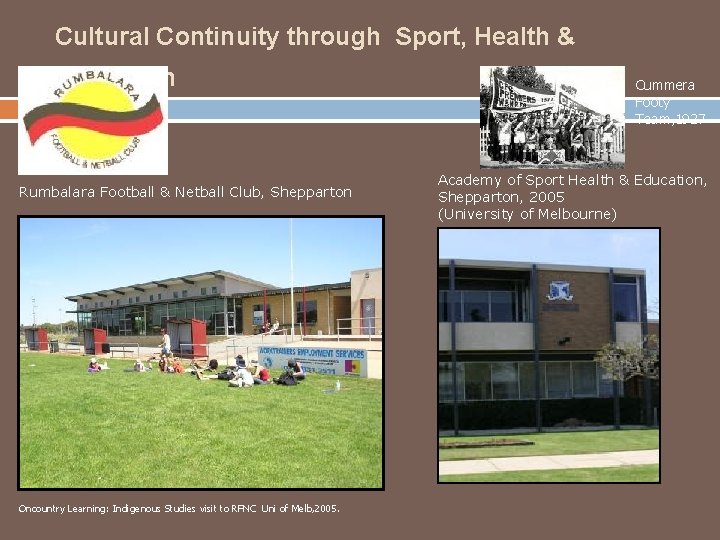
Cultural Continuity through Sport, Health & Education Rumbalara Football & Netball Club, Shepparton Oncountry Learning: Indigenous Studies visit to RFNC Uni of Melb, 2005. Cummera Footy Team, 1927 Academy of Sport Health & Education, Shepparton, 2005 (University of Melbourne)
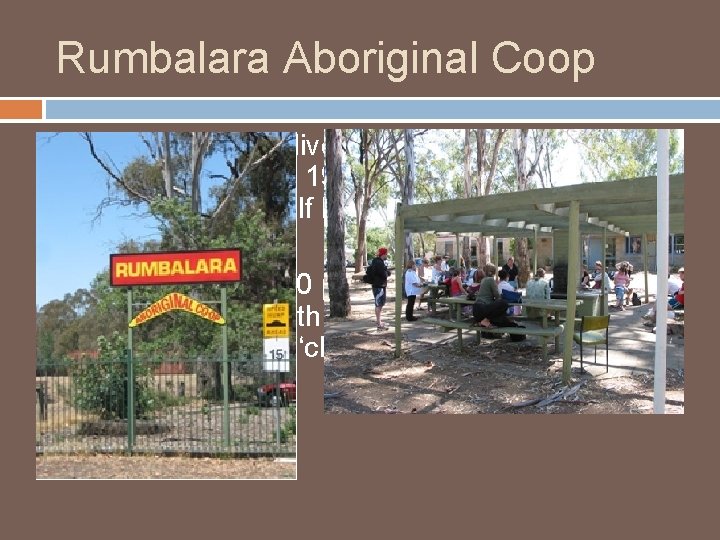
Rumbalara Aboriginal Coop Major service delivery organisation in Region that began in the 1970 s under the Whitlam Governments Self Determination policy. Employs over 200 people and runs diversity of programs in health, housing, family care, and justice, aimed a ‘closing the gap’.
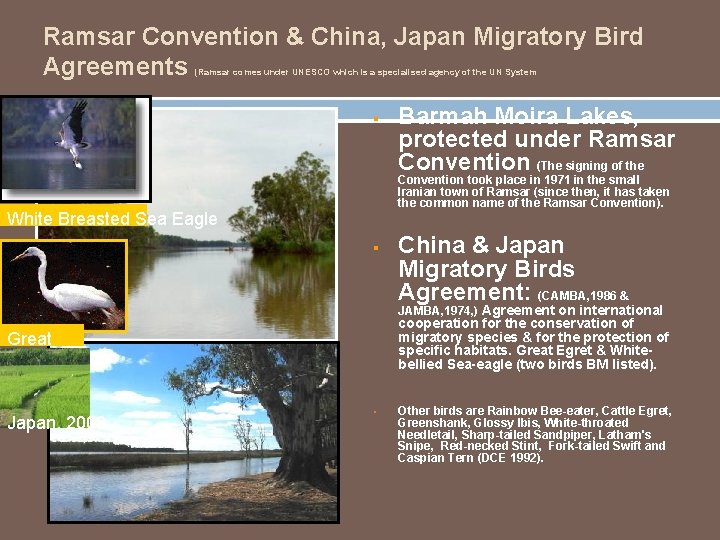
Ramsar Convention & China, Japan Migratory Bird Agreements (Ramsar comes under UNESCO which is a specialised agency of the UN System § Barmah Moira Lakes, protected under Ramsar Convention (The signing of the Convention took place in 1971 in the small Iranian town of Ramsar (since then, it has taken the common name of the Ramsar Convention). White Breasted Sea Eagle § China & Japan Migratory Birds Agreement: (CAMBA, 1986 & JAMBA, 1974, ) Agreement on international cooperation for the conservation of migratory species & for the protection of specific habitats. Great Egret & Whitebellied Sea-eagle (two birds BM listed). Great Egret Japan, 2008 § Other birds are Rainbow Bee-eater, Cattle Egret, Greenshank, Glossy Ibis, White-throated Needletail, Sharp-tailed Sandpiper, Latham's Snipe, Red-necked Stint, Fork-tailed Swift and Caspian Tern (DCE 1992).
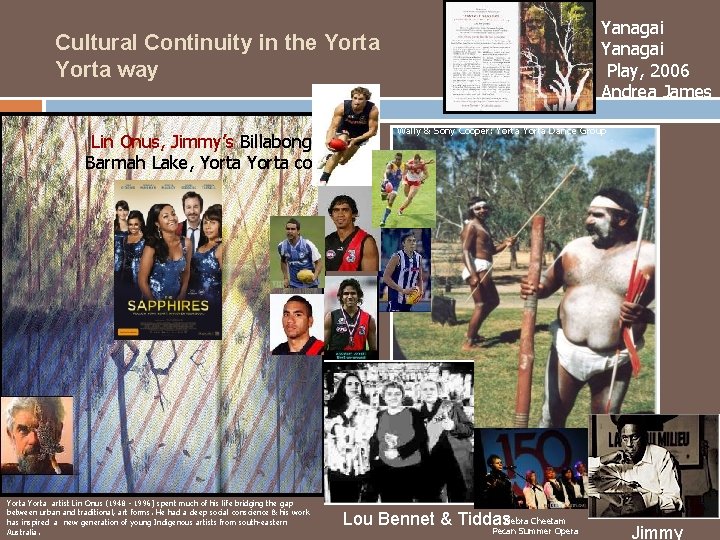
Yanagai Play, 2006 Andrea James Cultural Continuity in the Yorta way Lin Onus, Jimmy’s Billabong Barmah Lake, Yorta country Yorta artist Lin Onus (1948 - 1996) spent much of his life bridging the gap between urban and traditional, art forms. He had a deep social conscience & his work has inspired a new generation of young Indigenous artists from south-eastern Australia. Wally & Sony Cooper: Yorta Dance Group Lou Bennet & Tiddas. Debra Cheetam Pecan Summer Opera Jimmy
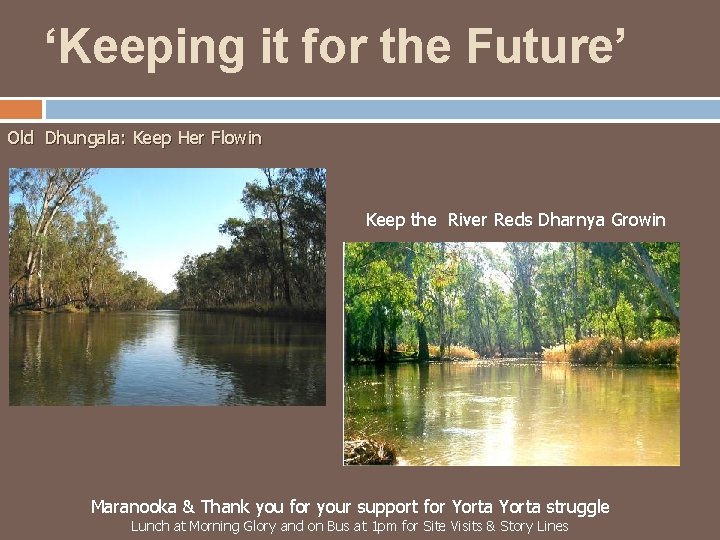
‘Keeping it for the Future’ Old Dhungala: Keep Her Flowin Keep the River Reds Dharnya Growin Maranooka & Thank you for your support for Yorta struggle Lunch at Morning Glory and on Bus at 1 pm for Site Visits & Story Lines