
Dr Ursula Jacob Medical director USA 2012 Thursday

Dr. Ursula Jacob Medical director USA 2012 Thursday, February 25, 2021

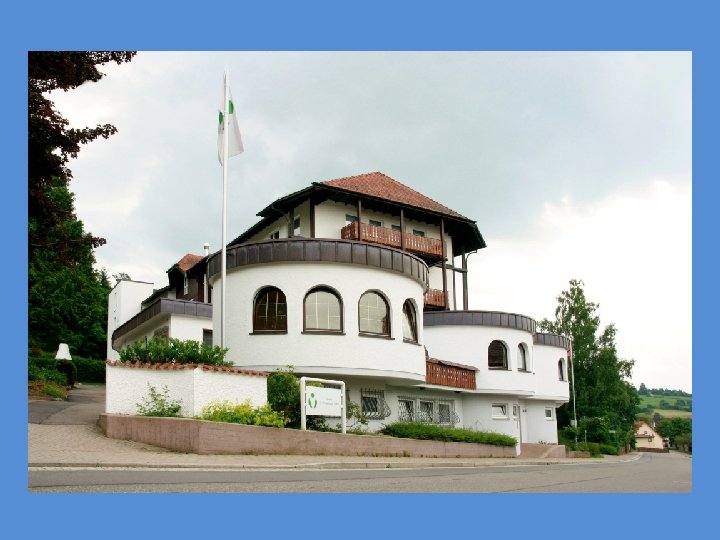
Clinic Dr. Ursula Jacob Silberwaldstrasse 34 D 72280 Dornstetten – Hallwangen Germany Tel: +49 7443 964 240 Fax. : +49 7443 964 24 99 klinik@ursula-jacob. de
Company Overview • The clinic has 17 rooms • Over 7, 000 patients treated, from Europe, Australia and North America. • Staff of 4 doctors, 12 nurses
Indications • • preventive diagnostics and treatments regenerative treatments oncological diseases hematological diseases metabolic disorders chronic neurological diseases chronic viral diseases
Diagnostics • Electrocardiogram (at rest and stress) • Sonography • Pulmonary function test • Bone marrow cytology with rapid diagnostic • Biopsy under appropriate control
Diagnostics • • • • Diagnostics in cooperation: X-Ray CT and MRT Bronchoscopy Gastroscopy Colonoscopy Rectoscopy PET (positron-emission-tomography) Scintigraphy Laboratory diagnostics (standard diagnostics, tumour markers, immunology) Chemosensitivity test CTC Test (Circulating Tumour Cells) CFS Test (Chronic Fatigue Syndrome) Pathology Genetic testing
Therapies • • • Hyperthermia Immunological therapy Naturopathy Psycho-oncological treatment Nutritional therapy Photopheresis Individual chemotherapy / Immune therapies Regenerative therapy Antiviral therapy Individual preventative treatments Various vaccination therapies
History of Cell Therapy • • • • Rufus von Ephesus Galen Vesalius Felix Platter Sir Astley Cooper Restelli Friedleben Emil T. Kocher J. Wagner-Jaureg, G. Bayer (Hrsg. ) Elis Sandberg (THX) Aleksandrowicz Miller Neymeyer Pesic Skotnicki (THF) 98 -117 130 -200 1543 1536 -1614 1832 1845 1858 1883 1913 Detection of the human thymus gland Exact description of the thymus Pictorial illustration of the thymus First clinical correlation „thymus death“ A thymus tumor is first described Animal trials Thymectomy „Transplantation“ (1841 -1919) Textbook on Organotherapy 1938 Publication of theoretical studies
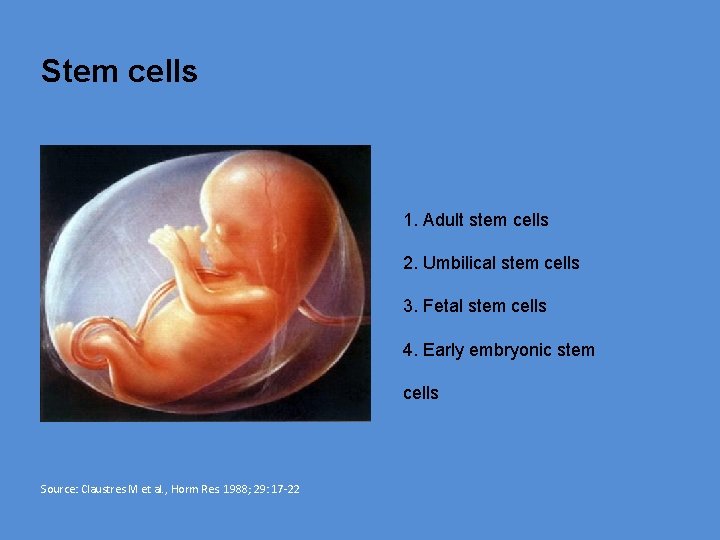
Stem cells 1. Adult stem cells 2. Umbilical stem cells 3. Fetal stem cells 4. Early embryonic stem cells Source: Claustres M et al. , Horm Res. 1988; 29: 17 -22
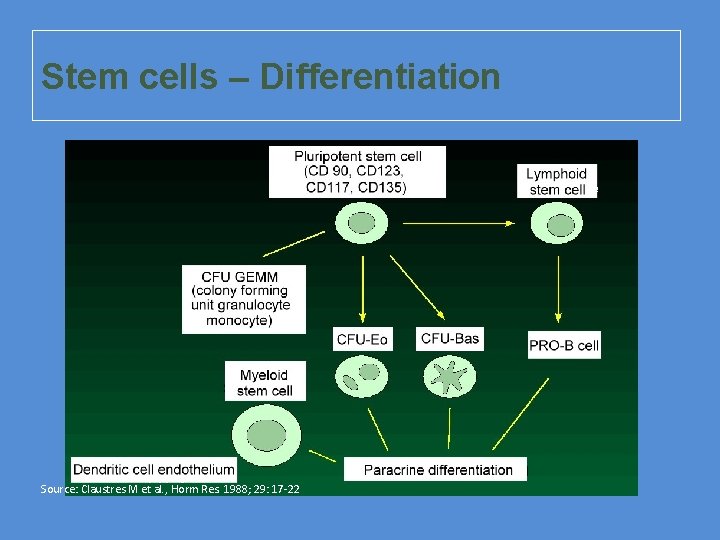
Stem cells – Differentiation Source: Claustres M et al. , Horm Res. 1988; 29: 17 -22
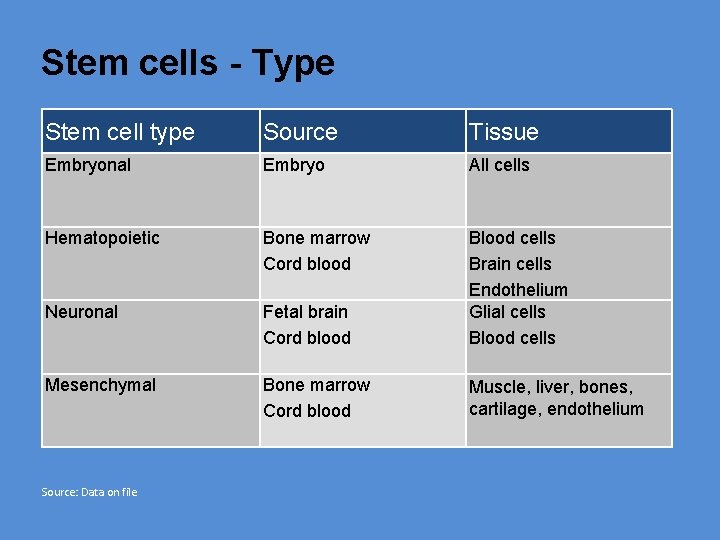
Stem cells - Type Stem cell type Source Tissue Embryonal Embryo All cells Hematopoietic Bone marrow Cord blood Neuronal Fetal brain Cord blood Blood cells Brain cells Endothelium Glial cells Blood cells Mesenchymal Bone marrow Cord blood Muscle, liver, bones, cartilage, endothelium Source: Data on file
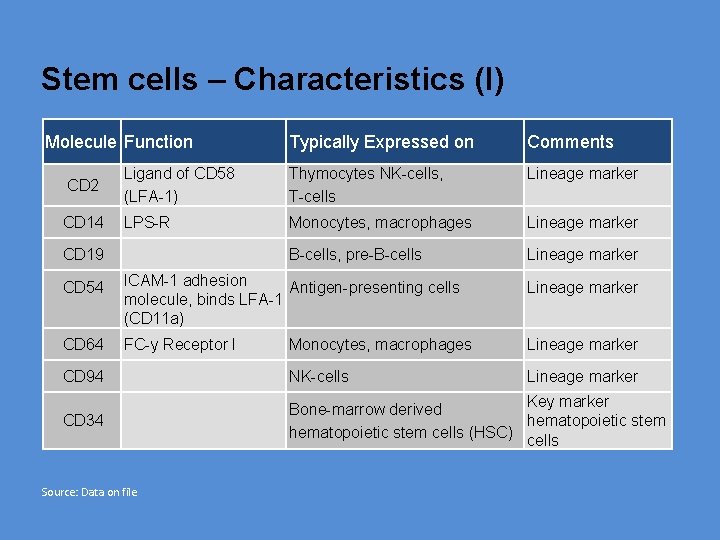
Stem cells – Characteristics (I) Molecule Function Typically Expressed on Comments Ligand of CD 58 CD 2 (LFA-1) Thymocytes NK-cells, T-cells Lineage marker CD 14 Monocytes, macrophages Lineage marker B-cells, pre-B-cells Lineage marker LPS-R CD 19 CD 54 ICAM-1 adhesion Antigen-presenting cells molecule, binds LFA-1 (CD 11 a) Lineage marker CD 64 FC-y Receptor I Monocytes, macrophages Lineage marker CD 94 NK-cells Lineage marker CD 34 Key marker Bone-marrow derived hematopoietic stem cells (HSC) cells Source: Data on file
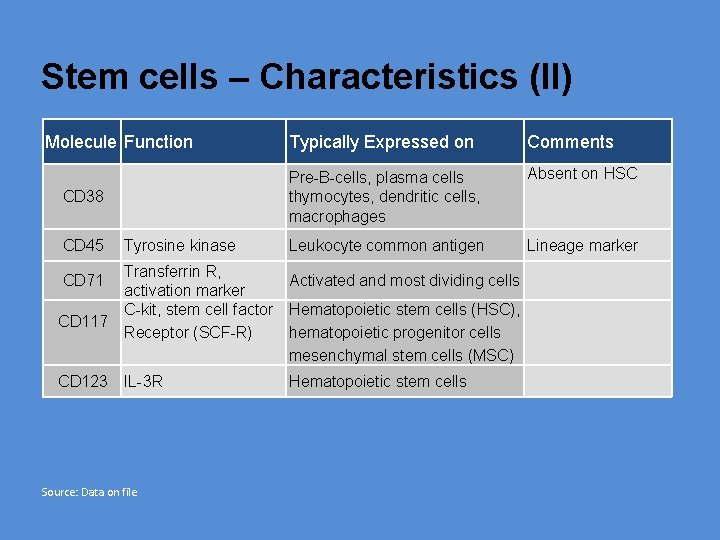
Stem cells – Characteristics (II) Molecule Function CD 38 CD 45 Tyrosine kinase Typically Expressed on Comments Pre-B-cells, plasma cells thymocytes, dendritic cells, macrophages Absent on HSC Leukocyte common antigen Lineage marker Transferrin R, Activated and most dividing cells activation marker C-kit, stem cell factor Hematopoietic stem cells (HSC), CD 117 Receptor (SCF-R) hematopoietic progenitor cells mesenchymal stem cells (MSC) CD 71 CD 123 IL-3 R Source: Data on file Hematopoietic stem cells
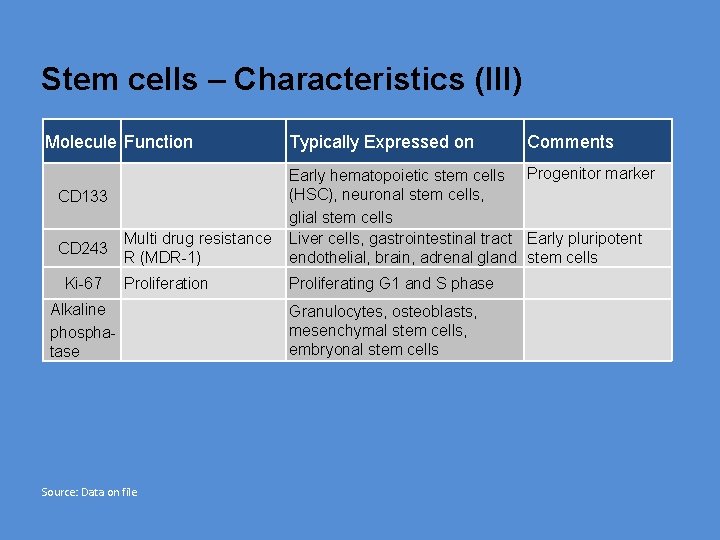
Stem cells – Characteristics (III) Molecule Function Typically Expressed on Comments Early hematopoietic stem cells Progenitor marker (HSC), neuronal stem cells, CD 133 glial stem cells Multi drug resistance Liver cells, gastrointestinal tract Early pluripotent CD 243 R (MDR-1) endothelial, brain, adrenal gland stem cells Ki-67 Proliferation Alkaline phosphatase Source: Data on file Proliferating G 1 and S phase Granulocytes, osteoblasts, mesenchymal stem cells, embryonal stem cells
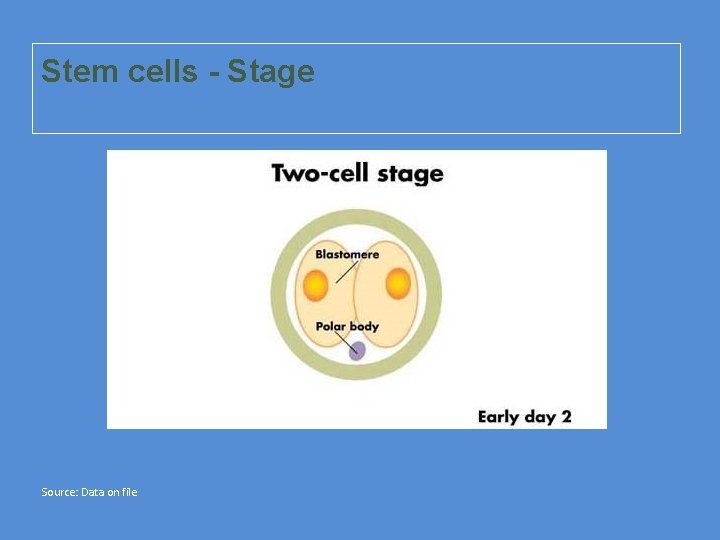
Stem cells - Stage Source: Data on file
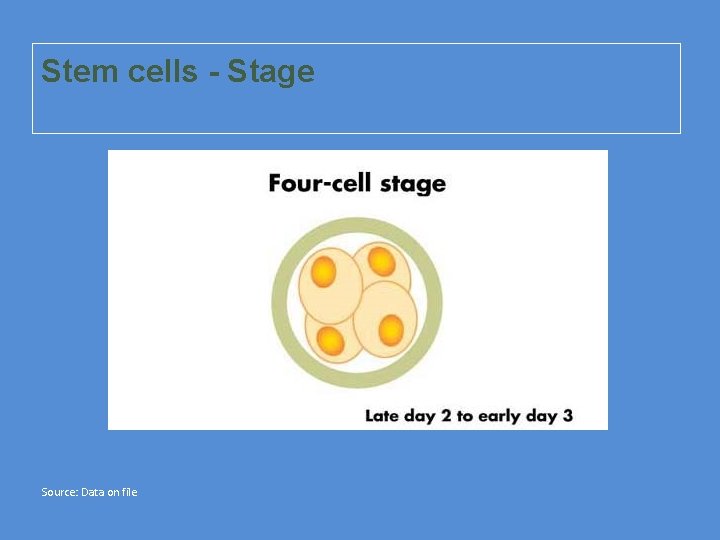
Stem cells - Stage Source: Data on file
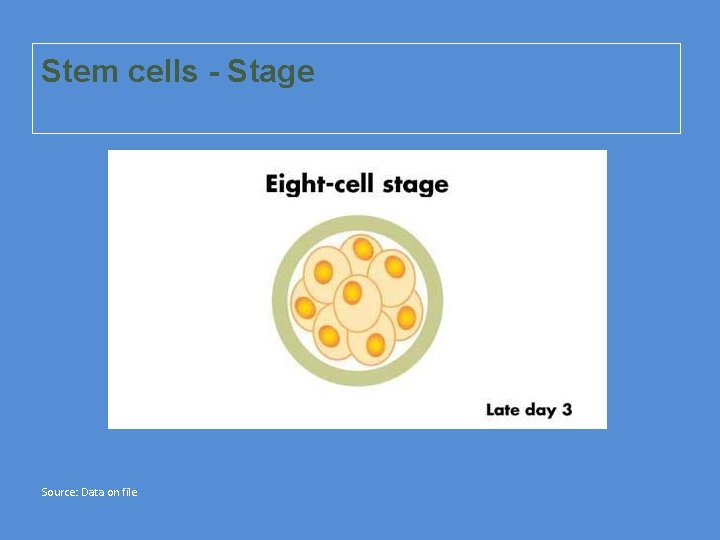
Stem cells - Stage Source: Data on file
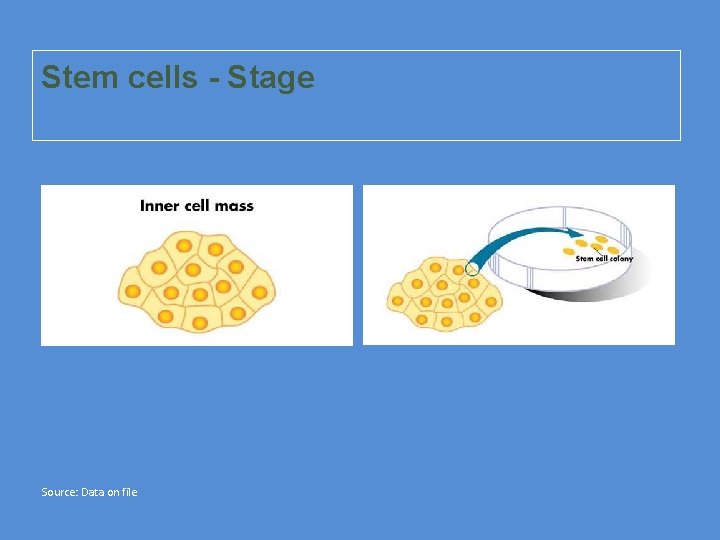
Stem cells - Stage Source: Data on file
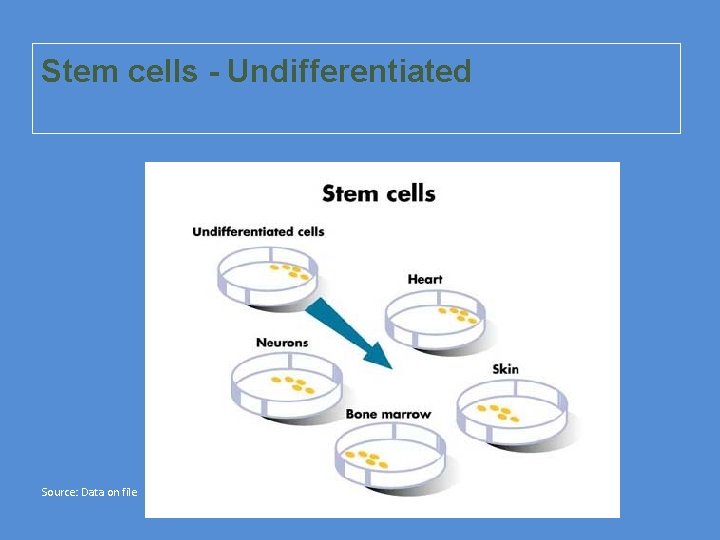
Stem cells - Undifferentiated Source: Data on file
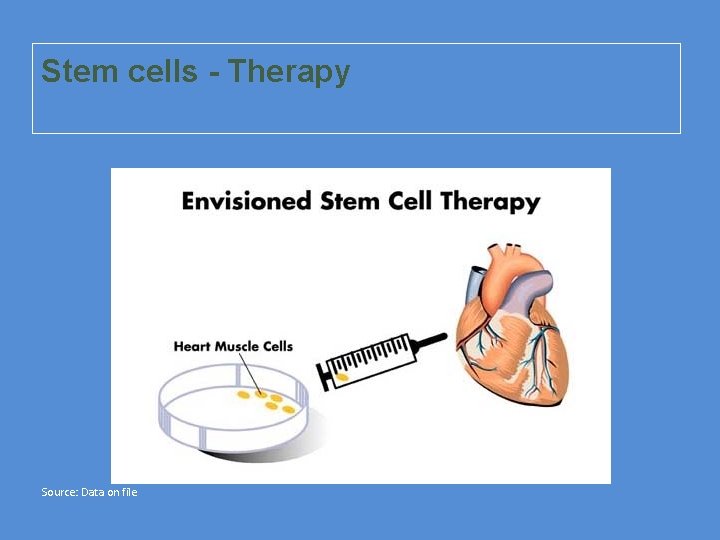
Stem cells - Therapy Source: Data on file
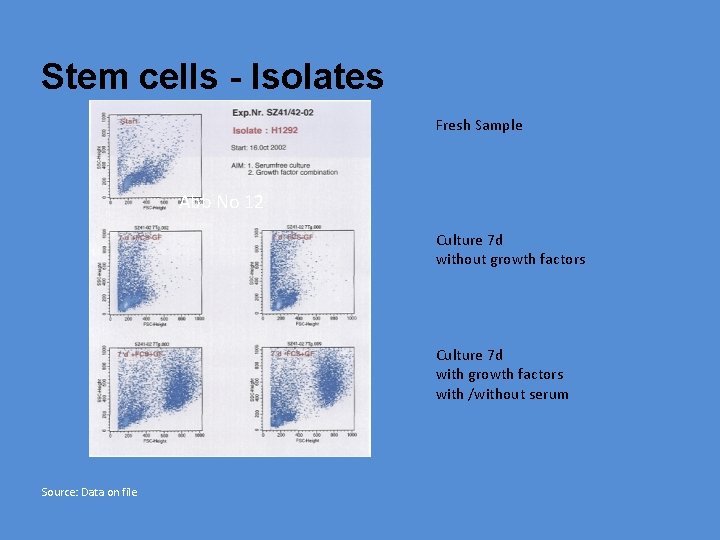
Stem cells - Isolates Fresh Sample Abb No 12 Culture 7 d without growth factors Culture 7 d with growth factors with /without serum Source: Data on file
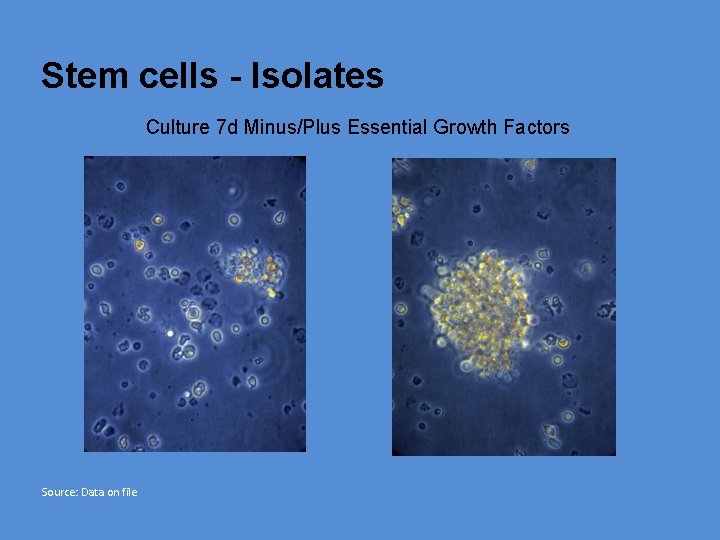
Stem cells - Isolates Culture 7 d Minus/Plus Essential Growth Factors Source: Data on file
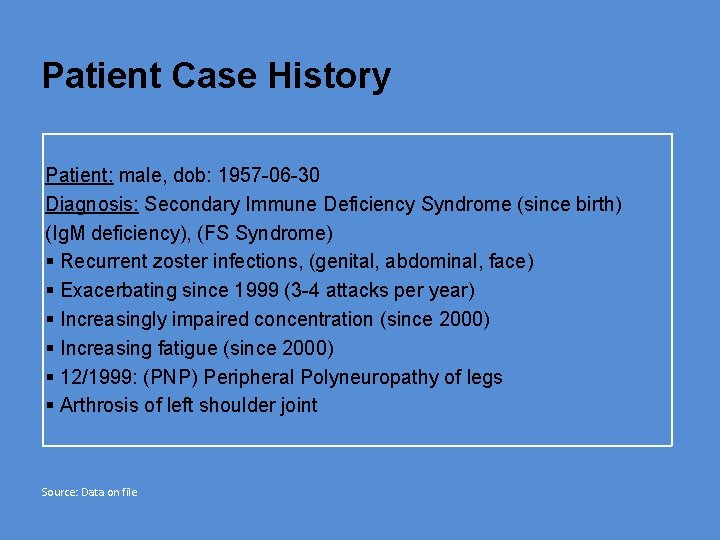
Patient Case History Patient: male, dob: 1957 -06 -30 Diagnosis: Secondary Immune Deficiency Syndrome (since birth) (Ig. M deficiency), (FS Syndrome) Recurrent zoster infections, (genital, abdominal, face) Exacerbating since 1999 (3 -4 attacks per year) Increasingly impaired concentration (since 2000) Increasing fatigue (since 2000) 12/1999: (PNP) Peripheral Polyneuropathy of legs Arthrosis of left shoulder joint Source: Data on file
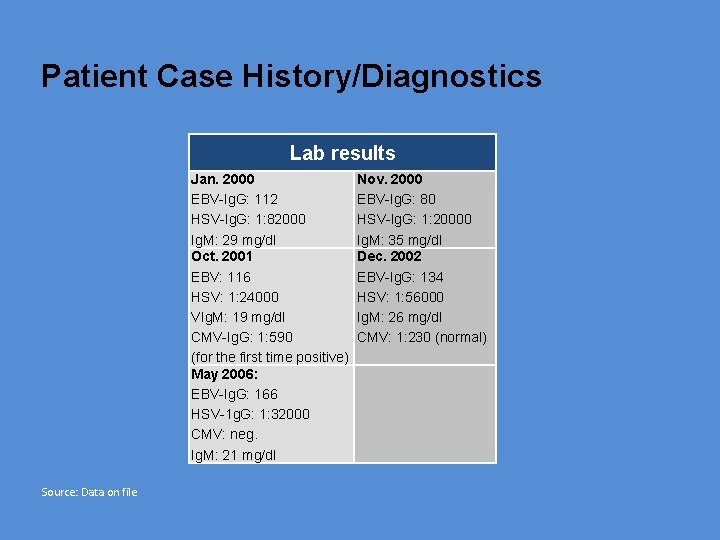
Patient Case History/Diagnostics Lab results Jan. 2000 EBV-Ig. G: 112 HSV-Ig. G: 1: 82000 Ig. M: 29 mg/dl Oct. 2001 EBV: 116 HSV: 1: 24000 VIg. M: 19 mg/dl CMV-Ig. G: 1: 590 (for the first time positive) May 2006: EBV-Ig. G: 166 HSV-1 g. G: 1: 32000 CMV: neg. Ig. M: 21 mg/dl Source: Data on file Nov. 2000 EBV-Ig. G: 80 HSV-Ig. G: 1: 20000 Ig. M: 35 mg/dl Dec. 2002 EBV-Ig. G: 134 HSV: 1: 56000 Ig. M: 26 mg/dl CMV: 1: 230 (normal)
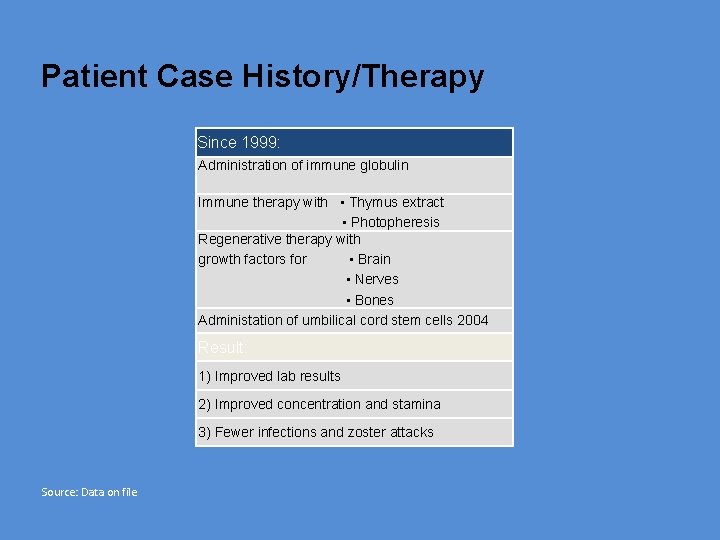
Patient Case History/Therapy Since 1999: Administration of immune globulin Immune therapy with ▪ Thymus extract ▪ Photopheresis Regenerative therapy with growth factors for ▪ Brain ▪ Nerves ▪ Bones Administation of umbilical cord stem cells 2004 Result: 1) Improved lab results 2) Improved concentration and stamina 3) Fewer infections and zoster attacks Source: Data on file
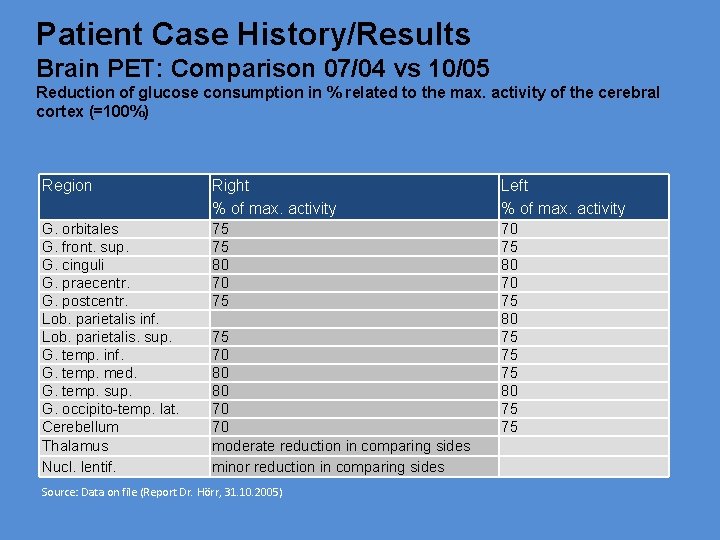
Patient Case History/Results Brain PET: Comparison 07/04 vs 10/05 Reduction of glucose consumption in % related to the max. activity of the cerebral cortex (=100%) Region Right % of max. activity Left % of max. activity G. orbitales G. front. sup. G. cinguli G. praecentr. G. postcentr. Lob. parietalis inf. Lob. parietalis. sup. G. temp. inf. G. temp. med. G. temp. sup. G. occipito-temp. lat. Cerebellum Thalamus Nucl. lentif. 75 75 80 70 75 80 75 75 75 70 80 80 70 70 moderate reduction in comparing sides minor reduction in comparing sides Source: Data on file (Report Dr. Hörr, 31. 10. 2005)
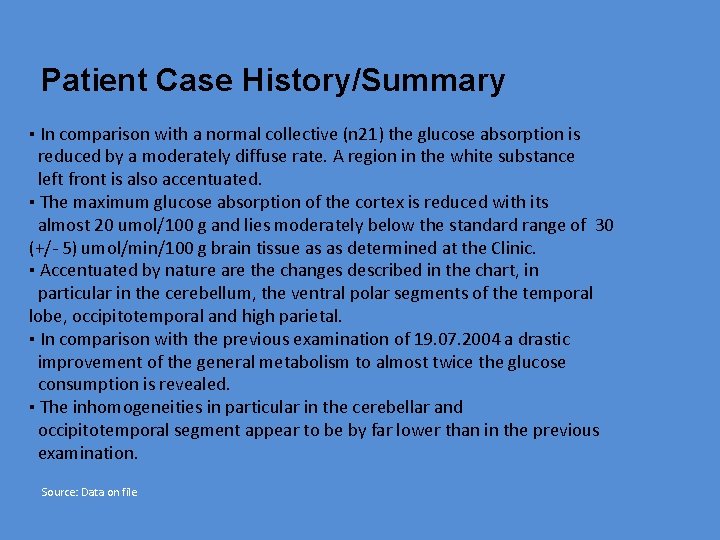
Patient Case History/Summary ▪ In comparison with a normal collective (n 21) the glucose absorption is reduced by a moderately diffuse rate. A region in the white substance left front is also accentuated. ▪ The maximum glucose absorption of the cortex is reduced with its almost 20 umol/100 g and lies moderately below the standard range of 30 (+/- 5) umol/min/100 g brain tissue as as determined at the Clinic. ▪ Accentuated by nature are the changes described in the chart, in particular in the cerebellum, the ventral polar segments of the temporal lobe, occipitotemporal and high parietal. ▪ In comparison with the previous examination of 19. 07. 2004 a drastic improvement of the general metabolism to almost twice the glucose consumption is revealed. ▪ The inhomogeneities in particular in the cerebellar and occipitotemporal segment appear to be by far lower than in the previous examination. Source: Data on file
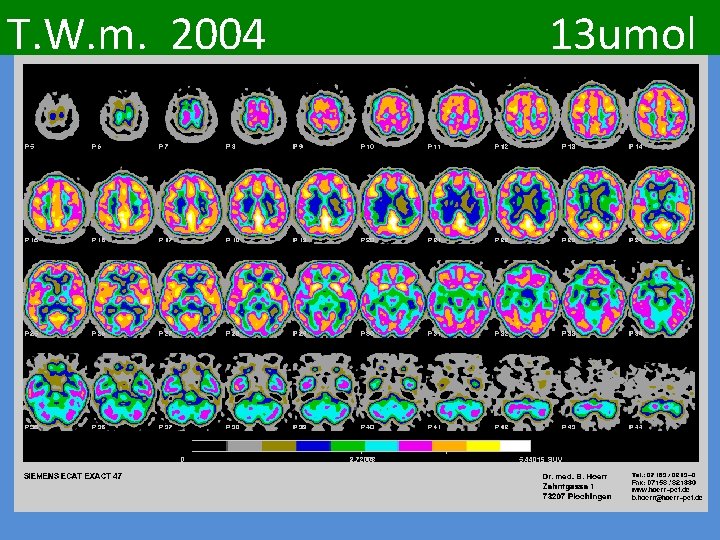
T. W. m. 2004 13 umol
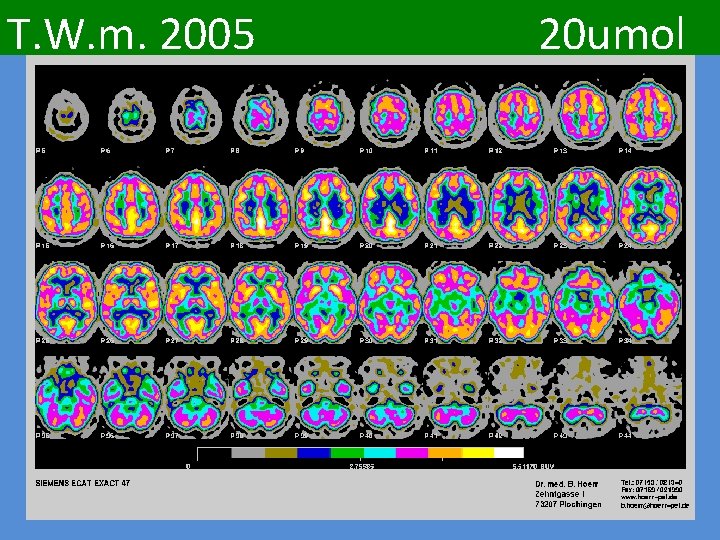
T. W. m. 2005 20 umol
CFS current diagnosis and therapies Compendium Prof. Dr. Bieger Germany presented by Dr. Ursula Jacob
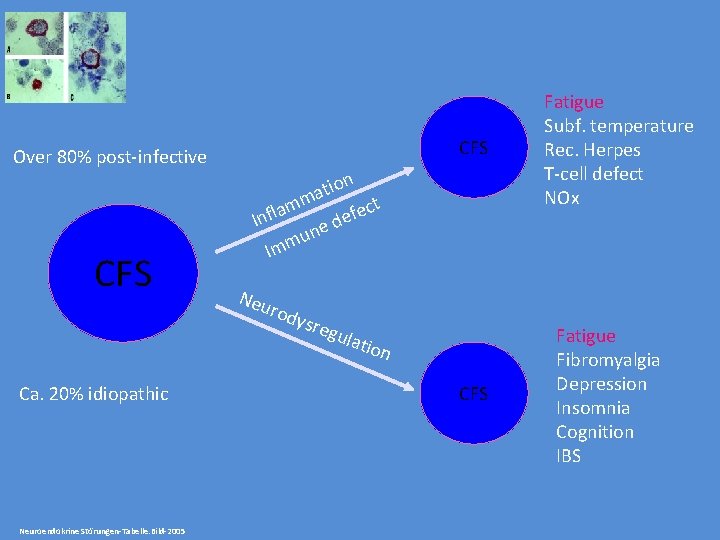
Over 80% post-infective CFS Ca. 20% idiopathic Neuroendokrine Störungen-Tabelle. Bild-2005 CFS tion a m m ct a e l f f In de e n u m m I Neu rod ysre gula tion CFS Fatigue Subf. temperature Rec. Herpes T-cell defect NOx Fatigue Fibromyalgia Depression Insomnia Cognition IBS
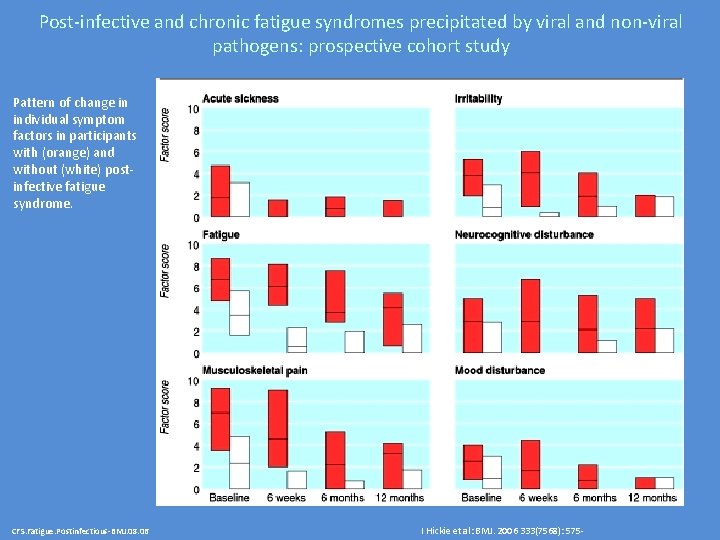
Post-infective and chronic fatigue syndromes precipitated by viral and non-viral pathogens: prospective cohort study Pattern of change in individual symptom factors in participants with (orange) and without (white) postinfective fatigue syndrome. CFS. Fatigue. Postinfectious-BMJ. 08. 06 I Hickie et al: BMJ. 2006 333(7568): 575 -
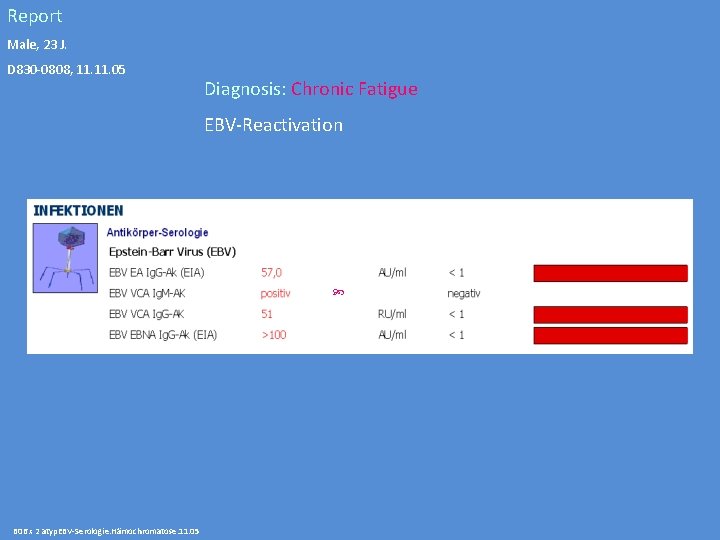
Report Male, 23 J. D 830 -0808, 11. 05 Diagnosis: Chronic Fatigue EBV-Reactivation B 06 x 2 atyp. EBV-Serologie. Hämochromatose. 11. 05
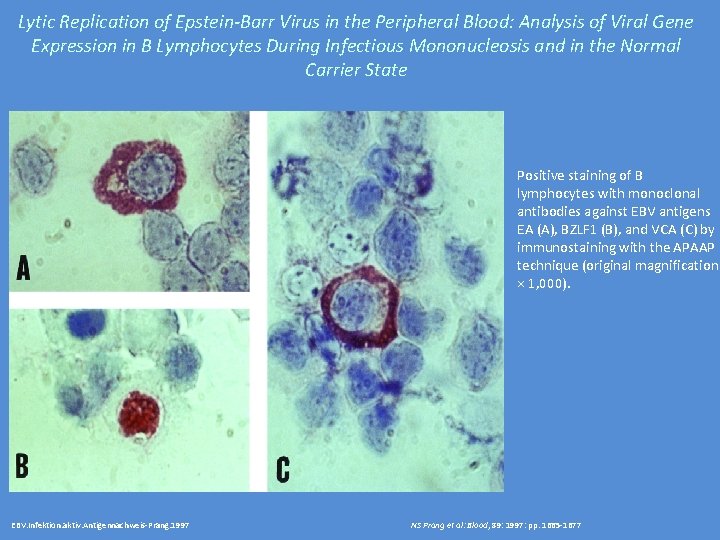
Lytic Replication of Epstein-Barr Virus in the Peripheral Blood: Analysis of Viral Gene Expression in B Lymphocytes During Infectious Mononucleosis and in the Normal Carrier State Positive staining of B lymphocytes with monoclonal antibodies against EBV antigens EA (A), BZLF 1 (B), and VCA (C) by immunostaining with the APAAP technique (original magnification × 1, 000). EBV. Infektion. aktiv. Antigennachweis-Prang. 1997 NS Prang et al: Blood, 89: 1997: pp. 1665 -1677
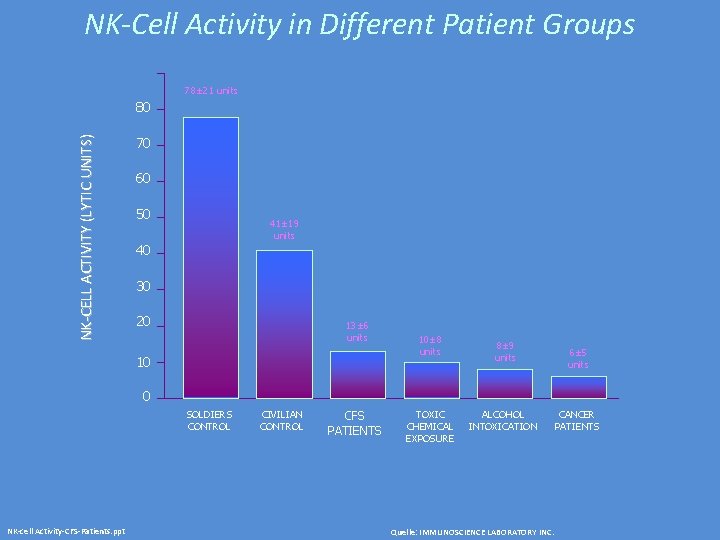
NK-Cell Activity in Different Patient Groups 78± 21 units NK-CELL ACTIVITY (LYTIC UNITS) 80 70 60 50 41± 19 units 40 30 20 13± 6 units 10 10± 8 units 8± 9 units 6± 5 units 0 SOLDIERS CONTROL NK-cell Activity-CFS-Patients. ppt CIVILIAN CONTROL CFS PATIENTS TOXIC CHEMICAL EXPOSURE ALCOHOL INTOXICATION Quelle: IMMUNOSCIENCE LABORATORY INC. CANCER PATIENTS
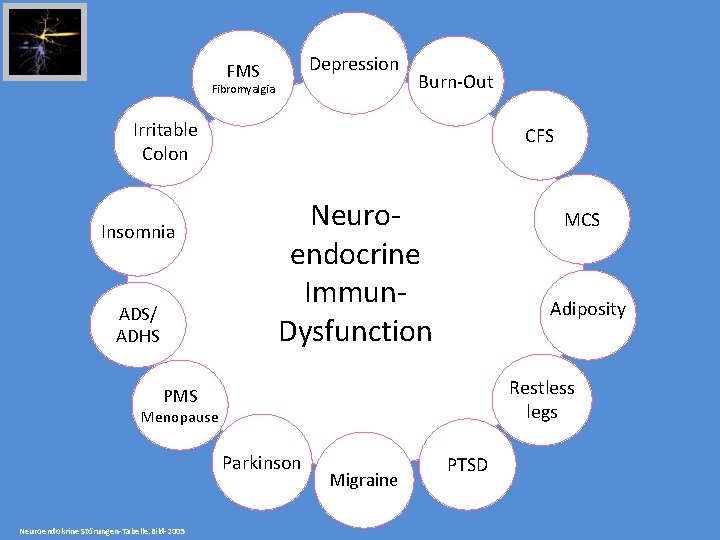
Depression FMS Fibromyalgia Burn-Out Irritable Colon Insomnia ADS/ ADHS CFS Neuroendocrine Immun. Dysfunction MCS Adiposity Restless legs PMS Menopause Parkinson Neuroendokrine Störungen-Tabelle. Bild-2005 Migraine PTSD
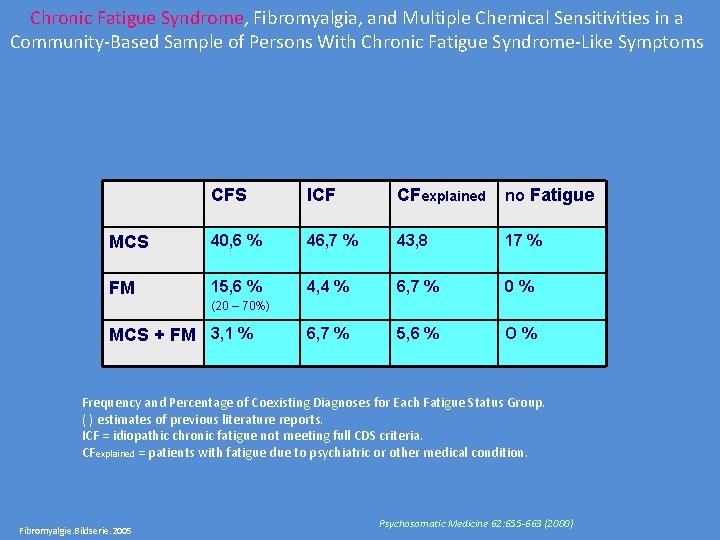
Chronic Fatigue Syndrome, Fibromyalgia, and Multiple Chemical Sensitivities in a Community-Based Sample of Persons With Chronic Fatigue Syndrome-Like Symptoms CFS ICF CFexplained no Fatigue MCS 40, 6 % 46, 7 % 43, 8 17 % FM 15, 6 % 4, 4 % 6, 7 % 0% 6, 7 % 5, 6 % O% (20 – 70%) MCS + FM 3, 1 % Frequency and Percentage of Coexisting Diagnoses for Each Fatigue Status Group. ( ) estimates of previous literature reports. ICF = idiopathic chronic fatigue not meeting full CDS criteria. CFexplained = patients with fatigue due to psychiatric or other medical condition. Fibromyalgie. Bildserie. 2005 Psychosomatic Medicine 62: 655 -663 (2000)
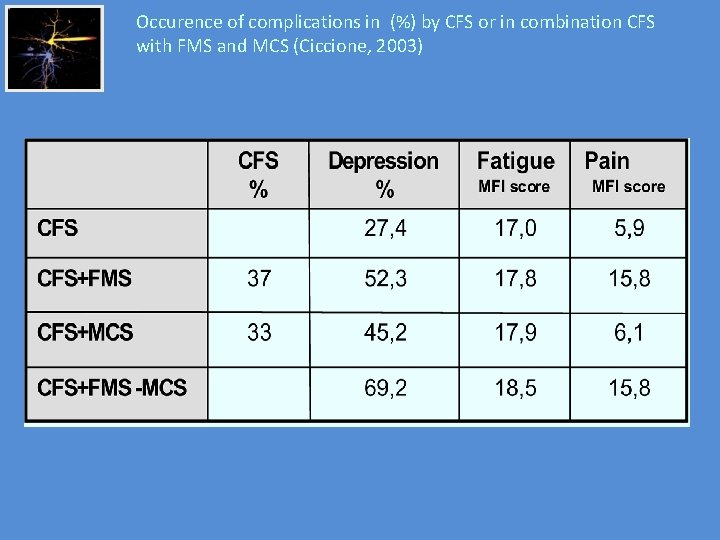
Occurence of complications in (%) by CFS or in combination CFS with FMS and MCS (Ciccione, 2003)
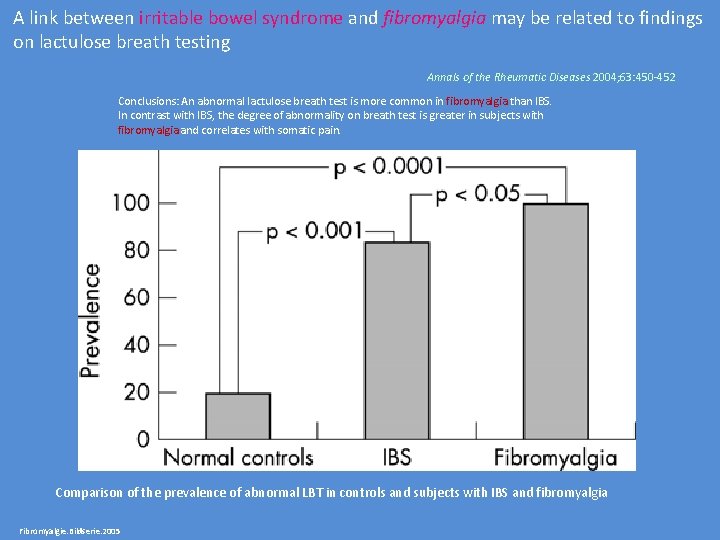
A link between irritable bowel syndrome and fibromyalgia may be related to findings on lactulose breath testing Annals of the Rheumatic Diseases 2004; 63: 450 -452 Conclusions: An abnormal lactulose breath test is more common in fibromyalgia than IBS. In contrast with IBS, the degree of abnormality on breath test is greater in subjects with fibromyalgia and correlates with somatic pain. Comparison of the prevalence of abnormal LBT in controls and subjects with IBS and fibromyalgia Fibromyalgie. Bildserie. 2005
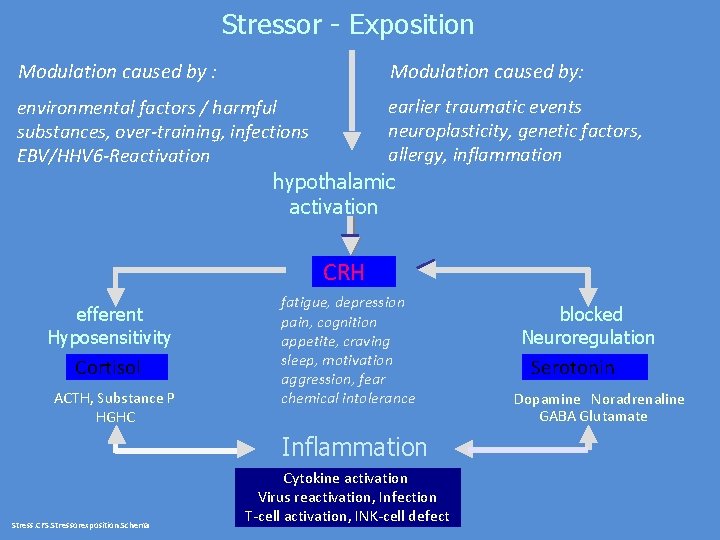
Stressor - Exposition Modulation caused by : Modulation caused by: environmental factors / harmful substances, over-training, infections EBV/HHV 6 -Reactivation earlier traumatic events neuroplasticity, genetic factors, allergy, inflammation hypothalamic activation CRH efferent Hyposensitivity Cortisol ACTH, Substance P HGHC fatigue, depression pain, cognition appetite, craving sleep, motivation aggression, fear chemical intolerance Inflammation Stress. CFS. Stressorexposition. Schema Cytokine activation Virus reactivation, Infection T-cell activation, INK-cell defect blocked Neuroregulation Serotonin Dopamine Noradrenaline GABA Glutamate
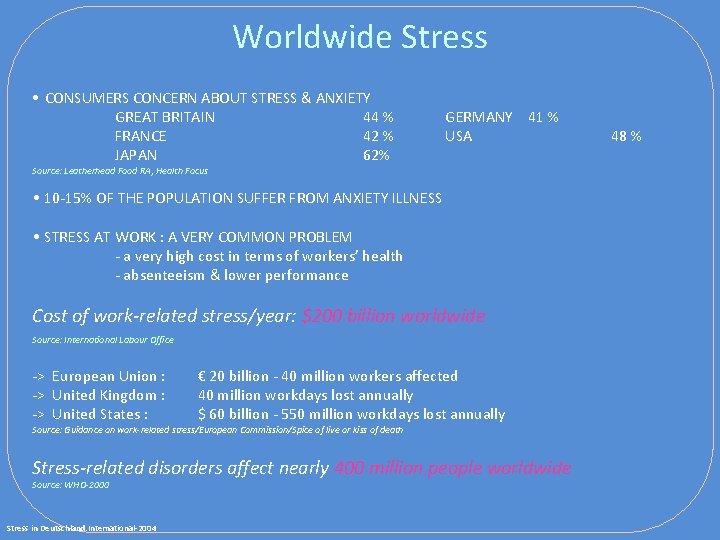
Worldwide Stress • CONSUMERS CONCERN ABOUT STRESS & ANXIETY GREAT BRITAIN 44 % FRANCE 42 % JAPAN 62% GERMANY 41 % USA Source: Leatherhead Food RA, Health Focus • 10 -15% OF THE POPULATION SUFFER FROM ANXIETY ILLNESS • STRESS AT WORK : A VERY COMMON PROBLEM - a very high cost in terms of workers’ health - absenteeism & lower performance Cost of work-related stress/year: $200 billion worldwide Source: International Labour Office -> European Union : -> United Kingdom : -> United States : € 20 billion - 40 million workers affected 40 million workdays lost annually $ 60 billion - 550 million workdays lost annually Source: Guidance on work-related stress/European Commission/Spice of live or kiss of death Stress-related disorders affect nearly 400 million people worldwide Source: WHO-2000 Stress in Deutschland. International-2004 48 %
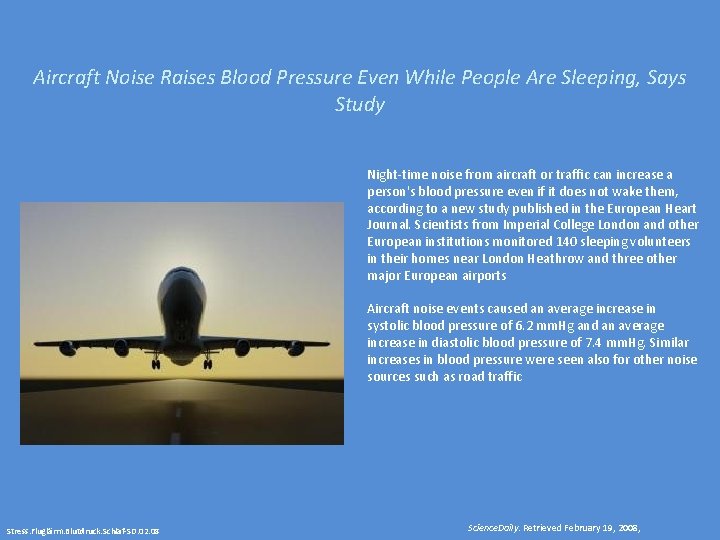
Aircraft Noise Raises Blood Pressure Even While People Are Sleeping, Says Study Night-time noise from aircraft or traffic can increase a person's blood pressure even if it does not wake them, according to a new study published in the European Heart Journal. Scientists from Imperial College London and other European institutions monitored 140 sleeping volunteers in their homes near London Heathrow and three other major European airports Aircraft noise events caused an average increase in systolic blood pressure of 6. 2 mm. Hg and an average increase in diastolic blood pressure of 7. 4 mm. Hg. Similar increases in blood pressure were seen also for other noise sources such as road traffic Stress. Fluglärm. Blutdruck. Schlaf-SD. 02. 08 Science. Daily. Retrieved February 19, 2008,
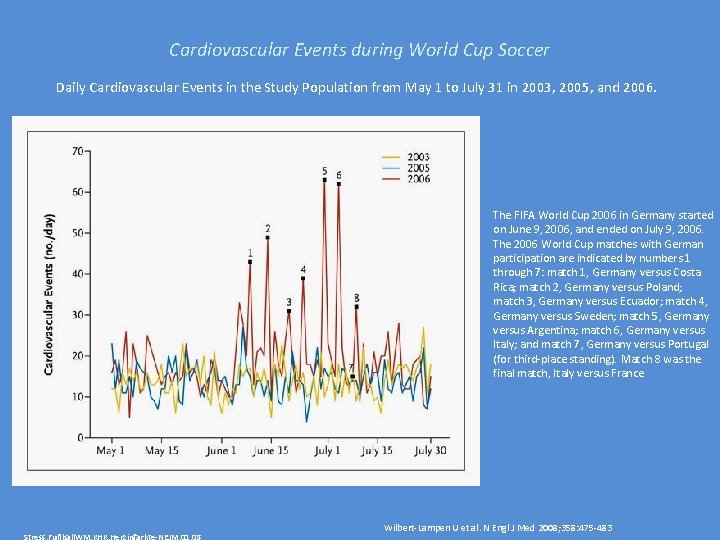
Cardiovascular Events during World Cup Soccer Daily Cardiovascular Events in the Study Population from May 1 to July 31 in 2003, 2005, and 2006. The FIFA World Cup 2006 in Germany started on June 9, 2006, and ended on July 9, 2006. The 2006 World Cup matches with German participation are indicated by numbers 1 through 7: match 1, Germany versus Costa Rica; match 2, Germany versus Poland; match 3, Germany versus Ecuador; match 4, Germany versus Sweden; match 5, Germany versus Argentina; match 6, Germany versus Italy; and match 7, Germany versus Portugal (for third-place standing). Match 8 was the final match, Italy versus France Stress. Fußball. WM. KHK. Herzinfarkte-NEJM. 01. 08 Wilbert-Lampen U et al. N Engl J Med 2008; 358: 475 -483
NEURO-REGULATION I Stress hormone axis HPT – AP – ADR Catecholamine – Serotonin – ANS -axis
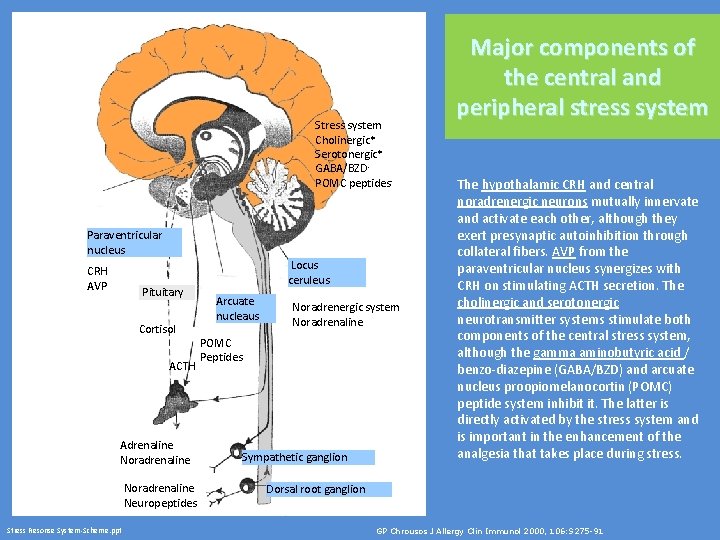
Stress system Cholinergic* Serotonergic* GABA/BZDPOMC peptides- Paraventricular nucleus CRH AVP Pituitary Cortisol ACTH Adrenaline Noradrenaline Neuropeptides Stress Resonse System-Scheme. ppt Locus ceruleus Arcuate nucleaus Noradrenergic system Noradrenaline POMC Peptides Sympathetic ganglion Major components of the central and peripheral stress system The hypothalamic CRH and central noradrenergic neurons mutually innervate and activate each other, although they exert presynaptic autoinhibition through collateral fibers. AVP from the paraventricular nucleus synergizes with CRH on stimulating ACTH secretion. The cholinergic and serotonergic neurotransmitter systems stimulate both components of the central stress system, although the gamma aminobutyric acid / benzo-diazepine (GABA/BZD) and arcuate nucleus proopiomelanocortin (POMC) peptide system inhibit it. The latter is directly activated by the stress system and is important in the enhancement of the analgesia that takes place during stress. Dorsal root ganglion GP Chrousos J Allergy Clin Immunol 2000, 106: S 275 -91
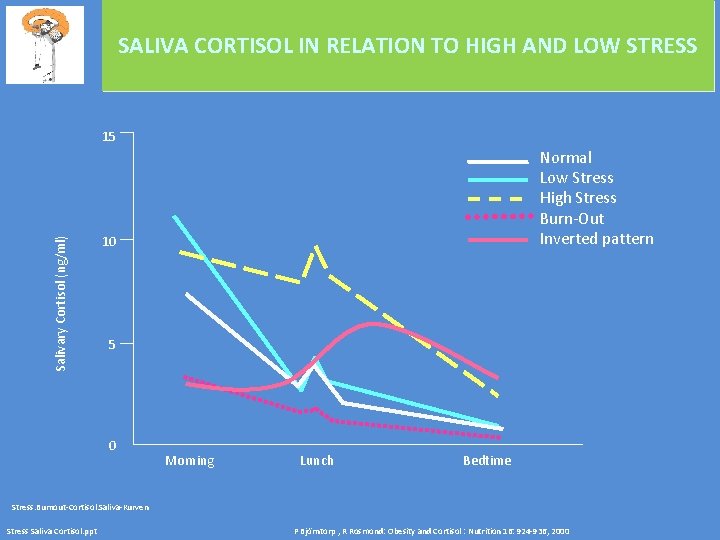
SALIVA CORTISOL IN RELATION TO HIGH AND LOW STRESS Salivary Cortisol (ng/ml) 15 Normal Low Stress High Stress Burn-Out Inverted pattern 10 5 0 Morning Lunch Bedtime Stress. Burnout-Cortisol. Saliva-Kurven Stress Saliva Cortisol. ppt P Björntorp , R Rosmond: Obesity and Cortisol : Nutrition 16: 924 -936, 2000
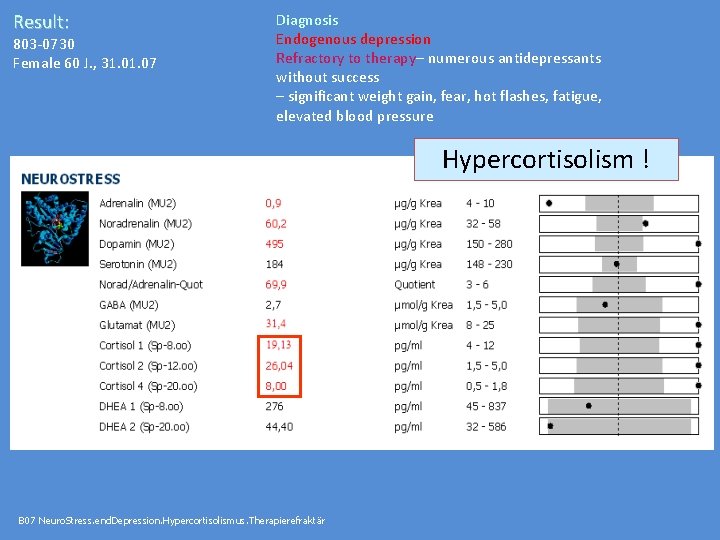
Result: 803 -0730 Female 60 J. , 31. 07 Diagnosis Endogenous depression Refractory to therapy– numerous antidepressants without success – significant weight gain, fear, hot flashes, fatigue, elevated blood pressure Hypercortisolism ! B 07 Neuro. Stress. end. Depression. Hypercortisolismus. Therapierefraktär
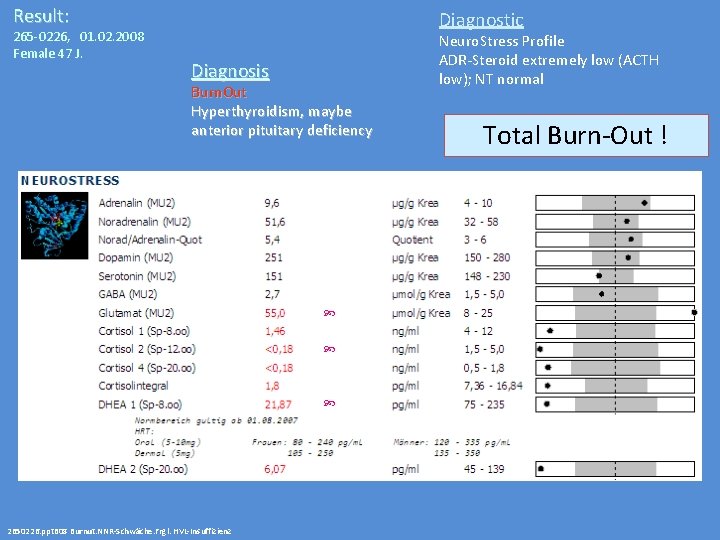
Result: 265 -0226, 01. 02. 2008 Female 47 J. Diagnostic Diagnosis Burn. Out Hyperthyroidism, maybe anterior pituitary deficiency 2650226. ppt. B 08 Burnut. NNR-Schwäche. Frgl. HVL-Insuffizienz Neuro. Stress Profile ADR-Steroid extremely low (ACTH low); NT normal Total Burn-Out !
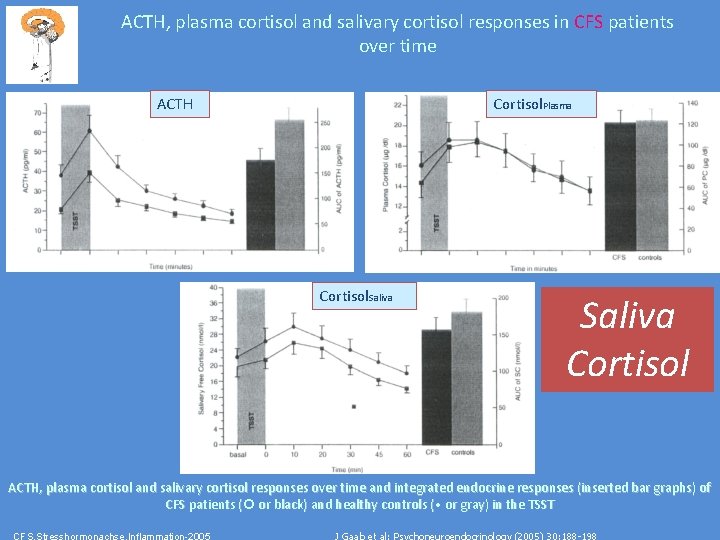
ACTH, plasma cortisol and salivary cortisol responses in CFS patients over time ACTH Cortisol. Plasma Cortisol. Saliva Cortisol ACTH, plasma cortisol and salivary cortisol responses over time and integrated endocrine responses (inserted bar graphs) of CFS patients ( or black) and healthy controls ( • or gray) in the TSST
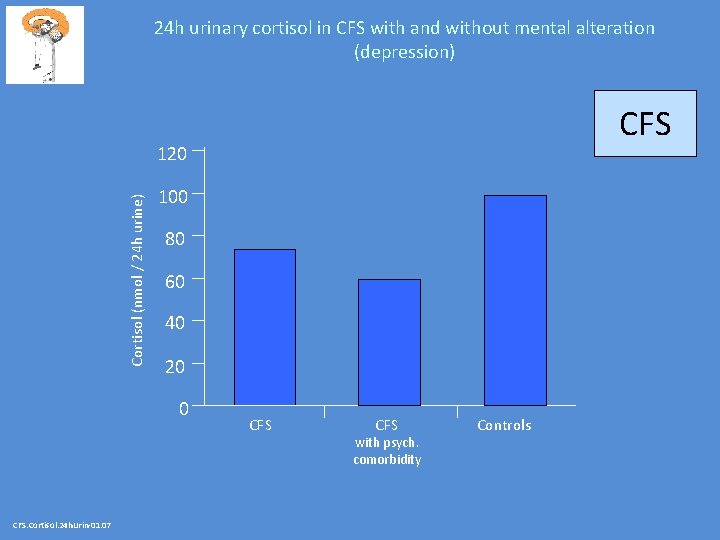
24 h urinary cortisol in CFS with and without mental alteration (depression) CFS Cortisol (nmol / 24 h urine) 120 100 80 60 40 20 0 CFS. Cortisol. 24 h. Urin-01. 07 CFS with psych. comorbidity Controls
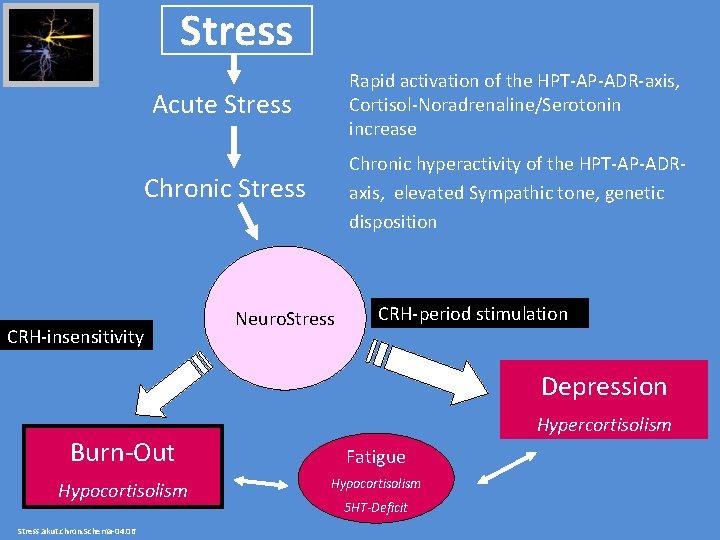
Stress Acute Stress Rapid activation of the HPT-AP-ADR-axis, Cortisol-Noradrenaline/Serotonin increase Chronic Stress Chronic hyperactivity of the HPT-AP-ADRaxis, elevated Sympathic tone, genetic disposition CRH-insensitivity Neuro. Stress CRH-period stimulation Depression Burn-Out Hypocortisolism Stress. akut. chron. Schema-04. 06 Hypercortisolism Fatigue Hypocortisolism 5 HT-Deficit
NEURO-REGULATION II HPT – AP – ADR Stress hormone axis CNS-ANS-axis Catecholamine – Serotonin GABA - Glutamate
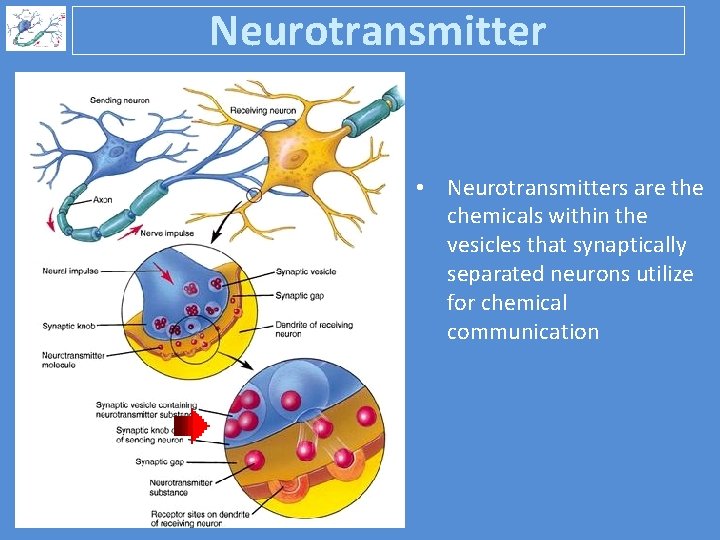
Neurotransmitter • Neurotransmitters are the chemicals within the vesicles that synaptically separated neurons utilize for chemical communication
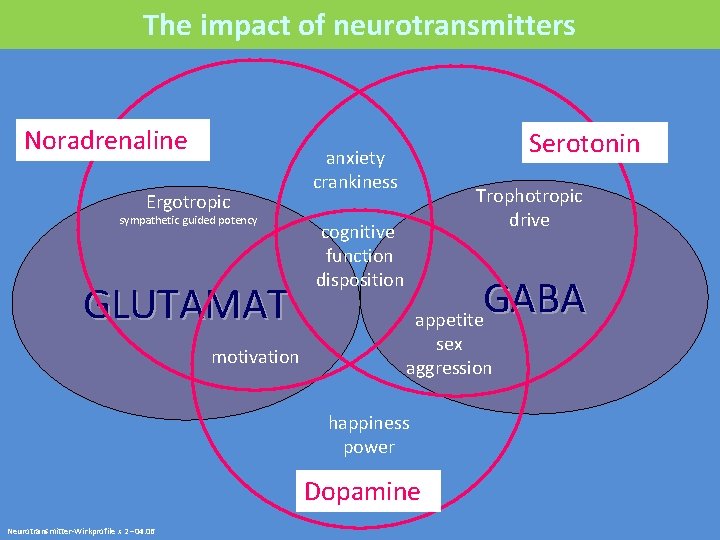
The impact of neurotransmitters Noradrenaline Ergotropic sympathetic guided potency GLUTAMAT motivation Serotonin anxiety crankiness Trophotropic drive cognitive function disposition GABA appetite sex aggression happiness power Dopamine Neurotransmitter-Wirkprofile x 2 – 04. 06
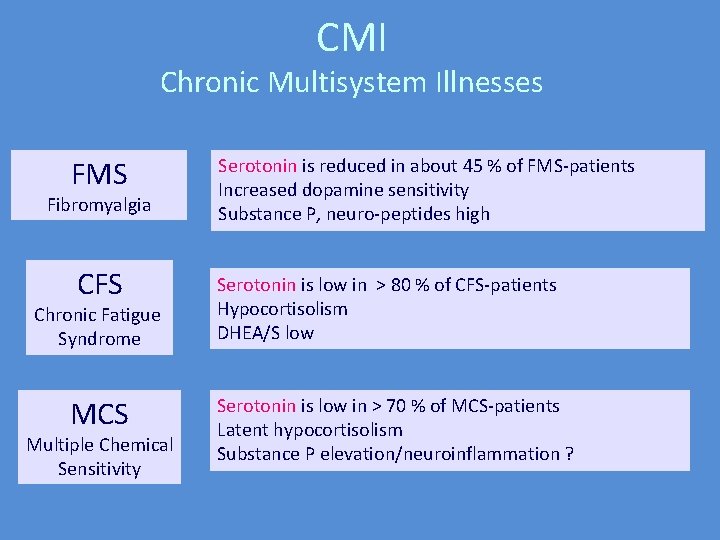
CMI Chronic Multisystem Illnesses FMS Serotonin is reduced in about 45 % of FMS-patients Increased dopamine sensitivity Substance P, neuro-peptides high CFS Serotonin is low in > 80 % of CFS-patients Hypocortisolism DHEA/S low Fibromyalgia Chronic Fatigue Syndrome MCS Multiple Chemical Sensitivity Serotonin is low in > 70 % of MCS-patients Latent hypocortisolism Substance P elevation/neuroinflammation ?
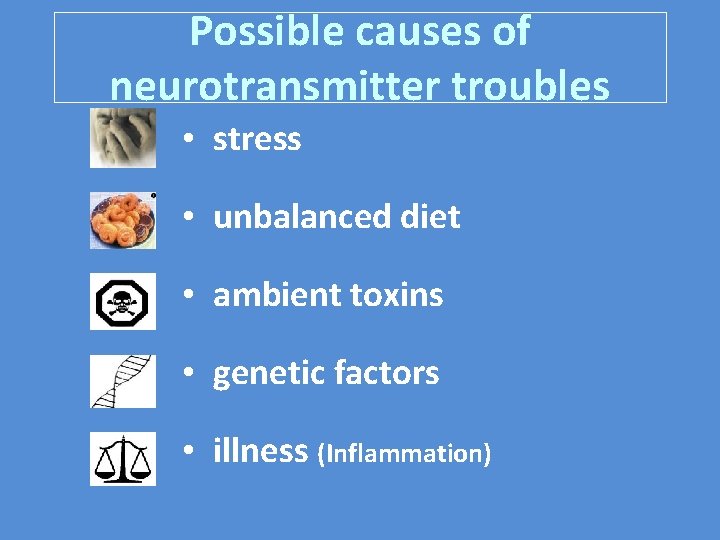
Possible causes of neurotransmitter troubles • stress • unbalanced diet • ambient toxins • genetic factors • illness (Inflammation)
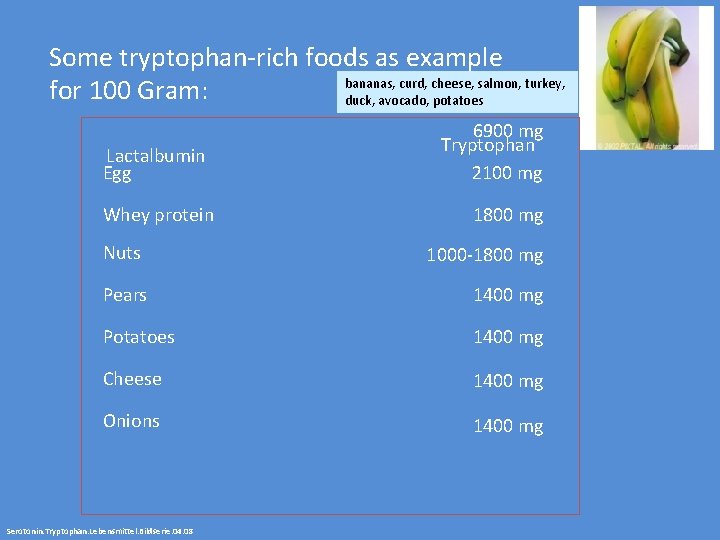
Some tryptophan-rich foods as example bananas, curd, cheese, salmon, turkey, for 100 Gram: duck, avocado, potatoes Lactalbumin Egg Whey protein Nuts 6900 mg Tryptophan 2100 mg 1800 mg 1000 -1800 mg Pears 1400 mg Potatoes 1400 mg Cheese 1400 mg Onions 1400 mg Serotonin. Tryptophan. Lebensmittel. Bildserie. 04. 08
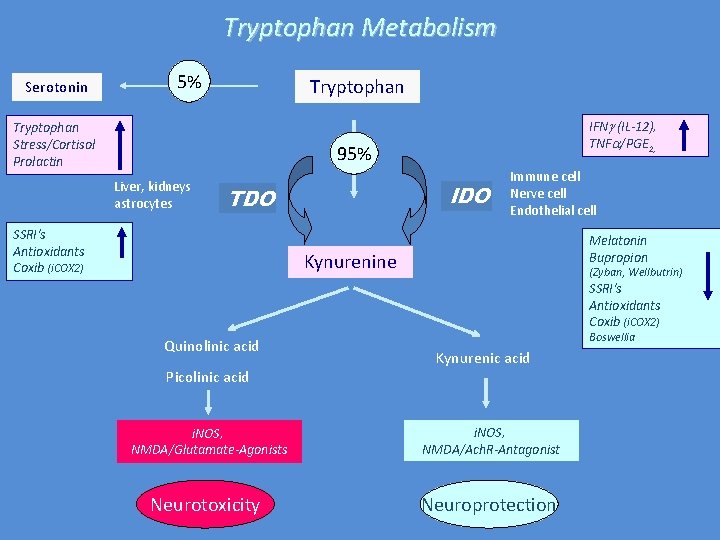
Tryptophan Metabolism Serotonin 5% Tryptophan Stress/Cortisol Prolactin IFN (IL-12), TNF /PGE 2, 95% Liver, kidneys astrocytes IDO TDO SSRI‘s Antioxidants Coxib (i. COX 2) Immune cell Nerve cell Endothelial cell Melatonin Bupropion Kynurenine (Zyban, Wellbutrin) SSRI‘s Antioxidants Coxib (i. COX 2) Quinolinic acid Picolinic acid Boswellia Kynurenic acid i. NOS, NMDA/Glutamate-Agonists i. NOS, NMDA/Ach. R-Antagonist Neurotoxicity Neuroprotection
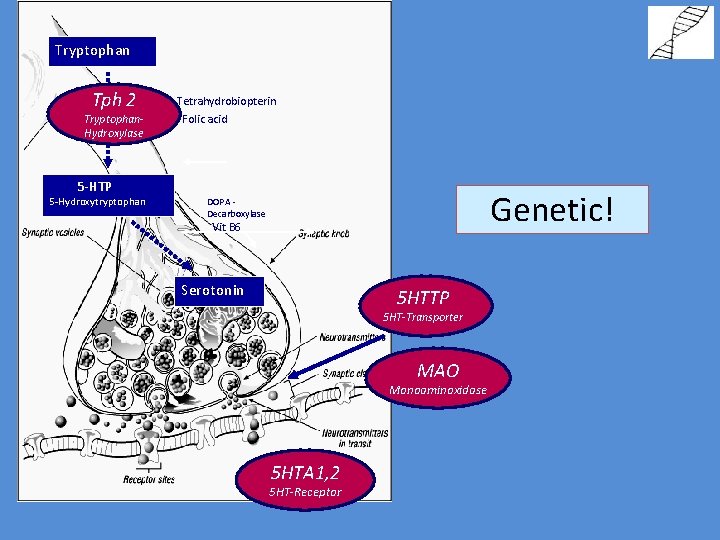
Tryptophan Tph 2 Tryptophan. Hydroxylase Tetrahydrobiopterin Folic acid 5 -HTP 5 -Hydroxytryptophan Genetic! DOPA Decarboxylase Vit B 6 Serotonin 5 HTTP 5 HT-Transporter MAO Monoaminoxidase 5 HTA 1, 2 5 HT-Receptor
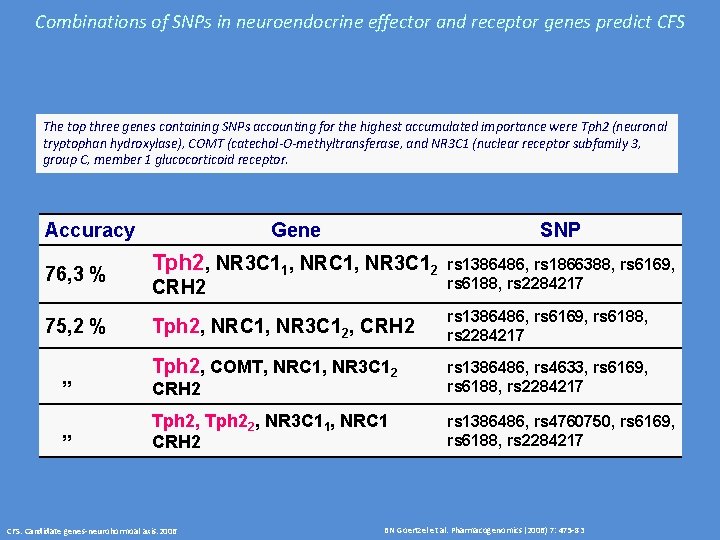
Combinations of SNPs in neuroendocrine effector and receptor genes predict CFS The top three genes containing SNPs accounting for the highest accumulated importance were Tph 2 (neuronal tryptophan hydroxylase), COMT (catechol-O-methyltransferase, and NR 3 C 1 (nuclear receptor subfamily 3, group C, member 1 glucocorticoid receptor. Accuracy Gene SNP 76, 3 % Tph 2, NR 3 C 11, NRC 1, NR 3 C 12 CRH 2 rs 1386486, rs 1866388, rs 6169, rs 6188, rs 2284217 75, 2 % Tph 2, NRC 1, NR 3 C 12, CRH 2 rs 1386486, rs 6169, rs 6188, rs 2284217 Tph 2, COMT, NRC 1, NR 3 C 12 CRH 2 rs 1386486, rs 4633, rs 6169, rs 6188, rs 2284217 Tph 2, Tph 22, NR 3 C 11, NRC 1 CRH 2 rs 1386486, rs 4760750, rs 6169, rs 6188, rs 2284217 „ „ CFS. Candidate genes-neurohormoal axis. 2006 BN Goertzel et al. Pharmacogenomics (2006) 7: 475 -83
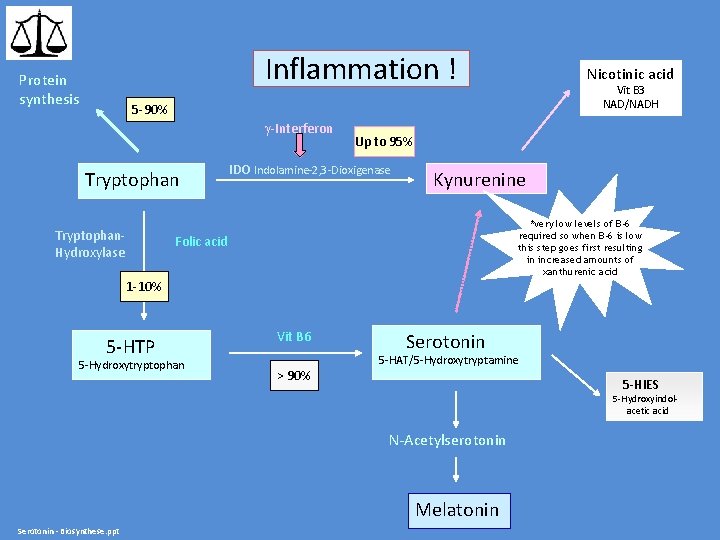
Inflammation ! Protein synthesis Nicotinic acid Vit B 3 NAD/NADH 5 -90% -Interferon Tryptophan. Hydroxylase Up to 95% IDO Indolamine-2, 3 -Dioxigenase Kynurenine *very low levels of B-6 required so when B-6 is low this step goes first resulting in increased amounts of xanthurenic acid Folic acid 1 -10% 5 -HTP 5 -Hydroxytryptophan Vit B 6 > 90% Serotonin 5 -HAT/5 -Hydroxytryptamine 5 -HIES 5 -Hydroxyindol acetic acid N-Acetylserotonin Melatonin Serotonin - Biosynthese. ppt
STRESS INFLAMMATION
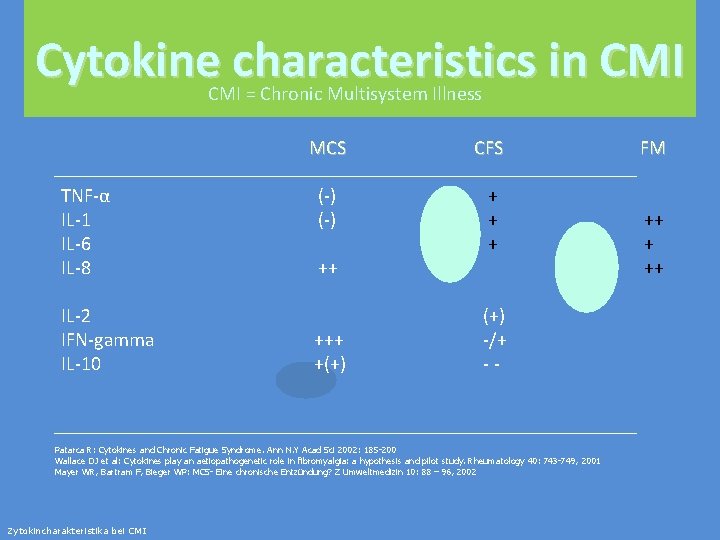
Cytokine characteristics in CMI = Chronic Multisystem Illness TNF-α IL-1 IL-6 IL-8 IL-2 IFN-gamma IL-10 MCS (-) CFS ++ +(+) + + + FM (+) -/+ - - Patarca R: Cytokines and Chronic Fatigue Syndrome. Ann N. Y Acad Sci 2002: 185 -200 Wallace DJ et al: Cytokines play an aetiopathogenetic role in fibromyalgia: a hypothesis and pilot study. Rheumatology 40: 743 -749, 2001 Mayer WR, Bartram F, Bieger WP: MCS- Eine chronische Entzündung? Z Umweltmedizin 10: 88 – 96, 2002 Zytokincharakteristika bei CMI ++ + ++
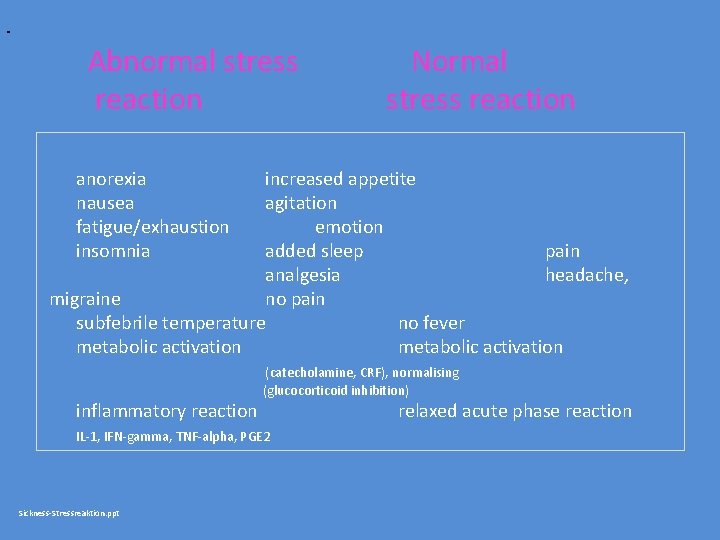
Abnormal stress Normal reaction stress reaction anorexia nausea fatigue/exhaustion insomnia increased appetite agitation emotion added sleep pain analgesia headache, migraine no pain subfebrile temperature no fever metabolic activation metabolic activation (catecholamine, CRF), normalising (glucocorticoid inhibition) inflammatory reaction IL-1, IFN-gamma, TNF-alpha, PGE 2 Sickness-Stressreaktion. ppt relaxed acute phase reaction
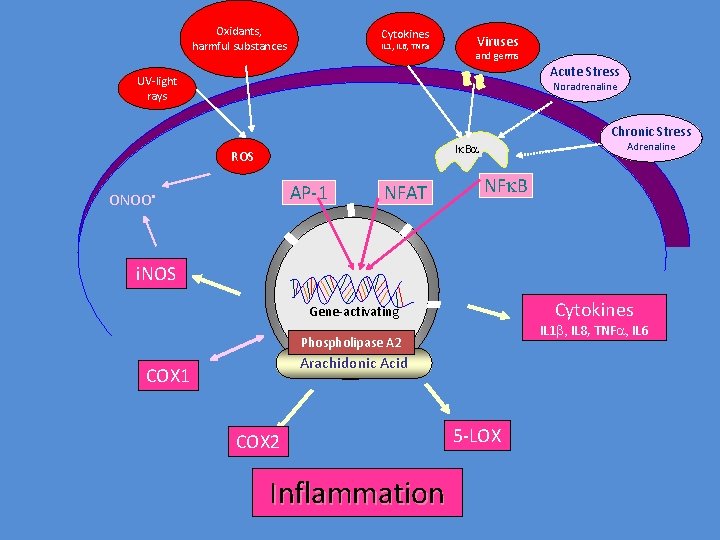
Oxidants, harmful substances Cytokines IL 1, IL 6, TNFa Viruses and germs Acute Stress UV-light rays Noradrenaline Chronic Stress Adrenaline Ik. B ROS AP-1 ONOO • NFAT NFk. B i. NOS Cytokines Gene-activating IL 1 b, IL 8, TNF , IL 6 Phospholipase A 2 Arachidonic Acid COX 1 COX 2 Inflammation 5 -LOX
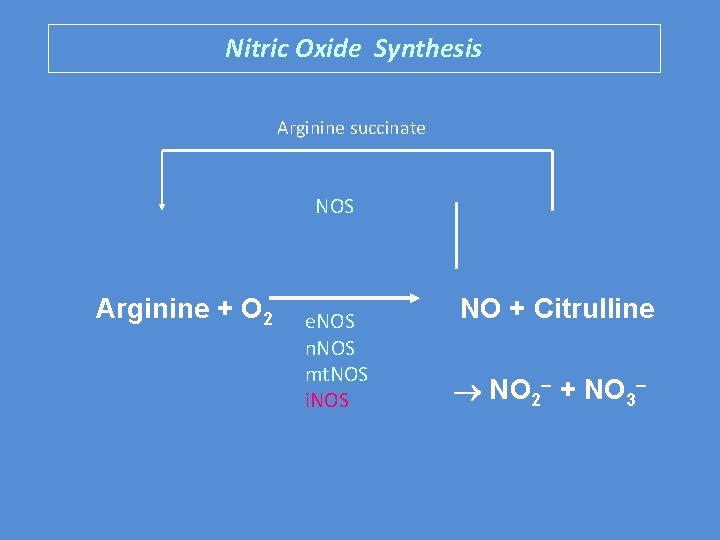
Nitric Oxide Synthesis Arginine succinate NOS Arginine + O 2 e. NOS n. NOS mt. NOS i. NOS NO + Citrulline NO 2 + NO 3
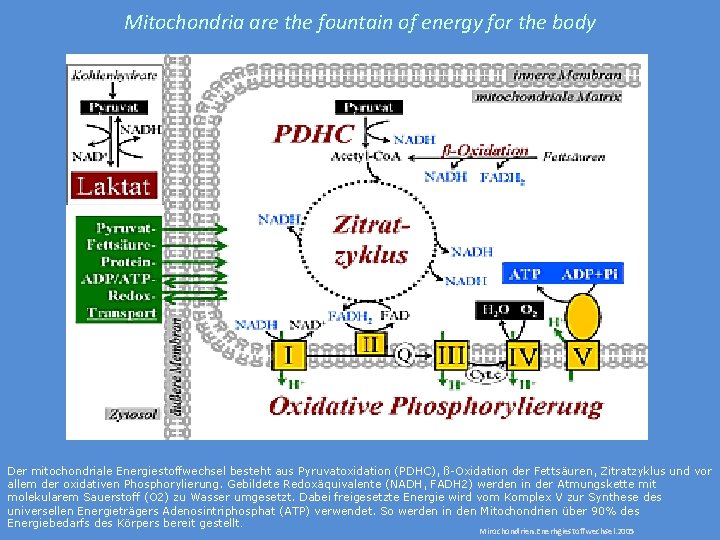
Mitochondria are the fountain of energy for the body Der mitochondriale Energiestoffwechsel besteht aus Pyruvatoxidation (PDHC), ß-Oxidation der Fettsäuren, Zitratzyklus und vor allem der oxidativen Phosphorylierung. Gebildete Redoxäquivalente (NADH, FADH 2) werden in der Atmungskette mit molekularem Sauerstoff (O 2) zu Wasser umgesetzt. Dabei freigesetzte Energie wird vom Komplex V zur Synthese des universellen Energieträgers Adenosintriphosphat (ATP) verwendet. So werden in den Mitochondrien über 90% des Energiebedarfs des Körpers bereit gestellt. Mirochondrien. Enerhgiestoffwechsel. 2005
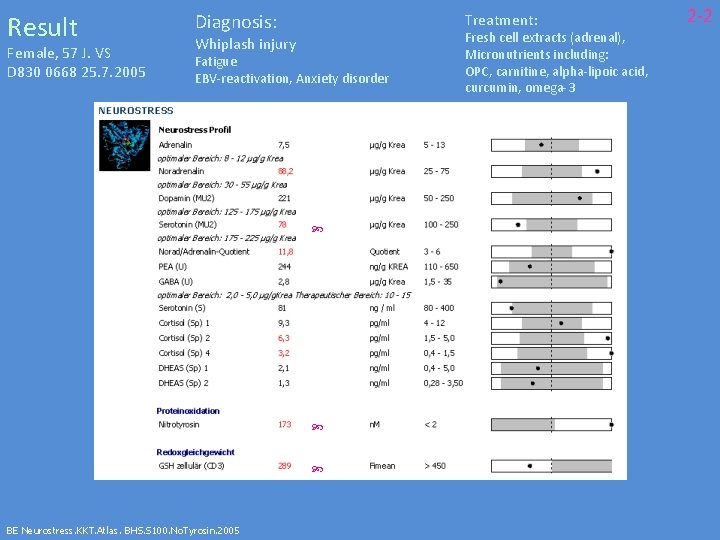
Result Female, 57 J. VS D 830 0668 25. 7. 2005 Diagnosis: Treatment: Whiplash injury Fatigue EBV-reactivation, Anxiety disorder BE Neurostress. KKT. Atlas. BHS. S 100. No. Tyrosin. 2005 Fresh cell extracts (adrenal), Micronutrients including: OPC, carnitine, alpha-lipoic acid, curcumin, omega-3 2 -2
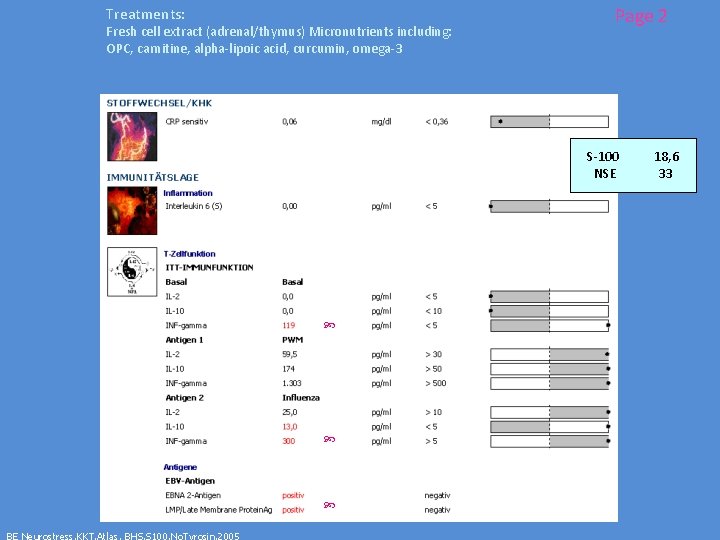
Treatments: Fresh cell extract (adrenal/thymus) Micronutrients including: OPC, carnitine, alpha-lipoic acid, curcumin, omega-3 Page 2 S-100 18, 6 NSE 33
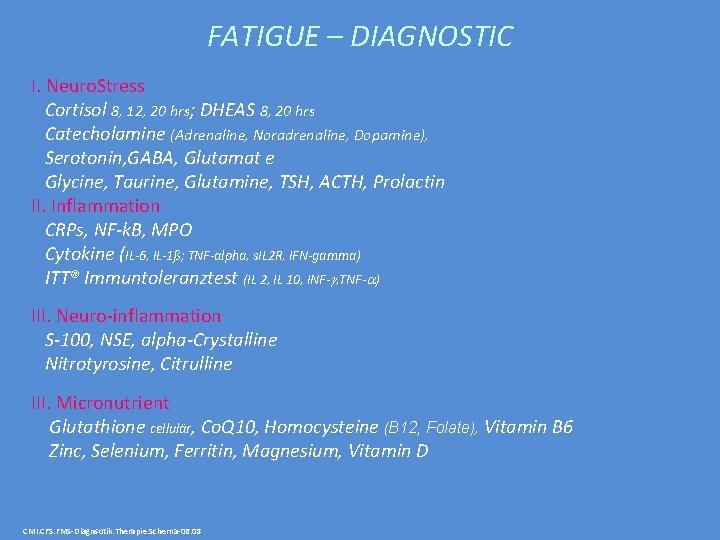
FATIGUE – DIAGNOSTIC I. Neuro. Stress Cortisol 8, 12, 20 hrs; DHEAS 8, 20 hrs Catecholamine (Adrenaline, Noradrenaline, Dopamine), Serotonin, GABA, Glutamat e Glycine, Taurine, Glutamine, TSH, ACTH, Prolactin II. Inflammation CRPs, NF-k. B, MPO Cytokine (IL-6, IL-1ß; TNF-alpha, s. IL 2 R, IFN-gamma) ITT® Immuntoleranztest (IL 2, IL 10, INF- , TNF- ) III. Neuro-inflammation S-100, NSE, alpha-Crystalline Nitrotyrosine, Citrulline III. Micronutrient Glutathione cellulär, Co. Q 10, Homocysteine (B 12, Folate), Vitamin B 6 Zinc, Selenium, Ferritin, Magnesium, Vitamin D CMI. CFS. FMS-Diagnsotik. Therapie. Schema-06. 08
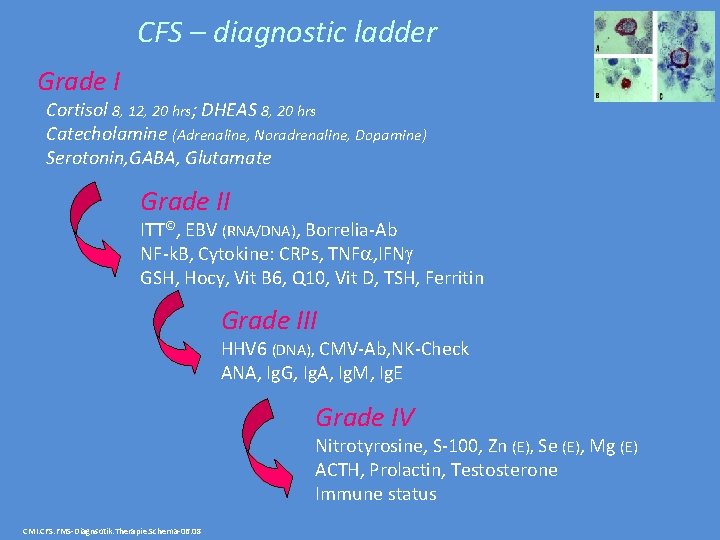
CFS – diagnostic ladder Grade I Cortisol 8, 12, 20 hrs; DHEAS 8, 20 hrs Catecholamine (Adrenaline, Noradrenaline, Dopamine) Serotonin, GABA, Glutamate Grade II ITT©, EBV (RNA/DNA), Borrelia-Ab NF-k. B, Cytokine: CRPs, TNF , IFN GSH, Hocy, Vit B 6, Q 10, Vit D, TSH, Ferritin Grade III HHV 6 (DNA), CMV-Ab, NK-Check ANA, Ig. G, Ig. A, Ig. M, Ig. E Grade IV Nitrotyrosine, S-100, Zn (E), Se (E), Mg (E) ACTH, Prolactin, Testosterone Immune status CMI. CFS. FMS-Diagnsotik. Therapie. Schema-06. 08
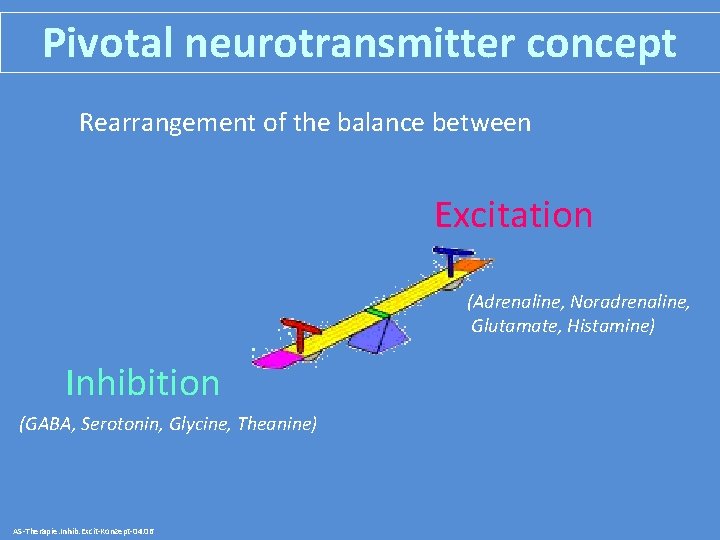
Pivotal neurotransmitter concept Rearrangement of the balance between Excitation (Adrenaline, Noradrenaline, Glutamate, Histamine) Inhibition (GABA, Serotonin, Glycine, Theanine) AS-Therapie. Inhib. Excit-Konzept-04. 06
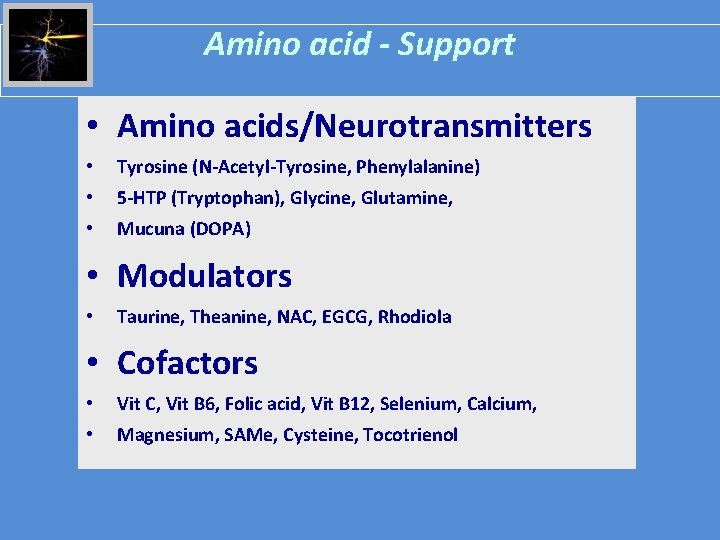
Amino acid - Support • Amino acids/Neurotransmitters • Tyrosine (N-Acetyl-Tyrosine, Phenylalanine) • 5 -HTP (Tryptophan), Glycine, Glutamine, • Mucuna (DOPA) • Modulators • Taurine, Theanine, NAC, EGCG, Rhodiola • Cofactors • Vit C, Vit B 6, Folic acid, Vit B 12, Selenium, Calcium, • Magnesium, SAMe, Cysteine, Tocotrienol
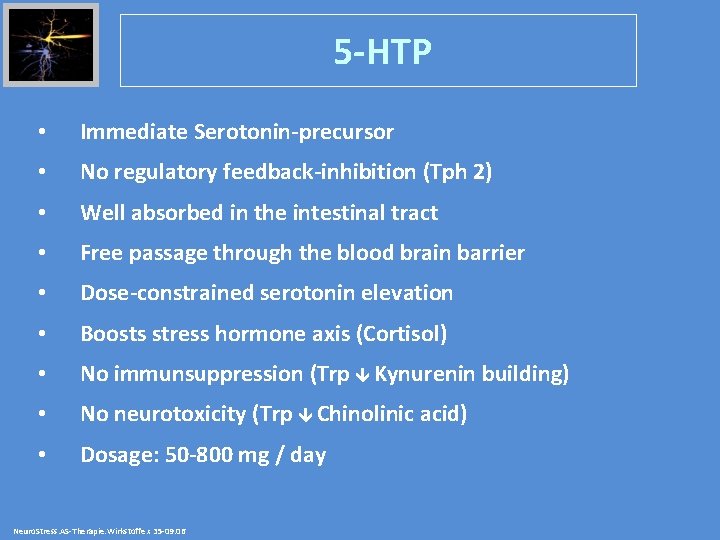
5 -HTP • Immediate Serotonin-precursor • No regulatory feedback-inhibition (Tph 2) • Well absorbed in the intestinal tract • Free passage through the blood brain barrier • Dose-constrained serotonin elevation • Boosts stress hormone axis (Cortisol) • No immunsuppression (Trp Kynurenin building) • No neurotoxicity (Trp Chinolinic acid) • Dosage: 50 -800 mg / day Neuro. Stress. AS-Therapie. Wirkstoffe x 35 -09. 06
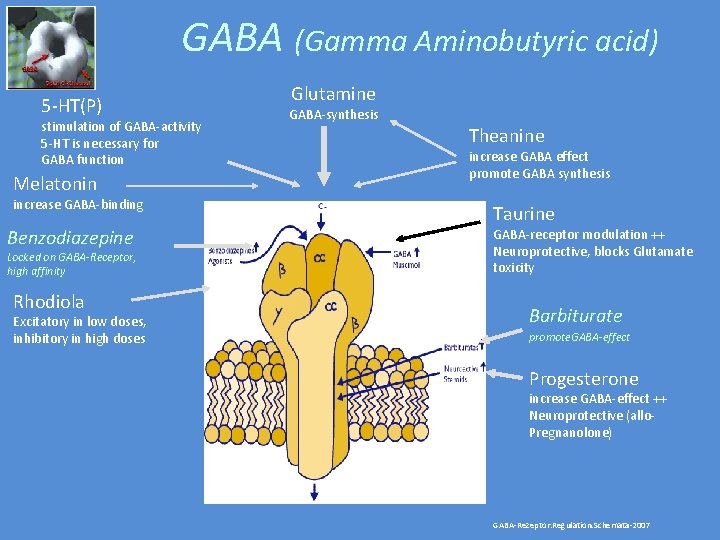
GABA (Gamma Aminobutyric acid) 5 -HT(P) stimulation of GABA-activity 5 -HT is necessary for GABA function Melatonin increase GABA-binding Benzodiazepine Locked on GABA-Receptor, high affinity Rhodiola Excitatory in low doses, inhibitory in high doses Glutamine GABA-synthesis Theanine increase GABA effect promote GABA synthesis Taurine GABA-receptor modulation ++ Neuroprotective, blocks Glutamate toxicity Barbiturate promote. GABA-effect Progesterone increase GABA-effect ++ Neuroprotective (allo. Pregnanolone) GABA-Rezeptor. Regulation. Schemata-2007
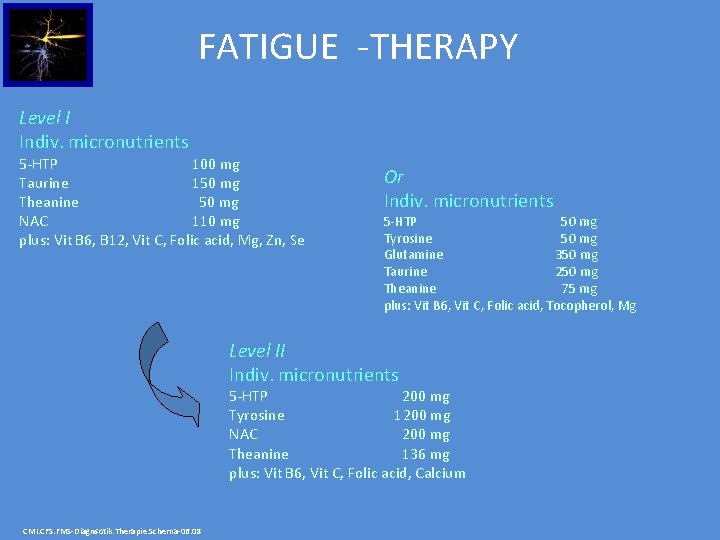
FATIGUE -THERAPY Level I Indiv. micronutrients 5 -HTP 100 mg Taurine 150 mg Theanine 50 mg NAC 110 mg plus: Vit B 6, B 12, Vit C, Folic acid, Mg, Zn, Se Or Indiv. micronutrients 5 -HTP 50 mg Tyrosine 50 mg Glutamine 350 mg Taurine 250 mg Theanine 75 mg plus: Vit B 6, Vit C, Folic acid, Tocopherol, Mg Level II Indiv. micronutrients 5 -HTP 200 mg Tyrosine 1200 mg NAC 200 mg Theanine 136 mg plus: Vit B 6, Vit C, Folic acid, Calcium CMI. CFS. FMS-Diagnsotik. Therapie. Schema-06. 08
Melatonin Neuroprotection • Melatonin is produced in darkness from Serotonin via NAcetylserotonin in the pineal glad • Neuronal Antioxidant – in reduced and in oxidised form • Potentiates GABA-Receptor building • Operates as sedative • Operates to promote sleep • Antagonist of Glutamate and Chinolinic acid (Trp-KYNMetabolite) • Operates as an anticonvulsant
Patient: C. J. (04/13/44) m. Diagnosis: CFS following drug abuse over 20 years, Osteopenia, Lack of concentration Therapy: Fresh cell extracts ( thymus, cerebrum, gut ) Detox
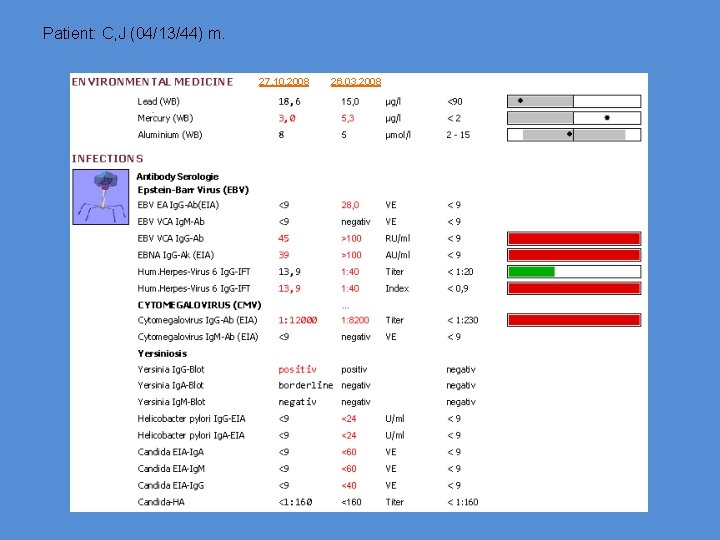
Patient: C, J (04/13/44) m. 27. 10. 2008 26. 03. 2008
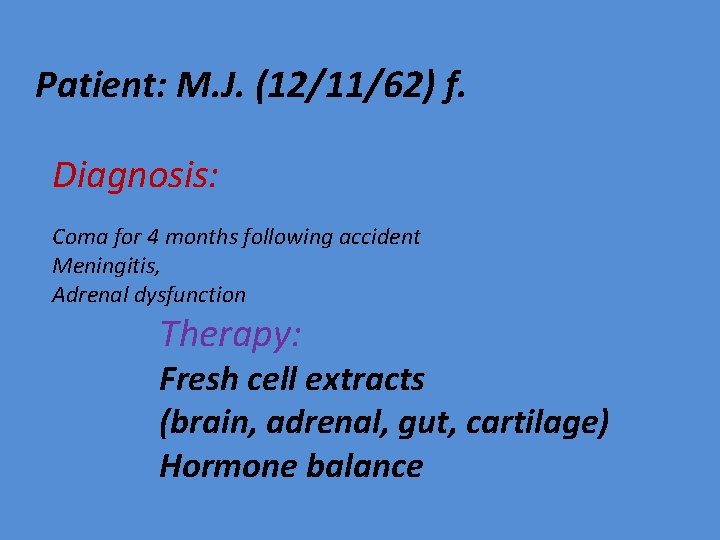
Patient: M. J. (12/11/62) f. Diagnosis: Coma for 4 months following accident Meningitis, Adrenal dysfunction Therapy: Fresh cell extracts (brain, adrenal, gut, cartilage) Hormone balance
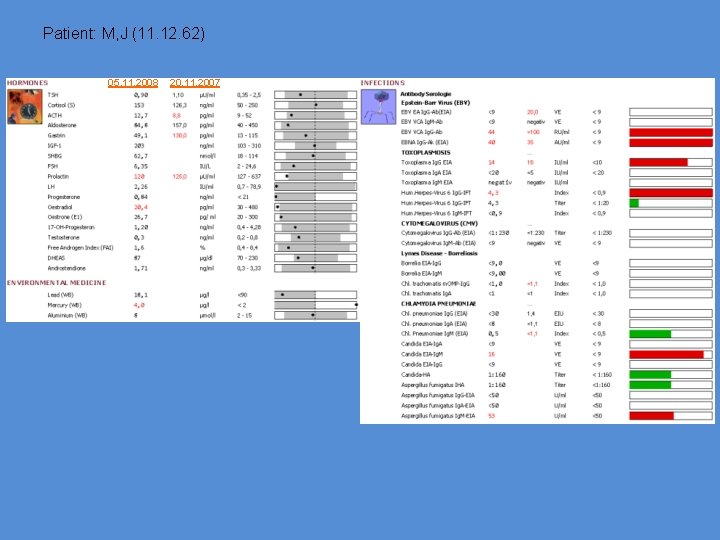
Patient: M, J (11. 12. 62) 05. 11. 2008 20. 11. 2007
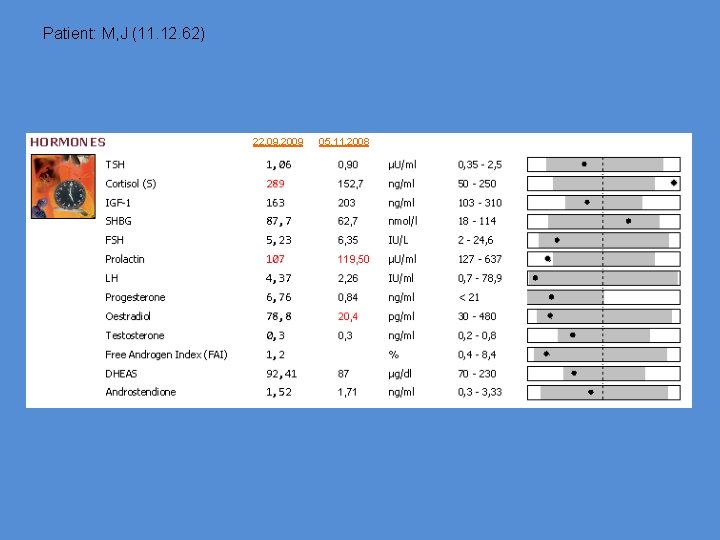
Patient: M, J (11. 12. 62) 22. 09. 2009 05. 11. 2008
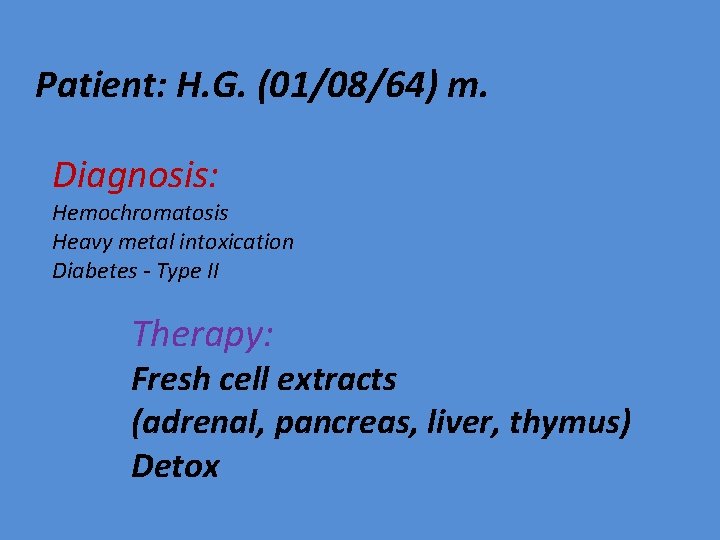
Patient: H. G. (01/08/64) m. Diagnosis: Hemochromatosis Heavy metal intoxication Diabetes - Type II Therapy: Fresh cell extracts (adrenal, pancreas, liver, thymus) Detox
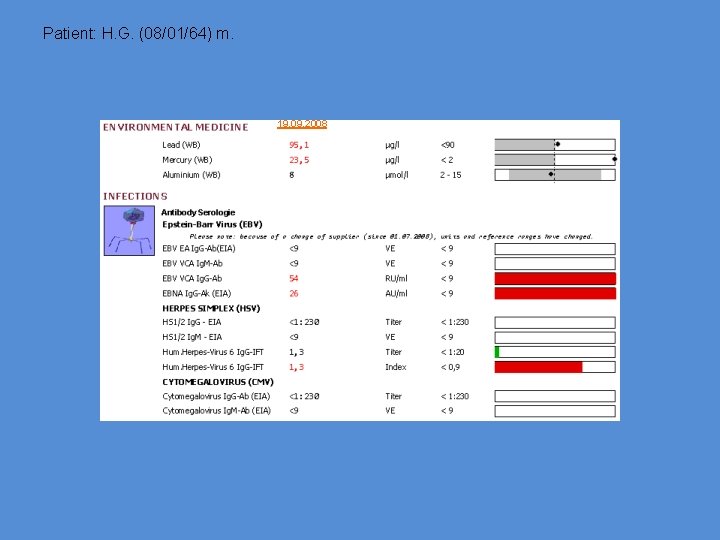
Patient: H. G. (08/01/64) m. 19. 09. 2008

Patient: H. G. (08/01/64) m. 10. 12. 2009
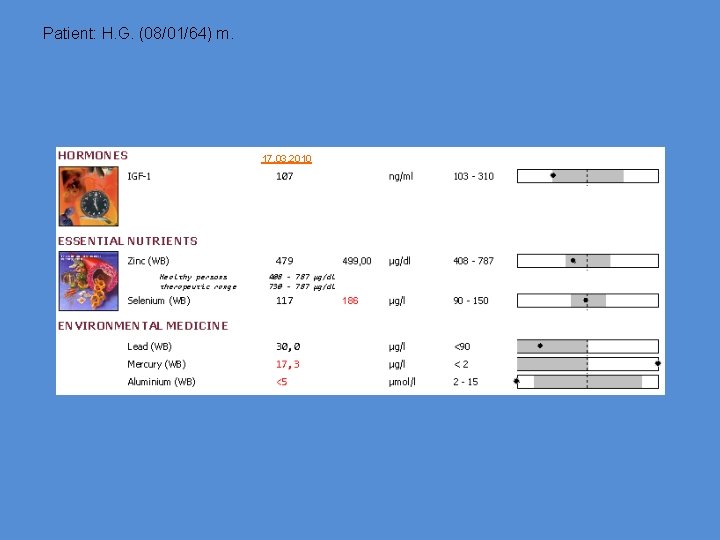
Patient: H. G. (08/01/64) m. 17. 03. 2010
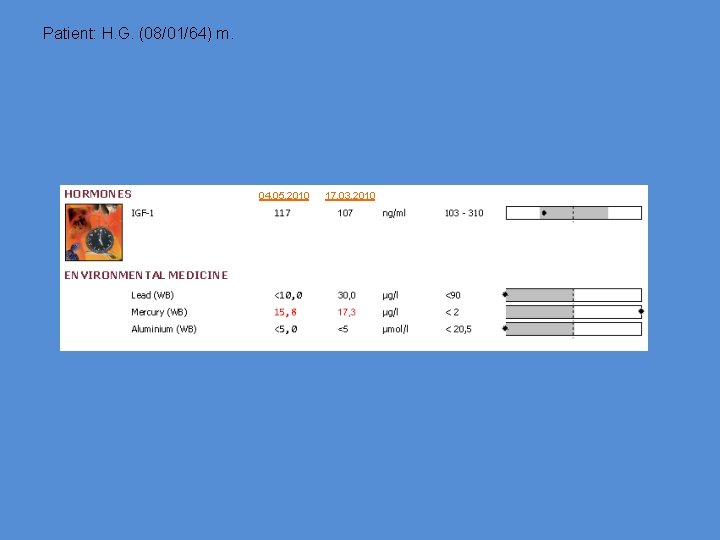
Patient: H. G. (08/01/64) m. 04. 05. 2010 17. 03. 2010
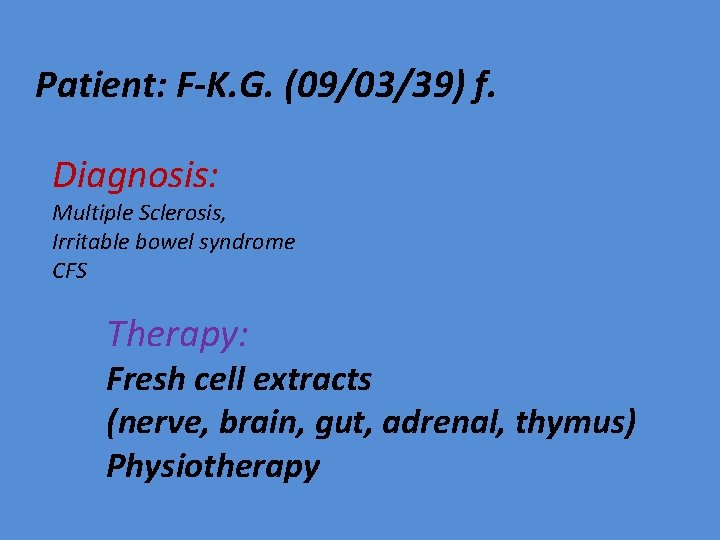
Patient: F-K. G. (09/03/39) f. Diagnosis: Multiple Sclerosis, Irritable bowel syndrome CFS Therapy: Fresh cell extracts (nerve, brain, gut, adrenal, thymus) Physiotherapy
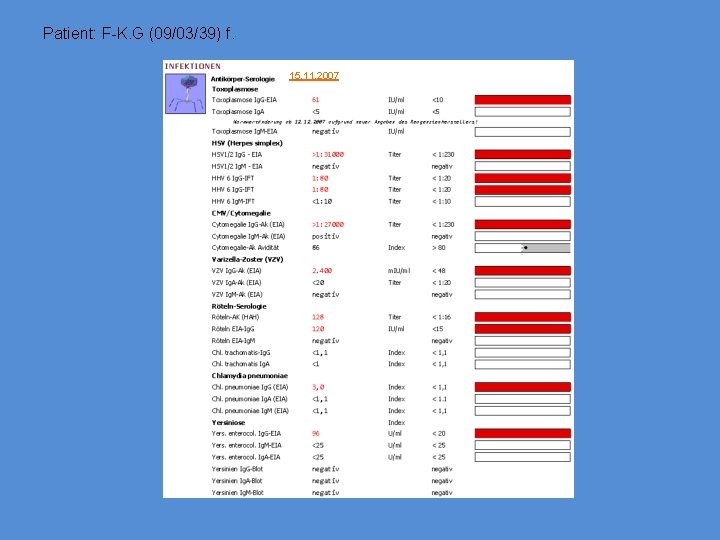
Patient: F-K. G (09/03/39) f. 15. 11. 2007
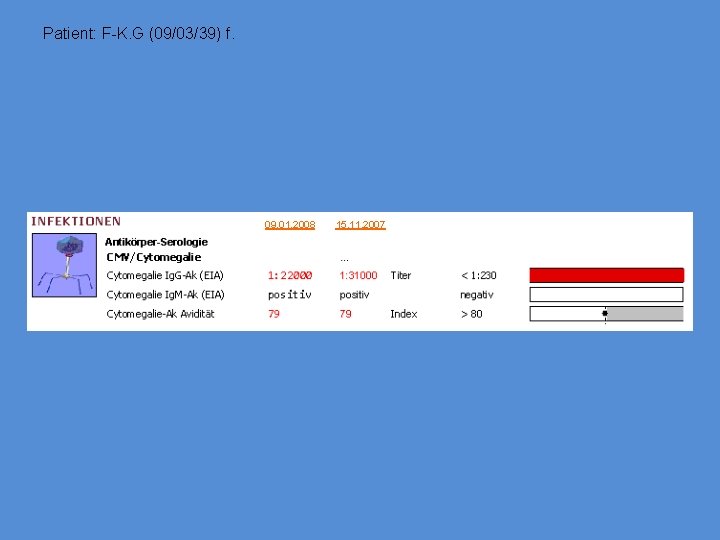
Patient: F-K. G (09/03/39) f. 09. 01. 2008 15. 11. 2007
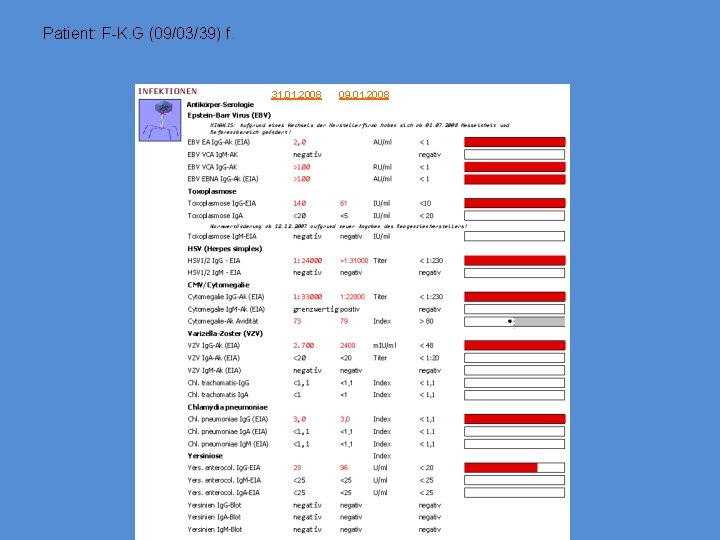
Patient: F-K. G (09/03/39) f. 31. 01. 2008 09. 01. 2008
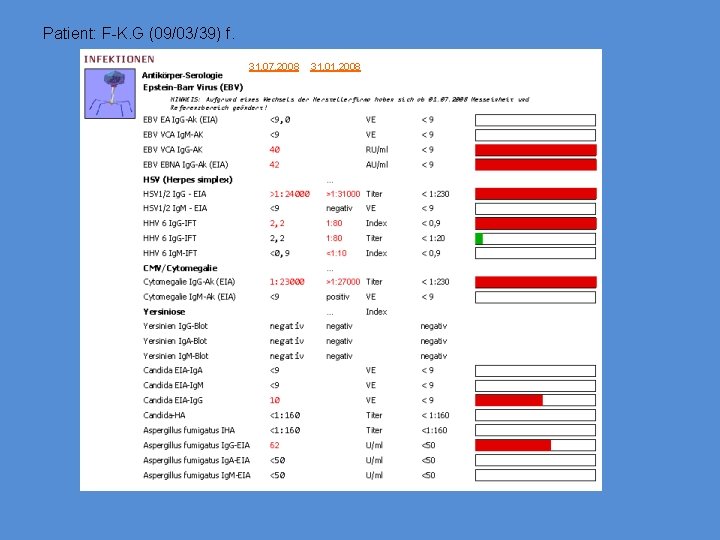
Patient: F-K. G (09/03/39) f. 31. 07. 2008 31. 01. 2008
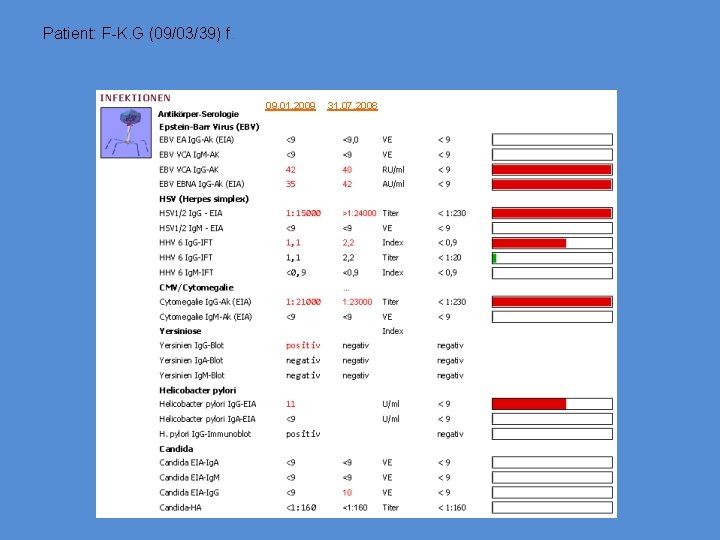
Patient: F-K. G (09/03/39) f. 09. 01. 2009 31. 07. 2008
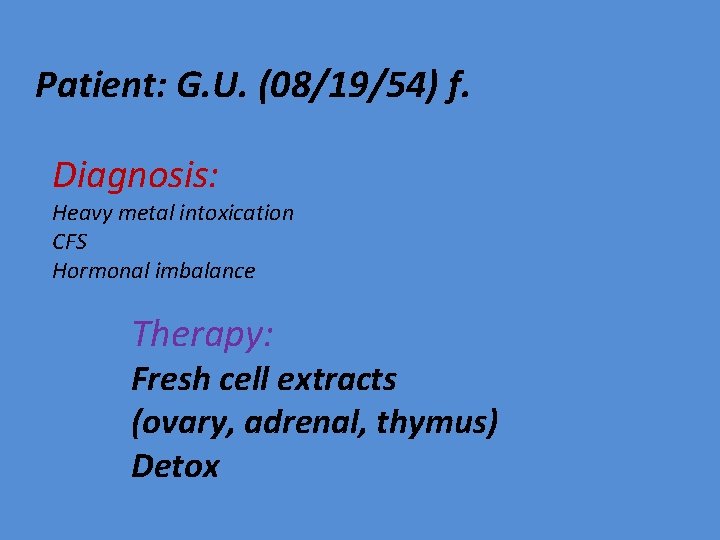
Patient: G. U. (08/19/54) f. Diagnosis: Heavy metal intoxication CFS Hormonal imbalance Therapy: Fresh cell extracts (ovary, adrenal, thymus) Detox
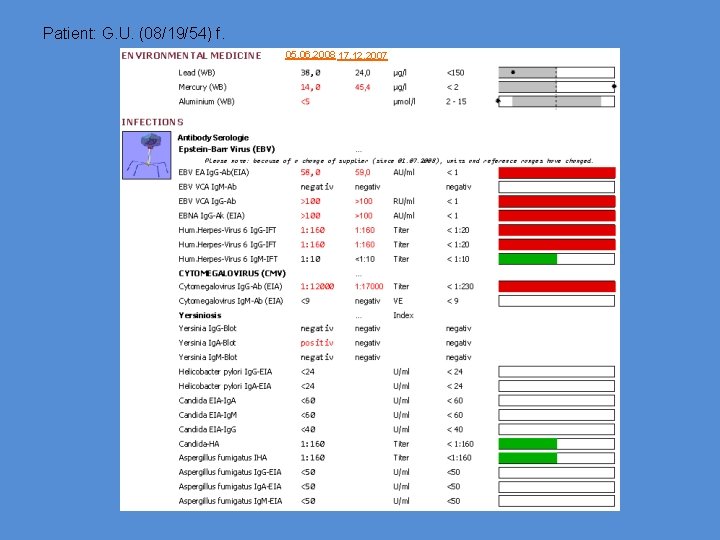
Patient: G. U. (08/19/54) f. 05. 06. 2008 17. 12. 2007
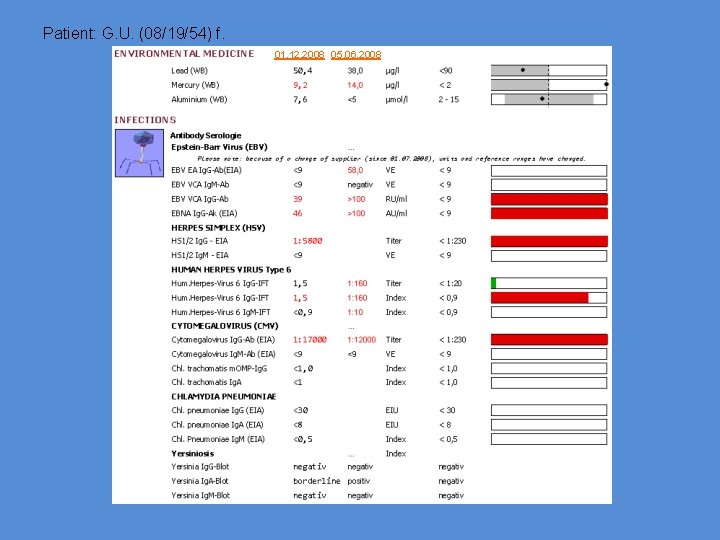
Patient: G. U. (08/19/54) f. 01. 12. 2008 05. 06. 2008
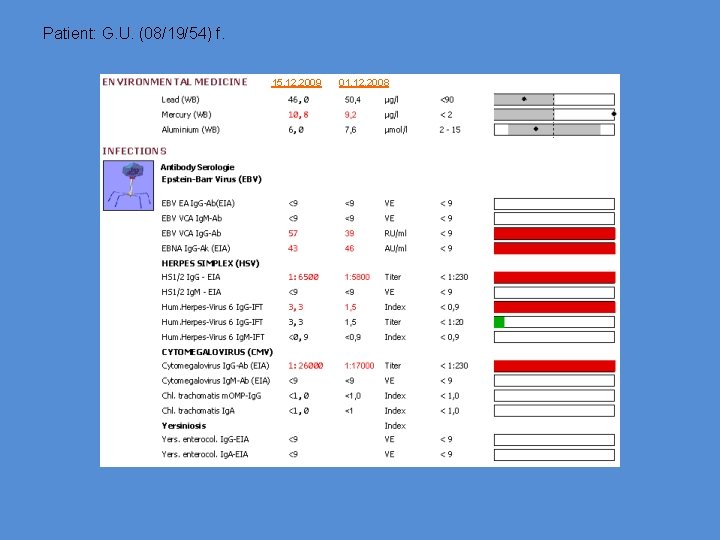
Patient: G. U. (08/19/54) f. 15. 12. 2009 01. 12. 2008
I hope you didn’t fall asleep… Thank you very much for your kind attention!
privat clinic Dr. Ursula Jacob Silberwaldstraße 34 72280 Dornstetten-Hallwangen Tel. : +49 (0) 7443 – 964 24 – 0 Fax: +49 (0) 7443 – 964 24 – 99 klinik@ursula-jacob. de www. ursula-jacob. de Thursday, February 25, 2021
- Slides: 102