
DR SHRADDHA RATHI MAXILLARY COMPLETE DENTURE MANDIBULAR DISTAL
DR SHRADDHA RATHI
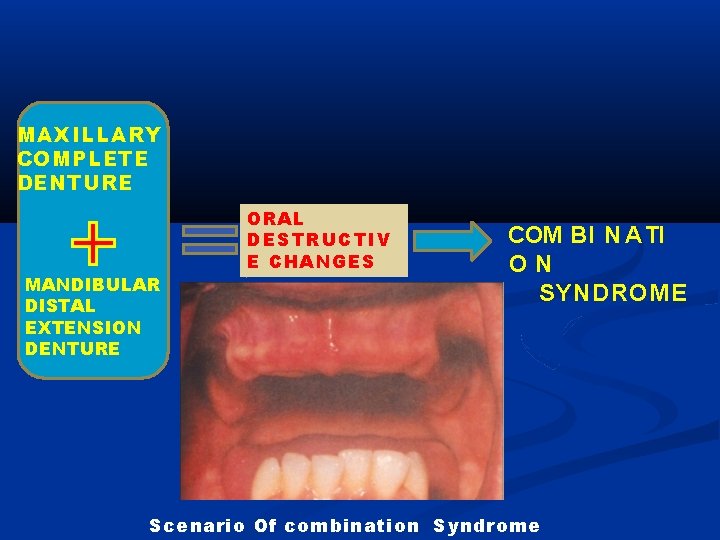
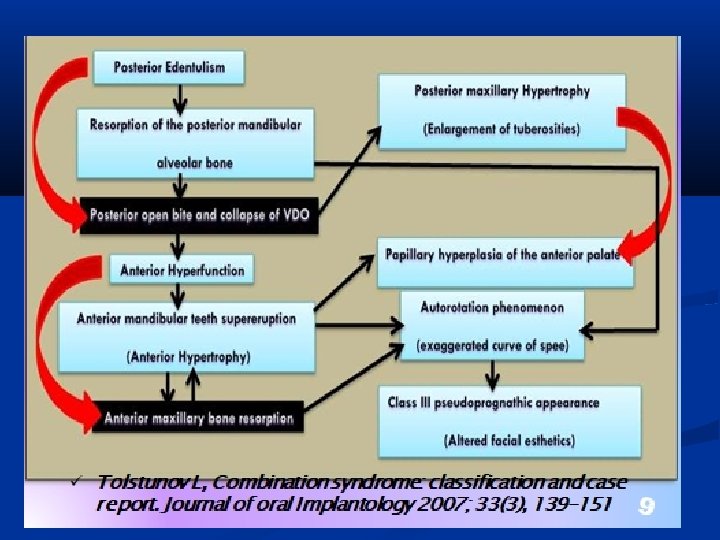
MAXILLARY COMPLETE DENTURE MANDIBULAR DISTAL EXTENSION DENTURE ORAL DESTRUCTIV E CHANGES COM BI N ATI ON SYNDROME Scenario Of combination Syndrome
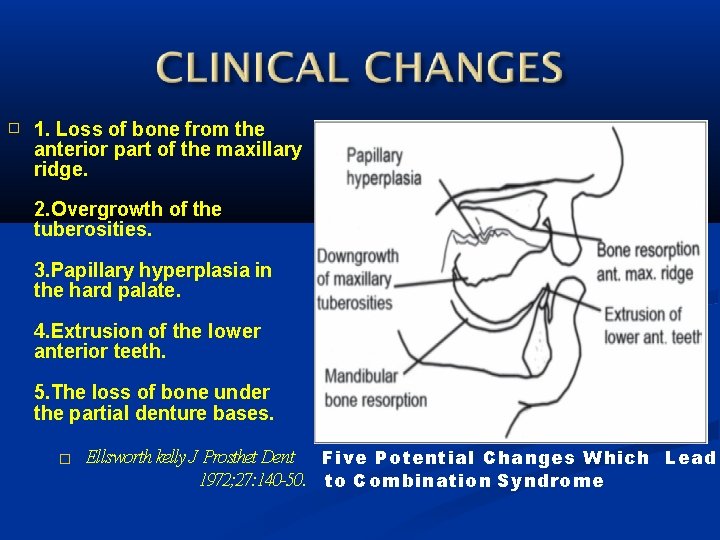
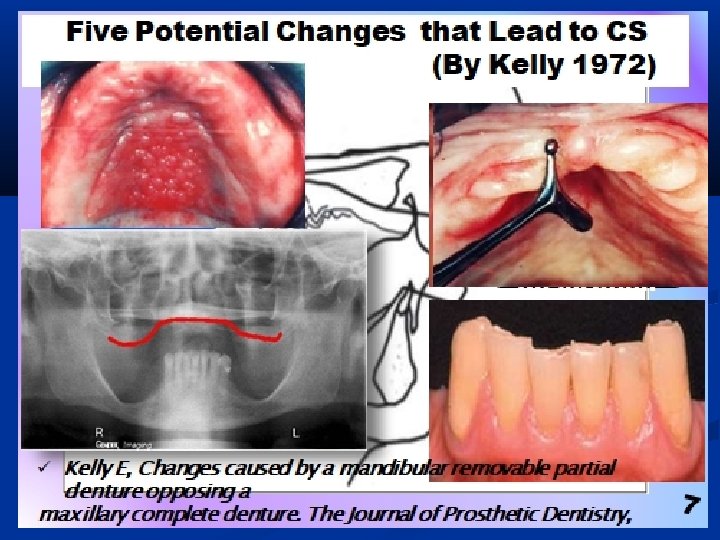
� 1. Loss of bone from the anterior part of the maxillary ridge. 2. Overgrowth of the tuberosities. 3. Papillary hyperplasia in the hard palate. 4. Extrusion of the lower anterior teeth. 5. The loss of bone under the partial denture bases. � Ellsworth kelly J Prosthet Dent Five Potential Changes Which Lead 1972; 27: 140 -50. to Combination Syndrome
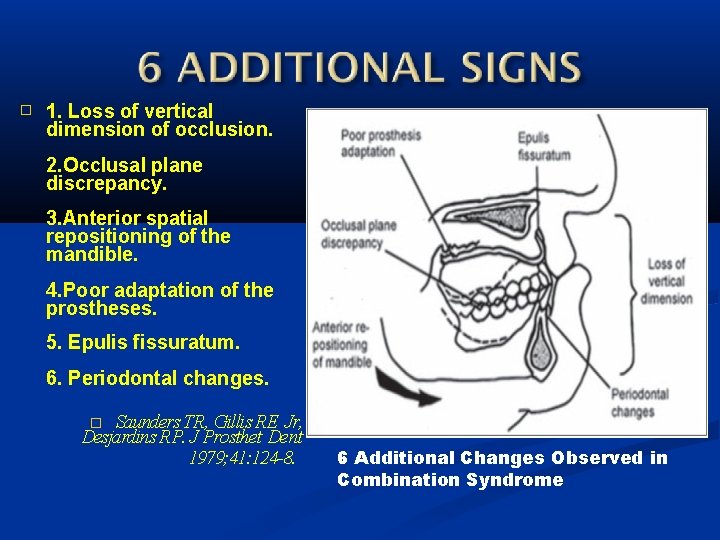
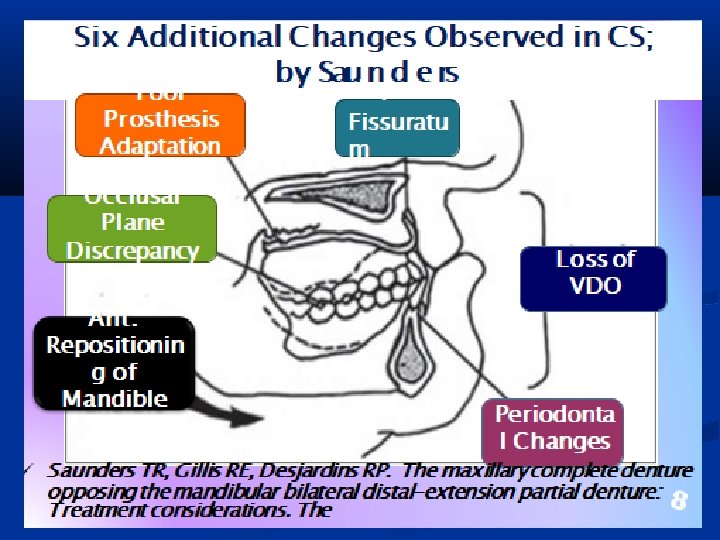
� 1. Loss of vertical dimension of occlusion. 2. Occlusal plane discrepancy. 3. Anterior spatial repositioning of the mandible. 4. Poor adaptation of the prostheses. 5. Epulis fissuratum. 6. Periodontal changes. Saunders TR, Gillis RE Jr, Desjardins RP. J Prosthet Dent 1979; 41: 124 -8. � 6 Additional Changes Observed in Combination Syndrome
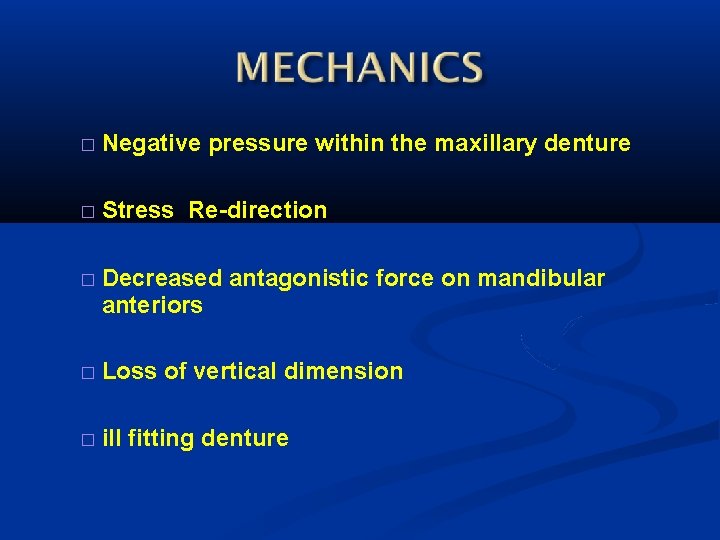
� Negative pressure within the maxillary denture � Stress Re-direction � Decreased antagonistic force on mandibular anteriors � Loss of vertical dimension � ill fitting denture
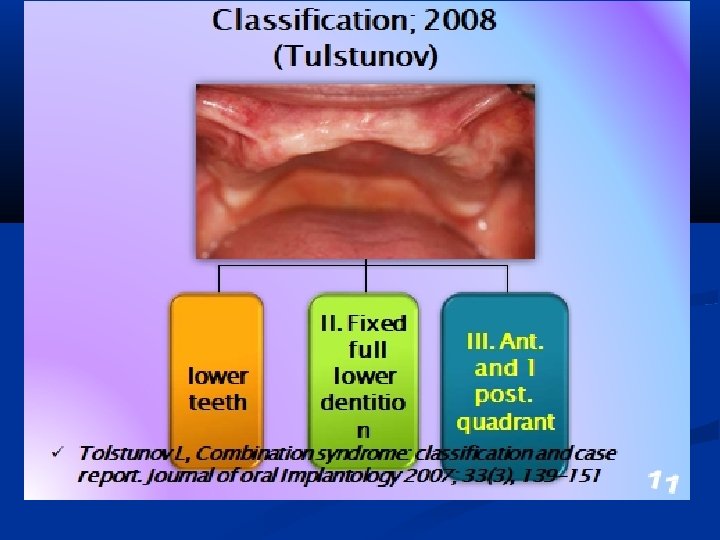
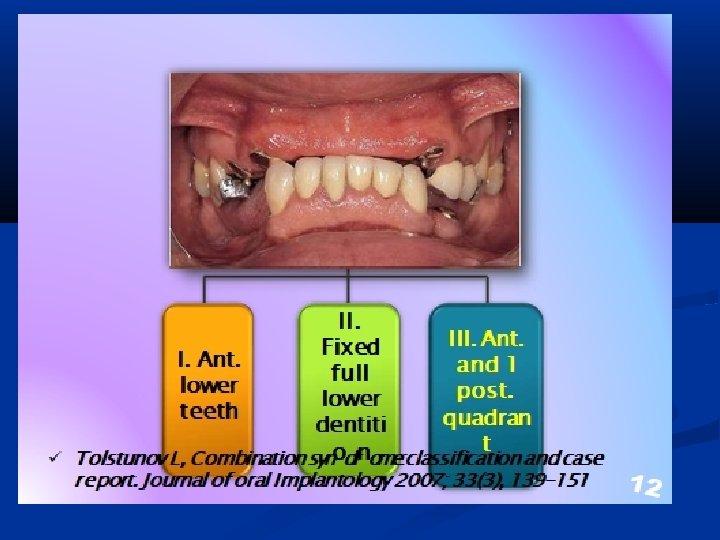
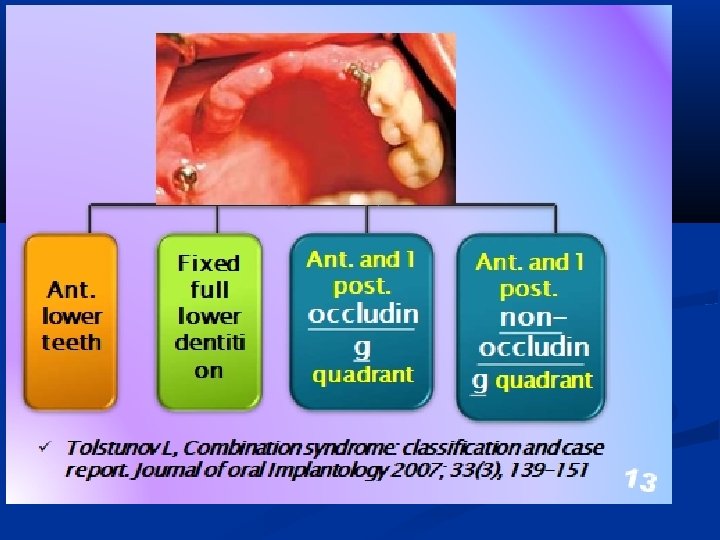
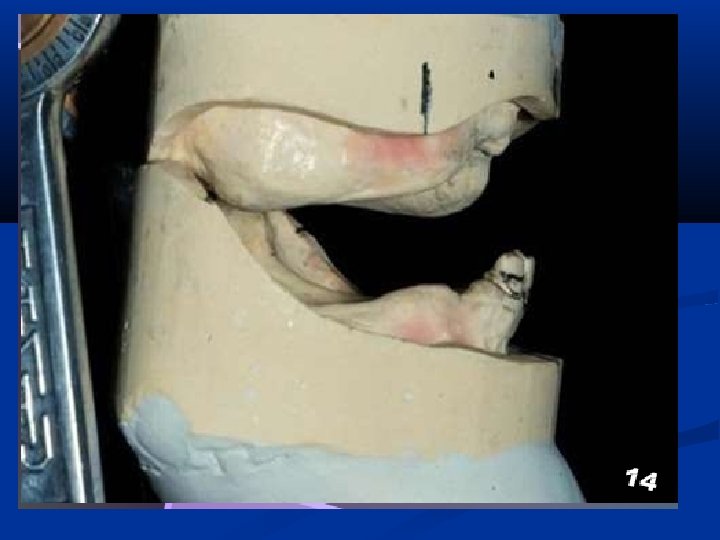
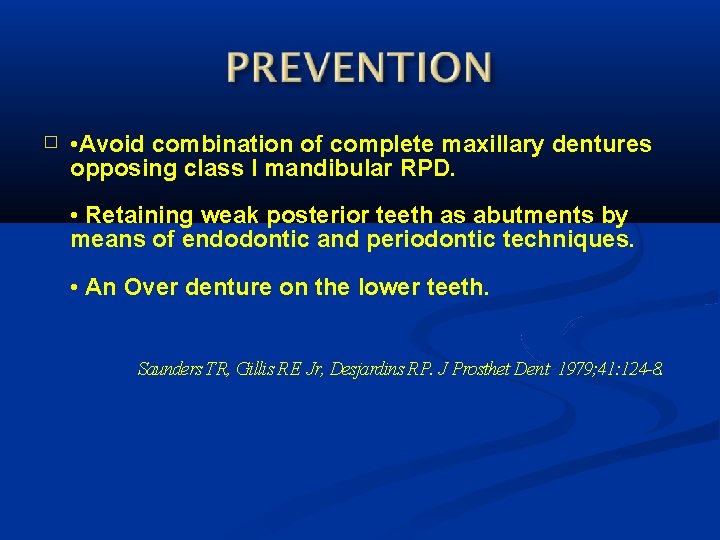
� • Avoid combination of complete maxillary dentures opposing class I mandibular RPD. • Retaining weak posterior teeth as abutments by means of endodontic and periodontic techniques. • An Over denture on the lower teeth. Saunders TR, Gillis RE Jr, Desjardins RP. J Prosthet Dent 1979; 41: 124 -8.
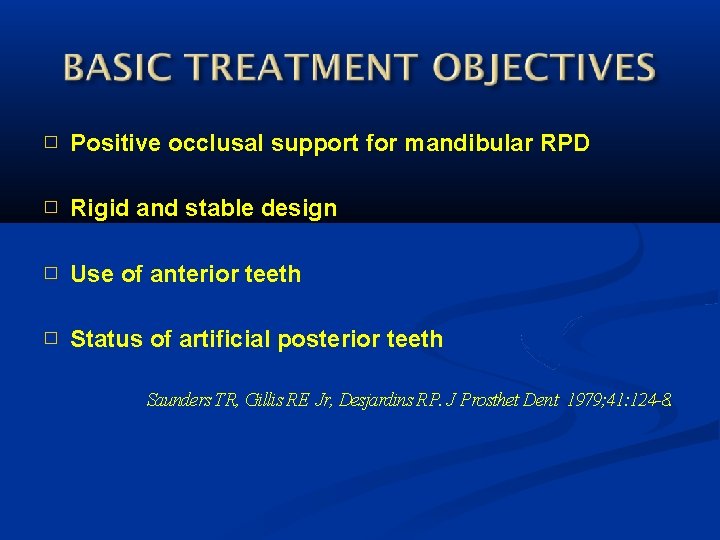
� Positive occlusal support for mandibular RPD � Rigid and stable design � Use of anterior teeth � Status of artificial posterior teeth Saunders TR, Gillis RE Jr, Desjardins RP. J Prosthet Dent 1979; 41: 124 -8.
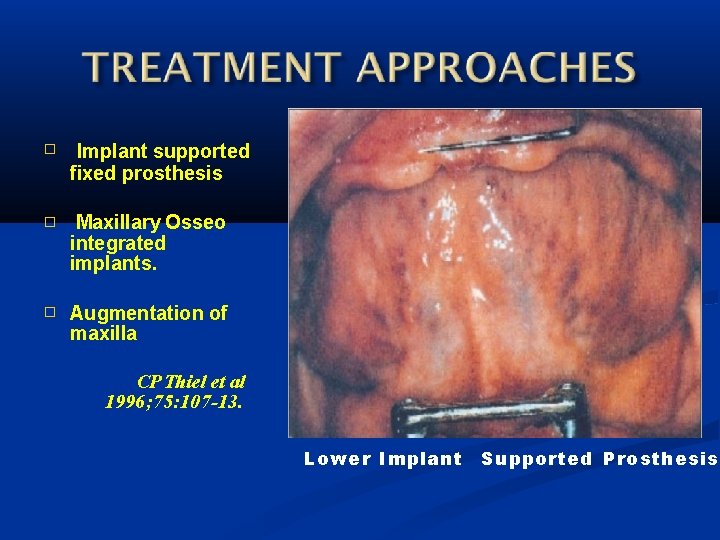
� Implant supported fixed prosthesis � Maxillary Osseo integrated implants. � Augmentation of maxilla CP Thiel et al 1996; 75: 107 -13. Lower Implant Supported Prosthesis
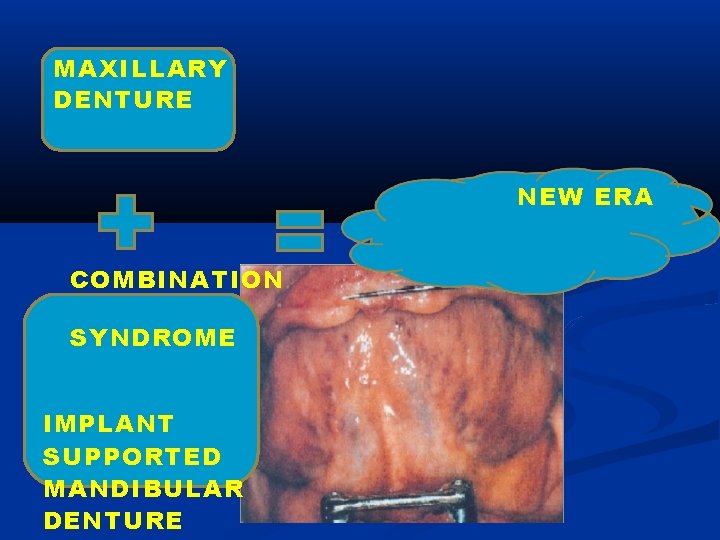
MAXILLARY DENTURE NEW ERA COMBINATION SYNDROME IMPLANT SUPPORTED MANDIBULAR DENTURE
MECHANICS Increased displacing forces to the upper denture from Vertical chewing pattern ruminatory pattern Changes to a
As the chewing pattern changes, the features of the ideal occlusal prescription also changes
THE SCENARIO IN SHORT… As the lower denture becomes more retentive……. Ineffective mastication Very unretentive upper denture. The ruminatory pattern of mastication Unable to exert any control over the mandible Wennerberg A, Carlsson GE, Jemt T. 2001; 14: 550 -5.
SOLUTIONS � Principles of good retention and stability � Designing of the occlusion � Implants on the upper jaw Wennerberg A, Carlsson GE, Jemt T. 2001; 14: 550 -5.
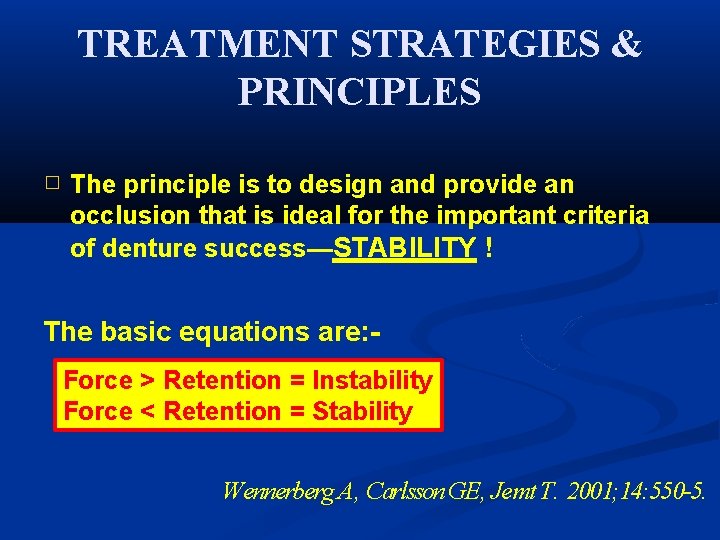
TREATMENT STRATEGIES & PRINCIPLES � The principle is to design and provide an occlusion that is ideal for the important criteria of denture success—STABILITY ! The basic equations are: Force > Retention = Instability Force < Retention = Stability Wennerberg A, Carlsson GE, Jemt T. 2001; 14: 550 -5.
OCCLUSAL DESIGNING � The occlusal prescription provided is a major factor in determining the size of the force applied to the dentures � The patients masticatory patterns defines the retentive capacity of the dentures Wennerberg A, Carlsson GE, Jemt T. 2001; 14: 550 -5.
CONCLUSION � Almost inevitable tissue changes occur in the patients wearing upper complete and lower partial dentures. � The dentist should plan the treatment modalities with care and institute them with caution. � The patient should be educated well about the fact that the longest life of the prosthesis can only be attained by frequent visits and maintenance care

- Slides: 27