
Dr Sailesh Sankar Associate Dean HEEWM Director Medical



- Slides: 38
Dr Sailesh Sankar Associate Dean –HEEWM Director Medical Education-UHCW NHS Trust
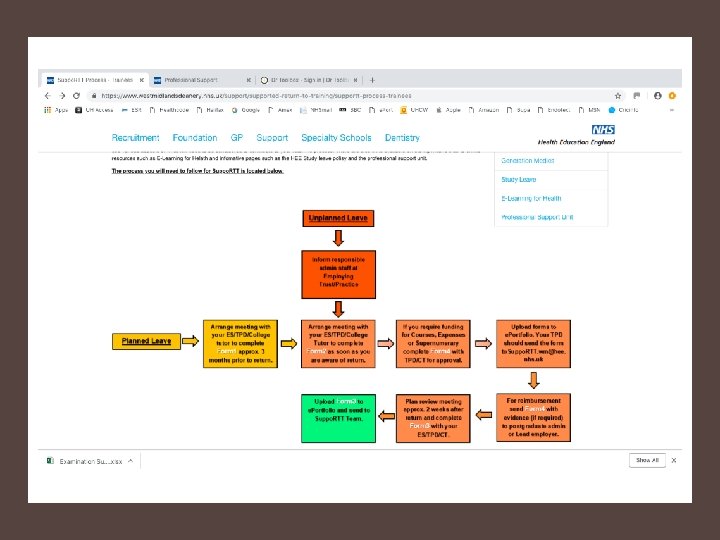
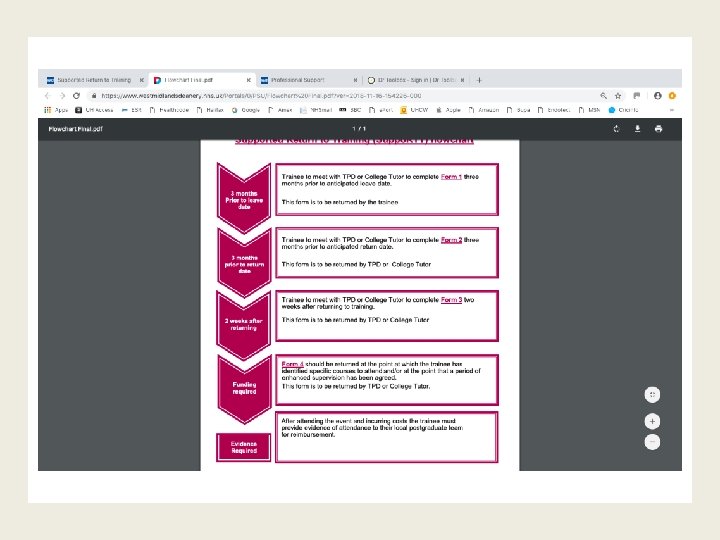
Supported Return to Training • Approximately 50, 000 doctors in England who are currently undertaking postgraduate medical training. Approximately 10% taking approved time out of programme, at any given time • A diverse group of doctors, facing wide-ranging challenges • Secretary of State reasserted commitment to returners in his keynote speech to NHS Providers, November 2016 • HEE commitment in Junior Doctor’s Contract agreement • https: //www. youtube. com/watch? v=MK 3 WLUOk. Ad. E
Whom does it apply to? • Doctors returning to practice after an absence ØMaternity or Parental leave ØApproved Out Of Progamme (Research / Experience / Career Break) ØSickness absence ØRestrictions on clinical practice ØSuspension by Trust or GMC ØPlanned and unplanned leave
Suppo. RTT in West Midlands
West Midlands Suppo. RTT Structure • Supported Return to Training sits within PSU structure Ø Dr Sailesh Sankar – Associate Postgraduate Dean Ø Samantha Turley – Supported Return to Training Officer Ø Dr Vicky Bower – Supported Return to Training Clinical Fellow Ø Doreen Davis – PSU Manager
Main considerations with trainees • Up-to-date courses Ø Life support courses (ALS, APLS, NLS) Ø Safeguarding • Changes in Training requirements Ø e. Portfolio Ø WBAs Ø Curricula Ø Exams • Revalidation • Confidence and Anxieties about returning
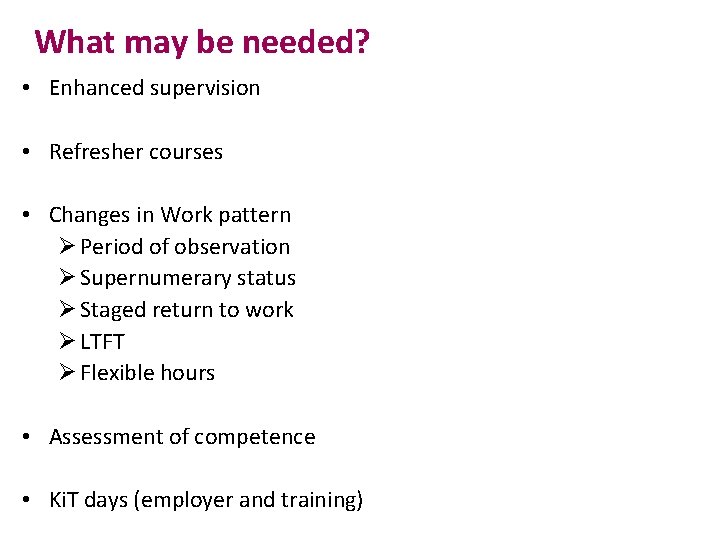
What may be needed? • Enhanced supervision • Refresher courses • Changes in Work pattern Ø Period of observation Ø Supernumerary status Ø Staged return to work Ø LTFT Ø Flexible hours • Assessment of competence • Ki. T days (employer and training)
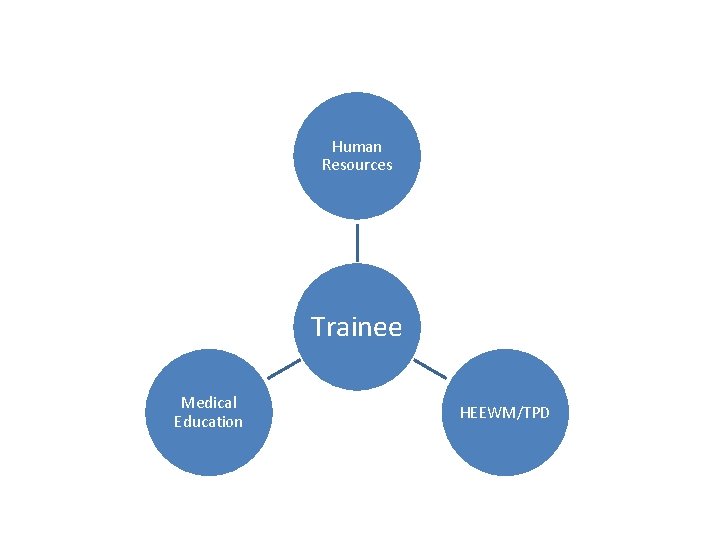
Human Resources Trainee Medical Education HEEWM/TPD
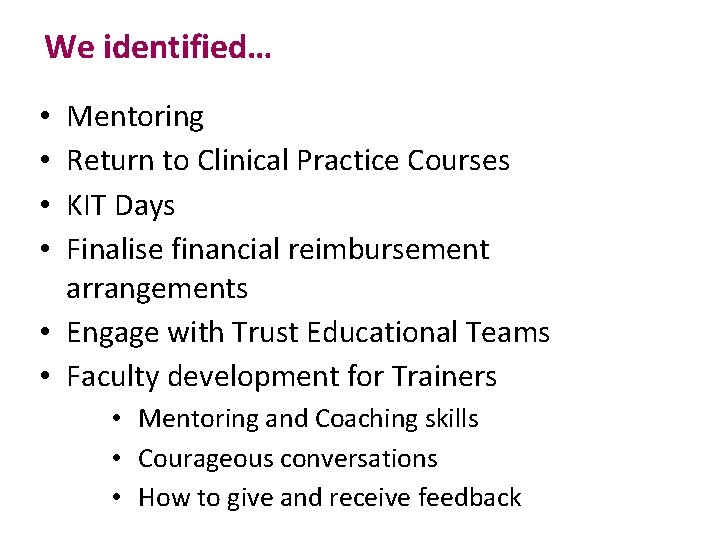
We identified… Mentoring Return to Clinical Practice Courses KIT Days Finalise financial reimbursement arrangements • Engage with Trust Educational Teams • Faculty development for Trainers • • • Mentoring and Coaching skills • Courageous conversations • How to give and receive feedback
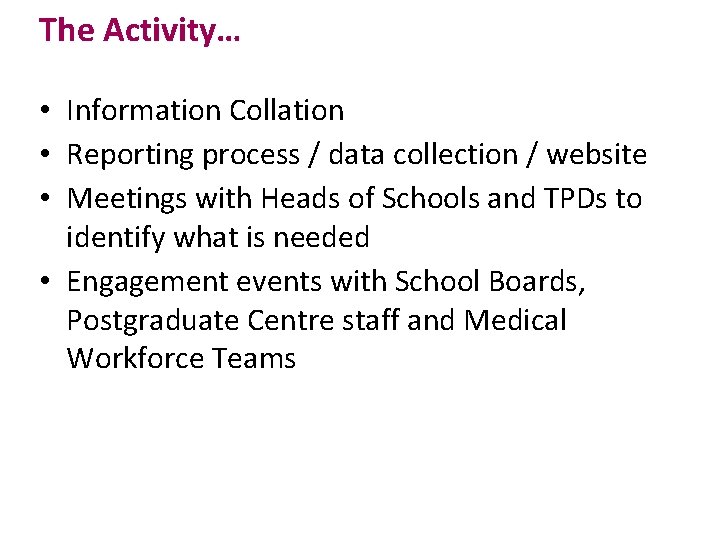
The Activity… • Information Collation • Reporting process / data collection / website • Meetings with Heads of Schools and TPDs to identify what is needed • Engagement events with School Boards, Postgraduate Centre staff and Medical Workforce Teams
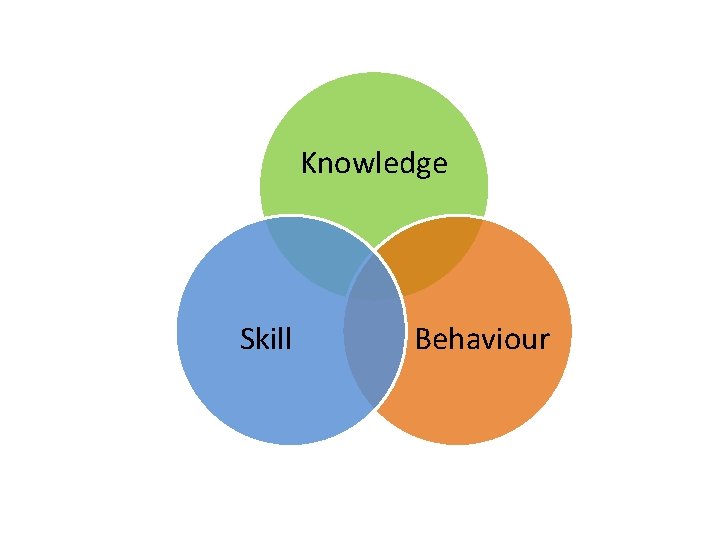
Knowledge Skill Behaviour
• All trainees who have had a period of absence of 6 months or more are entitled to a 2 -week enhanced supervision period • This can be altered to what you and your ES/TPD think is required • Basic salary will be paid for this period
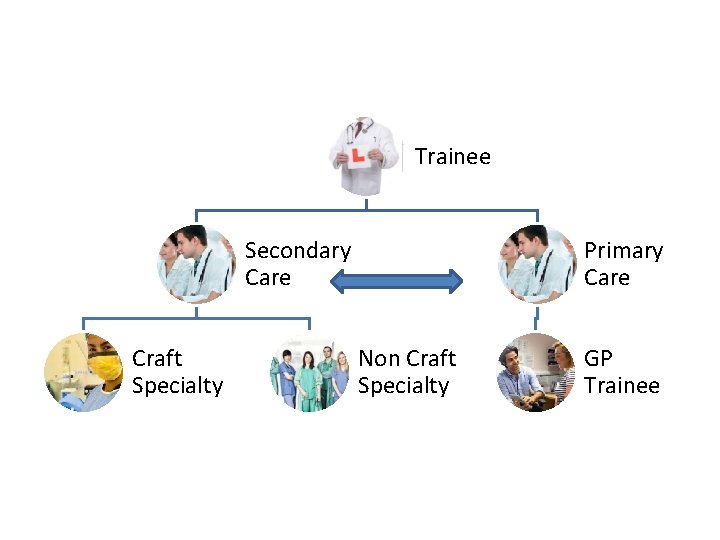
Trainee Secondary Care Craft Specialty Primary Care Non Craft Specialty GP Trainee
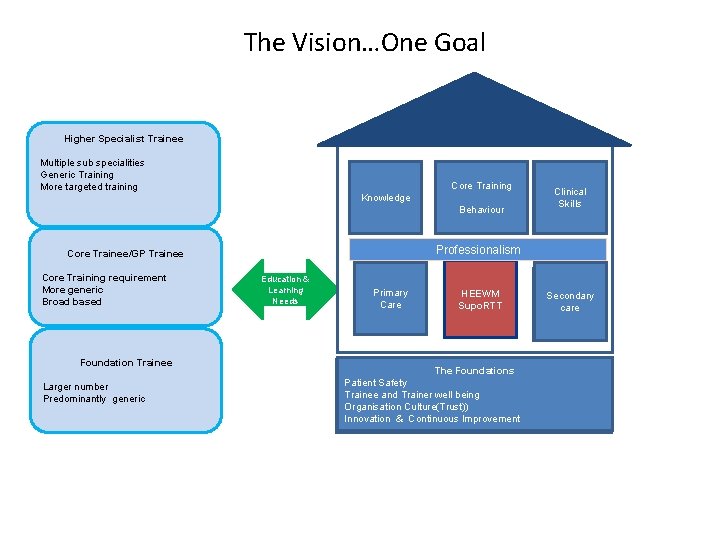
The Vision…One Goal Higher Specialist Trainee Multiple sub specialities Generic Training More targeted training Core Knowledge Training Foundation Trainee Larger number Predominantly generic Clinical Skills Professionalism Core Trainee/GP Trainee Core Training requirement More generic Broad based Core Training Professional Development Behaviour Education & Learning Needs Talent Primary & Leadership Care HEEWM Supo. RTT The Foundations The Patient Safety In-situ delivery Crosswell professional Trainee and Trainer being development Clinically driven Flexible Organisation Culture(Trust)) Self Funding Maximising technology Innovation & Continuous Improvement Linked to Innovation Hub & Research Academy Library & Secondary Knowledge care Services
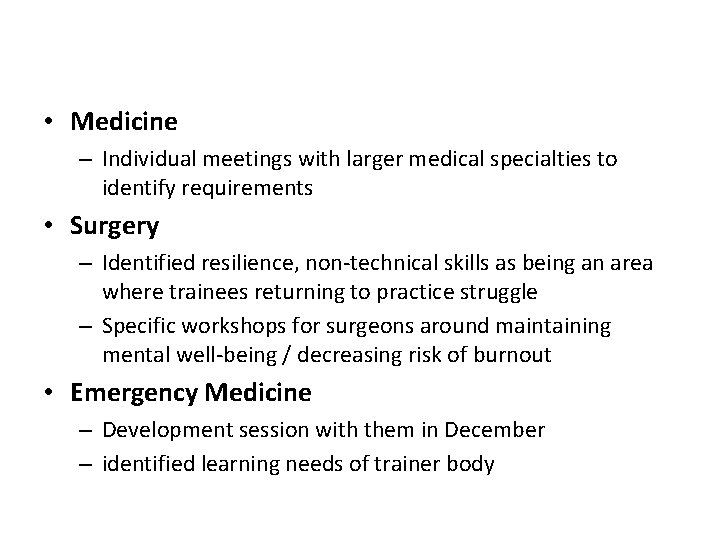
• Medicine – Individual meetings with larger medical specialties to identify requirements • Surgery – Identified resilience, non-technical skills as being an area where trainees returning to practice struggle – Specific workshops for surgeons around maintaining mental well-being / decreasing risk of burnout • Emergency Medicine – Development session with them in December – identified learning needs of trainer body
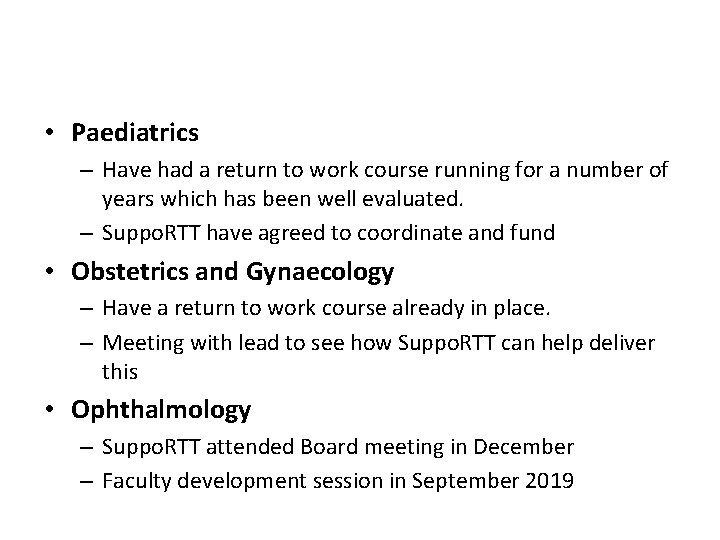
• Paediatrics – Have had a return to work course running for a number of years which has been well evaluated. – Suppo. RTT have agreed to coordinate and fund • Obstetrics and Gynaecology – Have a return to work course already in place. – Meeting with lead to see how Suppo. RTT can help deliver this • Ophthalmology – Suppo. RTT attended Board meeting in December – Faculty development session in September 2019
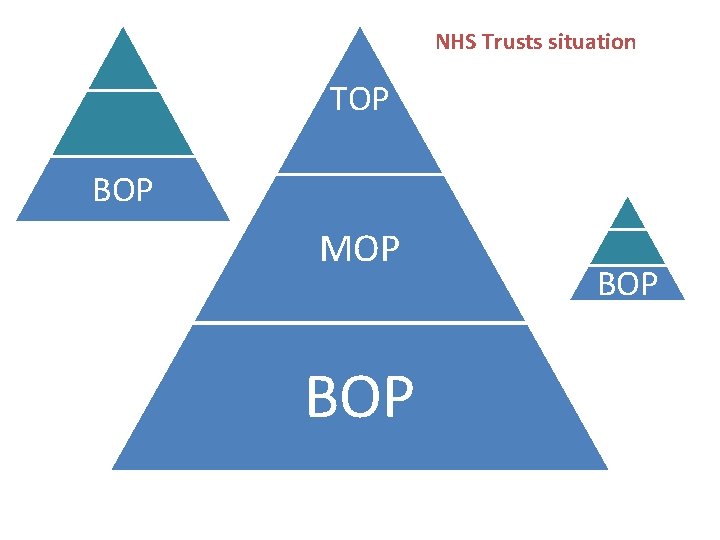
NHS Trusts situation TOP BOP MOP BOP
Supported Return to Training – Surgical Psychology Service • one-day course for HEEWM School of Surgery Trainees who are returning to clinical practice following a period of absence to achieve an increase in the trainee’s self-awareness and management of Stress and Anxiety caused from the anticipation of returning to practice to ultimately contribute to an improved performance
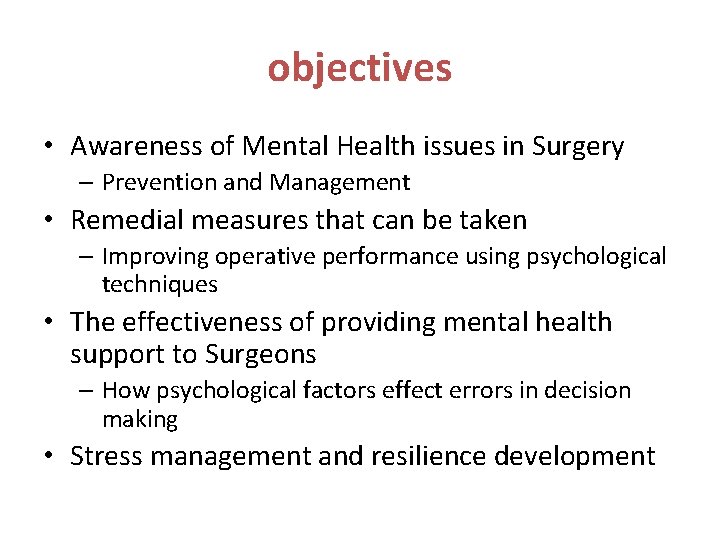
objectives • Awareness of Mental Health issues in Surgery – Prevention and Management • Remedial measures that can be taken – Improving operative performance using psychological techniques • The effectiveness of providing mental health support to Surgeons – How psychological factors effect errors in decision making • Stress management and resilience development
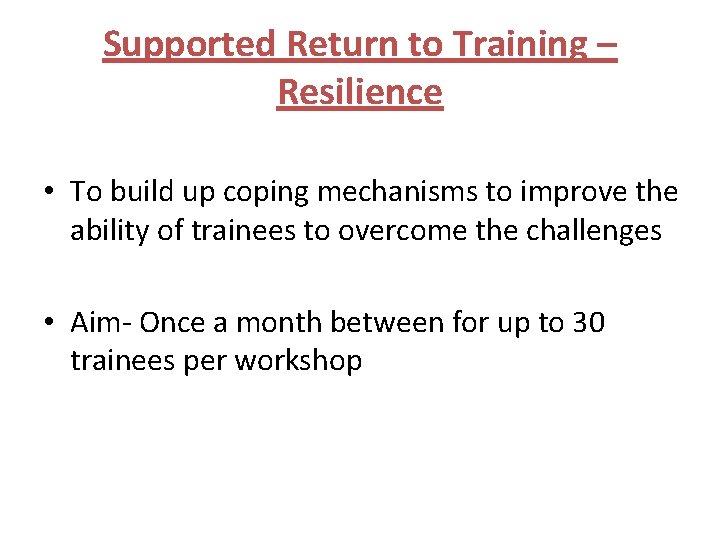
Supported Return to Training – Resilience • To build up coping mechanisms to improve the ability of trainees to overcome the challenges • Aim- Once a month between for up to 30 trainees per workshop
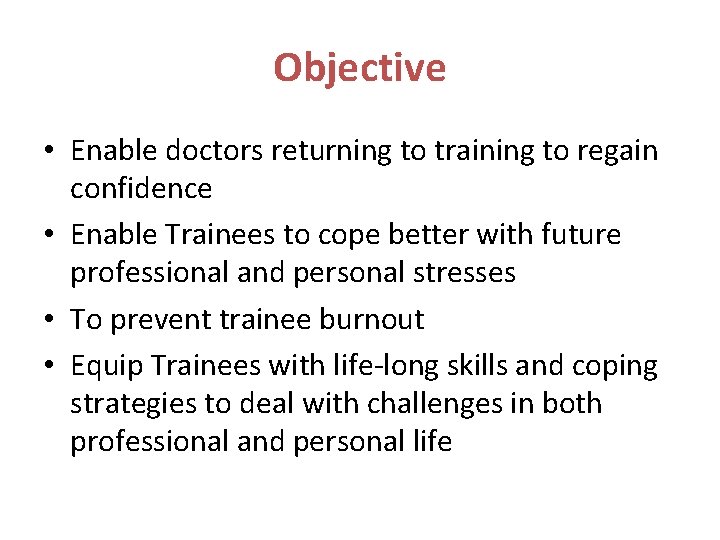
Objective • Enable doctors returning to training to regain confidence • Enable Trainees to cope better with future professional and personal stresses • To prevent trainee burnout • Equip Trainees with life-long skills and coping strategies to deal with challenges in both professional and personal life
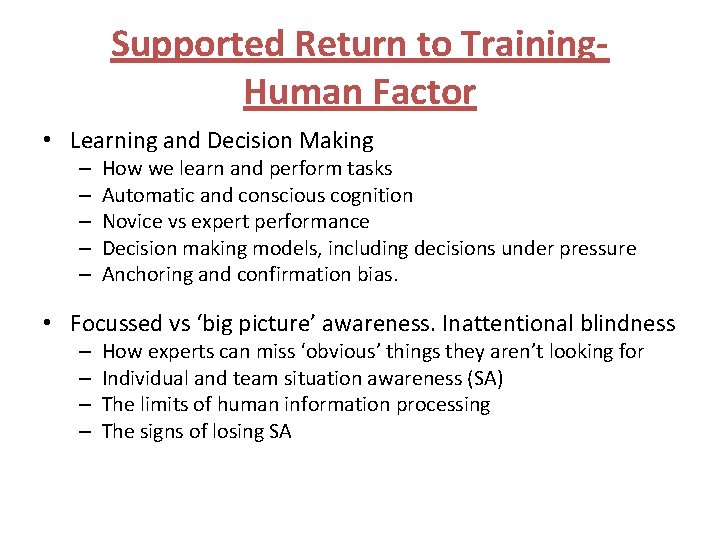
Supported Return to Training. Human Factor • Learning and Decision Making – – – How we learn and perform tasks Automatic and conscious cognition Novice vs expert performance Decision making models, including decisions under pressure Anchoring and confirmation bias. • Focussed vs ‘big picture’ awareness. Inattentional blindness – – How experts can miss ‘obvious’ things they aren’t looking for Individual and team situation awareness (SA) The limits of human information processing The signs of losing SA
Objective • The impact of fatigue and shift work – Strategies for individual resilience. • How culture drives behaviour – Groupthink and organisational blindness – How to engage with strong cultures to drive change. • Communication barriers and tools, including escalation strategies • What makes a team? – The multi-team framework – Teams vs pseudo-teams.
Objective • Leadership and followership – Briefing & debriefing – Situational leadership. • Why are people difficult? – Unconscious bias – Informational vs interpersonal conflict – Tools for achieving a positive outcome • Environmental challenges – Equipment Usability – Alarm fatigue & alarm management
Supported Return to Training – Upskilling the Educators • Self-awareness – Managing their own stress – Working with colleagues/trainees with differing personalities • Managing trainees – – Developing a trainee’s self-awareness, Helping trainees improve confidence and resilience Supporting a trainee with additional needs Supporting a trainee in crisis including recognition • Giving and receiving feedback • Having courageous conversations • Mentoring and coaching skills
Objective • Skills in managing trainees as well as giving feedback and having difficult conversations • Identifying concerns and signposting to relevant resources • To increase trainee self-awareness and guiding them to seek out the support best suited to them as an individual. • Supporting a trainee through challenging times
Supported Return to Training – Acute specialities return to work Sim • For trainees – Medicine – Emergency Medicine – ACCS
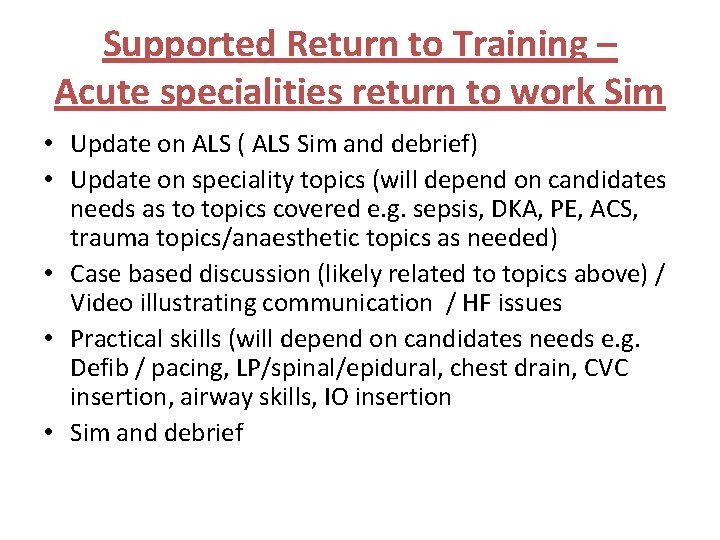
Supported Return to Training – Acute specialities return to work Sim • Update on ALS ( ALS Sim and debrief) • Update on speciality topics (will depend on candidates needs as to topics covered e. g. sepsis, DKA, PE, ACS, trauma topics/anaesthetic topics as needed) • Case based discussion (likely related to topics above) / Video illustrating communication / HF issues • Practical skills (will depend on candidates needs e. g. Defib / pacing, LP/spinal/epidural, chest drain, CVC insertion, airway skills, IO insertion • Sim and debrief
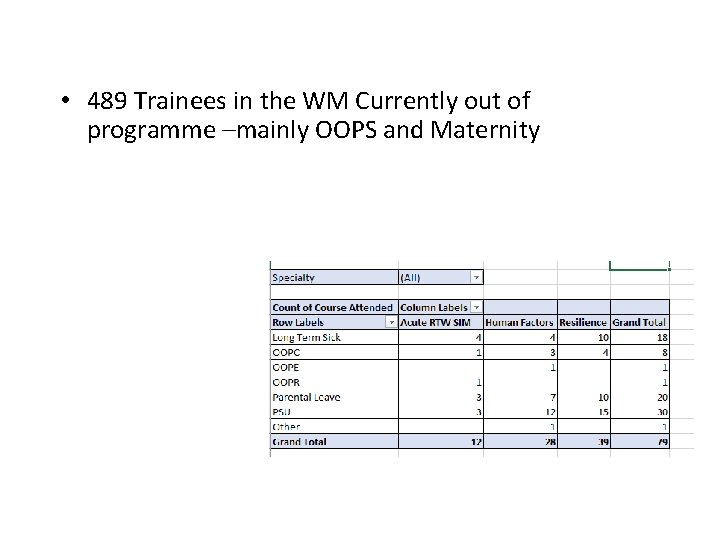
• 489 Trainees in the WM Currently out of programme –mainly OOPS and Maternity West midlands Data
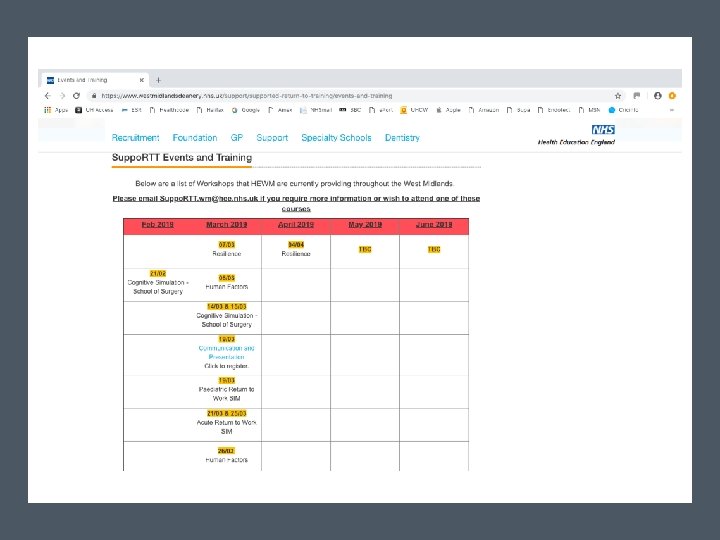
• Courses in the new financial year – Cognitive Simulation – Paediatric RTW – Communication and presentation • Out of those returning in the last 6 months - 35 completed the process
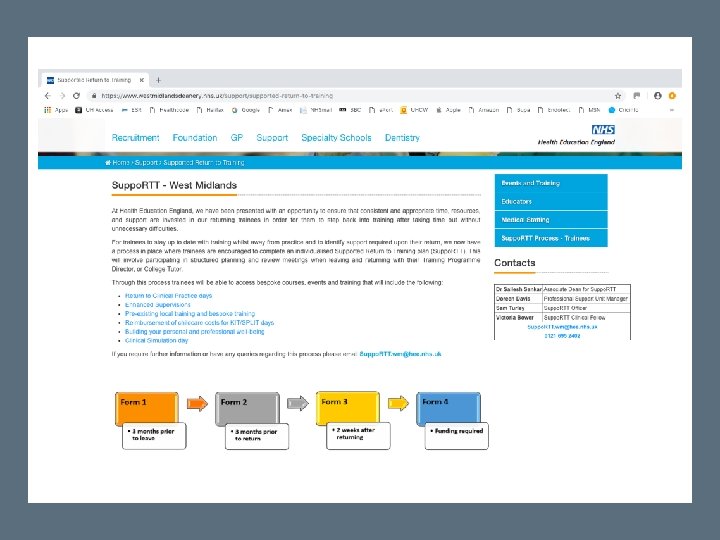
• https: //www. westmidlandsdeanery. nhs. uk/su pport/supported-return-to-training
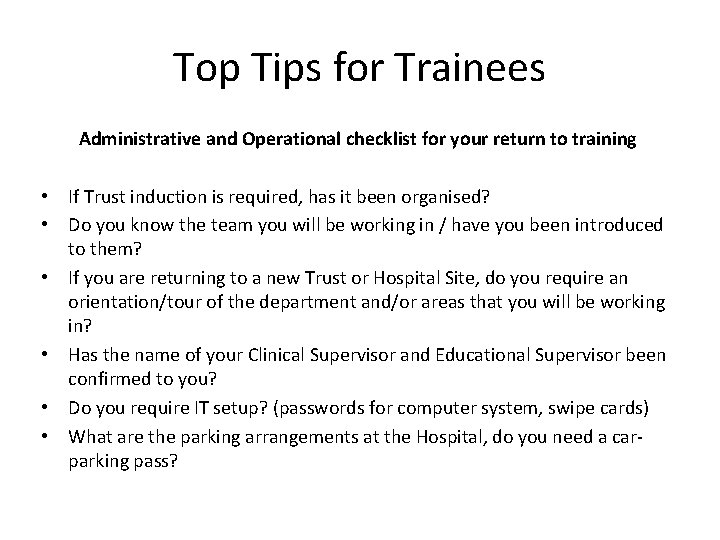
Top Tips for Trainees Administrative and Operational checklist for your return to training • If Trust induction is required, has it been organised? • Do you know the team you will be working in / have you been introduced to them? • If you are returning to a new Trust or Hospital Site, do you require an orientation/tour of the department and/or areas that you will be working in? • Has the name of your Clinical Supervisor and Educational Supervisor been confirmed to you? • Do you require IT setup? (passwords for computer system, swipe cards) • What are the parking arrangements at the Hospital, do you need a carparking pass?
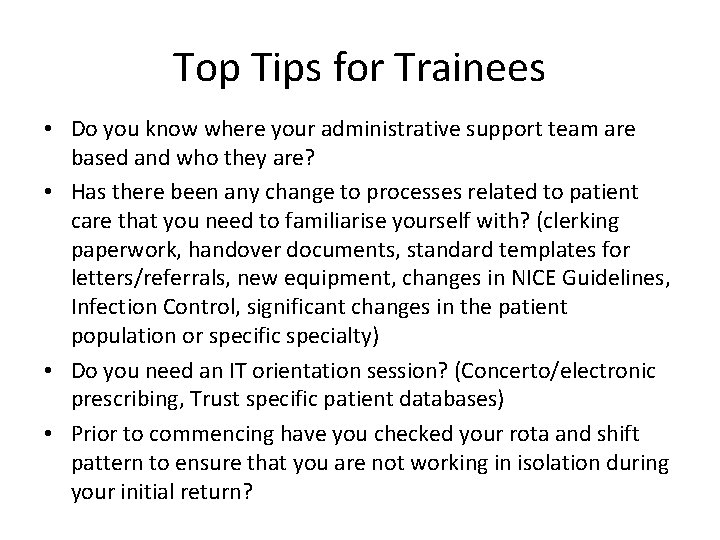
Top Tips for Trainees • Do you know where your administrative support team are based and who they are? • Has there been any change to processes related to patient care that you need to familiarise yourself with? (clerking paperwork, handover documents, standard templates for letters/referrals, new equipment, changes in NICE Guidelines, Infection Control, significant changes in the patient population or specific specialty) • Do you need an IT orientation session? (Concerto/electronic prescribing, Trust specific patient databases) • Prior to commencing have you checked your rota and shift pattern to ensure that you are not working in isolation during your initial return?
Questions https: //www. westmidlandsdeanery. nhs. uk/supported-return-to-training Email: sailesh. sankar@nhs. net