
Dr Richard Brown General Paediatrician Department of Paediatrics

Dr Richard Brown General Paediatrician Department of Paediatrics and Dermatology - LCCH Taylor Medical Centre – Woolloongabba
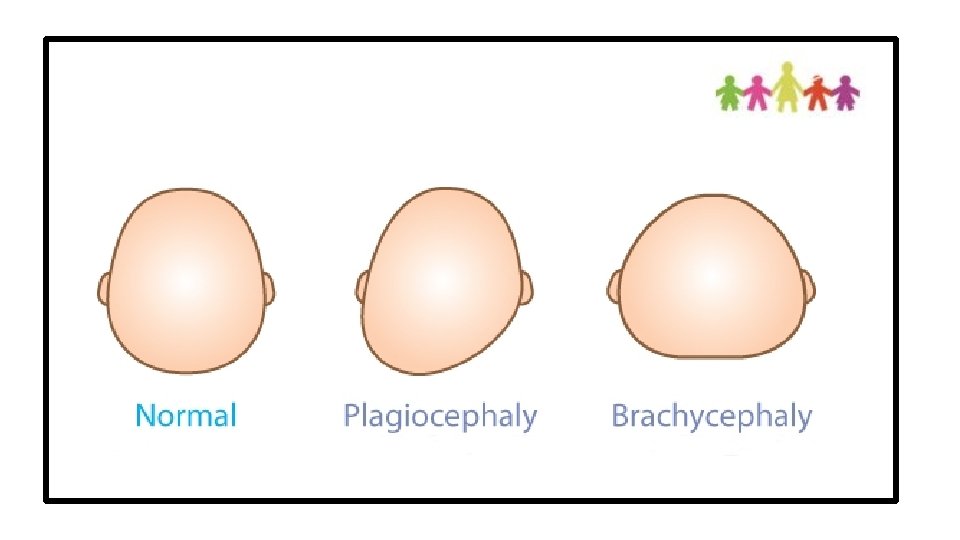
Referral Guidelines – Plagiocephaly needs to be distinguished from the rare condition, craniosynostosis, which is premature fusion of one or more cranial sutures. Craniosynostosis can occur alone or as part of a syndrome, and is treated surgically. GP assessment and management. Inspection and palpation of the infant’s skull from all angles looking for the following red flags for craniosynostosis: • A bony ridge along a suture line • A closed or triangular shaped anterior fontanelle (rather than an open, diamond shaped fontanelle) • Unusual head appearance • General examination for signs of possible genetic syndrome • Check for torticollis – test passive and active neck range of motion and look for persistent head tilt to one side • Review centile charts, in particular head growth • Plain skull XR if craniosynostosis is considered • If no red flags for craniosynostosis, normal developmental progress and normal head growth, manage conservatively and review: • Alternate sleep position on the right and left occiput • Have a certain amount of prone “tummy time” while awake • Vary the position for holding and carrying the infant. There is no evidence to support the use of helmets in the majority of cases.
Plagiocephaly - When to refer • If no red flags for craniosynostosis, normal developmental progress and normal head growth – manage conservatively as above and review. • If there is torticollis, persistent head tilt or tight neck muscles – consider paediatric physiotherapy referral (private or Child Development Program) • If abnormal head shape is associated with developmental concerns, or deformation is severe, refer to a paediatrician or Child Development Program • If skull XR is abnormal, refer to paediatrician or plastic reconstructive surgeon.

WHEEZE IN INFANCY & EARLY CHILDHOOD Definition - Continuous, high pitched sound from the chest during expiration Non-specific sign caused by turbulent air flow due to narrowing of intra-thoracic airways, indicating expiratory air flow limitation. Confirm expiratory sound by accurate history, video or clinical examination. Approximately 1/3 of children have one episode of wheeze before the age of three.
WHEEZE IN INFANCY & EARLY CHILDHOOD Differential diagnosis Episodic wheeze with URTI or multiple triggers Wheezing phenotype – transient intermittent wheeze of early childhood which resolves by the age of 2 -3 Early onset asthma Fixed obstruction – wheeze from birth which is constant or highly regular suggests fixed congenital airway obstruction Aspiration – risk factors: • Malformation of upper respiratory / digestive tract • Neurodevelopmental problems with impaired swallowing or airway protection Environmental factors – cigarette smoke and daycare

AMERICAN ACADEMY OF PAEDIATRICS GUIDELINE – BRONCHIOLITIS Consider risk factors for severe disease Aged less than 12 weeks Prematurity Underlying cardiopulmonary disease Immunodeficiency Investigations Routine chest X-ray and laboratory studies not indicated Treatment not indicated: Salbutamol Antibiotics Systemic corticosteroids Physiotherapy Pediatrics 2014; 134: e 1474 -1502

BRONCHIOLITIS – AVOID IN INFANCY: • Antibiotics • Steroids • Ventolin • Tests
ASTHMA IN CHILDREN – LESS THAN 5 YEARS OF AGE No current tests can diagnose asthma with certainty Increased risk of asthma in children: • Severe or frequent episodes, interval symptoms, eg, exercise, laughing and crying • History of eczema or positive allergy tests • First degree relative with asthma • Bronchodilator response on its own – conflicting evidence Global initiative for Asthma (GINA) Eur Respir J 2015; 46: 622 -639
FREQUENT OR PERSISTENT WHEEZE – LESS THAN 5 YEARS OF AGE Monitor: Symptom Control Inhaler technique Adherence Exposure – cigarette smoke, indoor / outdoor pollution, indoor allergens Psychological / socioeconomic problems Eur Respir J 2015; 46: 622 -639
INFANTS WITH RECURRENT OR PERSISTENT WHEEZING (American Thoracic Society Guidelines) Investigations All studies – low quality evidence, mainly case series Therefore there are conditional recommendations: • For infants less than 24 months of age • Non-responsive to bronchodilators, inhaled corticosteroids or systemic steroids Am. J. Resp. & Care Med 2016 194; 3: 356
TREATMENT OF WHEEZING IN PRE-SCHOOL AGE • • Salbutamol for acute symptoms, if symptomatic improvement Seven day course of montelukast at the start of viral induced wheeze, possible benefit Consider trial of montelukast or inhaled corticosteroids (ICS) eg, Fluticasone – 100/200 mcg / day with more severe recurrent / persistent wheeze Inhaled corticosteroids - May be more beneficial in children with multiple tracheal wheeze or children with positive asthma predictive index • Possible adverse effects on long-term airway thickness and lung micro anatomy • Recommend high threshold for using ICS in infancy, eg, persistent / disabling symptoms, or very severe episodes
RECURRENT OR PERSISTENT WHEEZING (American Thoracic Society Guidelines) Investigations Infants not responsive to bronchodilators, inhaled corticosteroids, systemic steroids: Bronchoscopy – 33% abnormal - Tracheomalacia, Bronchomalacia Vascular ring, sling, compression Bronchoalveolar lavage: 20 -30% positive bacterial culture Empiric dietary elimination - not recommended Consider tests for GOR - 24 hr p. H study + impedance monitoring Feeding swallow study – 10 -15% aspiration feeding intervention Am. J. Resp. & Care Med 2016 194; 3: 356
Excessive Crying in Infancy
Child: Mother: Father: 1 st Child: Marigold – eight weeks’ of age Jane William Annabelle – aged two Mother – Asthma, hayfever and allergic rhinitis Second pregnancy – Annabelle aged two At 25 weeks’ Jane’s mother – breast cancer – surgery At 30 weeks’ William retrenched Unexpected emergency caesarean section delivery Slow to attach and commence breast feeding From two weeks of age, fussing with feeds, spilling, vomiting, inconsolable crying, poor sleep pattern From six weeks’ Jane stopped dairy products From seven weeks’ of age Losec Syrup 10 mg / day commenced Examination normal – good weight gains Jane sleep deprived and exhausted. Tried various settling techniques.

ISSUES ? Effect of antenatal stress on infant ? Effect of neonatal course ? Food allergy ? Gastroesophageal Reflux Disease ? Safety of long-term Losec use during infancy ? Other factors contributing



EXCESSIVE CRYING (In An Otherwise Healthy Infant) Infant factors Gastroesophageal reflux Cow’s milk allergy Lactose intolerance Feeding issues Sensory issues Maternal Factors Anxiety/depression/stress Responsiveness/attachment Infant Temperament Disorder of Regulation Microbiome Family / Environmental Factors

GORD – Infants at High Risk • Neurological impairment • Congenital oesophageal anomaly Eg repaired tracheoesophageal fistula, hiatus hernia • Congenital diaphragmatic hernia • Chronic respiratory disorder, eg, cystic fibrosis, chronic neonatal lung disease • Prematurity • Obesity • Family history – severe GORD, or oesophageal adenocarcinoma National Institute for Health and Care Excellence, January 2015
GOR – American Academy for Pediatrics Management / guidance for the Pediatrician “No single symptom of cluster of symptoms can be reliably used to diagnose oesophagitis or other complications of GORD in children or to predict which patients are most likely to respond to therapy” “GERD…………. there is no single test that can rule it in or out” Pediatrics 2013; 131: 5, 1684
PPI use in infants • • • FDA reviewer experience 4 randomized controlled trials PPIs in infants Symptomatic GERD (fussiness, regurgitation, gagging with feeds) PPIs not effective Safety concerns with long term use of PPIs Subpopulation of infants with GER and acid induced disease, difficult to identify (Multi channel impedance monitoring) J PED GASTRO and NUTRITION 2012; 54: 8 -14
HUMAN MICROBIOME Neonates – bacterial colonisation of gastrointestinal tract – intimately inked • Development of the nascent immune system, gut anatomy and nervous system • By about the age of three, GIT microbiome is starting to approach an adult-like state • Role of gut microbiota in production of short chain fatty acids (SCFA) – important in relation to nutrition, adipose tissue deposition, immunity and cancer Int Med J 2014; 45: 9889 -898 BEWARE OF DISRUPTION OF MICROBIOTA IN EARLY INFANCY FROM ANTIBIOTICS AND PROTEIN PUMP INHIBITORS

Respect 1. Trucks 2. The body’s normal physiology
Infant Crying – Food Allergy • Cow’s milk protein allergy • Uncommon unless other GI/skin manifestations • Consider trial elimination • If breastfeeding – maternal dairy elimination for 2 week • If bottle feeding – trial soy milk 2 weeks or • Trial extensively hydrolyzed formula (Pepti Junior or Alfare) • Re-challenge in one month J PAEDIATRICS AND CHILD HEALTH 2009; 45: 481 -486
Temperament – Goodness of Fit with Parents Sensitivity – to sound, touch, light Activity level Intensity – strength of reaction to change / distress Regularity – routine Adaptability – cope with change, intrusion into space Persistence – with development of new skill Soothability Community Paediatric Review, Royal Children’s Hospital Melbourne. March 2013
Excessive Crying in Infancy 1. 2. 3. 4. Biological and psychological risk factors in mother and infant interact early and can interfere with mutual regulation Disrupted mother – infant dynamic becomes entrenched “Complex adaptive system” vs reductionist approach Support parents ability to respond to their individual infant’s capacity to develop self regulation ARCH DIS CHILD 2011; 96: 793
Strategies for Calming Early infancy: 1. 2. 3. 4. 5. Consider different feeding technique* Relaxed cue based care Physical contact Co sleeping (share room, not bed) Sensory stimulation • Eye contact, reciprocal interaction • Singing, humming, speaking softly • White noise, warm bath • Movement, massage • Swaddling * NEWBORN INFANT NURS REV. 2005; 5: 49 -58
EXCESSIVE CRYING IN INFANCY – REVIEW ARTICLES Managing infants who cry excessively in the first few months of life: P. Douglas, P. Hill. BMJ 2011; 243: D 772 Troublesome Crying in Infancy, Arch Dis Child Educ Pract Ed, 2013: 98; 201

Recommend and Useful Websites – Handout
THE MICROBIOME MELODY: (With Apologies to the Hokey Pokey!) You put your antibiotics in, your put your antibiotics out You put your antibiotics in, and you shake them all about! You worship the microbiome and turn you around And that’s what it’s all about! You put your PPI’s in, your put your PPI’s out You put your PPI’s in, and you shake them all about! You worship the microbiome and you turn around And that’s what it’s all about!
- Slides: 36