
Dr Pradeep Kumar Professor department of physiology KGMU

- Slides: 40
Dr Pradeep Kumar, Professor department of physiology, KGMU, Lucknow
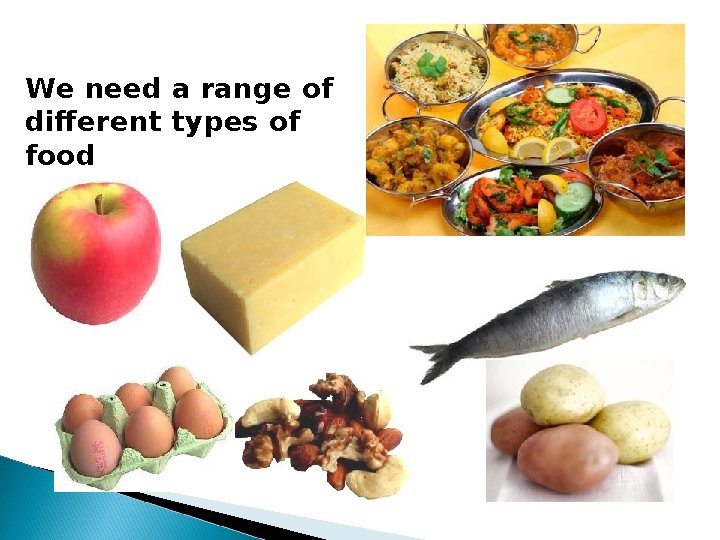
We need a range of different types of food
Chemical substances found in the largest amounts in food: ◦Water (found inside cells in plants and animals) ◦Carbohydrates ◦Fats ◦Protein ◦Miniral ◦vitamins
The important constituents Of Food
• Understand the different classes of carbohydrates • Understand the enzymes responsible for digestion of carbohydrates • What are sites for absorptin Molecular basis of glucose transpotation • Learn about the function of carbohydrates
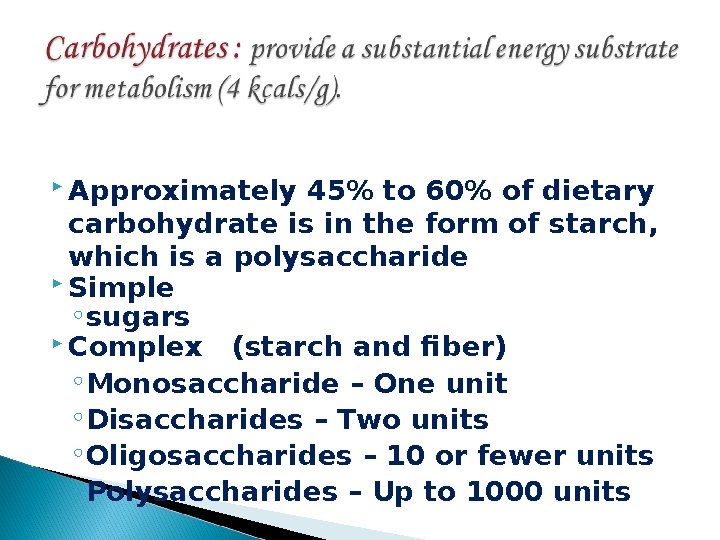
Approximately 45% to 60% of dietary carbohydrate is in the form of starch, which is a polysaccharide Simple ◦sugars Complex (starch and fiber) ◦Monosaccharide – One unit ◦Disaccharides – Two units ◦Oligosaccharides – 10 or fewer units ◦Polysaccharides – Up to 1000 units
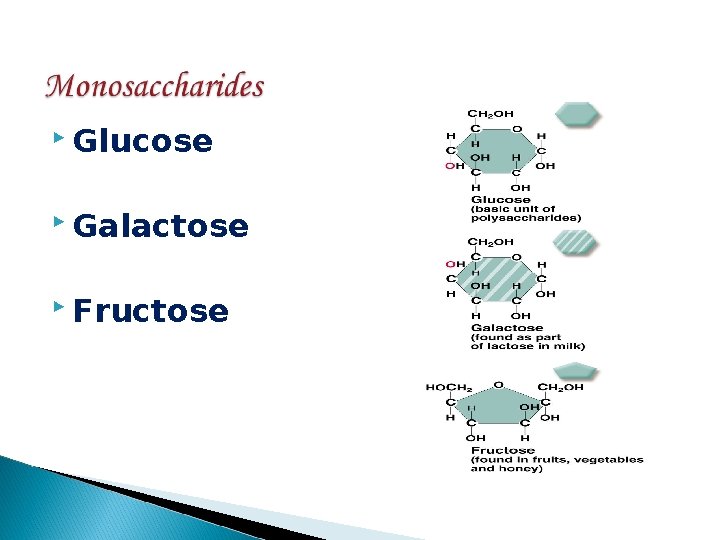
Glucose Galactose Fructose
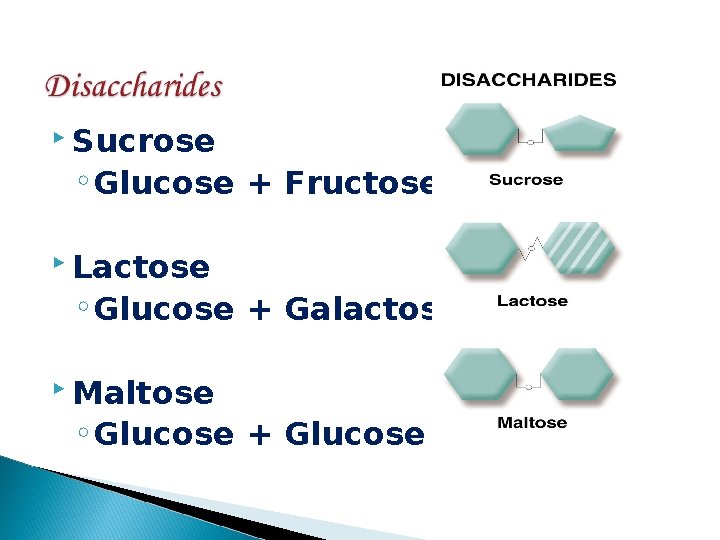
Sucrose ◦Glucose + Fructose Lactose ◦Glucose + Galactose Maltose ◦Glucose + Glucose
Starch ◦ Amylose ◦ Amylopectin Dextrins ◦ Produced when starch molecules are partially broken down by enzymes, acid, or heat. Less thickening power than starch Glycogen Plant Fiber Components
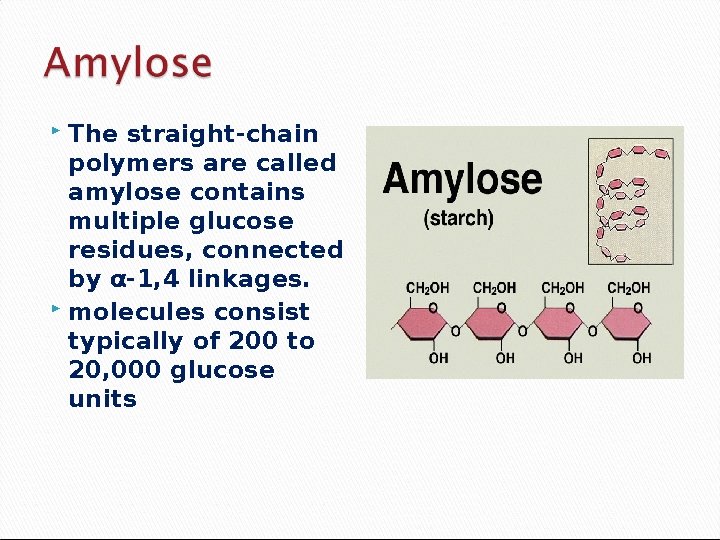
The straight-chain polymers are called amylose contains multiple glucose residues, connected by α-1, 4 linkages. molecules consist typically of 200 to 20, 000 glucose units
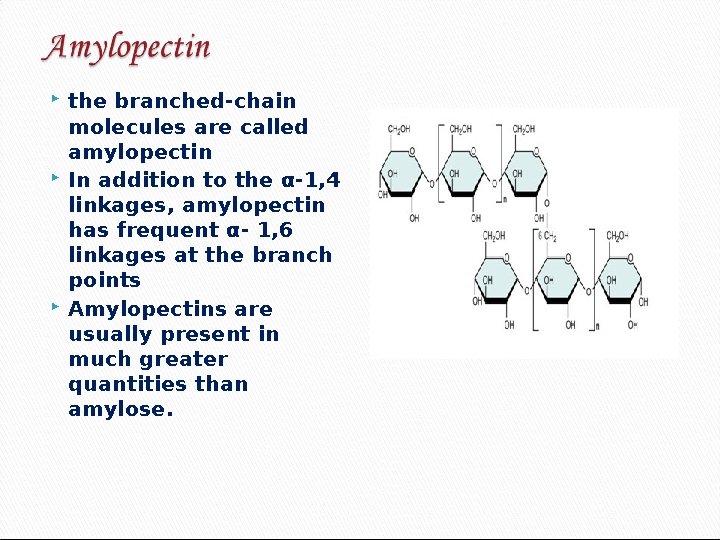
the branched-chain molecules are called amylopectin In addition to the α-1, 4 linkages, amylopectin has frequent α- 1, 6 linkages at the branch points Amylopectins are usually present in much greater quantities than amylose.
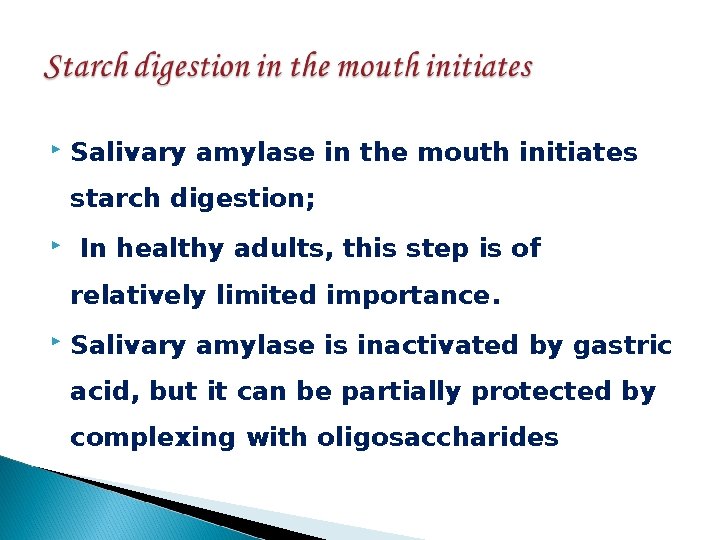
Salivary amylase in the mouth initiates starch digestion; In healthy adults, this step is of relatively limited importance. Salivary amylase is inactivated by gastric acid, but it can be partially protected by complexing with oligosaccharides
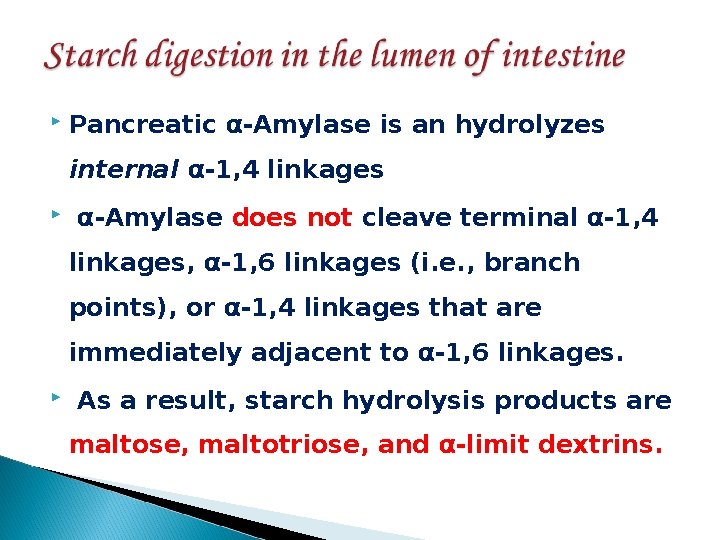
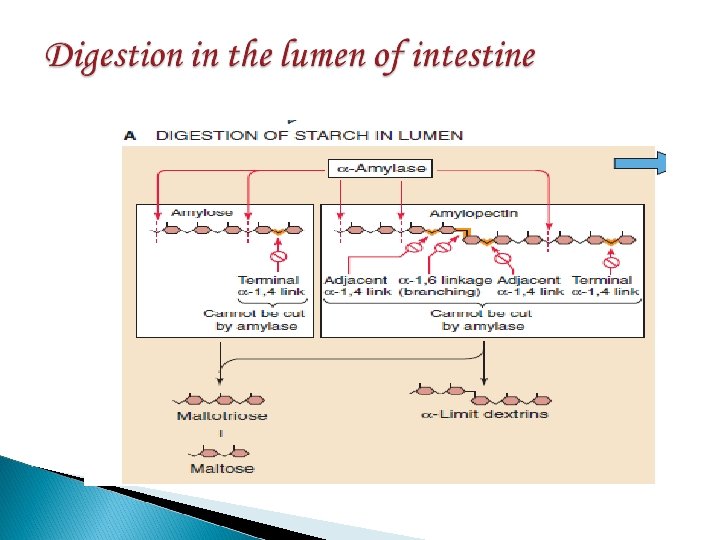
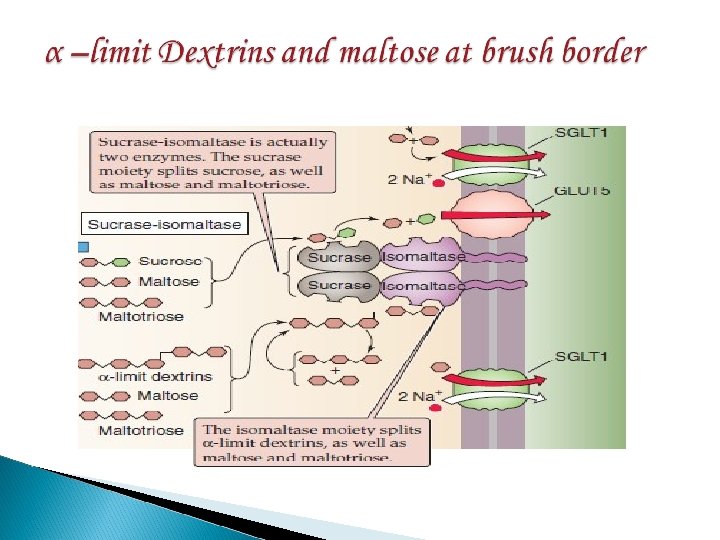
Pancreatic α-Amylase is an hydrolyzes internal α-1, 4 linkages α-Amylase does not cleave terminal α-1, 4 linkages, α-1, 6 linkages (i. e. , branch points), or α-1, 4 linkages that are immediately adjacent to α-1, 6 linkages. As a result, starch hydrolysis products are maltose, maltotriose, and α-limit dextrins.
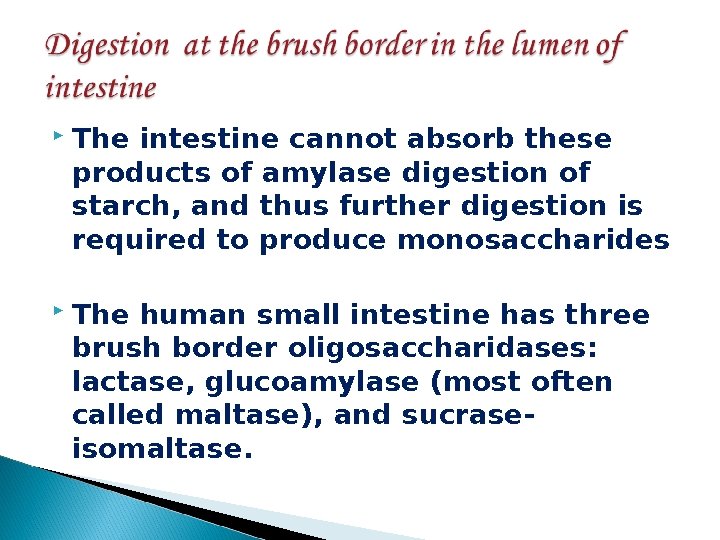
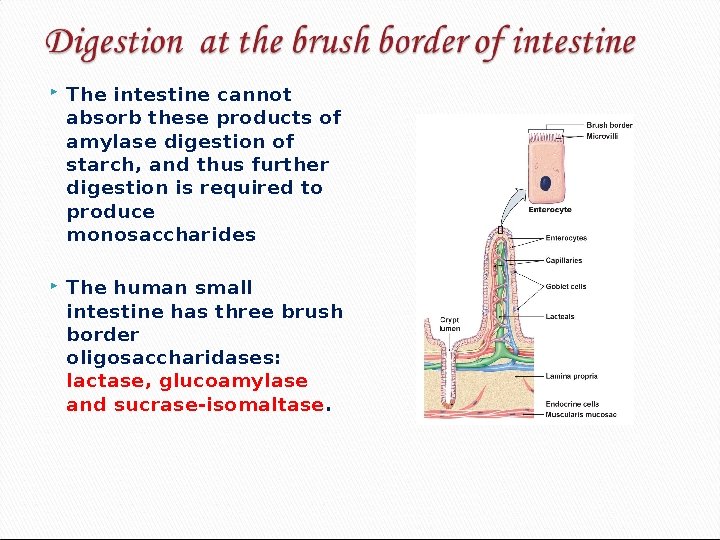
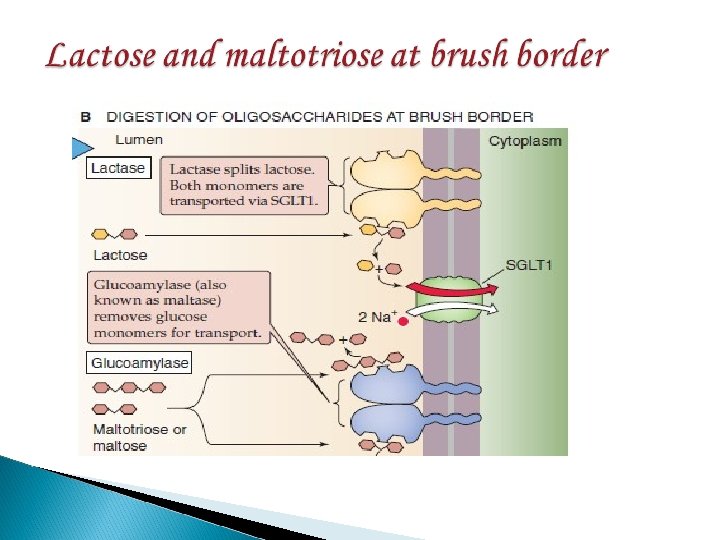
The intestine cannot absorb these products of amylase digestion of starch, and thus further digestion is required to produce monosaccharides The human small intestine has three brush border oligosaccharidases: lactase, glucoamylase (most often called maltase), and sucraseisomaltase.
The intestine cannot absorb these products of amylase digestion of starch, and thus further digestion is required to produce monosaccharides The human small intestine has three brush border oligosaccharidases: lactase, glucoamylase and sucrase-isomaltase.
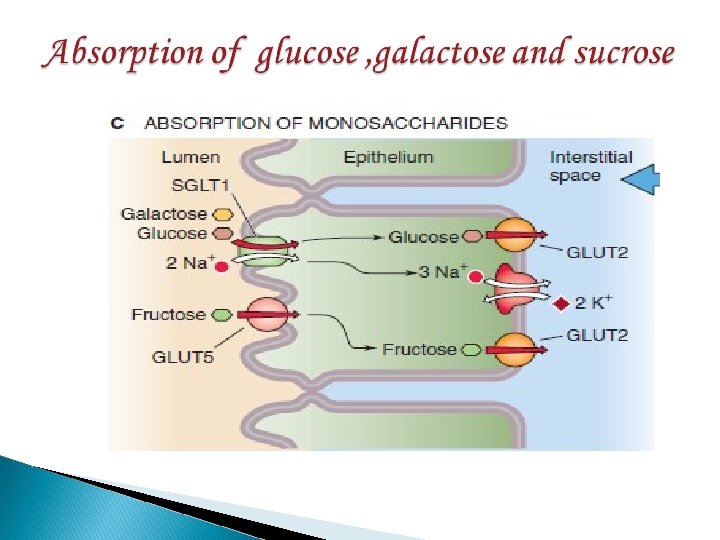
There are three monosaccharide products of carbohydrate digestion—glucose, galactose, and fructose They are absorbed by the small intestine in a two-step process: Their uptake across the apical membrane into the epithelial cell Their coordinated exit across the basolateral membrane The Na/glucose transporter 1 (SGLT 1) is the membrane protein responsible for glucose and galactose uptake at the apical membrane the apical step of fructose absorption occurs by the facilitated diffusion of fructose through GLUT 5 a single transporter (GLUT 2) is responsible for the movement of both monosaccharides across the basolateral membrane.
The uptake of glucose across the apical membrane through SGLT 1 (secondary active transport, ) because the glucose influx occurs against the glucose concentration gradien Glucose uptake across the apical membrane is energized by the electrochemical Na+ gradient, which, in turn, is maintained by the extrusion of Na+ across the basolateral membrane by the Na-K pump The apical step of fructose absorption occurs by the facilitated diffusion of fructose through GLUT 5
In most mammals and in many races of humans, intestinal lactase activity is high at birth, then declines to low levels during childhood and adulthood. The low lactase levels are associated with intolerance to milk ( lactose intolerance). When such individuals ingest dairy products, they are unable to digest lactose sufficiently, and so symptoms--such as bloating, pain, gas, and diarrhea are produced The simplest treatment for lactose intolerance is to avoid dairy products in the diet, Commercial lactase preparations, Yogurt is better to administration
Lippincott’s Illustrated Reviews: Physiology (2013) Medical Physiology, UPDATED SECOND EDITION (Walter F. Boron, MD, Ph. D) BERNE & LEVY, PHYSIOLOGY, SIXTH EDITION, UPDATED EDITION Ganong’s Review of Medical Physiology, T W E N T Y -F O U R T H E D I T I O N
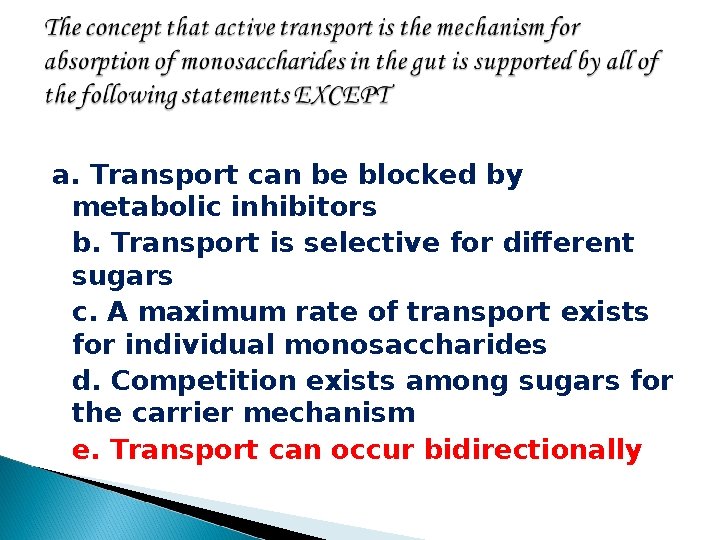
a. Transport can be blocked by metabolic inhibitors b. Transport is selective for different sugars c. A maximum rate of transport exists for individual monosaccharides d. Competition exists among sugars for the carrier mechanism e. Transport can occur bidirectionally
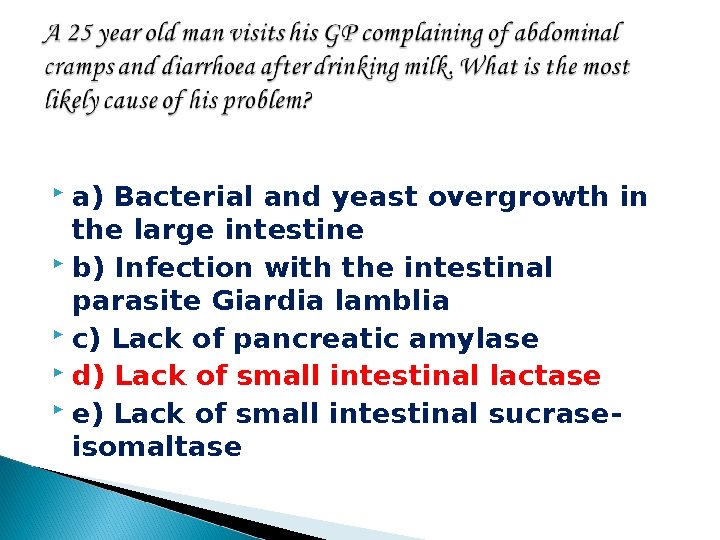
a) Bacterial and yeast overgrowth in the large intestine b) Infection with the intestinal parasite Giardia lamblia c) Lack of pancreatic amylase d) Lack of small intestinal lactase e) Lack of small intestinal sucraseisomaltase
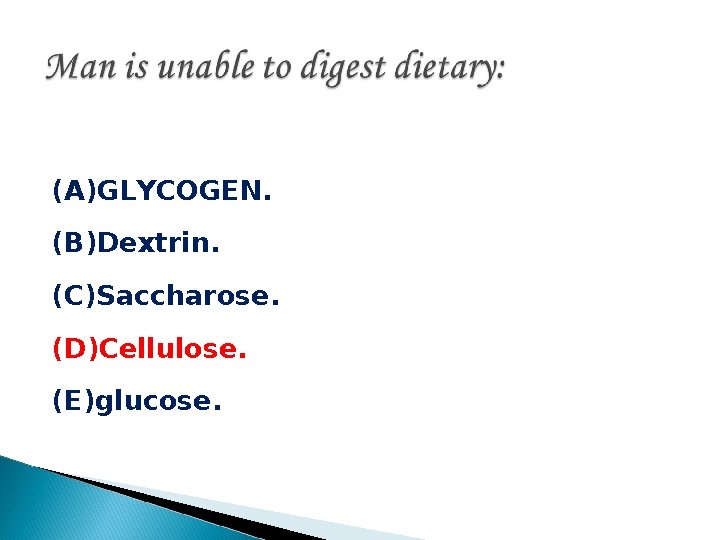
(A)GLYCOGEN. (B)Dextrin. (C)Saccharose. (D)Cellulose. (E)glucose.
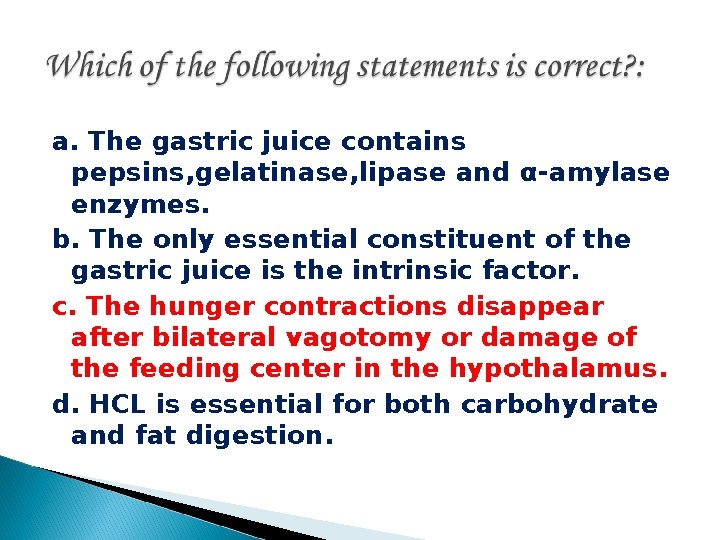
a. The gastric juice contains pepsins, gelatinase, lipase and α-amylase enzymes. b. The only essential constituent of the gastric juice is the intrinsic factor. c. The hunger contractions disappear after bilateral vagotomy or damage of the feeding center in the hypothalamus. d. HCL is essential for both carbohydrate and fat digestion.
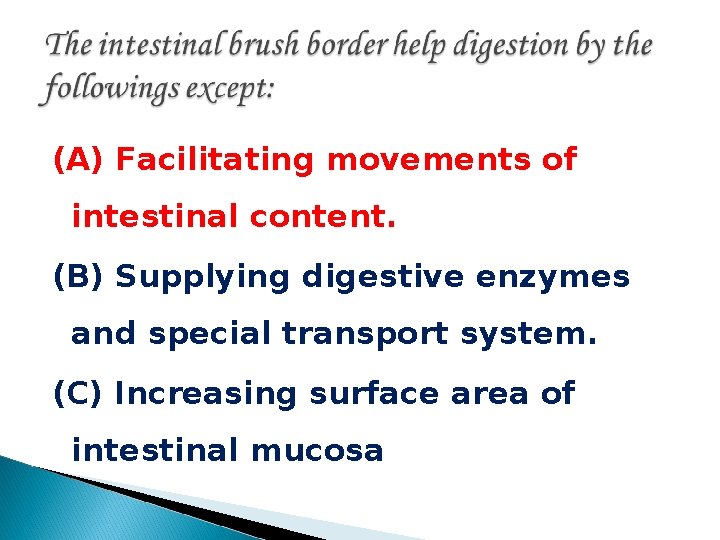
(A) Facilitating movements of intestinal content. (B) Supplying digestive enzymes and special transport system. (C) Increasing surface area of intestinal mucosa
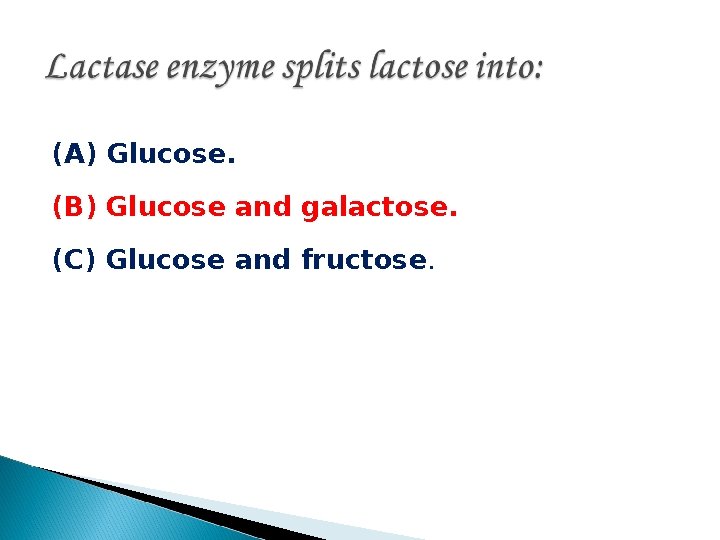
(A) Glucose. (B) Glucose and galactose. (C) Glucose and fructose.
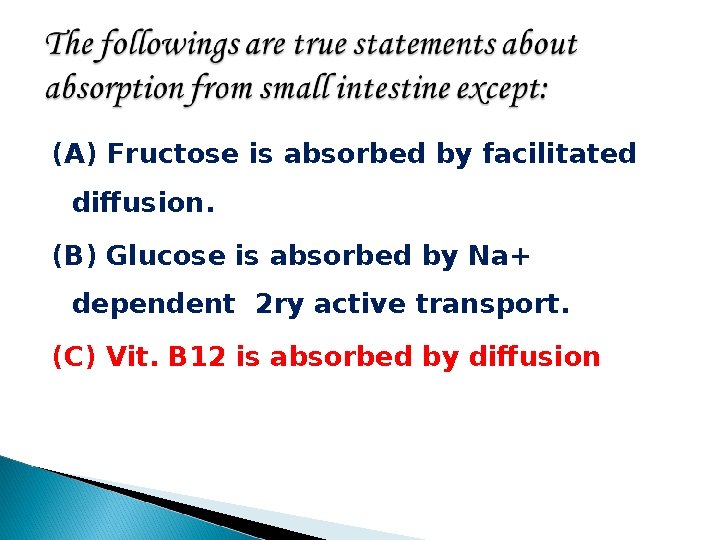
(A) Fructose is absorbed by facilitated diffusion. (B) Glucose is absorbed by Na+ dependent 2 ry active transport. (C) Vit. B 12 is absorbed by diffusion
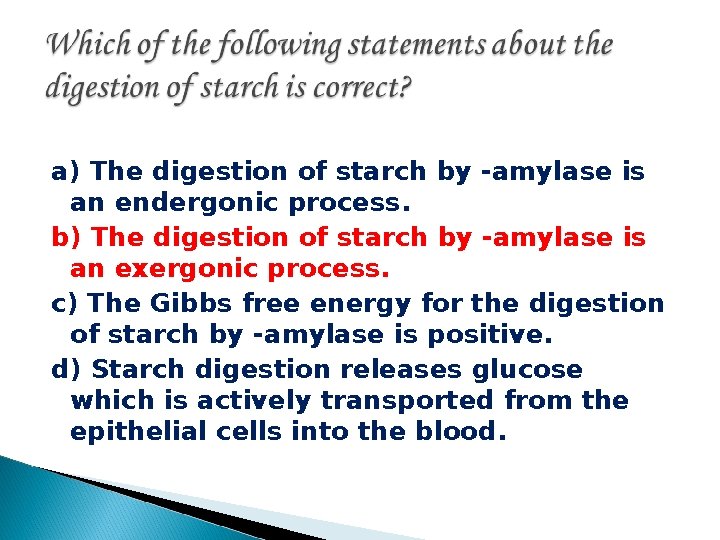
a) The digestion of starch by -amylase is an endergonic process. b) The digestion of starch by -amylase is an exergonic process. c) The Gibbs free energy for the digestion of starch by -amylase is positive. d) Starch digestion releases glucose which is actively transported from the epithelial cells into the blood.
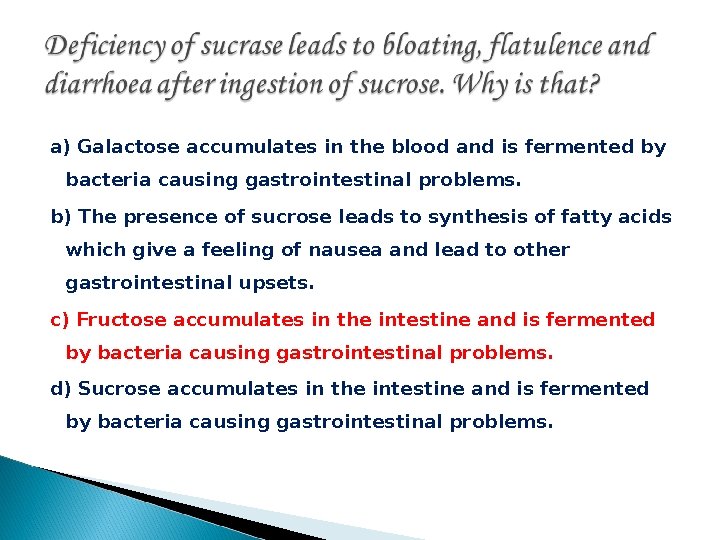
a) Galactose accumulates in the blood and is fermented by bacteria causing gastrointestinal problems. b) The presence of sucrose leads to synthesis of fatty acids which give a feeling of nausea and lead to other gastrointestinal upsets. c) Fructose accumulates in the intestine and is fermented by bacteria causing gastrointestinal problems. d) Sucrose accumulates in the intestine and is fermented by bacteria causing gastrointestinal problems.
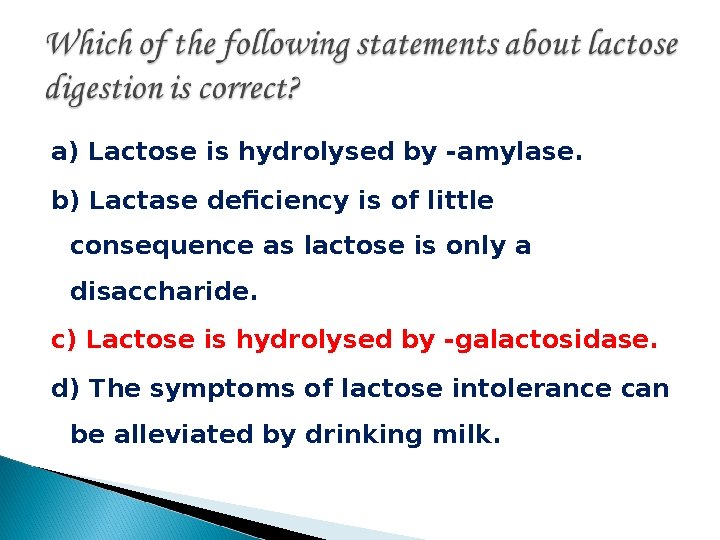
a) Lactose is hydrolysed by -amylase. b) Lactase deficiency is of little consequence as lactose is only a disaccharide. c) Lactose is hydrolysed by -galactosidase. d) The symptoms of lactose intolerance can be alleviated by drinking milk.
(A)Na concentration in intestinal lumen. (B)Plasma insulin. (C)Inhibitors of energy metabolism
(A)Special Na channel. (B)Cotransported with Cl. (C)Cotrannsported with glucose and amino acids. (D)None of the above.
(A)Simple diffusion. (B)Facilitated diffusion. (C)Na+ dependent 2 ry active transport.
Thank you