
Dr Kavita Raj Consultant Haematologist Guys and St




















- Slides: 65
Dr Kavita Raj Consultant Haematologist Guys and St Thomas’ Hospital HIGH RISK MDS AND HYPOMETHYLATING AGENTS
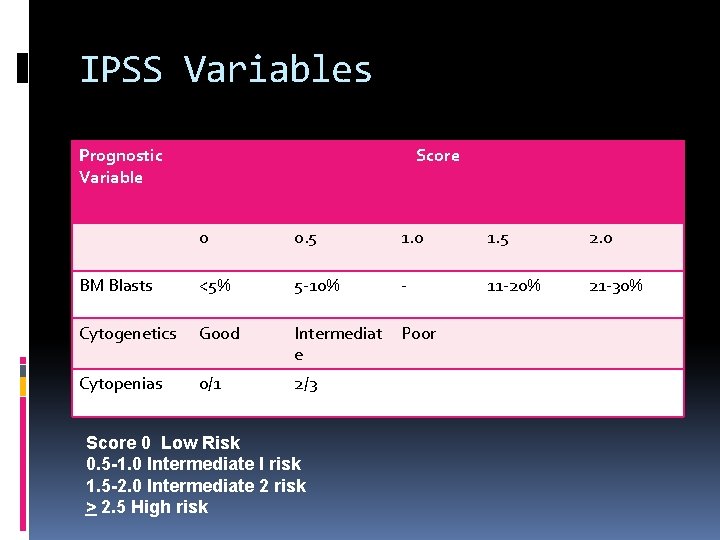
IPSS scoring system Blood counts Bone marrow blast percentage Cytogenetics
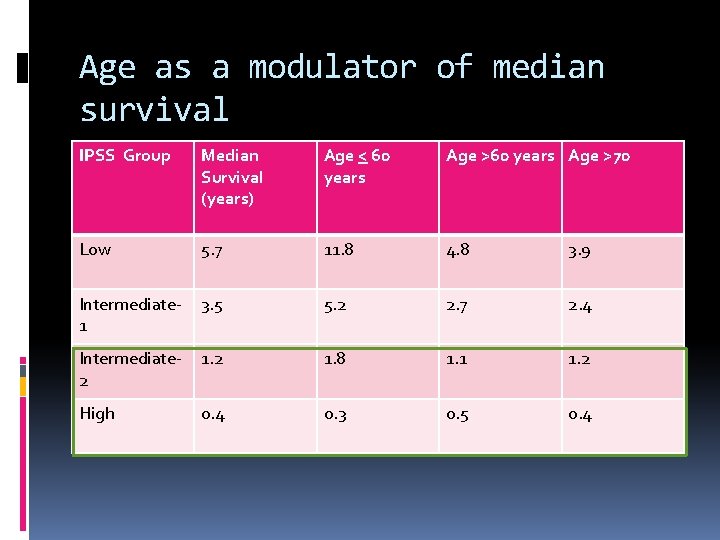
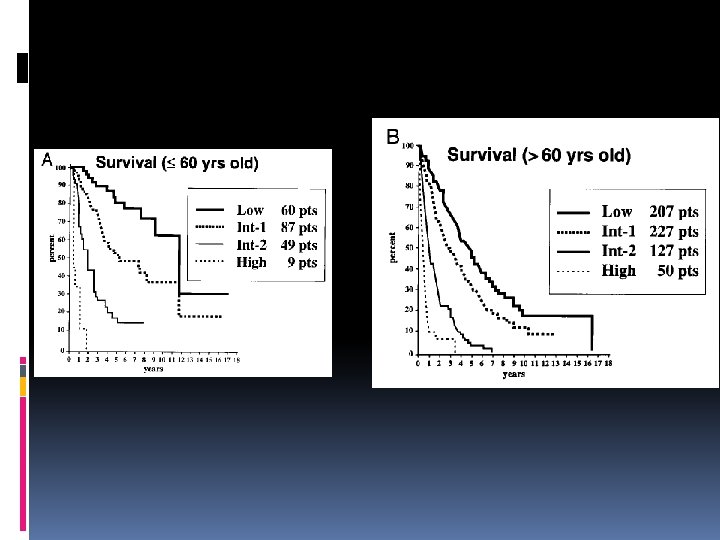
Age as a modulator of median survival IPSS Group Median Survival (years) Age < 60 years Age >70 Low 5. 7 11. 8 4. 8 3. 9 Intermediate 1 3. 5 5. 2 2. 7 2. 4 Intermediate 2 1. 8 1. 1 1. 2 High 0. 4 0. 3 0. 5 0. 4
IPSS Risk Categories Distribution High 8% Low Risk 31% Int-2 Risk 22% Int-1 Risk 39% *Estimated survival and risk of AML transformation Greenberg PL et al. Blood. 1997; 89: 2079
Goals for treatment Individual Prolong overall survival with best quality Prevent disease progression Achieve Complete remission Minimal side effects of therapy
Treatment Options Best Supportive care Low dose chemotherapy Intensive chemotherapy Haemopoietic stem cell transplantation Hypomethylating agents
Best Supportive Care Blood and platelet transfusions GCSF Prophylaxis against infection if prolonged neutropenia Iron chelation therapy No longer the mainstay of MDS therapy
Low Dose chemotherapy Low dose cytarabine, subcutaneously 20 mg/m 2 daily for 10 -14 days Disease control
Intensive chemotherapy Hospital admission for approximately 4 weeks Combination of 2 -3 drugs with cytarabine Risk of infection Risk of delayed recovery of blood counts, marrow aplasia Achieve Complete remission (cytogenetic) Likelihood of relapse unless consolidated with a stem cell transplant
Haemopoietic stem cell transplantation Consolidative procedure after achieving complete remission can cure upto 40% of patients with MDS Donor availability Reduced intensity conditioned regimes have reduced toxicity Infection Immune side effects
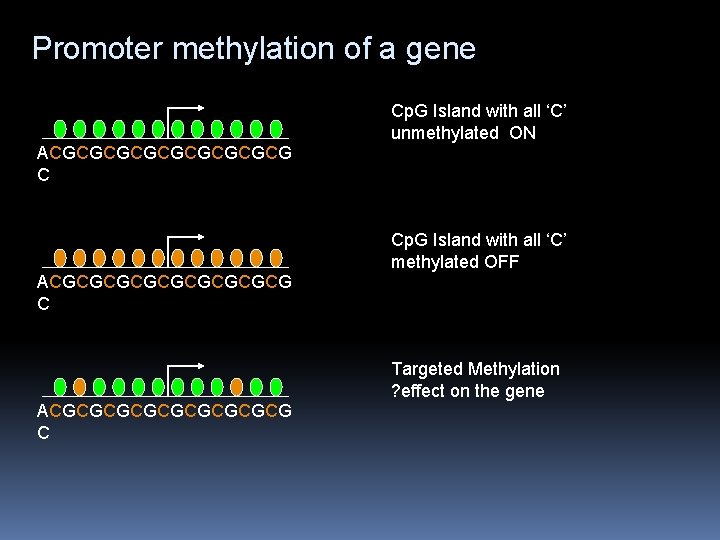
Hypomethylating agents Azacytidine Decitabine ( deoxy analog of azacytidine) Act by inhibiting DNA methyl transferase Also called Methyl transferase inhibitors
Promoter methylation of a gene Cp. G Island with all ‘C’ unmethylated ON ACGCGCGCGCG C Cp. G Island with all ‘C’ methylated OFF ACGCGCGCGCG C Targeted Methylation ? effect on the gene ACGCGCGCGCG C
Mechanism of action Silverman, 2001
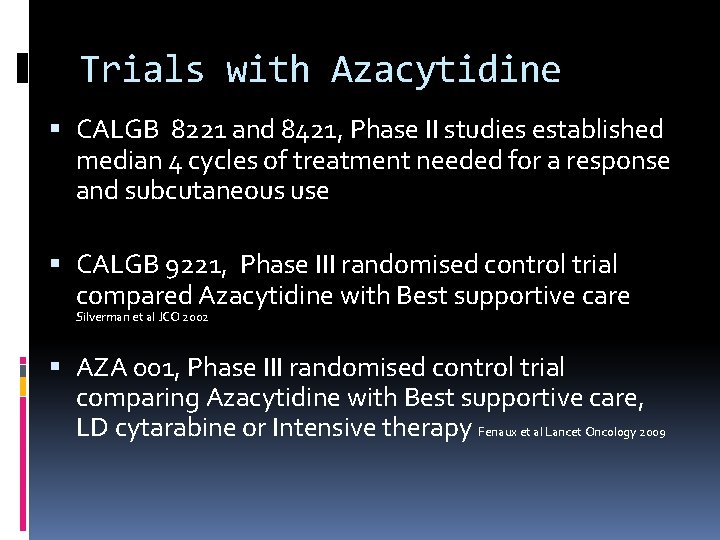
Trials with Azacytidine CALGB 8221 and 8421, Phase II studies established median 4 cycles of treatment needed for a response and subcutaneous use CALGB 9221, Phase III randomised control trial compared Azacytidine with Best supportive care Silverman et al JCO 2002 AZA 001, Phase III randomised control trial comparing Azacytidine with Best supportive care, LD cytarabine or Intensive therapy Fenaux et al Lancet Oncology 2009
CALGB 9221
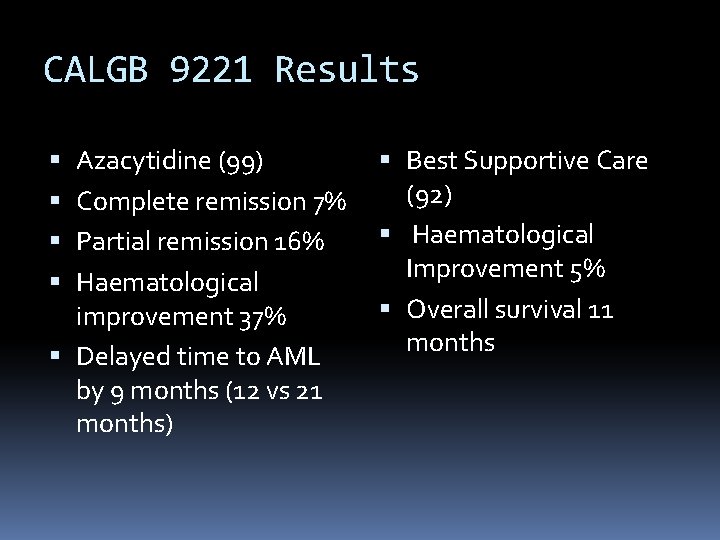
CALGB 9221 Results Azacytidine (99) Complete remission 7% Partial remission 16% Haematological improvement 37% Delayed time to AML by 9 months (12 vs 21 months) Best Supportive Care (92) Haematological Improvement 5% Overall survival 11 months
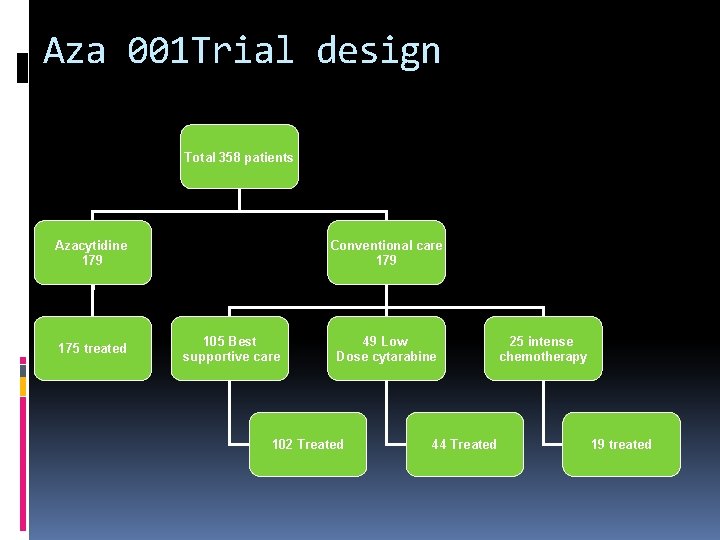
AZA 001 Multicentre, international High risk MDS IPSS Int-2 or high FAB RAEB-t or CMML ( <10% blasts Previously untreated Treatment option predetermined by physician
Aza 001 Trial design Total 358 patients Azacytidine 179 175 treated Conventional care 179 105 Best supportive care 49 Low Dose cytarabine 102 Treated 44 Treated 25 intense chemotherapy 19 treated
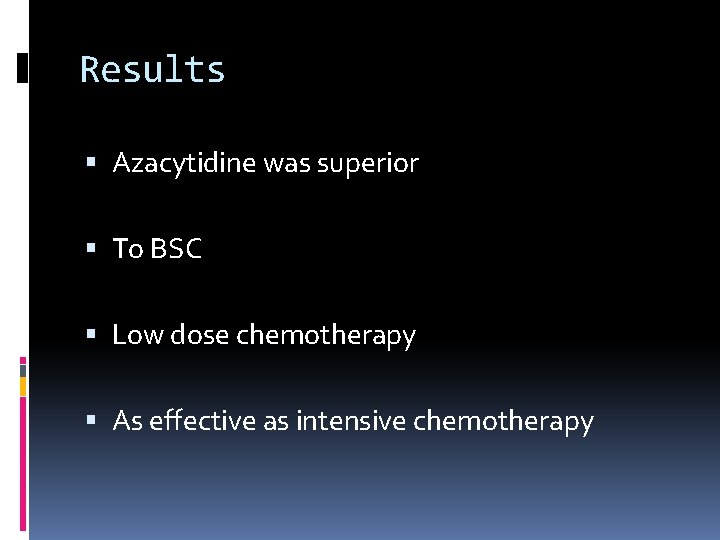
Results Median Age 69 years, 72% >65 years Survival at 2 years was doubled for patients treated with Azacytidine versus conventional care ( 50. 8% vs 26. 2%, p<0. 0001) Time to leukaemia transformation was 17. 8 months for azacytidine group versus 11. 5 months in the conventional care (p<0. 0001)
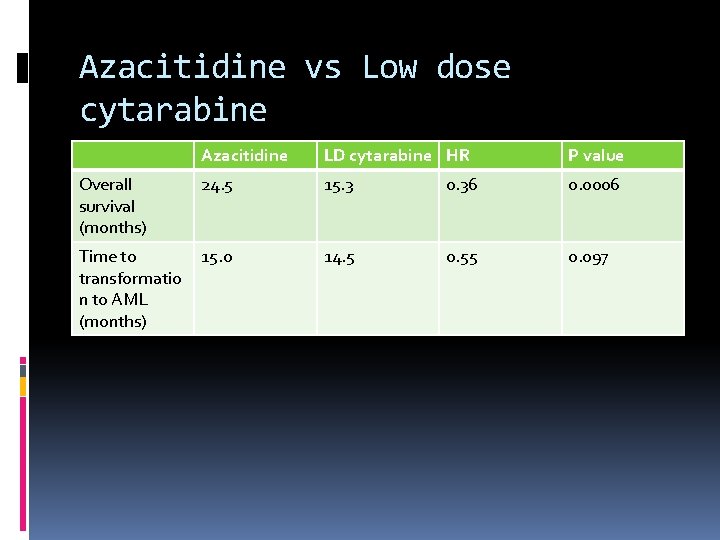
Overall survival for Azacytidine 24. 5 months vs 15 months with conventional care ( p=0. 0001)
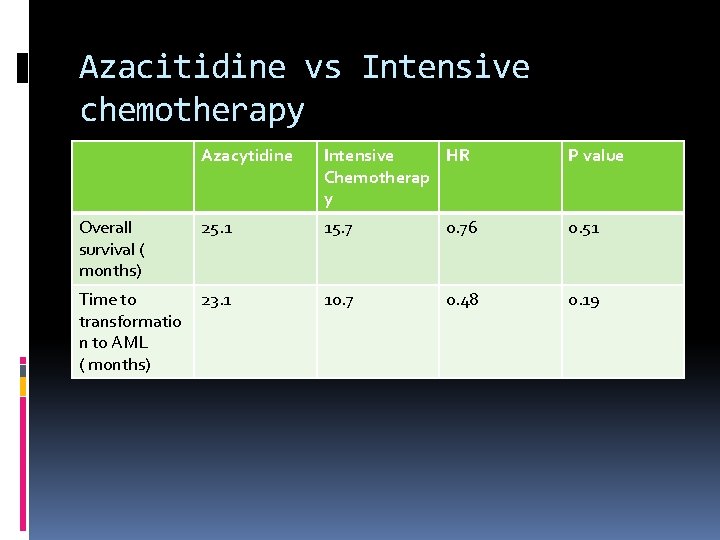
Results Azacytidine was superior To BSC Low dose chemotherapy As effective as intensive chemotherapy
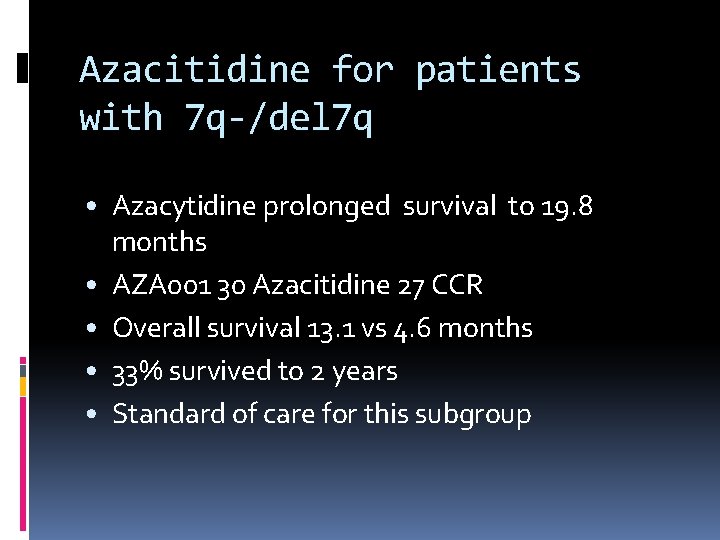
Azacitidine for patients with 7 q-/del 7 q • Azacytidine prolonged survival to 19. 8 months • AZA 001 30 Azacitidine 27 CCR • Overall survival 13. 1 vs 4. 6 months • 33% survived to 2 years • Standard of care for this subgroup
Administration of Azacytidine 75 mg/m 2 x 7 days every 28 days Subcutaneously Average sized person two injections daily Rotating sites, abdomen, thighs, upper arms
Side effects of Azacytidine Well tolerated Increased blood or platelet requirements in the initial cycles Nausea Constipation/diarrhoea Injection site reaction Local nodules/bruises Febrile neutropenia/sepsis
Concomitant medications Antisickness medications Topical cream for local reactions Laxatives to counter constipation Allopurinol to prevent gout
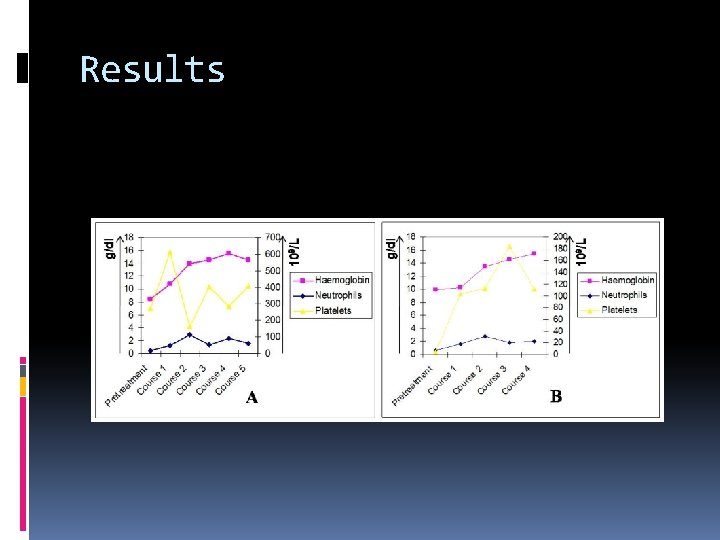
Results
Decitabine Analog of Azacitidine Phase III study 45 mg/m 2/day x 3 days q 6 weeks IV Decitabine n=89, BSC n=81 43/89 received less than 2 cycles of decitabine CR 9%, PR 8% HI 13%
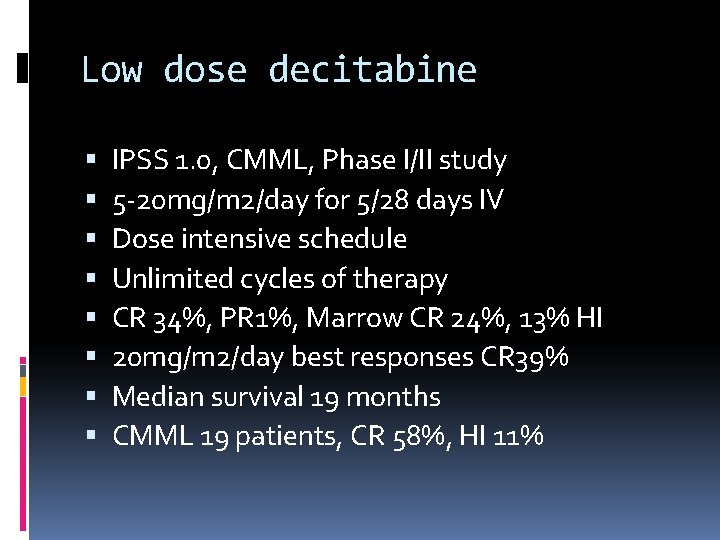
Low dose decitabine IPSS 1. 0, CMML, Phase I/II study 5 -20 mg/m 2/day for 5/28 days IV Dose intensive schedule Unlimited cycles of therapy CR 34%, PR 1%, Marrow CR 24%, 13% HI 20 mg/m 2/day best responses CR 39% Median survival 19 months CMML 19 patients, CR 58%, HI 11%
Combination therapy Azacytidine with HDAC inhibitors Vorinostat Responses in approximately 80%
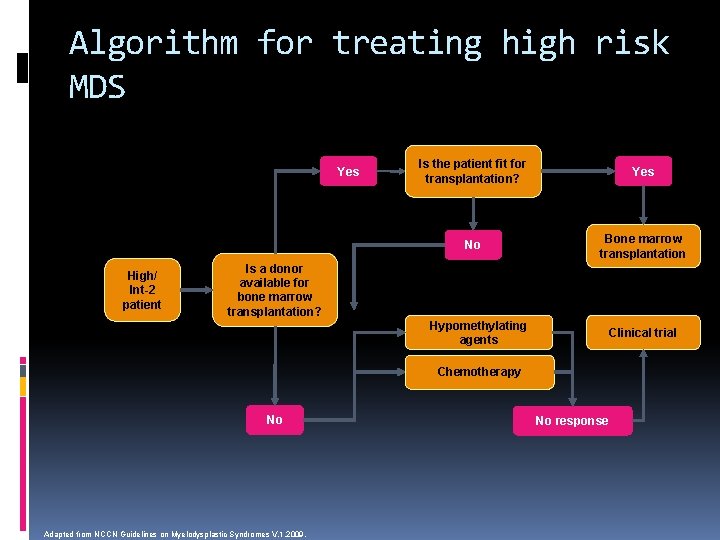
Algorithm for treating high risk MDS Yes High/ Int-2 patient Is the patient fit for transplantation? Yes No Bone marrow transplantation Is a donor available for bone marrow transplantation? Hypomethylating agents Clinical trial Chemotherapy No Adapted from NCCN Guidelines on Myelodysplastic Syndromes V. 1. 2009. No response
Summary MTI’s should be considered for High risk MDS Particulary patients with high risk cytogenetics Studies on improving outcomes with these drugs either alone or in combination are ongoing
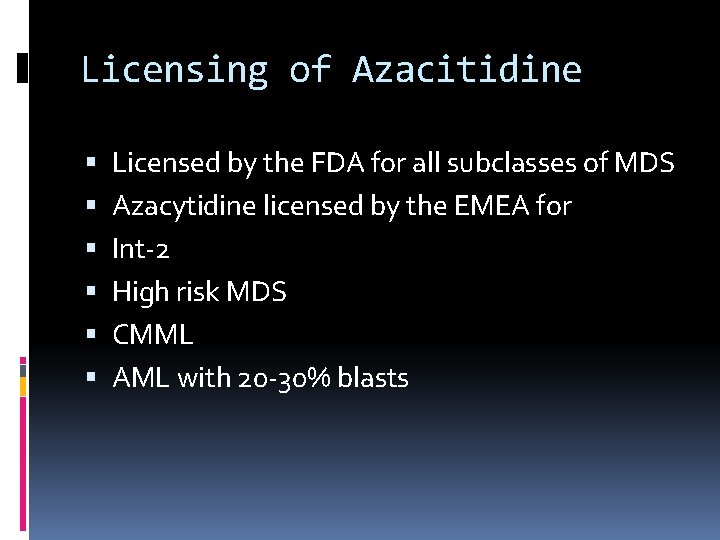
Licensing of Azacitidine Licensed by the FDA for all subclasses of MDS Azacytidine licensed by the EMEA for Int-2 High risk MDS CMML AML with 20 -30% blasts
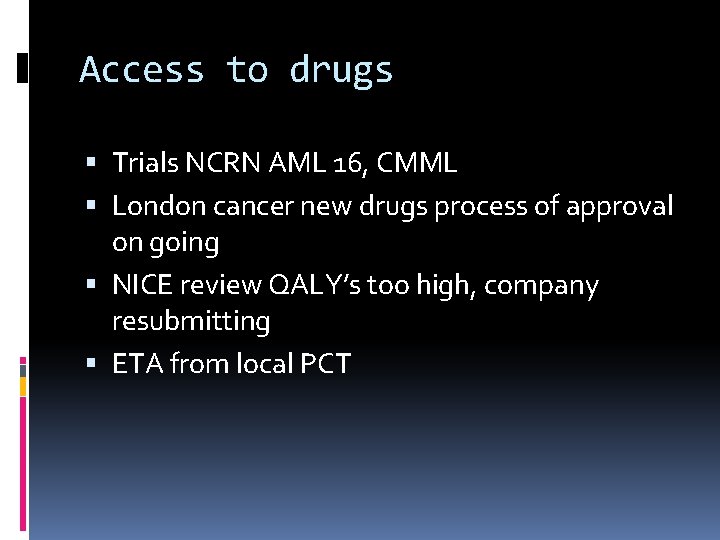
Access to drugs Trials NCRN AML 16, CMML London cancer new drugs process of approval on going NICE review QALY’s too high, company resubmitting ETA from local PCT
Acknowledgement MRC Prof Mufti Dr Shaun Thomas Patients at KCH and GSTT
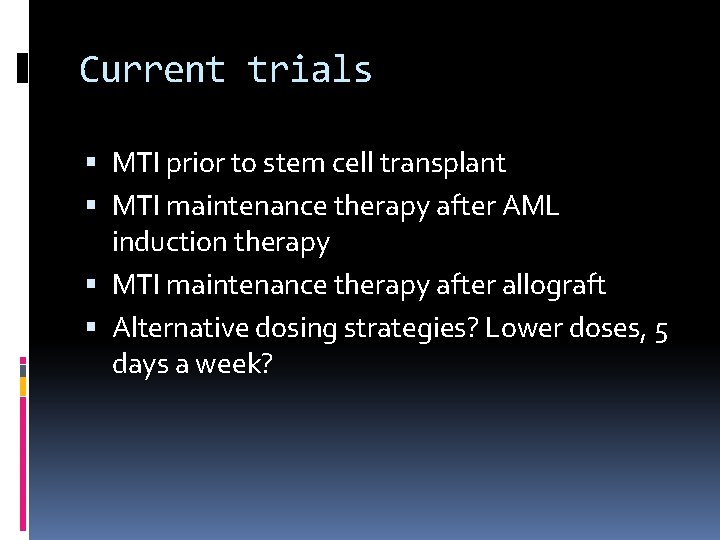
Current trials MTI prior to stem cell transplant MTI maintenance therapy after AML induction therapy MTI maintenance therapy after allograft Alternative dosing strategies? Lower doses, 5 days a week?
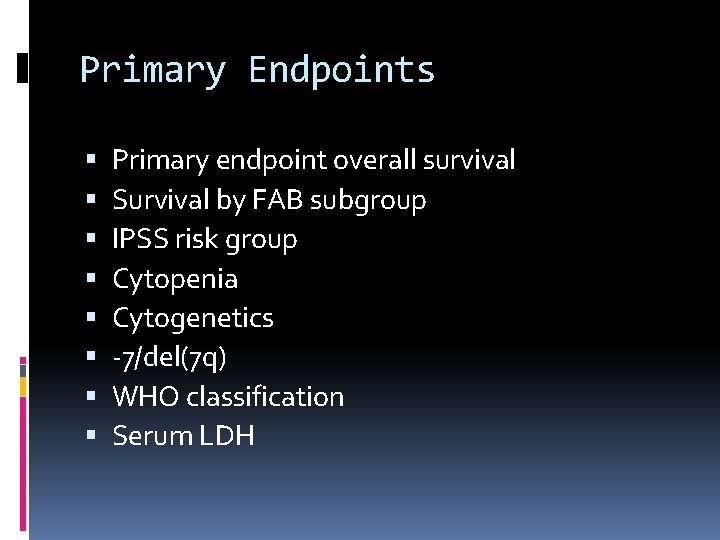
Primary Endpoints Primary endpoint overall survival Survival by FAB subgroup IPSS risk group Cytopenia Cytogenetics -7/del(7 q) WHO classification Serum LDH
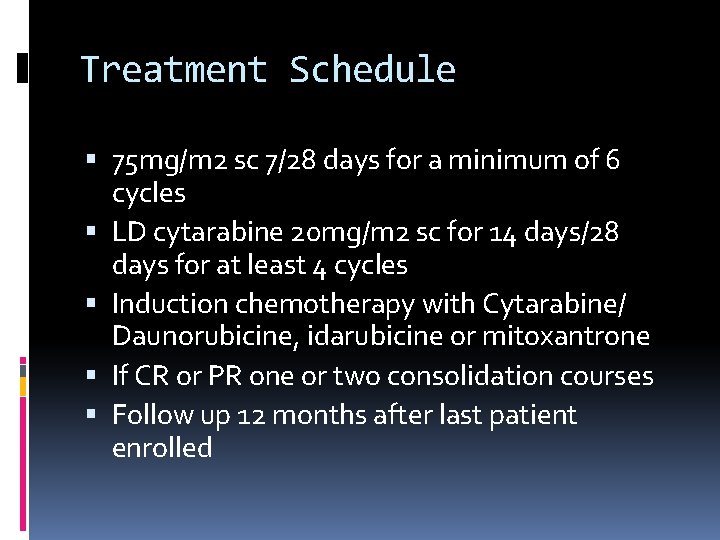
Treatment Schedule 75 mg/m 2 sc 7/28 days for a minimum of 6 cycles LD cytarabine 20 mg/m 2 sc for 14 days/28 days for at least 4 cycles Induction chemotherapy with Cytarabine/ Daunorubicine, idarubicine or mitoxantrone If CR or PR one or two consolidation courses Follow up 12 months after last patient enrolled
WPSS risk groups and survival WPSS Risk Score WPSS Risk Group Median overall Survival months Cumulative probability of leukaemic transformation at 2 years 0 Very Low 141 0. 03 1 Low 66 0. 06 2 Intermediate 48 0. 21 3 or 4 High 26 0. 38 5 Very High 9 0. 80
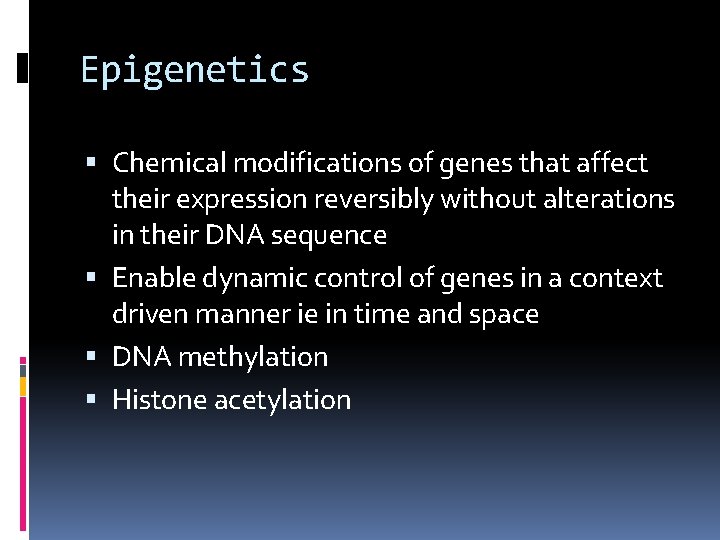
Epigenetics Chemical modifications of genes that affect their expression reversibly without alterations in their DNA sequence Enable dynamic control of genes in a context driven manner ie in time and space DNA methylation Histone acetylation
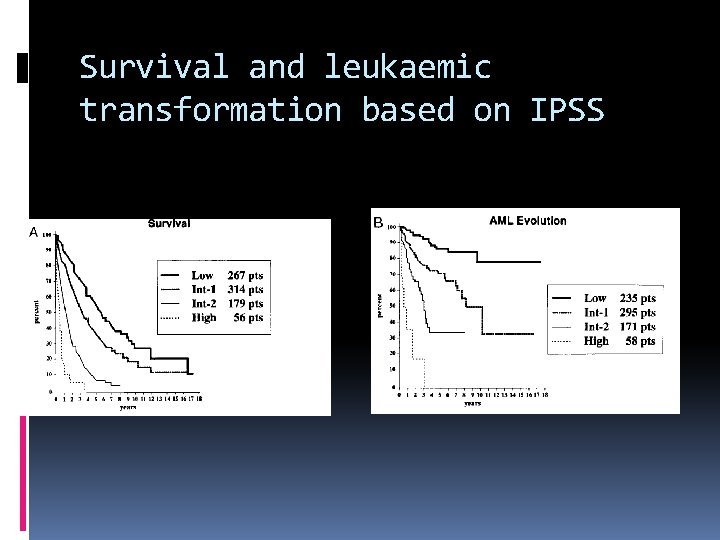
Survival and leukaemic transformation based on IPSS
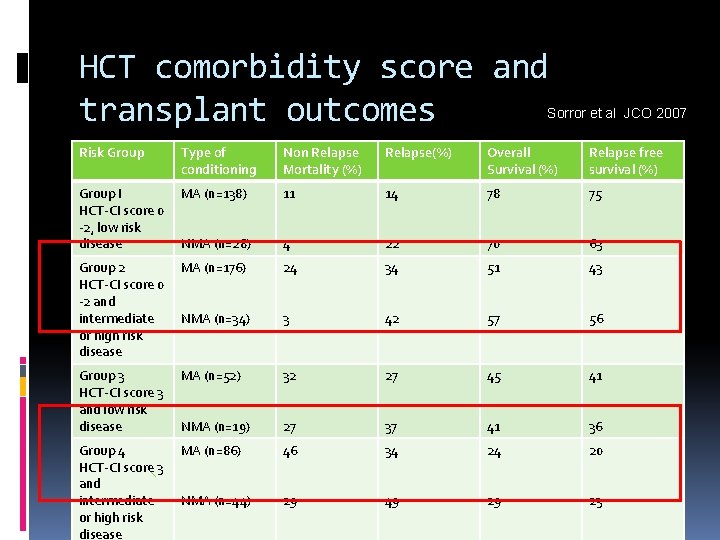
HCT comorbidity score and transplant outcomes Sorror et al JCO 2007 Risk Group Type of conditioning Non Relapse Mortality (%) Relapse(%) Overall Survival (%) Relapse free survival (%) Group I HCT-CI score 0 -2, low risk disease MA (n=138) 11 14 78 75 NMA (n=28) 4 22 70 63 Group 2 HCT-CI score 0 -2 and intermediate or high risk disease MA (n=176) 24 34 51 43 NMA (n=34) 3 42 57 56 Group 3 HCT-CI score 3 and low risk disease MA (n=52) 32 27 45 41 NMA (n=19) 27 37 41 36 Group 4 HCT-CI score 3 and intermediate or high risk disease MA (n=86) 46 34 24 20 NMA (n=44) 29 49 29 23
Secondary End points Time to transform to AML Haematological Improvement Red cell transfusion independence
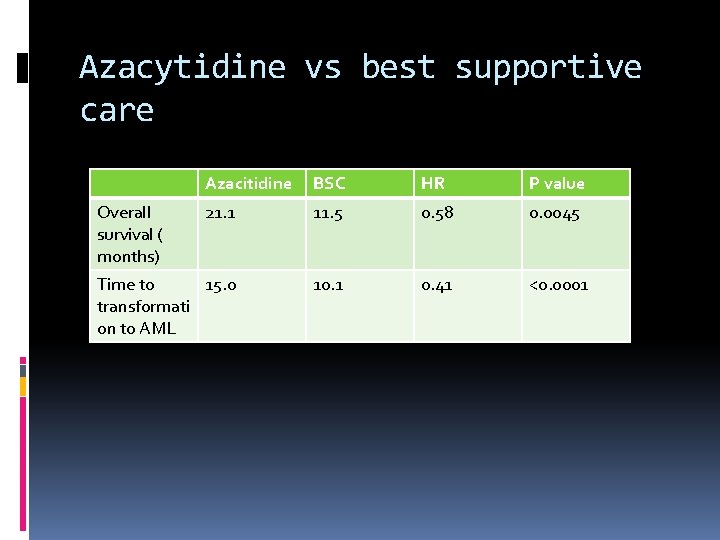
Azacytidine vs best supportive care Azacitidine BSC HR P value 21. 1 11. 5 0. 58 0. 0045 Time to 15. 0 transformati on to AML 10. 1 0. 41 <0. 0001 Overall survival ( months)
Azacitidine vs Low dose cytarabine Azacitidine LD cytarabine HR P value Overall survival (months) 24. 5 15. 3 0. 36 0. 0006 Time to transformatio n to AML (months) 15. 0 14. 5 0. 55 0. 097
Azacitidine vs Intensive chemotherapy Azacytidine Intensive HR Chemotherap y P value Overall survival ( months) 25. 1 15. 7 0. 76 0. 51 Time to transformatio n to AML ( months) 23. 1 10. 7 0. 48 0. 19
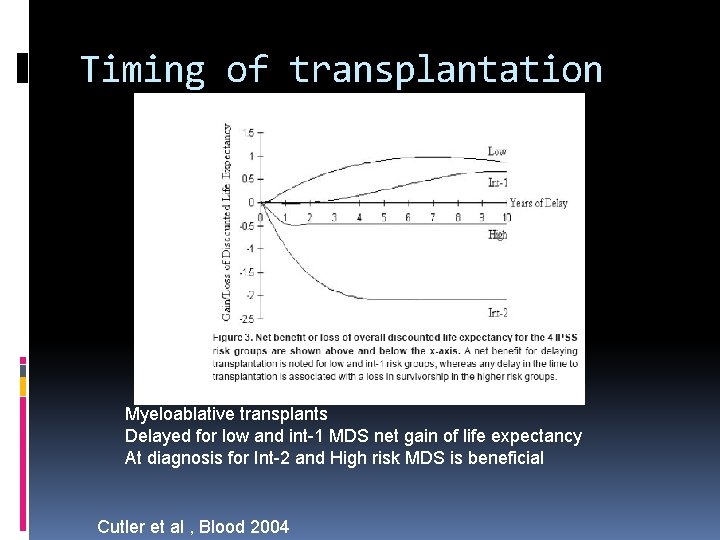
Timing of transplantation Myeloablative transplants Delayed for low and int-1 MDS net gain of life expectancy At diagnosis for Int-2 and High risk MDS is beneficial Cutler et al , Blood 2004
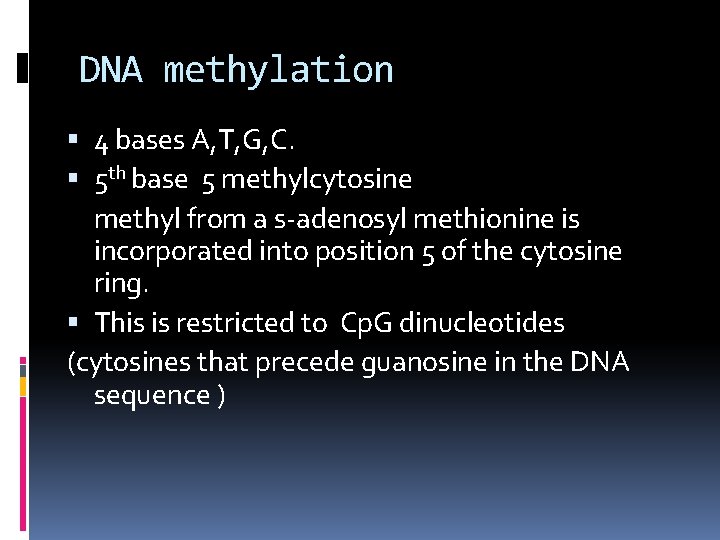
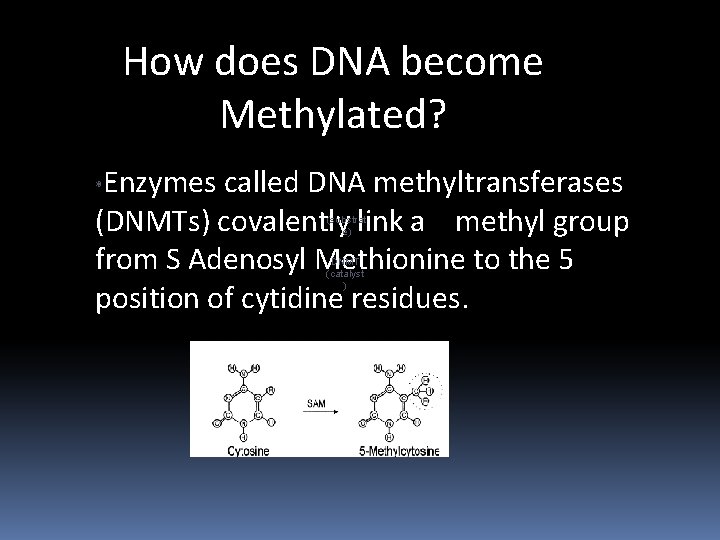
DNA methylation 4 bases A, T, G, C. 5 th base 5 methylcytosine methyl from a s-adenosyl methionine is incorporated into position 5 of the cytosine ring. This is restricted to Cp. G dinucleotides (cytosines that precede guanosine in the DNA sequence )
How does DNA become Methylated? Enzymes called DNA methyltransferases (DNMTs) covalently link a methyl group from S Adenosyl Methionine to the 5 position of cytidine residues. * (substrat e) DNMT (catalyst )
WHO Prognostic Scoring System Variable 0 1 2 3 WHO Category RA, RARS, 5 q- RCMD, RCMD -RS RAEB-1 RAEB-2 Cytogenetics* Good Intermediate Poor Transfusion requirement Regular No • *As per the IPSS subgroups
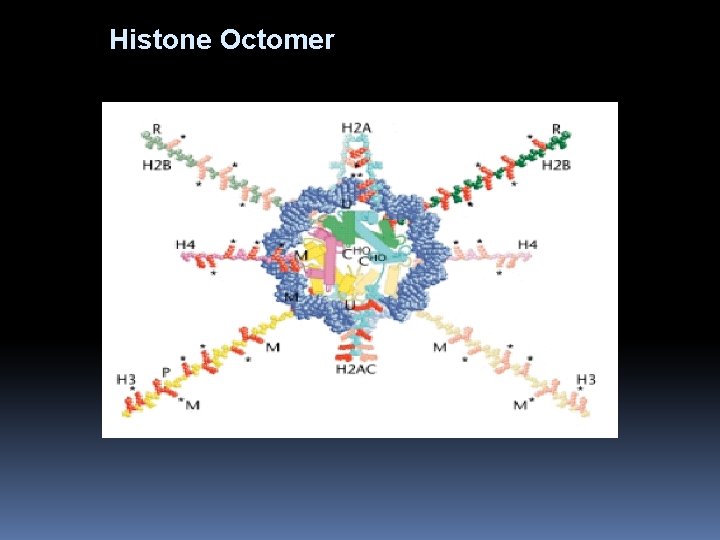
Histone Octomer
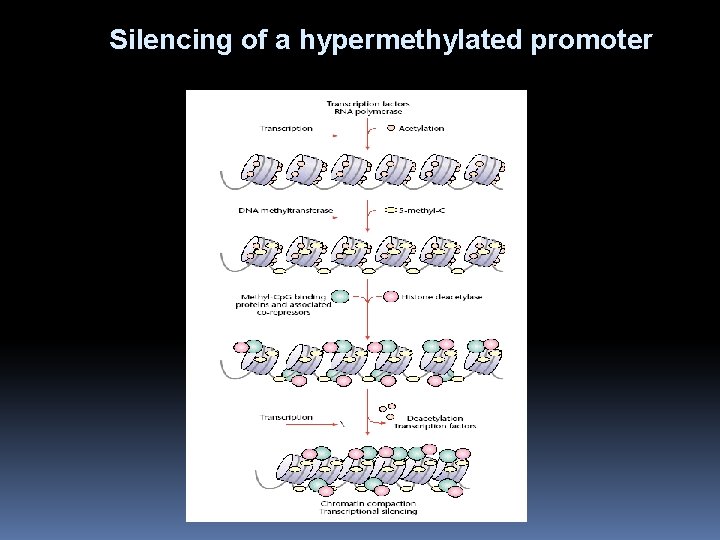
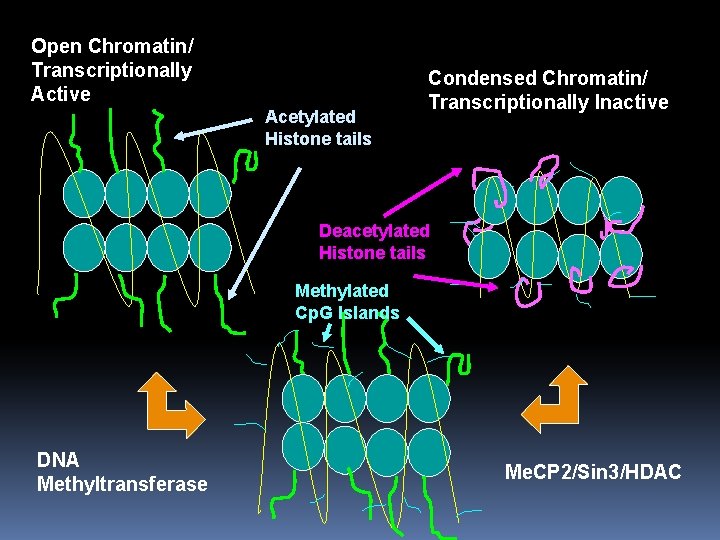
Silencing of a hypermethylated promoter
DNA methylation in MDS In cancer methylation of genes increases These are reversibly switched off Critical pathways such as cell cycle control, cell death, cellular growth, DNA repair may be affected In MDS: p 15 INK 4 b, MLH 1, ER, may be silenced by methylation and may be critical to disease progression Responses to MTI have been linked with demethylation of genes
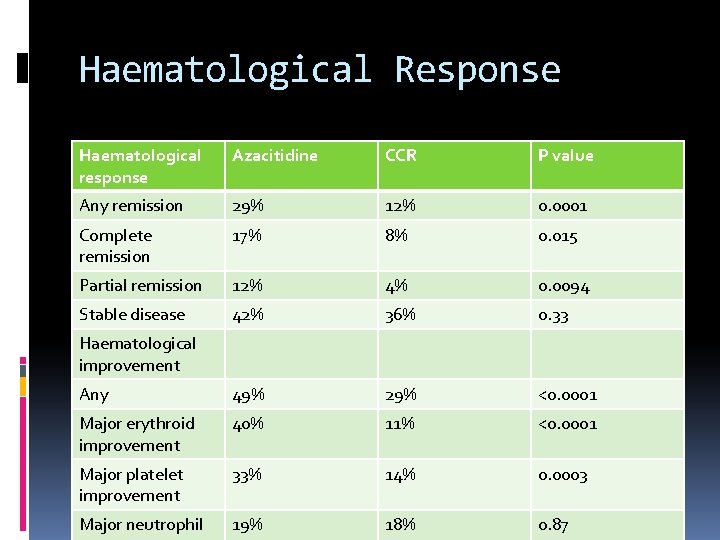
Haematological Response Haematological response Azacitidine CCR P value Any remission 29% 12% 0. 0001 Complete remission 17% 8% 0. 015 Partial remission 12% 4% 0. 0094 Stable disease 42% 36% 0. 33 Any 49% 29% <0. 0001 Major erythroid improvement 40% 11% <0. 0001 Major platelet improvement 33% 14% 0. 0003 Major neutrophil 19% 18% 0. 87 Haematological improvement
Acknowledgement MRC Prof Mufti Dr Shaun Thomas Patients at KCH and GSTT
Disease Factors Blast percentage Cytogenetics: chromososome 7 Tempo of disease De-novo or secondary MDS
Blast percentage
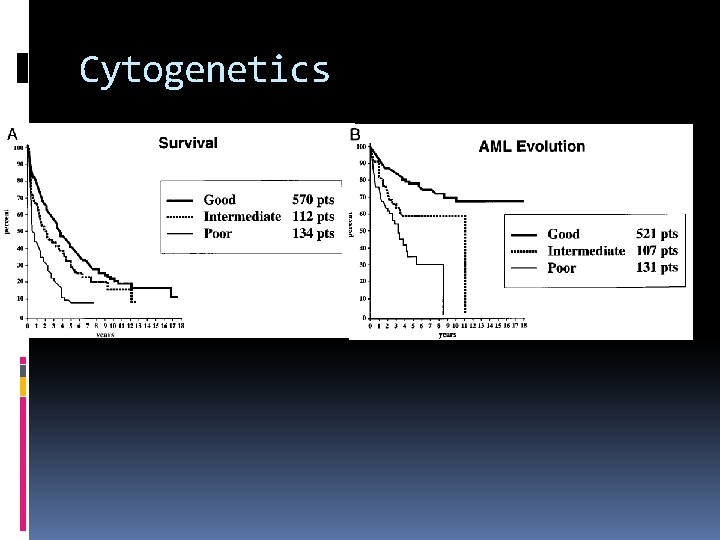
Cytogenetics
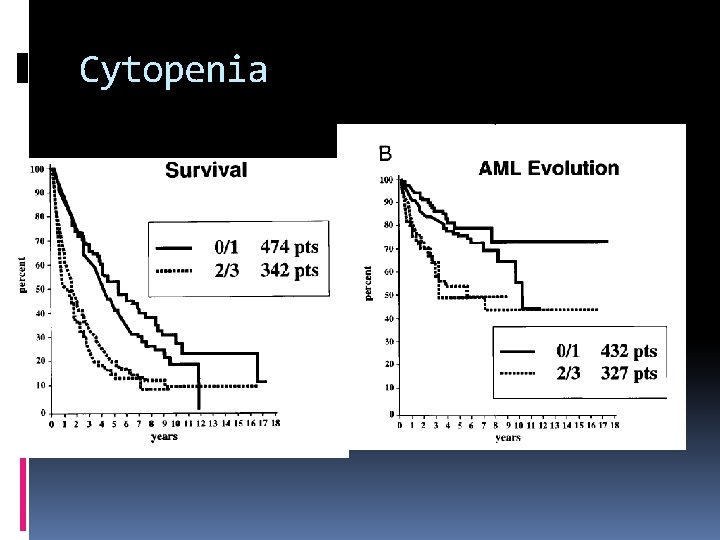
Cytopenia
Age as a modulator of leukaemic transformation IPSS Group Median time Age < 60 for 25% Risk years of Leukaemia (years) Age >60 years Age>70 years Low 9. 4 >9. 4 ( not reached) >5. 8 ( not reached) Intermediate 1 3. 3 6. 9 2. 7 2. 2 Intermediate 2 1. 1 0. 7 1. 3 1. 4 High 0. 2 0. 4
Choice of treatment Co-existing conditions Cardiac: previous MI, prosthetic valves Liver dysfunction Pulmonary: COPD, Mobility Rheumatoid arthritis High ferritin levels
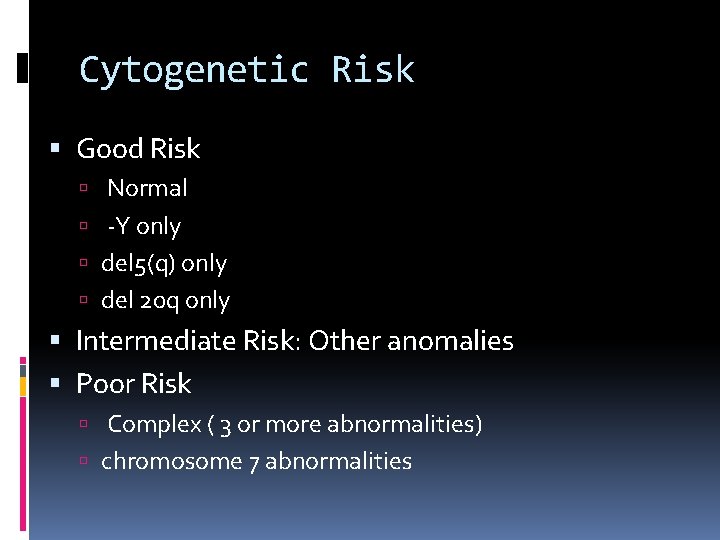
Cytogenetic Risk Good Risk Normal -Y only del 5(q) only del 20 q only Intermediate Risk: Other anomalies Poor Risk Complex ( 3 or more abnormalities) chromosome 7 abnormalities
Open Chromatin/ Transcriptionally Active Acetylated Histone tails Condensed Chromatin/ Transcriptionally Inactive Deacetylated Histone tails Methylated Cp. G Islands DNA Methyltransferase Me. CP 2/Sin 3/HDAC
IPSS Variables Prognostic Variable Score 0 0. 5 1. 0 1. 5 2. 0 BM Blasts <5% 5 -10% - 11 -20% 21 -30% Cytogenetics Good Intermediat e Poor Cytopenias 0/1 2/3 Score 0 Low Risk 0. 5 -1. 0 Intermediate I risk 1. 5 -2. 0 Intermediate 2 risk > 2. 5 High risk