
DR GORDON E PENFOLD D MIN PO BOX

DR. GORDON E. PENFOLD, D. MIN PO BOX 178 Eaton, CO 80615 gordonpnfld@gmail. com Starting. Fresh. net 970. 631. 6740 Taught by Dr. Gordon Penfold for Doctor of Ministry Students Uploaded by Dr. Rick Griffith • Singapore Bible College Files in many languages for free download at Bible. Study. Downloads. org
DISC Profile: YOUR LEADERSHIP PERSONALITY AND YOUR MINISTRY SINGAPORE BIBLE COLLEGE DMIN CHURCH REVITALIZATION
Overview This workshop is intended to address individual behaviors and provide each person information that will allow them to make course corrections in their day-to-day interactions with others to enhance the process of communication in your place of ministry.
Overview Behavior Versus Personality is defined as “the pattern of collective character, behavior, temperamental, emotional, and mental traits of an individual. ” Personality is very complex and consists of multiple factors.
Overview Behavior Versus Personality Behavior is defined as “ones actions or reactions under specified circumstances. ” Behavior is observable. The distinction, then, we could make is that personality is our overall way of looking at a person – the totality of qualities, cultural values, beliefs, emotional make-up, skills, abilities, and traits particular to an individual. Behavior, on the other hand, is the way we respond to a specific situation. It is the outward expression of who we are.
Session Goals • Understand your work behavioral tendencies and develop an understanding of how these styles may affect others. • Understand, respect, appreciate, and value individual differences. • Enhance your effectiveness in accomplishing better communication through style flexibility.
History • Hippocrates – 400 BC – Observed four different areas of behavior – – • • Blood Black Bile Yellow Bile Phlegm Jung - 1921 – refined the four types Marsten – 1928 – Published “Emotions of Normal People” and identified the behavioral theory we use today
History Gary Smalley and John Trent developed the following based on animals. • Personality Types: Lion, Otter, Golden Retriever, and Beaver

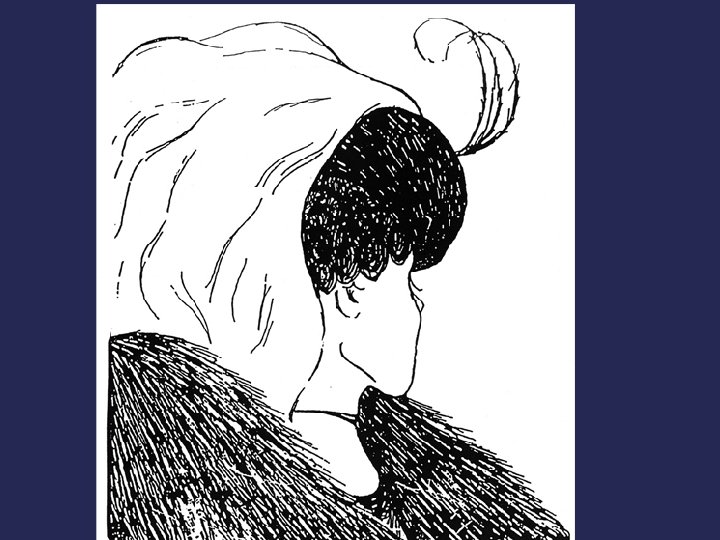
Write down what you see in the next slides.


© TAMCO Performance Consultants

© TAMCO Performance Consultants

How the DISC Works.
Lion (Choleric/Dominance) Strengths– Visionary, practical, productive, strong-willed, independent, decisive, leader Weaknesses– Cold, domineering, unemotional self-sufficient, unforgiving, sarcastic, cruel .
Otter (Sanguine/Influence) Strengths– Outgoing, responsive, warm, friendly, talkative, enthusiastic, compassionate Weaknesses– Undisciplined, unproductive, exaggerates, egocentric, unstable
Golden Retriever (Phlegmatic/Steadiness) Strengths– Calm, easy-going, dependable, quiet, objective, diplomatic, humorous Weaknesses– Selfish, stingy, procrastinator, unmotivated, indecisive, fearful, worrier
Beaver (Melancholy/Compliance) Strengths– Analytical, self-disciplined, industrious, organized, aesthetic, sacrificing Weaknesses– Moody, self-centered, touchy, negative, unsociable, critical, revengeful
Often you’ll find that people have a primary character type and a secondary type. Take a look at yourself. Which one is your primary and which one is your secondary? Some naturally go together and make for a wonderful set of strengths. Also, be sensitive to the weaknesses in yourself and in others.
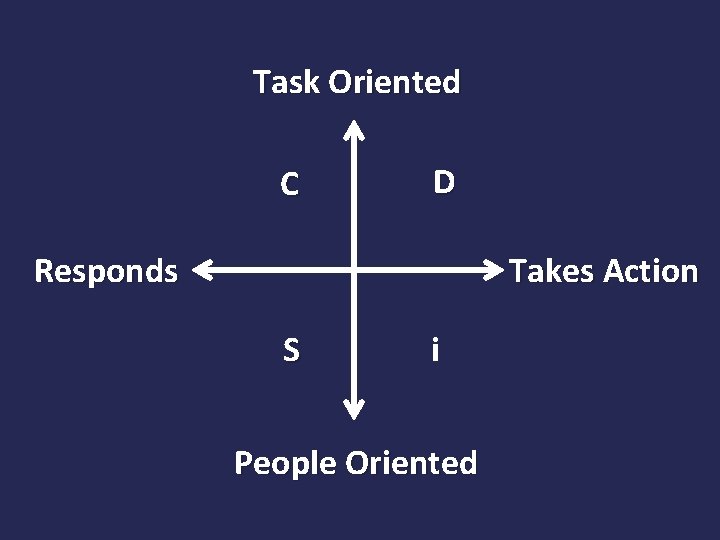
Task Oriented C D Takes Action Responds S i People Oriented
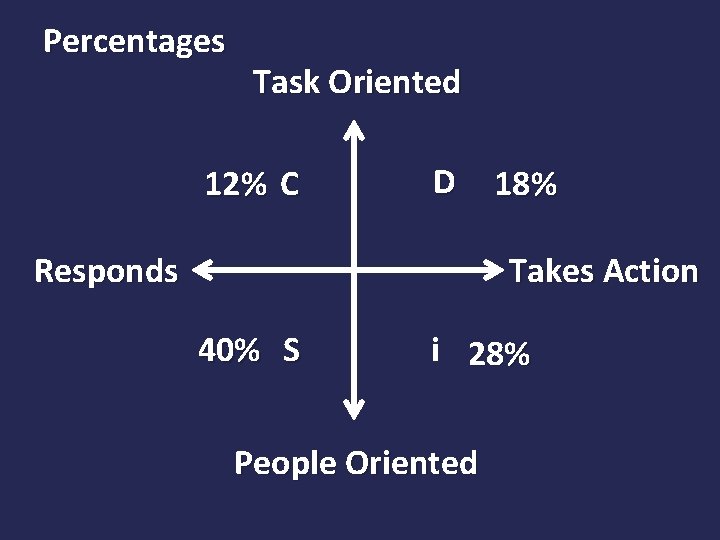
Percentages Task Oriented 12% C D 18% Takes Action Responds 40% S i 28% People Oriented
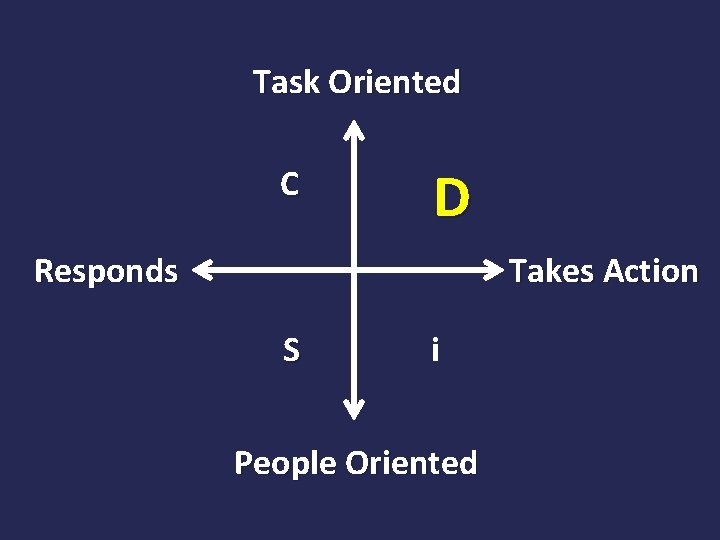
Task Oriented C D Takes Action Responds S i People Oriented
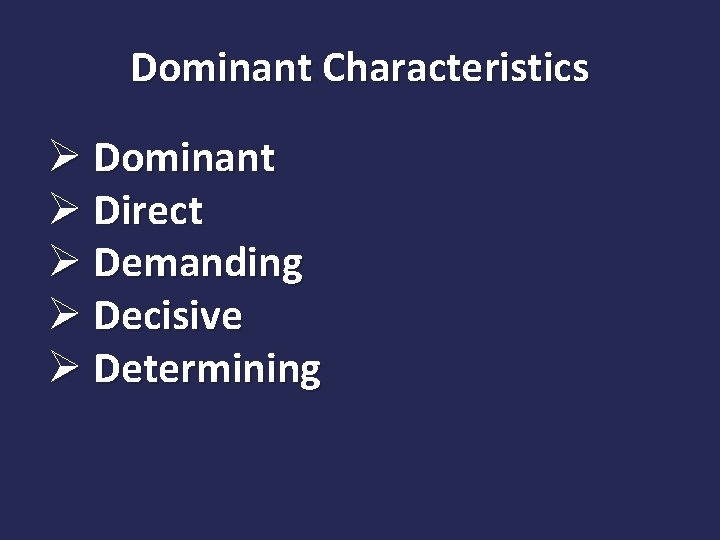
Dominant Characteristics Ø Dominant Ø Direct Ø Demanding Ø Decisive Ø Determining
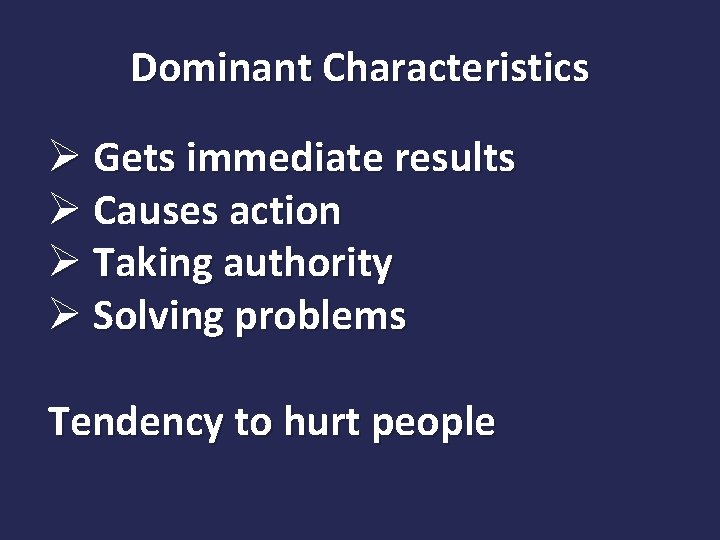
Dominant Characteristics Ø Gets immediate results Ø Causes action Ø Taking authority Ø Solving problems Tendency to hurt people
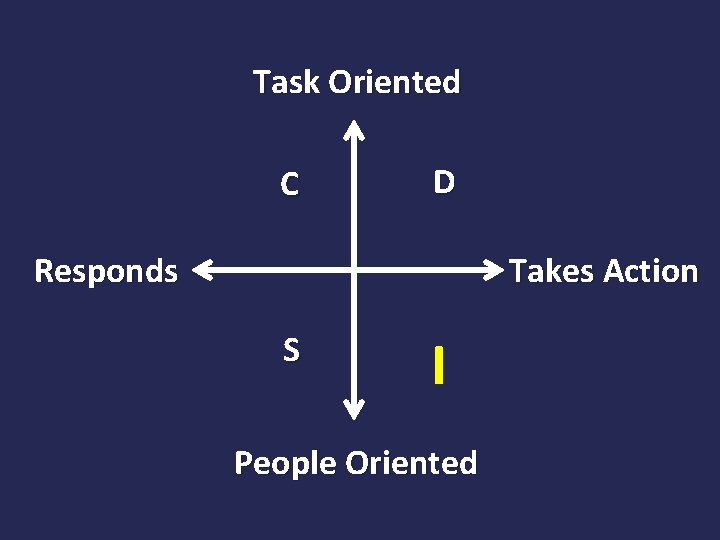
Task Oriented C D Takes Action Responds S I People Oriented
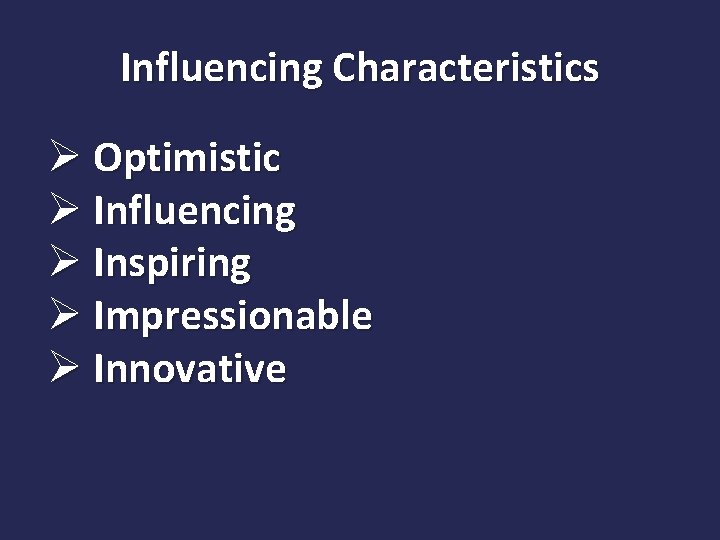
Influencing Characteristics Ø Optimistic Ø Influencing Ø Inspiring Ø Impressionable Ø Innovative
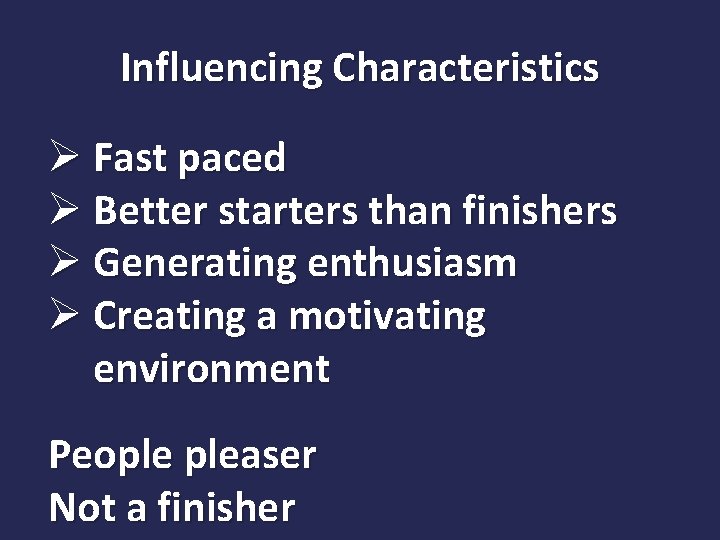
Influencing Characteristics Ø Fast paced Ø Better starters than finishers Ø Generating enthusiasm Ø Creating a motivating environment People pleaser Not a finisher
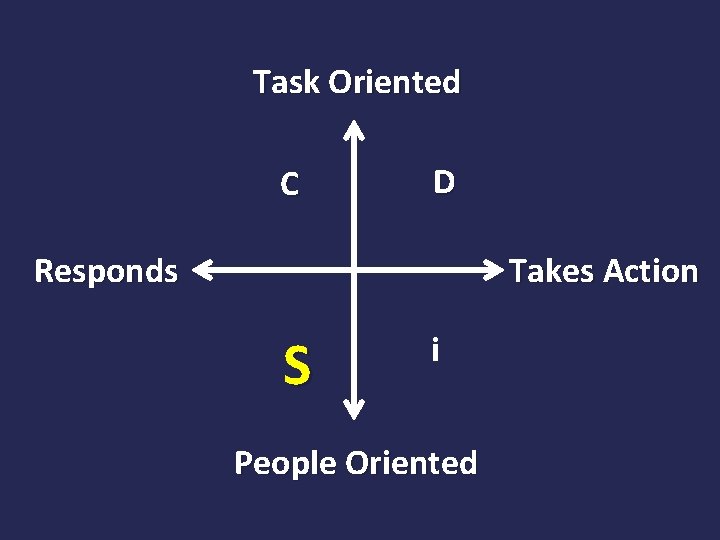
Task Oriented C D Takes Action Responds S i People Oriented
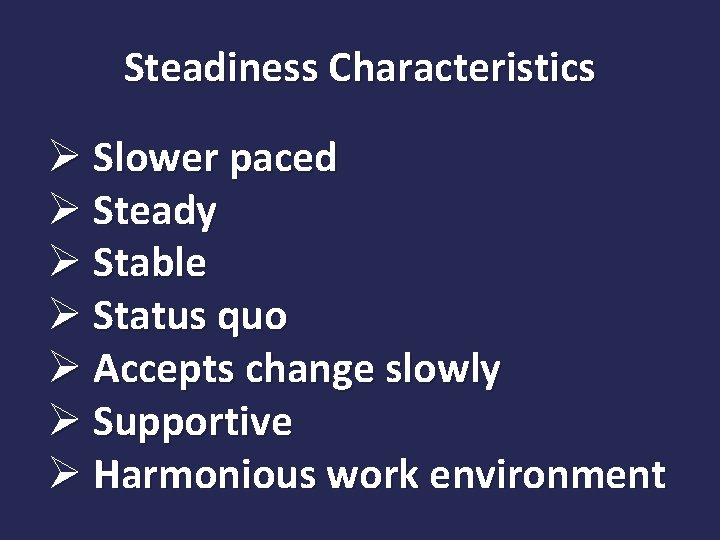
Steadiness Characteristics Ø Slower paced Ø Steady Ø Stable Ø Status quo Ø Accepts change slowly Ø Supportive Ø Harmonious work environment
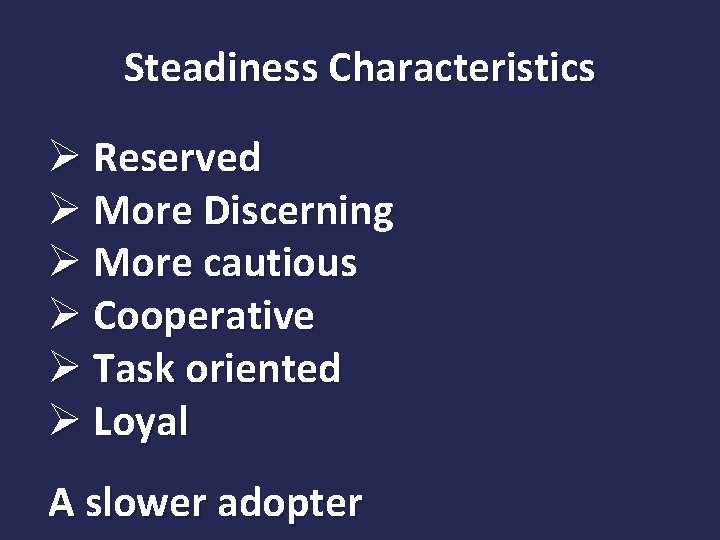
Steadiness Characteristics Ø Reserved Ø More Discerning Ø More cautious Ø Cooperative Ø Task oriented Ø Loyal A slower adopter
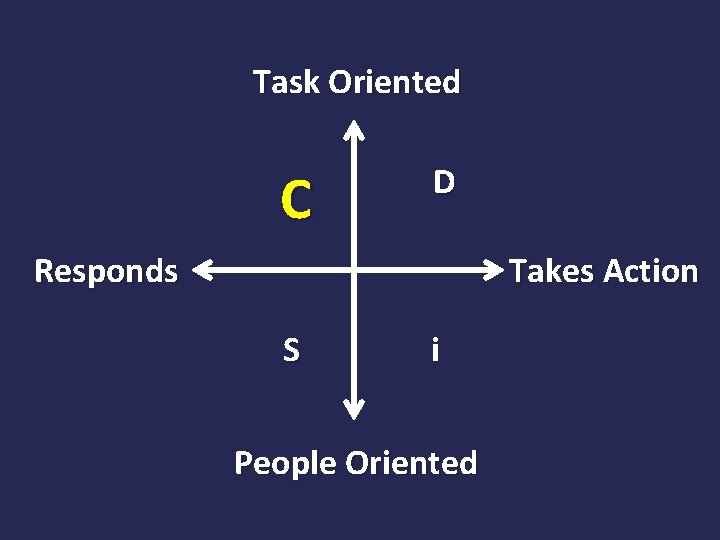
Task Oriented C D Takes Action Responds S i People Oriented
Conscientiousness Characteristics Ø Conscientious Ø Calculating Ø Cautious (overly at times) Ø Competent Ø Careful Ø Contemplative
Conscientiousness Characteristics Ø Analytical Ø Diplomatic with people Ø Cautious (overly) Ø Analyze performance critically Ø Systematic
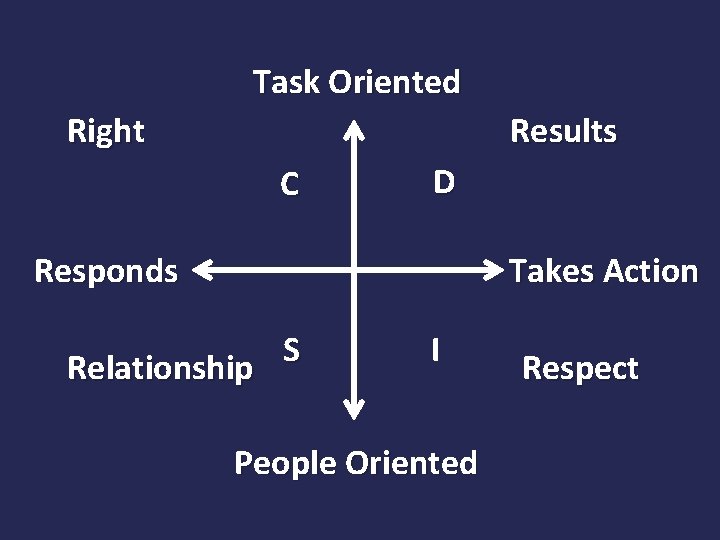
Task Oriented Results Right C D Takes Action Responds S Relationship I People Oriented Respect
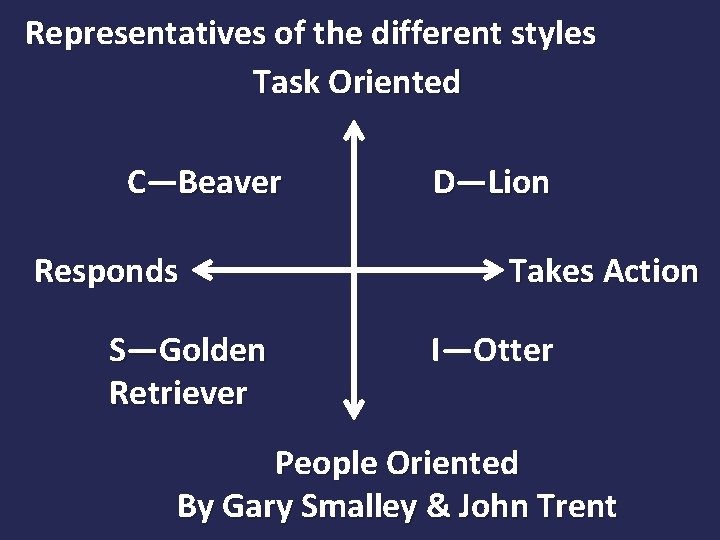
Representatives of the different styles Task Oriented C—Beaver Responds S—Golden Retriever D—Lion Takes Action I—Otter People Oriented By Gary Smalley & John Trent
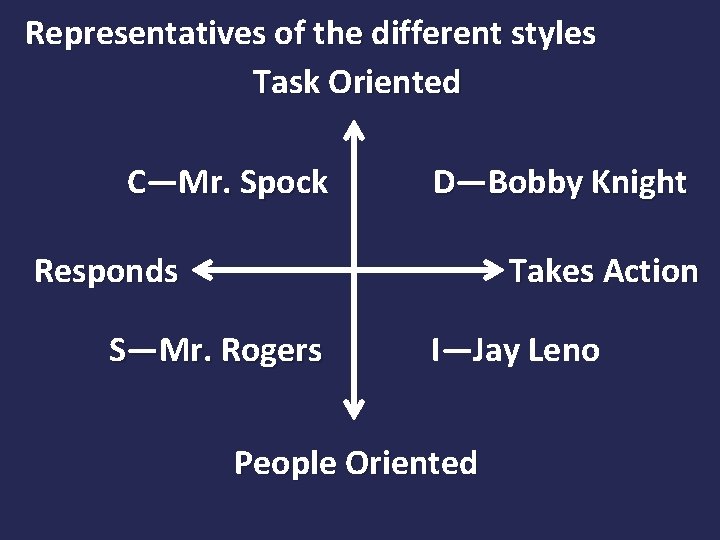
Representatives of the different styles Task Oriented C—Mr. Spock D—Bobby Knight Takes Action Responds S—Mr. Rogers I—Jay Leno People Oriented
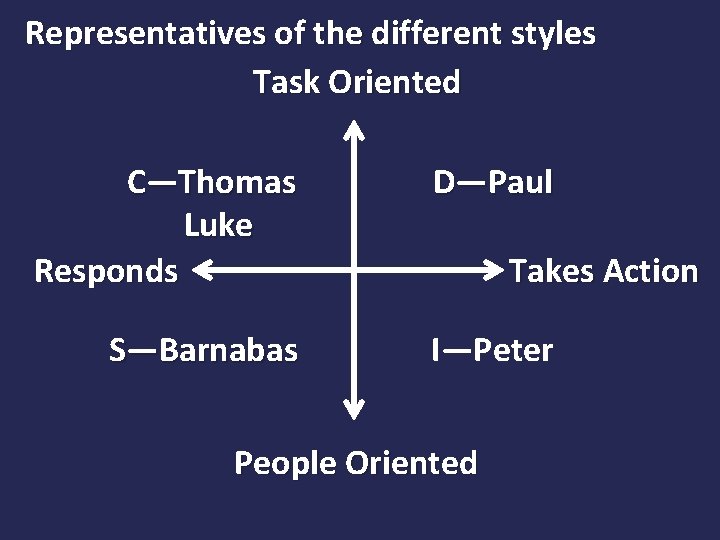
Representatives of the different styles Task Oriented C—Thomas Luke Responds D—Paul S—Barnabas I—Peter Takes Action People Oriented
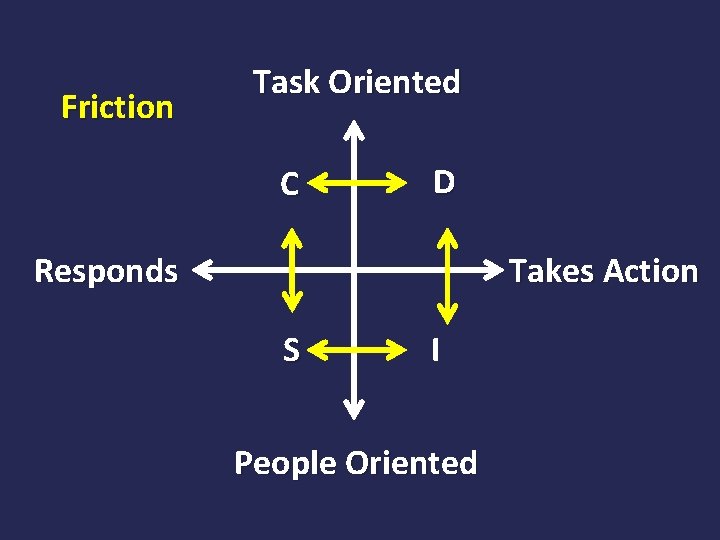
Friction Task Oriented C D Takes Action Responds S I People Oriented
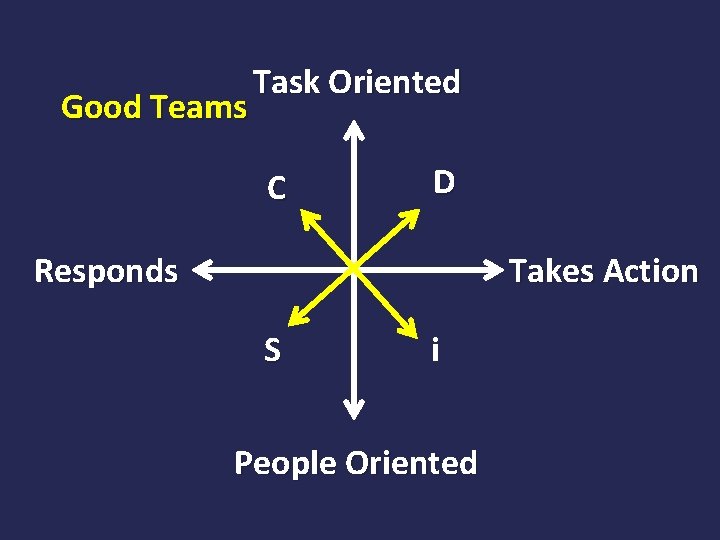
Good Teams Task Oriented C D Takes Action Responds S i People Oriented
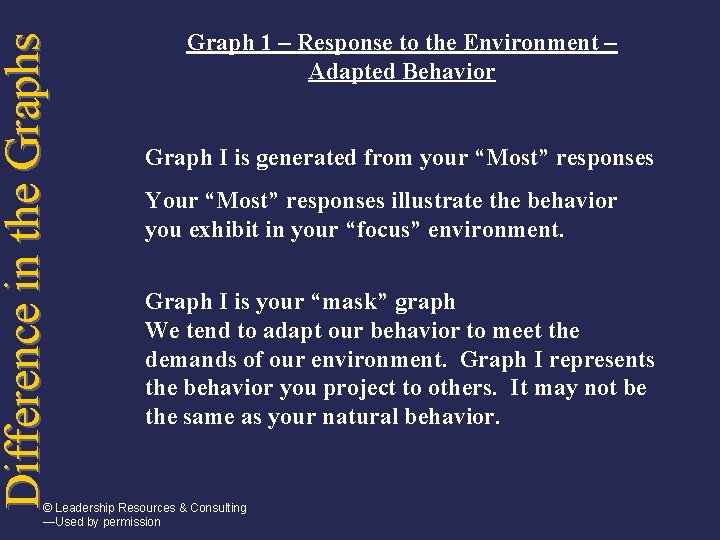
Difference in the Graphs Graph 1 – Response to the Environment – Adapted Behavior Graph I is generated from your “Most” responses Your “Most” responses illustrate the behavior you exhibit in your “focus” environment. Graph I is your “mask” graph We tend to adapt our behavior to meet the demands of our environment. Graph I represents the behavior you project to others. It may not be the same as your natural behavior. © Leadership Resources & Consulting —Used by permission
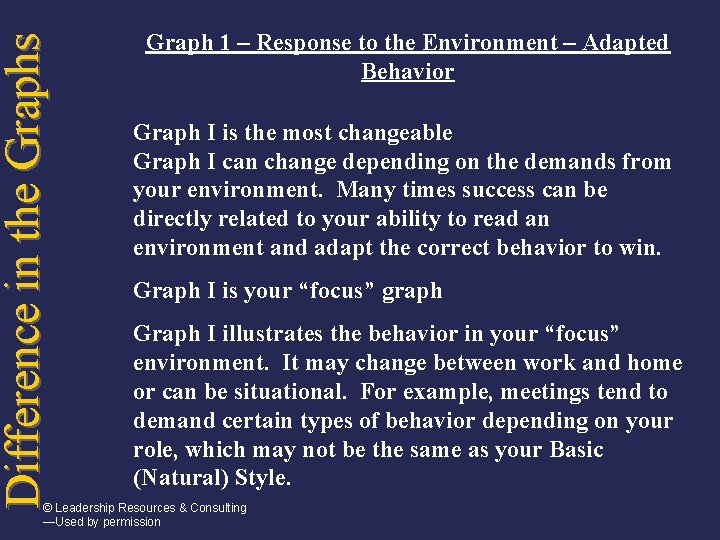
Difference in the Graphs Graph 1 – Response to the Environment – Adapted Behavior Graph I is the most changeable Graph I can change depending on the demands from your environment. Many times success can be directly related to your ability to read an environment and adapt the correct behavior to win. Graph I is your “focus” graph Graph I illustrates the behavior in your “focus” environment. It may change between work and home or can be situational. For example, meetings tend to demand certain types of behavior depending on your role, which may not be the same as your Basic (Natural) Style. © Leadership Resources & Consulting —Used by permission
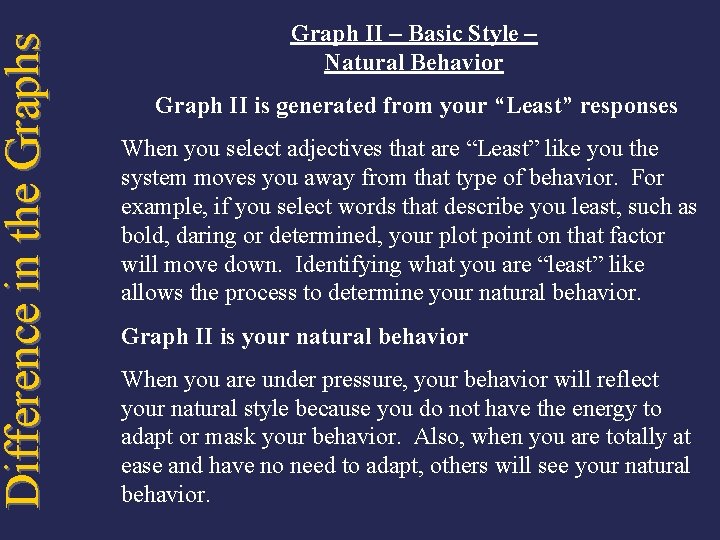
Difference in the Graphs Graph II – Basic Style – Natural Behavior Graph II is generated from your “Least” responses When you select adjectives that are “Least” like you the system moves you away from that type of behavior. For example, if you select words that describe you least, such as bold, daring or determined, your plot point on that factor will move down. Identifying what you are “least” like allows the process to determine your natural behavior. Graph II is your natural behavior When you are under pressure, your behavior will reflect your natural style because you do not have the energy to adapt or mask your behavior. Also, when you are totally at ease and have no need to adapt, others will see your natural behavior.
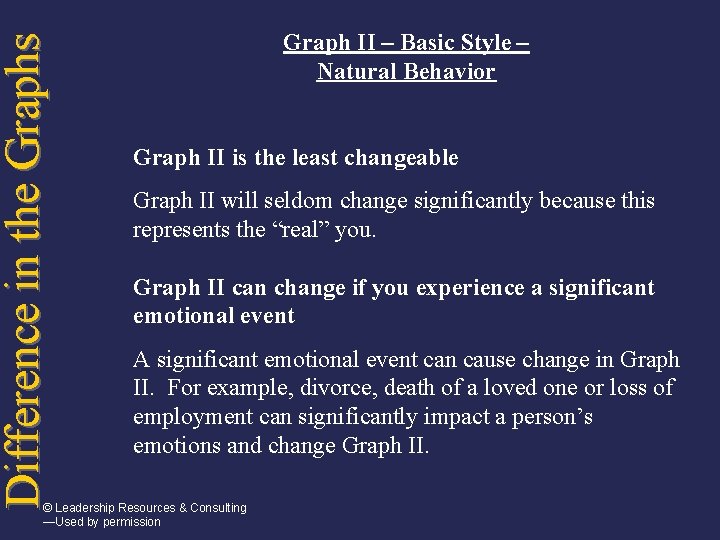
Difference in the Graphs Graph II – Basic Style – Natural Behavior Graph II is the least changeable Graph II will seldom change significantly because this represents the “real” you. Graph II can change if you experience a significant emotional event A significant emotional event can cause change in Graph II. For example, divorce, death of a loved one or loss of employment can significantly impact a person’s emotions and change Graph II. © Leadership Resources & Consulting —Used by permission
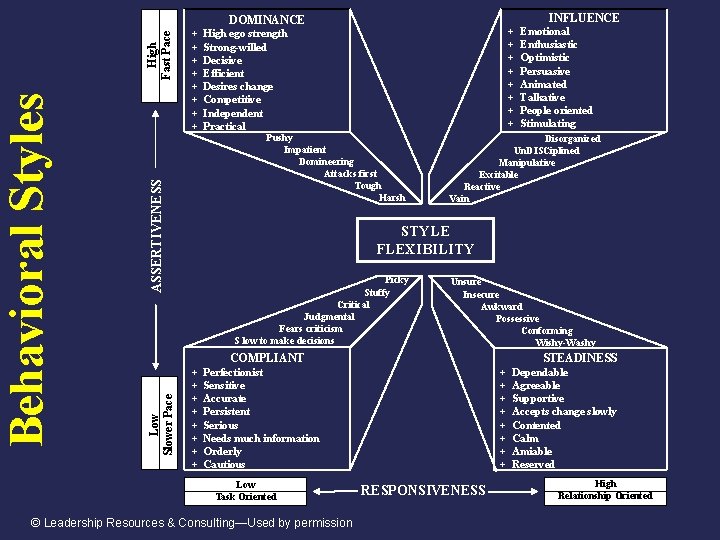
INFLUENCE ASSERTIVENESS + + + + High ego strength Strong-willed Decisive Efficient Desires change Competitive Independent Practical Pushy Impatient Domineering Attacks first Tough Harsh Emotional Enthusiastic Optimistic Persuasive Animated Talkative People oriented Stimulating Disorganized Un. DISCiplined Manipulative Excitable Reactive Vain STYLE FLEXIBILITY Picky Stuffy Critical Judgmental Fears criticism S low to make decisions COMPLIANT Low Slower Pace Behavioral Styles High Fast Pace DOMINANCE + + + + Unsure Insecure Awkward Possessive Conforming Wishy-Washy STEADINESS Perfectionist Sensitive Accurate Persistent Serious Needs much information Orderly Cautious Low Task Oriented © Leadership Resources & Consulting—Used by permission + + + + RESPONSIVENESS Dependable Agreeable Supportive Accepts change slowly Contented Calm Amiable Reserved High Relationship Oriented
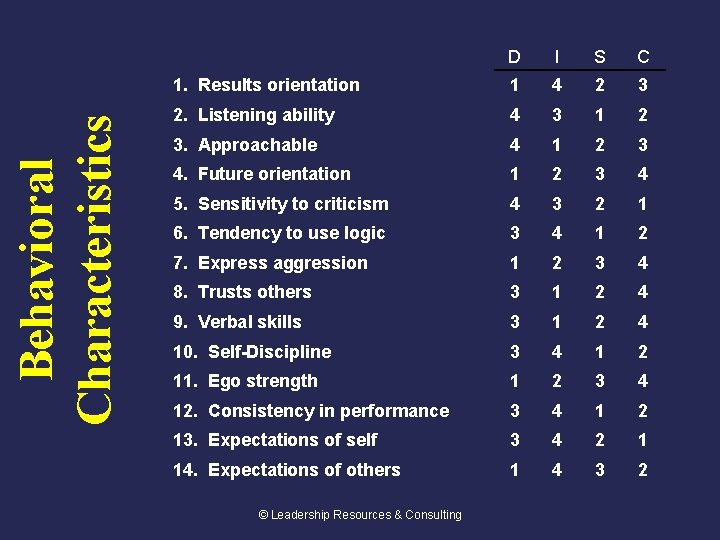
Behavioral Characteristics D I S C 1. Results orientation 1 4 2 3 2. Listening ability 4 3 1 2 3. Approachable 4 1 2 3 4. Future orientation 1 2 3 4 5. Sensitivity to criticism 4 3 2 1 6. Tendency to use logic 3 4 1 2 7. Express aggression 1 2 3 4 8. Trusts others 3 1 2 4 9. Verbal skills 3 1 2 4 10. Self-Discipline 3 4 1 2 11. Ego strength 1 2 3 4 12. Consistency in performance 3 4 1 2 13. Expectations of self 3 4 2 1 14. Expectations of others 1 4 3 2 © Leadership Resources & Consulting

Get this presentation for free! Church Transformation link at Bible. Study. Downloads. org
- Slides: 47