
Dr Fowler AFM Unit 8 4 The Normal

- Slides: 16
Dr. Fowler AFM Unit 8 -4 The Normal Distribution • Understand the basic properties of the normal curve. • Relate the area under a normal curve to z-scores. • Make conversions between raw scores and z-scores. • Use the normal distribution to solve applied problems.
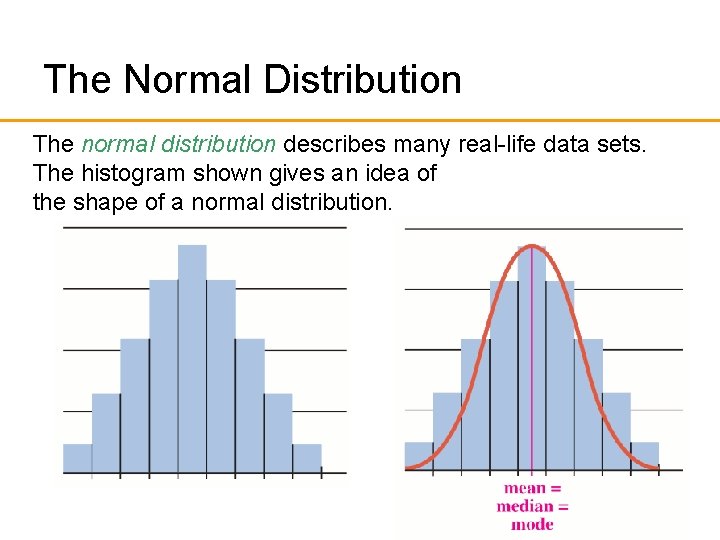
The Normal Distribution The normal distribution describes many real-life data sets. The histogram shown gives an idea of the shape of a normal distribution.
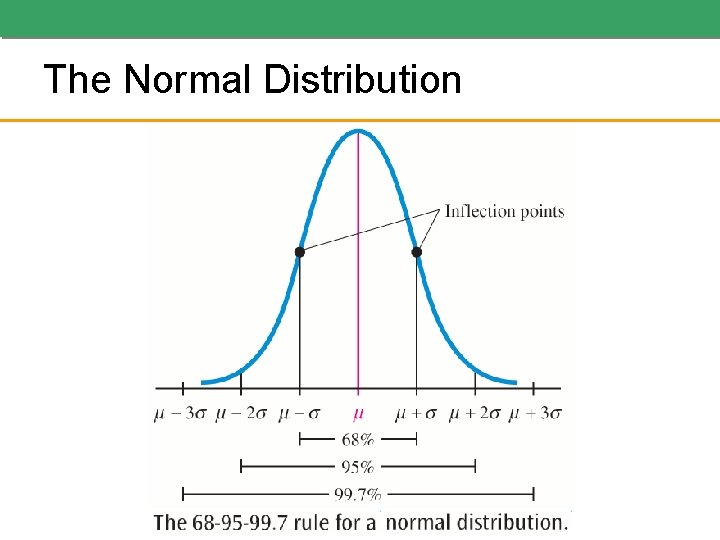
The Normal Distribution
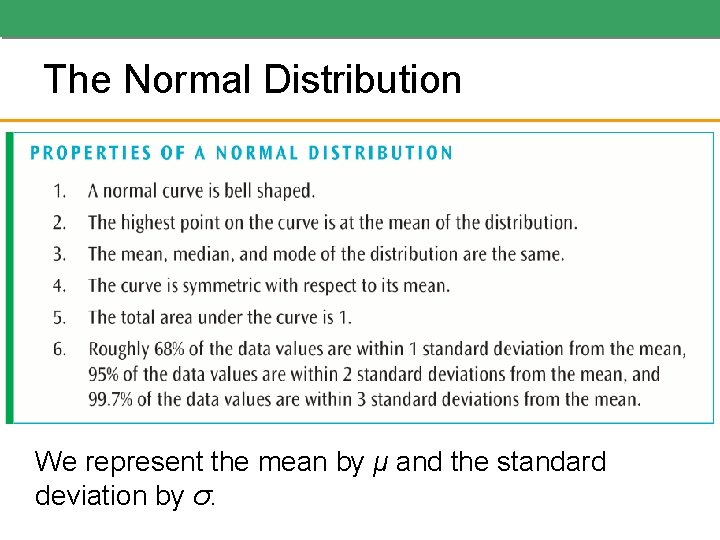
The Normal Distribution We represent the mean by μ and the standard deviation by σ.
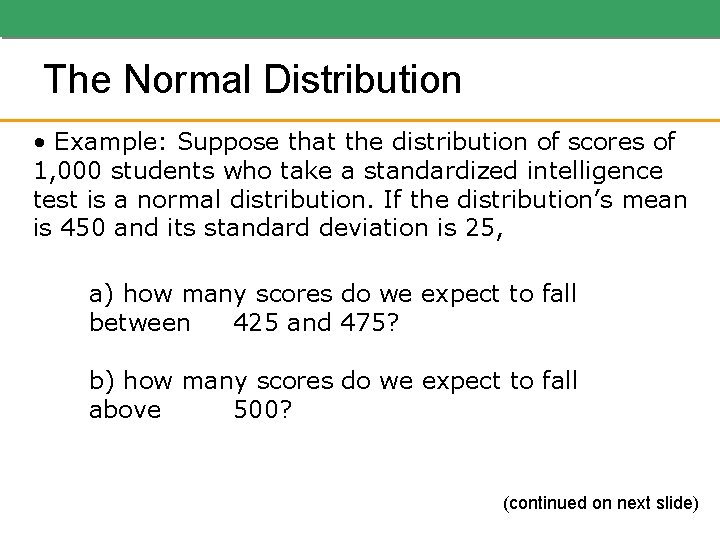
The Normal Distribution • Example: Suppose that the distribution of scores of 1, 000 students who take a standardized intelligence test is a normal distribution. If the distribution’s mean is 450 and its standard deviation is 25, a) how many scores do we expect to fall between 425 and 475? b) how many scores do we expect to fall above 500? (continued on next slide)
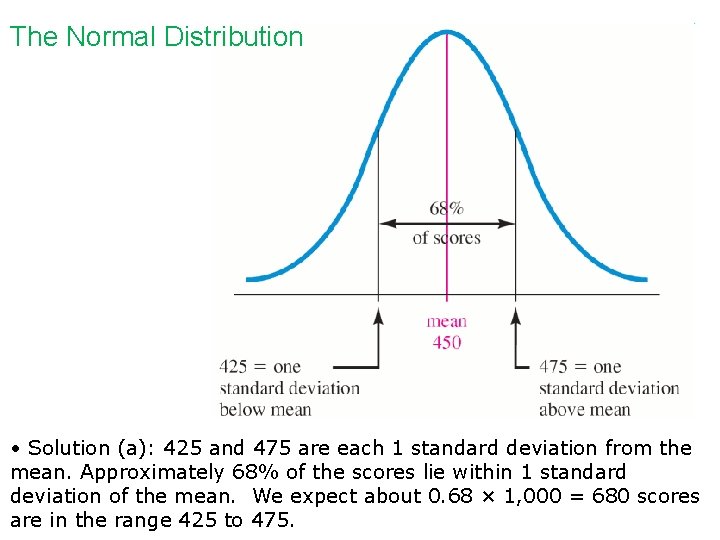
The Normal Distribution • Solution (a): 425 and 475 are each 1 standard deviation from the mean. Approximately 68% of the scores lie within 1 standard deviation of the mean. We expect about 0. 68 × 1, 000 = 680 scores are in the range 425 to 475.
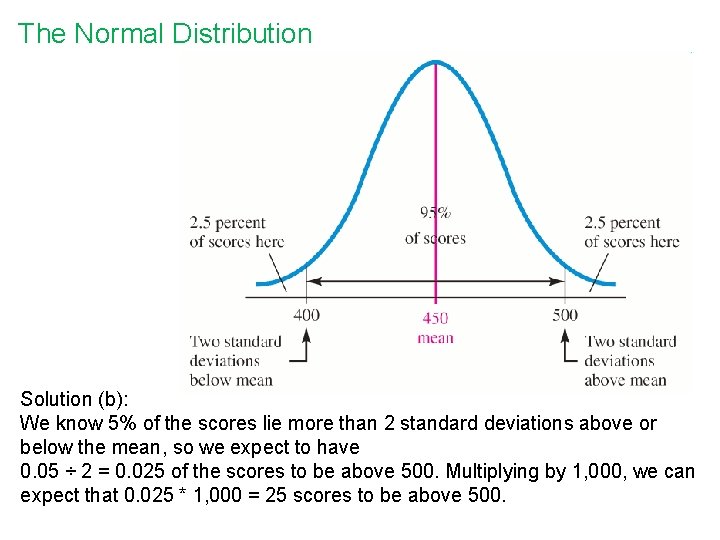
The Normal Distribution Solution (b): We know 5% of the scores lie more than 2 standard deviations above or below the mean, so we expect to have 0. 05 ÷ 2 = 0. 025 of the scores to be above 500. Multiplying by 1, 000, we can expect that 0. 025 * 1, 000 = 25 scores to be above 500.
z-Scores https: //www. youtube. com/watch? v=m. FYv. Ux. OO 2 T 4
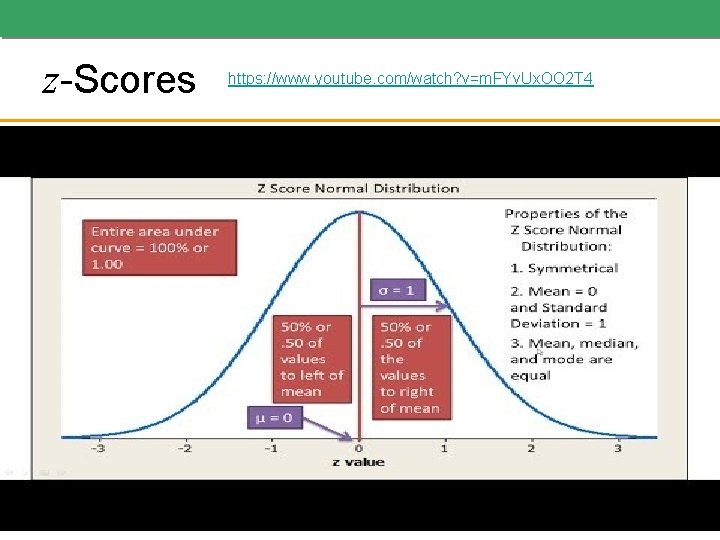
z-Scores The standard normal distribution has a mean of 0 and a standard deviation of 1. There are tables (see next slide) that give the area under this curve between the mean and a number called a z-score. A z-score represents the number of standard deviations a data value is from the mean. For example, for a normal distribution with mean 450 and standard deviation 25, the value 500 is 2 standard deviations above the mean; that is, the value 500 corresponds to a z-score of 2.
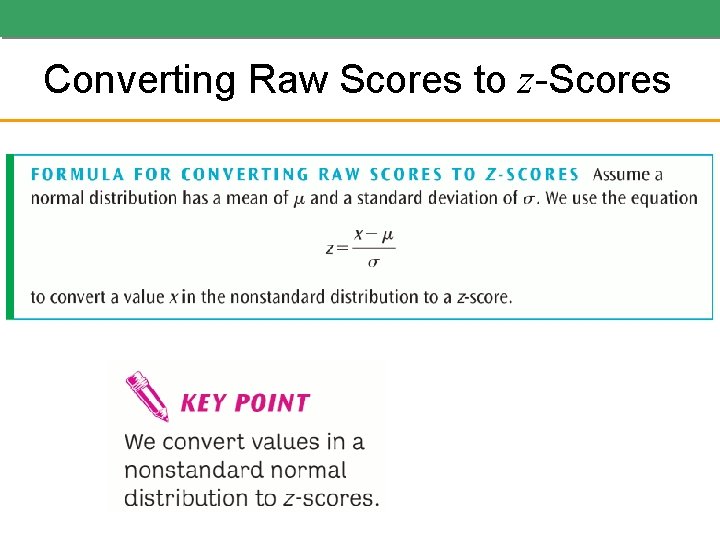
Converting Raw Scores to z-Scores
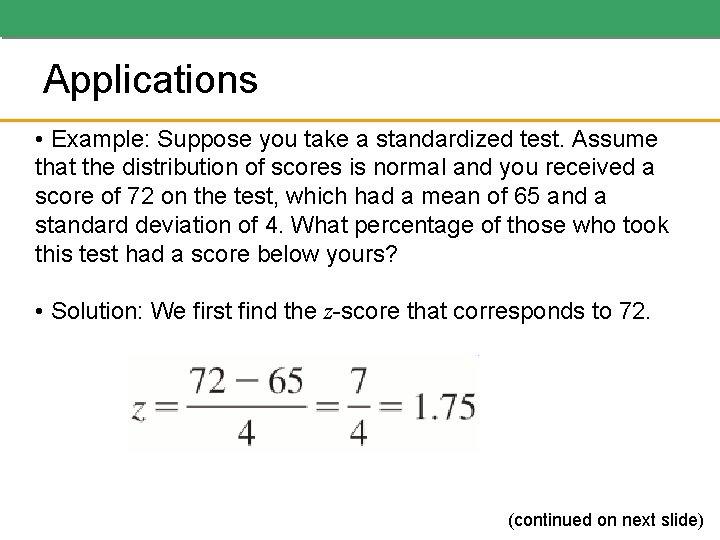
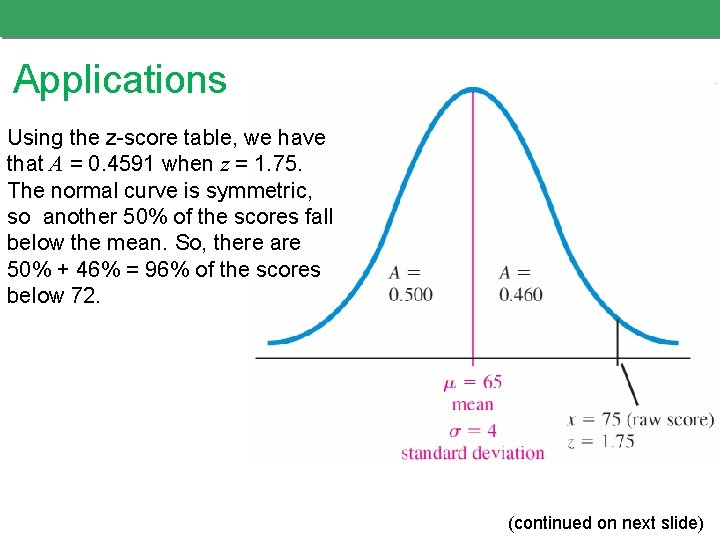
Applications • Example: Suppose you take a standardized test. Assume that the distribution of scores is normal and you received a score of 72 on the test, which had a mean of 65 and a standard deviation of 4. What percentage of those who took this test had a score below yours? • Solution: We first find the z-score that corresponds to 72. (continued on next slide)
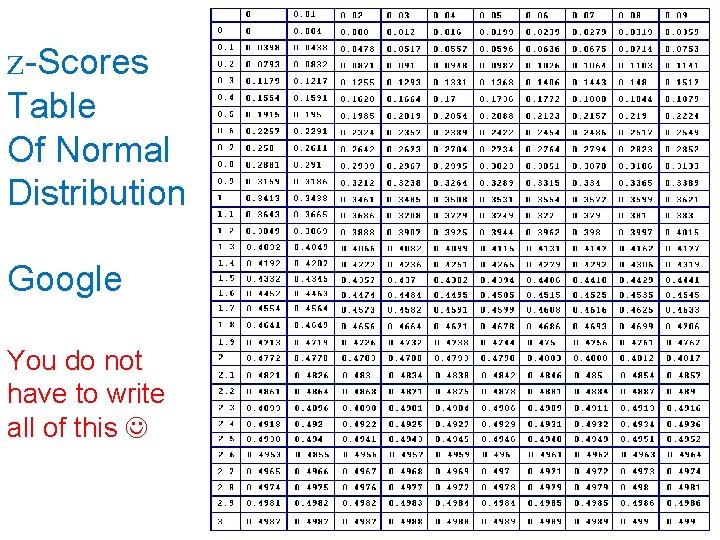
z-Scores Table Of Normal Distribution Google You do not have to write all of this
Applications Using the z-score table, we have that A = 0. 4591 when z = 1. 75. The normal curve is symmetric, so another 50% of the scores fall below the mean. So, there are 50% + 46% = 96% of the scores below 72. (continued on next slide)
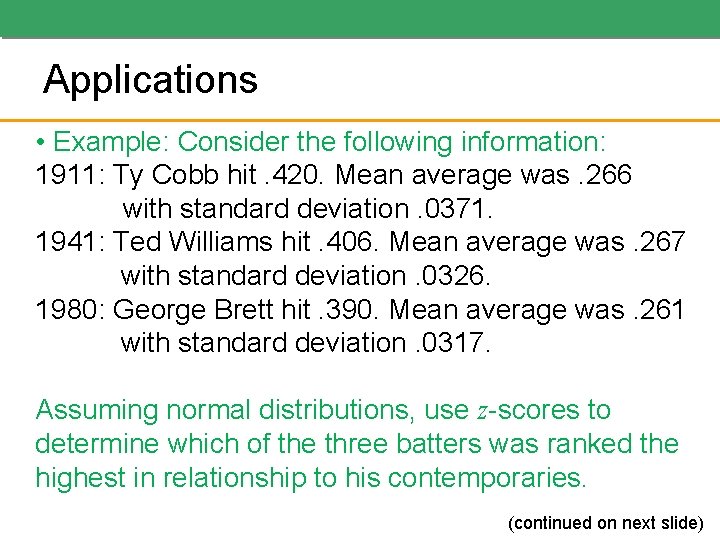
Applications • Example: Consider the following information: 1911: Ty Cobb hit. 420. Mean average was. 266 with standard deviation. 0371. 1941: Ted Williams hit. 406. Mean average was. 267 with standard deviation. 0326. 1980: George Brett hit. 390. Mean average was. 261 with standard deviation. 0317. Assuming normal distributions, use z-scores to determine which of the three batters was ranked the highest in relationship to his contemporaries. (continued on next slide)
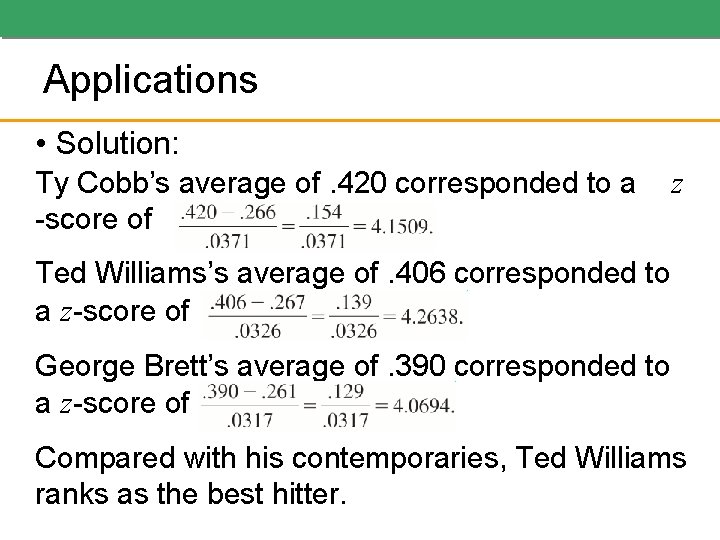
Applications • Solution: Ty Cobb’s average of. 420 corresponded to a -score of z Ted Williams’s average of. 406 corresponded to a z-score of George Brett’s average of. 390 corresponded to a z-score of Compared with his contemporaries, Ted Williams ranks as the best hitter.
Excellent Job !!! Well Done