
Dr Esam Ahmad Z Omar BDS MScOMFS FFDRCSI
Dr. Esam Ahmad Z. Omar BDS, MSc-OMFS, FFDRCSI Assistant Professor Oral & Maxillofacial Surgeon
Assessment of Difficulties • Difficulty in Surgical procedures mean factors that may create possible Challenges intra-Operatively, or/and may result in development of possible complications post-Operatively
Difficult Extraction • Systemic difficulty…. • • • limitation of mouth opening, TMJ • Local difficulty …. • • Sex, Age, Weight Psychology of patient Attitude Medically Compromised patients Diseases Remaining root beyond the alveolar ridge level Isolated tooth Tooth with abnormal number of roots or associated with pathology e. g periapical cementoma, hypercementosis, dilaceration Abnormal position of vital structures`e. g. maxillary sinus , mandibular canal
limitation of mouth opening, TMJ Diseases 1) Muscular 2) Skeletal 3) TMJ Limitation in the mouth opening could be: 1) Trismus 2) pseudoankylosis 3) True ankylosis
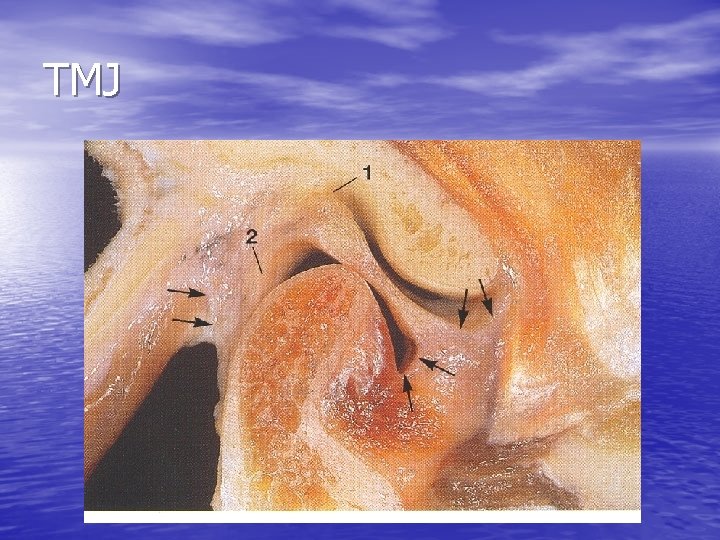
TMJ
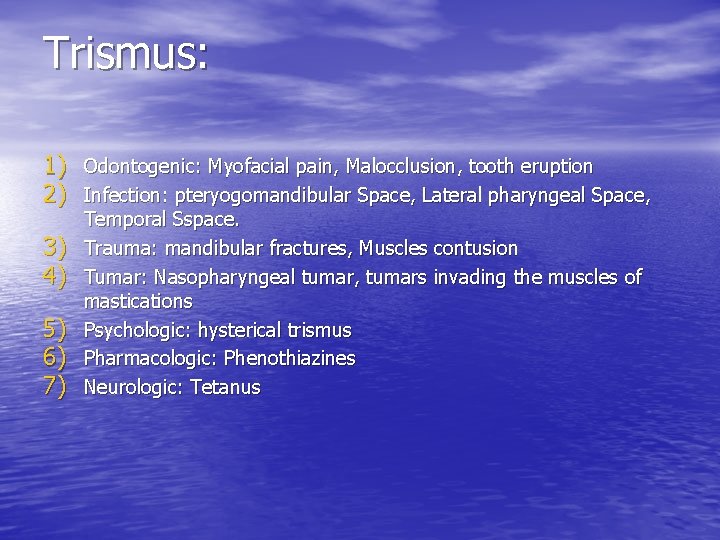
Trismus: 1) Odontogenic: Myofacial pain, Malocclusion, tooth eruption 2) Infection: pteryogomandibular Space, Lateral pharyngeal Space, 3) 4) 5) 6) 7) Temporal Sspace. Trauma: mandibular fractures, Muscles contusion Tumar: Nasopharyngeal tumar, tumars invading the muscles of mastications Psychologic: hysterical trismus Pharmacologic: Phenothiazines Neurologic: Tetanus
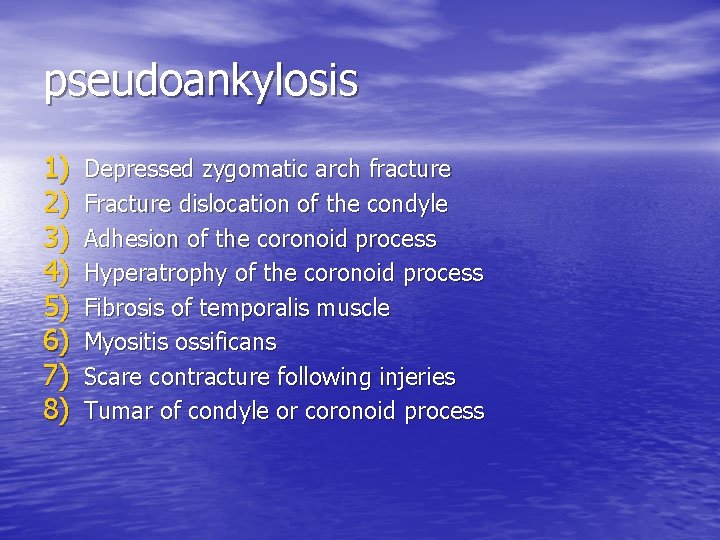
pseudoankylosis 1) 2) 3) 4) 5) 6) 7) 8) Depressed zygomatic arch fracture Fracture dislocation of the condyle Adhesion of the coronoid process Hyperatrophy of the coronoid process Fibrosis of temporalis muscle Myositis ossificans Scare contracture following injeries Tumar of condyle or coronoid process
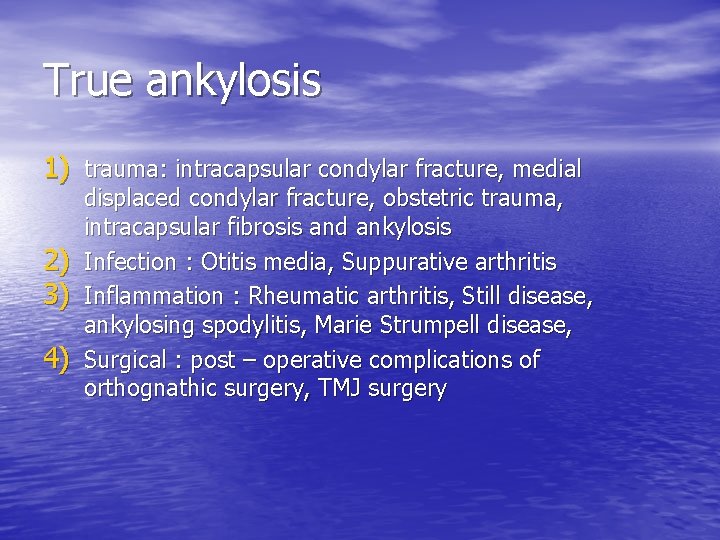
True ankylosis 1) trauma: intracapsular condylar fracture, medial 2) 3) 4) displaced condylar fracture, obstetric trauma, intracapsular fibrosis and ankylosis Infection : Otitis media, Suppurative arthritis Inflammation : Rheumatic arthritis, Still disease, ankylosing spodylitis, Marie Strumpell disease, Surgical : post – operative complications of orthognathic surgery, TMJ surgery
Assessment of Difficulties • degree of mouth opening and associated strictures , and Size of oral cavity, • Attention is focused on tooth: a) site, b) size, c) shape, d) situation : Sound Crown, badly carious tooth, Remaining root (above or beyond ) the alveolar ridge level, Isolated tooth
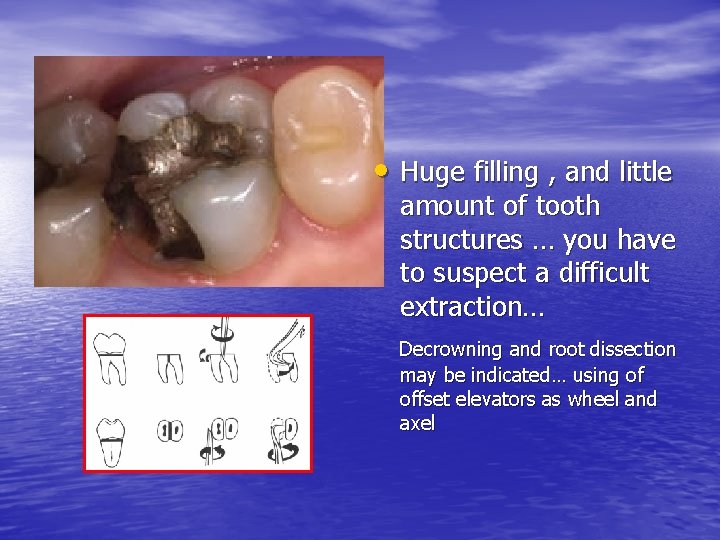
• Huge filling , and little amount of tooth structures … you have to suspect a difficult extraction… Decrowning and root dissection may be indicated… using of offset elevators as wheel and axel
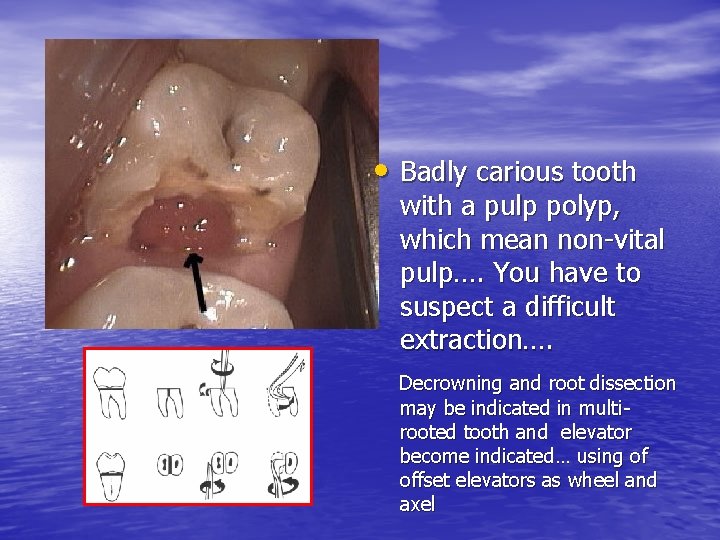
• Badly carious tooth with a pulp polyp, which mean non-vital pulp…. You have to suspect a difficult extraction…. Decrowning and root dissection may be indicated in multirooted tooth and elevator become indicated… using of offset elevators as wheel and axel
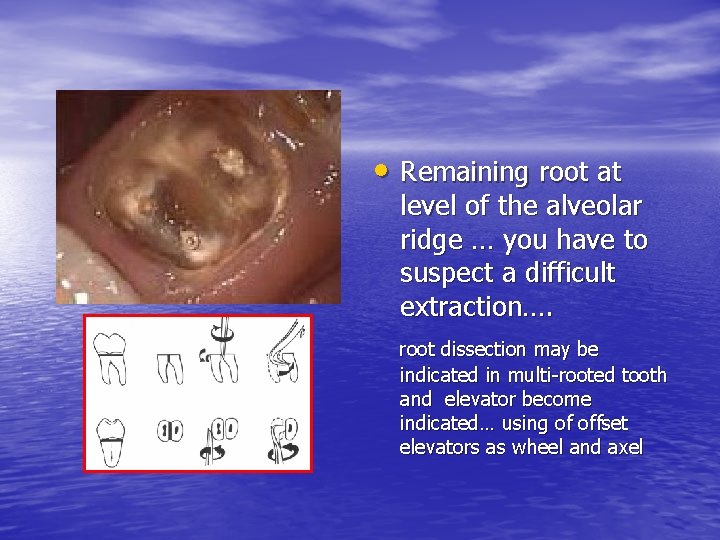
• Remaining root at level of the alveolar ridge … you have to suspect a difficult extraction…. root dissection may be indicated in multi-rooted tooth and elevator become indicated… using of offset elevators as wheel and axel
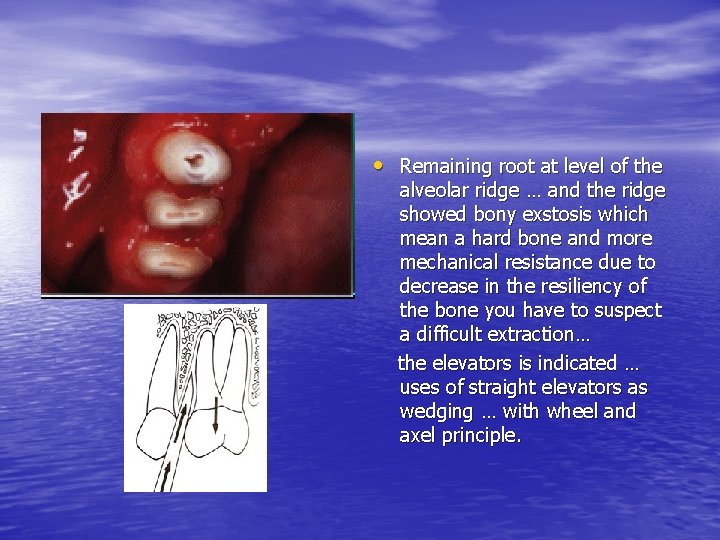
• Remaining root at level of the alveolar ridge … and the ridge showed bony exstosis which mean a hard bone and more mechanical resistance due to decrease in the resiliency of the bone you have to suspect a difficult extraction… the elevators is indicated … uses of straight elevators as wedging … with wheel and axel principle.
Radiographic evaluation • No dental extraction can be done without periapical X-Ray • The OPG may give a general information but it is always indicated to do periapical before any dental extraction
Radiographic evaluation • OPG: help In understanding of the relation of the tooth to other vital structures. • But for definitive evaluation of the tooth it is strongly recommended to do peri-apical radiograph
Radiographic evaluation • Roots – shape, size, pathology • Bone • Relation to vital structures Tooth with abnormal number of roots or associated with pathology e. g periapical cementoma, hypercementosis, dilaceration Abnormal position of vital structures`e. g. maxillary sinus , mandibular canal
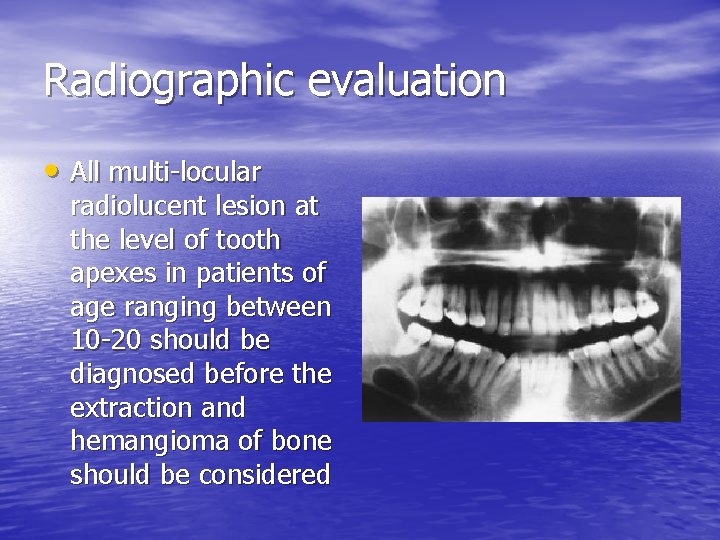
Radiographic evaluation • All multi-locular radiolucent lesion at the level of tooth apexes in patients of age ranging between 10 -20 should be diagnosed before the extraction and hemangioma of bone should be considered
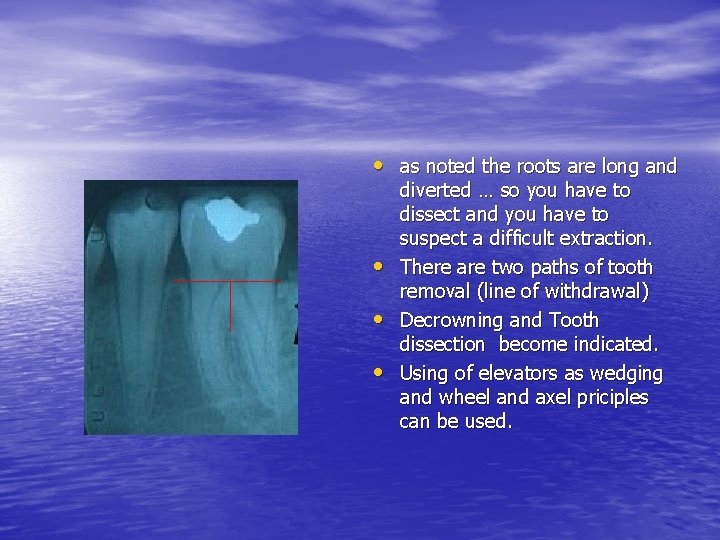
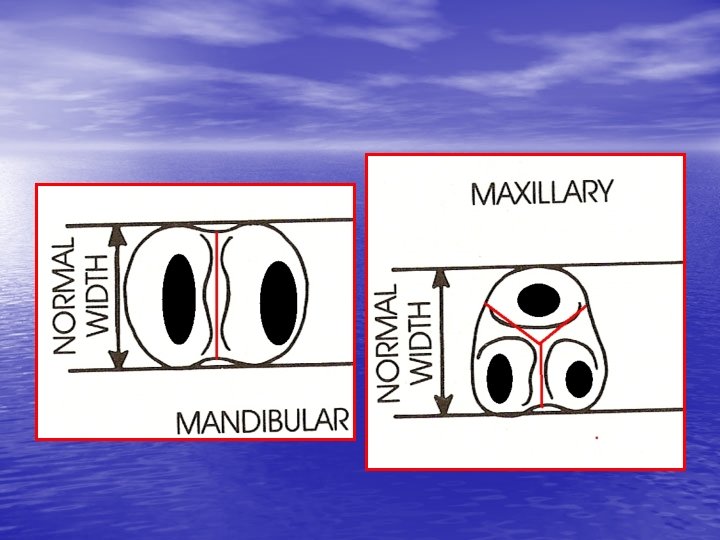
• as noted the roots are long and • • • diverted … so you have to dissect and you have to suspect a difficult extraction. There are two paths of tooth removal (line of withdrawal) Decrowning and Tooth dissection become indicated. Using of elevators as wedging and wheel and axel priciples can be used.
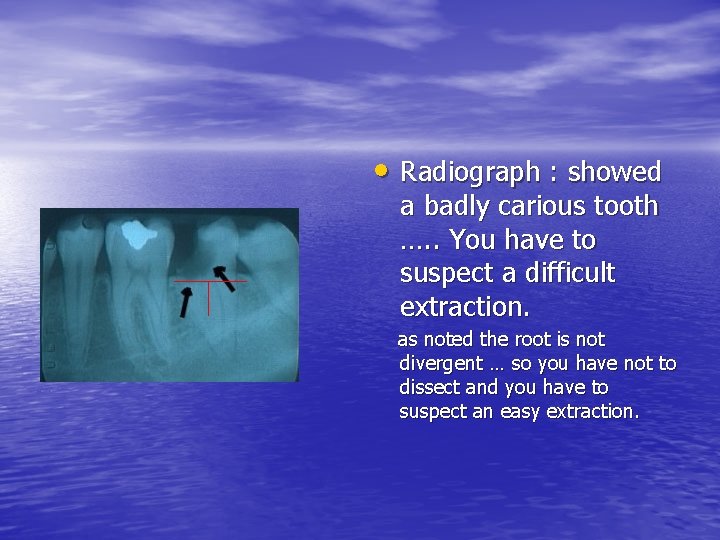
• Radiograph : showed a badly carious tooth …. . You have to suspect a difficult extraction. as noted the root is not divergent … so you have not to dissect and you have to suspect an easy extraction.
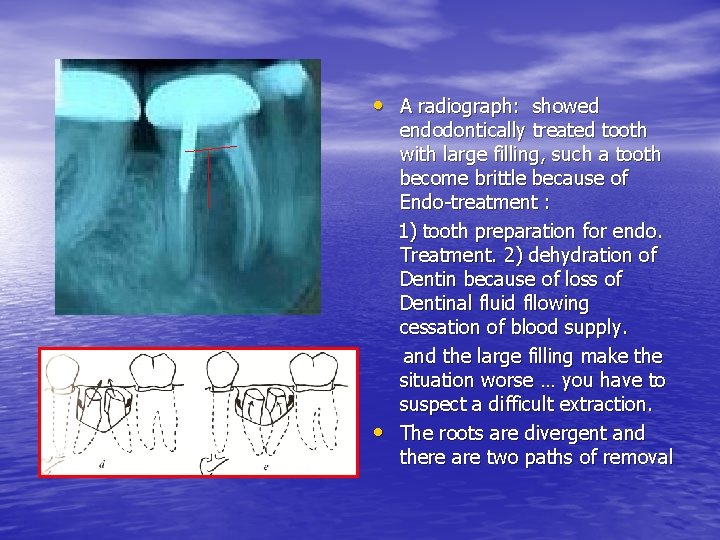
• A radiograph: showed endodontically treated tooth with large filling, such a tooth become brittle because of Endo-treatment : 1) tooth preparation for endo. Treatment. 2) dehydration of Dentin because of loss of Dentinal fluid fllowing cessation of blood supply. and the large filling make the situation worse … you have to suspect a difficult extraction. • The roots are divergent and there are two paths of removal
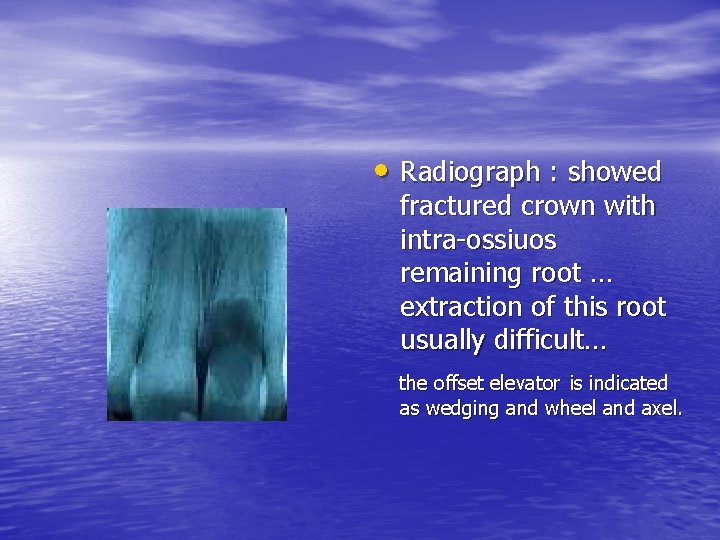
• Radiograph : showed fractured crown with intra-ossiuos remaining root … extraction of this root usually difficult… the offset elevator is indicated as wedging and wheel and axel.
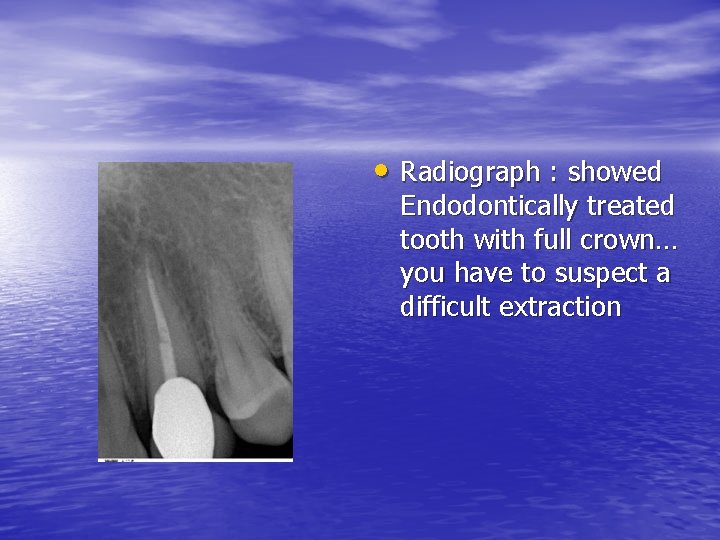
• Radiograph : showed Endodontically treated tooth with full crown… you have to suspect a difficult extraction
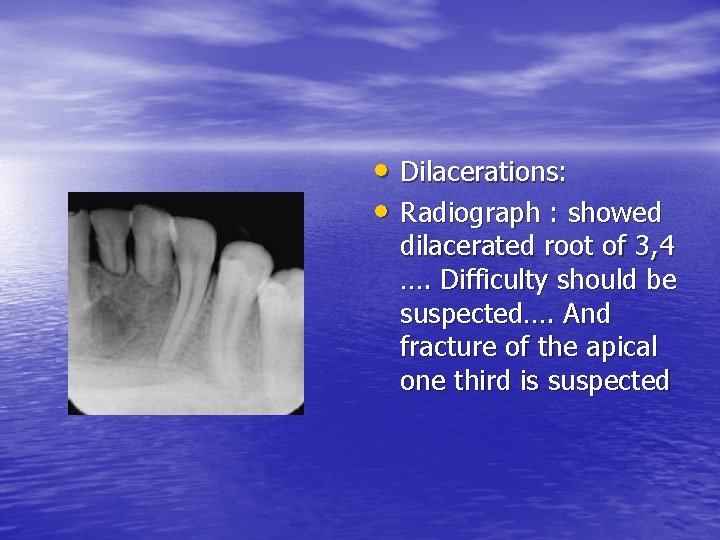
• Dilacerations: • Radiograph : showed dilacerated root of 3, 4 …. Difficulty should be suspected…. And fracture of the apical one third is suspected
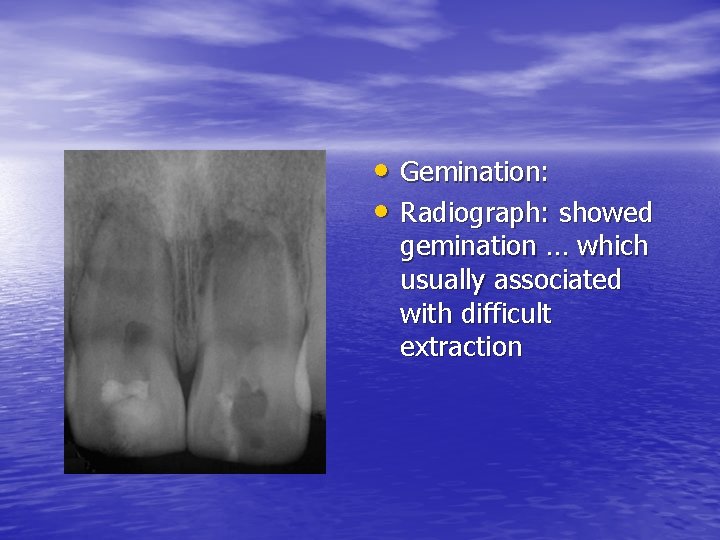
• Gemination: • Radiograph: showed gemination … which usually associated with difficult extraction
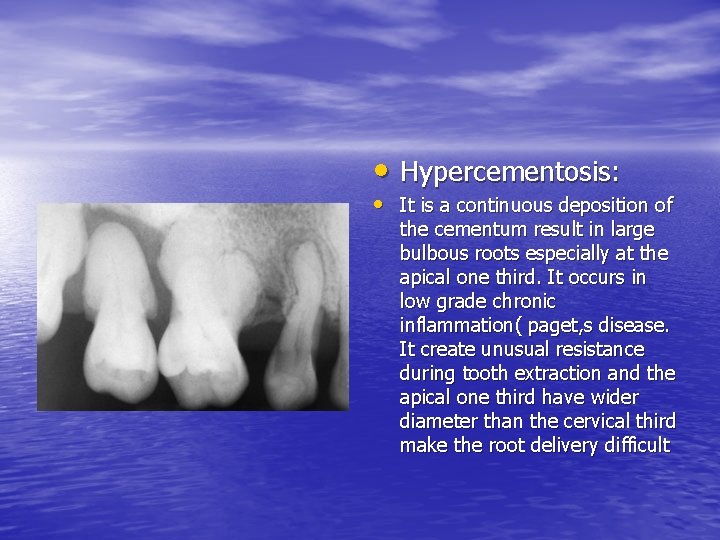
• Hypercementosis: • It is a continuous deposition of the cementum result in large bulbous roots especially at the apical one third. It occurs in low grade chronic inflammation( paget, s disease. It create unusual resistance during tooth extraction and the apical one third have wider diameter than the cervical third make the root delivery difficult
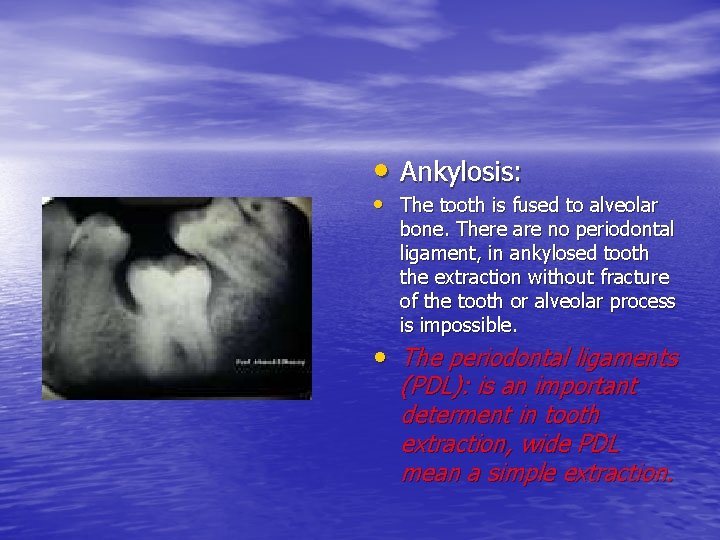
• Ankylosis: • The tooth is fused to alveolar bone. There are no periodontal ligament, in ankylosed tooth the extraction without fracture of the tooth or alveolar process is impossible. • The periodontal ligaments (PDL): is an important determent in tooth extraction, wide PDL mean a simple extraction.
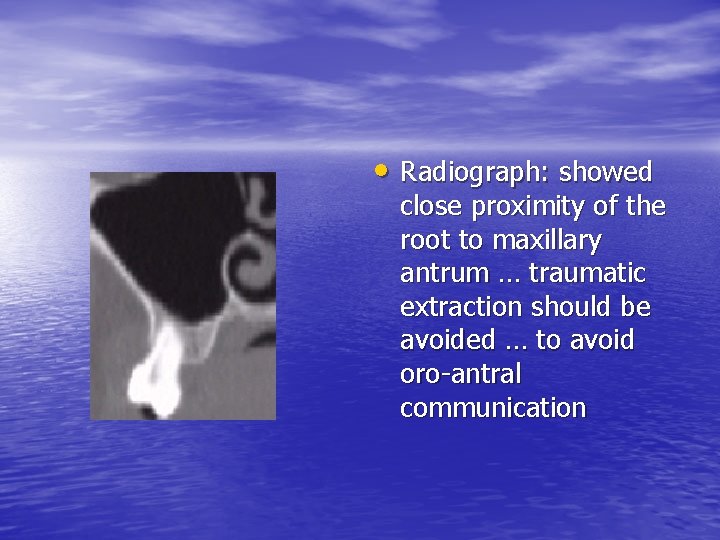
• Radiograph: showed close proximity of the root to maxillary antrum … traumatic extraction should be avoided … to avoid oro-antral communication
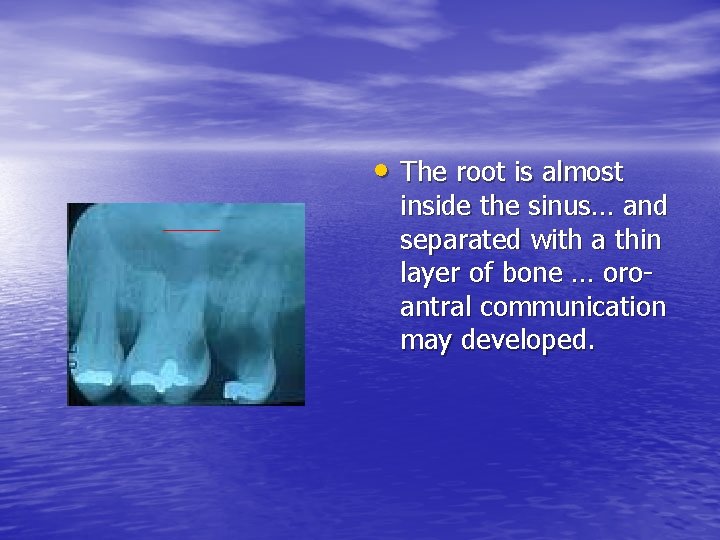
• The root is almost inside the sinus… and separated with a thin layer of bone … oroantral communication may developed.
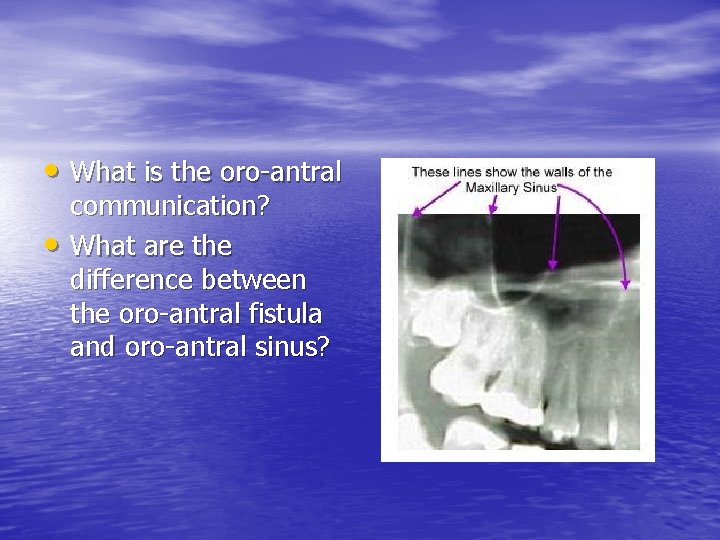
• What is the oro-antral • communication? What are the difference between the oro-antral fistula and oro-antral sinus?
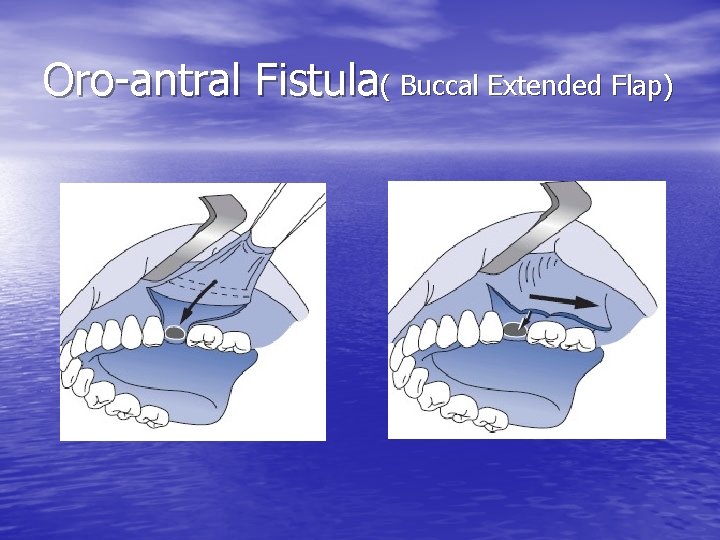
Oro-antral Fistula( Buccal Extended Flap)
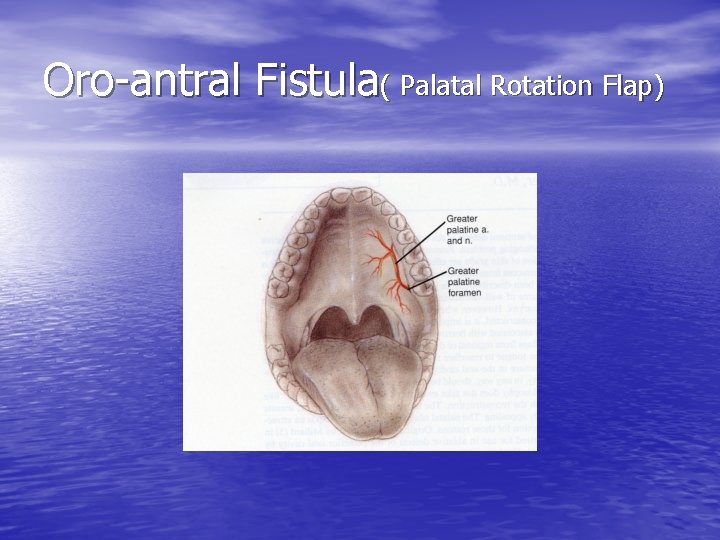
Oro-antral Fistula( Palatal Rotation Flap)
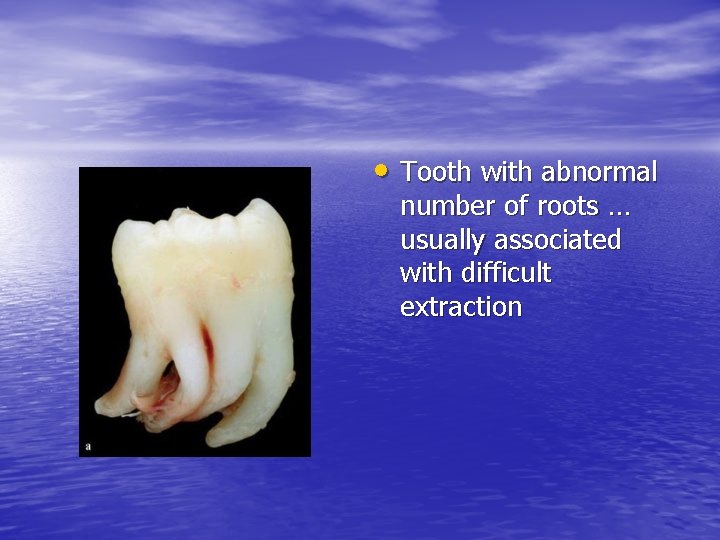
• Tooth with abnormal number of roots … usually associated with difficult extraction
Complex extraction technically • the Complex extraction technically is the extraction which can not be achieved by using a forceps alone and may need using of elevators or/and may need a surgical intervention.
With most of above cases using of elevators become mandatory • What are the elevators? • Definition : Elevators are single blades instruments for extraction of teeth and roots.
• As far as extraction of tooth is concerned there is no doubt that forceps are the best instruments for general use. It is therefore absolutely necessary to become proficient in the use of forceps before any attempt to master the use of elevators. they could be very dangerous instruments in the wrong hand. Elevators are constant companion to the forceps.

• Develop skills and mastery in the use of few elevators rather than try to double into the use of great many.
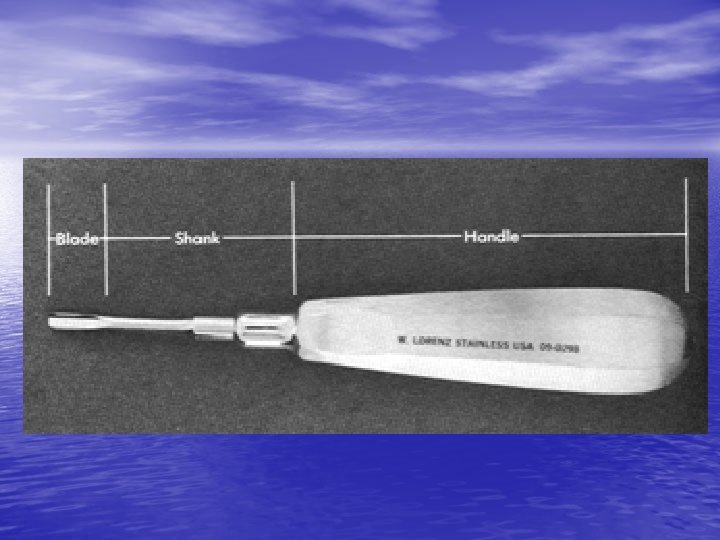
Parts of the elevators: • All elevators have the following parts • Handle: usually bulky. It may be a continuation • • of the shank or at right angle to it. Shank: this is analogous to the long arm of the lever. Blade: this is the part that engages the crown or root. It is comparable to the short arm of the lever.
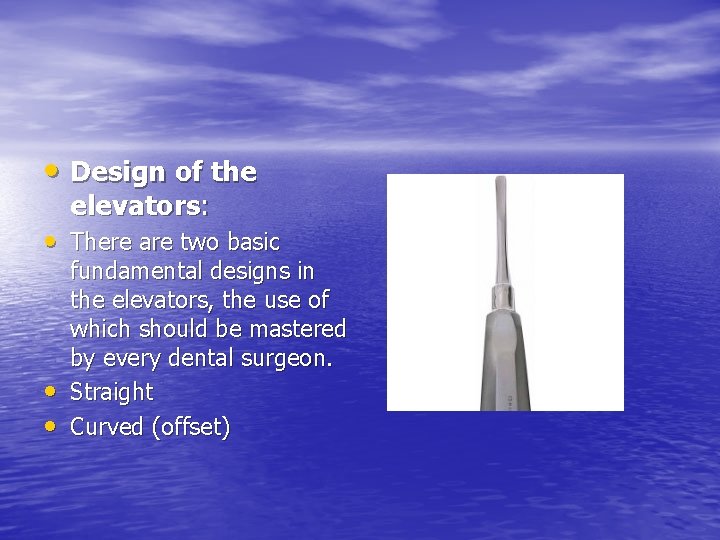
• Design of the elevators: • There are two basic • • fundamental designs in the elevators, the use of which should be mastered by every dental surgeon. Straight Curved (offset)
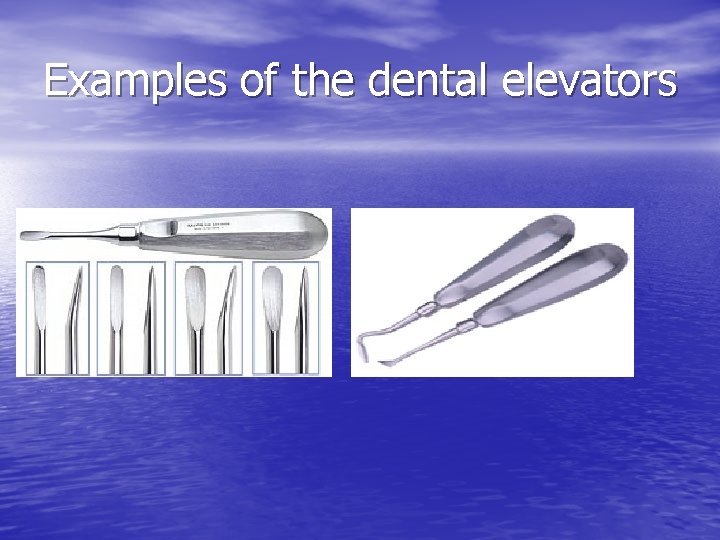
Examples of the dental elevators
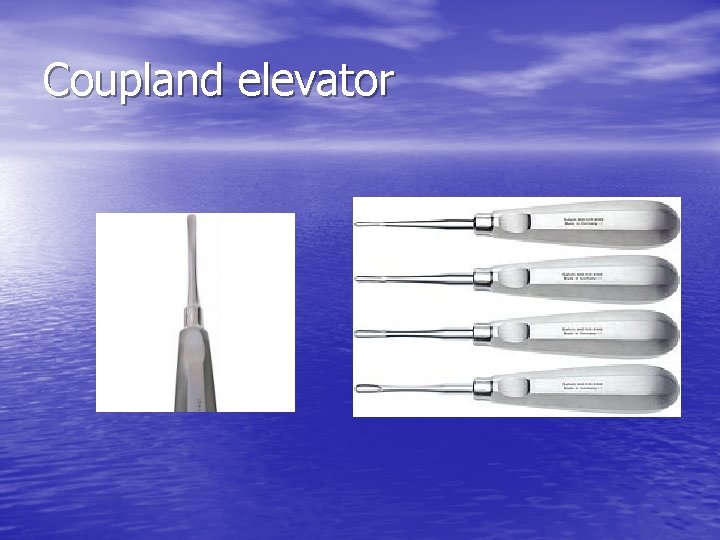
Coupland elevator
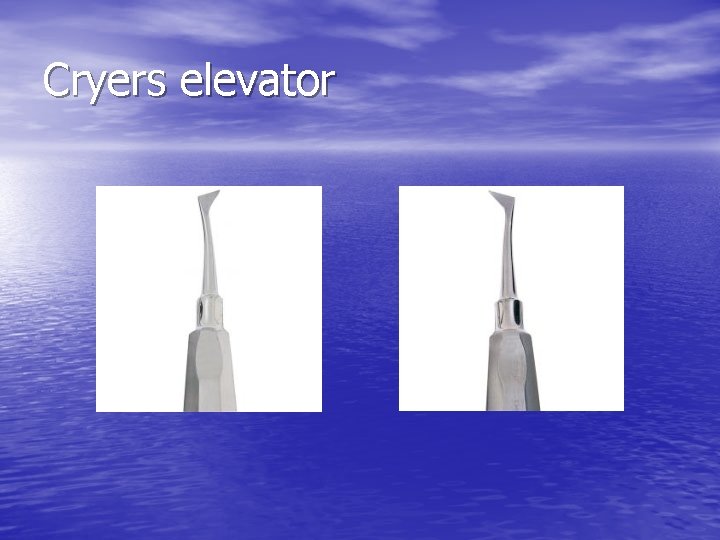
Cryers elevator
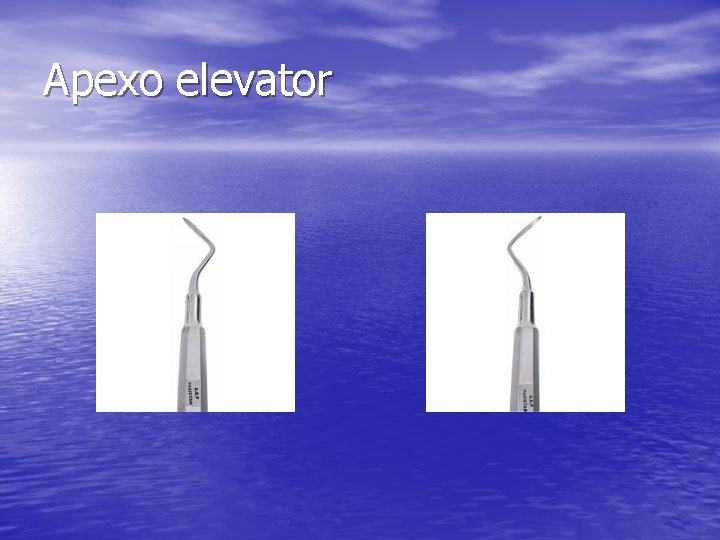
Apexo elevator
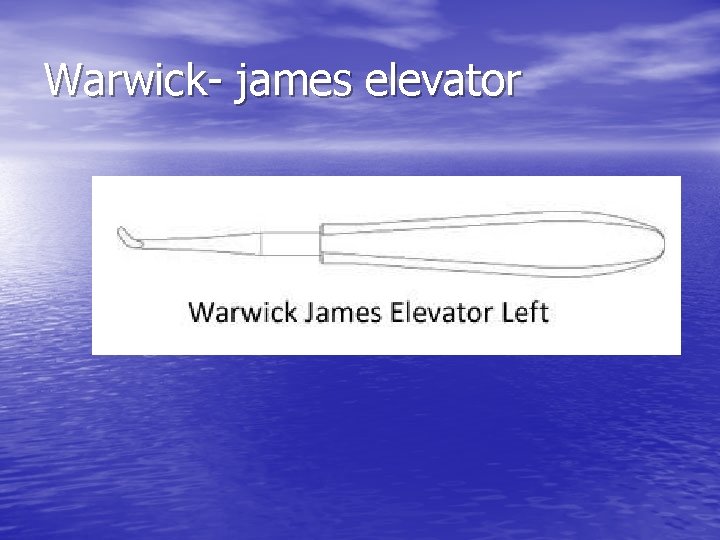
Warwick- james elevator
Indications for elevators: • • • To reflect mucoperiosteal membrane To loosen teeth perior to application of forceps To luxate teeth To remove teeth: In impacted when the use of forceps is not possible due to abnormal position Malposed teeth with lingualy , labially , buccally , crowded teeth. It is then impossible to apply the forceps without impinging on the adjacent teeth. Extensively decayed teeth: very often there is no crown for holding To remove a roots To split teeth which have had grooves cut them To remove intra-radicular bone
Dangers in the use of elevators: • • • Damaging or even extracting of the adjacent teeth Fractures of the bone ( maxilla , mandible ) Fracture of alveolar process Slipping and plunging the point of the instrument into the soft tissue – danger of perforating large blood vessels or nerves. Peneteration into the maxillary antrum or forcing the root in the antrum. Forcing the apical third of the root of the lower third molar into the mandibular canal.
Rules in the use of the elevators: • Never use adjacent tooth as a fulcrum unless that tooth is to be • • • subsequently extracted. Always use finger guards to protect the patients in case of using elevators Be certain that the forces applied by the elevators under control , and the elevators tip is exerting pressure in the correct direction. When cutting though the interseptal bone, take care not to engage the roots of the adjacent tooth, thus inadvertently forcing it out of it, s alveolus.
Classification of the elevators: • According to use: • For removal of entire tooth e. g. Coupland, Cryer where there is a • • thick buccal plate to act as a fulcrum. For removal of roots broken off at gingival margin, e. g. Apexo elevator (R. , L. , Straight) For removal of root broken halfway to apex e. g. hospital pattern For removal apical third of the root. E. g. apexo, warwich james elevators According to form: Straight : the blade, shank, and the handle are in one plane Angular : right and left Cross bar: handle at right angle to the shank
Physics principles in the use of elevators: • Lever principle • Wedge principle • Wheel and axel principle • Combination of any of 1, 2, 3
• The point at which force must be applied to effect delivery is called point of application of the elevator. • Point of application can be mesial, buccal, or distal. If the tooth move out of the socket, it must move along a certain path depending on the shape and direction of the root. The path is called the line of withdrawal.
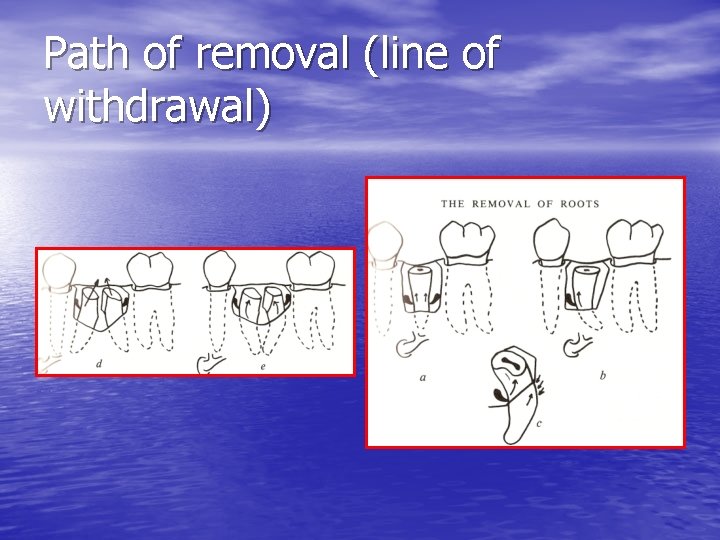
Path of removal (line of withdrawal)
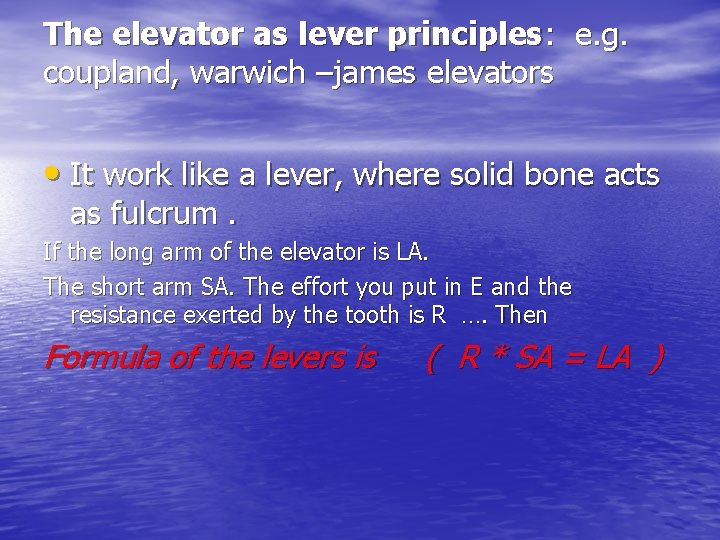
The elevator as lever principles: e. g. coupland, warwich –james elevators • It work like a lever, where solid bone acts as fulcrum. If the long arm of the elevator is LA. The short arm SA. The effort you put in E and the resistance exerted by the tooth is R …. Then Formula of the levers is ( R * SA = LA )
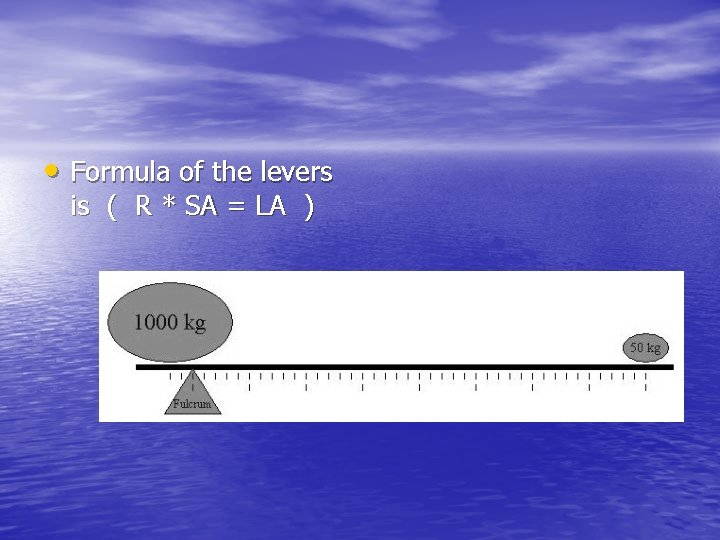
• Formula of the levers is ( R * SA = LA )
• In order to gain the mechanical advantage, the effort arm LA must be longer than the resistance arm SA, usually the elevators are so constricted that mechanical advantage is 3. • Therefore, every force applied is multiplied by 3.
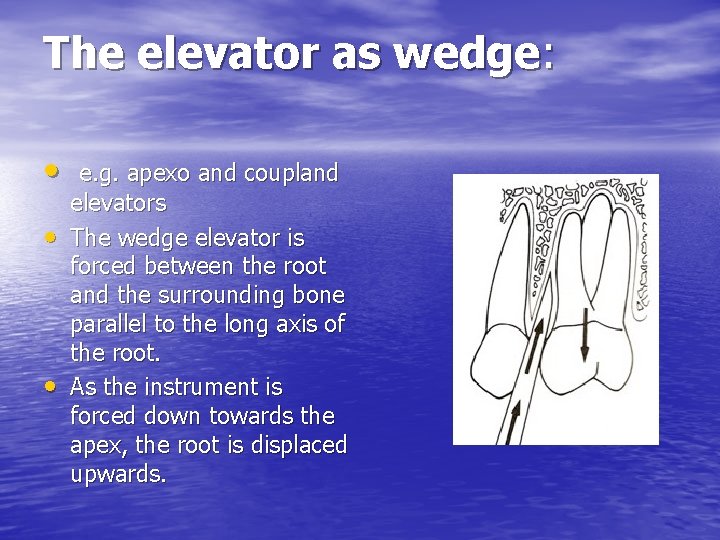
The elevator as wedge: • e. g. apexo and coupland • • elevators The wedge elevator is forced between the root and the surrounding bone parallel to the long axis of the root. As the instrument is forced down towards the apex, the root is displaced upwards.
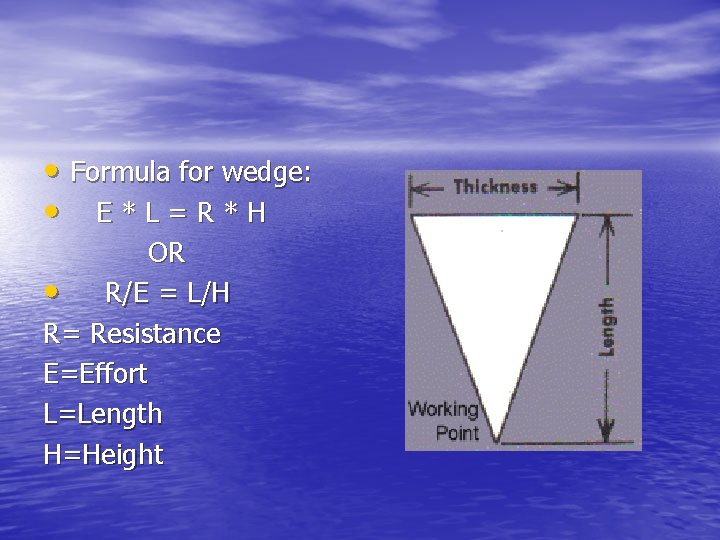
• Formula for wedge: • E * L = R * H OR • R/E = L/H R= Resistance E=Effort L=Length H=Height
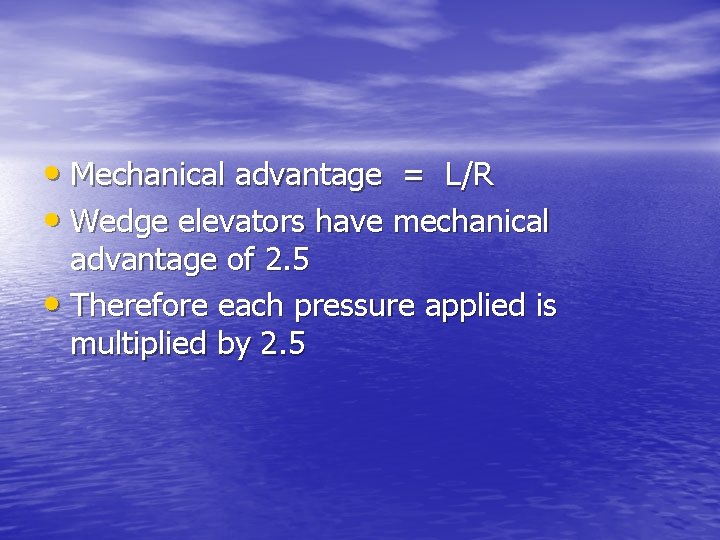
• Mechanical advantage = L/R • Wedge elevators have mechanical advantage of 2. 5 • Therefore each pressure applied is multiplied by 2. 5
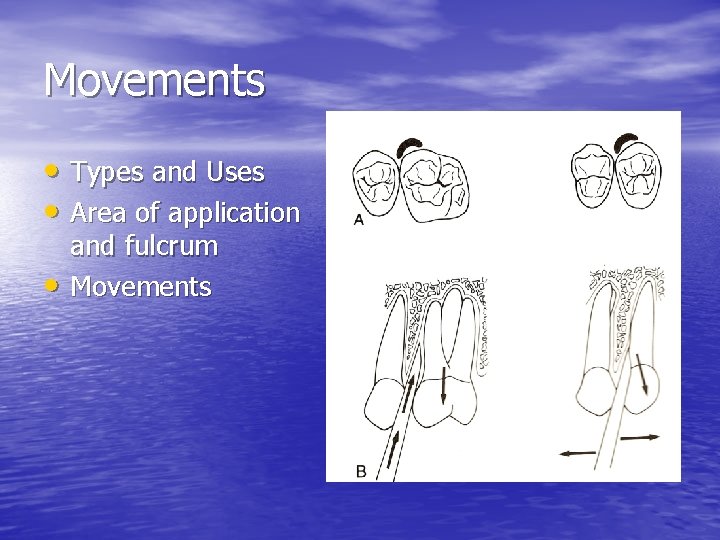
Movements • Types and Uses • Area of application • and fulcrum Movements
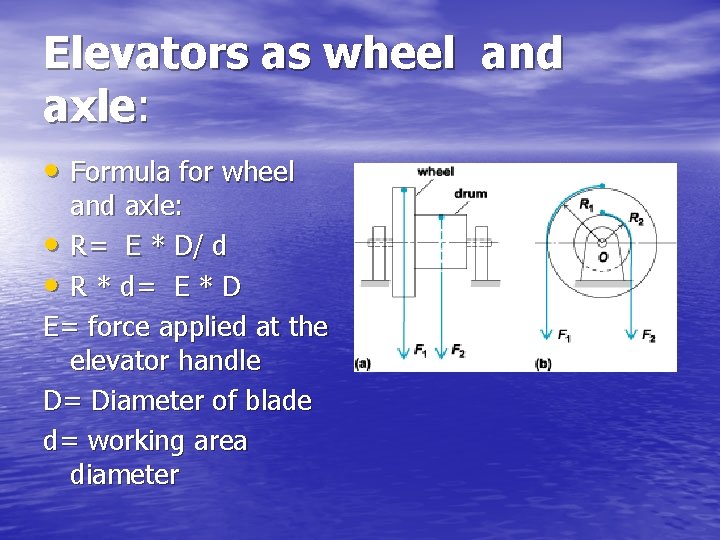
Elevators as wheel and axle: • Formula for wheel and axle: • R= E * D/ d • R * d= E * D E= force applied at the elevator handle D= Diameter of blade d= working area diameter
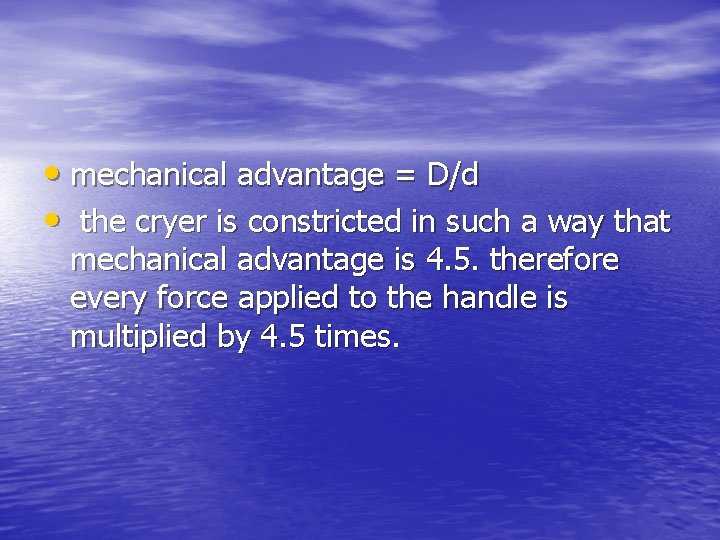
• mechanical advantage = D/d • the cryer is constricted in such a way that mechanical advantage is 4. 5. therefore every force applied to the handle is multiplied by 4. 5 times.
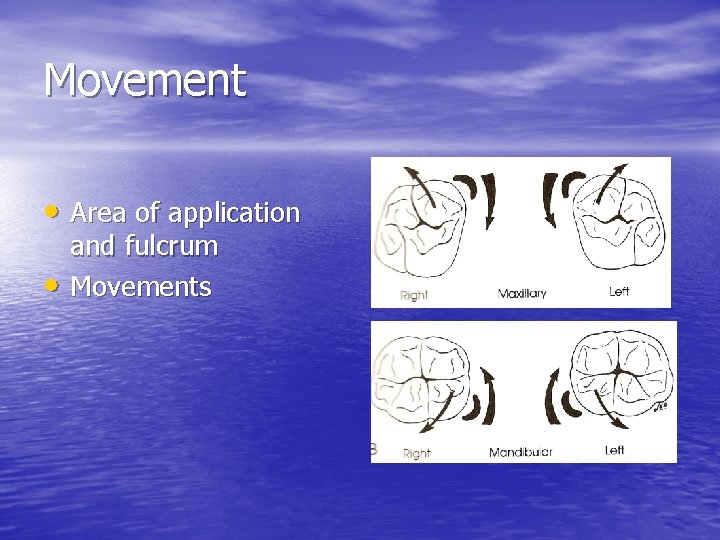
Movement • Area of application • and fulcrum Movements
Elevators as wheel and axle: • Uses in conjunction with a wedge principle and • • sometimes with lever principle e. g. Cryer, winter elevators. In wheel and axel, the mechanical advantage is obtained through the greater diameter of the handle over the blade. When inserted horizontally between tooth and the bone the sharp blade engaed the point of application on the cementum with alveolar bone as fulcrum the handle is rotated to left the root out of the socket along it, s line of withdrawal.

Protections and support Always remember: • Protection for soft tissues • Support for a hard tissues
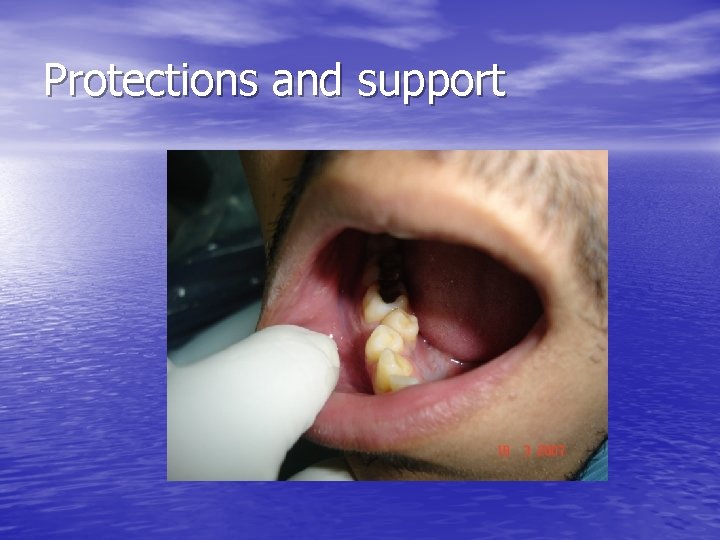
Protections and support
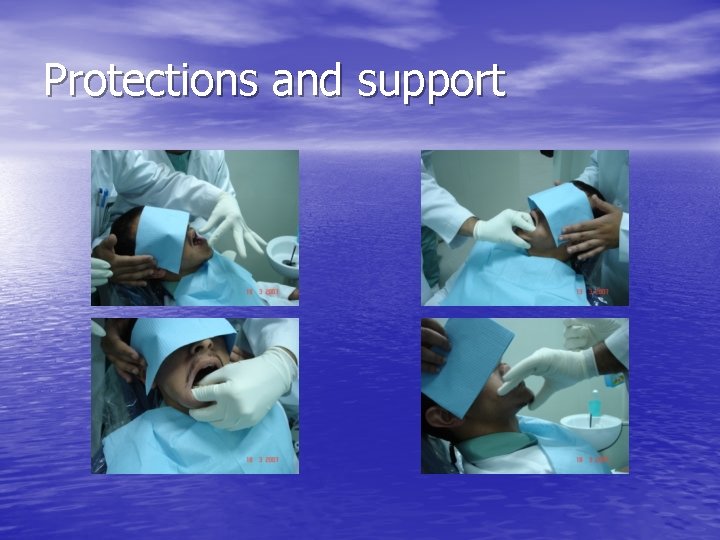
Protections and support
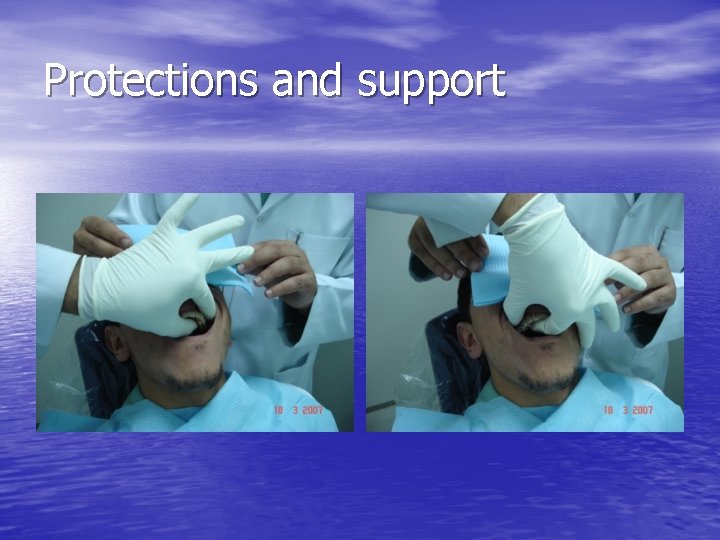
Protections and support
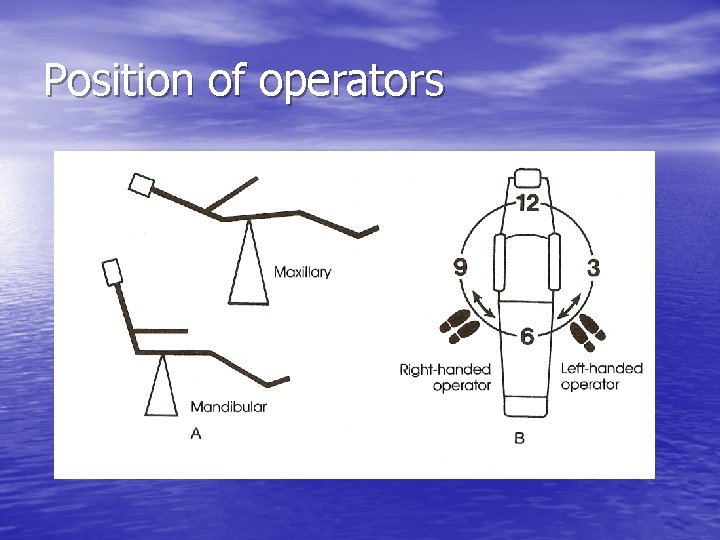
Position of operators
Basic movement • Separation of Gingival attachment • Cutting of PDL • Dilatation of socket
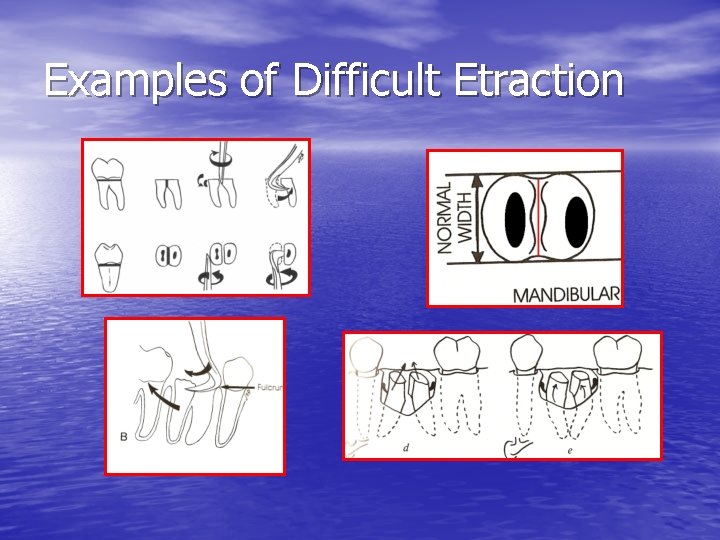
Examples of Difficult Etraction
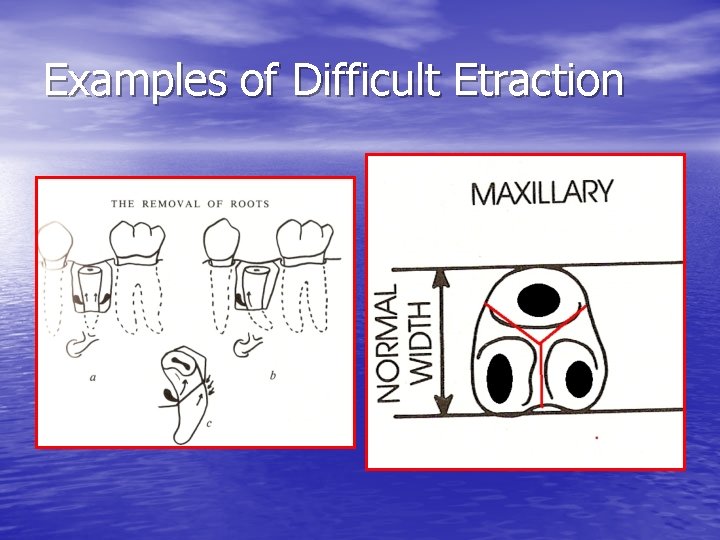
Examples of Difficult Etraction
movement • The most effective force are those that applied gradually and maintained briefly at the limit of achieved displacement before reciprocal movement is initiated.
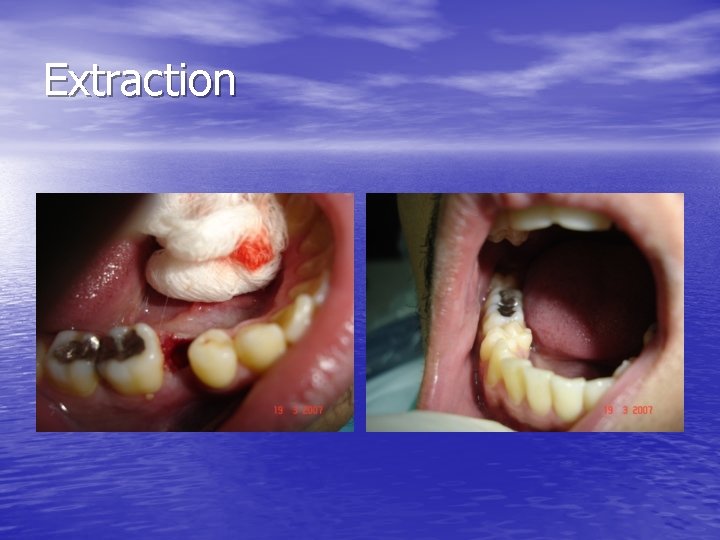
Extraction

Post-operative instructions • Importance of clotting • Prophylactic antibiotic – indication • Pain killer – analgesic, type and time
Thank you • Esam Omar, BDS, MSc-OMFS, FFDRCSI Maxillofacial Surgeon
- Slides: 75