
Dr Eman Shaat Professor of Medical Biochemistry and
Dr. Eman Shaat Professor of Medical Biochemistry and Molecular Biology Cardio Vascular System Dyslipoproteinemia & fatty liver Lecture 2 (33 slides) L/O/G/O 1
Dyslipoproteinemia Causes I. Primary dyslipoproteinemia are probably genetically based. Primary causes: Ø Increase production. Ø Defective processing. Ø Defective cellular uptake. II. Secondary hyperlipidemia may result from: 1. Diseases such as diabetes, thyroid disease, renal disorders, liver disorders, Cushing's syndrome, obesity, alcohol consumption. 2. Drug-associated changes in lipid metabolism as Diuretics, beta blockers, estrogen, corticosteroids 2
Primary Dyslipoproteinemia • It can be subdivided into two major categories: 1. Hypolipoproteinemia. Ø Abeta-lipoproteinemia. Ø Familial alpha-lipoprotein deficiency (apo-A 1 deficiency &Tangier disease) 2. Hyperlipoproteinemia: Ø Ø Ø Ø Familial LPL deficiency (type I). Familial hypercholesterolemia (type IIa). Familial hyperlipoproteinemia ; broad beta; remnant disease (type III). Familial hypertriglyceridemia (type IV). Familial hyperalphalipoproteinemia. Hepatic lipase deficiency. Familial LCAT deficiency. Familial lipoprotein (a) excess. 3
I. Primary dyslipoproteinemia. 1. hypolipoproteinemia. Abeta lipoproteinemia Defect: • Abeta lipoproteinemia: due to mutations in the gene encoding microsomal transfer protein (MTP), a protein that transfers lipids to nascent chylomicrons and VLDL in the intestine and liver, respectively. • Familial hypobetalipoproteinemia: due to mutations in Apo B. missense mutations in Apo B causes reduce secretion and/or accelerate catabolism of LDL. life-long low LDL-C levels are a reason for substantial reduction in coronary heart disease • No CM, VLDL, LDL formation. Remarks Ø Rare autosomal recessive disease. Ø , , , blood TG. Ø hhh TG in liver & intestine. Ø Abetalipoproteinemia usually presents in childhood with diarrhea and failure to thrive and is characterized clinically by fat malabsorption & nervous degeneration. they result from defects in the absorption and transport of fatsoluble vitamins, vitamins primarily vitamin E → physical & mental retardation.
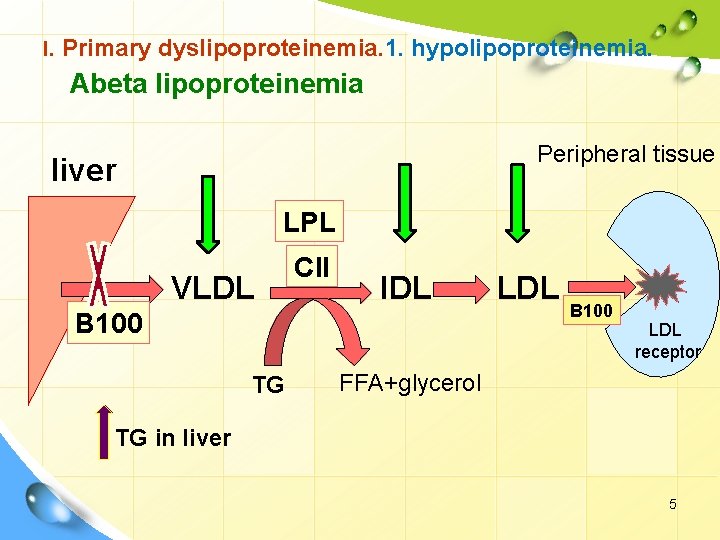
I. Primary dyslipoproteinemia. 1. hypolipoproteinemia. Abeta lipoproteinemia Peripheral tissue liver LPL VLDL CII IDL B 100 TG LDL B 100 LDL receptor FFA+glycerol TG in liver 5
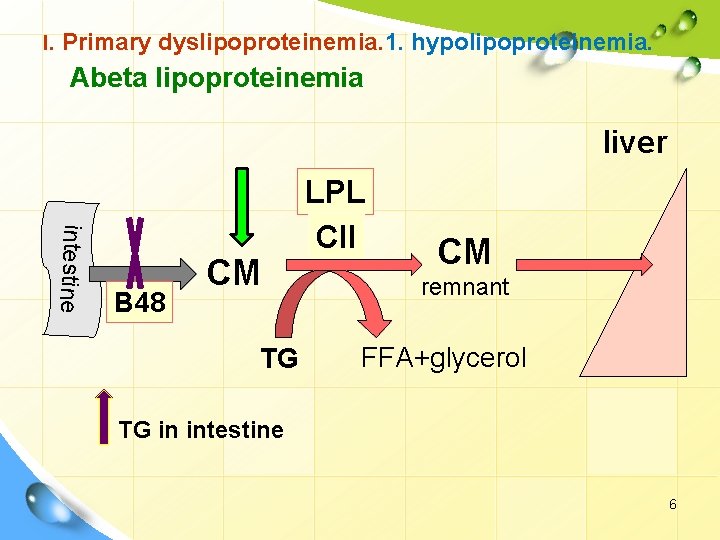
I. Primary dyslipoproteinemia. 1. hypolipoproteinemia. Abeta lipoproteinemia liver intestine B 48 CM TG LPL CII CM remnant FFA+glycerol TG in intestine 6
I. Primary dyslipoproteinemia. 1. hypolipoproteinemia: Familial Apo-A 1 deficiency Defect: due to mutations (as deletions) of the Apo-A 1 gene. It leads to decrease apo-A 1 production. Result in premature atherosclerosis. Normal VLDL & LDL. Clinically: blurred vision due to cornial opacities. Xanthoma, premature CHD. Hearing loss secondary to amyloidosis. Diagnosis: Ø Low apo-A 1. Ø Low HDL. Ø Normal VLDL & LDL. Ø Normal TG. Ø Genetic testing. Differential diagnosis: Tangier dis. , LCAT def. , secondary causes as malignancy. [apo-B/apo-A 1 ratio determines balance between atherogenic (LDL, …) and anti-atherogenic (HDL) particles]
I. Primarydyslipoproteinemia. 1. hypolipoproteinemi a: Familial alpha-lipoprotein deficiency: Tangier disease: Defect: • • It is an autosomal recessive disease. It is due to mutation in ABC-A 1 (eg. Deletion). (~100 cases) Leads to cholesterol accumulation within the cells. Results in premature atherosclerosis and increase risk for CHD. Manifestations: Ø Enlargements of liver, spleen, lymph nodes and tonsils (orangecolored) due to deposition of C and CE leading to toxic effects. Ø Peripheral neuropathy. • Absent or very low HDL. Decrease HDL without hypertriglyceridemia. (enhanced HDL degradation). An extreme form -Tangier Disease may have HDL 1 -2 mg/dl Treatment: by diet modification with low dietary lipids.
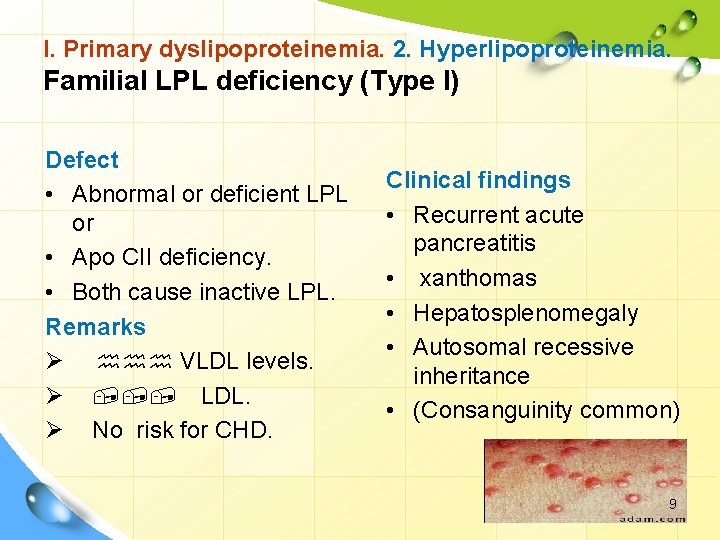
I. Primary dyslipoproteinemia. 2. Hyperlipoproteinemia. Familial LPL deficiency (Type I) Defect • Abnormal or deficient LPL or • Apo CII deficiency. • Both cause inactive LPL. Remarks Ø hhh VLDL levels. Ø , , , LDL. Ø No risk for CHD. Clinical findings • Recurrent acute pancreatitis • xanthomas • Hepatosplenomegaly • Autosomal recessive inheritance • (Consanguinity common) 9
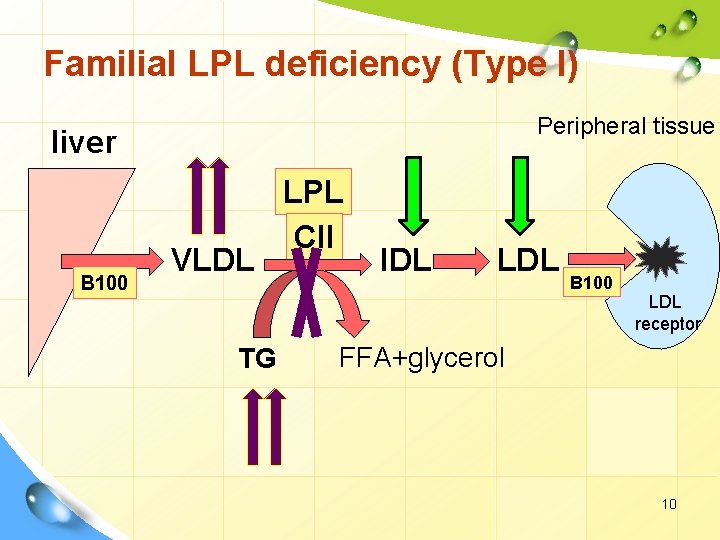
Familial LPL deficiency (Type I) Peripheral tissue liver B 100 VLDL TG LPL CII IDL LDL B 100 LDL receptor FFA+glycerol 10
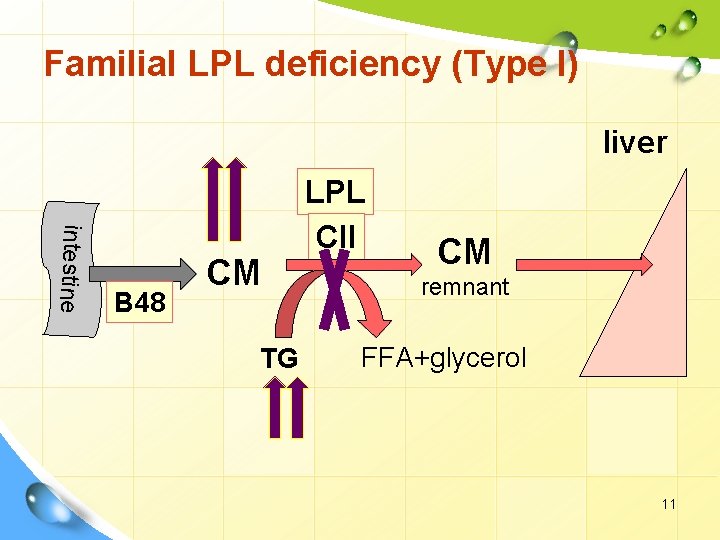
Familial LPL deficiency (Type I) liver intestine B 48 CM TG LPL CII CM remnant FFA+glycerol 11
I. Primary dyslipoproteinemia. 2. Hyperlipoproteinemia. Familial hypercholesterolemia (Type IIa) Defect • Defective LDL receptors. • Mutation in ligand region of apo -B 100 Remarks Ø hhh LDL levels. Ø hhh cholesterol. Ø Resulting in atherosclerosis and CHD. Homozygotes: --Total cholesterol 800 -1000 mg/dl. --Heart attack as early as teenage years. Heterozygotes: -- cholesterols 300 -600 mg/dl. --Heart attacks 20 -50 years 12
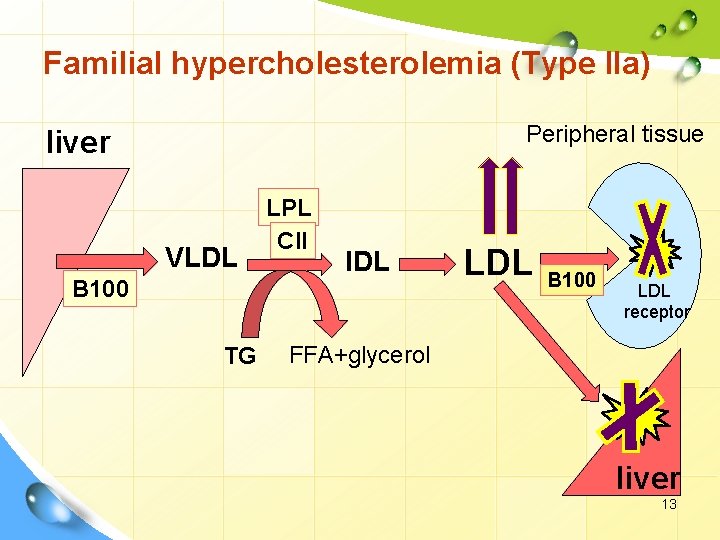
Familial hypercholesterolemia (Type IIa) Peripheral tissue liver VLDL B 100 TG LPL CII IDL LDL B 100 LDL receptor FFA+glycerol liver 13
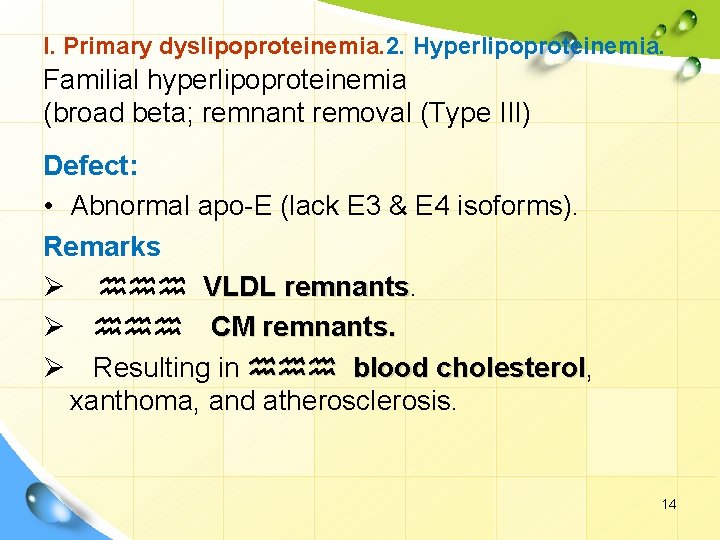
I. Primary dyslipoproteinemia. 2. Hyperlipoproteinemia. Familial hyperlipoproteinemia (broad beta; remnant removal (Type III) Defect: • Abnormal apo-E (lack E 3 & E 4 isoforms). Remarks Ø hhh VLDL remnants Ø hhh CM remnants. Ø Resulting in hhh blood cholesterol, cholesterol xanthoma, and atherosclerosis. 14
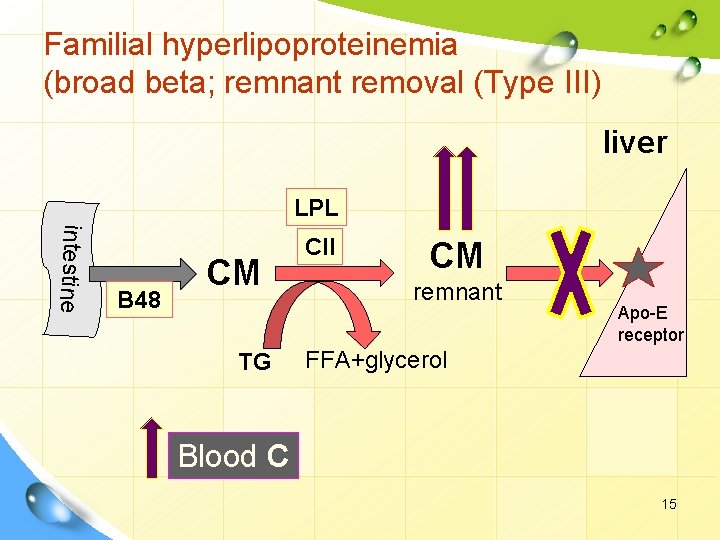
Familial hyperlipoproteinemia (broad beta; remnant removal (Type III) liver LPL intestine B 48 CM TG CII CM remnant Apo-E receptor FFA+glycerol Blood C 15
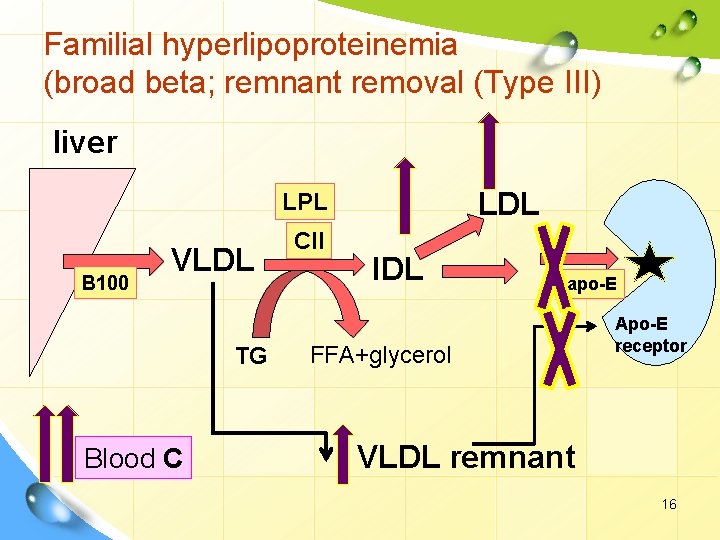
Familial hyperlipoproteinemia (broad beta; remnant removal (Type III) liver LDL LPL B 100 VLDL TG Blood C CII IDL apo-E FFA+glycerol Apo-E receptor VLDL remnant 16
I. Primary dyslipoproteinemia. 2. Hyperlipoproteinemia. Familial hypertriglyceridemia (Type IV) Defect: § hhh VLDL associated with glucose intolerance and hyperinsulinemia. The most common hyperlipidemia Remarks Ø hhh VLDL. hhh TG Ø hhh LDL. hhh cholerterol. Ø commonly associated with CHD, type II DM, obesity. 17
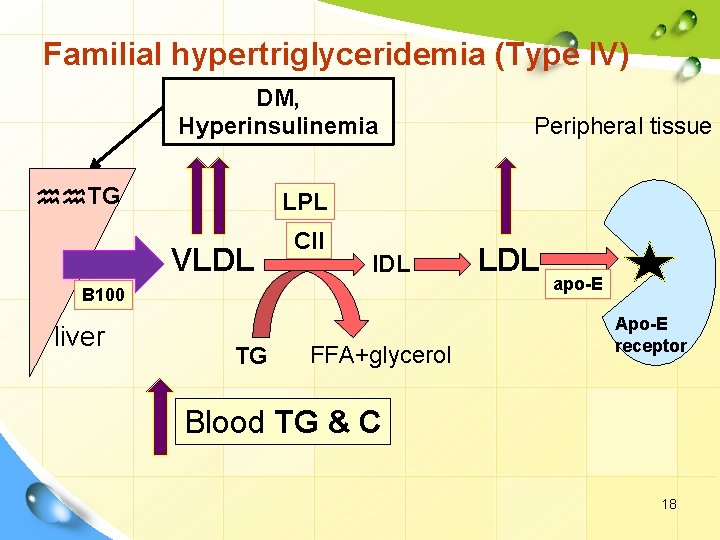
Familial hypertriglyceridemia (Type IV) DM, Hyperinsulinemia hh. TG LPL VLDL CII IDL B 100 liver Peripheral tissue TG FFA+glycerol LDL apo-E Apo-E receptor Blood TG & C 18
I. Primary dyslipoproteinemia. 2. Hyperlipoproteinemia. Familial hyperalphalipoproteinemia. Defect: § hhh HDL. Remarks Ø Rare. Ø Apparently beneficial to health. 19
I. Primary dyslipoproteinemia. 2. Hyperlipoproteinemia. Hepatic lipase (HL) deficiency Defect: • Deficient HL leads to § hhh HDL & VLDL remnants. (HDL which is loaded with CE, so can not pick up more free C) Remarks Ø Patients have xanthoma and CHD. 20
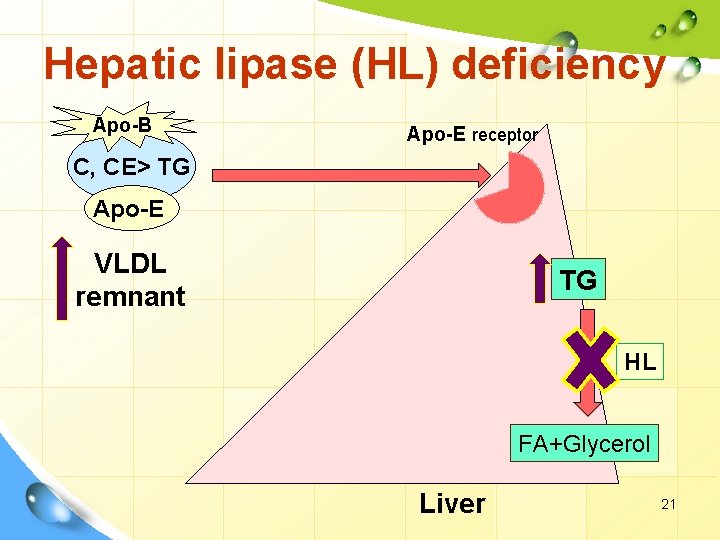
Hepatic lipase (HL) deficiency Apo-B Apo-E receptor C, CE> TG Apo-E VLDL remnant TG HL FA+Glycerol Liver 21
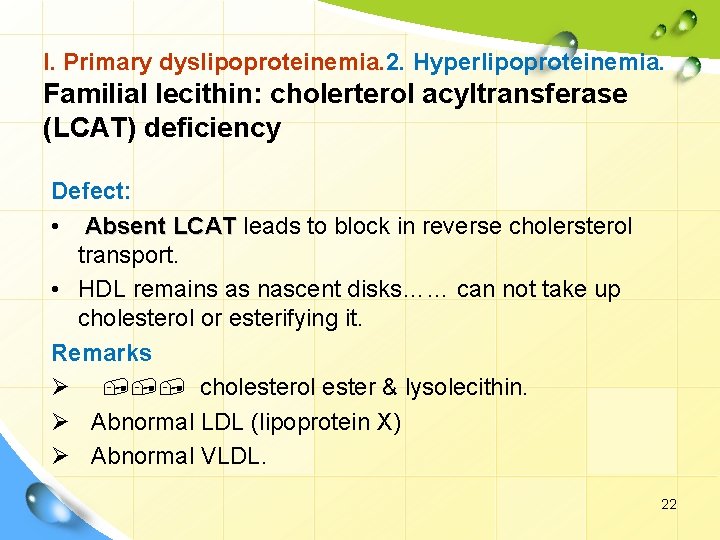
I. Primary dyslipoproteinemia. 2. Hyperlipoproteinemia. Familial lecithin: cholerterol acyltransferase (LCAT) deficiency Defect: • Absent LCAT leads to block in reverse cholersterol transport. • HDL remains as nascent disks…… can not take up cholesterol or esterifying it. Remarks Ø , , , cholesterol ester & lysolecithin. Ø Abnormal LDL (lipoprotein X) Ø Abnormal VLDL. 22
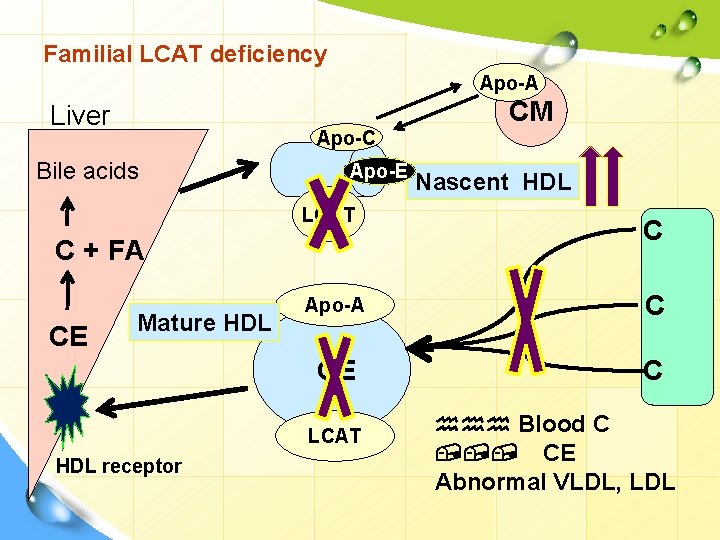
Familial LCAT deficiency Apo-A CM Liver Apo-C Bile acids Apo-E LCAT C + FA CE Mature HDL C Apo-A C CE C LCAT HDL receptor Nascent HDL hhh Blood C , , , CE Abnormal VLDL, LDL
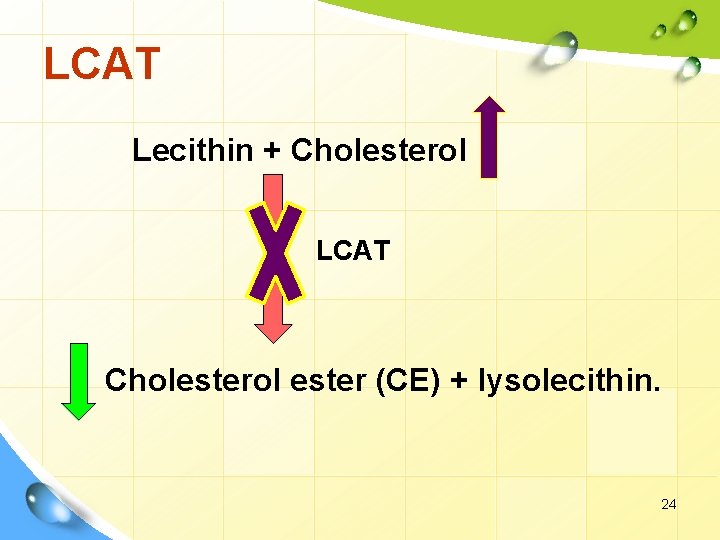
LCAT Lecithin + Cholesterol LCAT Cholesterol ester (CE) + lysolecithin. 24
I. Primary dyslipoproteinemia. 2. Hyperlipoproteinemia. Familial lipoprotein (a) excess Structure: • It consist of 1 mol LDL attached to 1 mol apo(a). Defect: • Excess apo(a). Remarks Ø patients have premature CHD and thrombosis due to inhibition of fibrinolysis. 25
Lipotropic factors and Fatty liver L/O/G/O 26
Lipotropic factors • These are substances that help the mobilization of fat from the liver. They include substances essential for the biosynthesis of phospholipids and proteins, proteins thus helping the formation of LDL, HDL and VLDL which are necessary for the mobilization of TG from the liver. E. g. 1. Substances important for the biosynthesis of phospholipids e. g. Essential fatty acids (PUFA), Inositol, Choline. 2. Methyl donors as Methionine, vitamin B 12, folic acid. 3. Proteins of high biological value that provide essential amino acids for biosynthesis of apoproteins. 27
Fatty liver • It means accumulation of lipid (mainly TG) in the liver, leading to fibrotic changes and impaired liver functions. I. Causes related to lipid: A) Causes due to excessive mobilization of fat to liver: 1. Excessive intake of lipid and carbohydrate (diet). 2. Excessive mobilization of fat from adipose tissue to the liver. TG synthesis in the liver exceeds the rate of lipoprotein formation and secretion, thus the hepatic content increases. This appears in prolonged starvation and severe uncontrolled DM. 3. Alcoholism: Alcohol intake increases TG synthesis and cholesterol synthesis. 28
Fatty liver II- Causes related to protein: 1. Liver poisons e. g. carbon tetrachloride that affect the conjugation of lipid to proteins to form lipoproteins or inhibit the formation of protein part of lipoproteins. 2. Protein deficiency decreased intake. 3. Drugs that inhibit protein synthesis e. g. puromycin. this will lead to deficiency in lipoproteins produced by the liver. 29
Causes of Fatty liver B) Causes due to decreased mobilization of fat from the liver: 1. deficiency of lipotropic factors which are essential for phospholipids synthesis that enter in the structure of plasma lipoproteins. 2. Reduced oxidation of fatty acid in the liver e. g. due to pantothenic acid and carnitine deficiency. 3. deficiency of essential fatty acids or cholesterol overfeeding. Cholesterol is esterified with essential fatty acids resulting in their depletion and inhibition of phospholipids formation. 30
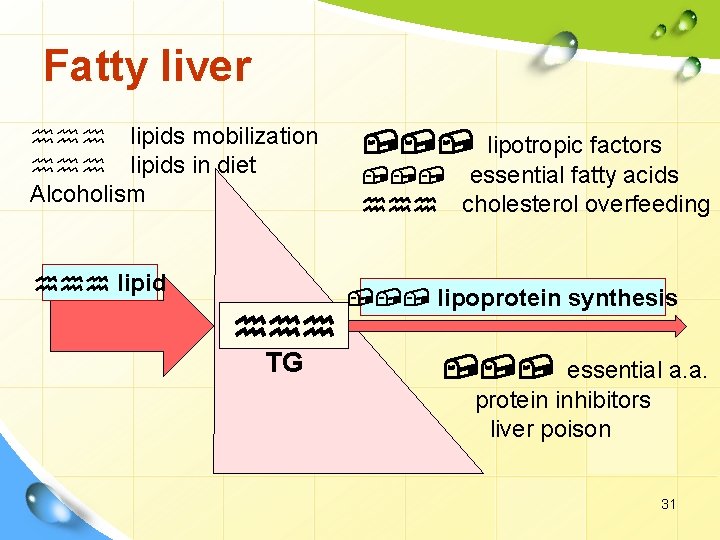
Fatty liver hhh lipids mobilization hhh lipids in diet Alcoholism hhh lipid hhh TG , , , lipotropic factors , , , essential fatty acids hhh cholesterol overfeeding , , , lipoprotein synthesis , , , essential a. a. protein inhibitors liver poison 31
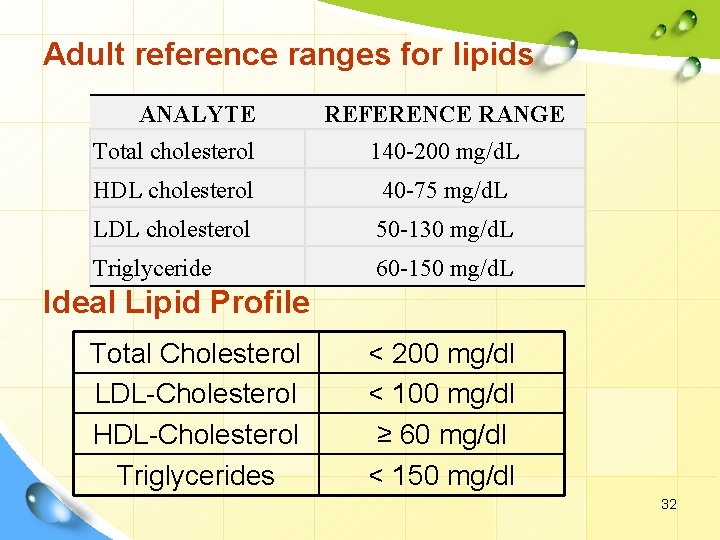
Adult reference ranges for lipids ANALYTE REFERENCE RANGE Total cholesterol 140 -200 mg/d. L HDL cholesterol 40 -75 mg/d. L LDL cholesterol 50 -130 mg/d. L Triglyceride 60 -150 mg/d. L Ideal Lipid Profile Total Cholesterol LDL-Cholesterol HDL-Cholesterol Triglycerides < 200 mg/dl < 100 mg/dl ≥ 60 mg/dl < 150 mg/dl 32
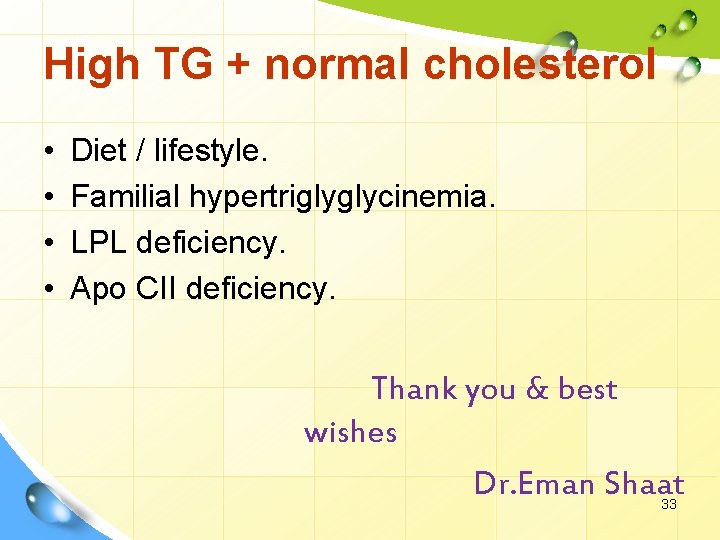
High TG + normal cholesterol • • Diet / lifestyle. Familial hypertriglyglycinemia. LPL deficiency. Apo CII deficiency. Thank you & best wishes Dr. Eman Shaat 33
- Slides: 33