
DR DANIEL GOLEMAN The Faces of Emotional Intelligence
- Slides: 8
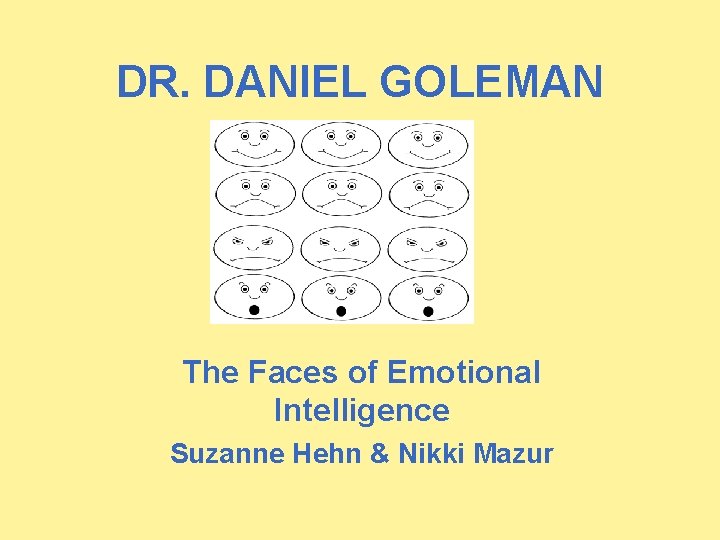
DR. DANIEL GOLEMAN The Faces of Emotional Intelligence Suzanne Hehn & Nikki Mazur
Highlights of the Model v. Daniel Goleman begins where Howard Gardner stops. . . after the Interpersonal and Intrapersonal Intelligences comes EMOTIONAL INTELLIGENCE.
A Simplistic Description Emotional Intelligence is not: v Being nice to each other v Letting you’re feelings all hang out The Original Emotional Intelligences (John Mayer/Peter Salovey) v Begin aware of feelings (perceiving emotion) v Handling disruptive emotions(managing) v Empathy (understanding emotion) v Being able to have skillful relationships (facilitate thought)
Unique Leadership Styles v. Clear vision of yourself, your organization, and everybody in it v. Democratic leadership v. Affiliations – Be a people person v. Pace-Setter – Give direction v. Coach v. Connection between people and competencies
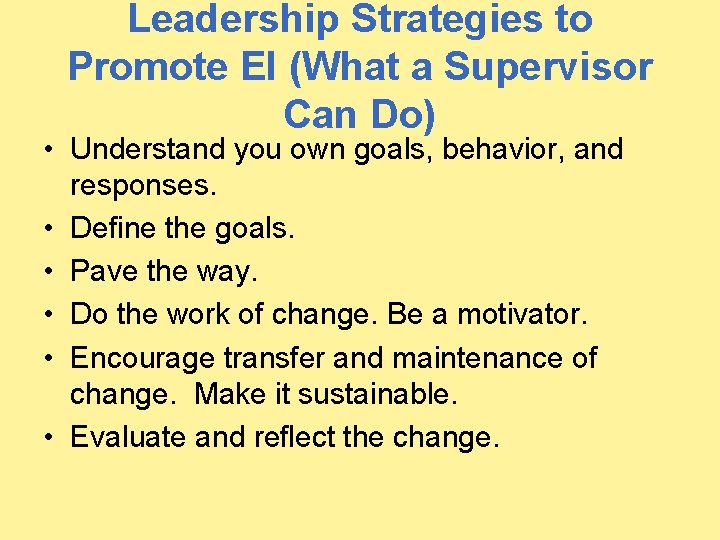
Leadership Strategies to Promote EI (What a Supervisor Can Do) • Understand you own goals, behavior, and responses. • Define the goals. • Pave the way. • Do the work of change. Be a motivator. • Encourage transfer and maintenance of change. Make it sustainable. • Evaluate and reflect the change.
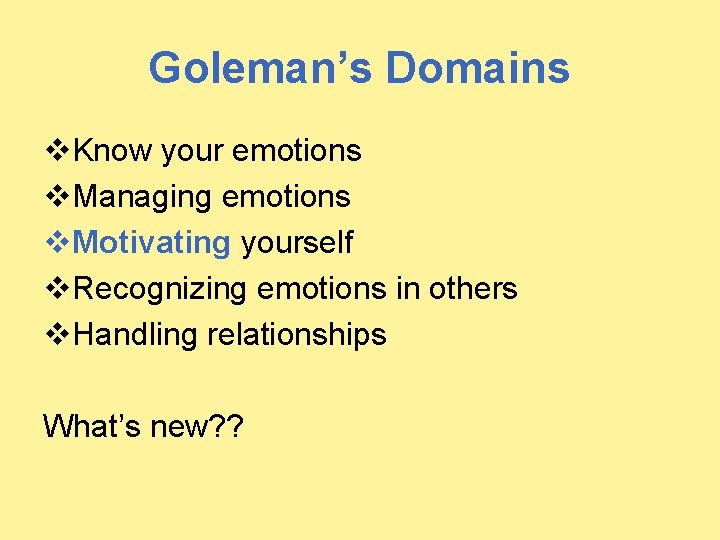
Goleman’s Domains v. Know your emotions v. Managing emotions v. Motivating yourself v. Recognizing emotions in others v. Handling relationships What’s new? ?
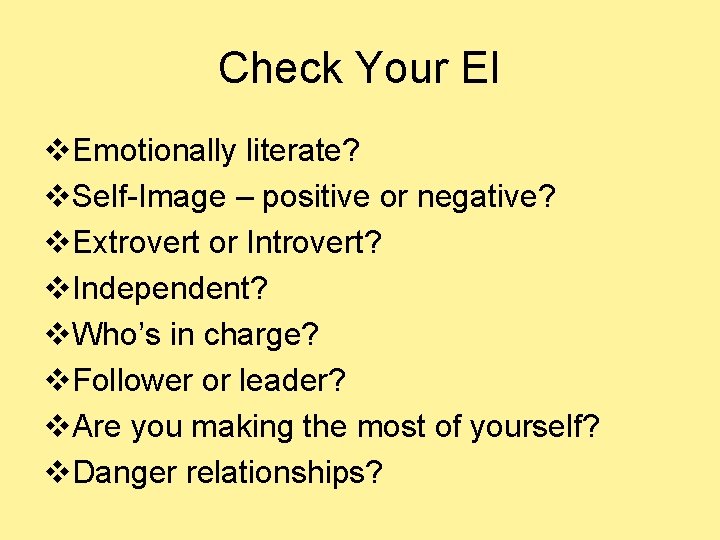
Check Your EI v. Emotionally literate? v. Self-Image – positive or negative? v. Extrovert or Introvert? v. Independent? v. Who’s in charge? v. Follower or leader? v. Are you making the most of yourself? v. Danger relationships?
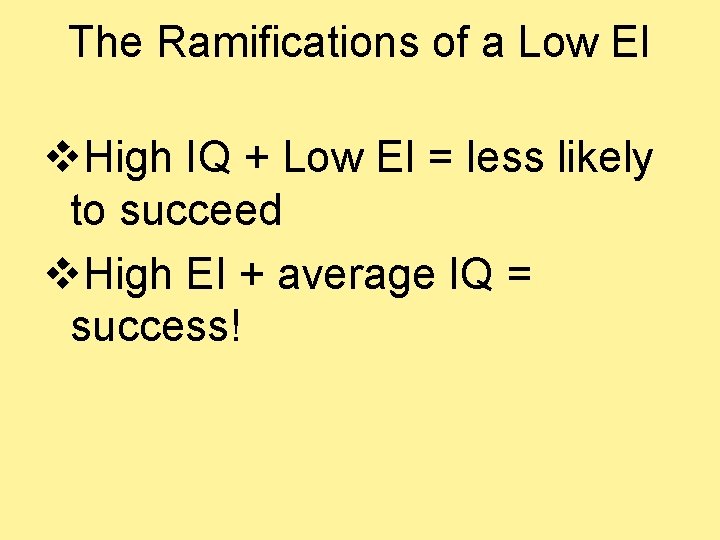
The Ramifications of a Low EI v. High IQ + Low EI = less likely to succeed v. High EI + average IQ = success!