
Dr Allan Paivio Tell Us A Little About
Dr. Allan Paivio
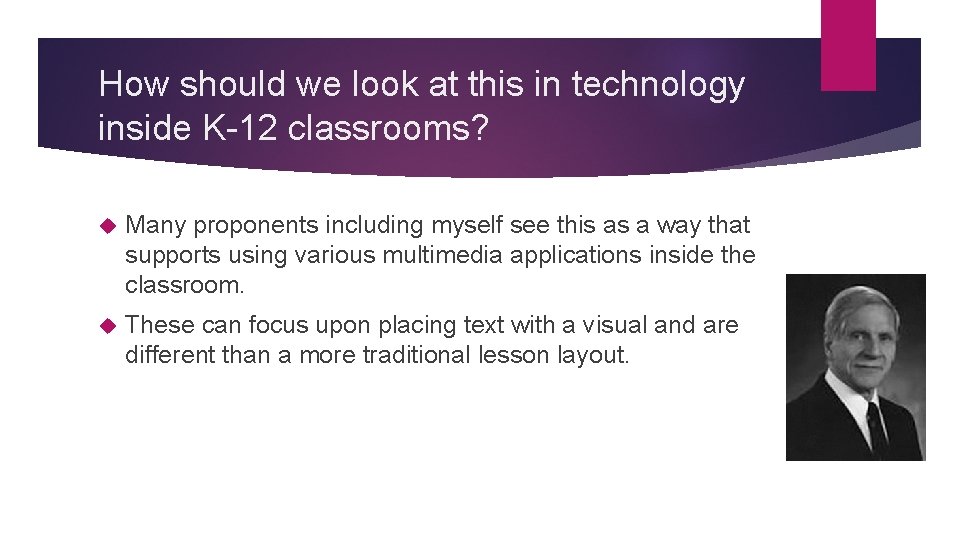
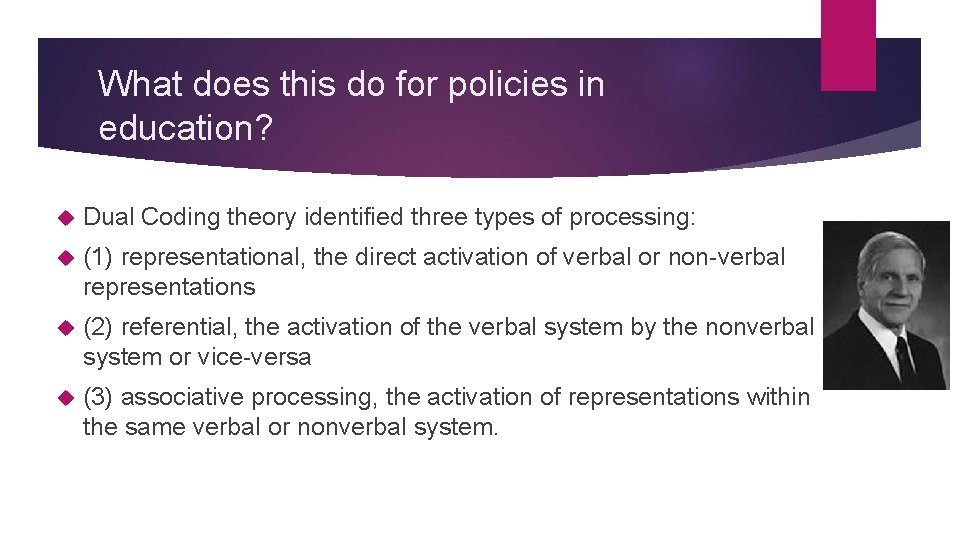
Tell Us A Little About Yourself Born March 29, 1925 Ph. D. from Mc. Gill University in Psychology Professor emeritus at the University of Western Ontario Started in 1963 and was there until retirement Main Focus: imagery, memory, language, and cognition. Dual Coding Theory - 1971 Mr. Canada in 1948 Golf and Body Building
Describe the Dual Coding Theory In simple form, it implies that verbal and non- verbal systems are alternative internal representations of events or things. In a sense we are looking at human cognition with verbal and nonverbal information.
Would you share an example? Take an image of a boy marked with the word boy. While that is being viewed, the word “boy” is spoken. In the end, the person this is being spoken to will have a better recall at a future point. You can use this with a house, car, animal, and so on.
How should we look at this in technology inside K-12 classrooms? Many proponents including myself see this as a way that supports using various multimedia applications inside the classroom. These can focus upon placing text with a visual and are different than a more traditional lesson layout.
What does this do for policies in education? Dual Coding theory identified three types of processing: (1) representational, the direct activation of verbal or non-verbal representations (2) referential, the activation of the verbal system by the nonverbal system or vice-versa (3) associative processing, the activation of representations within the same verbal or nonverbal system.
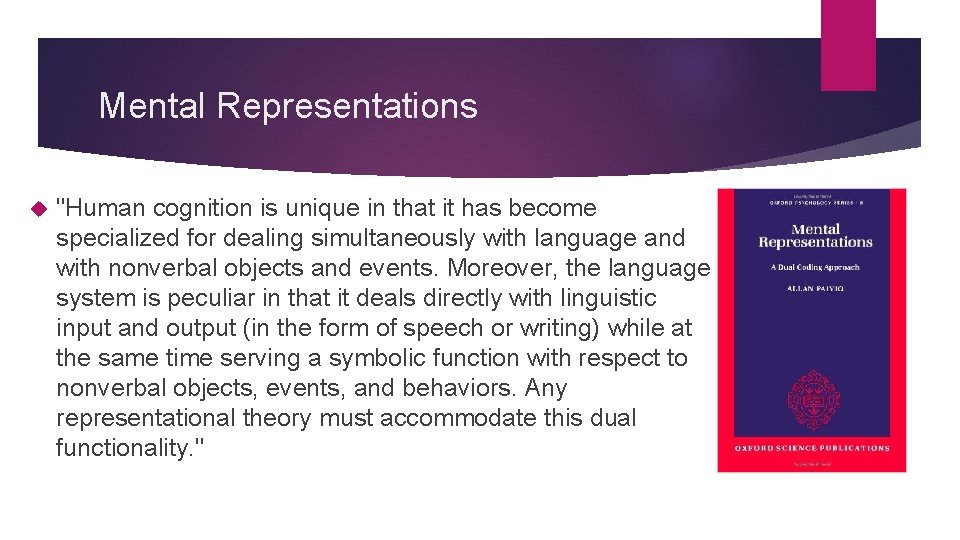
Mental Representations "Human cognition is unique in that it has become specialized for dealing simultaneously with language and with nonverbal objects and events. Moreover, the language system is peculiar in that it deals directly with linguistic input and output (in the form of speech or writing) while at the same time serving a symbolic function with respect to nonverbal objects, events, and behaviors. Any representational theory must accommodate this dual functionality. "

Check Our Website For Resources
- Slides: 8