
Dr ali albayati Lec 1 OBJECTIVES By the
Dr. ali al-bayati Lec. 1
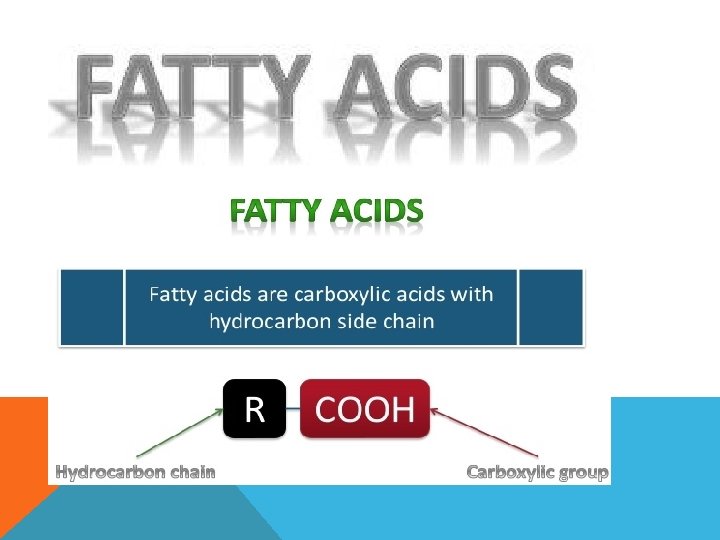
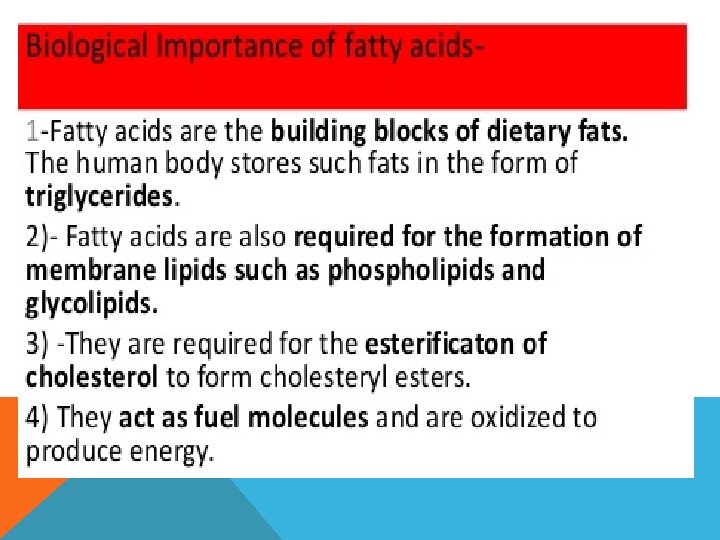
OBJECTIVES By the end of lecture the student should: Identify importance of lipids in food. Describe digestion of different types of lipids. Illustrate absorption of lipids from intestine. Summarize transport of dietary lipids from intestine. Identify different characteristics of fatty acids.
LIPIDS definition • Lipids comprise very heterogeneous group of compounds which are insoluble in water but soluble in non-polar organic solvents such us benzene, chloroform, and ether. They are present in all living organisms. The group includes fats, oils, waxes and related compounds. Classification of lipids Classification as storage and structural lipids and some other functional lipids. Classification based on lipid composition. 1) Simple lipids: esters of fatty acids with different alcohols. a) Fats and oils: These are esters of fatty acids with glycerol. b) Waxes: Esters of fatty acids with high molecular weight monohydric alcohols 1) Complex lipids: Esters of fatty acids and alcohols together with other head groups. A. Phospholipids: Esters of the above type containing phosphoric acid residue. a) Glycerophospholipids: - The alcohol is glycerol b) Sphingophospholipids: The alcohol is sphingosine. A. Glycolipids: Lipids containing fatty acid, sphingosine and carbohydrate residues. Others: Include sulfolipids, amino lipids and lipoproteins, which are modified forms of lipids.
General Functions of Lipids 1. They are efficient energy sources. 2. Serve as thermal insulators. 3. They are structural components of cell membrane. 4. Serve as precursors for hormones (steroid hormones). 5. They also dissolve the vitamins, which are fat-soluble and assist their digestion.
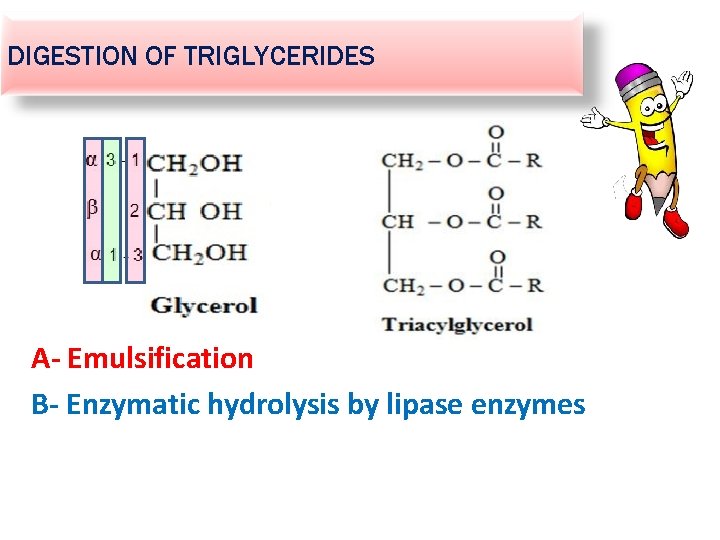
DIGESTION OF TRIGLYCERIDES A- Emulsification B- Enzymatic hydrolysis by lipase enzymes
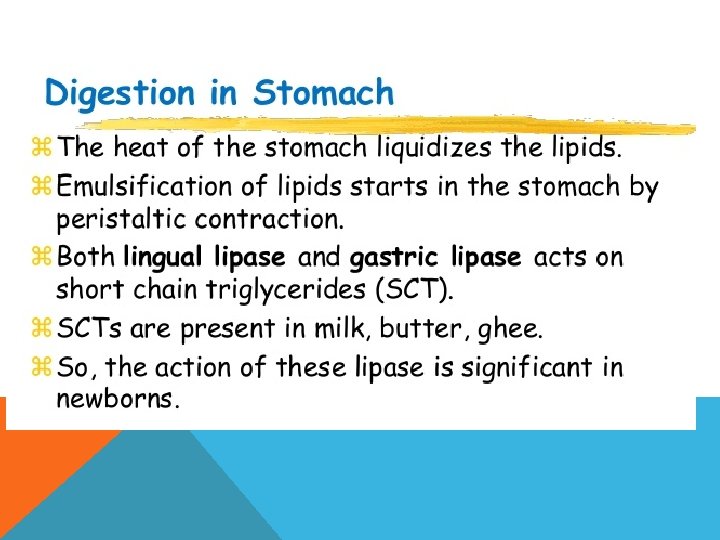
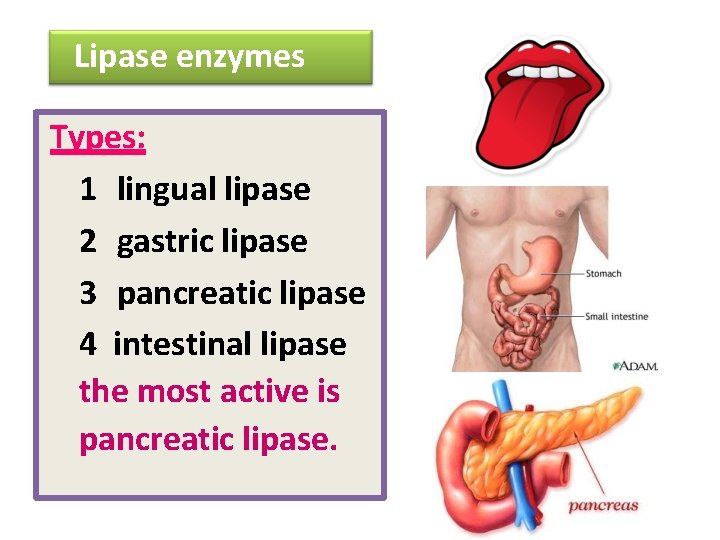
Lipase enzymes Types: 1 lingual lipase 2 gastric lipase 3 pancreatic lipase 4 intestinal lipase the most active is pancreatic lipase.
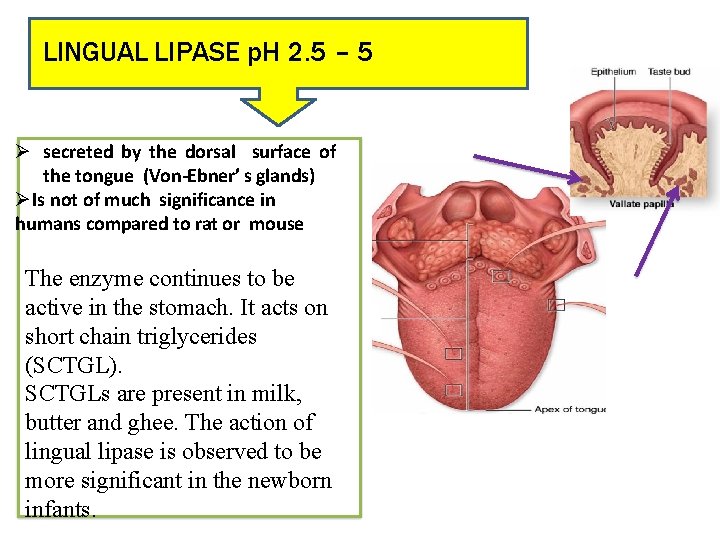
LINGUAL LIPASE p. H 2. 5 – 5 secreted by the dorsal surface of the tongue (Von-Ebner’ s glands) Is not of much significance in humans compared to rat or mouse The enzyme continues to be active in the stomach. It acts on short chain triglycerides (SCTGL). SCTGLs are present in milk, butter and ghee. The action of lingual lipase is observed to be more significant in the newborn infants.
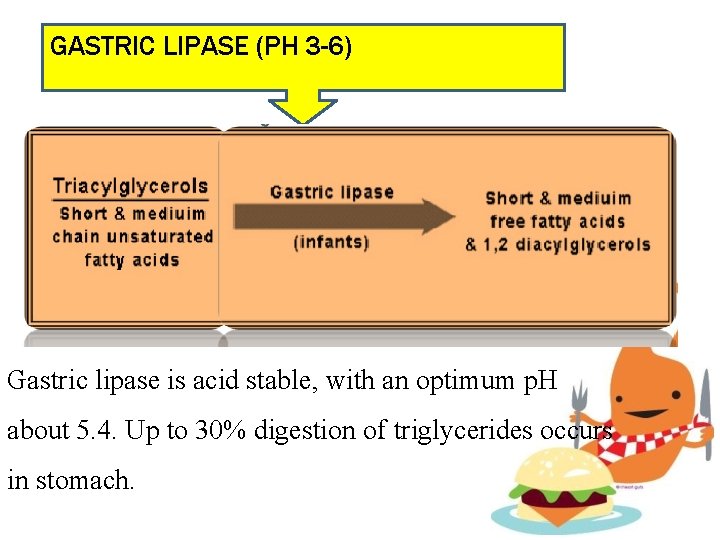
GASTRIC LIPASE (PH 3 -6) Gastric lipase is acid stable, with an optimum p. H about 5. 4. Up to 30% digestion of triglycerides occurs in stomach.

PANCREATIC LIPASE
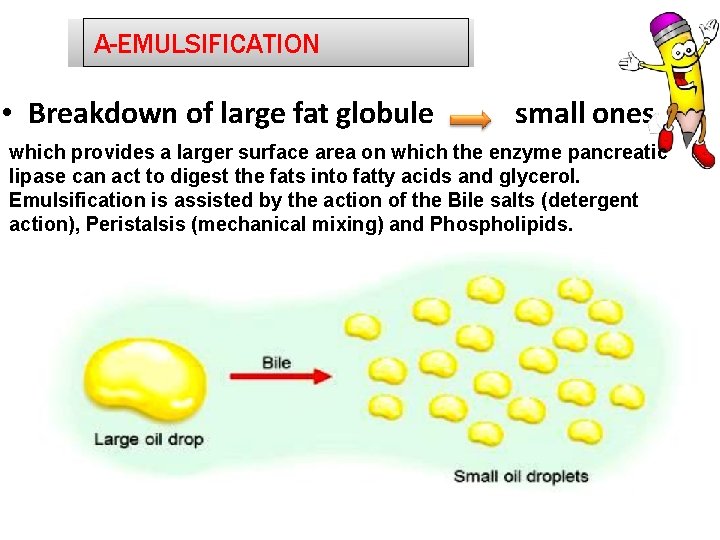
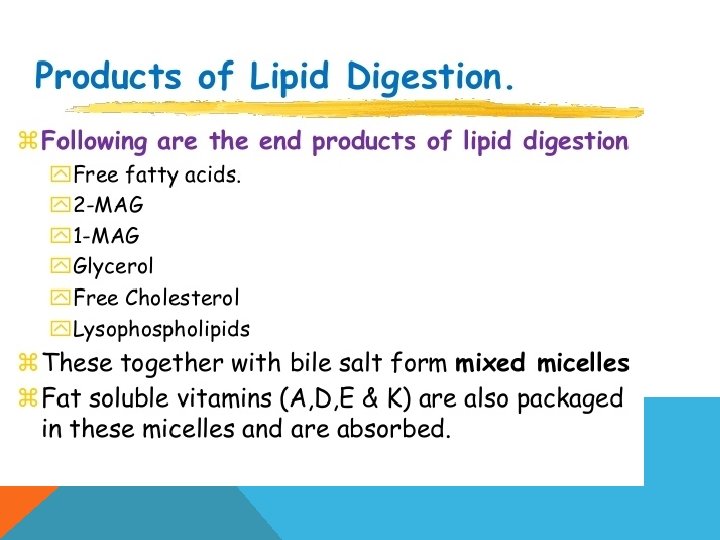
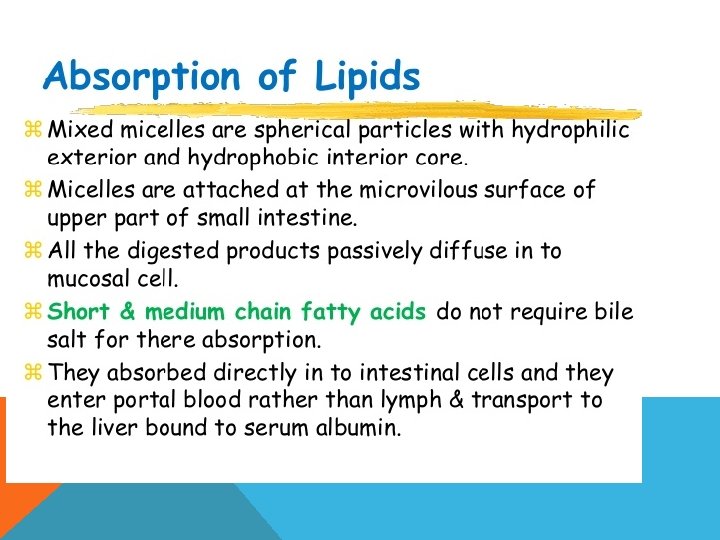
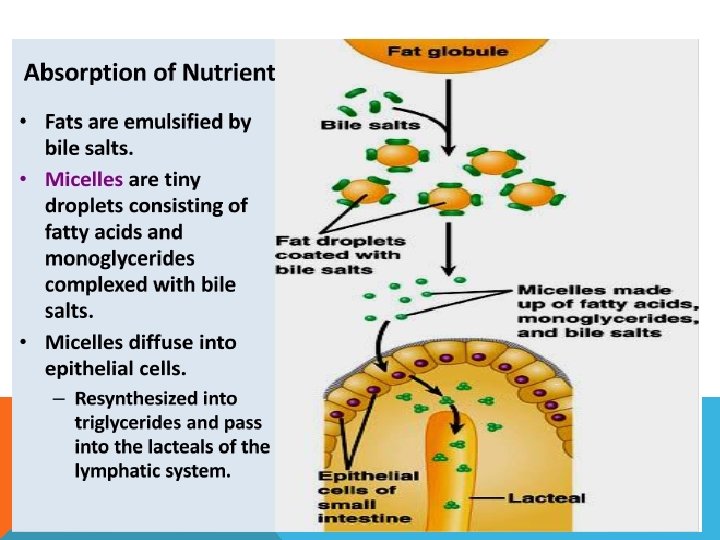
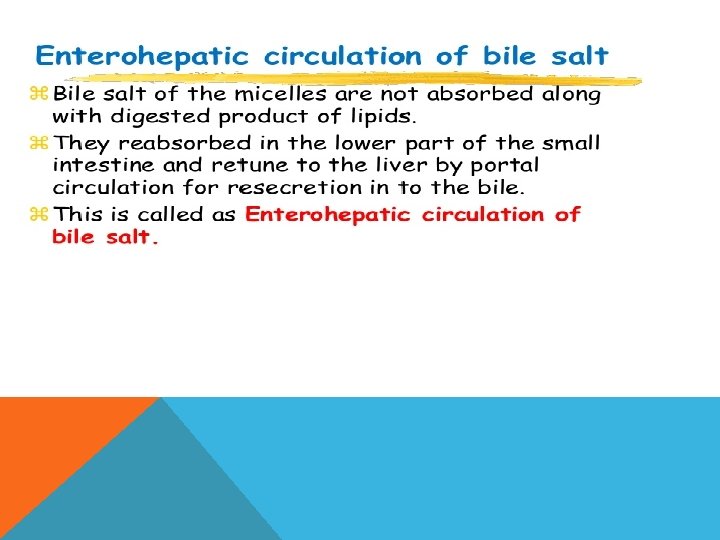
A-EMULSIFICATION • Breakdown of large fat globule small ones which provides a larger surface area on which the enzyme pancreatic lipase can act to digest the fats into fatty acids and glycerol. Emulsification is assisted by the action of the Bile salts (detergent action), Peristalsis (mechanical mixing) and Phospholipids.
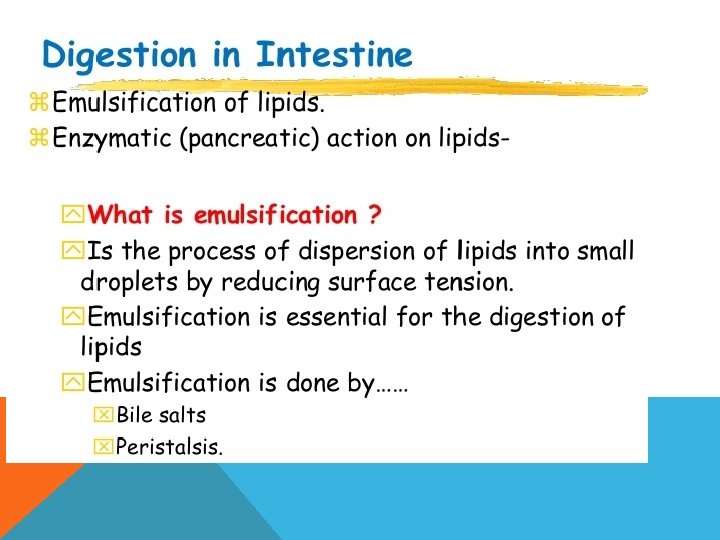
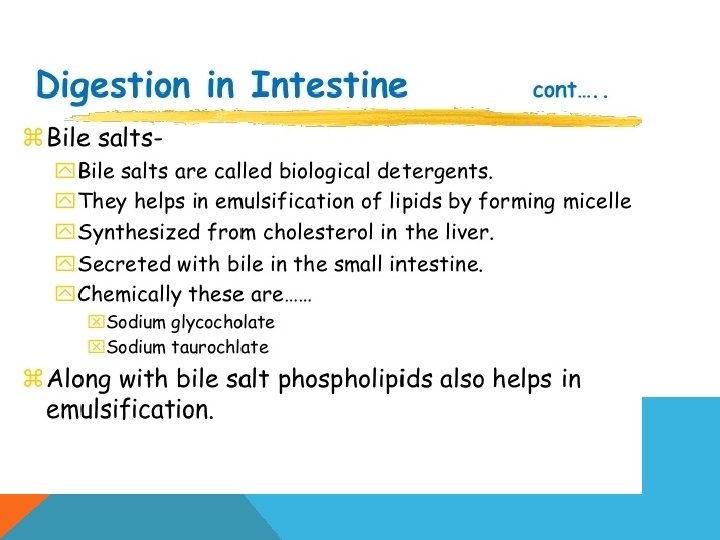
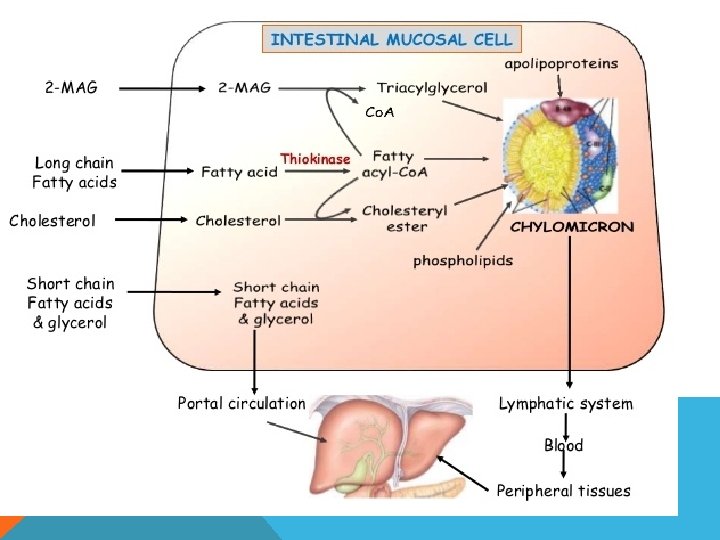
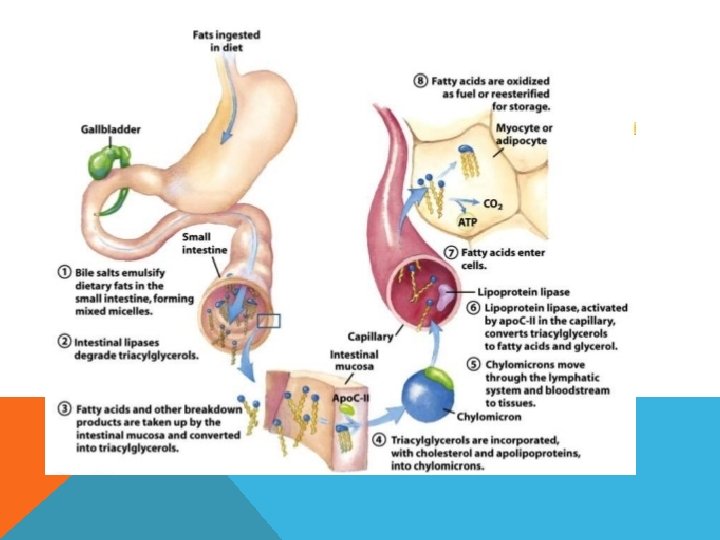
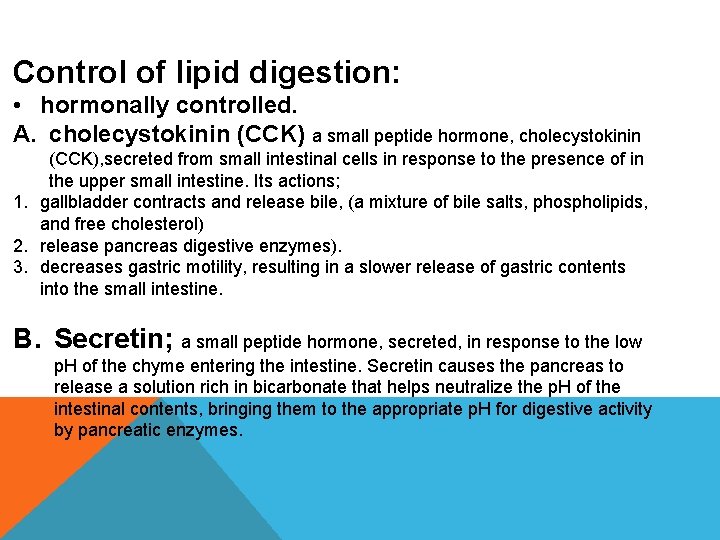
Control of lipid digestion: • hormonally controlled. A. cholecystokinin (CCK) a small peptide hormone, cholecystokinin (CCK), secreted from small intestinal cells in response to the presence of in the upper small intestine. Its actions; 1. gallbladder contracts and release bile, (a mixture of bile salts, phospholipids, and free cholesterol) 2. release pancreas digestive enzymes). 3. decreases gastric motility, resulting in a slower release of gastric contents into the small intestine. B. Secretin; a small peptide hormone, secreted, in response to the low p. H of the chyme entering the intestine. Secretin causes the pancreas to release a solution rich in bicarbonate that helps neutralize the p. H of the intestinal contents, bringing them to the appropriate p. H for digestive activity by pancreatic enzymes.
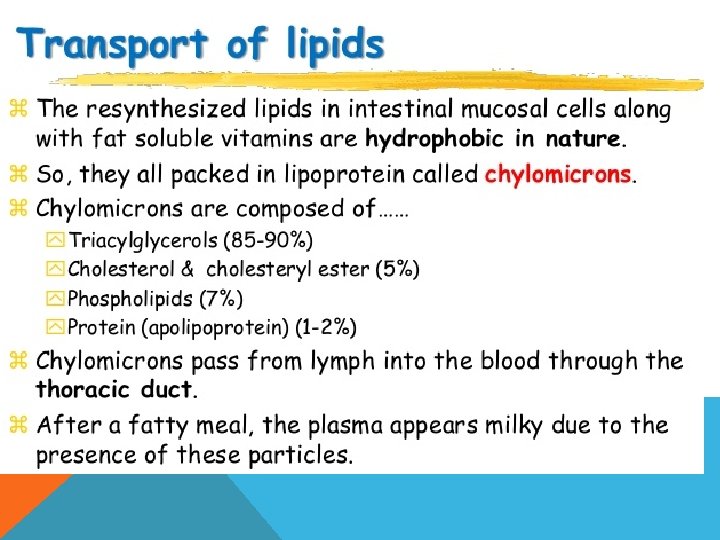
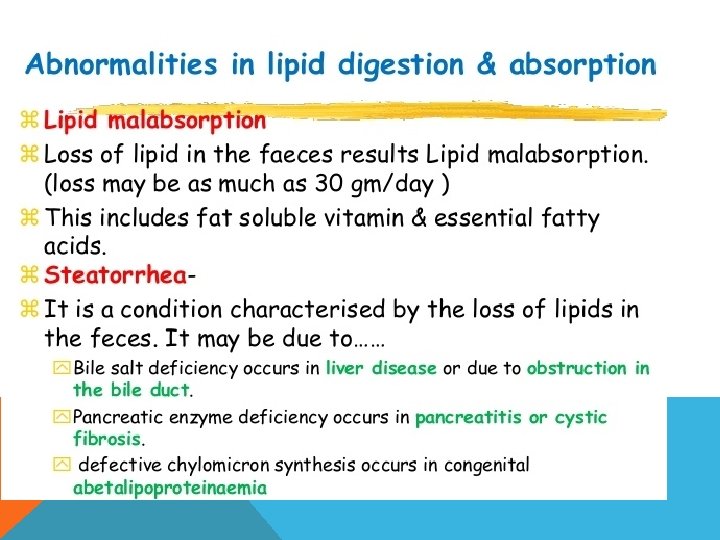
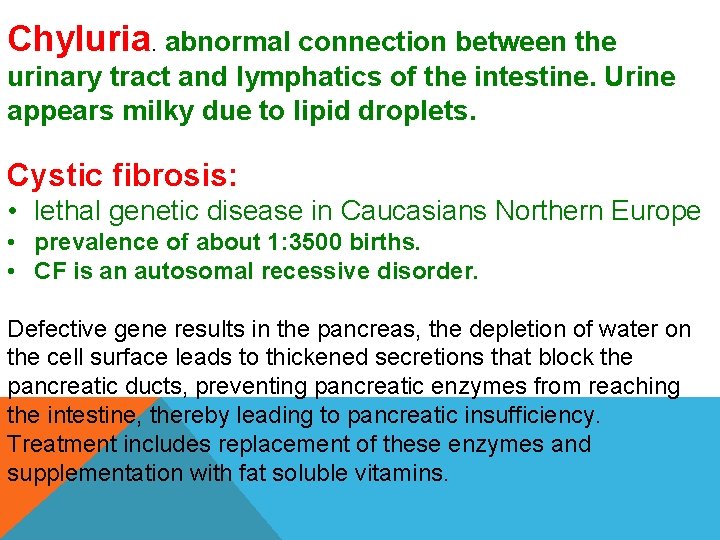
Chyluria. abnormal connection between the urinary tract and lymphatics of the intestine. Urine appears milky due to lipid droplets. Cystic fibrosis: • lethal genetic disease in Caucasians Northern Europe • prevalence of about 1: 3500 births. • CF is an autosomal recessive disorder. Defective gene results in the pancreas, the depletion of water on the cell surface leads to thickened secretions that block the pancreatic ducts, preventing pancreatic enzymes from reaching the intestine, thereby leading to pancreatic insufficiency. Treatment includes replacement of these enzymes and supplementation with fat soluble vitamins.

- Slides: 30