
Dr Abdul Qayyum Rao Associate Professor CEMB PU
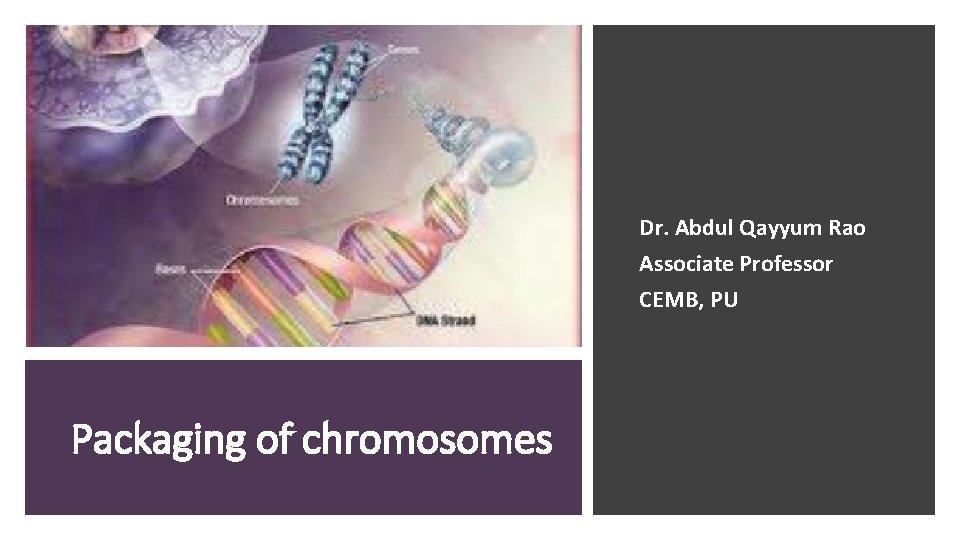
Dr. Abdul Qayyum Rao Associate Professor CEMB, PU Packaging of chromosomes


Each of us has enough DNA to reach from here to the sun and back, more than 300 times. How is all that DNA packaged so tightly into chromosomes and squeezed into a tiny nucleus?

Problem • Human genome (in diploid cells) = 6 x 10⁹ bp • 6 x 109 bp X 0. 34 nm/bp = 2. 04 x 109 nm = 2 m/cell • But diameter of nucleus = 5 -10 mm • How it is possible to maintain DNA in cell?

Solution CHROMOSOMES • Single DNA Molecule and associated proteins • Proteins bind to DNA and fold it, generating a series of organized coils and loops • These provides higher level of organization • Prevents DNA from unmanageable tangle • Karyotype
Amazing fact Although DNA is tightly compacted, it nevertheless remains accessible to the many enzymes in the cell that performs the function: • Replication • Repair mechanism • Gene expression
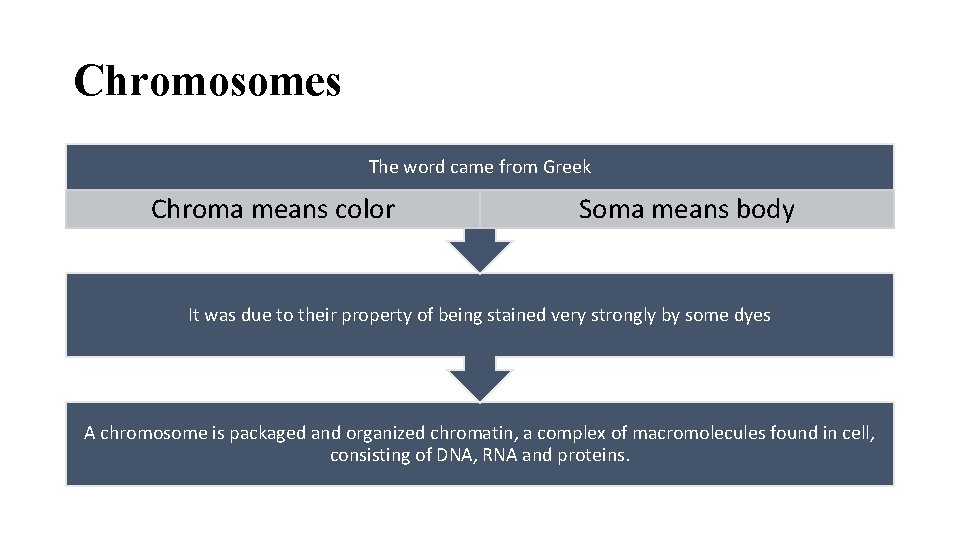
Chromosomes The word came from Greek Chroma means color Soma means body It was due to their property of being stained very strongly by some dyes A chromosome is packaged and organized chromatin, a complex of macromolecules found in cell, consisting of DNA, RNA and proteins.
Function of chromosomes Chromosomes contain genes Controls the synthesis of structural proteins and thus helps in cell division and cell growth Control cellular differentiation Maintains cell metabolism by directing the synthesis of particular enzymes Chromosomes replicate themselves for passage to daughter cells and next generation Chromosomes form a link between offspring and the parents
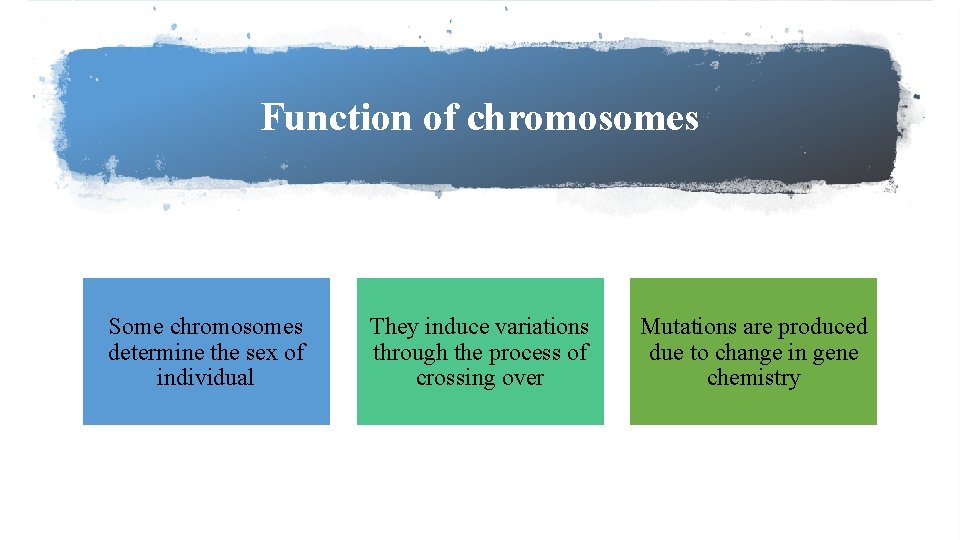
Function of chromosomes Some chromosomes determine the sex of individual They induce variations through the process of crossing over Mutations are produced due to change in gene chemistry

Chromatin Complex of DNA and tightly bound protein is called Chromatin Walther Flemming first used the term Chromatin in 1882 Most abundant proteins in chromatin are histone proteins
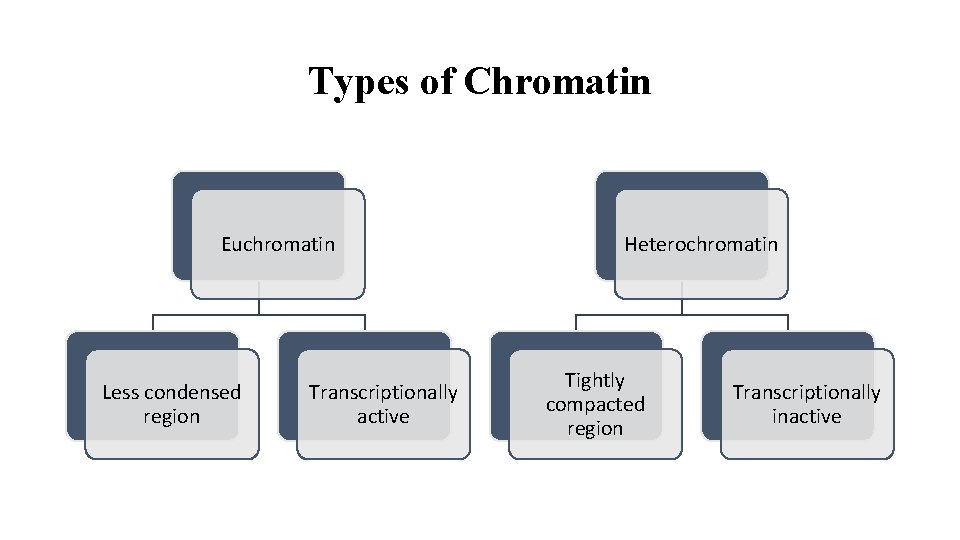
Types of Chromatin Euchromatin Less condensed region Transcriptionally active Heterochromatin Tightly compacted region Transcriptionally inactive
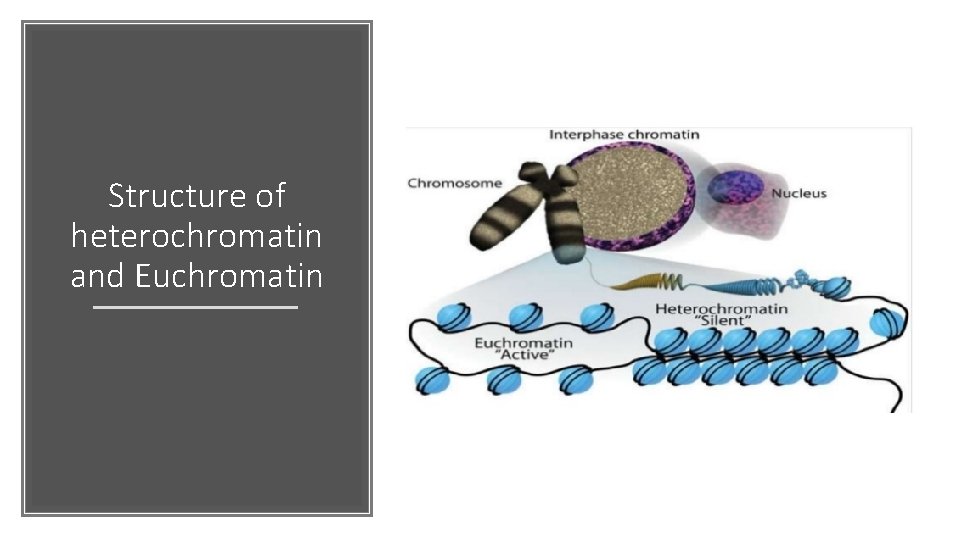
Structure of heterochromatin and Euchromatin
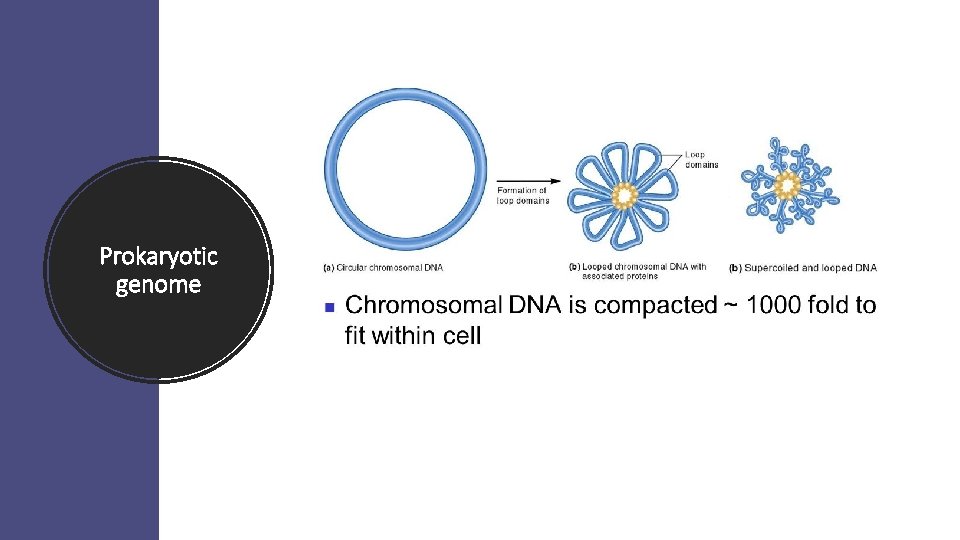
Prokaryotic genome

Eukaryotic chromosome
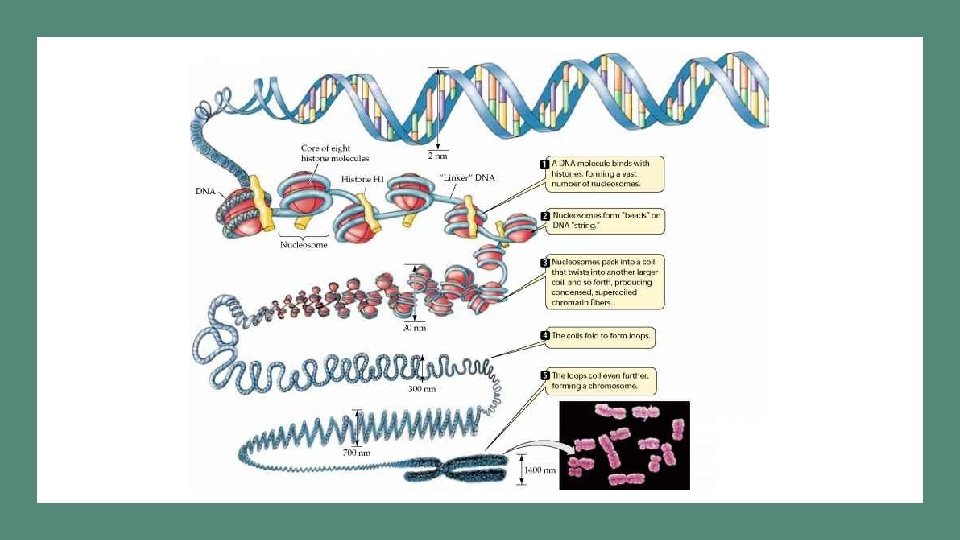
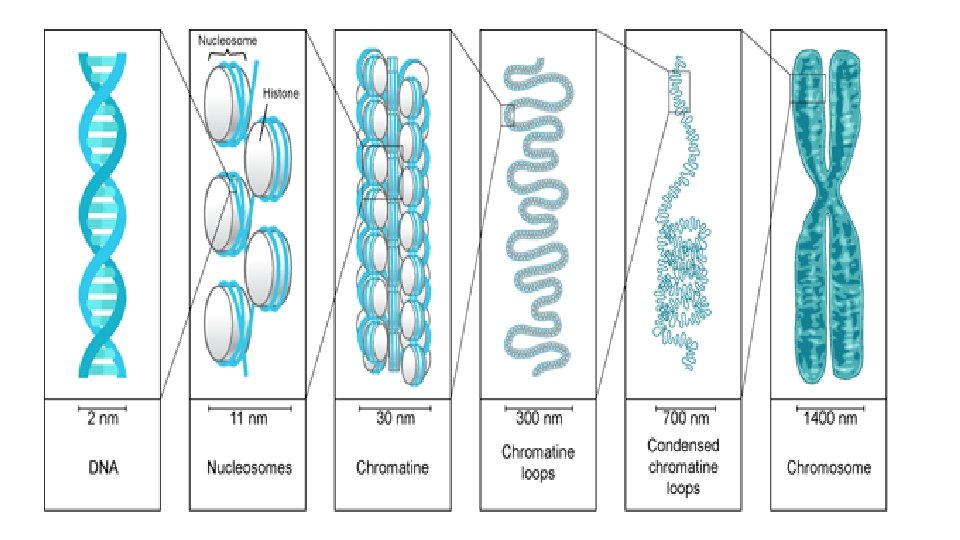
Levels of packaging There are three orders of packaging • First order – Nucleosome • Second order – solenoid fiber • Third order – scaffold loop Chromatids chromosome
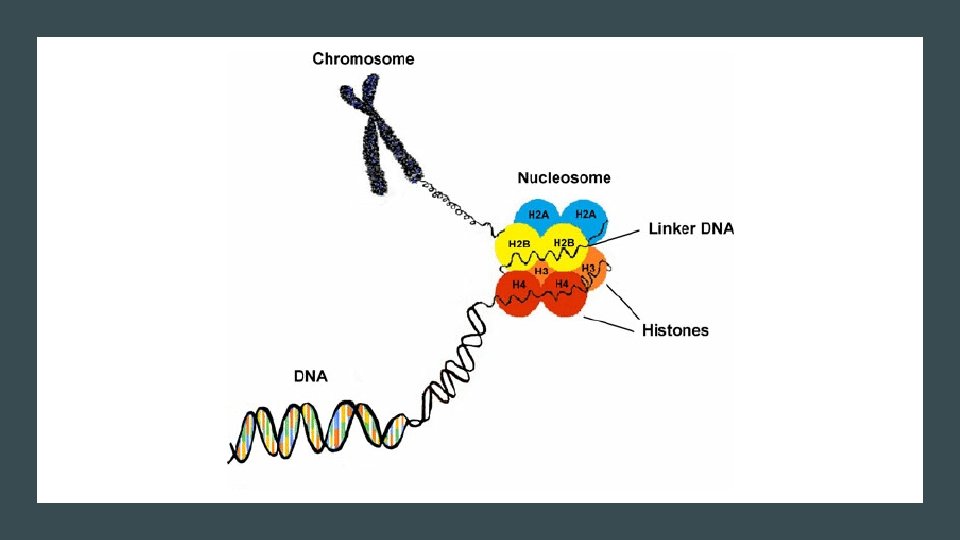
Nucleosome = DNA + core histones DNA wrapped twice around an octamer of core histones Nucleosome 1 st order 10 nm in diameter Nucleosome are repeated after every 200 nucleotides Positively charged histones are linked with negative charged phosphate groups of DNA
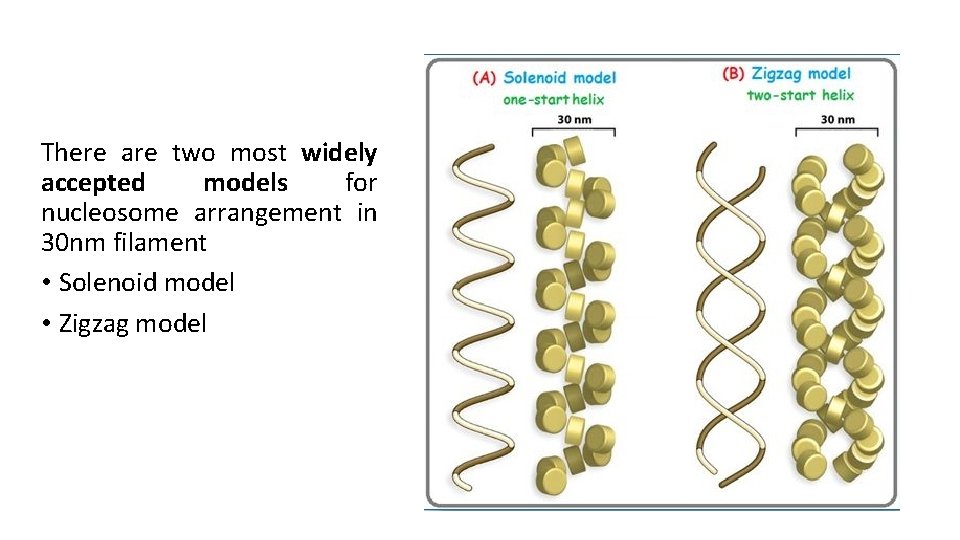
There are two most widely accepted models for nucleosome arrangement in 30 nm filament • Solenoid model • Zigzag model
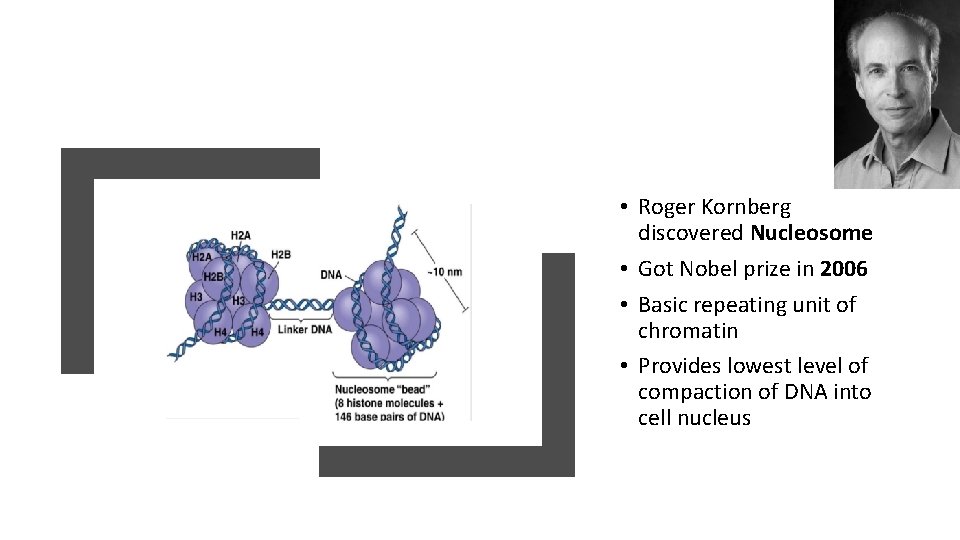
• Roger Kornberg discovered Nucleosome • Got Nobel prize in 2006 • Basic repeating unit of chromatin • Provides lowest level of compaction of DNA into cell nucleus
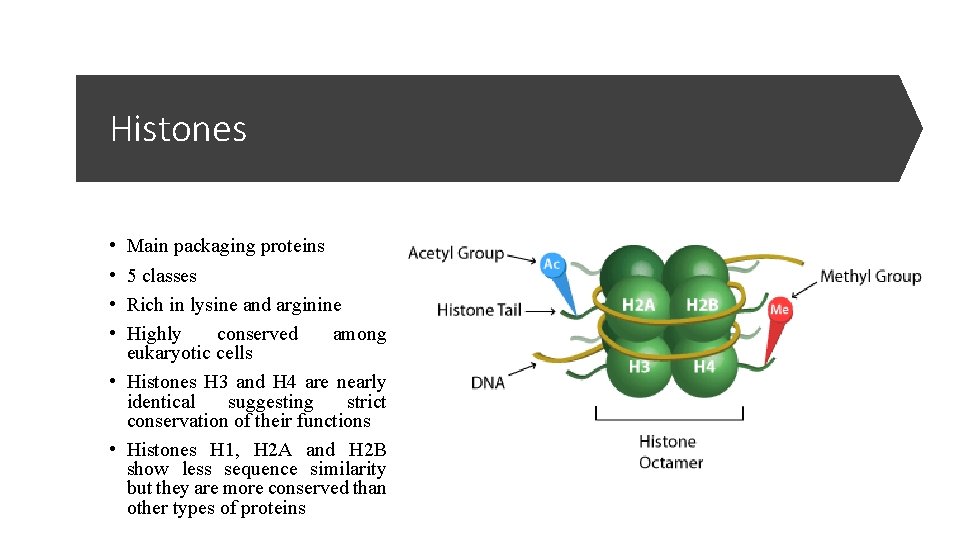
Histones • • Main packaging proteins 5 classes Rich in lysine and arginine Highly conserved among eukaryotic cells • Histones H 3 and H 4 are nearly identical suggesting strict conservation of their functions • Histones H 1, H 2 A and H 2 B show less sequence similarity but they are more conserved than other types of proteins
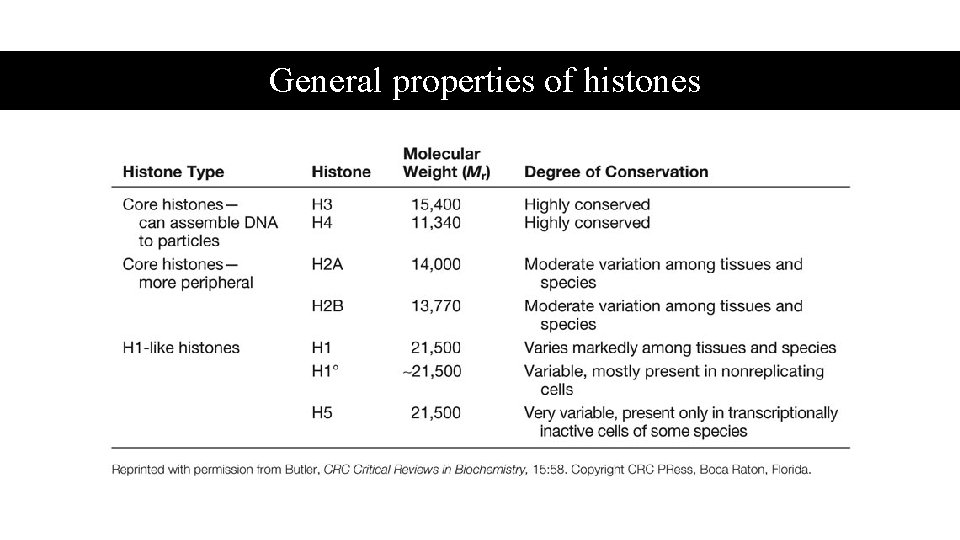
General properties of histones
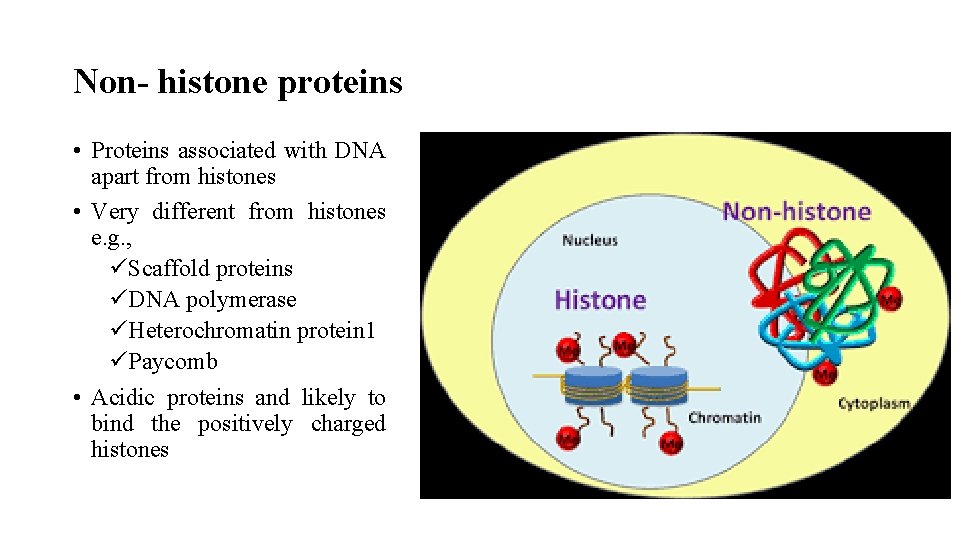
Non- histone proteins • Proteins associated with DNA apart from histones • Very different from histones e. g. , üScaffold proteins üDNA polymerase üHeterochromatin protein 1 üPaycomb • Acidic proteins and likely to bind the positively charged histones
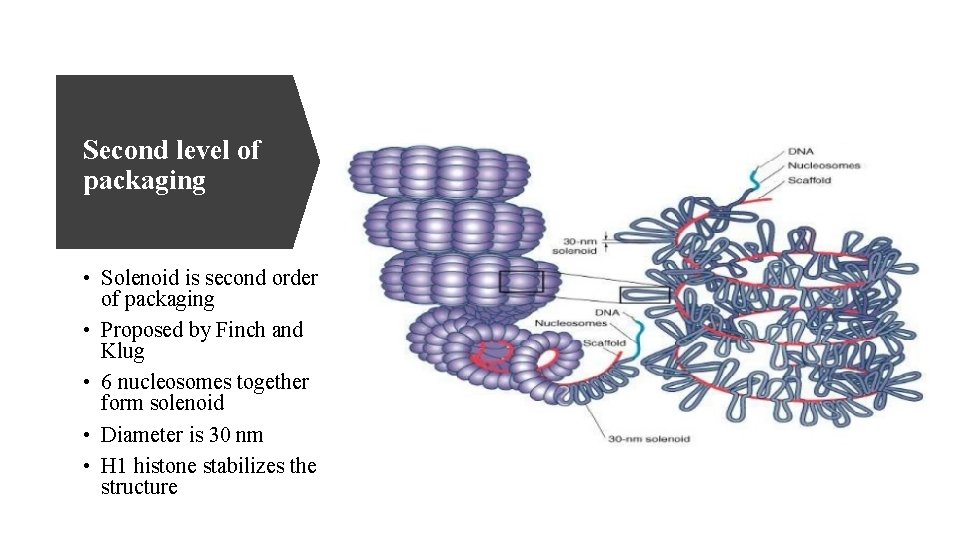
Second level of packaging • Solenoid is second order of packaging • Proposed by Finch and Klug • 6 nucleosomes together form solenoid • Diameter is 30 nm • H 1 histone stabilizes the structure
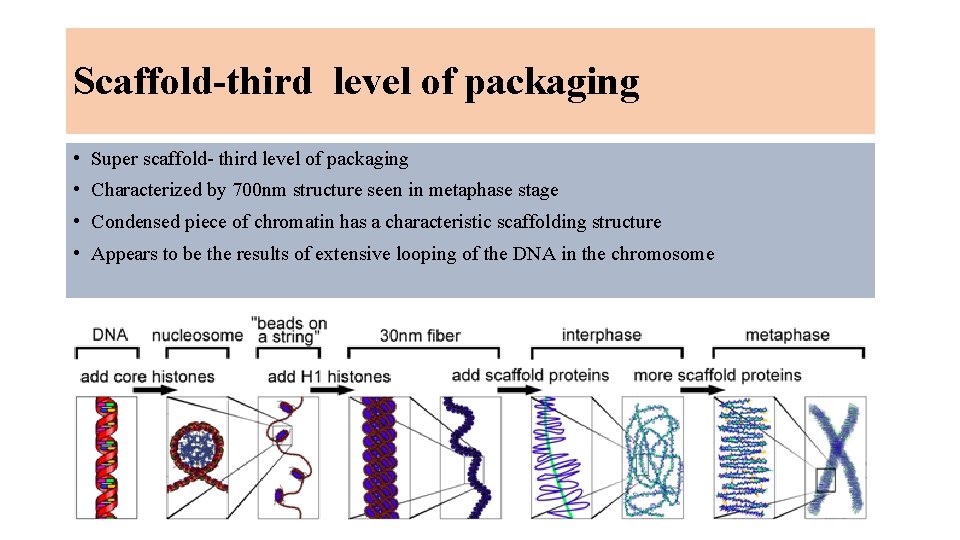
Scaffold-third level of packaging • Super scaffold- third level of packaging • Characterized by 700 nm structure seen in metaphase stage • Condensed piece of chromatin has a characteristic scaffolding structure • Appears to be the results of extensive looping of the DNA in the chromosome
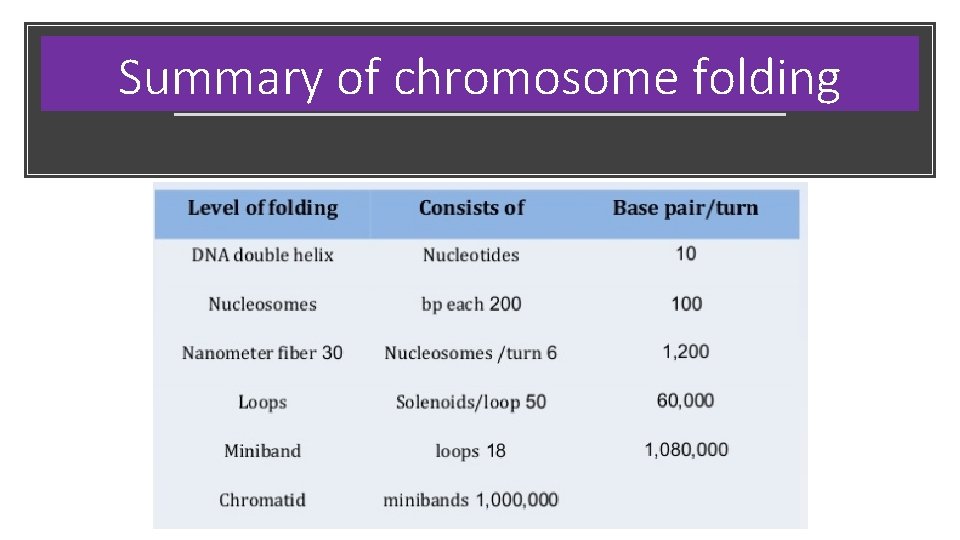
Summary of chromosome folding

- Slides: 28