
Down Syndrome MedicalScientific Names Trisomy 21 47 XX
- Slides: 19
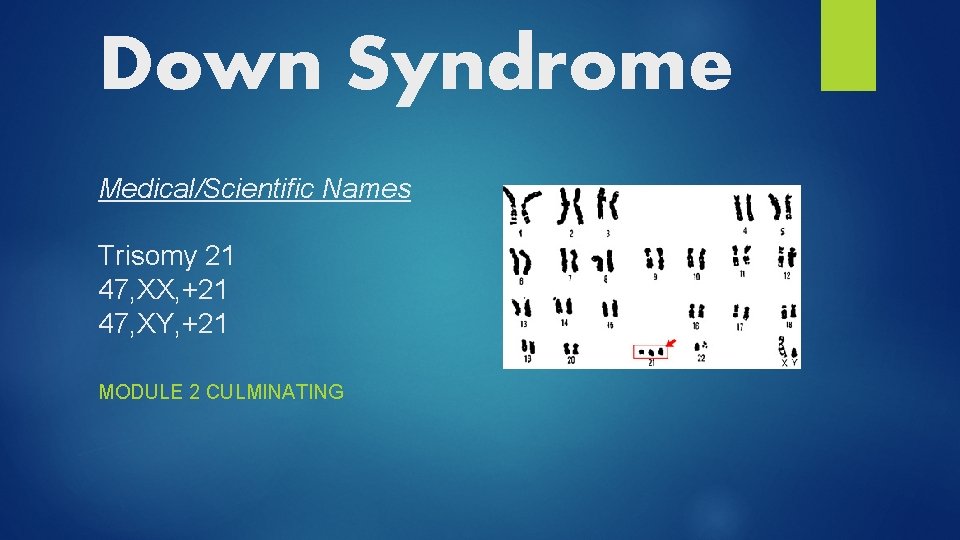
Down Syndrome Medical/Scientific Names Trisomy 21 47, XX, +21 47, XY, +21 MODULE 2 CULMINATING
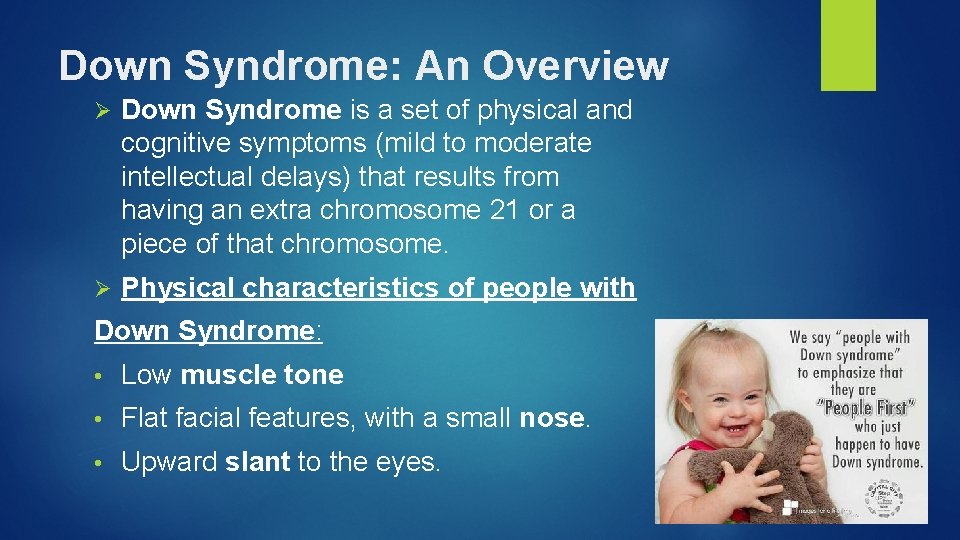
Down Syndrome: An Overview Ø Down Syndrome is a set of physical and cognitive symptoms (mild to moderate intellectual delays) that results from having an extra chromosome 21 or a piece of that chromosome. Ø Physical characteristics of people with Down Syndrome: • Low muscle tone • Flat facial features, with a small nose. • Upward slant to the eyes.
Now that we know what Down Syndrome is, it is important to say what it is not: Down Syndrome is not: • a disease • disorder • defect • medical condition.
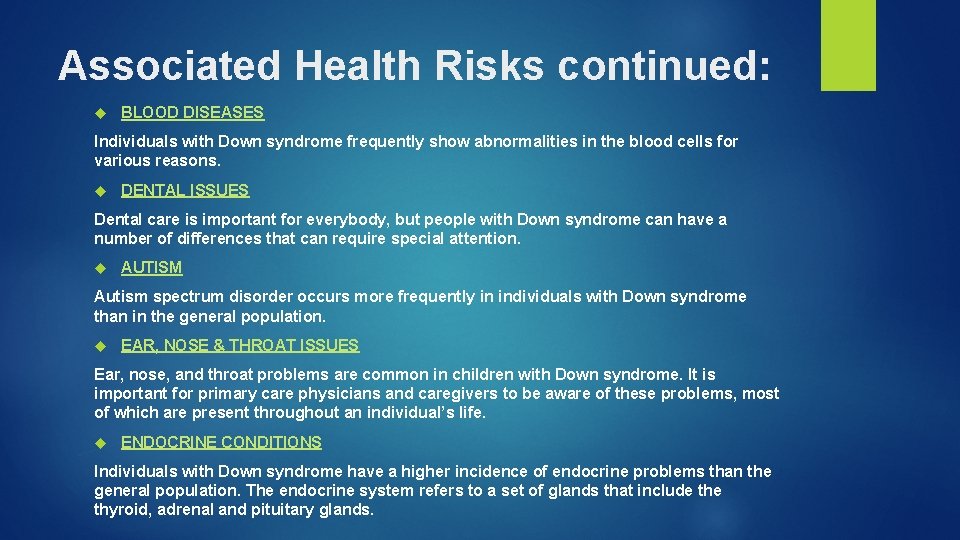
People with Down Syndrome are at risk for a number of other health conditions: ADHD Attention deficit hyperactivity disorder, or ADHD, is a commonly diagnosed childhood problem. However, ADHD-like symptoms are more common in young children with Down syndrome compared to children from the general population. ALZHEIMER'S DISEASE Alzheimer’s disease and Down syndrome share a genetic connection, leading to the increased risk of dementia at an earlier age. Understandably, many families and caregivers are especially worried about this possibility, which is one reason why this topic is covered in detail in this section. Getting accurate information and education about the risk of Alzheimer’s disease is an important way of empowering oneself to prepare for the future. ANESTHESIA Complications of anesthesia (sedation during surgery) occur in all patient populations, but are more likely to occur in individuals with Down syndrome than their peers without. ATLANTOAXIAL INSTABILITY Individuals with Down syndrome are at an increased risk of atlantoaxial instability, a serious disorder that could result in spinal cord damage.
Associated Health Risks continued: BLOOD DISEASES Individuals with Down syndrome frequently show abnormalities in the blood cells for various reasons. DENTAL ISSUES Dental care is important for everybody, but people with Down syndrome can have a number of differences that can require special attention. AUTISM Autism spectrum disorder occurs more frequently in individuals with Down syndrome than in the general population. EAR, NOSE & THROAT ISSUES Ear, nose, and throat problems are common in children with Down syndrome. It is important for primary care physicians and caregivers to be aware of these problems, most of which are present throughout an individual’s life. ENDOCRINE CONDITIONS Individuals with Down syndrome have a higher incidence of endocrine problems than the general population. The endocrine system refers to a set of glands that include thyroid, adrenal and pituitary glands.
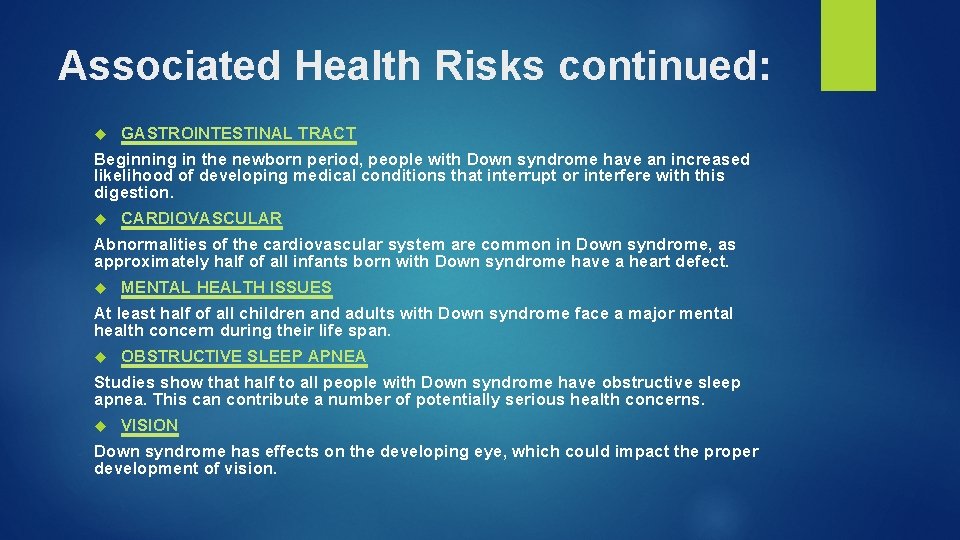
Associated Health Risks continued: GASTROINTESTINAL TRACT Beginning in the newborn period, people with Down syndrome have an increased likelihood of developing medical conditions that interrupt or interfere with this digestion. CARDIOVASCULAR Abnormalities of the cardiovascular system are common in Down syndrome, as approximately half of all infants born with Down syndrome have a heart defect. MENTAL HEALTH ISSUES At least half of all children and adults with Down syndrome face a major mental health concern during their life span. OBSTRUCTIVE SLEEP APNEA Studies show that half to all people with Down syndrome have obstructive sleep apnea. This can contribute a number of potentially serious health concerns. VISION Down syndrome has effects on the developing eye, which could impact the proper development of vision.
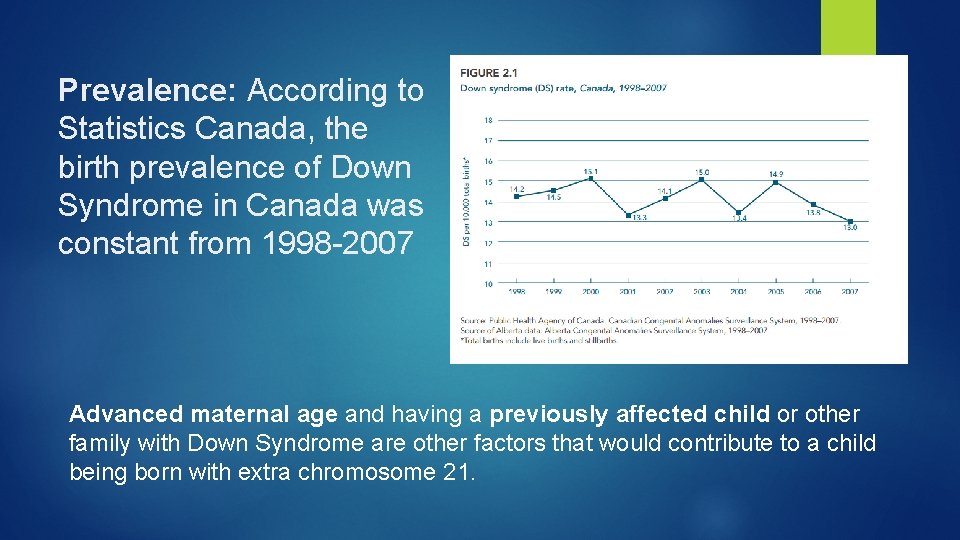
Prevalence: According to Statistics Canada, the birth prevalence of Down Syndrome in Canada was constant from 1998 -2007 Advanced maternal age and having a previously affected child or other family with Down Syndrome are other factors that would contribute to a child being born with extra chromosome 21.
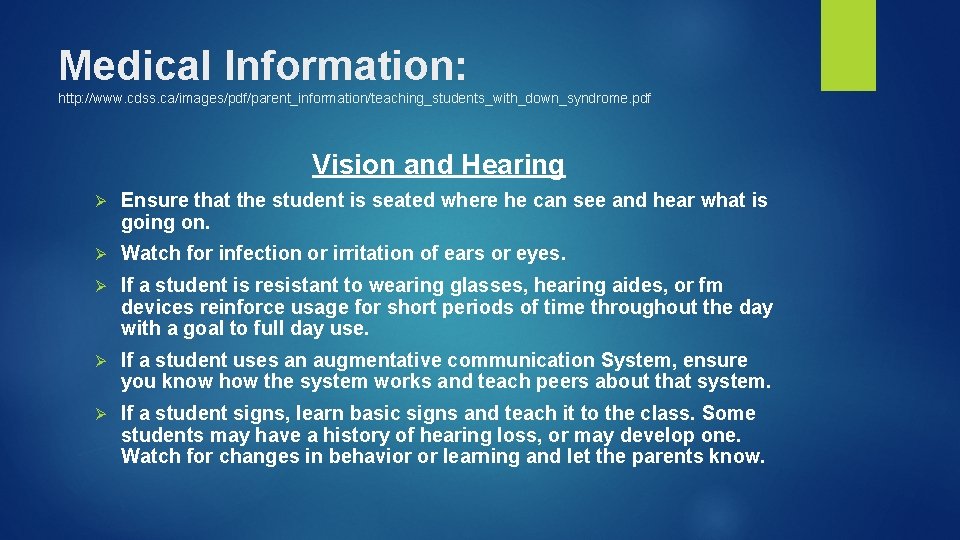
Medical Information: http: //www. cdss. ca/images/pdf/parent_information/teaching_students_with_down_syndrome. pdf Vision and Hearing Ø Ensure that the student is seated where he can see and hear what is going on. Ø Watch for infection or irritation of ears or eyes. Ø If a student is resistant to wearing glasses, hearing aides, or fm devices reinforce usage for short periods of time throughout the day with a goal to full day use. Ø If a student uses an augmentative communication System, ensure you know how the system works and teach peers about that system. Ø If a student signs, learn basic signs and teach it to the class. Some students may have a history of hearing loss, or may develop one. Watch for changes in behavior or learning and let the parents know.
Medical Information Continued: Frequent Upper Respiratory Infections Frequent infections are common and they often impact learning. A student may be absent more frequently or at increased risk of catching some “bugs”. Parents may send their child to school with a cold rather than missing more school. 40% of children with Down Syndrome Heart Conditions e have congenital heart defects, which have been repaired. Most students will be able to participate in all activities without restrictions. If a student has had recent surgery or is going to have surgery, teach about the condition and allow peers to learn how to be helpful to the student.
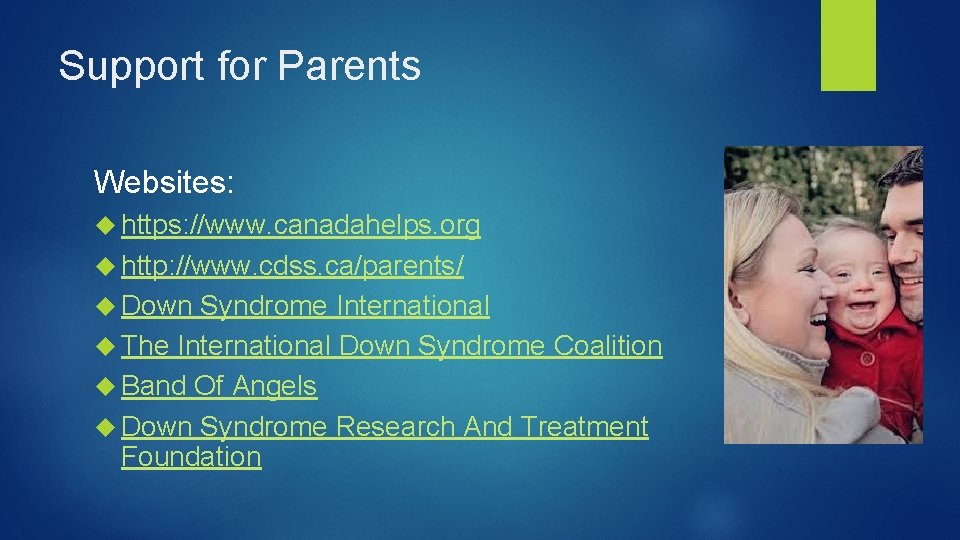
Support for Parents Websites: https: //www. canadahelps. org http: //www. cdss. ca/parents/ Down Syndrome International The International Down Syndrome Coalition Band Of Angels Down Syndrome Research And Treatment Foundation
Parental Support continued: Blogs: Enjoying The Small Things Down Wit Dat Noahs Dad Garden of Eagan Facebook: Ø Circle 21 Ø Down Syndrome Family Network Ø Kids With Down Syndrome Ø Down Syndrome in Arts & Media Books: Ø Bloom: Finding Beauty in the Unexpected Ø. Expecting Adam: A True Story of Birth, Rebirth, and Everyday Magic Ø Down Syndrome Parenting 101: Must -Have Ø The Year My Son and I Were Born Ø Road Map To Holland: How I Found My Way Ø Count Us In: Growing Up with Down Syndrome
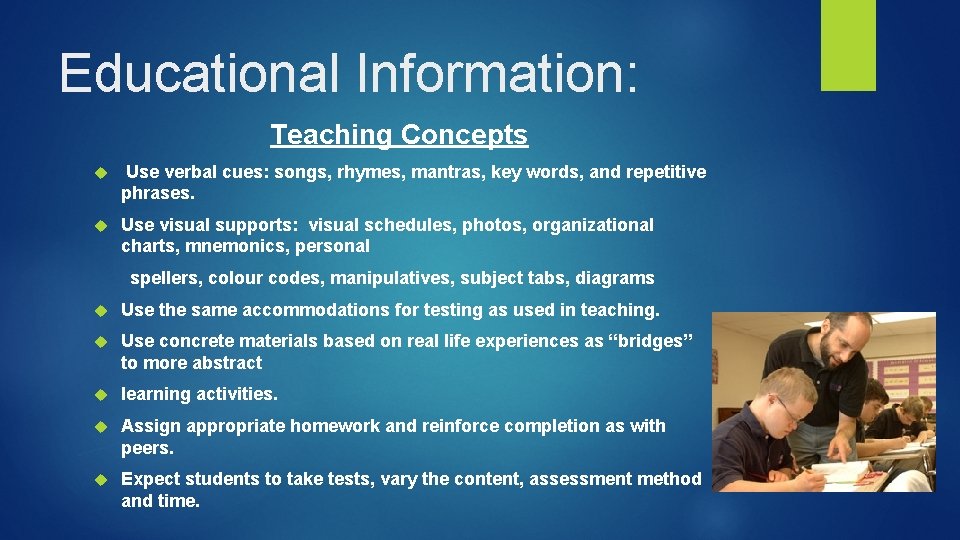
Educational Information: Teaching Concepts Use verbal cues: songs, rhymes, mantras, key words, and repetitive phrases. Use visual supports: visual schedules, photos, organizational charts, mnemonics, personal spellers, colour codes, manipulatives, subject tabs, diagrams Use the same accommodations for testing as used in teaching. Use concrete materials based on real life experiences as “bridges” to more abstract learning activities. Assign appropriate homework and reinforce completion as with peers. Expect students to take tests, vary the content, assessment method and time.
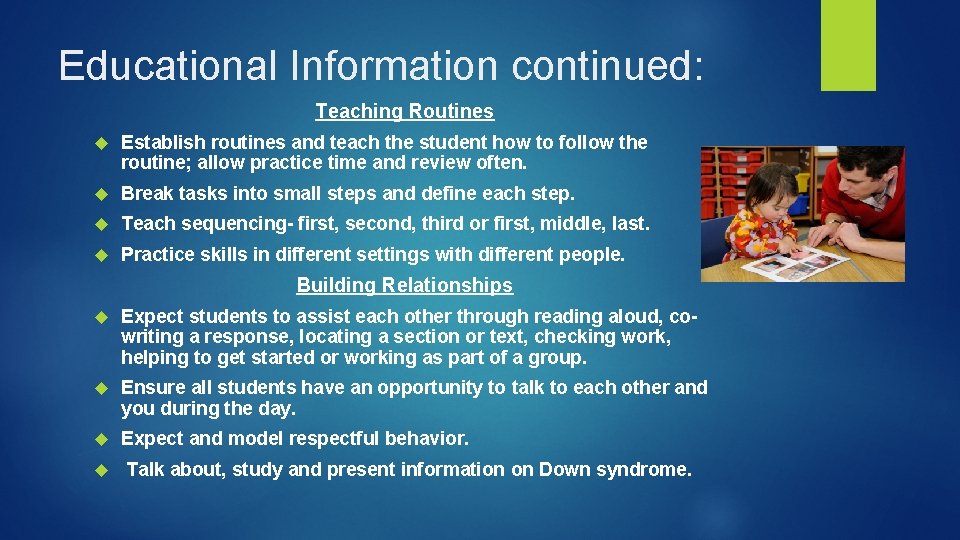
Educational Information continued: Teaching Routines Establish routines and teach the student how to follow the routine; allow practice time and review often. Break tasks into small steps and define each step. Teach sequencing- first, second, third or first, middle, last. Practice skills in different settings with different people. Building Relationships Expect students to assist each other through reading aloud, cowriting a response, locating a section or text, checking work, helping to get started or working as part of a group. Ensure all students have an opportunity to talk to each other and you during the day. Expect and model respectful behavior. Talk about, study and present information on Down syndrome.
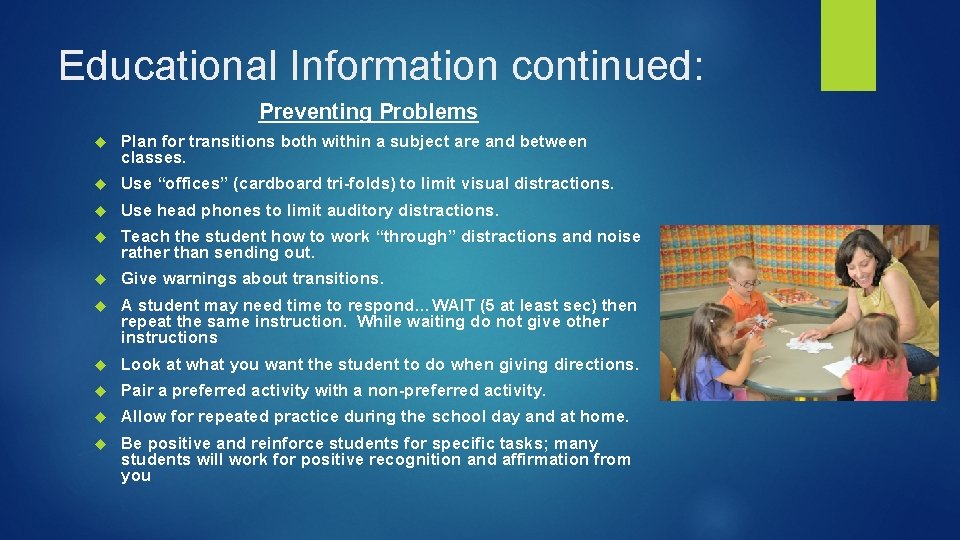
Educational Information continued: Preventing Problems Plan for transitions both within a subject are and between classes. Use “offices” (cardboard tri-folds) to limit visual distractions. Use head phones to limit auditory distractions. Teach the student how to work “through” distractions and noise rather than sending out. Give warnings about transitions. A student may need time to respond…WAIT (5 at least sec) then repeat the same instruction. While waiting do not give other instructions Look at what you want the student to do when giving directions. Pair a preferred activity with a non-preferred activity. Allow for repeated practice during the school day and at home. Be positive and reinforce students for specific tasks; many students will work for positive recognition and affirmation from you
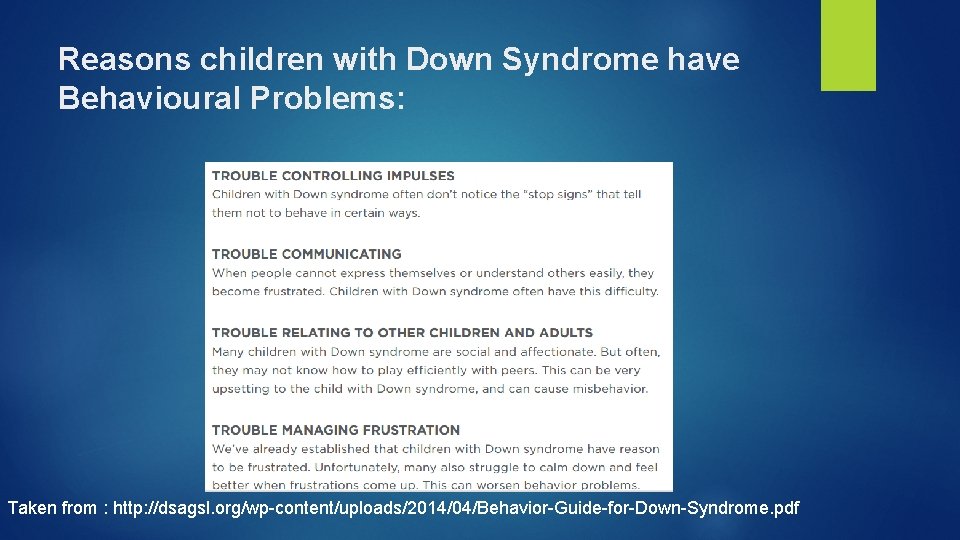
Reasons children with Down Syndrome have Behavioural Problems: Taken from : http: //dsagsl. org/wp-content/uploads/2014/04/Behavior-Guide-for-Down-Syndrome. pdf
Educational Websites: www. cdss, ca www. sped. org/ www. inclusion. com www. bced. gov. bc. ca/specialed/sid/ www. seriweb. com www. downsed. org www. bvcroarc. org/learningweb http: //www. altonweb. com/cs/downsyndrome/ www. kidstogether. org www. disabilitysolutions. com www. Inclusion. Daily. com www. knowyourrights. ca www. daviesandjohnson. com www. prepprog. org www. dsrf. org www. downsasa. asn. au
Online Resources Ø THE DOWN SYNDROME ASSOCIATION OF ONTARIO HTTP: //WWW. DSAO. CA/ Ø CANADIAN DOWN SYNDROME SOCIETY HTTP: //WWW. CDSS. CA/INDEX. PHP? OPTION=COM_CONTENT&TASK=BL OGCATEGORY&ID=13&ITEMID=52 Ø DOWN SYNDROME RESEARCH FOUNDATION HTTP: //WWW. DSRF. ORG/ Ø Canadian Down Syndrome Society - Facebook https: //www. facebook. com/cdndownsyndrome/
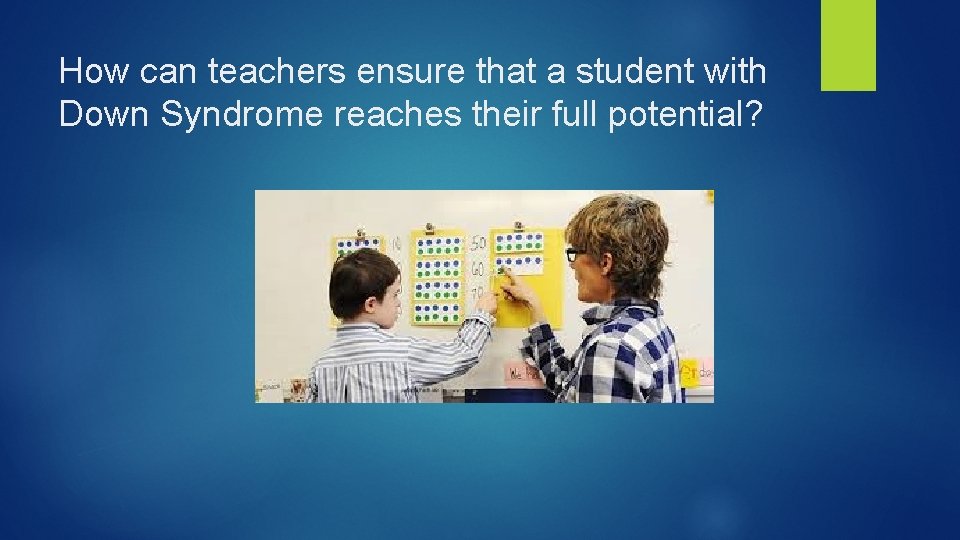
How can teachers ensure that a student with Down Syndrome reaches their full potential?
Cited Sources: http: //www. cdss. ca/index. php? option=com_content&task=blogcategory&id =13&Itemid=52 http: //www. ndss. org/Resources/Health-Care/Associated-Conditions/ http: //publications. gc. ca/collections/collection_2014/aspc-phac/HP 35 -402013 -eng. pdf http: //dsagsl. org/wp-content/uploads/2014/04/Behavior-Guide-for-Down. Syndrome. pdf