
Down syndrome DS Trisomy 21 Not inherited Cell

- Slides: 10
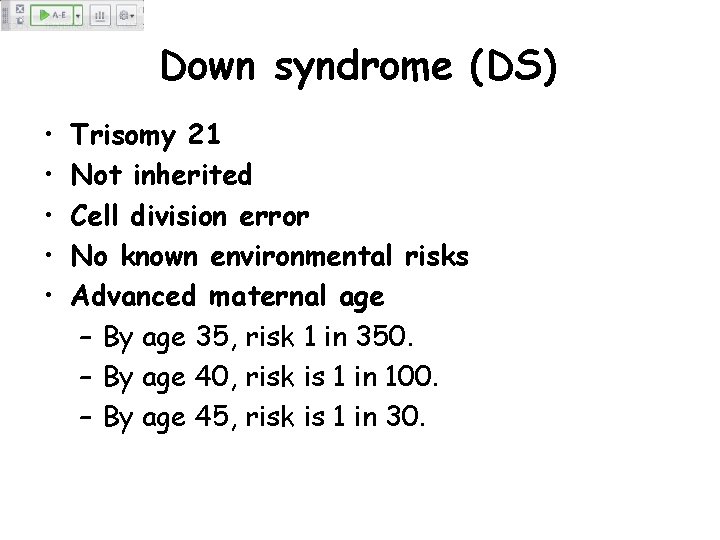
Down syndrome (DS) • • • Trisomy 21 Not inherited Cell division error No known environmental risks Advanced maternal age – By age 35, risk 1 in 350. – By age 40, risk is 1 in 100. – By age 45, risk is 1 in 30.
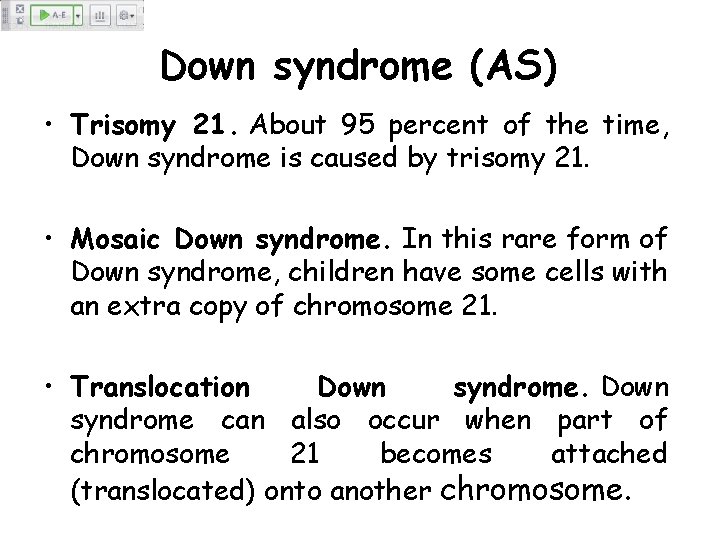
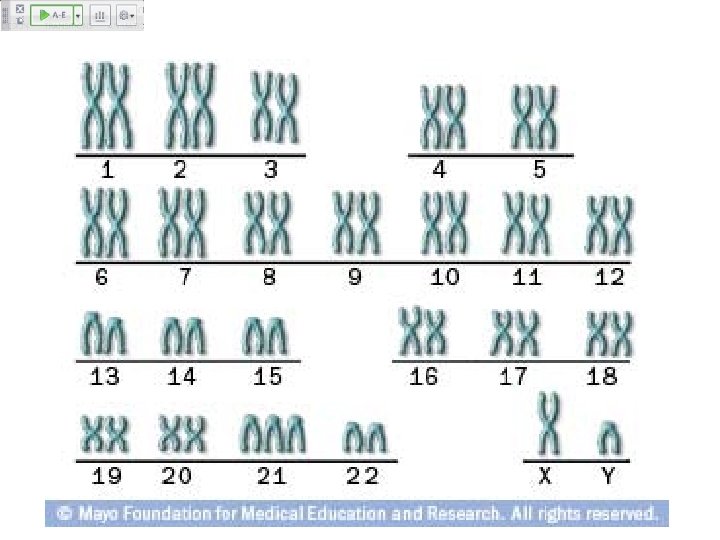
Down syndrome (AS) • Trisomy 21. About 95 percent of the time, Down syndrome is caused by trisomy 21. • Mosaic Down syndrome. In this rare form of Down syndrome, children have some cells with an extra copy of chromosome 21. • Translocation Down syndrome can also occur when part of chromosome 21 becomes attached (translocated) onto another chromosome.
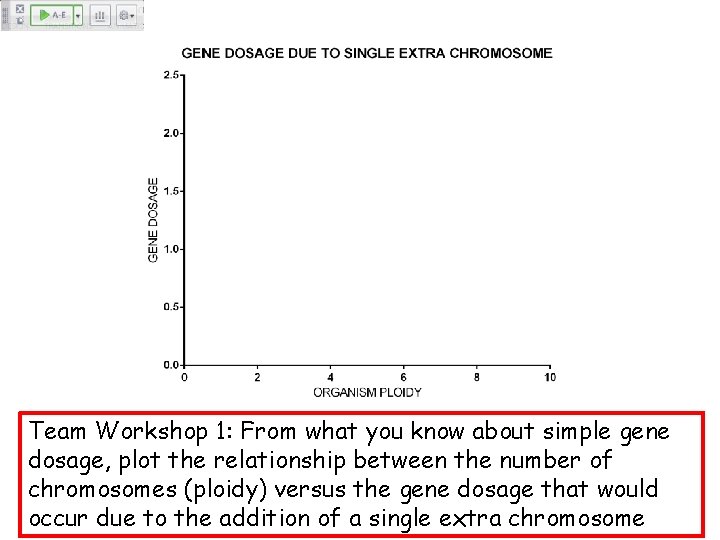
Team Workshop 1: From what you know about simple gene dosage, plot the relationship between the number of chromosomes (ploidy) versus the gene dosage that would occur due to the addition of a single extra chromosome
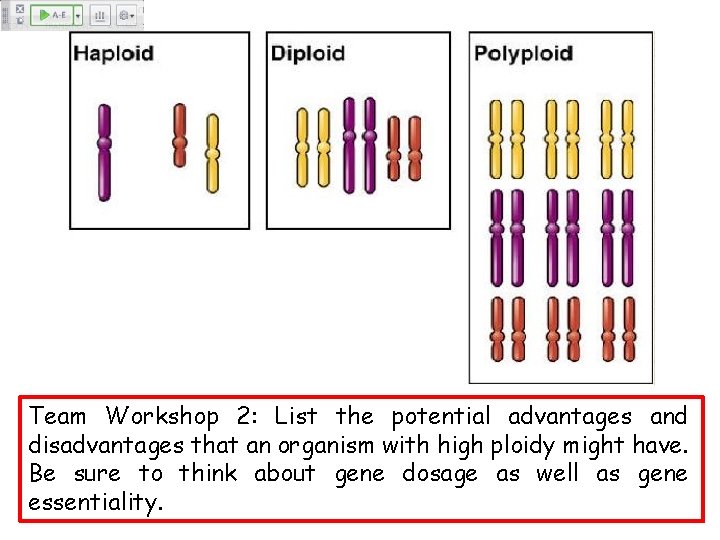
Team Workshop 2: List the potential advantages and disadvantages that an organism with high ploidy might have. Be sure to think about gene dosage as well as gene essentiality.
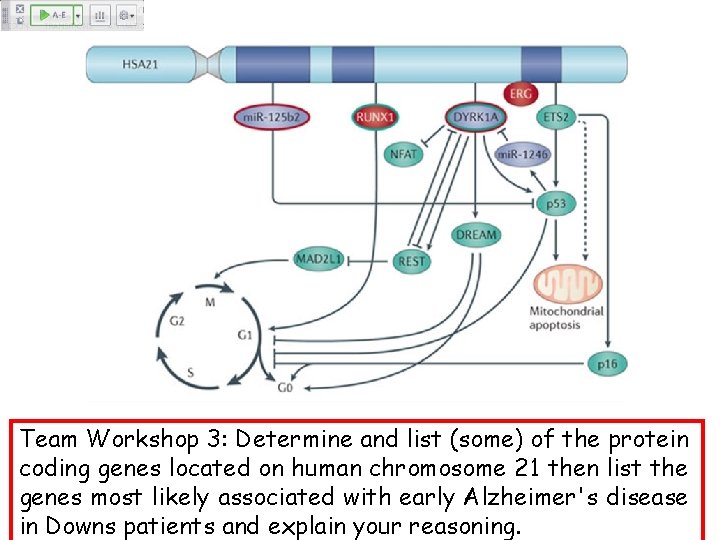
Team Workshop 3: Determine and list (some) of the protein coding genes located on human chromosome 21 then list the genes most likely associated with early Alzheimer's disease in Downs patients and explain your reasoning.
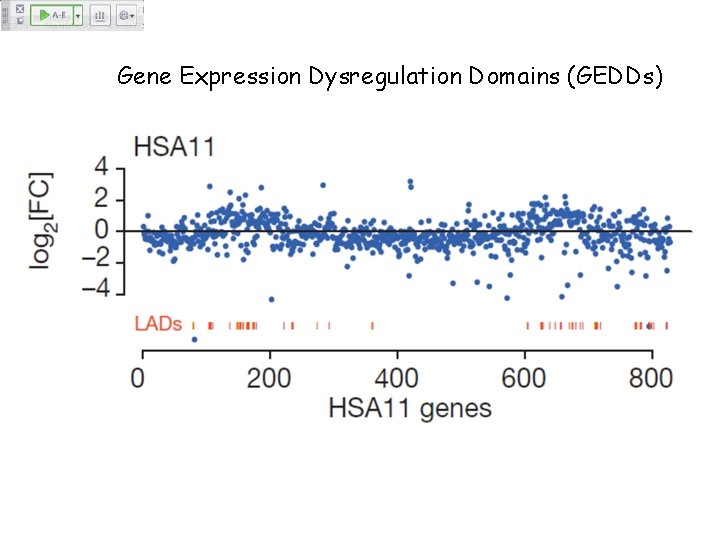
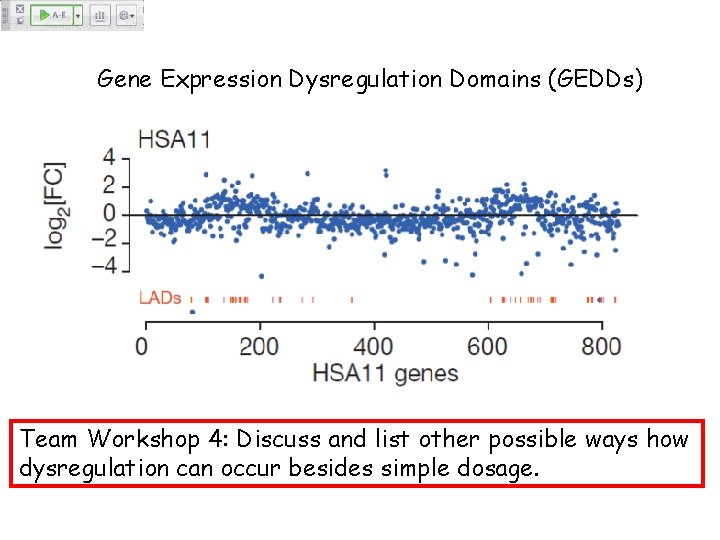
Gene Expression Dysregulation Domains (GEDDs)
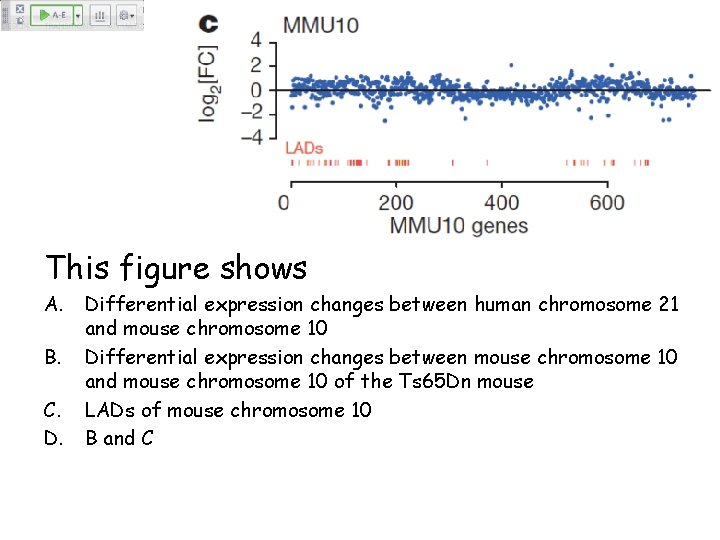
Thisfigureshows This A. Differentialexpressionchangesbetweenhumanchromosome 21 21 A. andmousechromosome 10 10 and Differentialexpressionchangesbetweenmousechromosome 10 10 B. B. Differential andmousechromosome 10 10 of ofthe the. Ts 65 Dnmouse and LADsof ofmousechromosome 10 10 C. C. LADs D. BBand and. CC D.
Gene Expression Dysregulation Domains (GEDDs) Team Workshop 4: Discuss and list other possible ways how dysregulation can occur besides simple dosage.
Remember • Before 12 PM of the next class day: – go to b. socrative. com/student/login and complete the quiz