
Down Syndrome By Teja Mallela Down Syndrome An
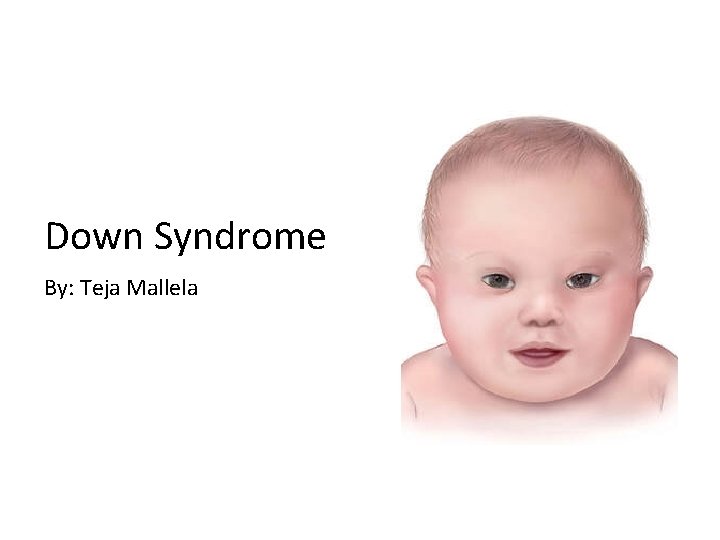
Down Syndrome By: Teja Mallela
Down Syndrome: An extra little chromosome Teja Mallela
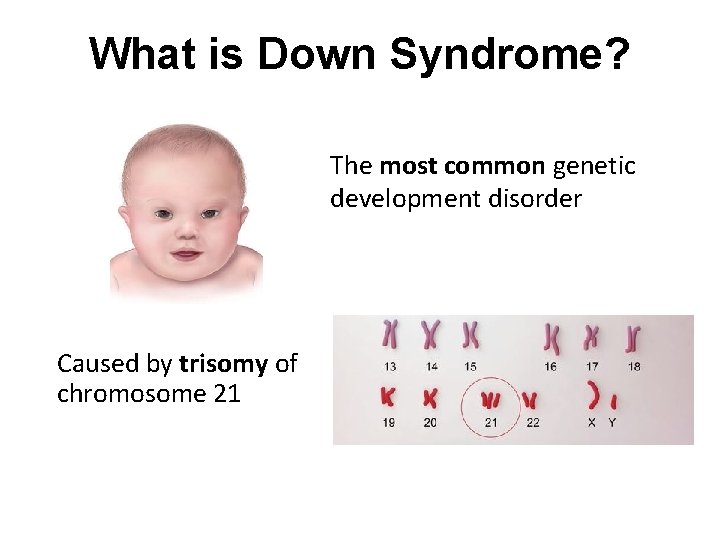
What is Down Syndrome? The most common genetic development disorder Caused by trisomy of chromosome 21
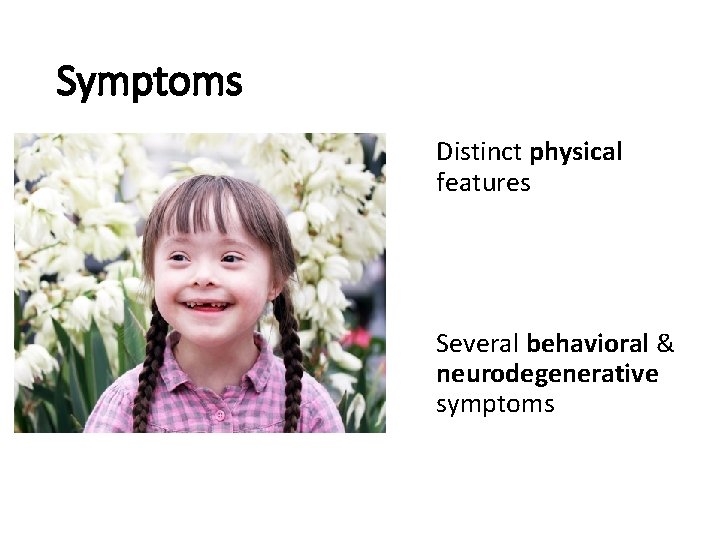
Symptoms Distinct physical features Several behavioral & neurodegenerative symptoms
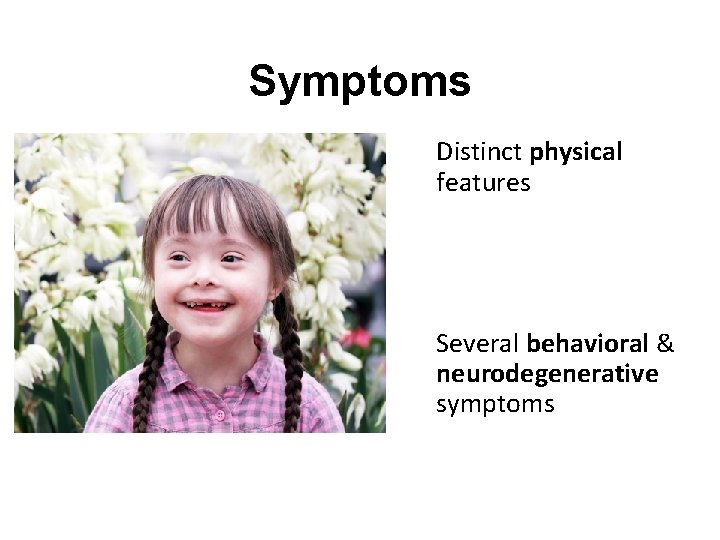
Symptoms Distinct physical features Several behavioral & neurodegenerative symptoms
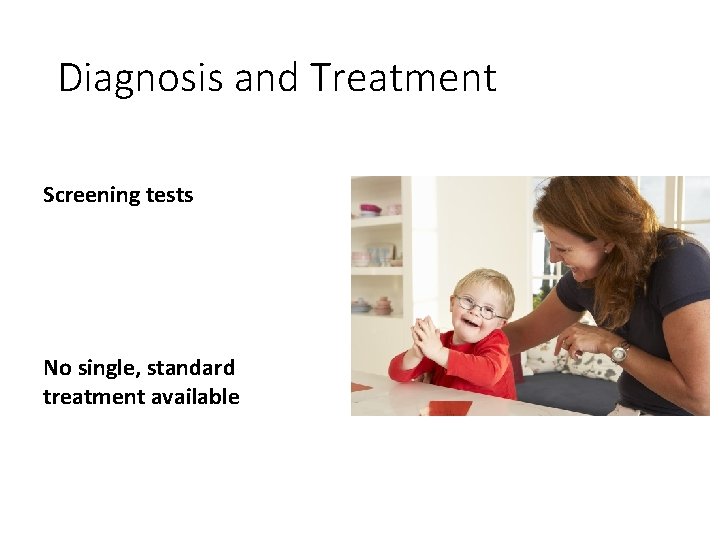
Diagnosis and Treatment Screening tests No single, standard treatment available
DYRK 1 A Gene A candidate gene identified to play a role in cognitive impairment Dual-specificity tyrosine-(Y)-phosphorylationregulated kinase 1 A protein DYRK 1 A plays a role in reduced neurogenesis and premature neuronal differentiation of neuroprogenitor cells
DYRK 1 A Gene Ontology • Cellular Component • Molecular Function • Biological Process
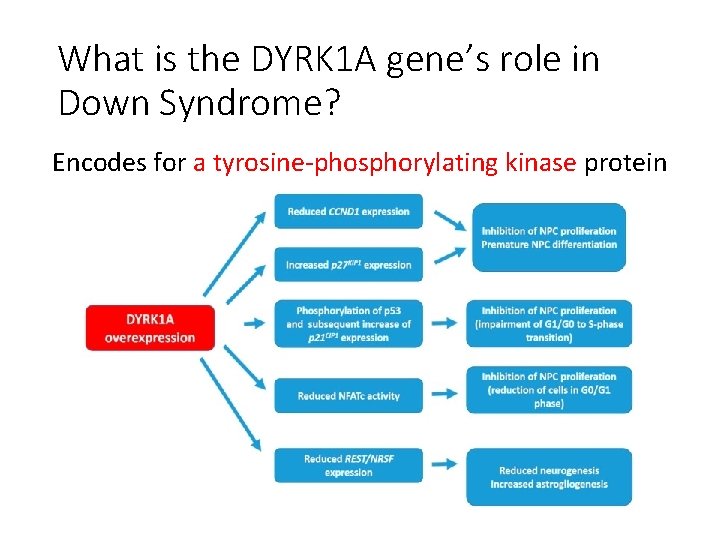
What is the DYRK 1 A gene’s role in Down Syndrome? Encodes for a tyrosine-phosphorylating kinase protein
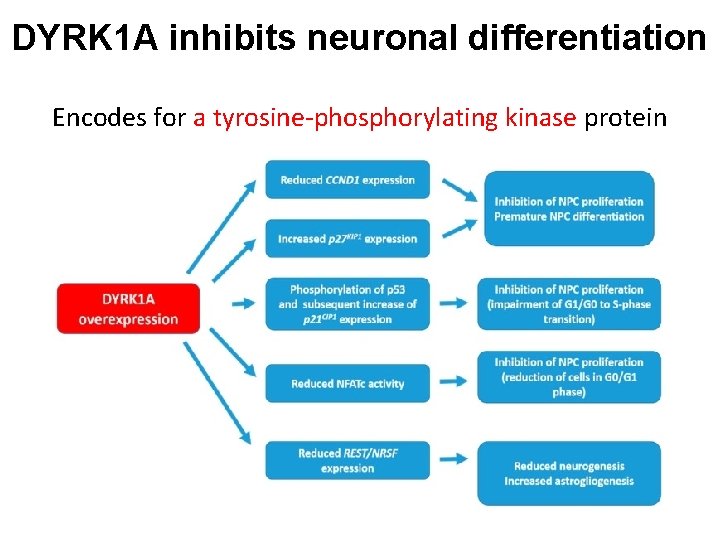
DYRK 1 A inhibits neuronal differentiation Encodes for a tyrosine-phosphorylating kinase protein
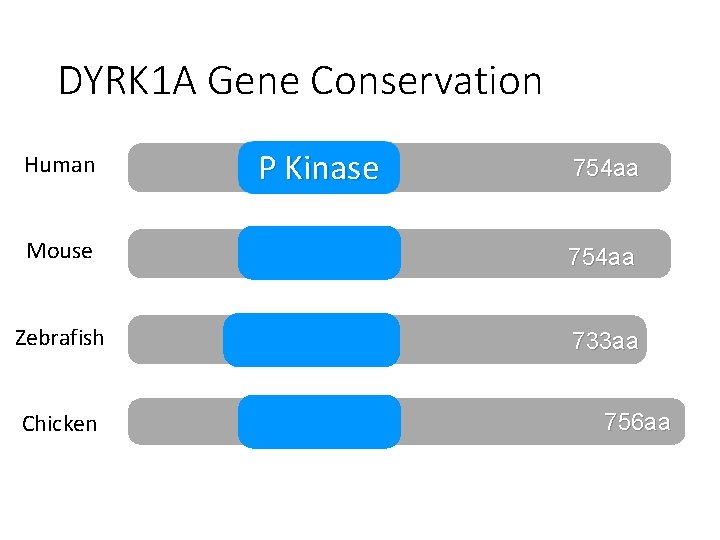
DYRK 1 A Gene Conservation Human P Kinase 754 aa Mouse 754 aa Zebrafish 733 aa Chicken 756 aa
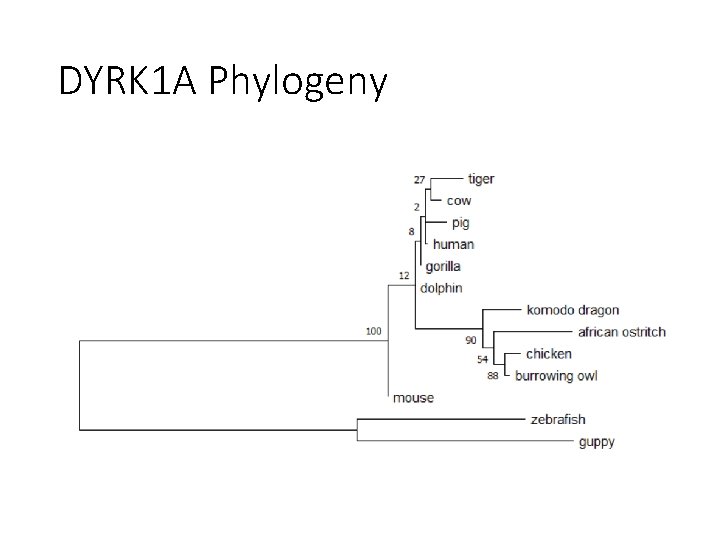
DYRK 1 A Phylogeny
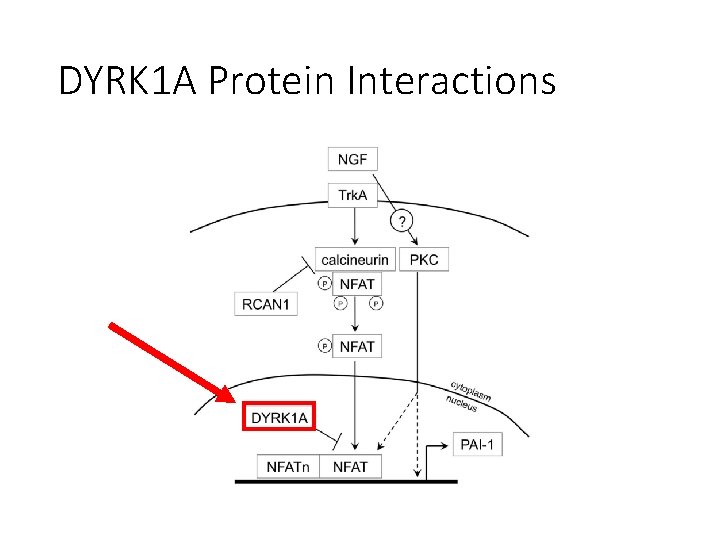
DYRK 1 A Protein Interactions
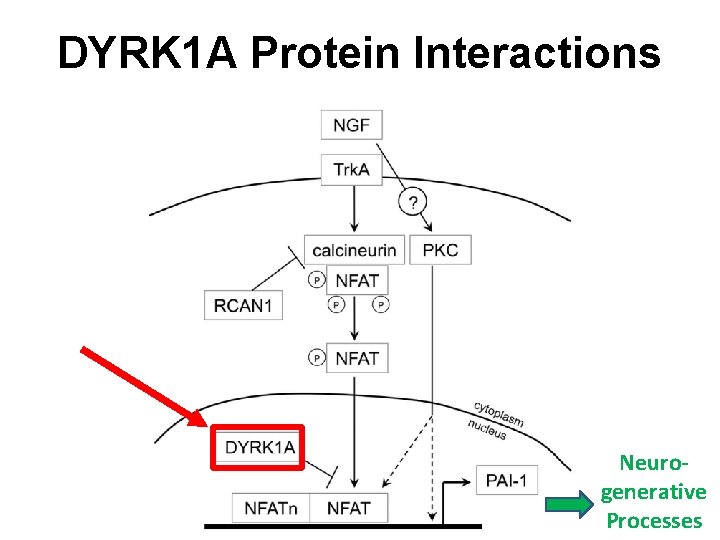
DYRK 1 A Protein Interactions Neurogenerative Processes
Knowledge Gap DYRK 1 A protein regulates several neurogenerative processes How exactly does upregulation of DYRK 1 A cause premature neuronal differentiation? The mechanism is not fully understood.
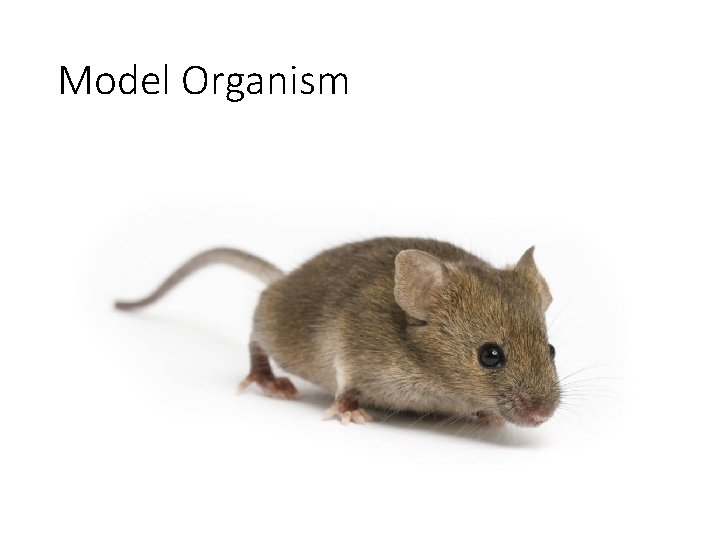
Model Organism
Hypothesis Overexpression is not corrected in trisomy 21. DYRK 1 A’s upregulated kinase activity accelerates cell division in NPCs, causing neurons to divide prematurely.
Aim 1: Identify sequences on DYRK 1 A that are critical for its role in neuronal differentiation Approach: Conduct a protein BLAST to determine homologs of DYRK 1 A. Align the homologs using Clustal. OMEGA. Use CRISPR/Cas 9 to remove highly conserved regions of DYRK 1 A. Then, observe the amount of premature NPCs in mice models with and without these conserved regions. Hypothesis: Specific regions of DYRK 1 A are linked to cell cycle regulation, the upregulation of these regions cause premature cell division.
Aim 2: Identify proteins that are differently-expressed in the presence and absence of DYRK 1 A Approach: RNA-sequencing will be utilized to see which genes are differently-expressed when DYRK 1 A is present and when absent. Hypothesis: Upregulated DYRK 1 A may cause upregulated function of certain genes. These genes may play a role in cell division or proliferation.

Aim 3:
Future Directions These studies could identify new gene targets for Down syndrome gene therapy Further studies to determine if these new gene could be more useful to target instead of dyrk 1 a
References 1. Feki, A. , & Hibaoui, Y. (2018). DYRK 1 A Protein, A Promising Therapeutic Target to Improve Cognitive Deficits in Down Syndrome. Brain sciences, 8(10), 187. Retrieved from: https: //www. ncbi. nlm. nih. gov/pmc/articles/PMC 6210095/ 2. Nguyen, Thu Lan et al. “Correction of cognitive deficits in mouse models of Down syndrome by a pharmacological inhibitor of DYRK 1 A. ” Disease models & mechanisms vol. 11, 9 dmm 035634. 27 Sep. 2018. Retrieved from: https: //www. ncbi. nlm. nih. gov/pmc/articles/PMC 5125364/? report=classic 3. Liu, Y. , Lin, Z. , Liu, M. , Wang, H. , & Sun, H. (2017). Overexpression of DYRK 1 A, a Down Syndrome Candidate gene, Impairs Primordial Germ Cells Maintenance and Migration in zebrafish. Scientific reports, 7(1), 15313. Retrieved from: https: //www. ncbi. nlm. nih. gov/pmc/articles/PMC 5681638/
- Slides: 22