
DOWN SYNDROME BY NATHAN CULLO About Down Syndrome
DOWN SYNDROME BY: NATHAN CULLO

About -Down Syndrome is a genetic disorder that causes a lifelong Intellectual Disability, developmental delays and other problems -Down Syndrome varies in severity, so developmental problems range from moderate to serious -Down Syndrome is the most common genetic cause of learning disabilities in children -Increased understanding of Down Syndrome and early interventions make a big difference in the lives of both children and adults with Down syndrome
Causes -Human cells normally contain 23 pairs of chromosomes. One chromosome in each pair comes from the father, the other from the mother -Down Syndrome results when one of three types of abnormal cell division involving chromosome 21 occurs -All three cell division abnormalities result in extra genetic material from chromosome 21, which is responsible for the characteristic features and developmental problems of Down Syndrome -The three genetic variations that can cause Down Syndrome include: Trisomy 21 Mosaic Down syndrome Translocation Down syndrome
Risk Factors Some parents have a greater risk of having a baby with Down syndrome Risk factors include: Advancing maternal age. A woman's chances of giving birth to a child with Down Syndrome increase with age. By age 35, a woman's risk of conceiving a child with Down Syndrome is 1 in 400. By age 45, the risk is 1 in 35. However, most children with Down Syndrome are actually born to women under age 35 because younger women have far more babies
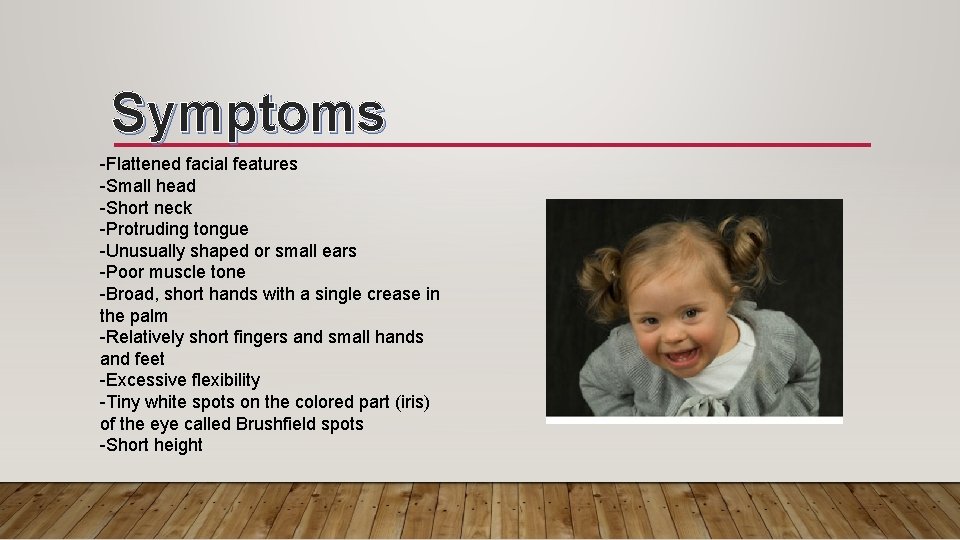
Symptoms -Flattened facial features -Small head -Short neck -Protruding tongue -Unusually shaped or small ears -Poor muscle tone -Broad, short hands with a single crease in the palm -Relatively short fingers and small hands and feet -Excessive flexibility -Tiny white spots on the colored part (iris) of the eye called Brushfield spots -Short height
Inherited? -Most of the time, Down Syndrome isn't inherited. It's caused by a mistake in cell division during the development of the egg, sperm or embryo -Translocation Down Syndrome is the only form of the disorder that can be passed from parent to child. However, only about 4% of children with Down Syndrome have translocation. And only about half of these children inherited it from one of their parents
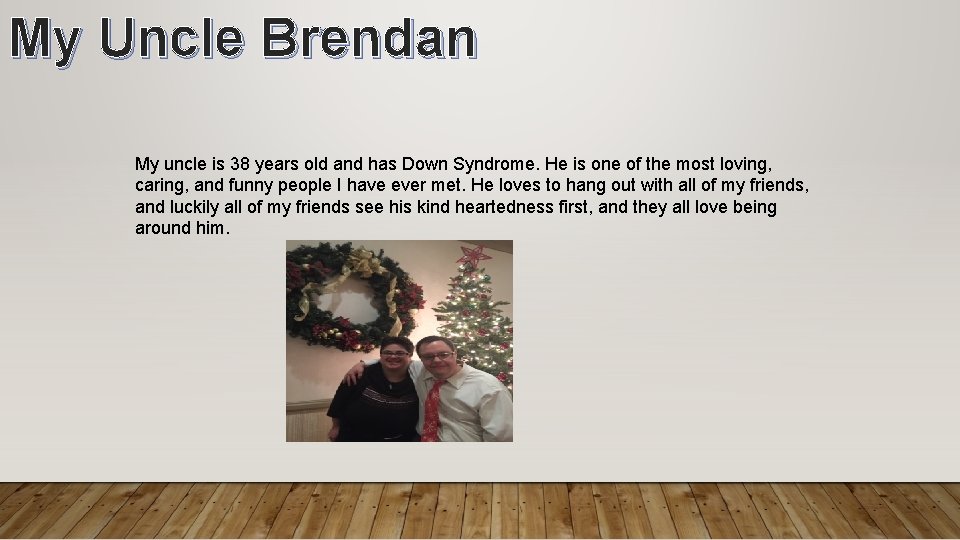
My Uncle Brendan My uncle is 38 years old and has Down Syndrome. He is one of the most loving, caring, and funny people I have ever met. He loves to hang out with all of my friends, and luckily all of my friends see his kind heartedness first, and they all love being around him.
Citations “National Down Syndrome Society. ” National Down Syndrome Society, www. ndss. org/. Accessed 9 Apr. 2017. “Down Syndrome. ” Mayo Clinic, www. mayoclinic. org/diseasesconditions/downsyndrome/basics/definition/con-20020948. Accessed 9 Apr. 2017.
- Slides: 8