
Double thoracic scoliosisLenke type 2 Pathologies Deformity Subgroup
Double thoracic scoliosis—Lenke type 2 • Pathologies: Deformity • Subgroup: Adult idiopathic scoliosis Copyright © by AOSpine International. Check hazards and legal restrictions on www. aospine. org/disclaimers. aspx
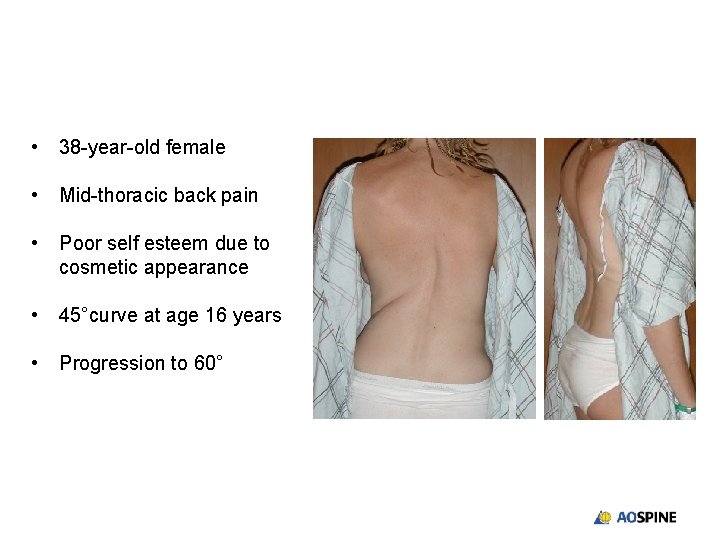
• 38 -year-old female • Mid-thoracic back pain • Poor self esteem due to cosmetic appearance • 45°curve at age 16 years • Progression to 60°
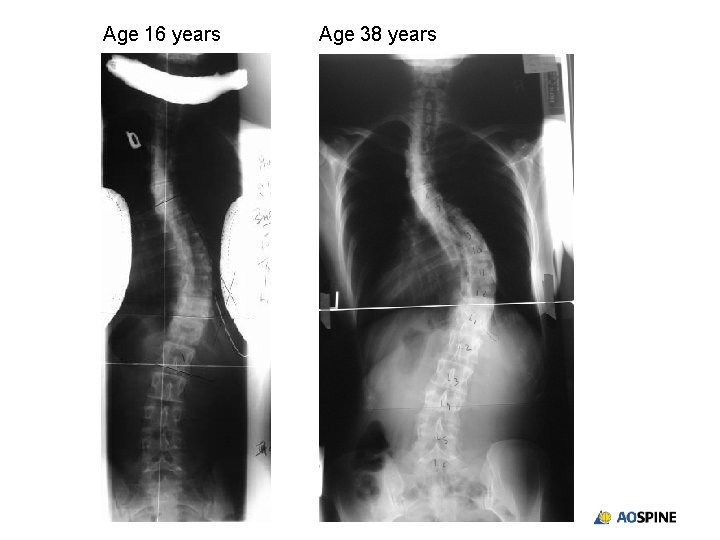
Age 16 years Age 38 years
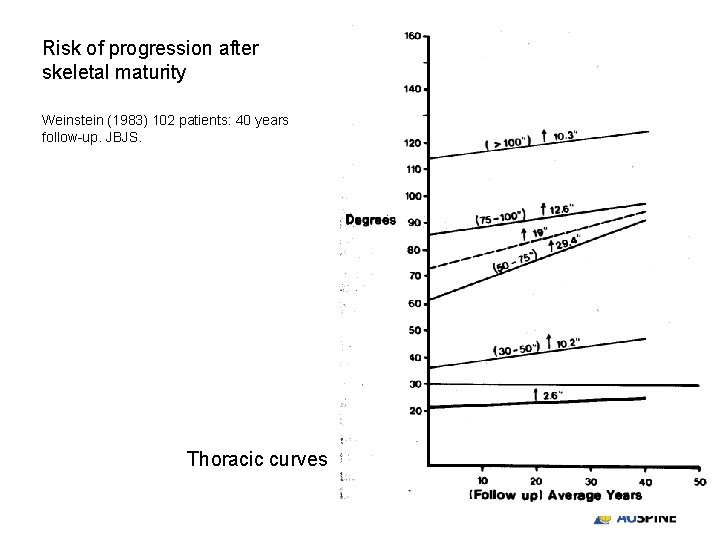
Risk of progression after skeletal maturity Weinstein (1983) 102 patients: 40 years follow-up. JBJS. Thoracic curves
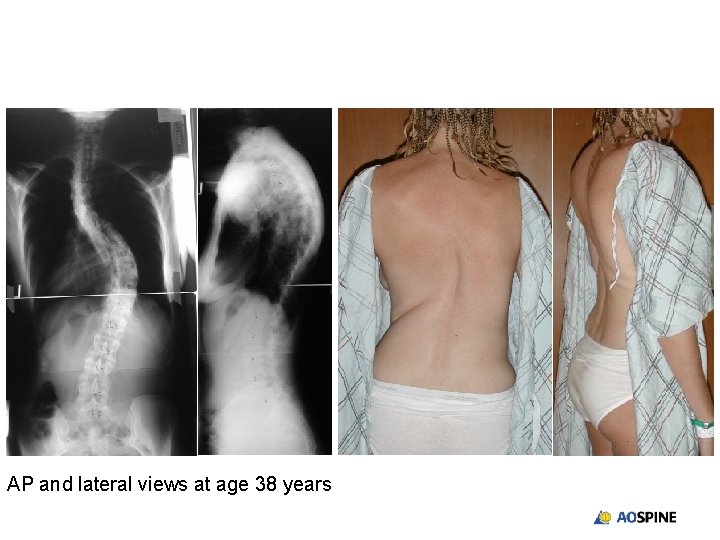
AP and lateral views at age 38 years
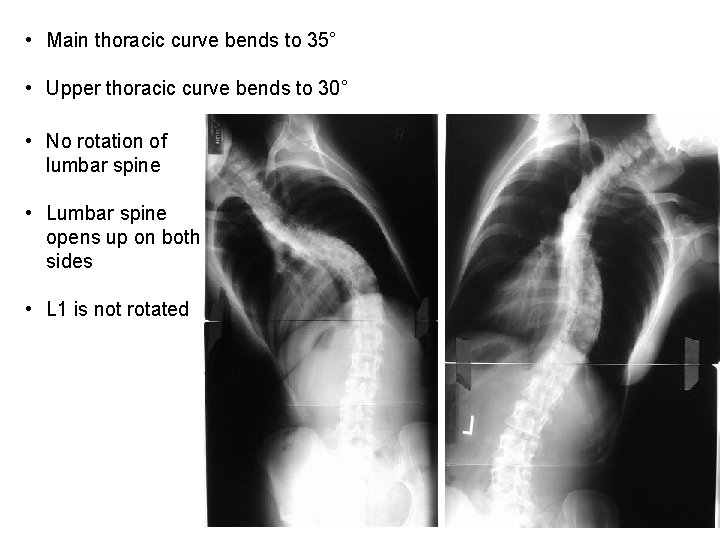
• Main thoracic curve bends to 35° • Upper thoracic curve bends to 30° • No rotation of lumbar spine • Lumbar spine opens up on both sides • L 1 is not rotated
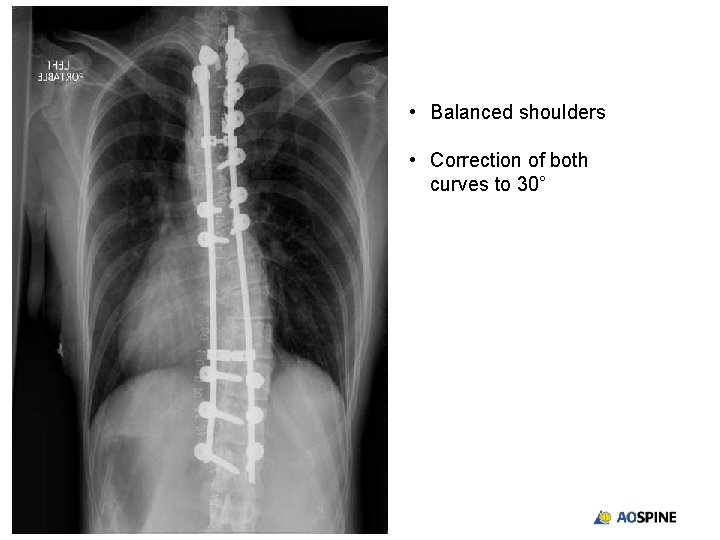
• Balanced shoulders • Correction of both curves to 30°
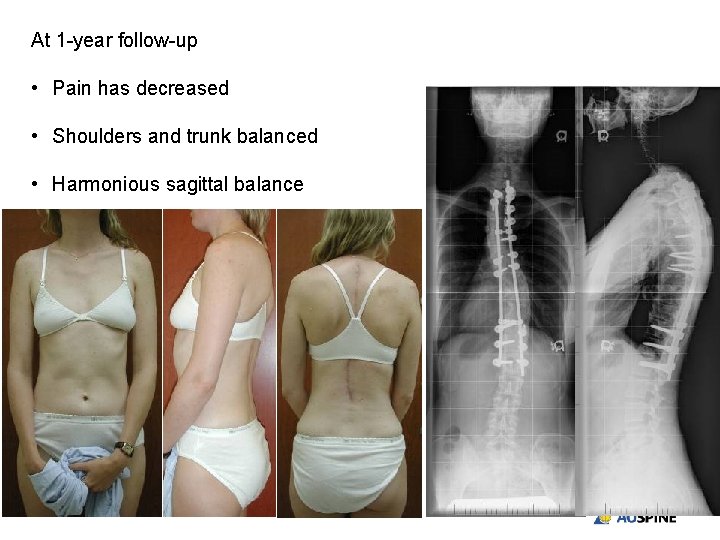
At 1 -year follow-up • Pain has decreased • Shoulders and trunk balanced • Harmonious sagittal balance
Summary • Elevation of left shoulder or even balanced shoulders with a right thoracic curve are hallmarks of a double thoracic curve • Include proximal and/or distal junctional kyphosis in instrumentation • Focus correction on the upper thoracic curve in a double thoracic curve; not on the main thoracic curve, otherwise uneven shoulders may result • An all-pedicle-screw construct of both curves would have likely ended in a markedly left shoulder elevation • The distal fusion must be in a stable vertebra identified on the standing posteroanterior and side-bending x-rays
Excellence in Spine
- Slides: 10