
Double Life AMPHIBIANS Adaptations to Meet Challenges of
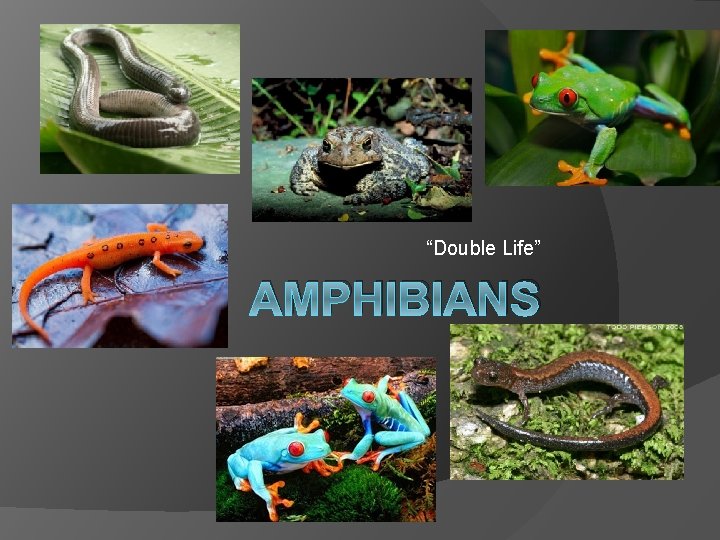
“Double Life” AMPHIBIANS
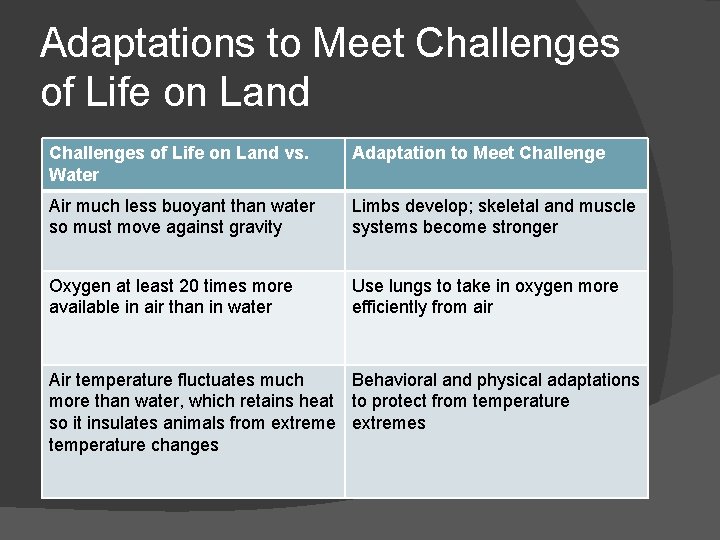
Adaptations to Meet Challenges of Life on Land vs. Water Adaptation to Meet Challenge Air much less buoyant than water so must move against gravity Limbs develop; skeletal and muscle systems become stronger Oxygen at least 20 times more available in air than in water Use lungs to take in oxygen more efficiently from air Air temperature fluctuates much Behavioral and physical adaptations more than water, which retains heat to protect from temperature so it insulates animals from extremes temperature changes
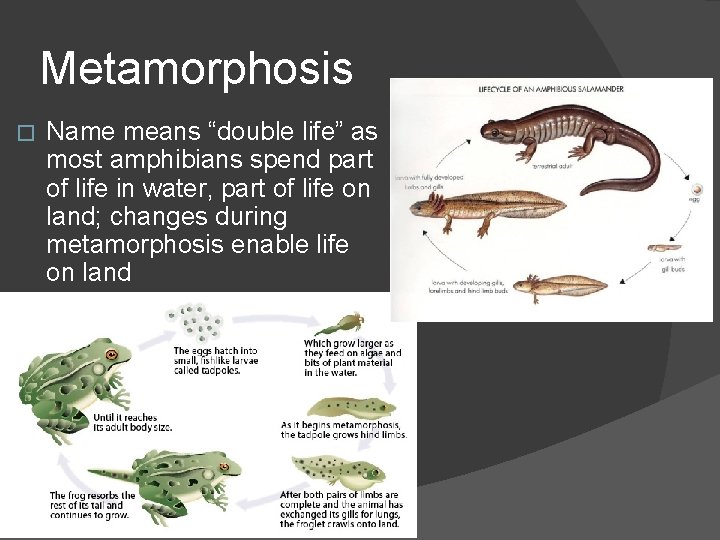
Metamorphosis � Name means “double life” as most amphibians spend part of life in water, part of life on land; changes during metamorphosis enable life on land

Basic Amphibian Characteristics � Most have 4 legs - tetrapods � Moist skin without scales � Gas exchange via skin and lungs � Double-loop circulatory system � Aquatic larvae � Ectothermic
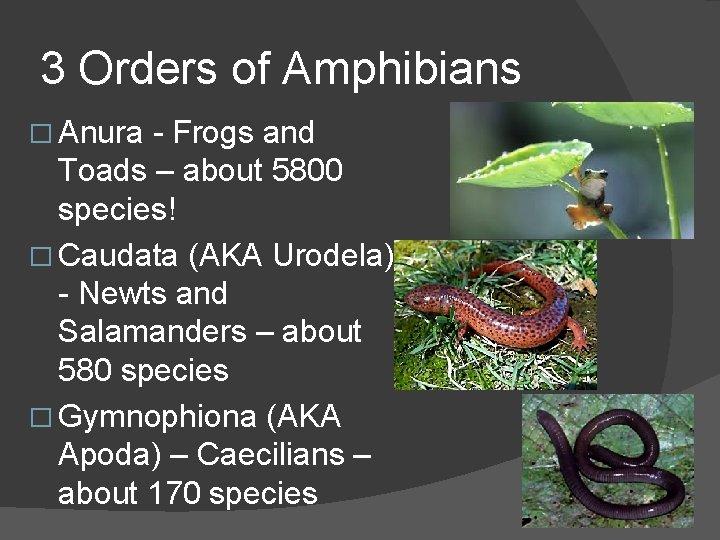
3 Orders of Amphibians � Anura - Frogs and Toads – about 5800 species! � Caudata (AKA Urodela) - Newts and Salamanders – about 580 species � Gymnophiona (AKA Apoda) – Caecilians – about 170 species
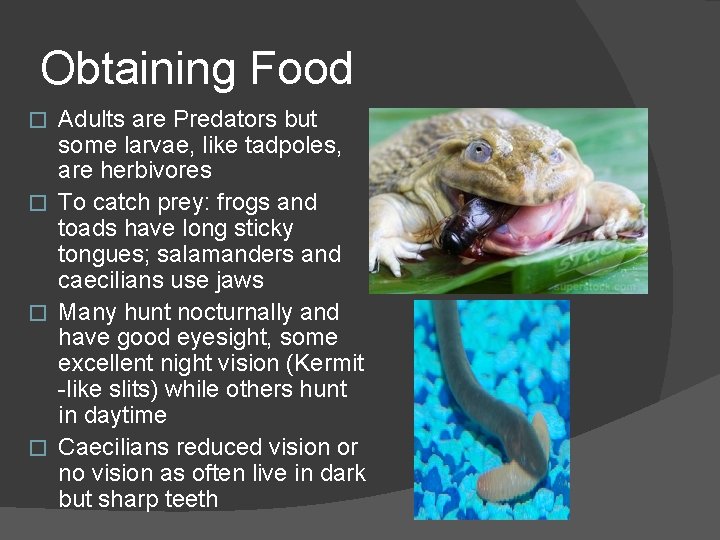
Obtaining Food Adults are Predators but some larvae, like tadpoles, are herbivores � To catch prey: frogs and toads have long sticky tongues; salamanders and caecilians use jaws � Many hunt nocturnally and have good eyesight, some excellent night vision (Kermit -like slits) while others hunt in daytime � Caecilians reduced vision or no vision as often live in dark but sharp teeth �
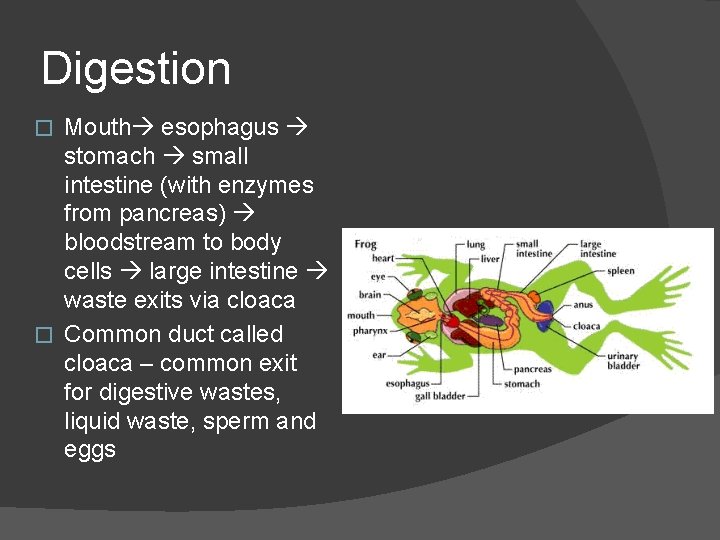
Digestion Mouth esophagus stomach small intestine (with enzymes from pancreas) bloodstream to body cells large intestine waste exits via cloaca � Common duct called cloaca – common exit for digestive wastes, liquid waste, sperm and eggs �
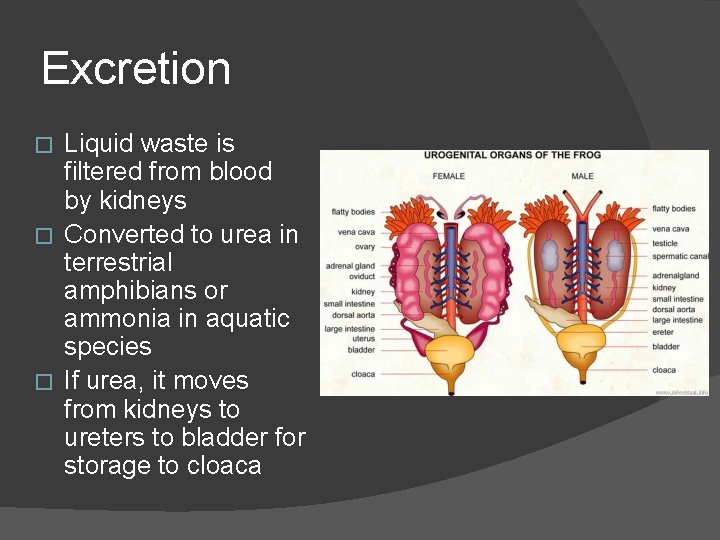
Excretion Liquid waste is filtered from blood by kidneys � Converted to urea in terrestrial amphibians or ammonia in aquatic species � If urea, it moves from kidneys to ureters to bladder for storage to cloaca �
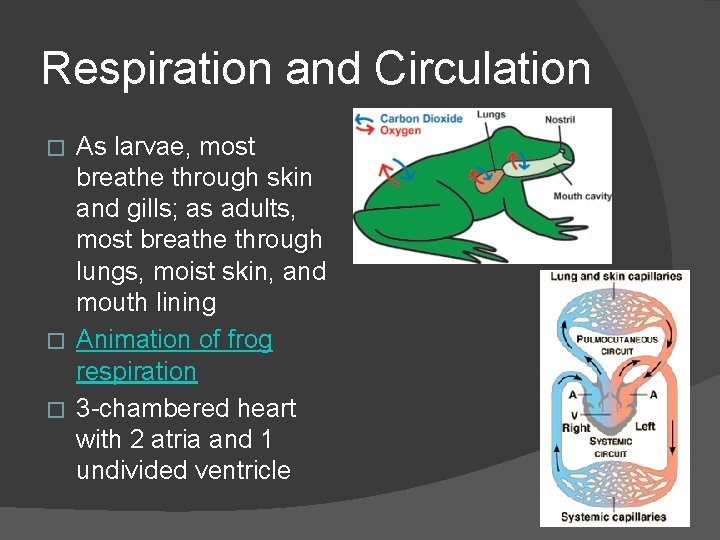
Respiration and Circulation As larvae, most breathe through skin and gills; as adults, most breathe through lungs, moist skin, and mouth lining � Animation of frog respiration � 3 -chambered heart with 2 atria and 1 undivided ventricle �
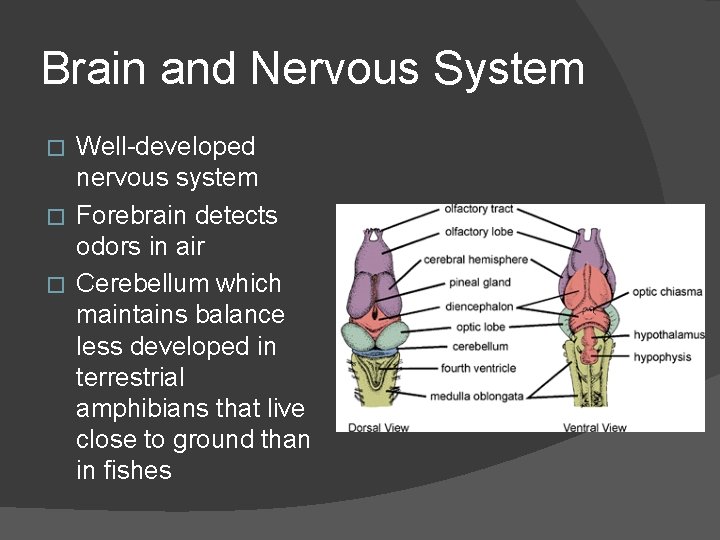
Brain and Nervous System Well-developed nervous system � Forebrain detects odors in air � Cerebellum which maintains balance less developed in terrestrial amphibians that live close to ground than in fishes �
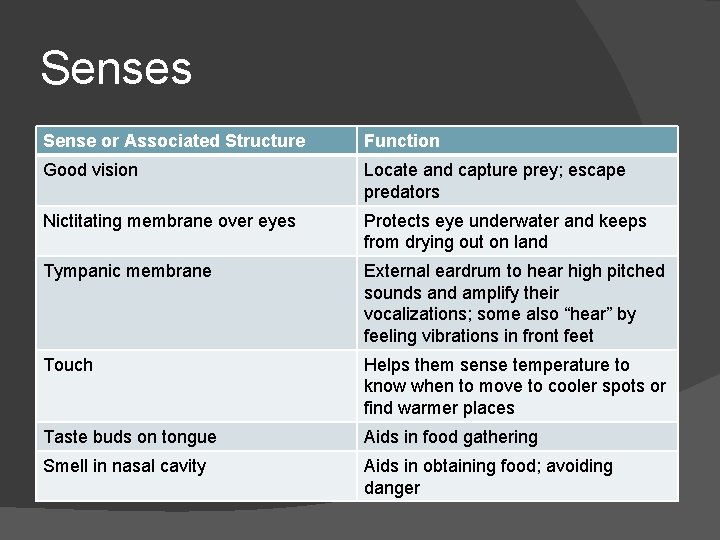
Senses Sense or Associated Structure Function Good vision Locate and capture prey; escape predators Nictitating membrane over eyes Protects eye underwater and keeps from drying out on land Tympanic membrane External eardrum to hear high pitched sounds and amplify their vocalizations; some also “hear” by feeling vibrations in front feet Touch Helps them sense temperature to know when to move to cooler spots or find warmer places Taste buds on tongue Aids in food gathering Smell in nasal cavity Aids in obtaining food; avoiding danger
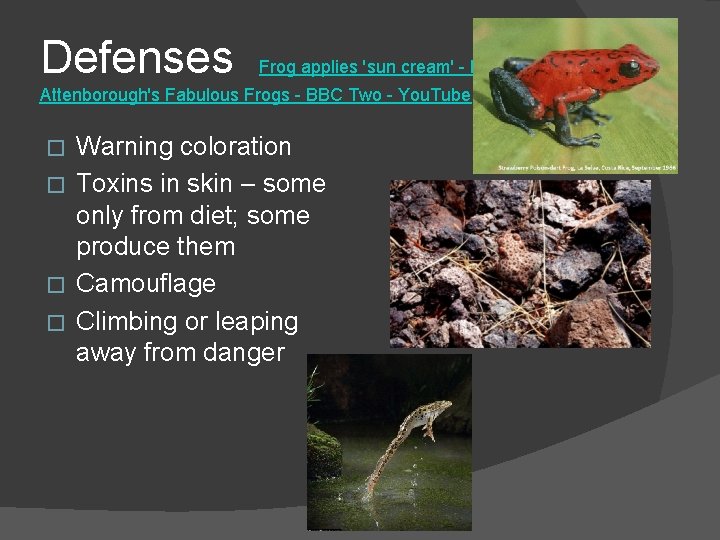
Defenses Frog applies 'sun cream' - Natural World: Attenborough's Fabulous Frogs - BBC Two - You. Tube Warning coloration � Toxins in skin – some only from diet; some produce them � Camouflage � Climbing or leaping away from danger �
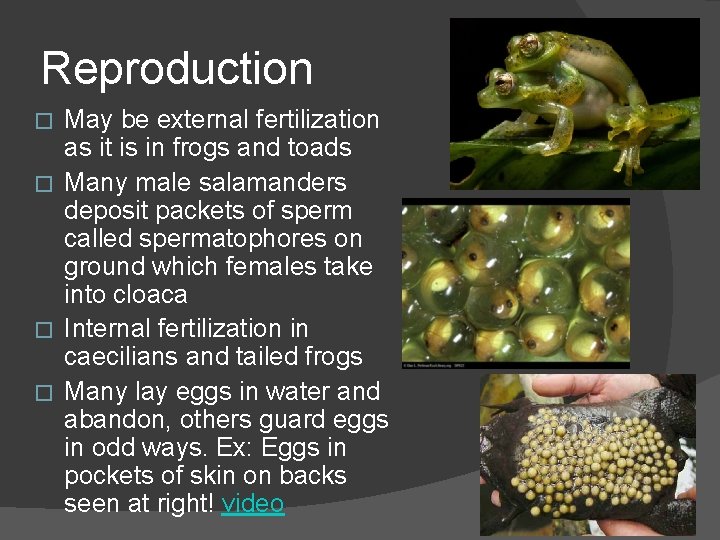
Reproduction May be external fertilization as it is in frogs and toads � Many male salamanders deposit packets of sperm called spermatophores on ground which females take into cloaca � Internal fertilization in caecilians and tailed frogs � Many lay eggs in water and abandon, others guard eggs in odd ways. Ex: Eggs in pockets of skin on backs seen at right! video �
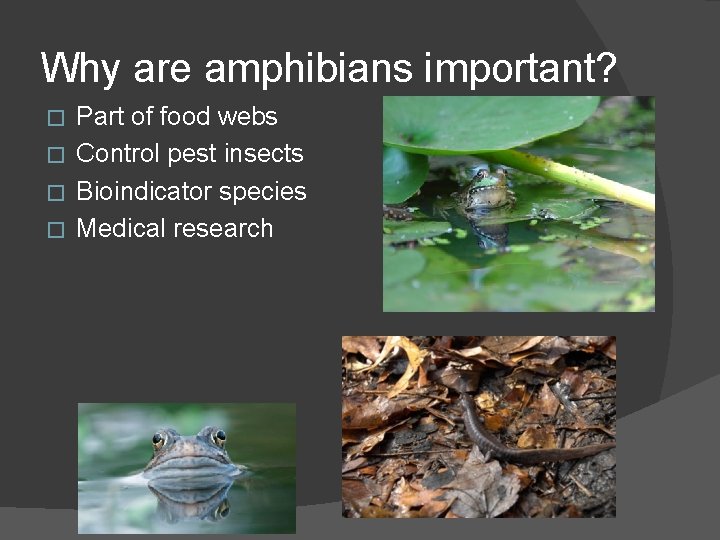
Why are amphibians important? Part of food webs � Control pest insects � Bioindicator species � Medical research �
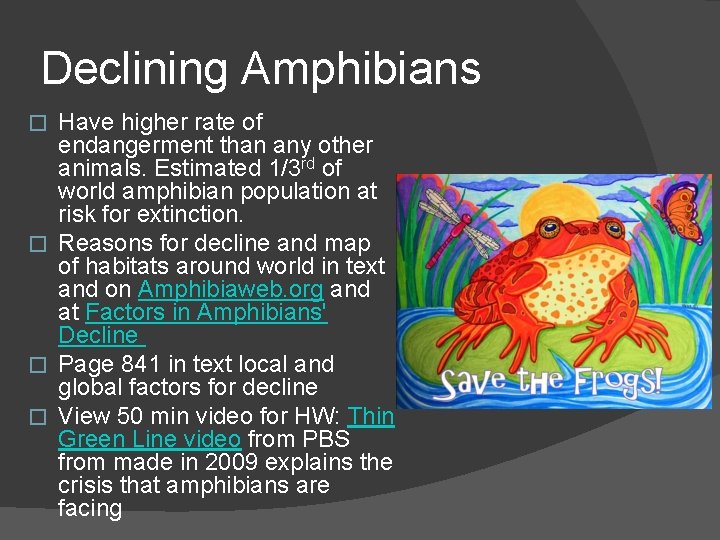
Declining Amphibians Have higher rate of endangerment than any other animals. Estimated 1/3 rd of world amphibian population at risk for extinction. � Reasons for decline and map of habitats around world in text and on Amphibiaweb. org and at Factors in Amphibians' Decline � Page 841 in text local and global factors for decline � View 50 min video for HW: Thin Green Line video from PBS from made in 2009 explains the crisis that amphibians are facing �
- Slides: 15