
Double Entry System 3 DR CR TRIAL BALANCE

Double Entry System 3 DR CR
TRIAL BALANCE
Objectives At the end of the lesson, students should be able to : • know what is a Trial Balance. • know the uses and limitations of Trial Balance. • identify and explain those errors that will affect and those that will not affect the Trial Balance. • know how to extract a simple Trial Balance.
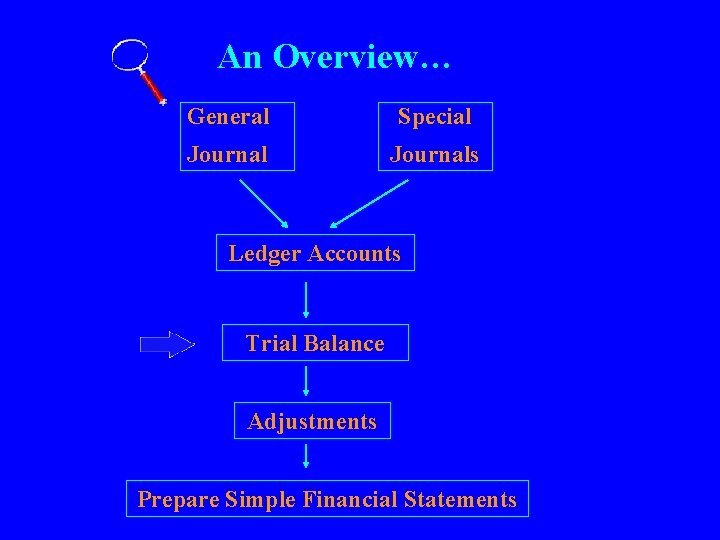
An Overview… General Special Journals Ledger Accounts Trial Balance Adjustments Prepare Simple Financial Statements
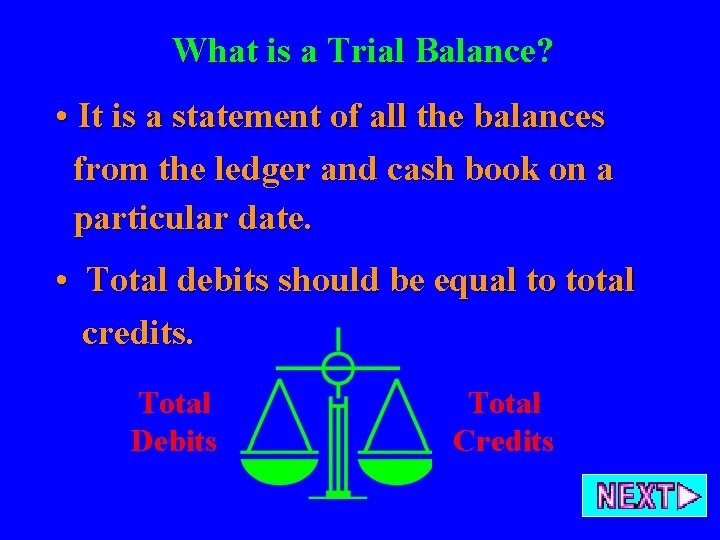
What is a Trial Balance? • It is a statement of all the balances from the ledger and cash book on a particular date. • Total debits should be equal to total credits. Total Debits Total Credits
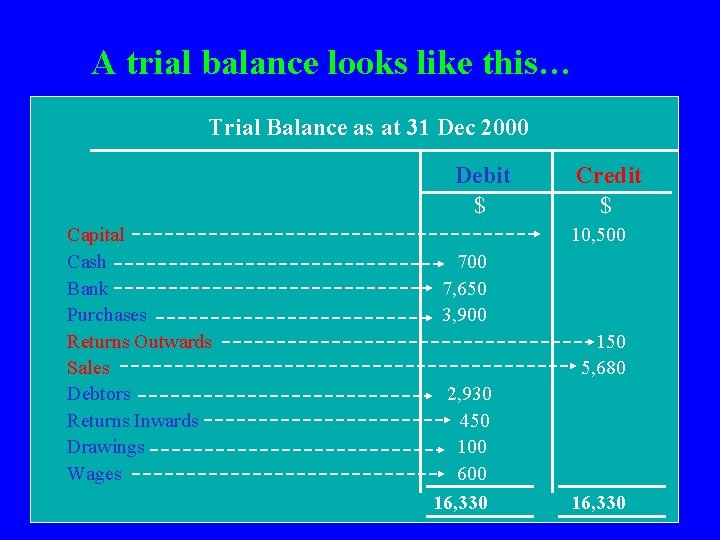
A trial balance looks like this… Trial Balance as at 31 Dec 2000 Debit $ Capital Cash Bank Purchases Returns Outwards Sales Debtors Returns Inwards Drawings Wages Credit $ 10, 500 7, 650 3, 900 150 5, 680 2, 930 450 100 600 16, 330
Uses and Limitations of Trial Balance… Uses • Test the equality of the recorded debits and credits. • If the total debit is not equal to the credit, it reveals the presence of some errors during the process of journalising or posting.
Uses and Limitations of Trial Balance… Limitations • A Trial Balance that balances does not necessarily prove that all the transactions have been recorded. • There are some kinds of error that can still cause the Trial Balance to balance and not easy to detect.
Errors that can affect the Trial Balance: • Errors of calculation • Errors of omission of one entry • Posting to the wrong side of an account • Errors in amount
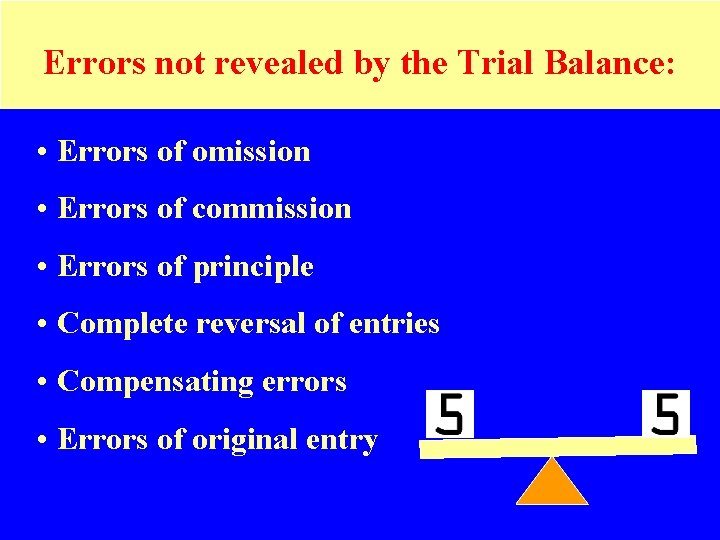
Errors not revealed by the Trial Balance: • Errors of omission • Errors of commission • Errors of principle • Complete reversal of entries • Compensating errors • Errors of original entry
- Slides: 10