
DOT ERG isolation and downwind distances and other
- Slides: 20
DOT ERG isolation and downwind distances and other models Tucson, AZ Disaster Response Scenario John S. Morawetz International Chemical Workers Union Council Center for Worker Health & Safety Education Cincinnati, Ohio https: //hsed. icwuc. org/ HMIT grant with UAW, AFSCME, AFGE and UFCW
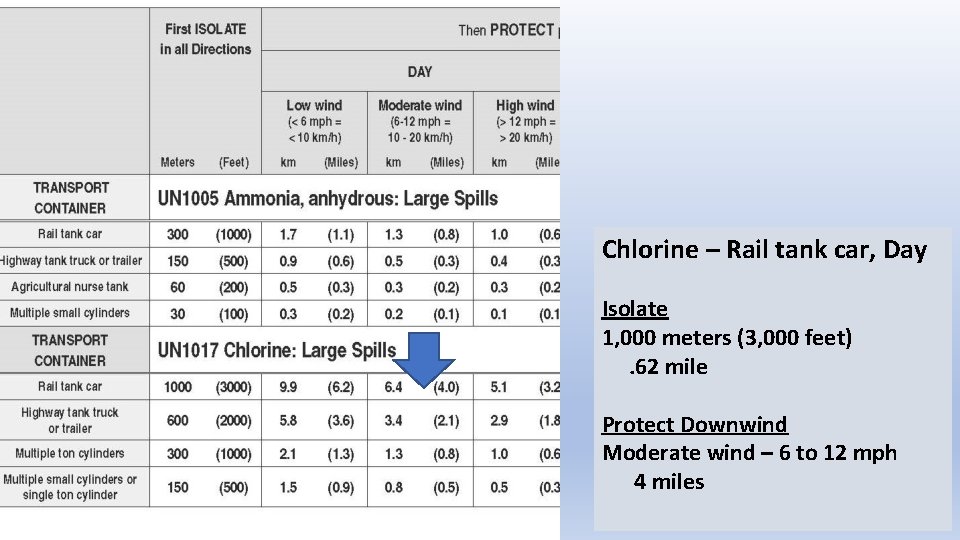
ERG: Background on Table 1 Initial Isolation and Protective Action Distances p. 293: “determine the downward distance to which persons may become incapacitated and unable to take protective action or may incur serious health effects”
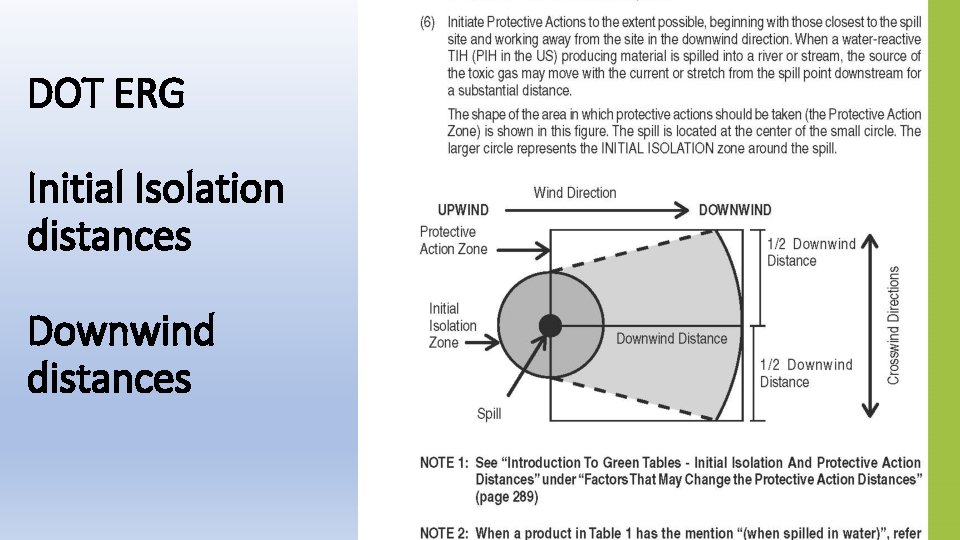
DOT ERG Initial Isolation distances Downwind distances
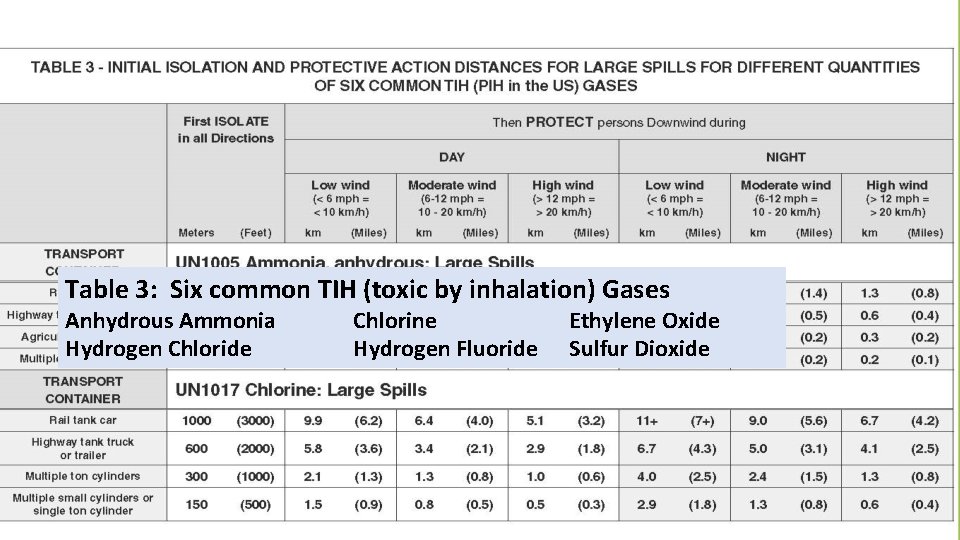
Table 3: Six common TIH (toxic by inhalation) Gases Anhydrous Ammonia Hydrogen Chloride Chlorine Hydrogen Fluoride Ethylene Oxide Sulfur Dioxide
Chlorine – Rail tank car, Day Isolate 1, 000 meters (3, 000 feet). 62 mile Protect Downwind Moderate wind – 6 to 12 mph 4 miles
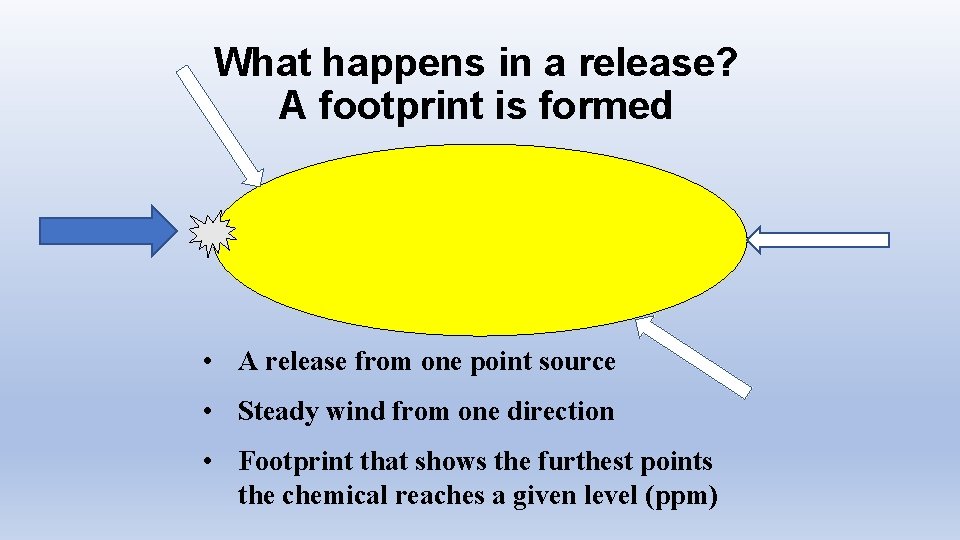
What happens in a release? A footprint is formed • A release from one point source • Steady wind from one direction • Footprint that shows the furthest points the chemical reaches a given level (ppm)
What health effects happen? There a number of health outcomes that responders use to utilize the ERG to plan a response inside and outside the downwind distance Will people have mild symptoms? Can they escape? Have serious health effects? Are their lives threatened?
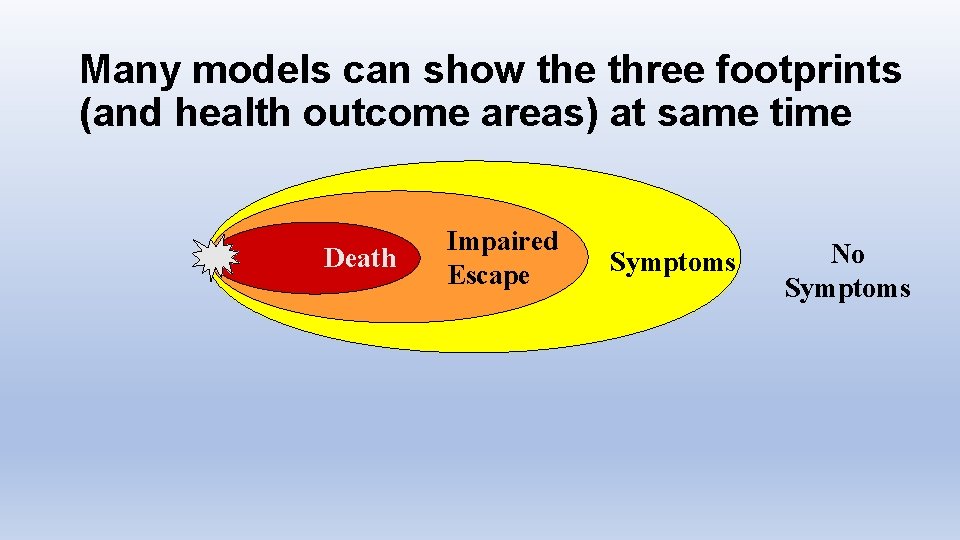
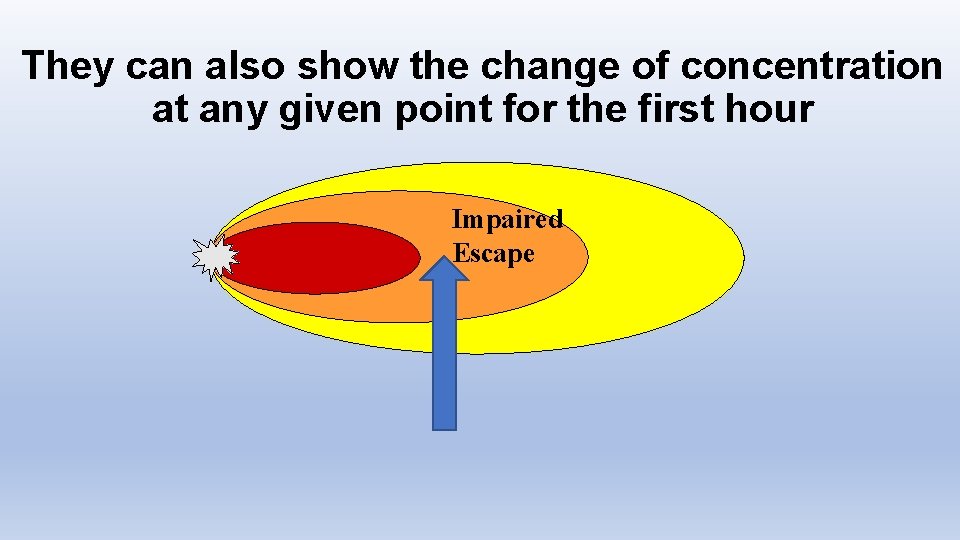
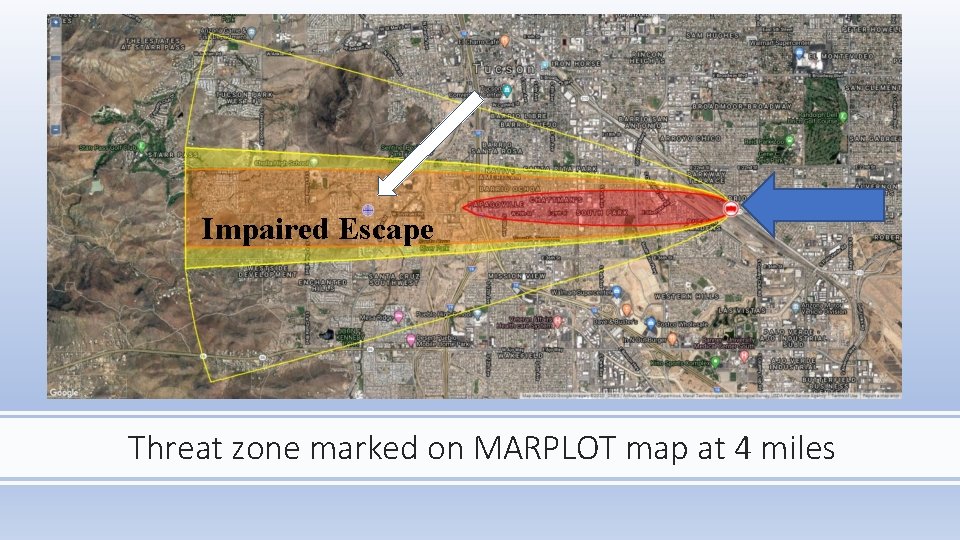
Many models can show the three footprints (and health outcome areas) at same time Death Impaired Escape Symptoms No Symptoms
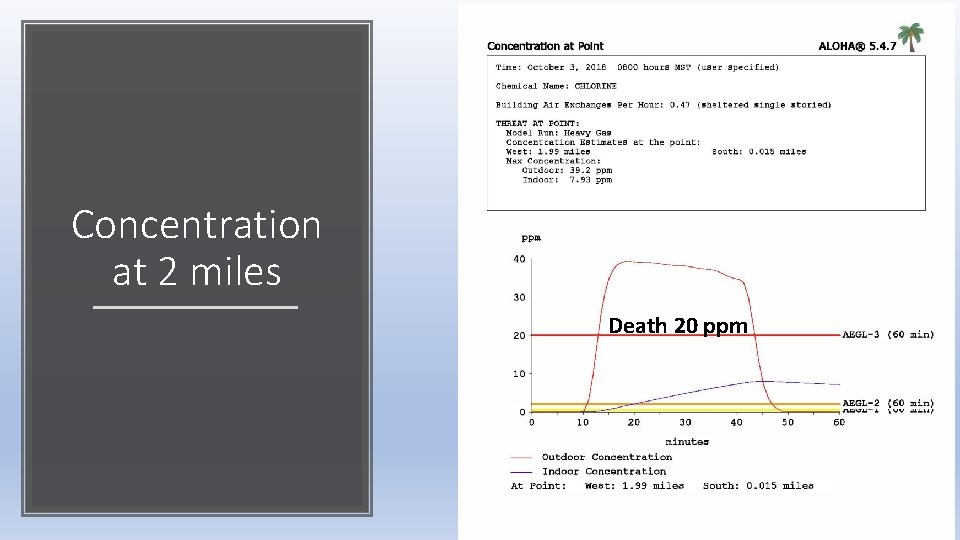
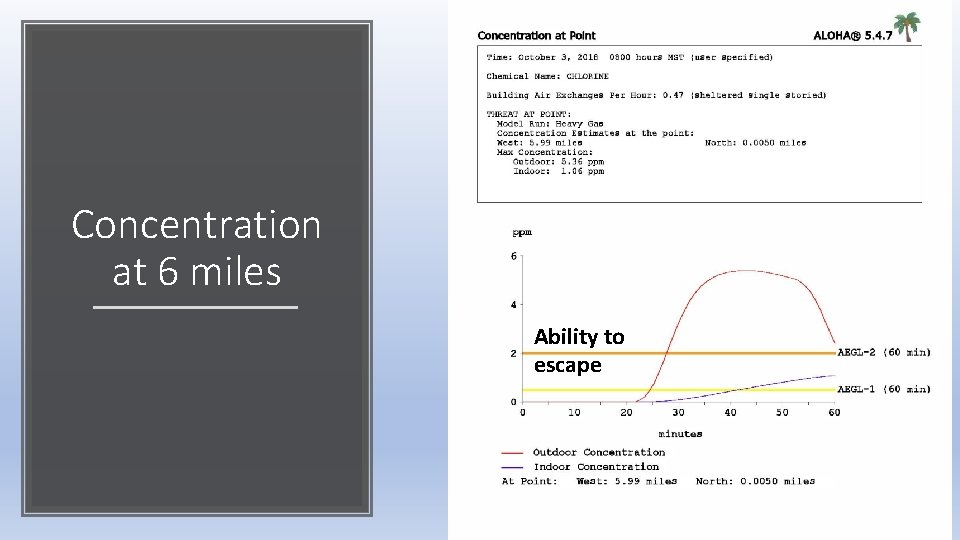
They can also show the change of concentration at any given point for the first hour Impaired Escape
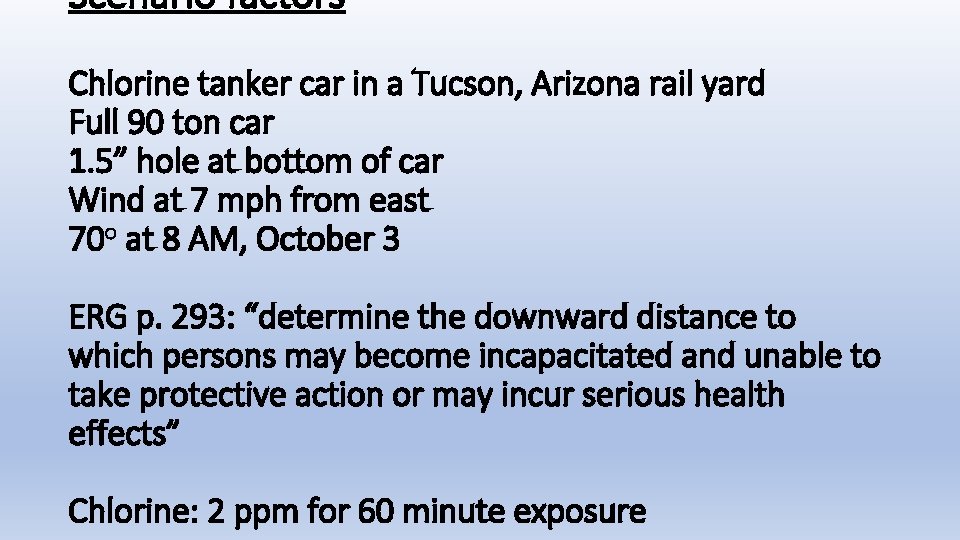
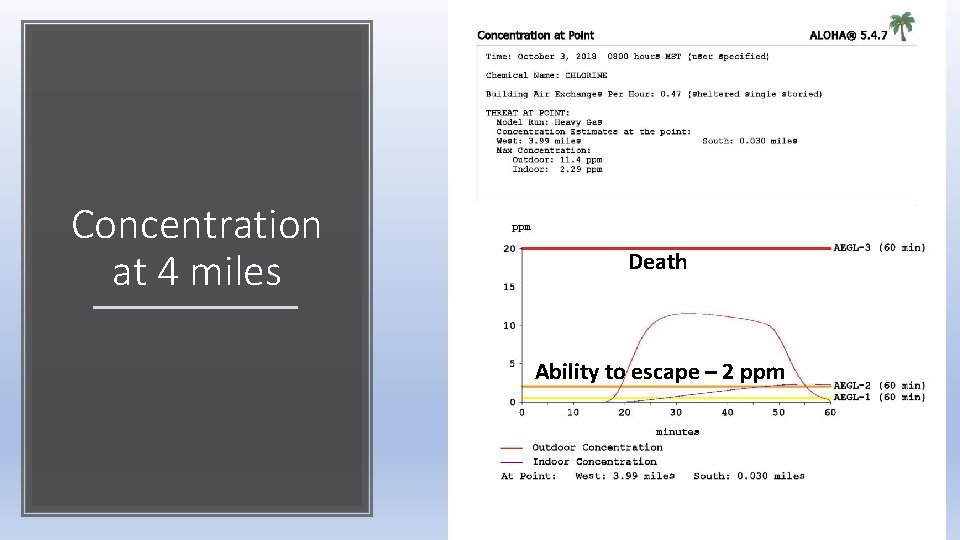
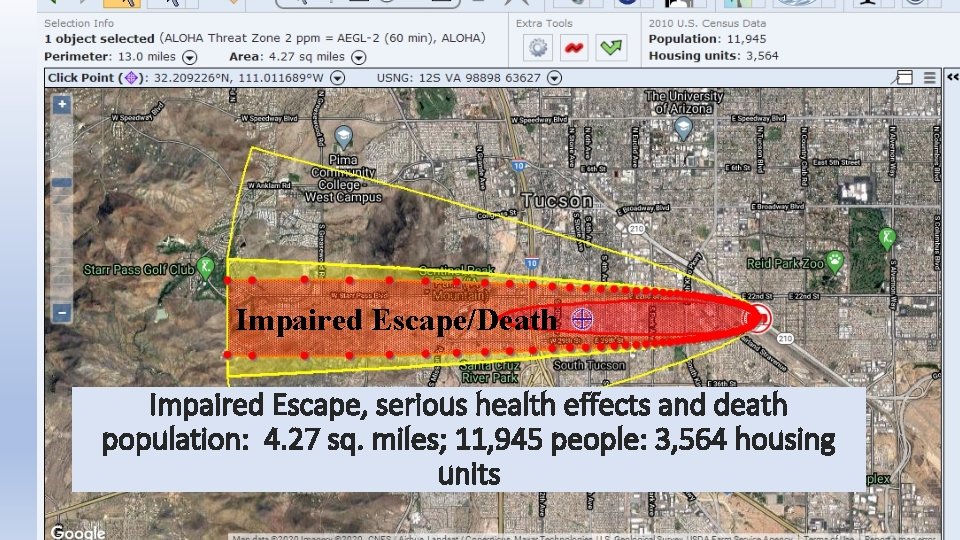
Scenario factors Chlorine tanker car in a Tucson, Arizona rail yard Full 90 ton car 1. 5” hole at bottom of car Wind at 7 mph from east 70 o at 8 AM, October 3 ERG p. 293: “determine the downward distance to which persons may become incapacitated and unable to take protective action or may incur serious health effects” Chlorine: 2 ppm for 60 minute exposure
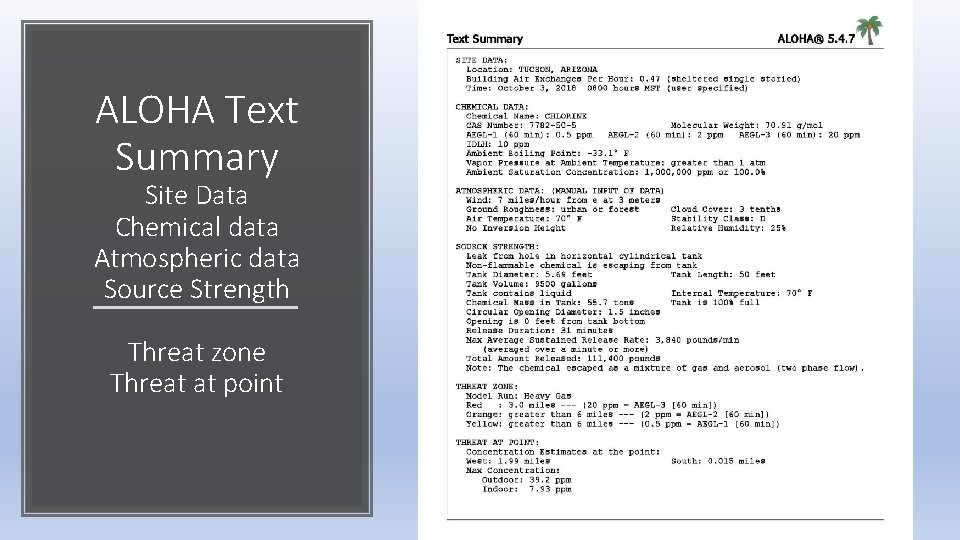
ALOHA Text Summary Site Data Chemical data Atmospheric data Source Strength Threat zone Threat at point
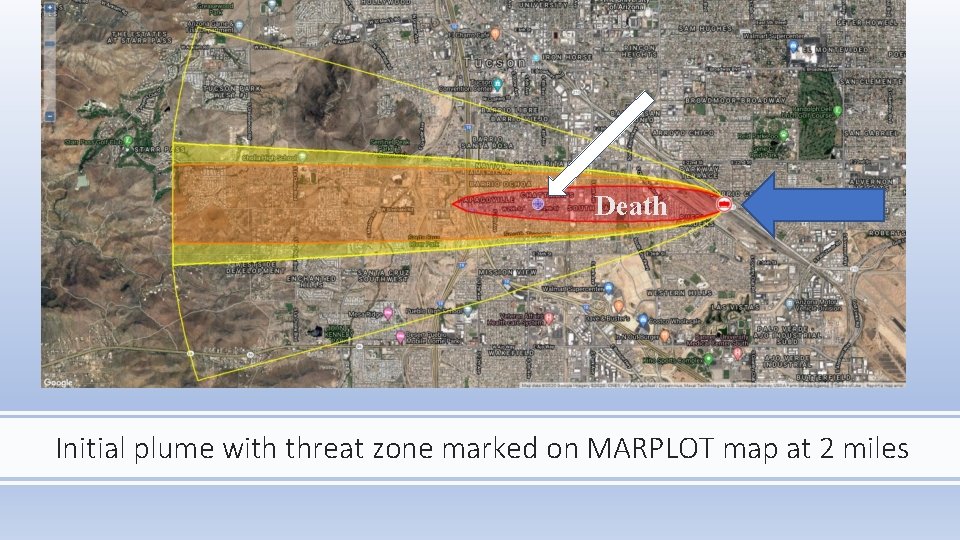
Death Initial plume with threat zone marked on MARPLOT map at 2 miles
Concentration at 2 miles Death 20 ppm
Impaired Escape Threat zone marked on MARPLOT map at 4 miles
Concentration at 4 miles Death Ability to escape – 2 ppm
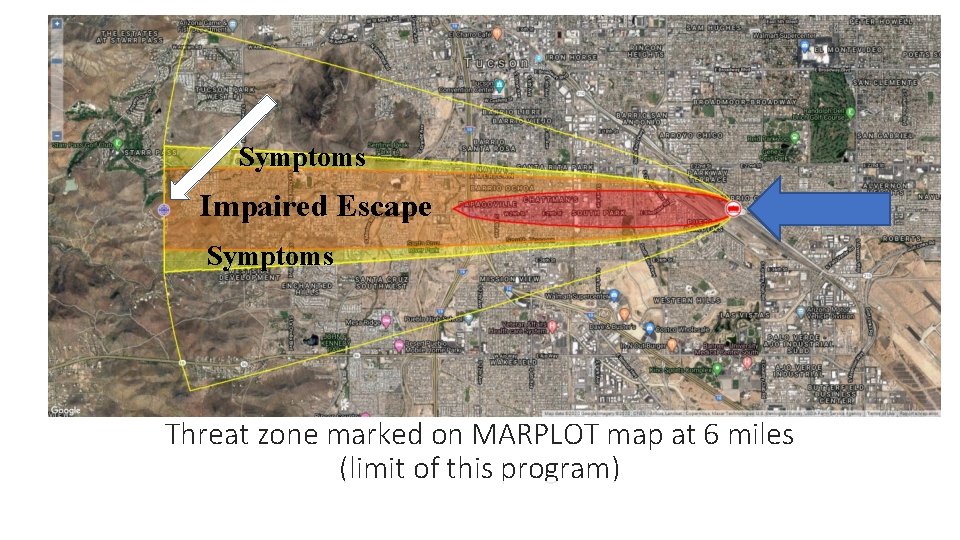
Symptoms Impaired Escape Symptoms Threat zone marked on MARPLOT map at 6 miles (limit of this program)
Concentration at 6 miles Ability to escape
Impaired Escape/Death Impaired Escape, serious health effects and death population: 4. 27 sq. miles; 11, 945 people: 3, 564 housing units
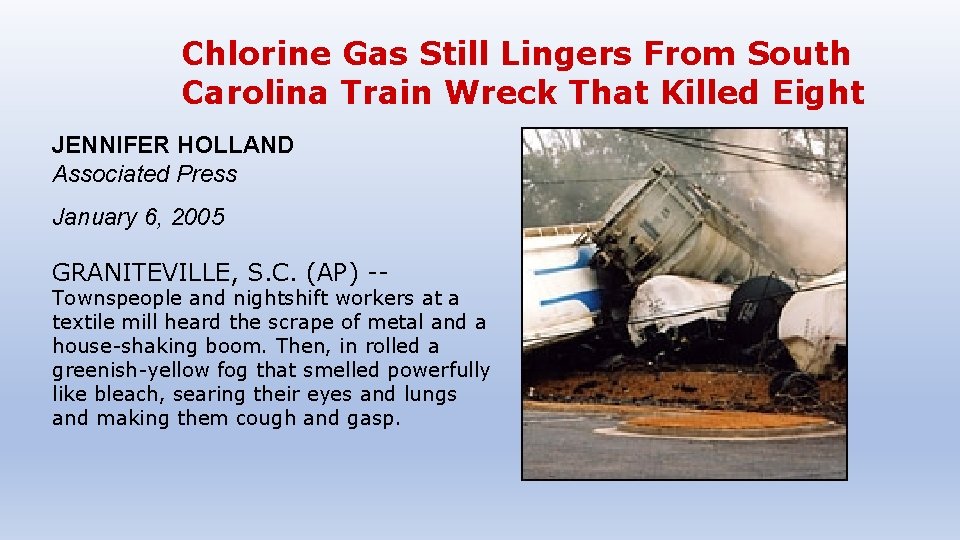
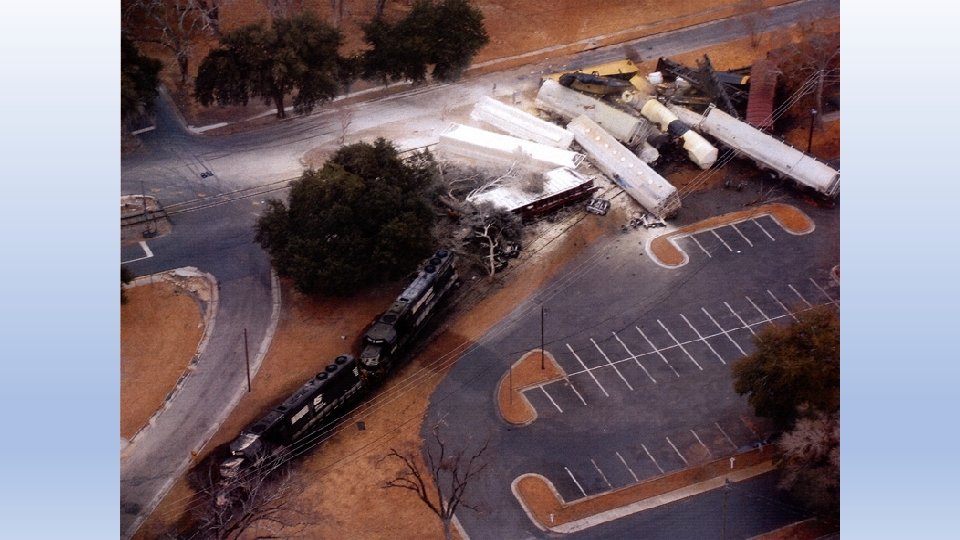
Chlorine Gas Still Lingers From South Carolina Train Wreck That Killed Eight JENNIFER HOLLAND Associated Press January 6, 2005 GRANITEVILLE, S. C. (AP) -- Townspeople and nightshift workers at a textile mill heard the scrape of metal and a house-shaking boom. Then, in rolled a greenish-yellow fog that smelled powerfully like bleach, searing their eyes and lungs and making them cough and gasp.