
Dostoevsky and Bakhtin Dr Inna Tigountsova Nikolay Berdyaev
Dostoevsky and Bakhtin Dr. Inna Tigountsova
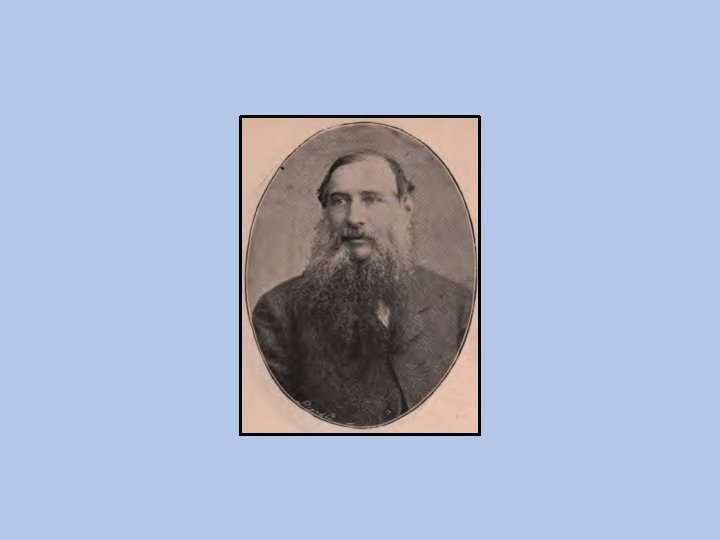
Nikolay Berdyaev: So great is the worth of Dostoevsky that to have produced him is by itself sufficient justification for the existence of the Russian people in the world: and he will bear witness for his country-men at the last judgement of the nations.
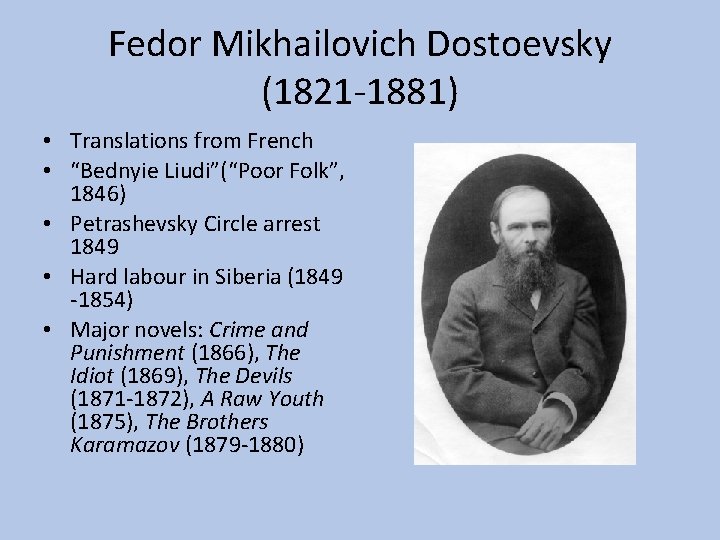
Fedor Mikhailovich Dostoevsky (1821 -1881) • Translations from French • “Bednyie Liudi”(“Poor Folk”, 1846) • Petrashevsky Circle arrest 1849 • Hard labour in Siberia (1849 -1854) • Major novels: Crime and Punishment (1866), The Idiot (1869), The Devils (1871 -1872), A Raw Youth (1875), The Brothers Karamazov (1879 -1880)
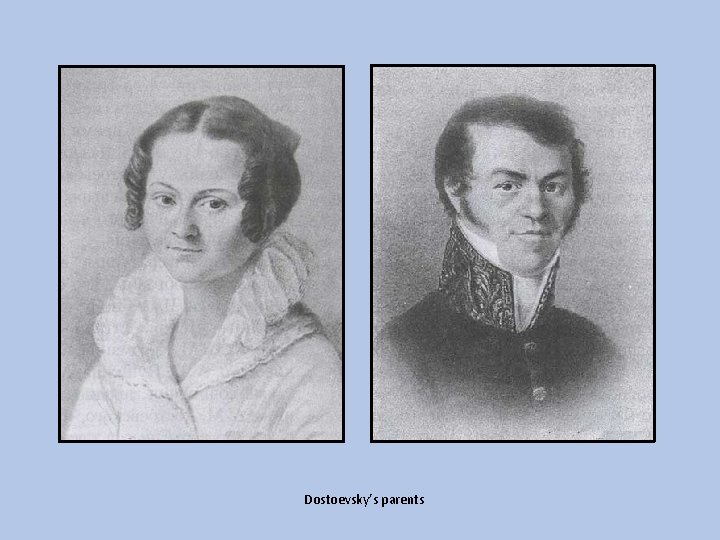
Dostoevsky’s parents
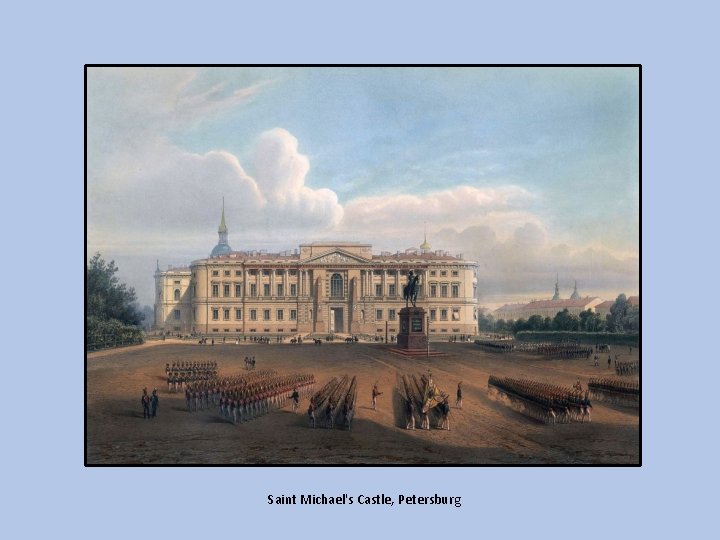
Saint Michael's Castle, Petersburg
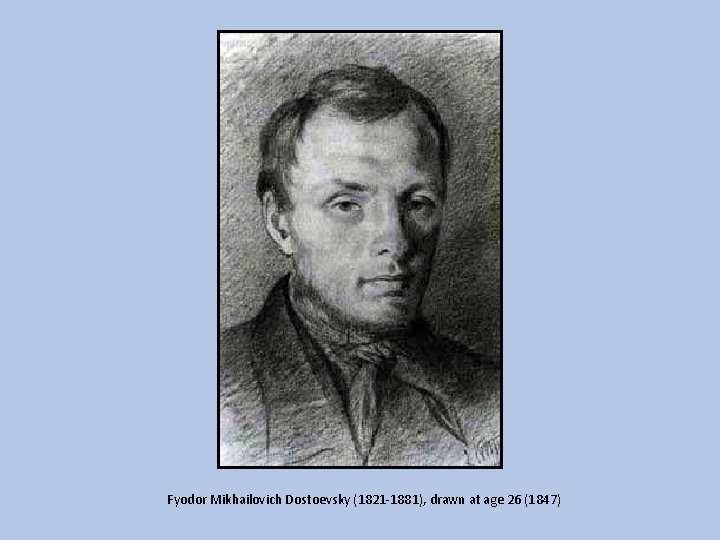
Fyodor Mikhailovich Dostoevsky (1821 -1881), drawn at age 26 (1847)
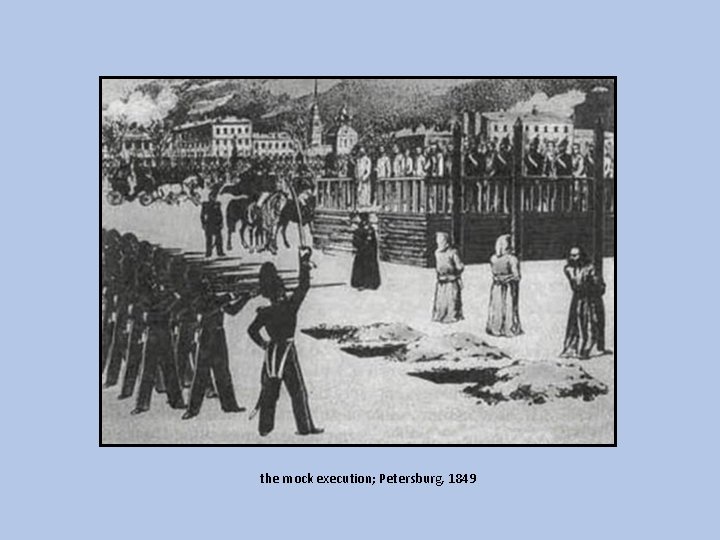
the mock execution; Petersburg, 1849
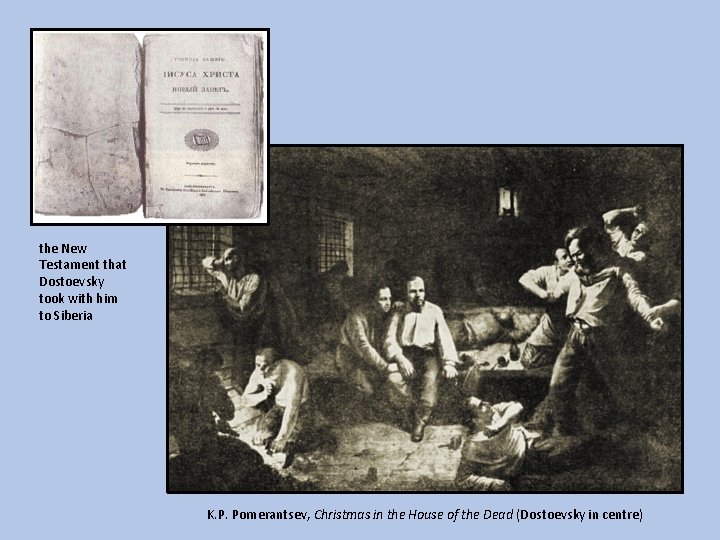
the New Testament that Dostoevsky took with him to Siberia K. P. Pomerantsev, Christmas in the House of the Dead (Dostoevsky in centre)
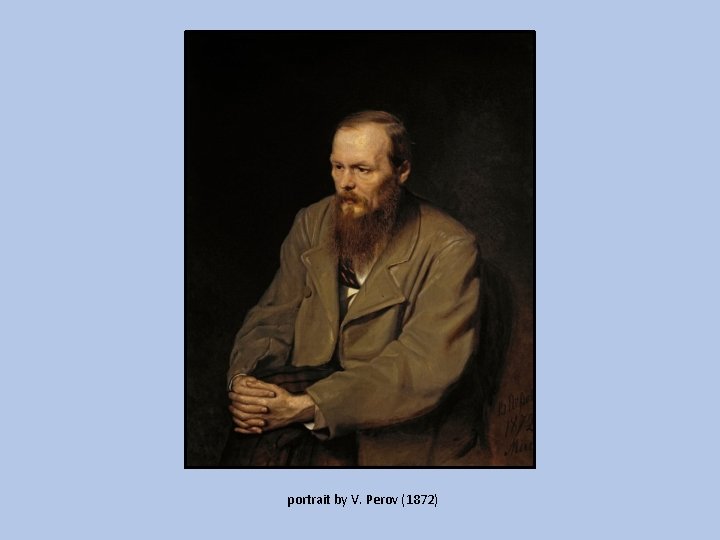
portrait by V. Perov (1872)
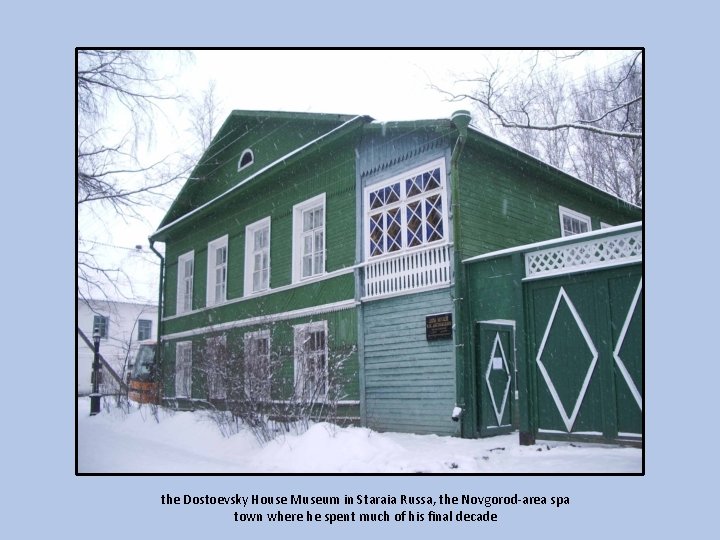
the Dostoevsky House Museum in Staraia Russa, the Novgorod-area spa town where he spent much of his final decade
Dostoevsky’s Journalism • A Writer’s Diary (18731881) • Boundary genre • “joints”, fiction, semifiction, non-fiction • Publishing, editing, writing, commenting on real and fictional letters, etc.
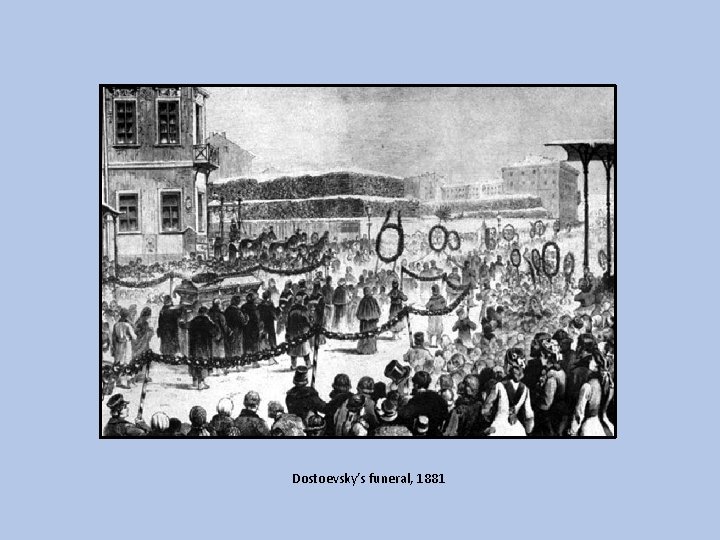
Dostoevsky’s funeral, 1881
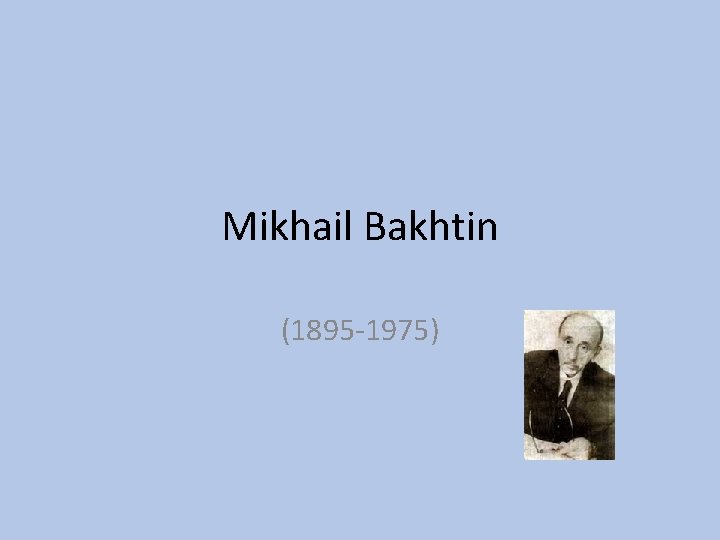
Mikhail Bakhtin (1895 -1975)
Bakhtin in 5 mins • https: //www. youtube. com/watch? v=g 6 J 71 rp 7 m_I
Problems of Dostoevsky’s Poetics • Chapter 3: The Idea in Dostoevsky • Idea as a character in a novel • Self-consciousness as the dominant of depiction of the character • The truth about the world is inseparable from the truth of personality • Acceptance and non-acceptance, rebellion and reconciliation become the basic categories for thinking about the world
• The hero as a carrier of an independently valued idea that belongs to no one • From the point of view of absolute truth, there are no individual instances of consciousness, and the sole principle of cognitive individualization, which individualism is aware of, is MISTAKE
Bakhtin “lab” • Write a “monologic” passage and re-write it as a “dialogic” one (5 mins for each)
Question to take home If these are the features of the poetics of arguably the most Russian of Russian writers, what does say about Russian national character?
Dostoevsky’s own ideas • Dostoevsky published his own monological affirmed/stated (utverzhdennye) ideas in “Time, ” “Epoch, ” “Citizen”, and A Writer’s Diary • These ideas are sometimes used in his novels, too, but either only superficially (as in the epilogue of Crime and Punishment), or in their dialogized form and on equal terms with other ideas in the novels
• Dostoevsky may well be completely opposed to some of the ideas that take part in the dialogue in his novels, for example, he was totally against the ideas of Napoleon III, which were explored in his Crime and Punishment, or the ideas of Chaadaev and Herzen, which are represented in “A Raw Youth” (he was only in partial agreement with those)
• As researches, we want to focus on the polyphonic thought in Dostoevsky’s novels as well as the function of the ideas (not their monological substance) in the polyphonic world of his novels • Dostoevsky’s ideas are prototypes of some images of ideas in his novels, such as those of Sonia, Myshkin, Alesha Karamazov, and Zosima
• Dostoevsky’s formative ideology does not imply a unified system of separate ideas as constituents that are subordinate to the whole system • Dostoevsky’s ideology does not know separate thoughts, or systemic unity • He operates with complete viewpoints, ideological positions of personalities
• The meaning of an idea, for Dostoevsky, is inseparable from the ideological position of a character • Each thought portrays the character as whole, this is why the combination of thoughts is not a system but a combination of complete ideological positions, combination of personalities
• Dostoevsky thought not in thoughts but in viewpoints, consciousnesses, voices • Each thought was an attempt to express the entire worldview of a person, his/her thought in which a wholesome spiritual intention if condensed • These thoughts-voices form not a system but an event performed by organized ideological positions and voices of the characters
• Two thoughts in the world of Dostoevsky’s novels represent two people • Thoughts always belong to someone • Each thought represents the whole person • This approach of expressing an idea as an entire ideological position of a personality also occurs in Dostoevsky’s polemical journalism
• Dialogue that develops an idea in Dostoevsky’s texts in not a dry logical dialogue but an opposition between individualized voices • Even in his polemical articles Dostoevsky organizes the voices and meanings as a part of an imaginary dialogue rather than attempts to convince you directly
• Even the voices and truths that are in agreement in Dostoevsky’s work do not meld together, do not form a single unified impersonal truth • Dostoevsky does offer not his readers aphorisms; thoughts that can be taken out of their context
- Slides: 28