
Dos Donts of Assessing Youth How to build
Do’s & Don’ts of Assessing Youth: How to build rapport NATALIE THOMAS, LISW, LICDC
Assessment goal(s) To evaluate someone’s behavior To make an estimation about someone’s ability To develop a recommendation To identify needs To direct resources To determine next steps
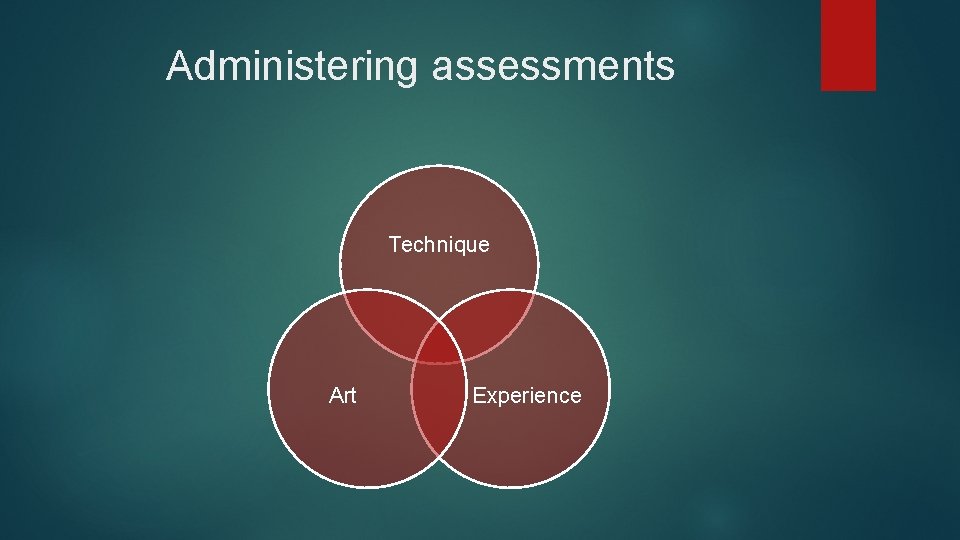
Administering assessments Technique Art Experience
Assessment technique: Motivational Interviewing (MI) Conceived by William R. Miller, Ph. D. and Stephen Rollnick, Ph. D. in 1983 Goal oriented & client-centered communication method on engaging intrinsic motivation and resolving ambivalence Use when youth are hesitant Take non-directive approach Ask open ended questions: “tell me…” “help me understand…” “on one hand, you would really like to get your life together, on the other hand, you keep breaking rules…” Partnership, compassion, and acceptance
Trauma informed considerations Trauma history may impact youth presentation (angry, sad, irritable, poor concentration, anxiety) Assessments may be triggering for some youth Pause or discontinue assessment if youth is unable to cope with process
Assessment Do’s & Don’ts Do’s Strengths based assessments Don’ts Assess an intoxicated youth Consider trauma impact on youth presentation and response Leave triggered youth without follow up support Affirm youth’s strengths Empower nonproductive behavior
Do’s & Don’ts contd. Do’s Purposefully set a good tone Consider trauma history Check-in on youth throughout assessment Allow for youth to have a sense of control Establish rapport Don’ts Assume youth understand why they are being assessed Assess intoxicated youth Use outdated information in assessments
Rapport /raˈpôr, rəˈpôr/ noun A friendly , harmonious relationship; especially; a relationship characterized by agreement, mutual understanding, or empathy that makes communication possible or easy
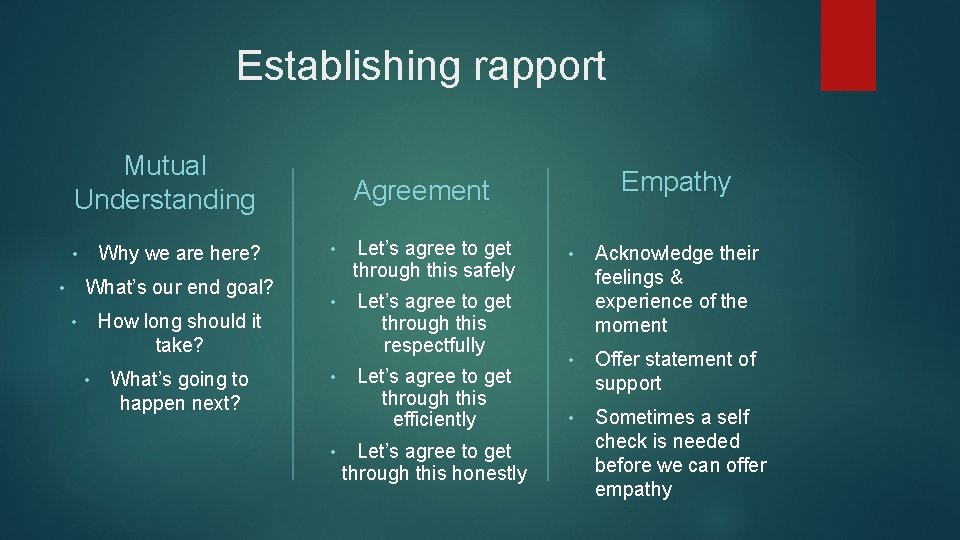
Establishing rapport Mutual Understanding Why we are here? • What’s our end goal? • How long should it take? • • What’s going to happen next? Empathy Agreement • Let’s agree to get through this safely • Let’s agree to get through this respectfully • • Let’s agree to get through this efficiently Let’s agree to get through this honestly • Acknowledge their feelings & experience of the moment • Offer statement of support • Sometimes a self check is needed before we can offer empathy
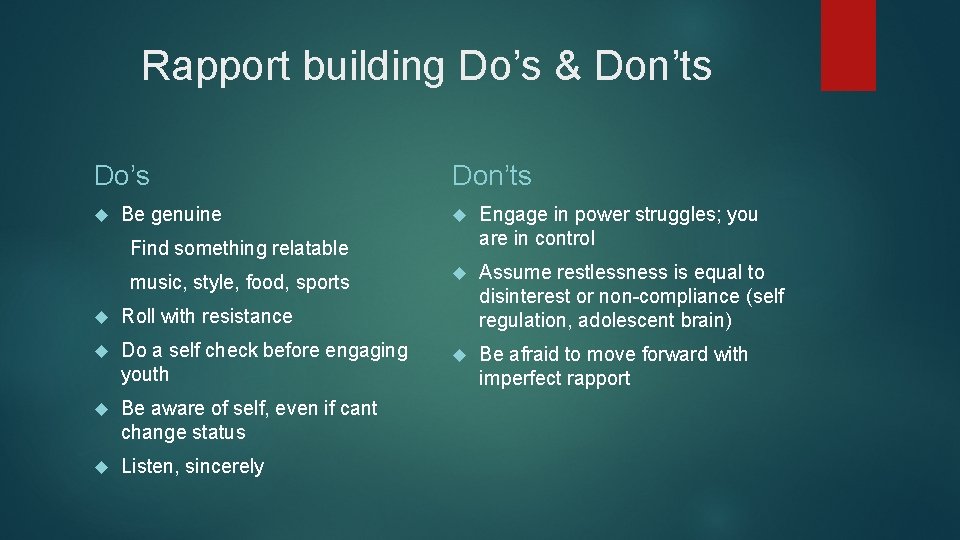
Rapport building Do’s & Don’ts Do’s Be genuine Don’ts Engage in power struggles; you are in control Assume restlessness is equal to disinterest or non-compliance (self regulation, adolescent brain) Be afraid to move forward with imperfect rapport Find something relatable music, style, food, sports Roll with resistance Do a self check before engaging youth Be aware of self, even if cant change status Listen, sincerely
Reality of Rapport building: Scrubs https: //www. youtube. com/watch? v=Vy g. Pd. Hqc. NAA
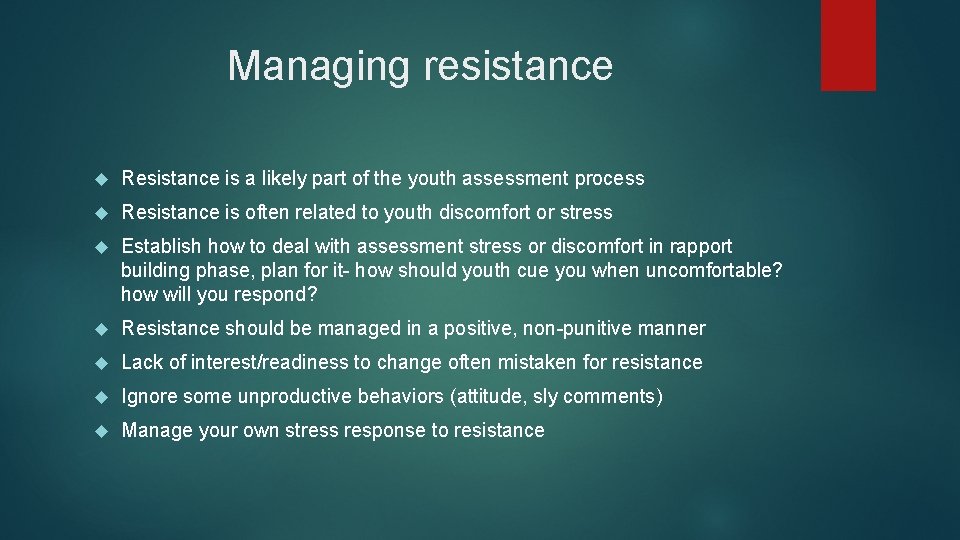
Managing resistance Resistance is a likely part of the youth assessment process Resistance is often related to youth discomfort or stress Establish how to deal with assessment stress or discomfort in rapport building phase, plan for it- how should youth cue you when uncomfortable? how will you respond? Resistance should be managed in a positive, non-punitive manner Lack of interest/readiness to change often mistaken for resistance Ignore some unproductive behaviors (attitude, sly comments) Manage your own stress response to resistance
Rapport building role play 2 Brave volunteers needed!
Resources Suarez, Mariann; Naar-King, Sylvie, (2011) Motivational Interviewing with Adolescents and Young Adults, New York & London: The Guilford Press National Child Traumatic Stress Network: www. nctsn. org
- Slides: 15