
Dorsal ColumnMedial Lemniscal Pathways Transmit input to the
- Slides: 28
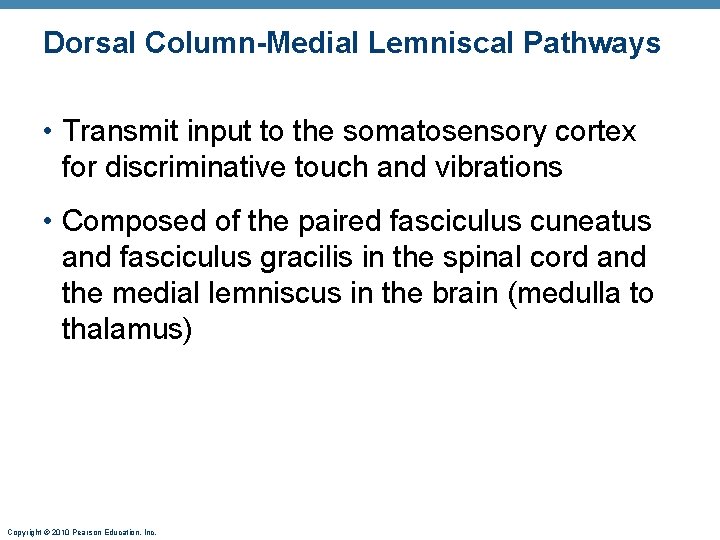
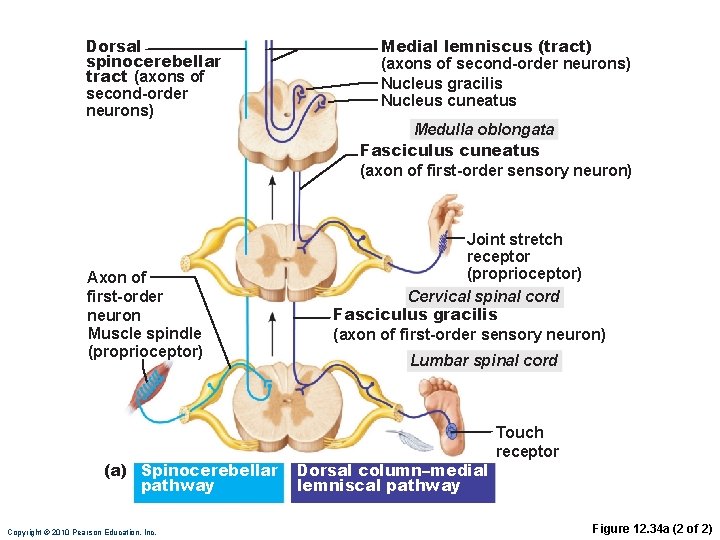
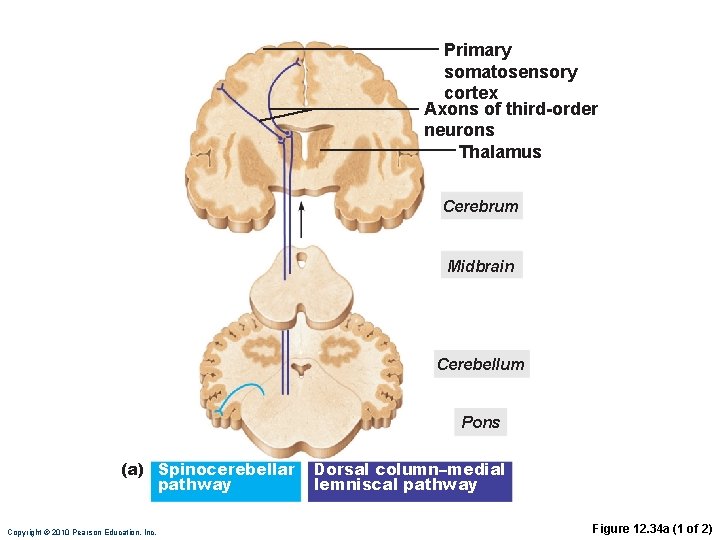
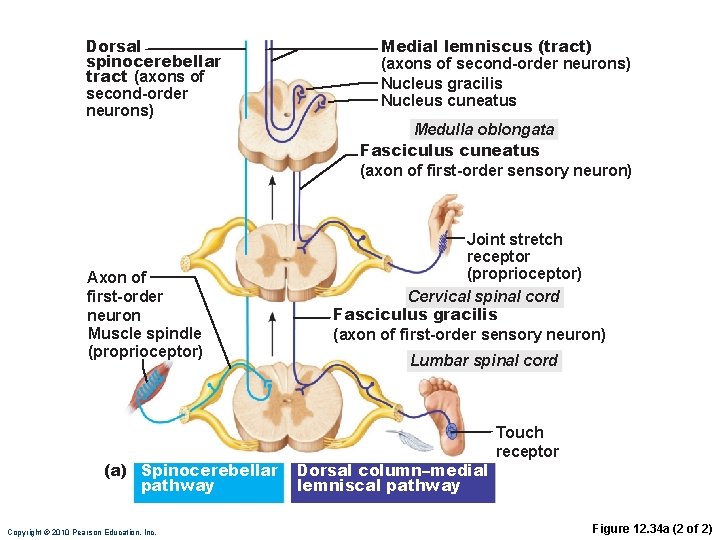
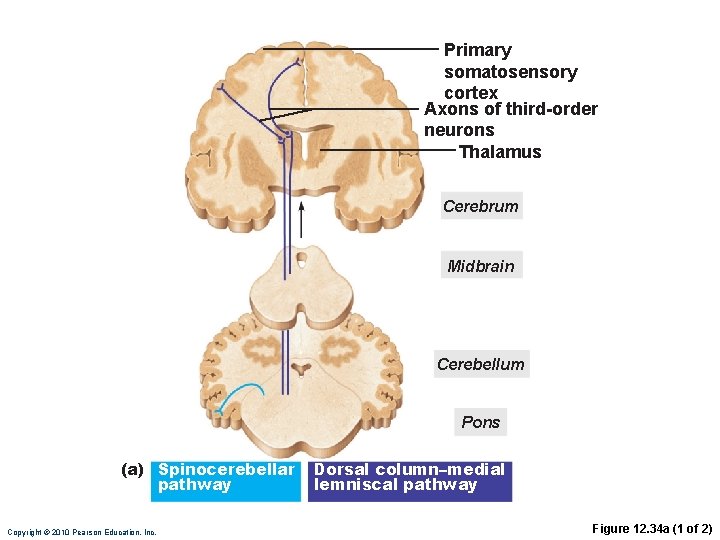
Dorsal Column-Medial Lemniscal Pathways • Transmit input to the somatosensory cortex for discriminative touch and vibrations • Composed of the paired fasciculus cuneatus and fasciculus gracilis in the spinal cord and the medial lemniscus in the brain (medulla to thalamus) Copyright © 2010 Pearson Education, Inc.
Dorsal spinocerebellar tract (axons of second-order neurons) Medial lemniscus (tract) (axons of second-order neurons) Nucleus gracilis Nucleus cuneatus Medulla oblongata Fasciculus cuneatus (axon of first-order sensory neuron) Axon of first-order neuron Muscle spindle (proprioceptor) (a) Spinocerebellar pathway Copyright © 2010 Pearson Education, Inc. Joint stretch receptor (proprioceptor) Cervical spinal cord Fasciculus gracilis (axon of first-order sensory neuron) Lumbar spinal cord Dorsal column–medial lemniscal pathway Touch receptor Figure 12. 34 a (2 of 2)
Primary somatosensory cortex Axons of third-order neurons Thalamus Cerebrum Midbrain Cerebellum Pons (a) Spinocerebellar pathway Copyright © 2010 Pearson Education, Inc. Dorsal column–medial lemniscal pathway Figure 12. 34 a (1 of 2)
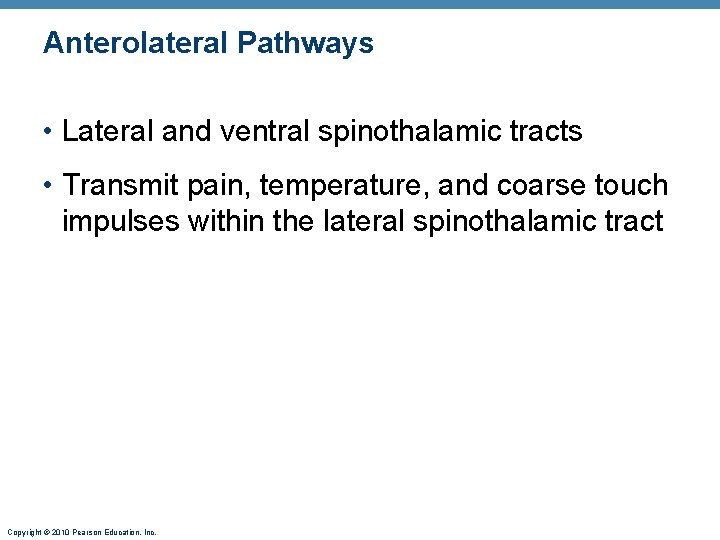
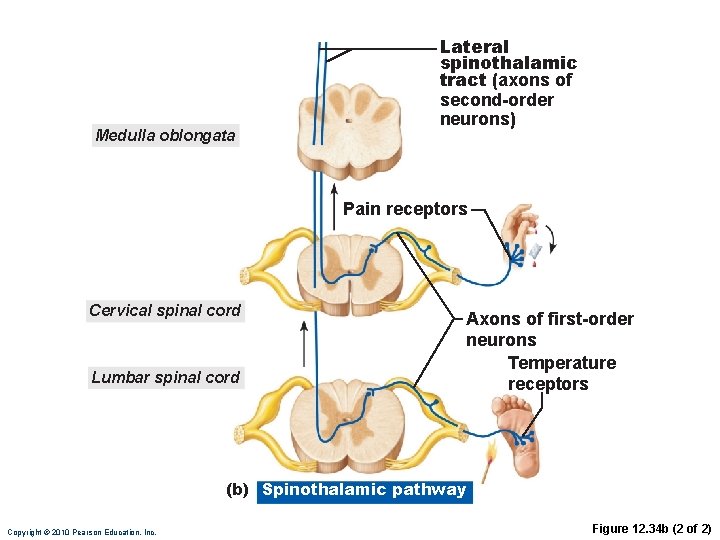
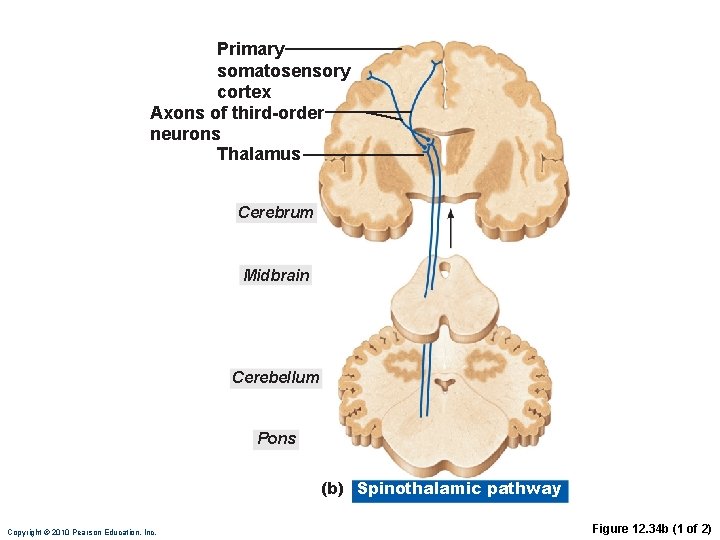
Anterolateral Pathways • Lateral and ventral spinothalamic tracts • Transmit pain, temperature, and coarse touch impulses within the lateral spinothalamic tract Copyright © 2010 Pearson Education, Inc.
Medulla oblongata Lateral spinothalamic tract (axons of second-order neurons) Pain receptors Cervical spinal cord Lumbar spinal cord Axons of first-order neurons Temperature receptors (b) Spinothalamic pathway Copyright © 2010 Pearson Education, Inc. Figure 12. 34 b (2 of 2)
Primary somatosensory cortex Axons of third-order neurons Thalamus Cerebrum Midbrain Cerebellum Pons (b) Spinothalamic pathway Copyright © 2010 Pearson Education, Inc. Figure 12. 34 b (1 of 2)
Spinocerebellar Tracts • Ventral and dorsal tracts • Convey information about muscle or tendon stretch to the cerebellum Copyright © 2010 Pearson Education, Inc.
Dorsal spinocerebellar tract (axons of second-order neurons) Medial lemniscus (tract) (axons of second-order neurons) Nucleus gracilis Nucleus cuneatus Medulla oblongata Fasciculus cuneatus (axon of first-order sensory neuron) Axon of first-order neuron Muscle spindle (proprioceptor) (a) Spinocerebellar pathway Copyright © 2010 Pearson Education, Inc. Joint stretch receptor (proprioceptor) Cervical spinal cord Fasciculus gracilis (axon of first-order sensory neuron) Lumbar spinal cord Dorsal column–medial lemniscal pathway Touch receptor Figure 12. 34 a (2 of 2)
Primary somatosensory cortex Axons of third-order neurons Thalamus Cerebrum Midbrain Cerebellum Pons (a) Spinocerebellar pathway Copyright © 2010 Pearson Education, Inc. Dorsal column–medial lemniscal pathway Figure 12. 34 a (1 of 2)
Descending Pathways and Tracts • Deliver efferent impulses from the brain to the spinal cord • Direct pathways—pyramidal tracts • Indirect pathways—all others Copyright © 2010 Pearson Education, Inc.
Descending Pathways and Tracts • Involve two neurons: 1. Upper motor neurons • Pyramidal cells in primary motor cortex 2. Lower motor neurons • Ventral horn motor neurons • Innervate skeletal muscles Copyright © 2010 Pearson Education, Inc.
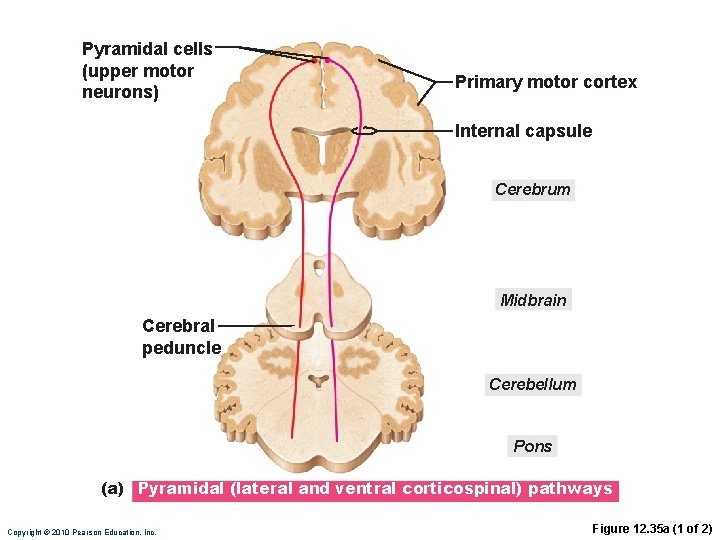
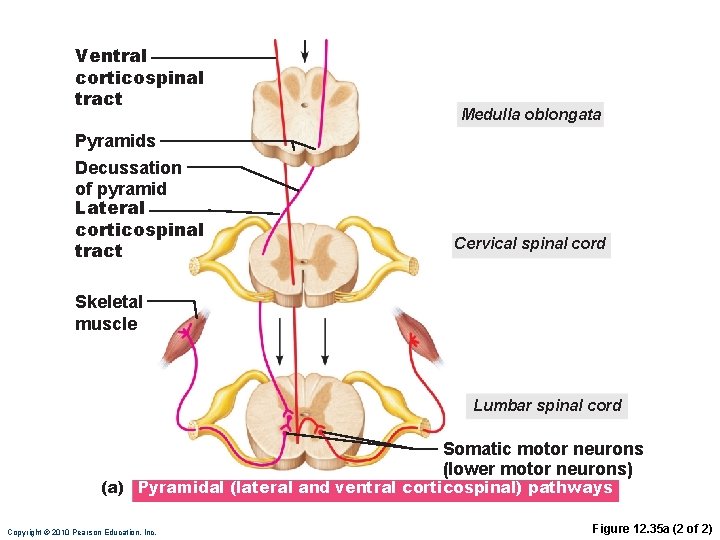
The Direct (Pyramidal) System • Impulses from pyramidal neurons in the precentral gyri pass through the pyramidal (corticospinal)l tracts • Axons synapse with interneurons or ventral horn motor neurons • The direct pathway regulates fast and fine (skilled) movements Copyright © 2010 Pearson Education, Inc.
Pyramidal cells (upper motor neurons) Primary motor cortex Internal capsule Cerebrum Midbrain Cerebral peduncle Cerebellum Pons (a) Pyramidal (lateral and ventral corticospinal) pathways Copyright © 2010 Pearson Education, Inc. Figure 12. 35 a (1 of 2)
Ventral corticospinal tract Pyramids Decussation of pyramid Lateral corticospinal tract Medulla oblongata Cervical spinal cord Skeletal muscle Lumbar spinal cord Somatic motor neurons (lower motor neurons) (a) Pyramidal (lateral and ventral corticospinal) pathways Copyright © 2010 Pearson Education, Inc. Figure 12. 35 a (2 of 2)
Indirect (Extrapyramidal) System • Includes the brain stem motor nuclei, and all motor pathways except pyramidal pathways • Also called the multineuronal pathways Copyright © 2010 Pearson Education, Inc.
Indirect (Extrapyramidal) System • These pathways are complex and multisynaptic, and regulate: • Axial muscles that maintain balance and posture • Muscles controlling coarse movements • Head, neck, and eye movements that follow objects Copyright © 2010 Pearson Education, Inc.
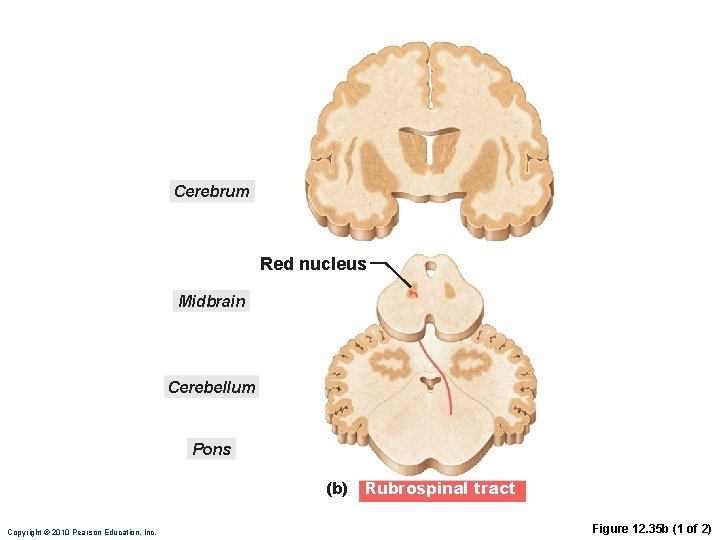
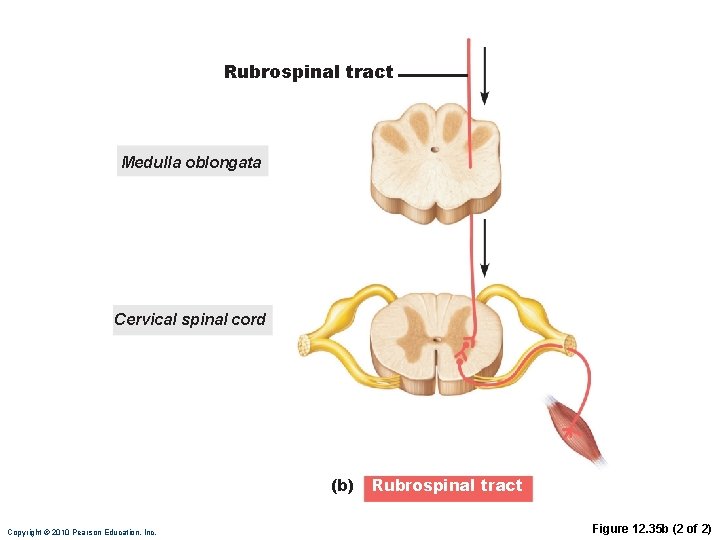
Indirect (Extrapyramidal) System • Reticulospinal and vestibulospinal tracts— maintain balance • Rubrospinal tracts—control flexor muscles • Superior colliculi and tectospinal tracts mediate head movements in response to visual stimuli Copyright © 2010 Pearson Education, Inc.
Cerebrum Red nucleus Midbrain Cerebellum Pons (b) Copyright © 2010 Pearson Education, Inc. Rubrospinal tract Figure 12. 35 b (1 of 2)
Rubrospinal tract Medulla oblongata Cervical spinal cord (b) Copyright © 2010 Pearson Education, Inc. Rubrospinal tract Figure 12. 35 b (2 of 2)
Spinal Cord Trauma • Functional losses • Parasthesias • Sensory loss • Paralysis • Loss of motor function Copyright © 2010 Pearson Education, Inc.
Spinal Cord Trauma • Flaccid paralysis—severe damage to the ventral root or ventral horn cells • Impulses do not reach muscles; there is no voluntary or involuntary control of muscles • Muscles atrophy Copyright © 2010 Pearson Education, Inc.
Spinal Cord Trauma • Spastic paralysis—damage to upper motor neurons of the primary motor cortex • Spinal neurons remain intact; muscles are stimulated by reflex activity • No voluntary control of muscles Copyright © 2010 Pearson Education, Inc.
Spinal Cord Trauma • Transection • Cross sectioning of the spinal cord at any level • Results in total motor and sensory loss in regions inferior to the cut • Paraplegia—transection between T 1 and L 1 • Quadriplegia—transection in the cervical region Copyright © 2010 Pearson Education, Inc.
Poliomyelitis • Destruction of the ventral horn motor neurons by the poliovirus • Muscles atrophy • Death may occur due to paralysis of respiratory muscles or cardiac arrest • Survivors often develop postpolio syndrome many years later, as neurons are lost Copyright © 2010 Pearson Education, Inc.
Amyotrophic Lateral Sclerosis (ALS) • Also called Lou Gehrig’s disease • Involves progressive destruction of ventral horn motor neurons and fibers of the pyramidal tract • Symptoms—loss of the ability to speak, swallow, and breathe • Death typically occurs within five years • Linked to glutamate excitotoxicity, attack by the immune system, or both Copyright © 2010 Pearson Education, Inc.
Developmental Aspects of the CNS • CNS is established during the first month of development • Gender-specific areas appear in both brain and spinal cord, depending on presence or absence of fetal testosterone • Maternal exposure to radiation, drugs (e. g. , alcohol and opiates), or infection can harm the developing CNS • Smoking decreases oxygen in the blood, which can lead to neuron death and fetal brain damage Copyright © 2010 Pearson Education, Inc.
Developmental Aspects of the CNS • The hypothalamus is one of the last areas of the CNS to develop • Visual cortex develops slowly over the first 11 weeks • Neuromuscular coordination progresses in superior-to-inferior and proximal-to-distal directions along with myelination Copyright © 2010 Pearson Education, Inc.
Developmental Aspects of the CNS • Age brings some cognitive declines, but these are not significant in healthy individuals until they reach their 80 s • Shrinkage of brain accelerates in old age • Excessive use of alcohol causes signs of senility unrelated to the aging process Copyright © 2010 Pearson Education, Inc.