
Doran Doeh Managing Partner of SNR Denton Manages



- Slides: 24
�Doran Doeh �Managing Partner of SNR Denton �Manages the Moscow Office and coordinates the CIS Practice � 25 th November �How he developed commercial awareness over his career.
How the City Works Graham Price, CAS Editor of Newsletter Ben Doeh, CAS Head of Events
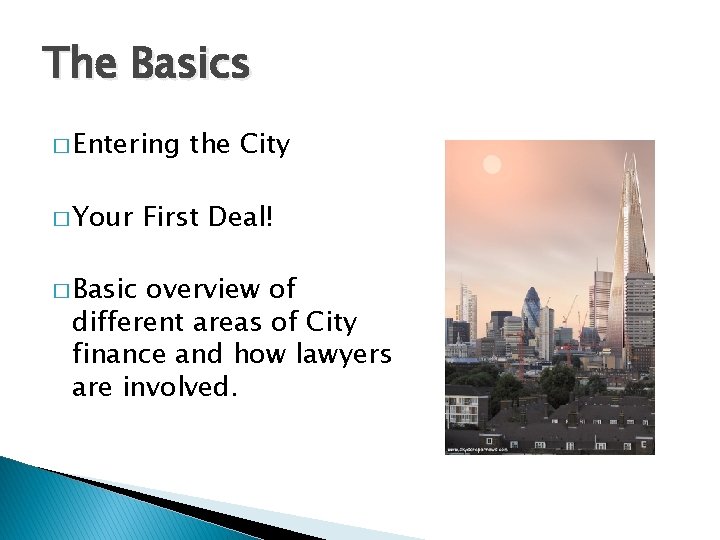
The Basics � Entering � Your � Basic the City First Deal! overview of different areas of City finance and how lawyers are involved.
What We’ll Cover � Initial Public Offerings or IPOs � Equity Finance, and Debt Finance � Investment Banks’ role in Equity Finance � Sovereign Debt, and Bonds � Derivatives � Asset Finance � Mergers and Acquisitions � Private Equity
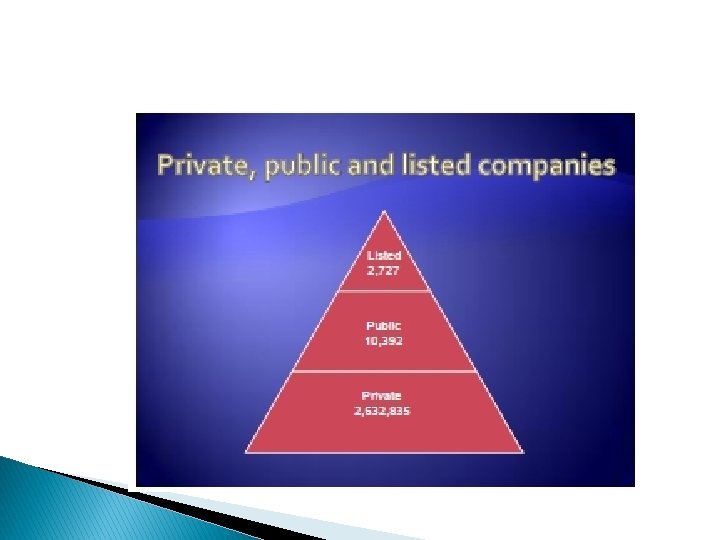
Public v Private Companies �A public company allows members of the public to buy its shares. � A small but significant minority (BP, Vodafone, Marks & Spencer) are listed, allowing their shares to be publicly traded on stock exchanges. � A private company is any company that is not a public company.
Only two types of money �Equity ◦ Shares (capital growth / loss) ◦ Dividends (discretionary share of profit) �Debt ◦ Loan / Bond (return of principal) ◦ Interest (set rate)
Equity � Raising money through the issuing of shares � Equity is risk capital. ◦ If the company goes bust, investors lose what they put in. � Additional equity can be raised through a further rights issue. � A rights issue is often underwritten by an investment bank. � The first offering of shares to the public is called an IPO.
Initial Public Offerings or IPOs � ‘Going Public’, ‘Floating’, ‘Doing a flotation’, ‘Listing’ ‘Doing an IPO’ ◦ Terms for when a private company decides to list on a stock exchange. �A stock exchange is a market where companies list shares to be bought and sold. � In an Initial Public Offering, companies issue new shares to raise money on a stock exchange.
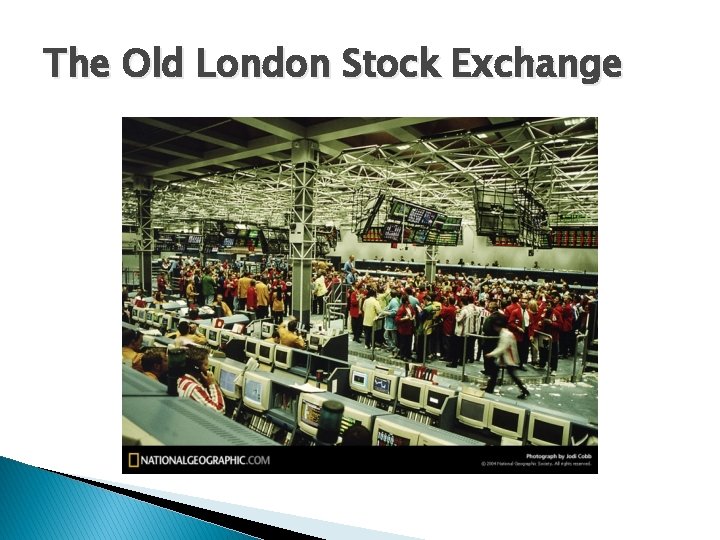
The Old London Stock Exchange
Mergers & Acquisitions � The bread and butter of corporate work! � A company can grow by taking over another company. This is called an acquisition. ◦ SAB Miller is acquiring Foster’s. ◦ Microsoft has acquiring Skype. � The company (the bidder) will make an offer for the target company, persuading the target shareholders to sell their shares. � When two firms decide to merge, obviously that’s called a merger. ◦ E. g British Airways & Iberia = IAG
Hostile Takeover � If the Company (the Board) does not want to be taken over, the bid is hostile (contested). � Offer put directly to shareholders � The takeover will be judged by the City Takeover Panel. � Companies often perform rights issues to raise money for a takeover. ◦ E. g. Kraft and Cadbury
Private Equity � Private Equity is a deal where the bidder is not a company but a fund. � This money is put together by an investment bank or specialist private equity house. � Private equity houses can buy shares in a public company, causing it to become private again. � These are public-to-private deals, done by private equity lawyers.
Debt � The traditional way of raising finance! � Debt finance is usually taking out an overdraft or a loan. � Often, companies get a bi-lateral loan from the bank. The bank is lending the company money (bi-lateral between one bank and the company). � Bond transactions can also be made to raise debt finance (see later). � Often where companies are highly leveraged, it’s for tax purposes.
Commercial Banks v Investment Banks � The banks that underwrite share issues are called investment banks (although they don’t actually invest themselves). � Commercial � Banking banks lend money. lawyers advise on loans.
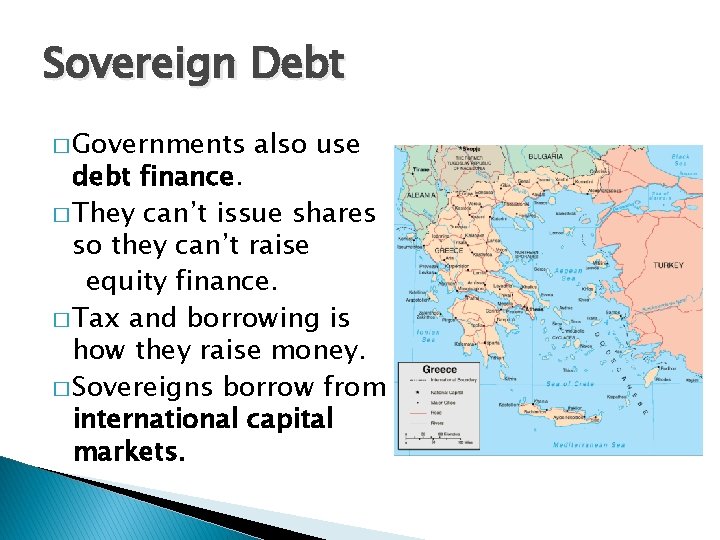
Sovereign Debt � Governments also use debt finance. � They can’t issue shares so they can’t raise equity finance. � Tax and borrowing is how they raise money. � Sovereigns borrow from international capital markets.
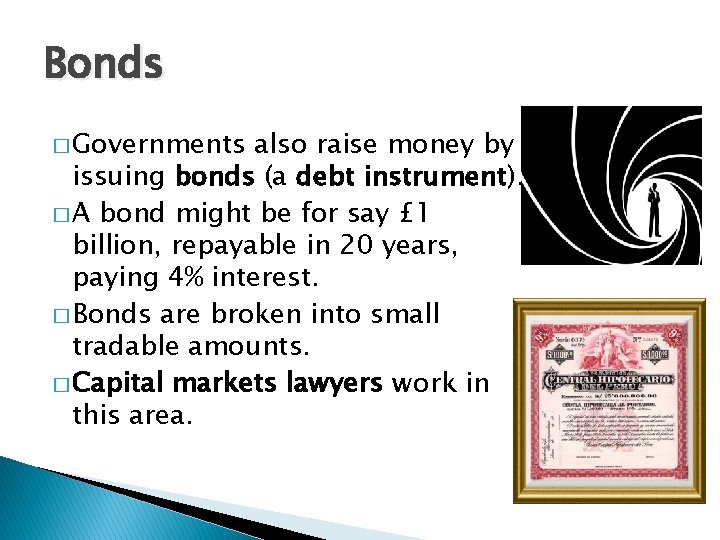
Bonds � Governments also raise money by issuing bonds (a debt instrument). � A bond might be for say £ 1 billion, repayable in 20 years, paying 4% interest. � Bonds are broken into small tradable amounts. � Capital markets lawyers work in this area.
Derivatives � Derivatives are financial instruments (swaps, options, futures) derived from equity and debt. � Options (shares) and bond futures (debt) can be traded. � Don’t panic – we’ll explain this in more detail later in the year. � Derivatives lawyers deal with this.
Project Finance � Project finance uses debt to fund infrastructure projects � E. g. In energy, health, transport and education. � Building pipelines, hospitals, railways and schools. � Many of these deals are PPPs (public-private partnership) or PFIs (private finance initiatives) because they are public sector projects funded in the private sector.
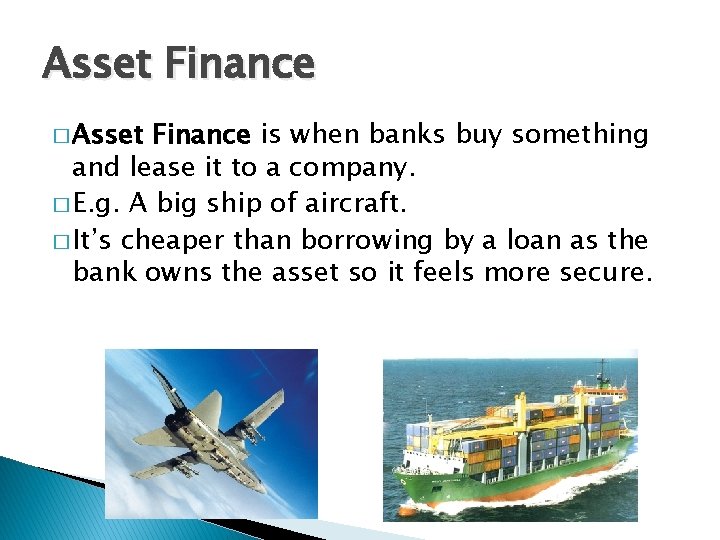
Asset Finance � Asset Finance is when banks buy something and lease it to a company. � E. g. A big ship of aircraft. � It’s cheaper than borrowing by a loan as the bank owns the asset so it feels more secure.
Our Role � Advising and assisting the company e. g. Ø Due Diligence. Due diligence is making sure that statements a company makes about itself are true. Ø Advising on underwriting agreements. � This work is carried out by Corporate Finance lawyers.
The End!