
Doppler Effect What Is It Pitch of an
- Slides: 12
Doppler Effect
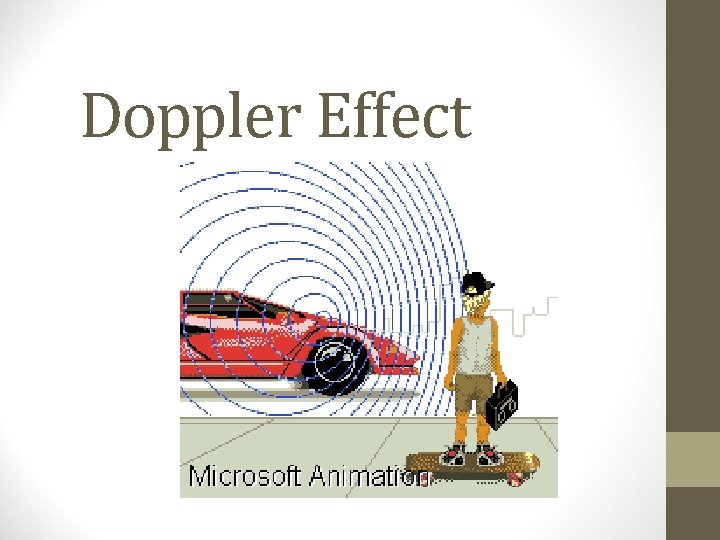
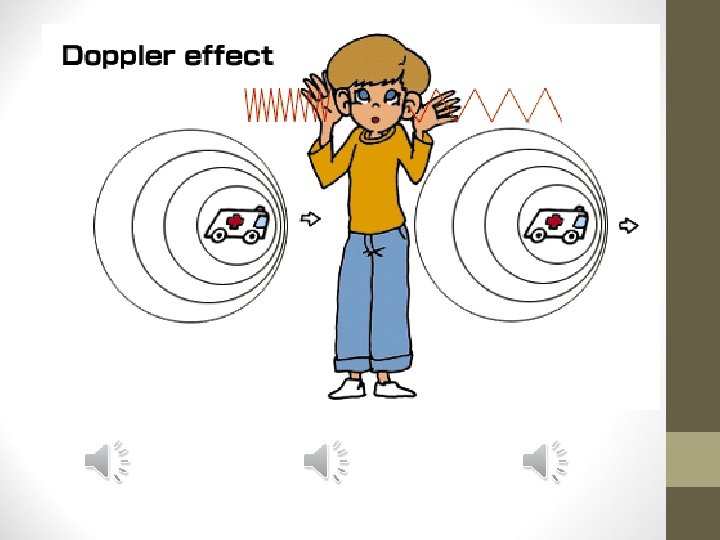
What Is It? • Pitch of an object appears to change as it passes a stationary observer • In front of moving object, waves pile up creating area of higher frequency • Behind waves spread out, lower frequency
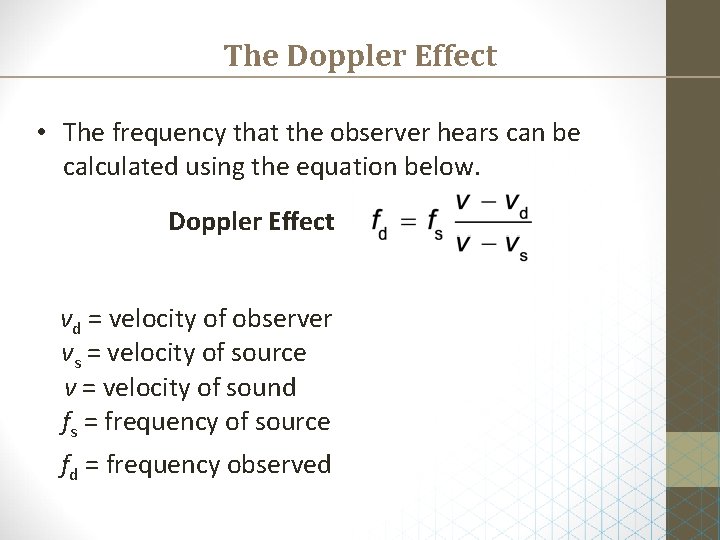
The Doppler Effect • The frequency that the observer hears can be calculated using the equation below. Doppler Effect vd = velocity of observer vs = velocity of source v = velocity of sound fs = frequency of source fd = frequency observed
Direction • For source moving: + towards - away For observer moving - towards + away
Example • A guitar plays a middle C (523 Hz) while traveling in a convertible at 24. 6 m/s. If the car is moving toward you, what frequency would you hear?
Whiteboard • A guitar plays a middle C (523 Hz) while traveling in a convertible at 24. 6 m/s. If the car is moving away from you, what frequency would you hear?
• A siren is mounted on a pole and sound’s a warning at 365 Hz. If you are in a car moving toward the pole at 25. 0 m/s, what frequency do you hear?
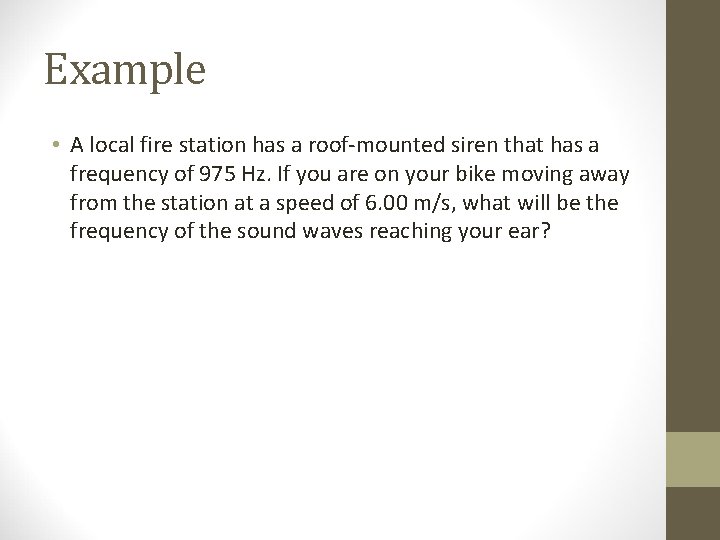
Example • A local fire station has a roof-mounted siren that has a frequency of 975 Hz. If you are on your bike moving away from the station at a speed of 6. 00 m/s, what will be the frequency of the sound waves reaching your ear?
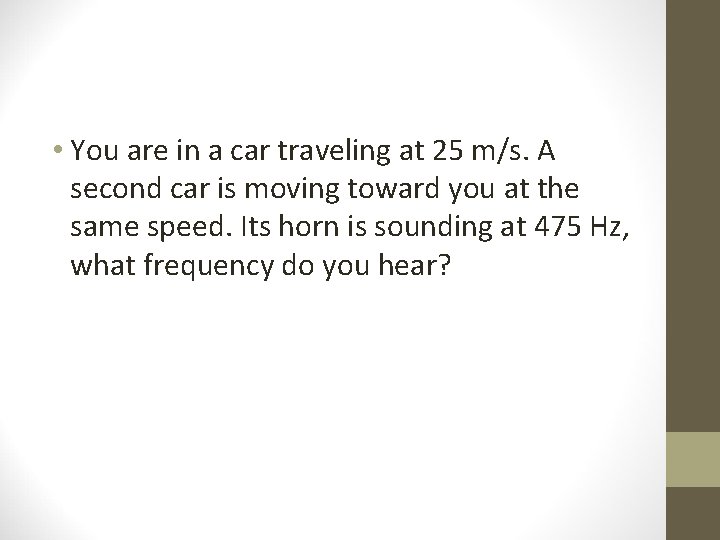
• You are in a car traveling at 25 m/s. A second car is moving toward you at the same speed. Its horn is sounding at 475 Hz, what frequency do you hear?
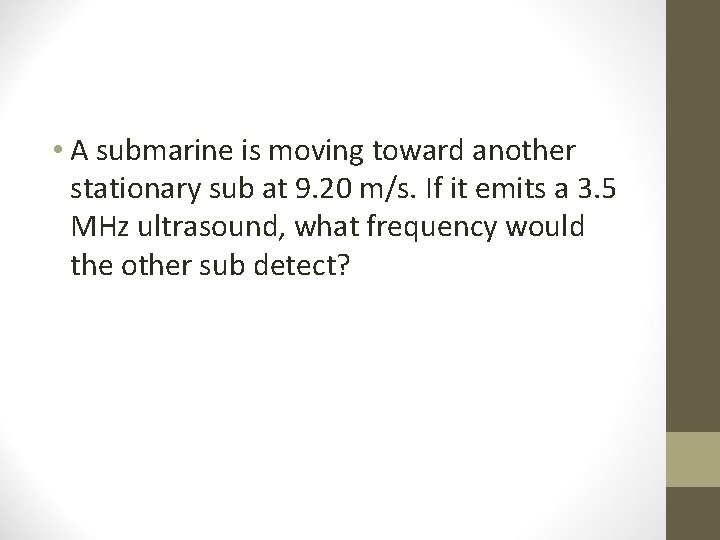
• A submarine is moving toward another stationary sub at 9. 20 m/s. If it emits a 3. 5 MHz ultrasound, what frequency would the other sub detect?
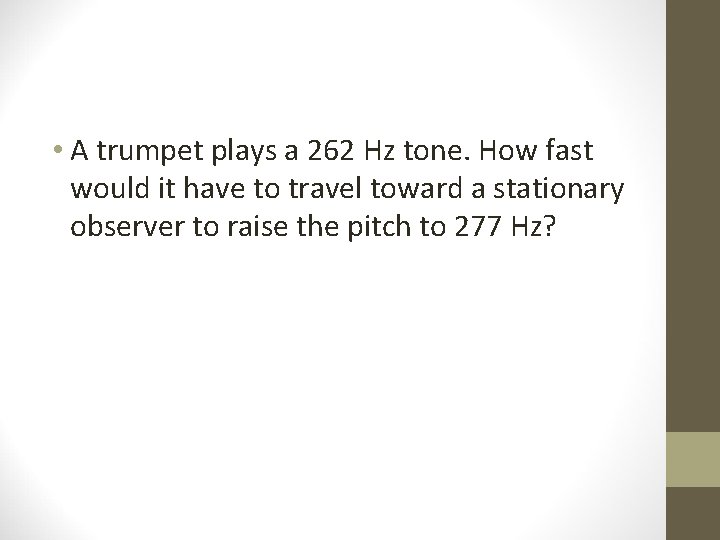
• A trumpet plays a 262 Hz tone. How fast would it have to travel toward a stationary observer to raise the pitch to 277 Hz?