
Dopamine Hypothesis Schizophrenia What is dopamine Helps control
- Slides: 4
Dopamine Hypothesis Schizophrenia
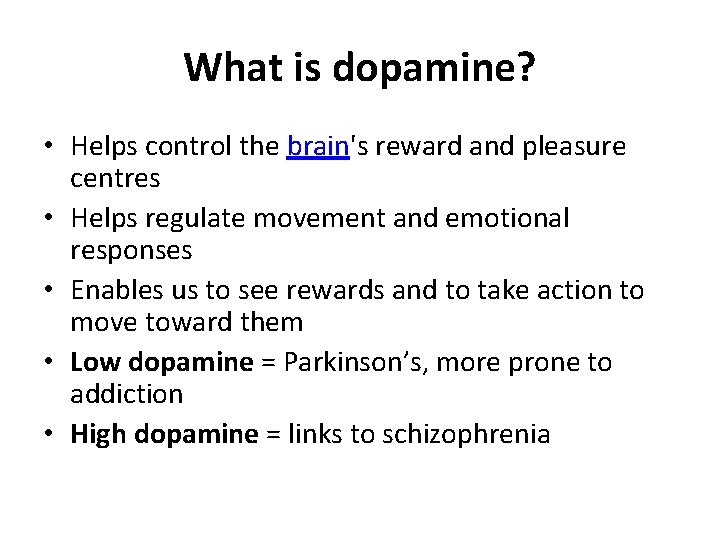
What is dopamine? • Helps control the brain's reward and pleasure centres • Helps regulate movement and emotional responses • Enables us to see rewards and to take action to move toward them • Low dopamine = Parkinson’s, more prone to addiction • High dopamine = links to schizophrenia
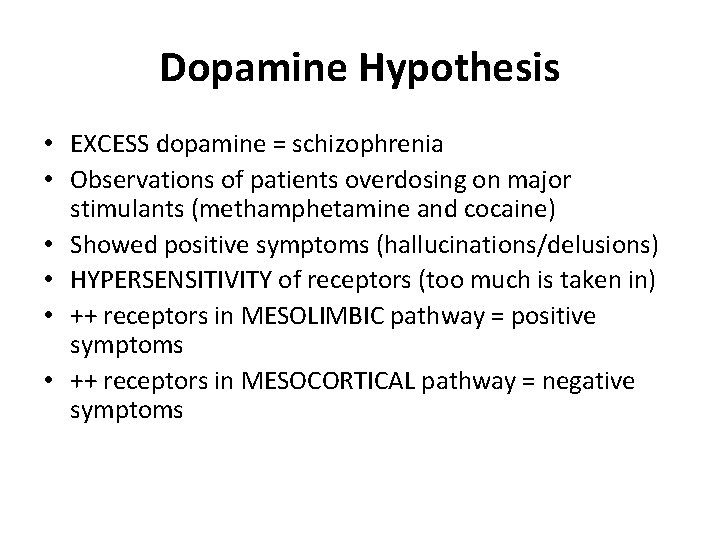
Dopamine Hypothesis • EXCESS dopamine = schizophrenia • Observations of patients overdosing on major stimulants (methamphetamine and cocaine) • Showed positive symptoms (hallucinations/delusions) • HYPERSENSITIVITY of receptors (too much is taken in) • ++ receptors in MESOLIMBIC pathway = positive symptoms • ++ receptors in MESOCORTICAL pathway = negative symptoms
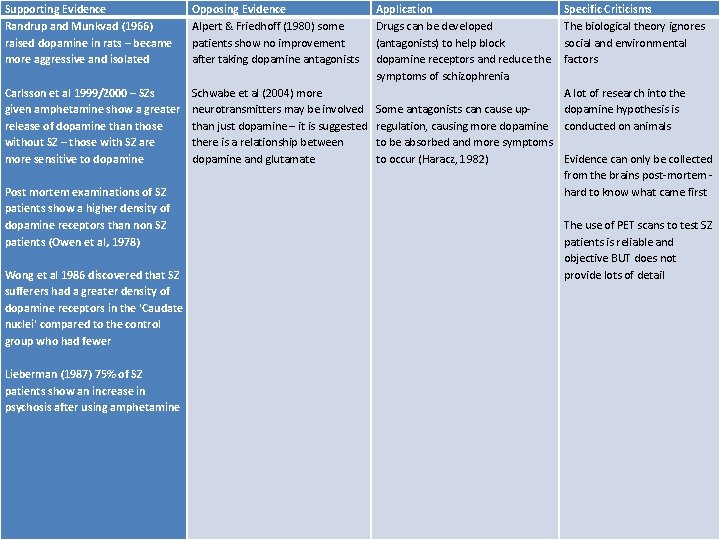
Supporting Evidence Randrup and Munkvad (1966) raised dopamine in rats – became more aggressive and isolated Opposing Evidence Alpert & Friedhoff (1980) some patients show no improvement after taking dopamine antagonists Carlsson et al 1999/2000 – SZs given amphetamine show a greater release of dopamine than those without SZ – those with SZ are more sensitive to dopamine Schwabe et al (2004) more neurotransmitters may be involved than just dopamine – it is suggested there is a relationship between dopamine and glutamate Post mortem examinations of SZ patients show a higher density of dopamine receptors than non SZ patients (Owen et al, 1978) Wong et al 1986 discovered that SZ sufferers had a greater density of dopamine receptors in the 'Caudate nuclei' compared to the control group who had fewer Lieberman (1987) 75% of SZ patients show an increase in psychosis after using amphetamine Application Drugs can be developed (antagonists) to help block dopamine receptors and reduce the symptoms of schizophrenia Specific Criticisms The biological theory ignores social and environmental factors A lot of research into the dopamine hypothesis is conducted on animals Some antagonists can cause upregulation, causing more dopamine to be absorbed and more symptoms to occur (Haracz, 1982) Evidence can only be collected from the brains post-mortem hard to know what came first The use of PET scans to test SZ patients is reliable and objective BUT does not provide lots of detail