
Dopamine Decision Making and Risk for Drug Addiction


- Slides: 29
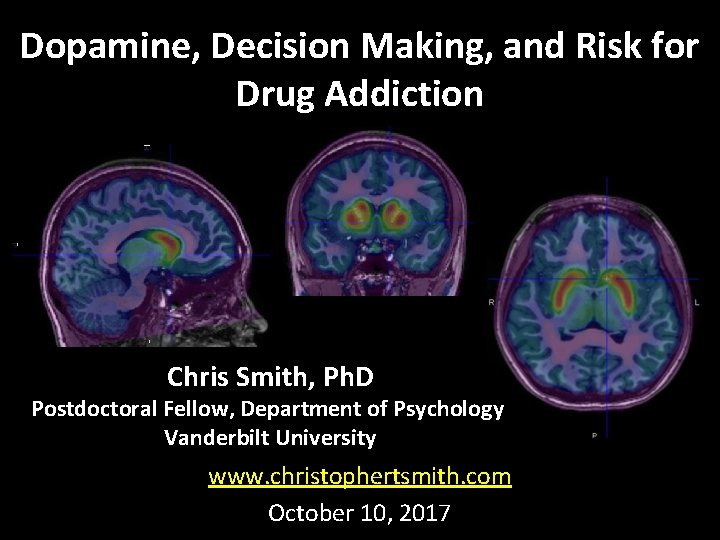
Dopamine, Decision Making, and Risk for Drug Addiction Chris Smith, Ph. D Postdoctoral Fellow, Department of Psychology Vanderbilt University www. christophertsmith. com October 10, 2017
Outline • Dopamine and drugs of abuse • Intermediate phenotypes & study of drug/alcohol abuse • Immediate Reward Selection Bias • Definition & Measurement = Impulsive Choice Ratio (ICR) 1) ICR as intermediate phenotype for alcohol use disorder 2) ICR modulation by dopamine, implications for personalized dopaminergic treatments 3) Using Positron Emission Tomography (PET) to evaluate the role of dopamine in ICR and risk for drug abuse
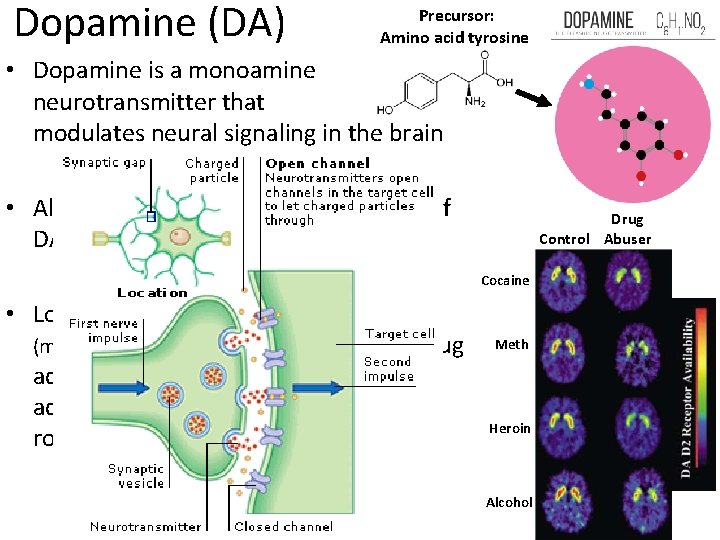
Dopamine (DA) Precursor: Amino acid tyrosine • Dopamine is a monoamine neurotransmitter that modulates neural signaling in the brain • All drugs of abuse lead to the release of DA in the brain Drug Control Abuser Cocaine • Lower DA D 2 receptor availability (measured with PET) is associated with drug addiction in humans (Volkow et al. , 2004) and addiction risk in monkeys (Nader et al. , 2006) & rodents (Dalley et al. , 2007) Meth Heroin Alcohol
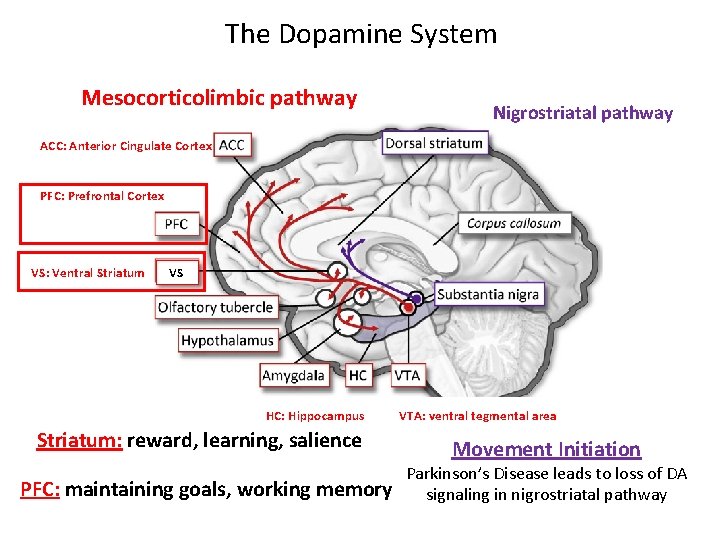
The Dopamine System Mesocorticolimbic pathway Nigrostriatal pathway ACC: Anterior Cingulate Cortex PFC: Prefrontal Cortex VS: Ventral Striatum VS HC: Hippocampus Striatum: reward, learning, salience PFC: maintaining goals, working memory VTA: ventral tegmental area Movement Initiation Parkinson’s Disease leads to loss of DA signaling in nigrostriatal pathway
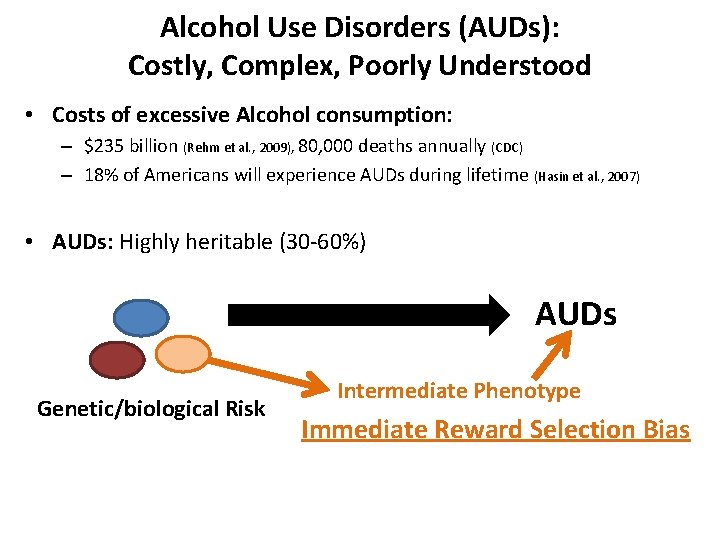
Alcohol Use Disorders (AUDs): Costly, Complex, Poorly Understood • Costs of excessive Alcohol consumption: – $235 billion (Rehm et al. , 2009), 80, 000 deaths annually (CDC) – 18% of Americans will experience AUDs during lifetime (Hasin et al. , 2007) • AUDs: Highly heritable (30 -60%) AUDs Genetic/biological Risk Intermediate Phenotype Immediate Reward Selection Bias
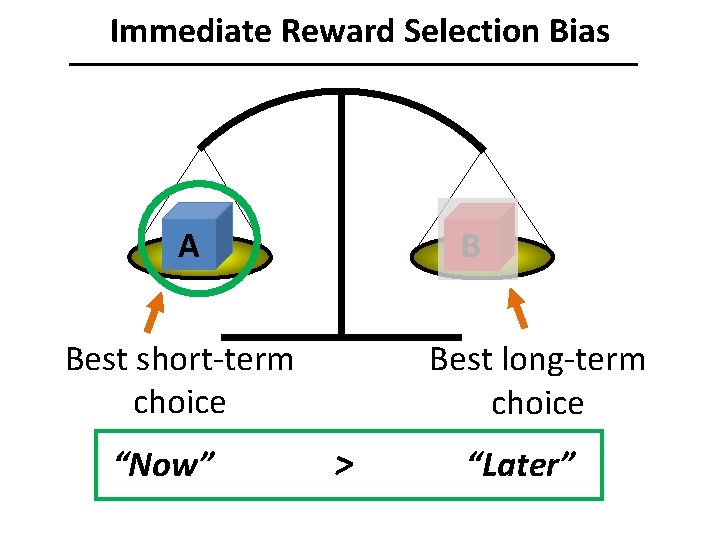
Immediate Reward Selection Bias A B Best short-term choice “Now” Best long-term choice > “Later”
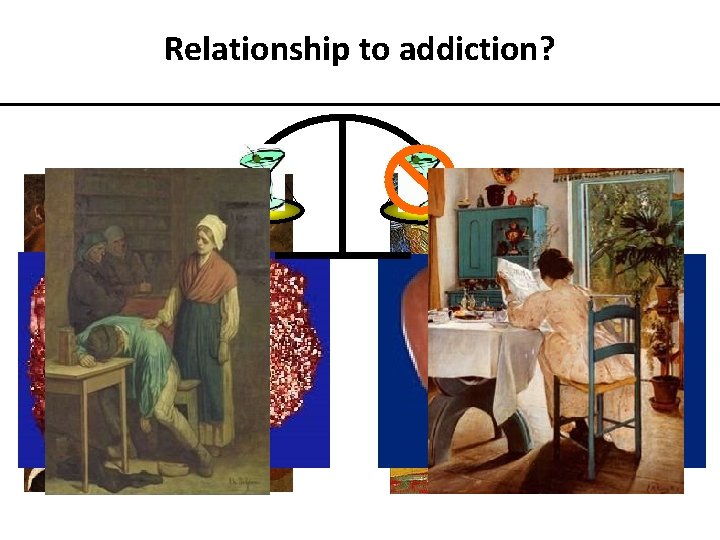
Relationship to addiction?
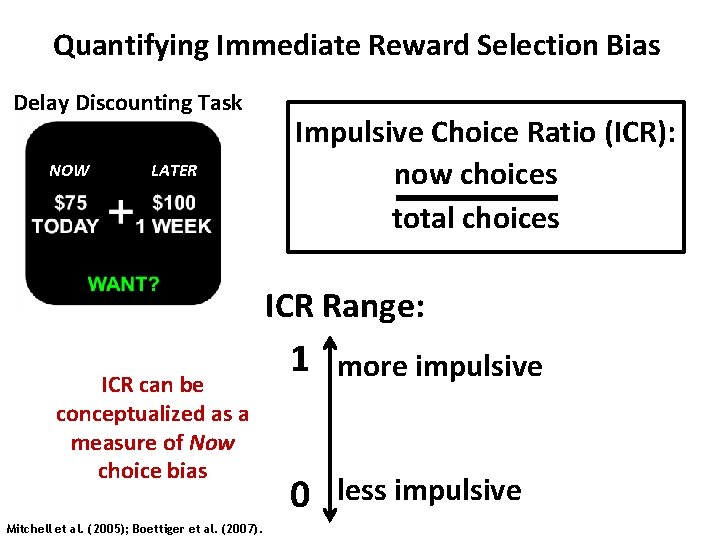
Quantifying Immediate Reward Selection Bias Delay Discounting Task NOW LATER Impulsive Choice Ratio (ICR): now choices total choices ICR Range: ICR can be conceptualized as a measure of Now choice bias Mitchell et al. (2005); Boettiger et al. (2007). 1 more impulsive 0 less impulsive
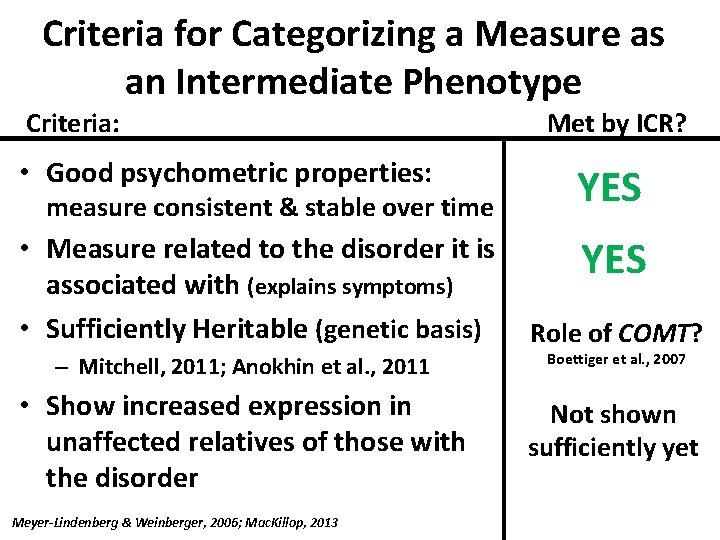
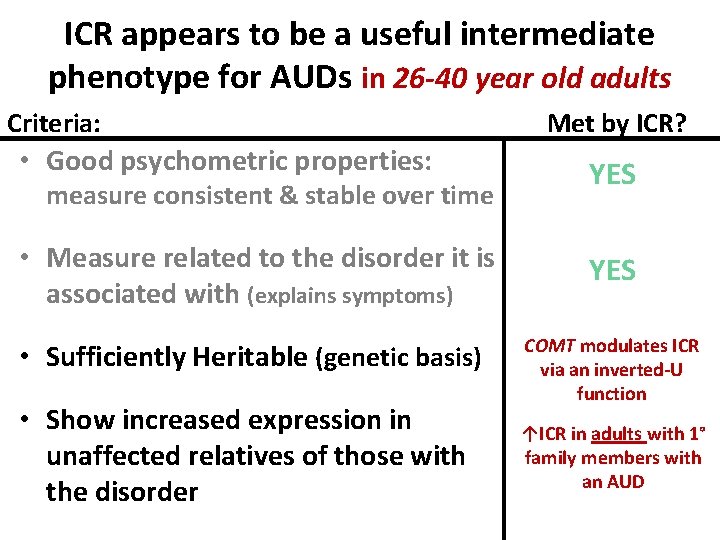
Criteria for Categorizing a Measure as an Intermediate Phenotype Criteria: Met by ICR? • Good psychometric properties: measure consistent & stable over time YES • Measure related to the disorder it is YES associated with (explains symptoms) • Sufficiently Heritable (genetic basis) Role of COMT? – Mitchell, 2011; Anokhin et al. , 2011 • Show increased expression in unaffected relatives of those with the disorder Meyer-Lindenberg & Weinberger, 2006; Mac. Killop, 2013 Boettiger et al. , 2007 Not shown sufficiently yet
See: Mitchell et al. , 2005; Smith et al. , 2015 Frontiers in Human Neuroscience
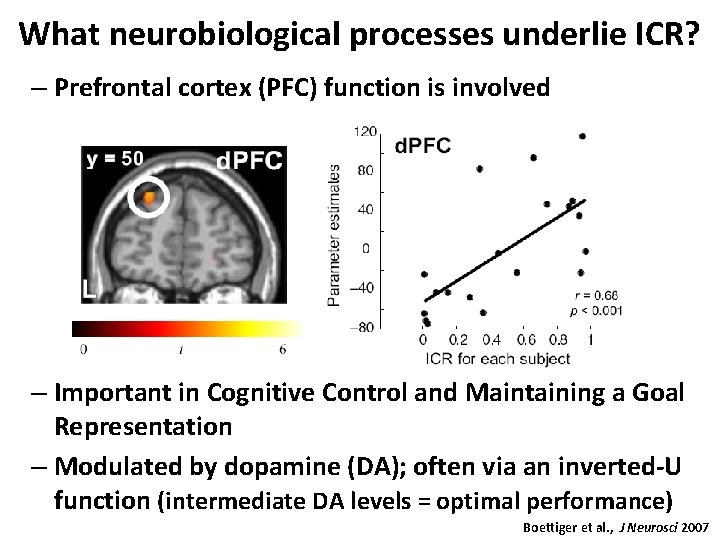
What neurobiological processes underlie ICR? – Prefrontal cortex (PFC) function is involved – Important in Cognitive Control and Maintaining a Goal Representation – Modulated by dopamine (DA); often via an inverted-U function (intermediate DA levels = optimal performance) Boettiger et al. , J Neurosci 2007
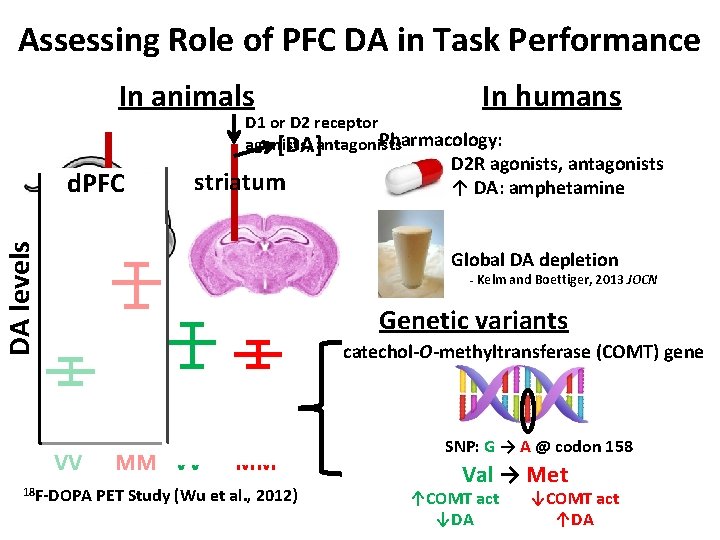
Assessing Role of PFC DA in Task Performance In animals In humans D 1 or D 2 receptor Pharmacology: agonists, antagonists [DA] striatum DA levels d. PFC D 2 R agonists, antagonists ↑ DA: amphetamine Global DA depletion - Kelm and Boettiger, 2013 JOCN Genetic variants catechol-O-methyltransferase (COMT) gene VV MM 18 F-DOPA PET Study (Wu et al. , 2012) SNP: G → A @ codon 158 Val → Met ↑COMT act ↓DA ↓COMT act ↑DA
PFC DA Level is Controlled by the Enzyme Catechol-O-methyltransferase (COMT) Val/Val COMT Met/Met COMT Tyrosine TH L-DOPA AADC Dopamine DAT COM T TH: tyrosine hydroxylase AADC: aromatic amino acid decarboxylase DAT: dopamine transporter 3 -MT: 3 -methoxytyramine DAT COM T DA 3 -MT PFC DA
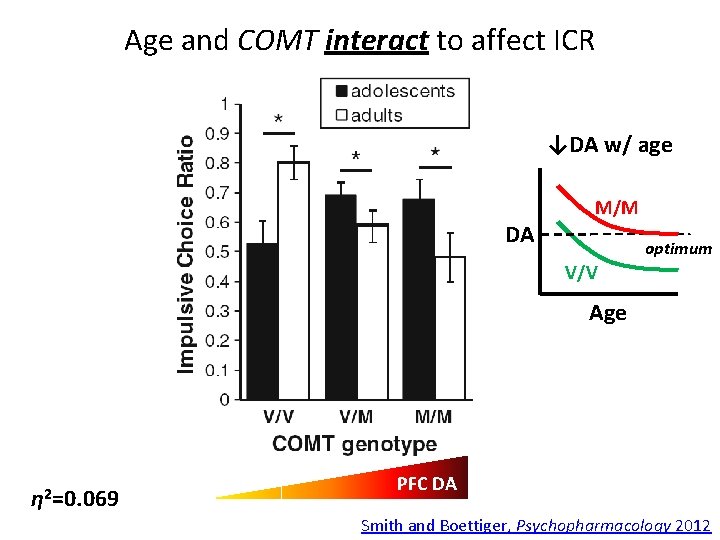
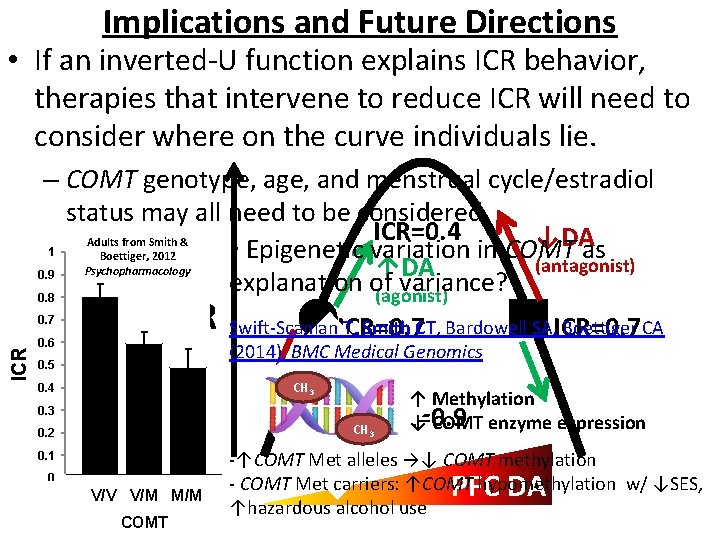
Age and COMT interact to affect ICR ↓DA w/ age DA M/M optimum V/V Age η 2=0. 069 PFC DA Smith and Boettiger, Psychopharmacology 2012
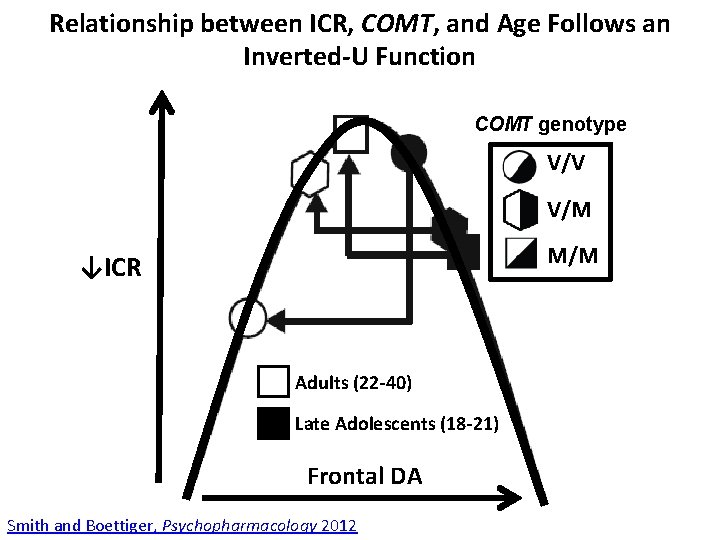
Relationship between ICR, COMT, and Age Follows an Inverted-U Function COMT genotype V/V V/M M/M ↓ICR Adults (22 -40) Late Adolescents (18 -21) Frontal DA Smith and Boettiger, Psychopharmacology 2012
Revisiting ICR as an Intermediate ICR appears to be a useful intermediate phenotype for AUDs in 26 -40 year old adults Phenotype for Alcohol Use Disorders Criteria: Met by ICR? • Good psychometric properties: YES • Measure related to the disorder it is associated with (explains symptoms) YES measure consistent & stable over time • Sufficiently Heritable (genetic basis) • Show increased expression in unaffected relatives of those with the disorder COMT modulates ICR via an inverted-U function ↑ICR in adults with 1° family members with an AUD
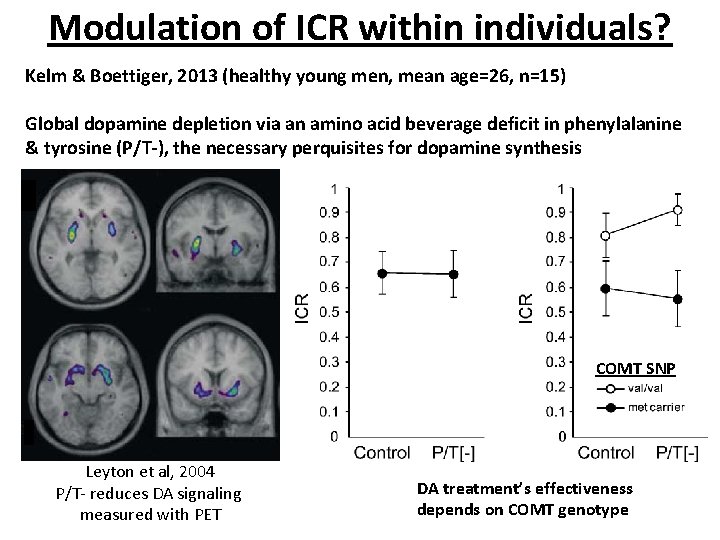
Modulation of ICR within individuals? Kelm & Boettiger, 2013 (healthy young men, mean age=26, n=15) Global dopamine depletion via an amino acid beverage deficit in phenylalanine & tyrosine (P/T-), the necessary perquisites for dopamine synthesis COMT SNP Leyton et al, 2004 P/T- reduces DA signaling measured with PET DA treatment’s effectiveness depends on COMT genotype
Implications and Future Directions • If an inverted-U function explains ICR behavior, therapies that intervene to reduce ICR will need to consider where on the curve individuals lie. – COMT genotype, age, and menstrual cycle/estradiol status may all need to be considered ICR=0. 4 ↓DA Adults from Smith & 1 • Epigenetic variation in COMT as Boettiger, 2012 (antagonist) Psychopharmacology ↑DA 0. 9 explanation of variance? 0. 8 (agonist) ICR 0. 7 0. 6 ↓ICR Swift-Scanlan. ICR=0. 7 T, Smith CT, Bardowell SA, ICR=0. 7 Boettiger CA (2014), BMC Medical Genomics 0. 5 CH 3 0. 4 0. 3 0. 2 0. 1 0 0 1 2 3 V/V V/M M/M COMT ↑ Methylation ICR=0. 9 ↓ COMT enzyme expression CH 3 -↑COMT Met alleles →↓ COMT methylation hypomethylation w/ ↓SES, 4 - COMT Met carriers: ↑COMT PFC DA ↑hazardous alcohol use
Positron Emission Tomography & Measurement of Dopamine Signaling in the Human Brain
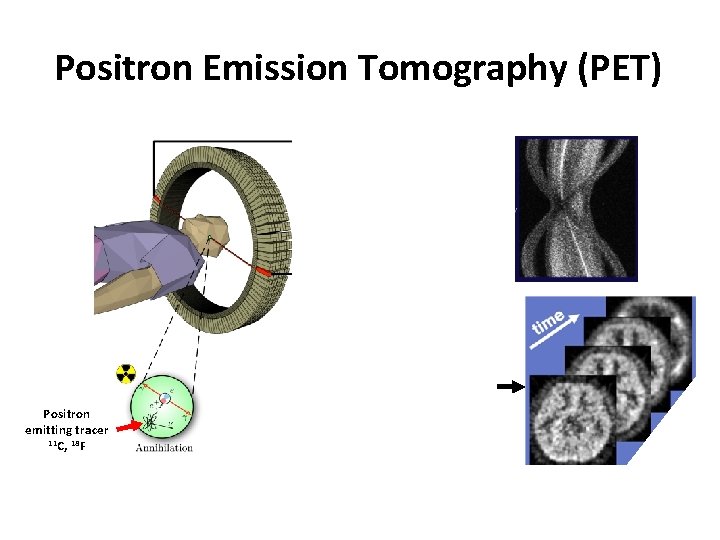
Positron Emission Tomography (PET) Positron emitting tracer 11 C, 18 F
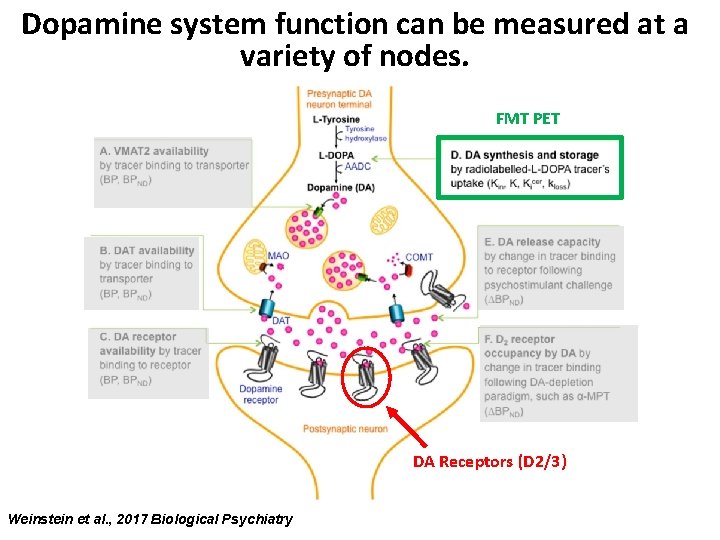
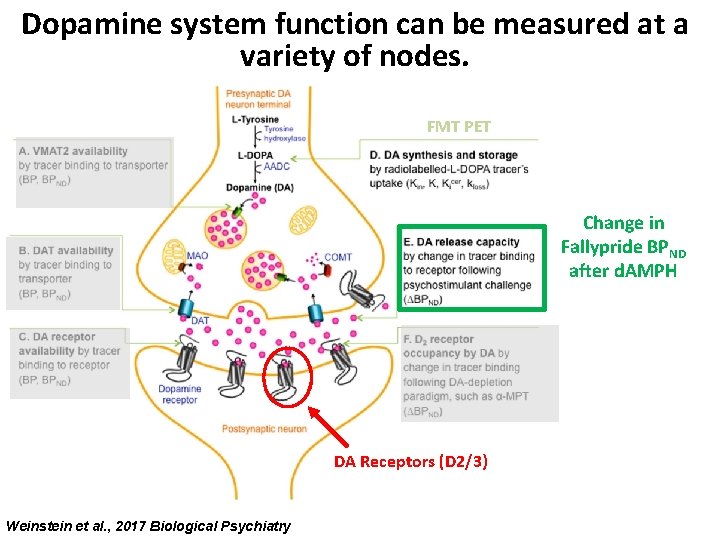
Dopamine system function can be measured at a variety of nodes. FMT PET Weinstein et al. , 2017 Biological Psychiatry DA Receptors (D 2/3)
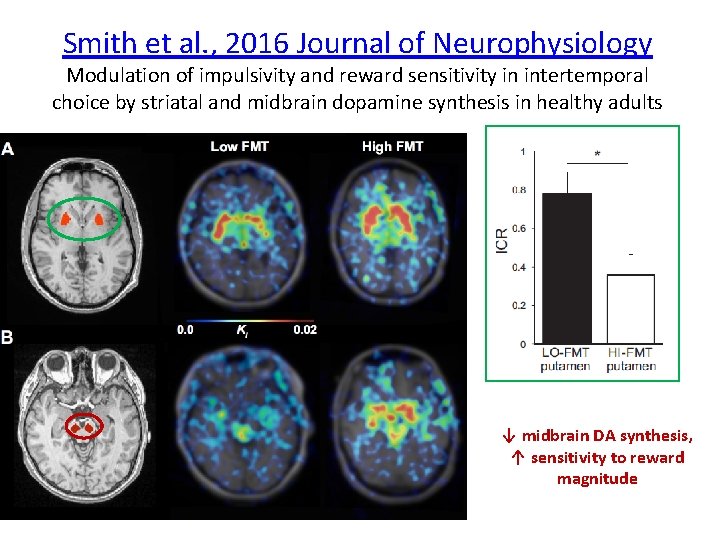
Smith et al. , 2016 Journal of Neurophysiology Modulation of impulsivity and reward sensitivity in intertemporal choice by striatal and midbrain dopamine synthesis in healthy adults ↓ midbrain DA synthesis, ↑ sensitivity to reward magnitude
Dopamine system function can be measured at a variety of nodes. FMT PET Change in Fallypride BPND after d. AMPH DA Receptors (D 2/3) Weinstein et al. , 2017 Biological Psychiatry
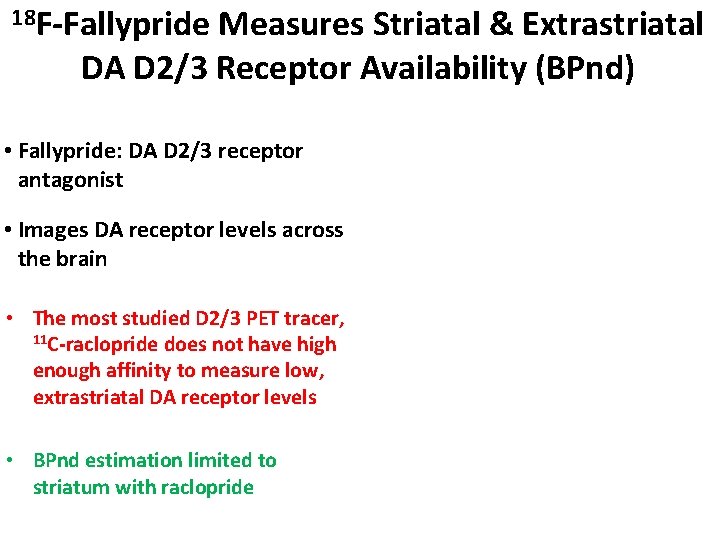
18 F-Fallypride Measures Striatal & Extrastriatal DA D 2/3 Receptor Availability (BPnd) • Images DA receptor levels across the brain • The most studied D 2/3 PET tracer, 11 C-raclopride does not have high enough affinity to measure low, extrastriatal DA receptor levels • BPnd estimation limited to striatum with raclopride 100% Fallypride Signal • Fallypride: DA D 2/3 receptor antagonist 50% 0% BPnd
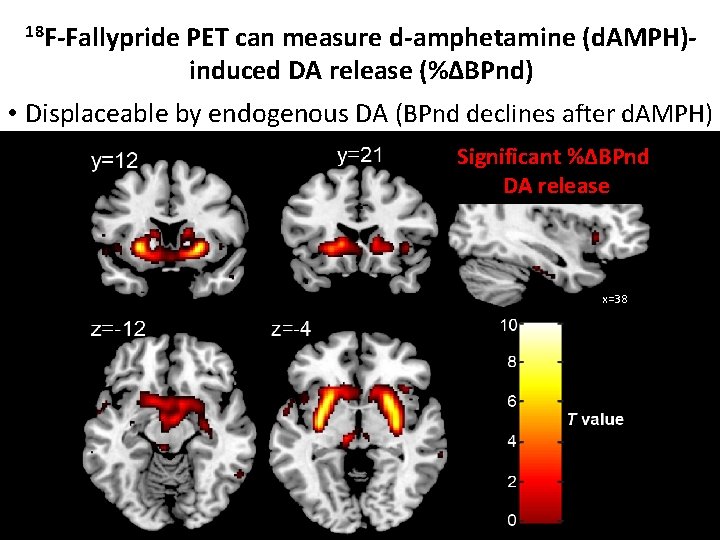
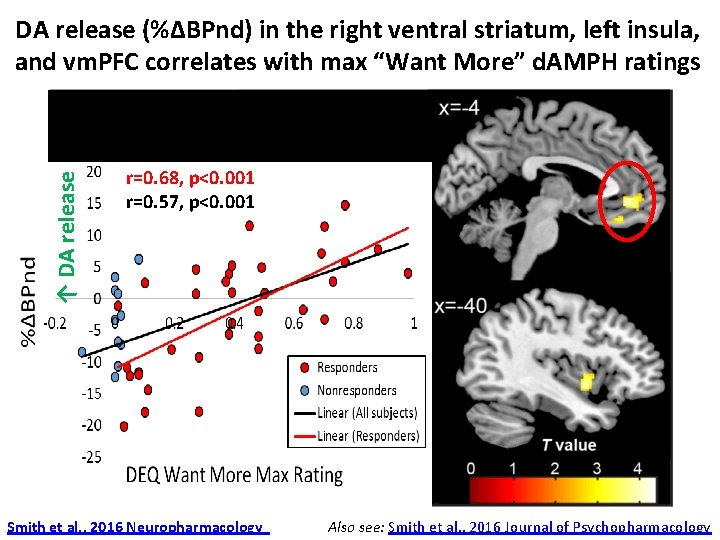
18 F-Fallypride PET can measure d-amphetamine (d. AMPH)- induced DA release (%ΔBPnd) • Displaceable by endogenous DA (BPnd declines after d. AMPH) Significant %ΔBPnd DA release x=38
↑ DA release (%ΔBPnd) in the right ventral striatum, left insula, and vm. PFC correlates with max “Want More” d. AMPH ratings r=0. 68, p<0. 001 r=0. 57, p<0. 001 Smith et al. , 2016 Neuropharmacology Also see: Smith et al. , 2016 Journal of Psychopharmacology
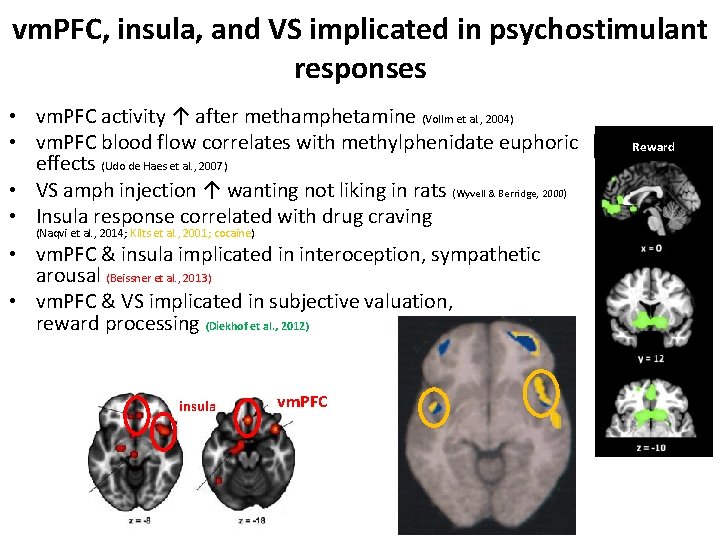
vm. PFC, insula, and VS implicated in psychostimulant responses • vm. PFC activity ↑ after methamphetamine (Vollm et al. , 2004) • vm. PFC blood flow correlates with methylphenidate euphoric effects (Udo de Haes et al. , 2007) • VS amph injection ↑ wanting not liking in rats (Wyvell & Berridge, 2000) • Insula response correlated with drug craving (Naqvi et al. , 2014; Kilts et al. , 2001; cocaine) • vm. PFC & insula implicated in interoception, sympathetic arousal (Beissner et al. , 2013) • vm. PFC & VS implicated in subjective valuation, reward processing (Diekhof et al. , 2012) insula vm. PFC Reward
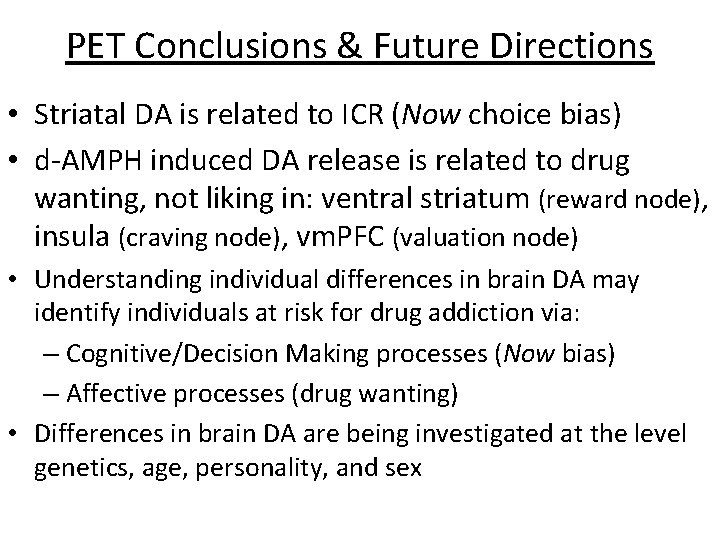
PET Conclusions & Future Directions • Striatal DA is related to ICR (Now choice bias) • d-AMPH induced DA release is related to drug wanting, not liking in: ventral striatum (reward node), insula (craving node), vm. PFC (valuation node) • Understanding individual differences in brain DA may identify individuals at risk for drug addiction via: – Cognitive/Decision Making processes (Now bias) – Affective processes (drug wanting) • Differences in brain DA are being investigated at the level genetics, age, personality, and sex
UNC Chapel Hill Acknowledgements Charlotte Boettiger, Ph. D (Ph. D Advisor) – Katie Kelm, Ph. D – Michael Parrish* – Scott Oppler* Collaborators: Vanderbilt University David Zald, Ph. D (Postdoc Mentor) – Linh Dang, Ph. D – RAs: • • • Scott Perkins Jaime Castrellon Leah Burgess Danica San Juan Darcy Smith Theresa Swift-Scanlan (VCU) Andy Smolen (University of Colorado) Bill Jagust (Lawerence Berkeley National Lab) Deanna Wallace (UC Berkeley) Linh Dang (UC Berkeley, now Vanderbilt) Emily Jacobs (UC Berkeley, now UCSB) Gregory Samanez-Larkin (Yale, now Duke) Ronald Cowan, MD, Ph. D (Vanderbilt) Robert Kessler, MD (UAB) Harriet de Wit (Univ of Chicago) Jessica Weafer (Univ of Chicago) Joshua Buckholtz (Harvard) Daniel Claassen (Vanderbilt) Grad Funding: F 31 AA 020132 (CTS) from NIAAA, T 32 DA 007244 (CTS) from NIDA, UL 1 RR 025747 (CAB) and KL 2 RR 025746 (CAB) from NCRR, A 14 -0050 -001 (CAB) from ABMRF. Postdoc Funding: NIDA: R 01 DA 019670 (DHZ), R 21 DA 033611 (DHZ), F 32 DA 041157 (CTS); NIA: R 01 AG 044838 (DHZ)