
Dont Forget the Well Keys Lessons Learned from

- Slides: 24
Don’t Forget the Well Keys: Lessons Learned from 25 years of Field Work EPA CLU-IN RCRA Expert Series 7 September 2016 Katherine Baylor, PG USEPA Region 9, San Francisco 1
DISCLAIMER This presentation has been provided as part of a U. S. Environmental Protection Agency webinar. The document does not constitute EPA policy. Mention of trade names or commercial products does not constitute endorsement or recommendation for use. Links to non-EPA web sites do not imply any official EPA endorsement of or a responsibility for the opinions, ideas, data, or products presented at those locations or guarantee the validity of the information provided. Links to non-EPA servers are provided solely as a pointer to information that might be useful to EPA staff and the public. 2
Why Field Work? • • Environmental Data Collection (sampling) Oversight of Regulated Facilities / Enforcement Site Familiarization Training 3
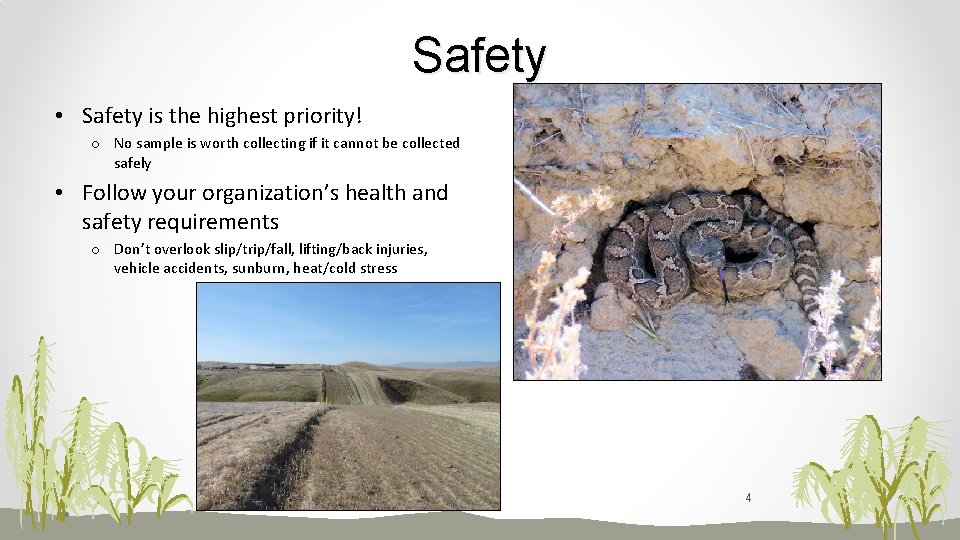
Safety • Safety is the highest priority! o No sample is worth collecting if it cannot be collected safely • Follow your organization’s health and safety requirements o Don’t overlook slip/trip/fall, lifting/back injuries, vehicle accidents, sunburn, heat/cold stress 4
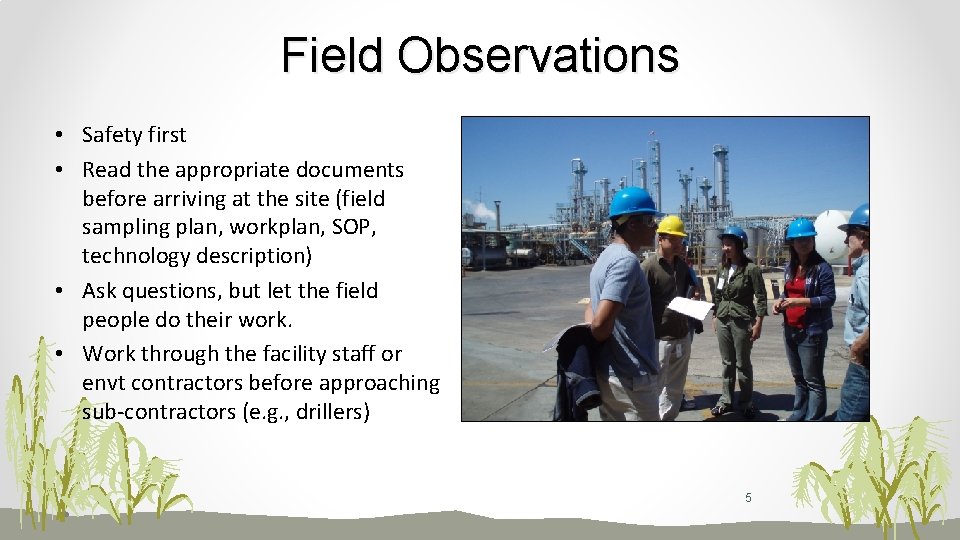
Field Observations • Safety first • Read the appropriate documents before arriving at the site (field sampling plan, workplan, SOP, technology description) • Ask questions, but let the field people do their work. • Work through the facility staff or envt contractors before approaching sub-contractors (e. g. , drillers) 5
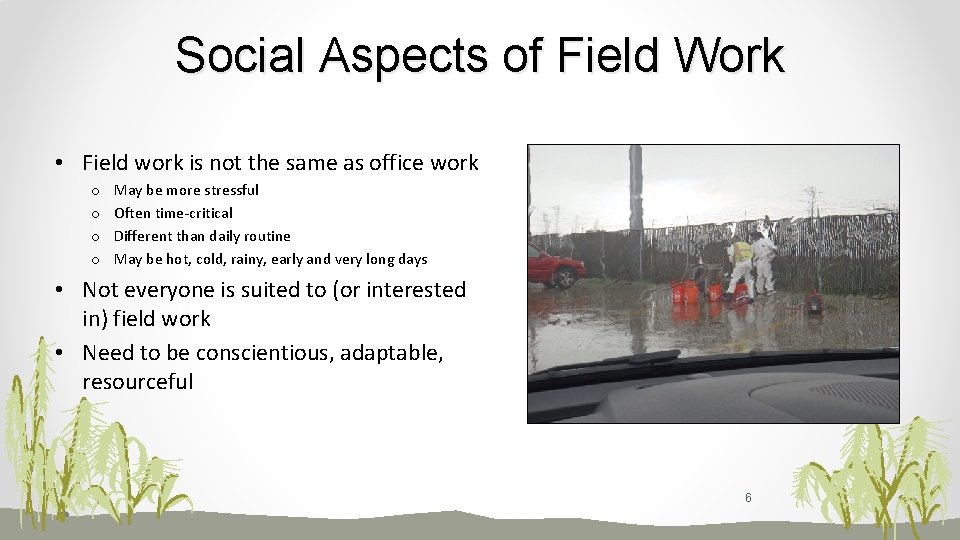
Social Aspects of Field Work • Field work is not the same as office work o o May be more stressful Often time-critical Different than daily routine May be hot, cold, rainy, early and very long days • Not everyone is suited to (or interested in) field work • Need to be conscientious, adaptable, resourceful 6
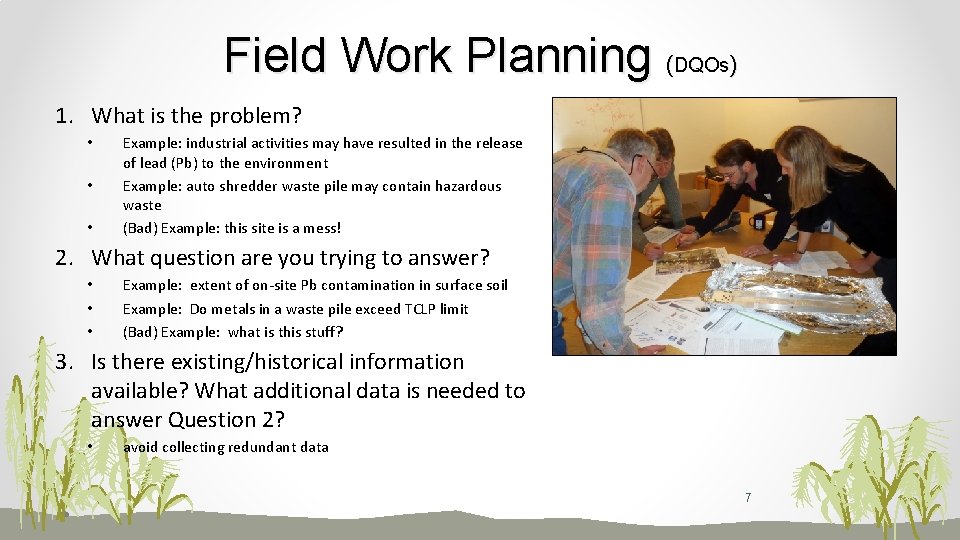
Field Work Planning (DQOs) 1. What is the problem? • • • Example: industrial activities may have resulted in the release of lead (Pb) to the environment Example: auto shredder waste pile may contain hazardous waste (Bad) Example: this site is a mess! 2. What question are you trying to answer? • • • Example: extent of on-site Pb contamination in surface soil Example: Do metals in a waste pile exceed TCLP limit (Bad) Example: what is this stuff? 3. Is there existing/historical information available? What additional data is needed to answer Question 2? • avoid collecting redundant data 7
Field Work Planning (DQOs) 4. Where/when will data be collected? • On-site, off-site, at depth, during multiple seasons? 5. What regulatory/risk levels apply? • Regulatory/risk levels may dictate analytical methods and requested detection limits 6. Using inputs from Questions 1 through 5, design the sampling/analysis approach • • Consider resources: budget, personnel, time How many samples? What media (soil, water, air, biota)? What analysis? VOCs, SVOC, metals, PCBs? • What detection limits are needed? Grab samples, composite samples, multi-increment samples? 7. Work with the laboratory to get the necessary analysis 8
Field Work Planning (Data Quality Objectives) 1. State the Problem 2. Identify the Goals of the Study 3. Identify Information Inputs 4. Define the Boundaries of the Study 5. Develop the Analytic Approach 6. Specify Performance or Acceptance Criteria 7. Develop the Plan for Obtaining the Data Quality Objectives: https: //www. epa. gov/sites/production/files/201506/documents/g 4 -final. pdf (121 pages) 9
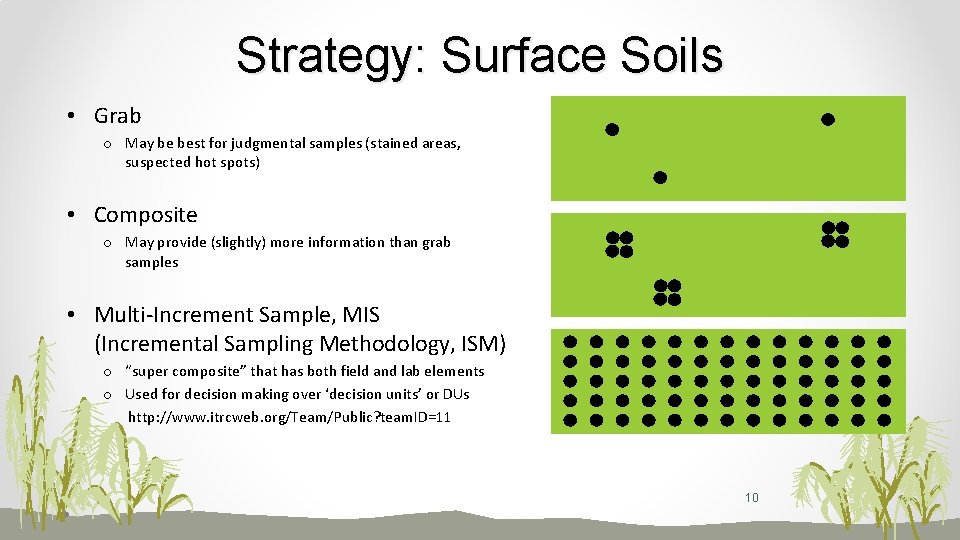
Strategy: Surface Soils • Grab o May be best for judgmental samples (stained areas, suspected hot spots) • Composite o May provide (slightly) more information than grab samples • Multi-Increment Sample, MIS (Incremental Sampling Methodology, ISM) o “super composite” that has both field and lab elements o Used for decision making over ‘decision units’ or DUs http: //www. itrcweb. org/Team/Public? team. ID=11 10
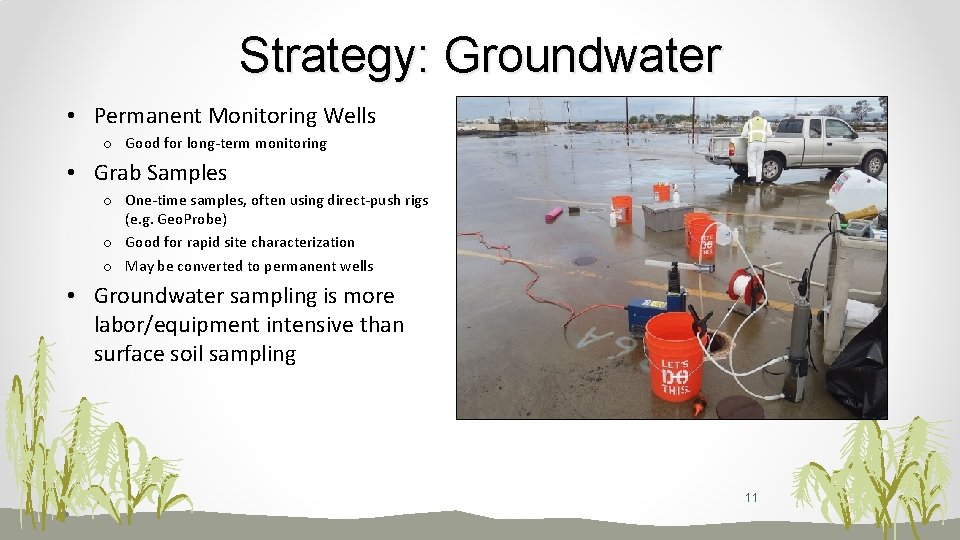
Strategy: Groundwater • Permanent Monitoring Wells o Good for long-term monitoring • Grab Samples o One-time samples, often using direct-push rigs (e. g. Geo. Probe) o Good for rapid site characterization o May be converted to permanent wells • Groundwater sampling is more labor/equipment intensive than surface soil sampling 11
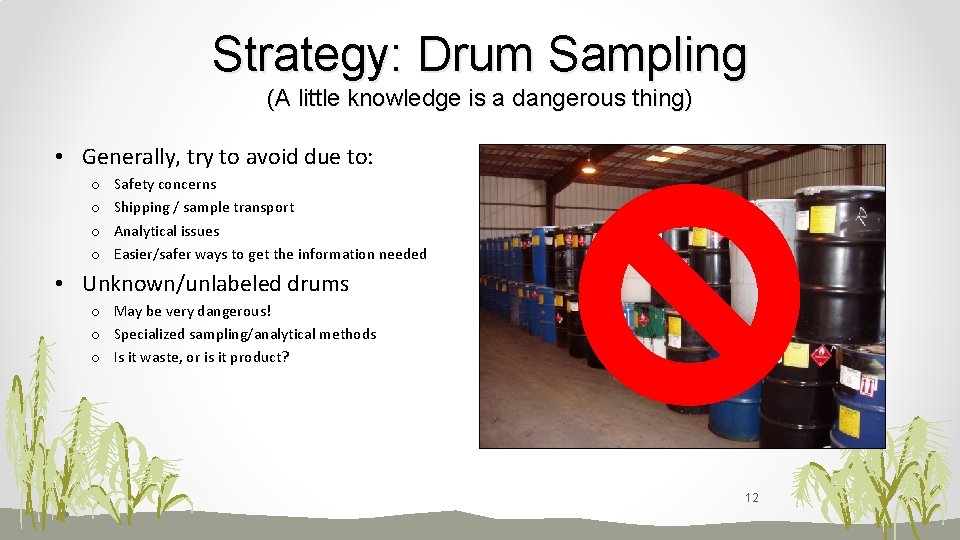
Strategy: Drum Sampling (A little knowledge is a dangerous thing) • Generally, try to avoid due to: o o Safety concerns Shipping / sample transport Analytical issues Easier/safer ways to get the information needed • Unknown/unlabeled drums o May be very dangerous! o Specialized sampling/analytical methods o Is it waste, or is it product? 12
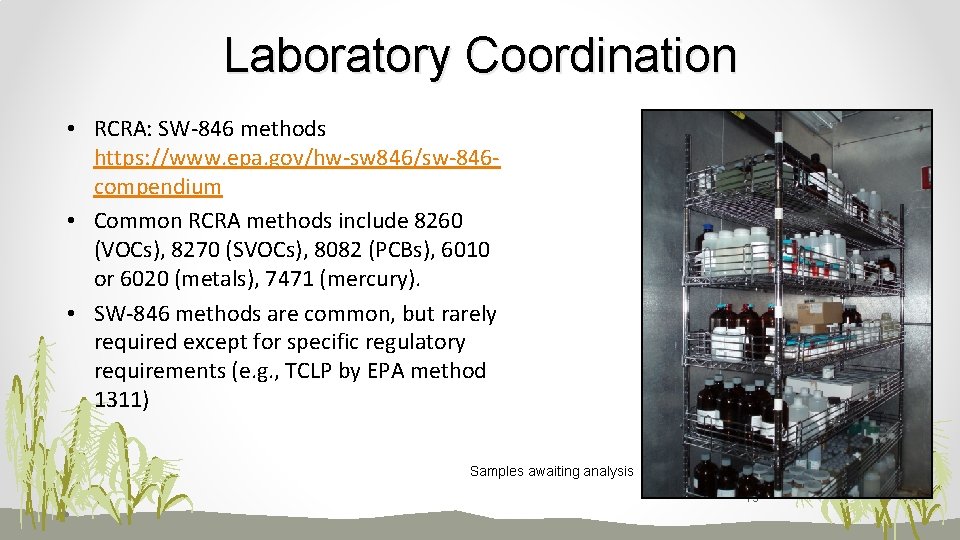
Laboratory Coordination • RCRA: SW-846 methods https: //www. epa. gov/hw-sw 846/sw-846 compendium • Common RCRA methods include 8260 (VOCs), 8270 (SVOCs), 8082 (PCBs), 6010 or 6020 (metals), 7471 (mercury). • SW-846 methods are common, but rarely required except for specific regulatory requirements (e. g. , TCLP by EPA method 1311) Samples awaiting analysis 13
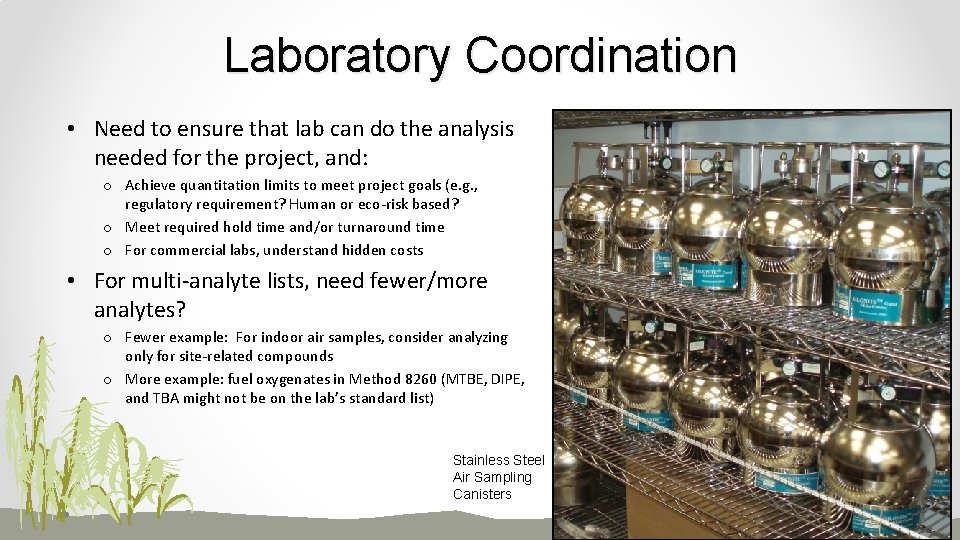
Laboratory Coordination • Need to ensure that lab can do the analysis needed for the project, and: o Achieve quantitation limits to meet project goals (e. g. , regulatory requirement? Human or eco-risk based? o Meet required hold time and/or turnaround time o For commercial labs, understand hidden costs • For multi-analyte lists, need fewer/more analytes? o Fewer example: For indoor air samples, consider analyzing only for site-related compounds o More example: fuel oxygenates in Method 8260 (MTBE, DIPE, and TBA might not be on the lab’s standard list) Stainless Steel Air Sampling Canisters 14
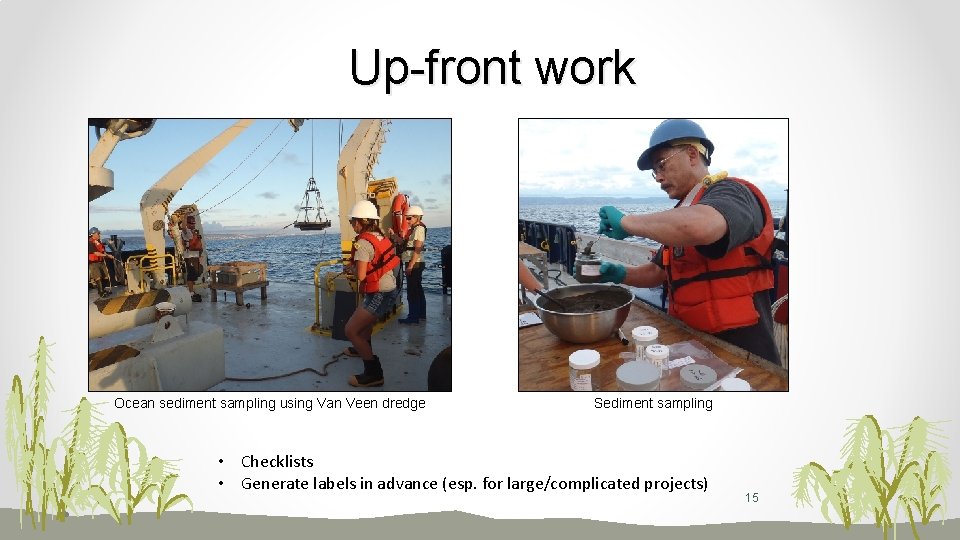
Up-front work Ocean sediment sampling using Van Veen dredge Sediment sampling • Checklists • Generate labels in advance (esp. for large/complicated projects) 15
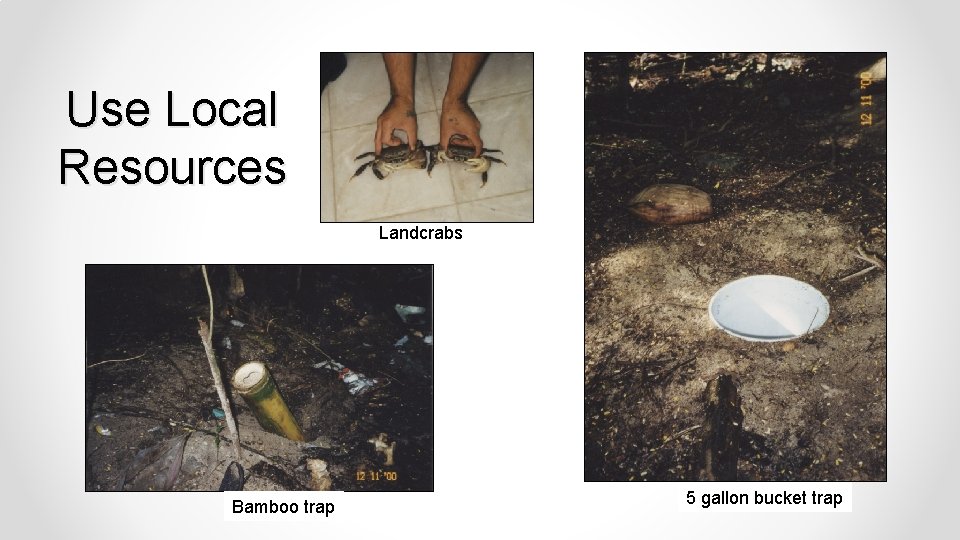
Use Local Resources Landcrabs Bamboo trap 5 gallon 16 bucket trap
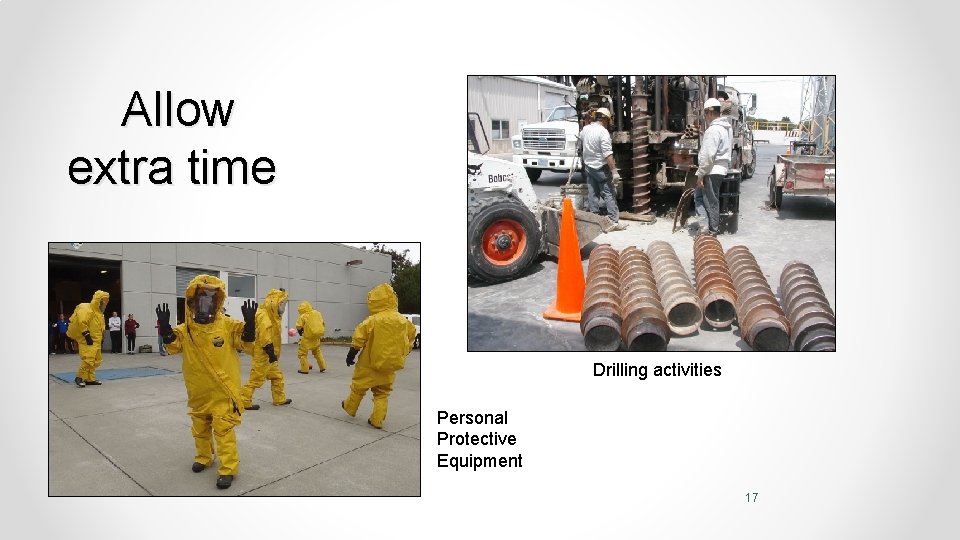
Allow extra time Drilling activities Personal Protective Equipment 17
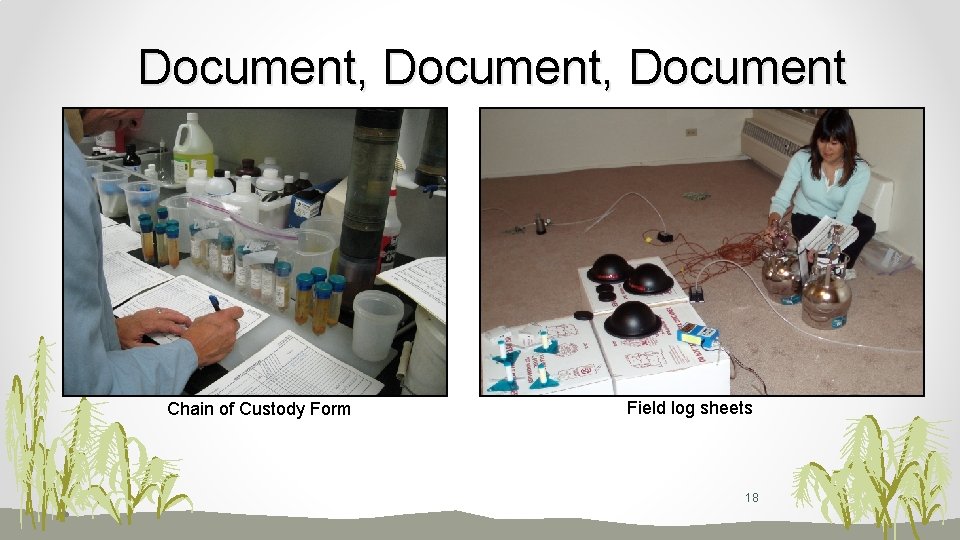
Document, Document Chain of Custody Form Field log sheets 18
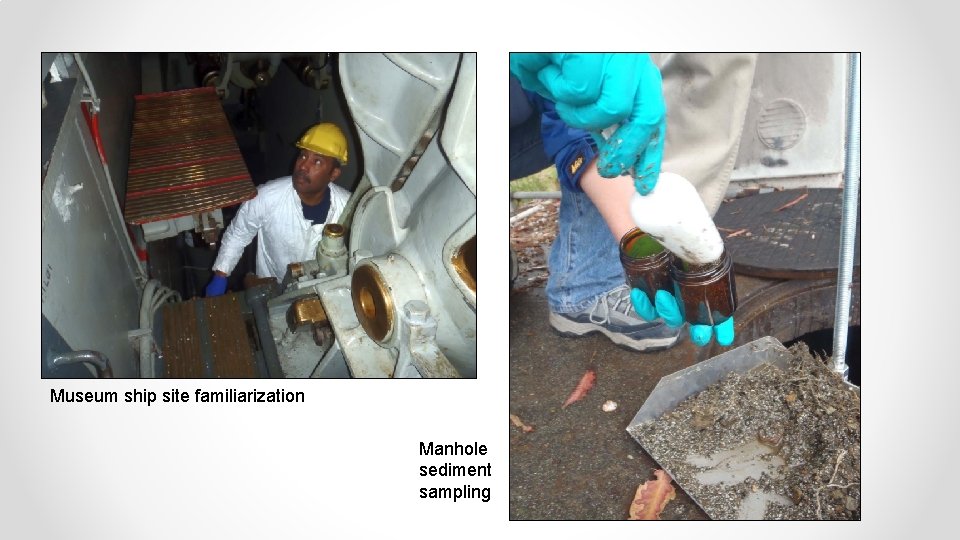
Museum ship site familiarization Manhole sediment sampling 19
Technical Resources: websites ITRC: http: //www. itrcweb. org/ Clu-In: https: //clu-in. org/ EPA SW-846: https: //www. epa. gov/hw-sw 846 EPA ORD: https: //www. epa. gov/aboutepa/about-office-research-anddevelopment-ord 20
Technical Resources: EPA Documents • RCRA Waste Sampling Draft Technical Guidance: Planning, Implementation, and Assessment EPA 530 -D-02 -002, August 2002 (353 pages) • Description and Sampling of Contaminated Soils, A Field Pocket Guide. EPA/625/12 -91/002 November 1991 • Subsurface Characterization and Monitoring Techniques, A Desk Reference Guide (dated, but still packed with useful information) o o Volume 1: Solids and Ground Water, Appendices A and B: EPA/625/R-93/003 a Volume 2: the Vadose Zone, Field Screening, and Analytical Methods, Appendices C and D: EPA/625/R-93/003 b • RCRA Ground-Water Monitoring: Draft Technical Guidance https: //www. epa. gov/quality/rcraground-water-monitoring-draft-technical-guidance (dated, but parts are very useful) • Statistical Analysis of Groundwater Monitoring Data at RCRA Facilities (Unified Guidance), March 2009 with August 2010 updates. EPA 530/R-09 -007 21
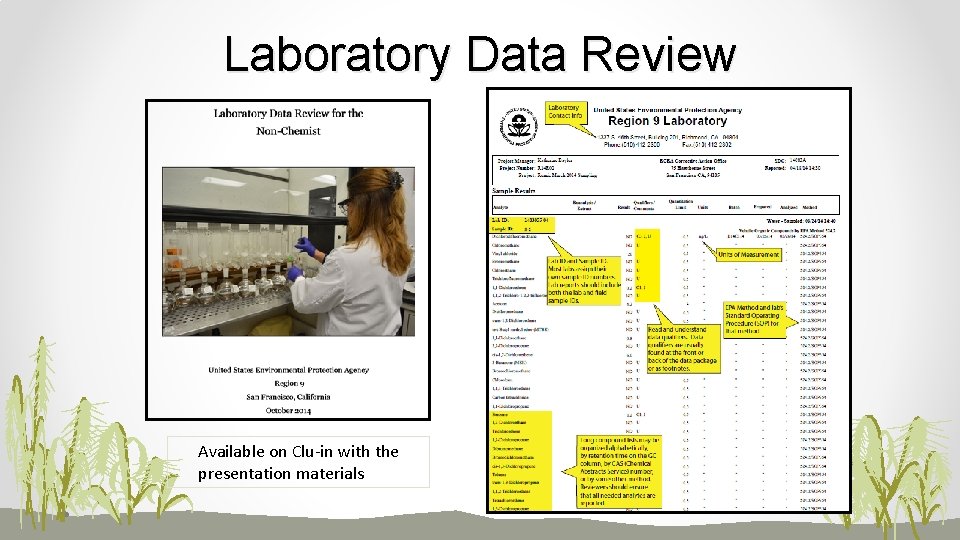
Laboratory Data Review Available on Clu-in with the presentation materials 22
Field work career path • Ask colleagues, supervisor: what group/team in our organization does field work? o Within EPA, may be Environmental Services Division/Branch or specific sections within divisions • Get additional training: on the job, commercial field courses, local colleges, You. Tube, online courses o ITRC, Trainex, state/local govt organizations • Take every field work opportunity available • Get your field work fix outside of work (e. g. , hiking, backpacking, kayaking) 23
Questions ? Contact: Katherine Baylor, EPA Region 9 baylor. katherine@epa. gov 415 -972 -3351 24