
DONT BE YOUR OWN ENEMY If there is

DON’T BE YOUR OWN ENEMY “If there is no enemy within, the enemy outside can do us no harm. ” -Les Brown
DISEASES OF THE STOMACH
Stomach Diseases: Acute Gastritis § Acute Gastritis ■ ■ ■ Spoiled food Change in diet Food allergy Infections (bacterial, viral, parasitic) Toxins (chemicals, plants, drugs, organ failure) Foreign objects § Signs ■ ■ Anorexia Vomiting (maybe dehydration) Painful abdomen Hx of diet change, toxin ingestion, infection, parasites
Acute Gastritis § Diagnosis § History and Physical Exam § CBC, Chem Panel
Acute Gastritis § Treatment § NPO until vomiting stops § small sips of water every hour § Fluid therapy (SQ or IV) § Gradually start feeding § Bland food (Hill’s I/D, boiled chicken/rice) § Antiemetics § Cerenia (maropitant) § Regaln (metoclopramide) § Coating agents – sucralfate § H 2 blockers § Antibiotics – rarely needed
Acute Gastritis § Client info § Avoid abrupt changes in diet § Gradually mix new food in with old § If pet vomit 2 -3 times, NPO x 24 h; if it continues see vet § Dogs and cats do not need variety in the diet as some clients believe
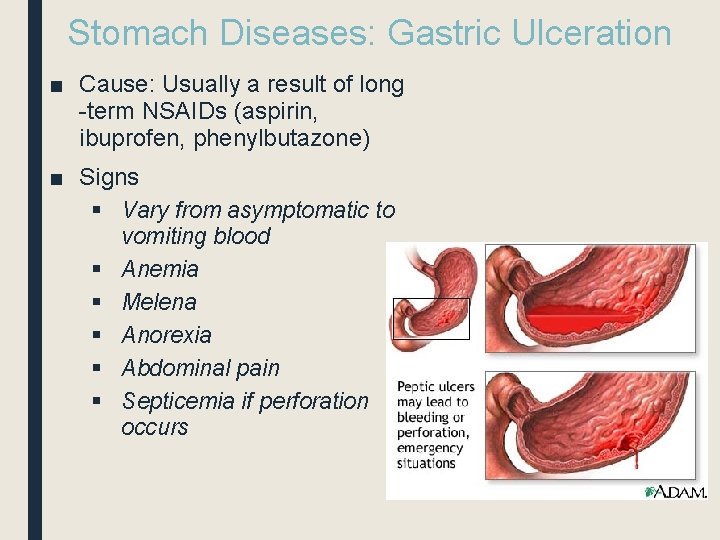
Stomach Diseases: Gastric Ulceration ■ Cause: Usually a result of long -term NSAIDs (aspirin, ibuprofen, phenylbutazone) ■ Signs § Vary from asymptomatic to § § § vomiting blood Anemia Melena Anorexia Abdominal pain Septicemia if perforation occurs
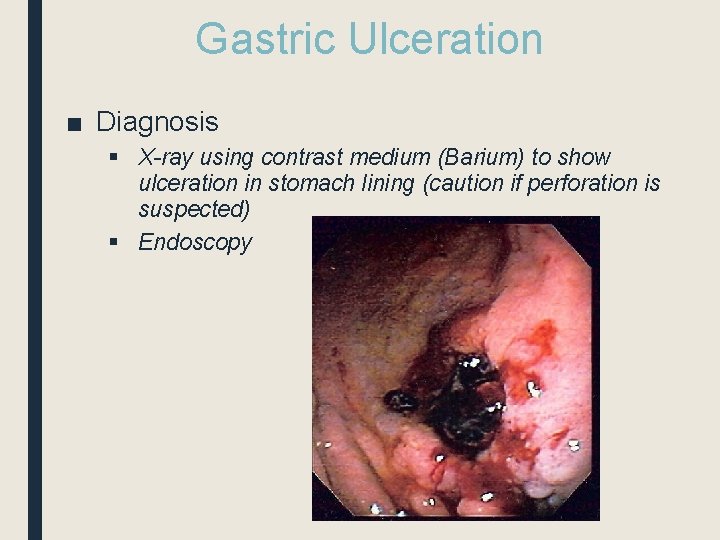
Gastric Ulceration ■ Diagnosis § X-ray using contrast medium (Barium) to show ulceration in stomach lining (caution if perforation is suspected) § Endoscopy
Gastric Ulceration § Treatment § Fluid therapy for dehydration § NPO § Coating agents/ H 2 blockers § Sucralfate § Cimetidine - H 2 blocker (↓ HCl production) § Omeprazole –proton pump inhibitor (↓ HCl production) § Client info § Do not use NSAIDs without veterinary supervision § Give NSAIDs with meal/antacids
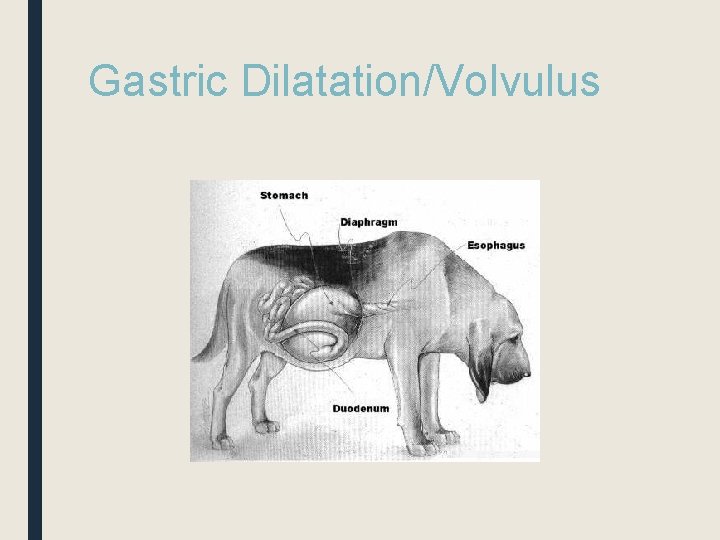
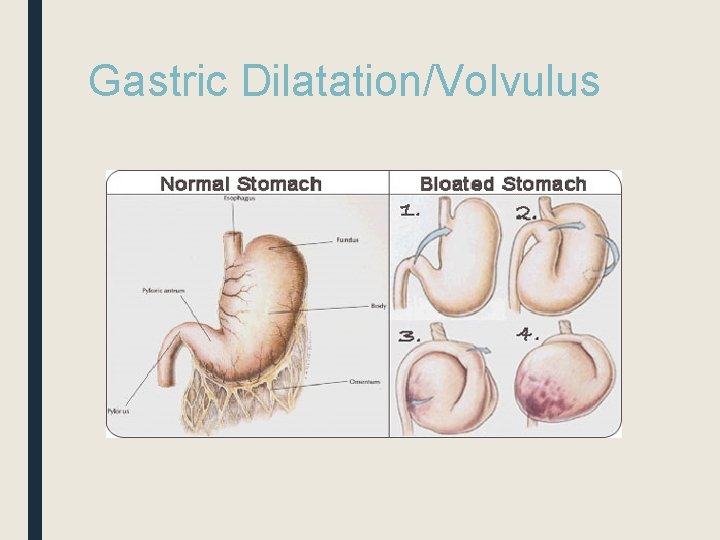
Stomach Diseases: Gastric Dilatation/Volvulus § Primarily a disease of large, deep-chested dogs § Dilation - gas filled, Volvulus - twisted alongitudinal axis § Cause: Food/exercise? Etiology unclear § Signs § Abdominal pain/distension § Weakness, collapse, depression, nausea, salivation § Increased HR, RR – may lead to arrhythmias
Gastric Dilatation/Volvulus
Gastric Dilatation/Volvulus
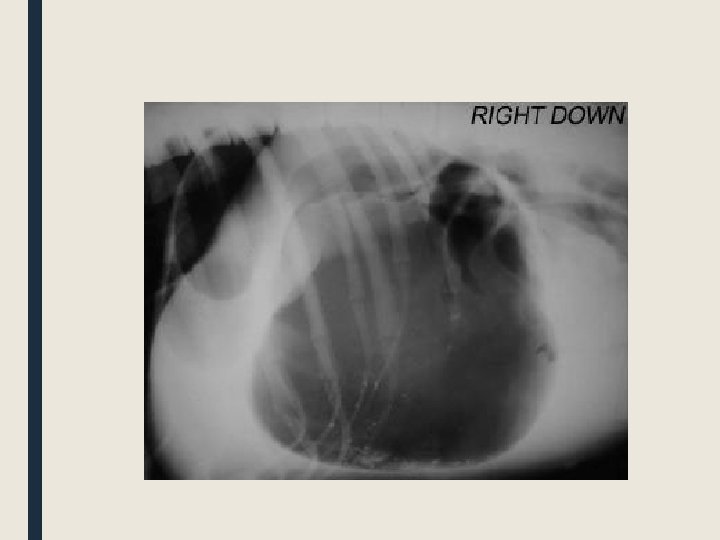
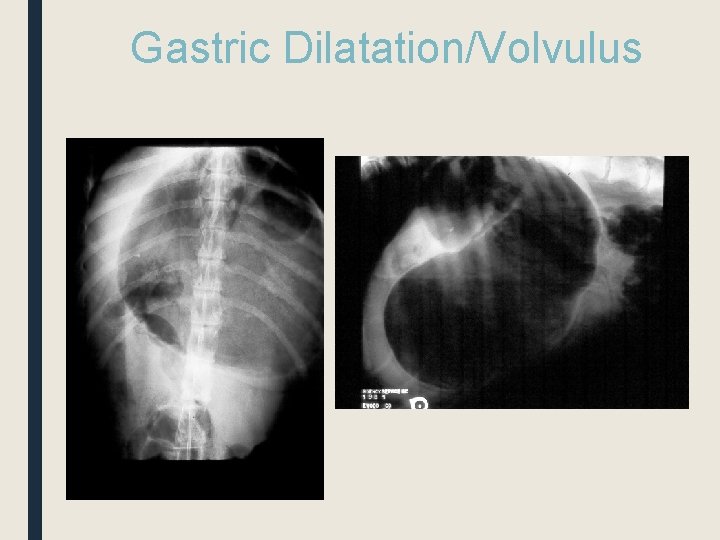
Stomach Diseases: GDV § Diagnosis § PE shows depressed, weak animal with poor perfusion (↑CRT) § X-rays show air filled stomach- “double-bubble” § Or “popeye arm”, or “smurf hat” § ECG may show ventricular arrhythmia or sinus tachycardia § CBC and Chem panel § electrolyte levels § p. H imbalances § Lactate levels
Gastric Dilatation/Volvulus § Treatment goals § Decompress stomach § Pass stomach tube § 18 gauge needle § Stabilize patient (fluids, electrolytes, ECG) § Antibiotics § Prepare for Surgery ASAP
Gastric Dilatation/Volvulus
Gastric Dilatation/Volvulus § Post-Op ■ ■ ■ ECG Blood pressure Pain management Monitor urine output Antibiotics Maintain fluids (oral, IV)
Gastric Dilatation/Volvulus ■ Client info § § Avoid large meals Limit exercise after meals Feed high-quality diets Tack-down procedure not 100% preventative
Stomach Diseases: Gastric Neoplasia § Most common malignant neoplasia in dogs is adenocarcinoma; in cats lymphoma ■ Signs § Wt. loss § Vomiting w/ or w/o blood § Obstruction § Usually seen in older animals ■ Diagnosis § Endoscopy and biopsy for diagnosis § X-ray with Barium contrast
Gastric Neoplasia ■ Treatment § Surgery is treatment of choice § Many tumors are too far advanced (inoperable) § Chemotherapy § Radiation less successful for gastric tumors ■ Client info § Prognosis is poor; gastric neoplasia is a fatal disease § Supportive care, control of vomiting, good nutrition are needed for these animals
- Slides: 20