
Domo Manipulation for Partner Robots Aaron Edsinger MIT
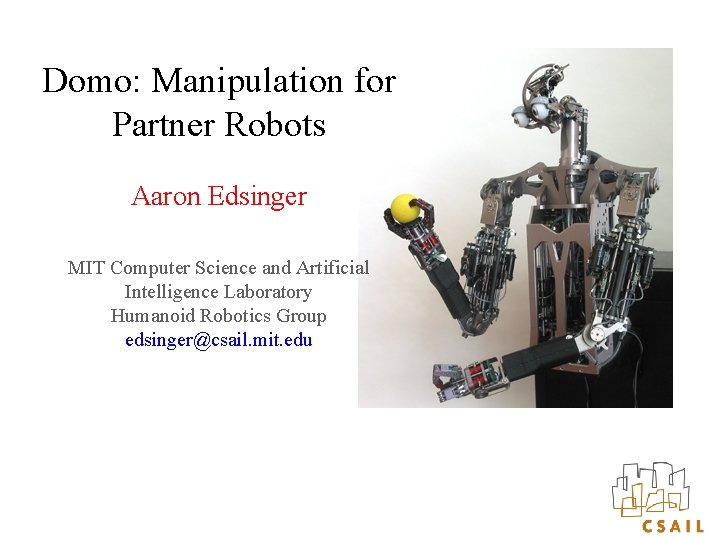
Domo: Manipulation for Partner Robots Aaron Edsinger MIT Computer Science and Artificial Intelligence Laboratory Humanoid Robotics Group edsinger@csail. mit. edu
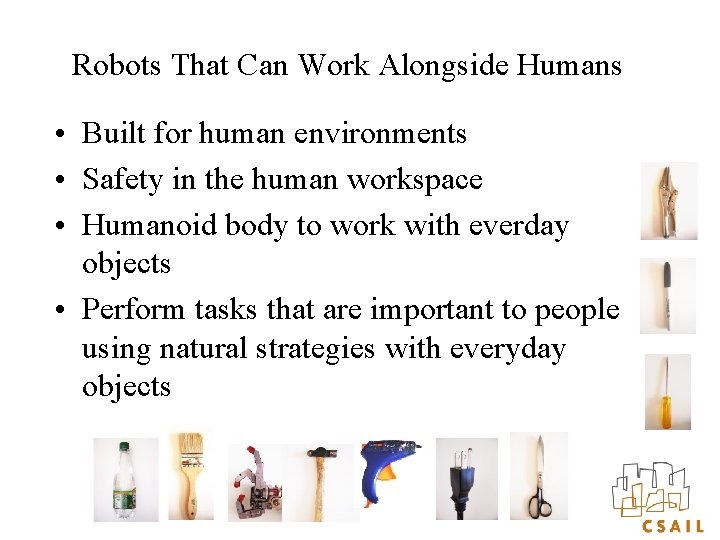
Robots That Can Work Alongside Humans • Built for human environments • Safety in the human workspace • Humanoid body to work with everday objects • Perform tasks that are important to people using natural strategies with everyday objects

Confronting Unstructured Environments

Creating Robust Manipulation Interactions in Unstructured Environments • • • Let the body assist perception Passive compliance and force control Highly integrated behavior-based architecture Perceptual prediction through efference-copy models Learn task-relevant features of objects instead of using full 3 D models
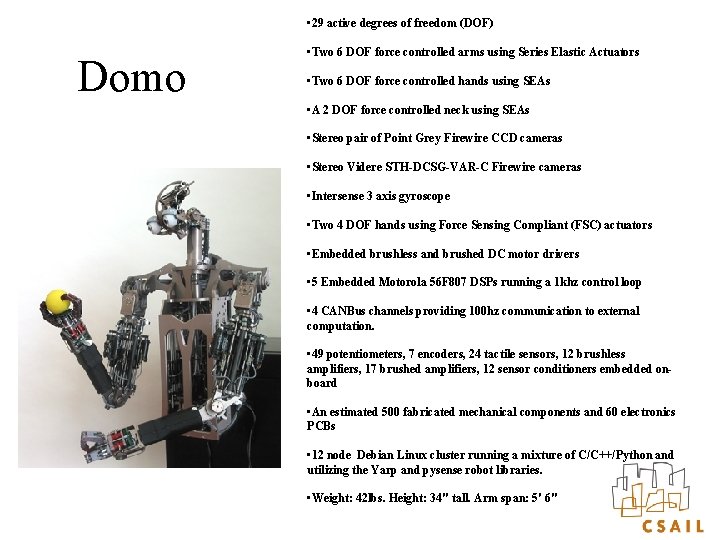
• 29 active degrees of freedom (DOF) Domo • Two 6 DOF force controlled arms using Series Elastic Actuators • Two 6 DOF force controlled hands using SEAs • A 2 DOF force controlled neck using SEAs • Stereo pair of Point Grey Firewire CCD cameras • Stereo Videre STH-DCSG-VAR-C Firewire cameras • Intersense 3 axis gyroscope • Two 4 DOF hands using Force Sensing Compliant (FSC) actuators • Embedded brushless and brushed DC motor drivers • 5 Embedded Motorola 56 F 807 DSPs running a 1 khz control loop • 4 CANBus channels providing 100 hz communication to external computation. • 49 potentiometers, 7 encoders, 24 tactile sensors, 12 brushless amplifiers, 17 brushed amplifiers, 12 sensor conditioners embedded onboard • An estimated 500 fabricated mechanical components and 60 electronics PCBs • 12 node Debian Linux cluster running a mixture of C/C++/Python and utilizing the Yarp and pysense robot libraries. • Weight: 42 lbs. Height: 34" tall. Arm span: 5' 6"
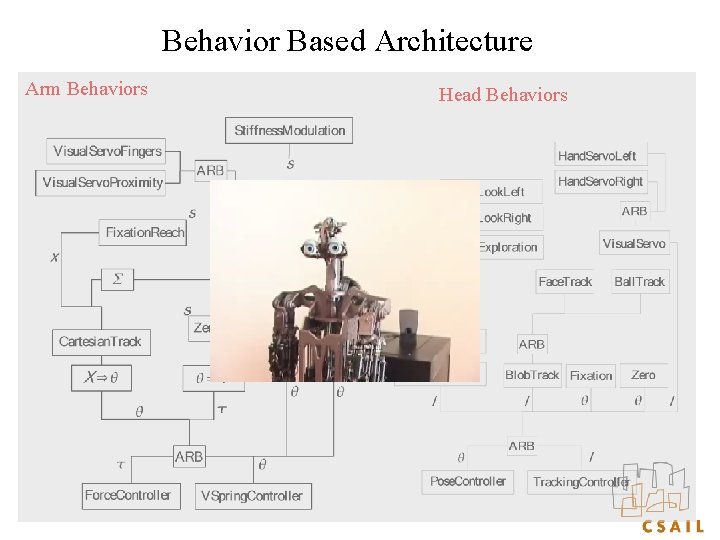
Behavior Based Architecture Arm Behaviors Head Behaviors
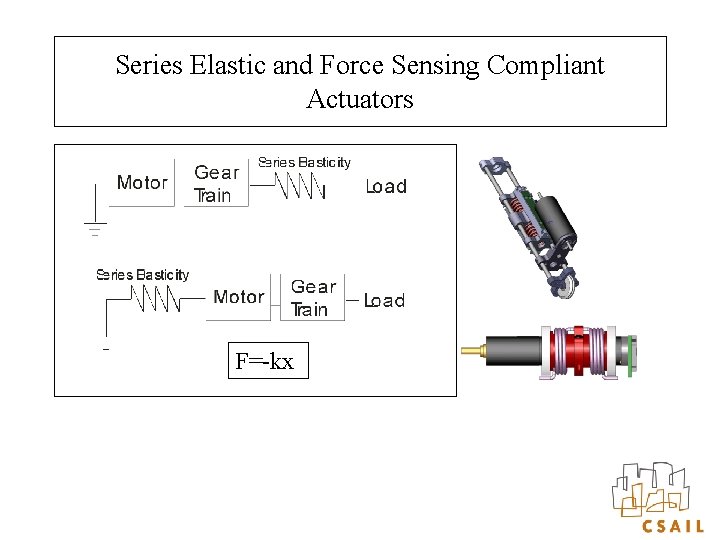
Series Elastic and Force Sensing Compliant Actuators F=-kx
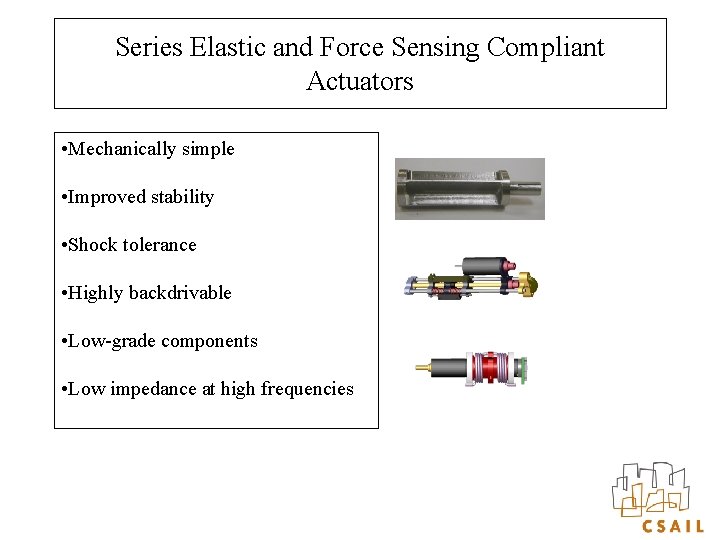
Series Elastic and Force Sensing Compliant Actuators • Mechanically simple • Improved stability • Shock tolerance • Highly backdrivable • Low-grade components • Low impedance at high frequencies
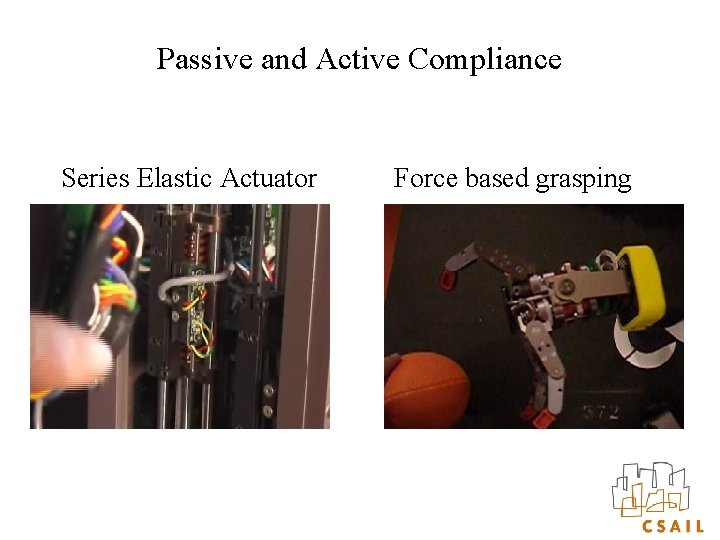
Passive and Active Compliance Series Elastic Actuator Force based grasping
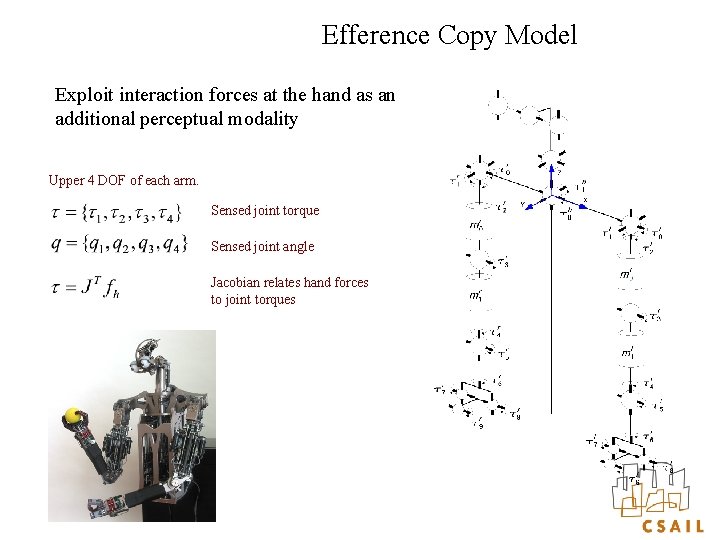
Efference Copy Model Exploit interaction forces at the hand as an additional perceptual modality Upper 4 DOF of each arm. Sensed joint torque Sensed joint angle Jacobian relates hand forces to joint torques
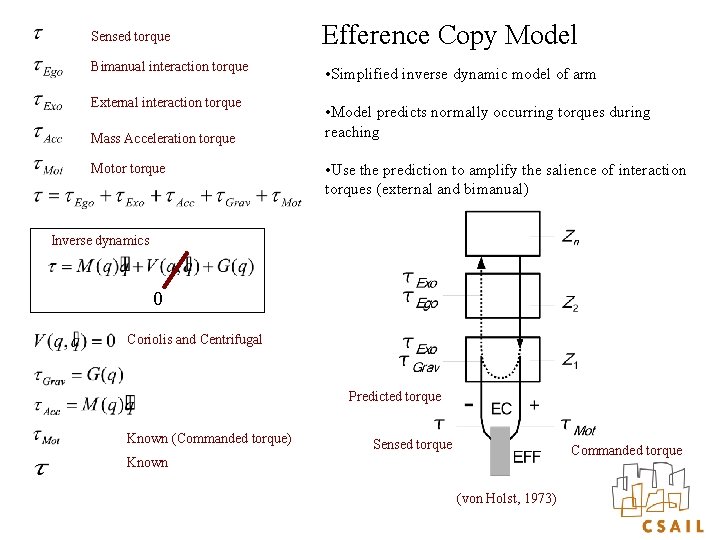
Sensed torque Bimanual interaction torque External interaction torque Mass Acceleration torque Motor torque Efference Copy Model • Simplified inverse dynamic model of arm • Model predicts normally occurring torques during reaching • Use the prediction to amplify the salience of interaction torques (external and bimanual) Inverse dynamics 0 Coriolis and Centrifugal Predicted torque Known (Commanded torque) Sensed torque Commanded torque Known (von Holst, 1973)
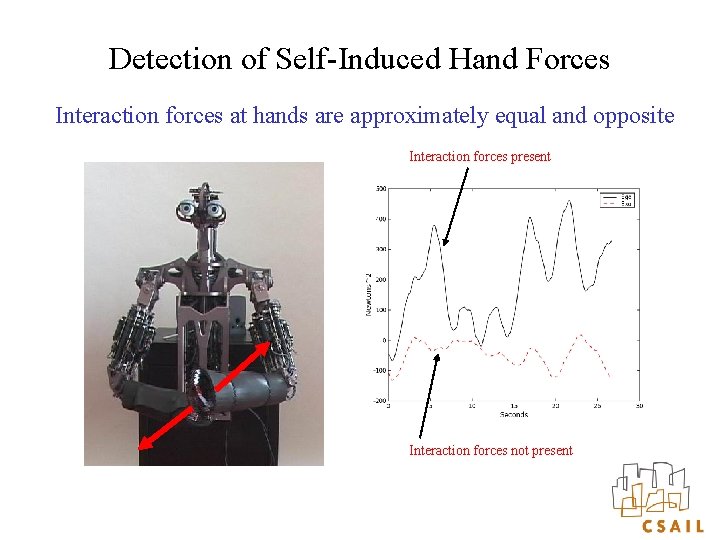
Detection of Self-Induced Hand Forces Interaction forces at hands are approximately equal and opposite Interaction forces present Interaction forces not present
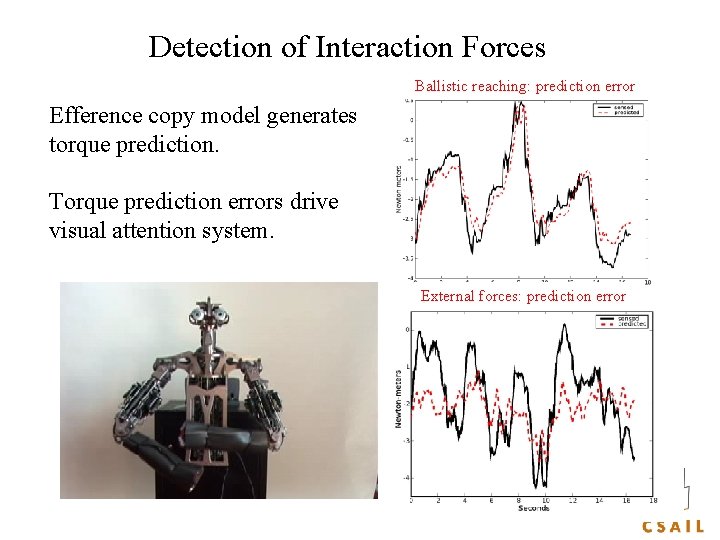
Detection of Interaction Forces Ballistic reaching: prediction error Efference copy model generates torque prediction. Torque prediction errors drive visual attention system. External forces: prediction error
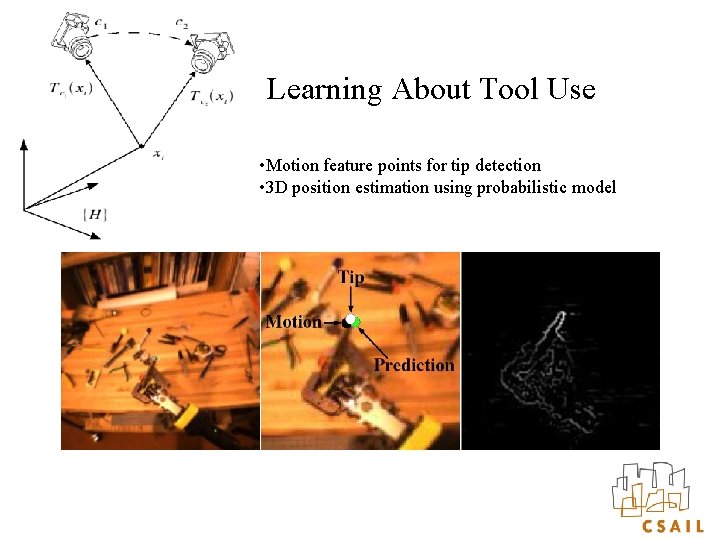
Learning About Tool Use • Motion feature points for tip detection • 3 D position estimation using probabilistic model
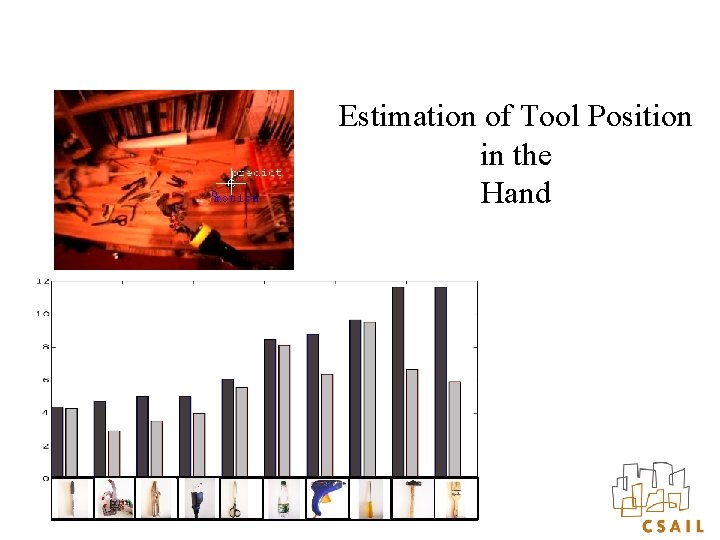
Estimation of Tool Position in the Hand
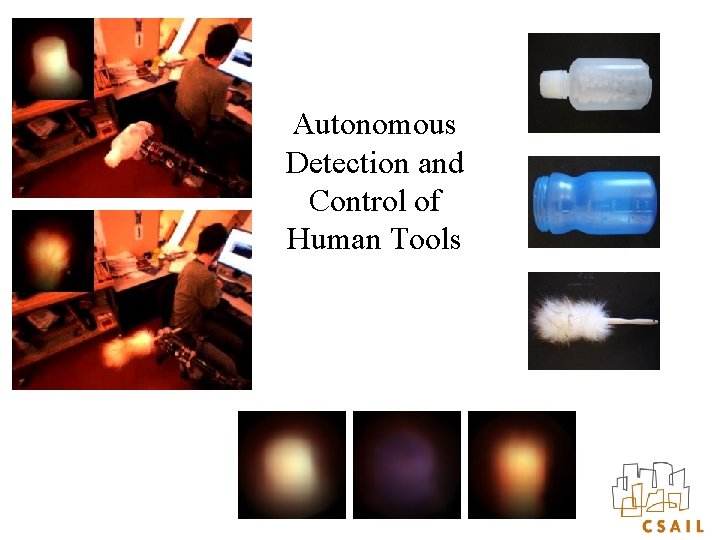
Autonomous Detection and Control of Human Tools
- Slides: 16