
Domestic Violence 101 Jennifer Fernandez Executive Director Guadalupe
- Slides: 30
Domestic Violence 101 Jennifer Fernandez, Executive Director Guadalupe Valley Family Violence Shelter, Inc.
The Stats In 2014, 132 women were killed in Texas by a current or former intimate partner 10 family members or friends were also killed An additional 13 family members or friends injured 120 bystanders present during the murder Texas Council on Family Violence
The Stats Oldest woman killed was 90 years old, shot by her husband The youngest woman killed was 16 years old Pregnant with twins Stabbed and strangled Texas Council on Family Violence
The Stats In 2014, Texas programs: Answered 185, 373 hotline calls Sheltered 23, 311 adults and children Provided nonresidential services to 61, 119 adults and children 185, 817 2014 family violence incidents were reported in Texas Council on Family Violence
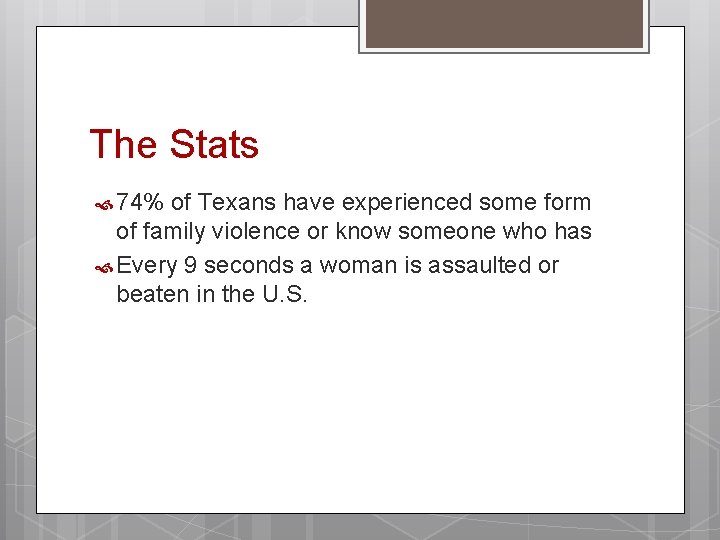
The Stats 74% of Texans have experienced some form of family violence or know someone who has Every 9 seconds a woman is assaulted or beaten in the U. S.
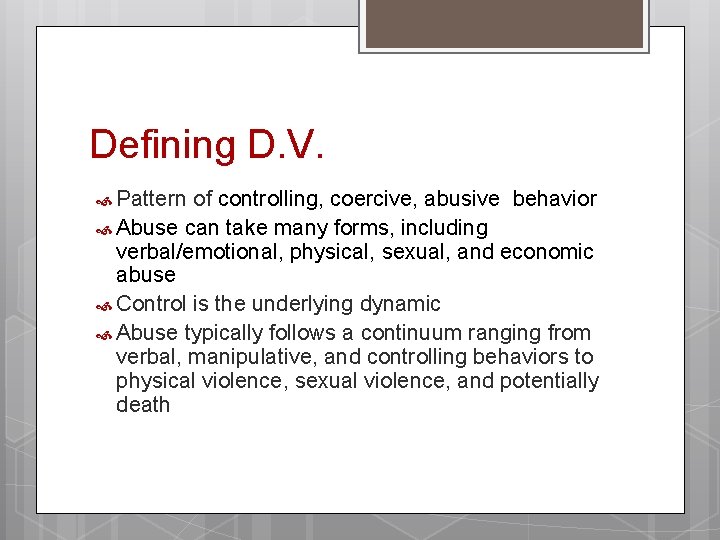
Defining D. V. Pattern of controlling, coercive, abusive behavior Abuse can take many forms, including verbal/emotional, physical, sexual, and economic abuse Control is the underlying dynamic Abuse typically follows a continuum ranging from verbal, manipulative, and controlling behaviors to physical violence, sexual violence, and potentially death
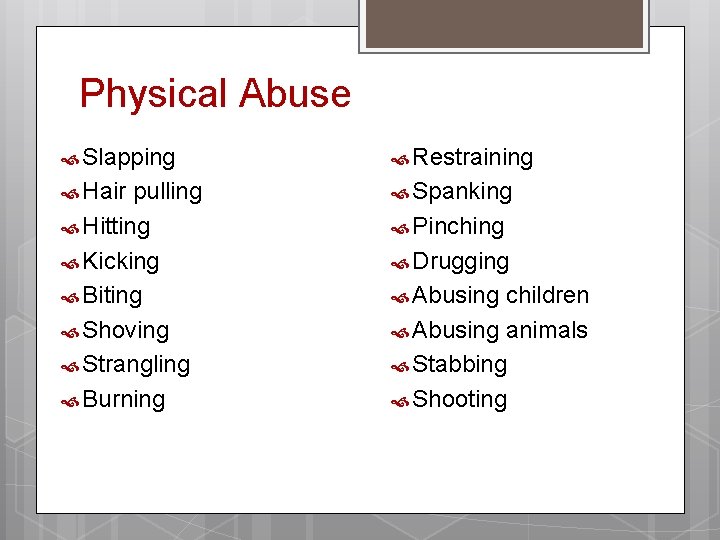
Physical Abuse Slapping Restraining Hair Spanking pulling Hitting Kicking Biting Shoving Strangling Burning Pinching Drugging Abusing children Abusing animals Stabbing Shooting
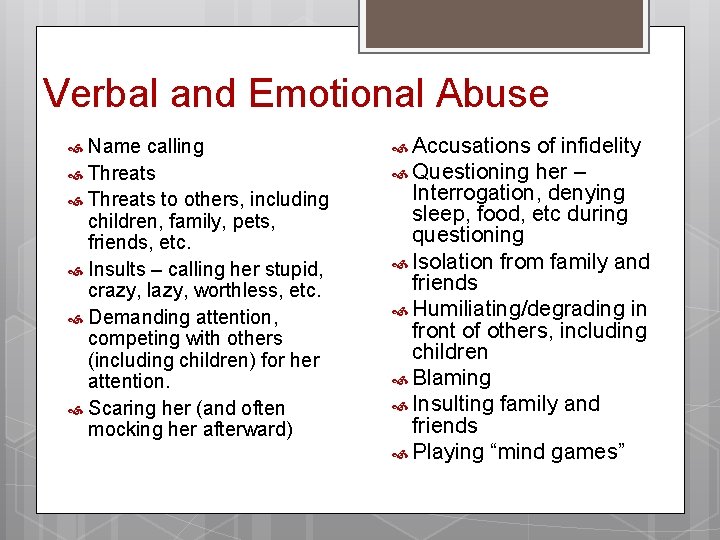
Verbal and Emotional Abuse Name calling Threats to others, including children, family, pets, friends, etc. Insults – calling her stupid, crazy, lazy, worthless, etc. Demanding attention, competing with others (including children) for her attention. Scaring her (and often mocking her afterward) Accusations of infidelity Questioning her – Interrogation, denying sleep, food, etc during questioning Isolation from family and friends Humiliating/degrading in front of others, including children Blaming Insulting family and friends Playing “mind games”
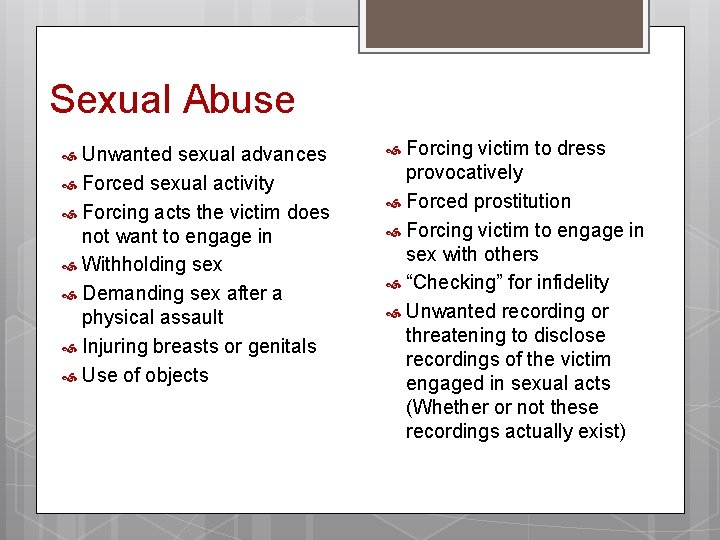
Sexual Abuse Unwanted sexual advances Forced sexual activity Forcing acts the victim does not want to engage in Withholding sex Demanding sex after a physical assault Injuring breasts or genitals Use of objects Forcing victim to dress provocatively Forced prostitution Forcing victim to engage in sex with others “Checking” for infidelity Unwanted recording or threatening to disclose recordings of the victim engaged in sexual acts (Whether or not these recordings actually exist)
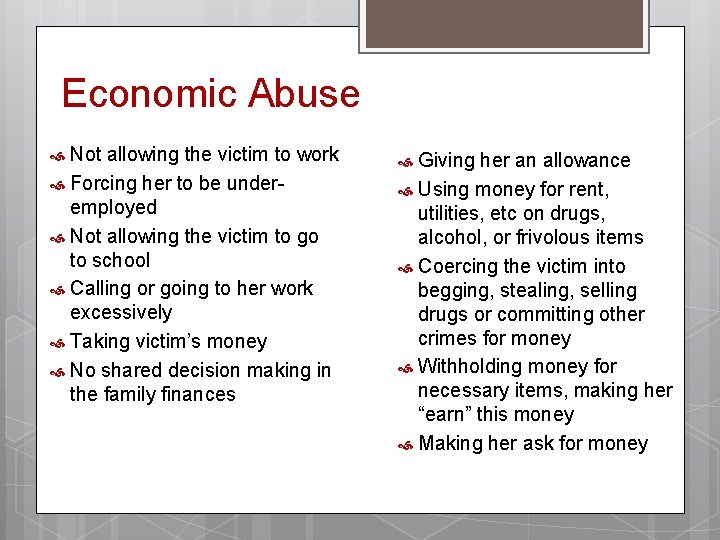
Economic Abuse Not allowing the victim to work Forcing her to be underemployed Not allowing the victim to go to school Calling or going to her work excessively Taking victim’s money No shared decision making in the family finances Giving her an allowance Using money for rent, utilities, etc on drugs, alcohol, or frivolous items Coercing the victim into begging, stealing, selling drugs or committing other crimes for money Withholding money for necessary items, making her “earn” this money Making her ask for money
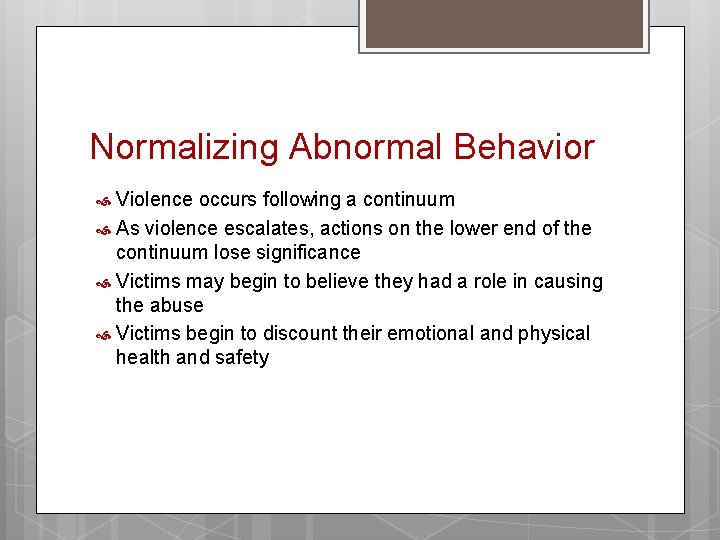
Normalizing Abnormal Behavior Violence occurs following a continuum As violence escalates, actions on the lower end of the continuum lose significance Victims may begin to believe they had a role in causing the abuse Victims begin to discount their emotional and physical health and safety
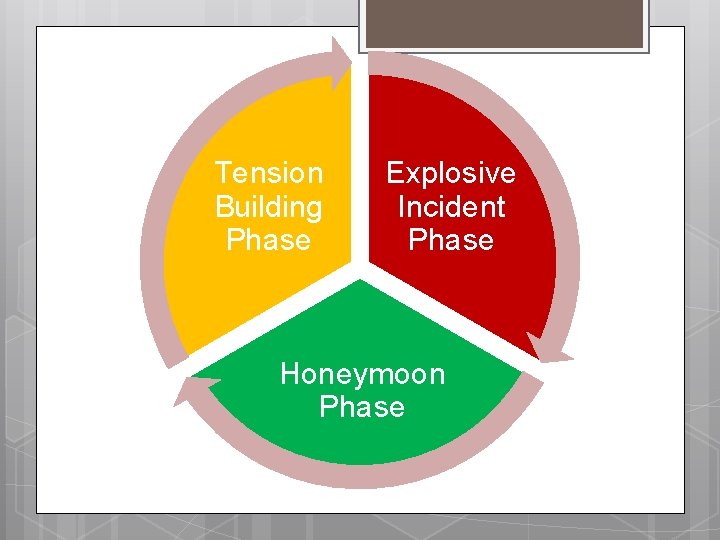
Tension Building Phase Explosive Incident Phase Honeymoon Phase
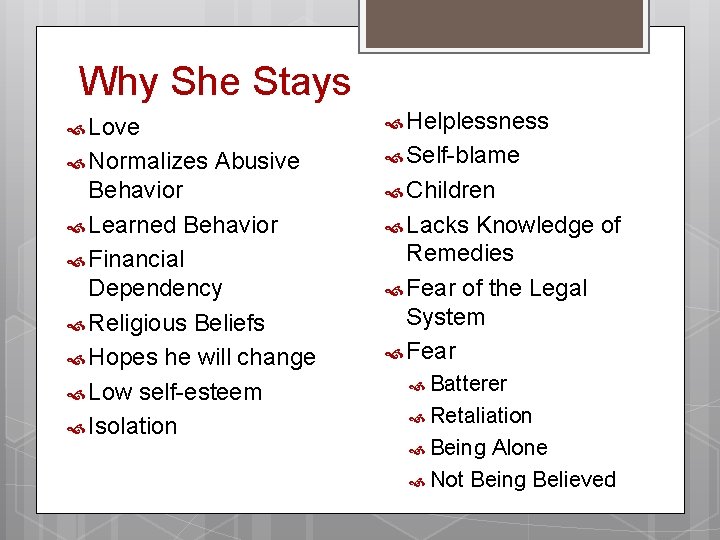
Why She Stays Helplessness Love Normalizes Abusive Behavior Learned Behavior Financial Dependency Religious Beliefs Hopes he will change Low self-esteem Isolation Self-blame Children Lacks Knowledge of Remedies Fear of the Legal System Fear Batterer Retaliation Being Alone Not Being Believed
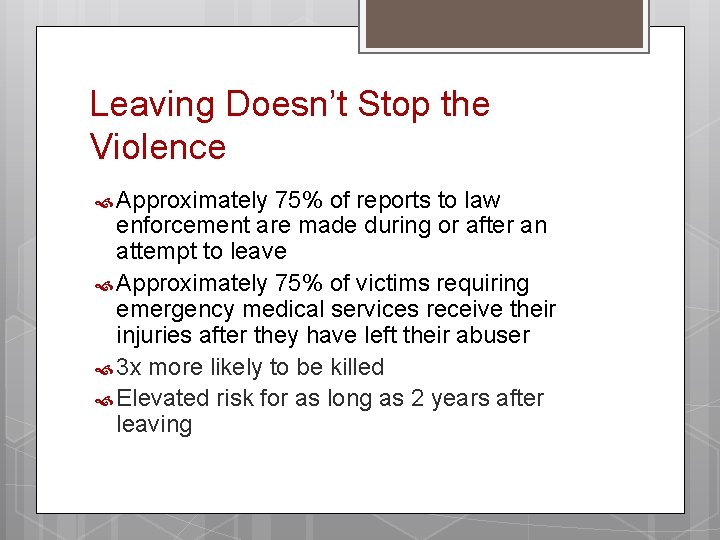
Leaving Doesn’t Stop the Violence Approximately 75% of reports to law enforcement are made during or after an attempt to leave Approximately 75% of victims requiring emergency medical services receive their injuries after they have left their abuser 3 x more likely to be killed Elevated risk for as long as 2 years after leaving
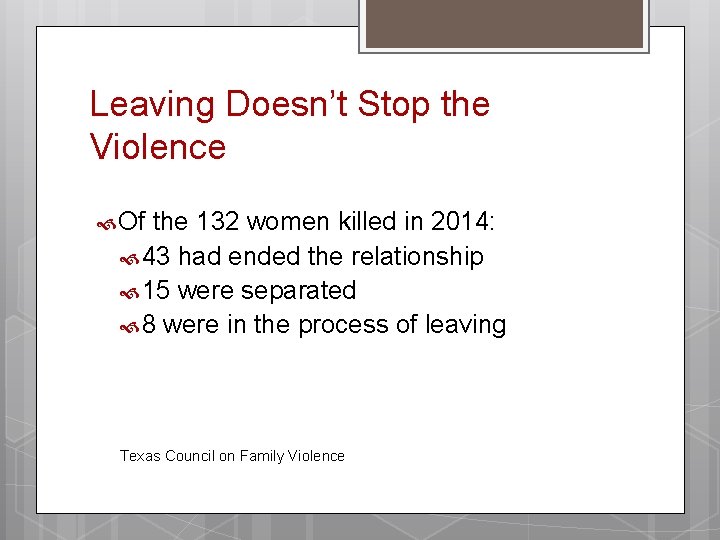
Leaving Doesn’t Stop the Violence Of the 132 women killed in 2014: 43 had ended the relationship 15 were separated 8 were in the process of leaving Texas Council on Family Violence
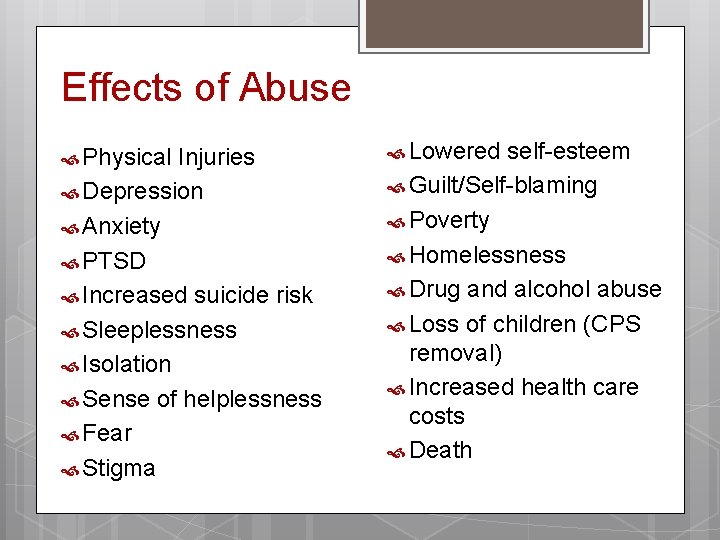
Effects of Abuse Physical Injuries Depression Anxiety PTSD Increased suicide risk Sleeplessness Isolation Sense of helplessness Fear Stigma Lowered self-esteem Guilt/Self-blaming Poverty Homelessness Drug and alcohol abuse Loss of children (CPS removal) Increased health care costs Death
Interacting With Victims They are experiencing a crisis Victims and their actions/reactions can vary greatly Their biochemical trauma response is outside their control Recognize that victims are under a great deal of stress and may not remember or understand everything you are telling them Recognize what it took for them to make the call Be judgement free Objective, yet empathetic
Interacting With Victims Being uncooperative may not mean she does not want help Be honest, and make no promises NEVER tell a victim “Its going to be okay. ” Help her to identify her options If she wants to leave, help give the tools to do so safely
Your Response Matters Is this the first time they’ve made the call? Repeat Caller? Victims leave 7 -13 times before leaving for good Is this the time? If perceived that the system can’t or won’t protect them, are they going to call back? Did your contact leave the victim feeling empowered or re-victimized? A few minutes of your time can be life-changing for the victim
Resources Get to know your local program http: //tcfv. org/service-directory/? action=search Search or Download 1 -800 -799 -SAFE (National Hotline)
Eligibility Victim of Domestic Violence, Dating Violence, Sexual Assault, Stalking Children and family of victims As primary or secondary victims Females and males Adult male victims receive the same services as females except they do not stay in the Shelter.
Eligibility Victims of family/dating violence under 18 years of age Accompanied by parent/guardian Legally emancipated Minor-mother
Services 24 -hour Crisis Line Callers may receive information, support, services, and referrals from an advocate 24/7 Calls may be anonymous Emergency Avg. Shelter stay 14 -30 days Every situation is unique
Services Safety Planning Helping victims to be safer in abusive situations Preparing to leave an abusive relationship Crisis Intervention Helping survivor to cope with immediate crisis response Assist in meeting needs and short-term goals Identify support and resources
Services Accompaniment During forensic examinations, interactions with law enforcement, prosecutor’s offices, and the courts Case Management Service planning, problem solving, goal setting, applications for assistance, information and referrals, transportation arrangements
Services Counseling Individual Group Adult Child Support Programs Group or Individual Peer Counseling H. E. A. R. T. Parenting
Services Legal Advocacy for divorce, custody, child support and relocation Assist with emergency and standard Protective Orders Assists in applying for Crime Victims Compensation Assistance with Immigration issues Provides accompaniment to court and law enforcement
Services Multidisciplinary Training and Community Education Provide materials Resource May be source of “experts”
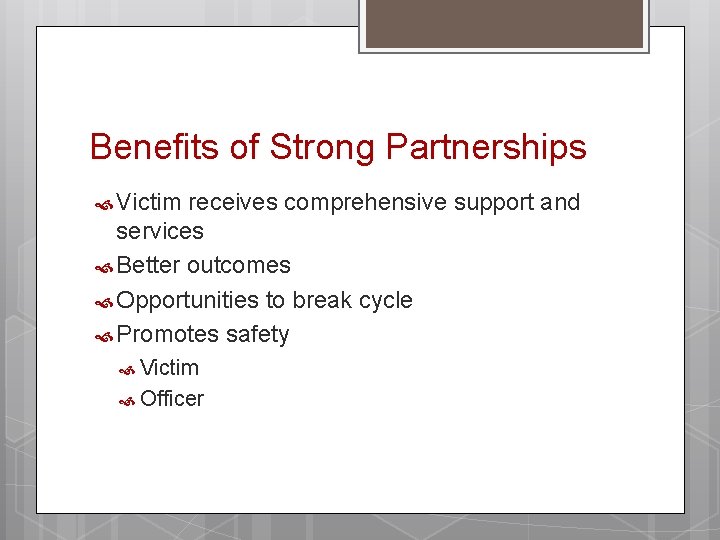
Benefits of Strong Partnerships Victim receives comprehensive support and services Better outcomes Opportunities to break cycle Promotes safety Victim Officer
Thank you for your service and dedication! Jennifer Fernandez Executive Director Guadalupe Valley Family Violence Shelter, Inc. 830 -372 -2780 jennifer. fernandez@safeseguin. org