
Domain Archaea n Kingdom Archaebacteria No nucleus Cell
Domain Archaea n Kingdom Archaebacteria – No nucleus – Cell wall present – No Peptidoglycan § Carbohydrate in cell walls – Genes similar to eukaryotes
Kingdom Archaebacteria n Live in harsh environments such as: – Animal intestines § These produce methane gas § AKA methanogens – Hot springs § Temperatures near boiling § AKA thermophiles – Great Salt Lake in Utah § Extremely salty area § AKA halophiles
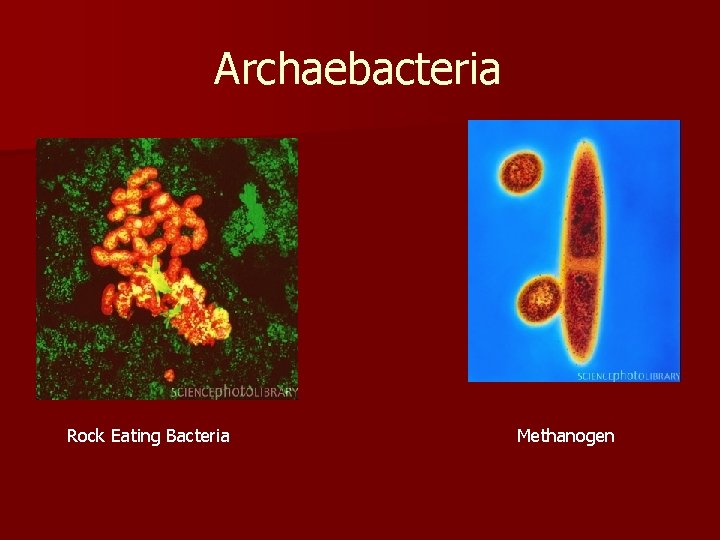
Archaebacteria Rock Eating Bacteria Methanogen
For your chart: Archaebacteria n Obtaining: n Transforming: n Transporting: n Releasing: n Eliminating: n Additional Info: – – Autotrophic (Photosynthetic/ Chemosynthetic) Heterotrophic (Decomposition/ Parasitic) – Negative energy to Positive Energy (Decomposition) – All perform Cellular Respiration or Fermentation – Absorb materials through cell membrane into cytoplasm – Release energy by cellular respiration or fermentation – Wastes move out of cell through cell membrane – Some excrete toxic gases that build up inside cell (methanogens) – – Prokaryotic, single cell, no peptidoglycan May have been the ancestral cell to eukaryotes
Domain Bacteria n Kingdom Eubacteria – Larger kingdom than Archaebacteria – Live in many different environments – Occupy many different niches – Examples: § Soil bacteria decomposition and N fixation § Disease causing bacteria § Skin bacteria § Food bacteria
General Characteristics n Cell walls and cell membranes present n Have Peptidoglycan n Cytoplasm n Flagella n Pili n DNA

Video Clip
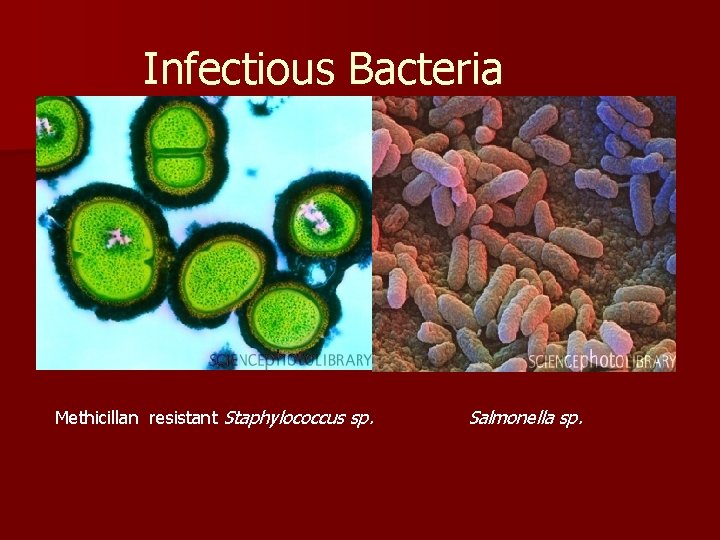
Infectious Bacteria Methicillan resistant Staphylococcus sp. Salmonella sp.
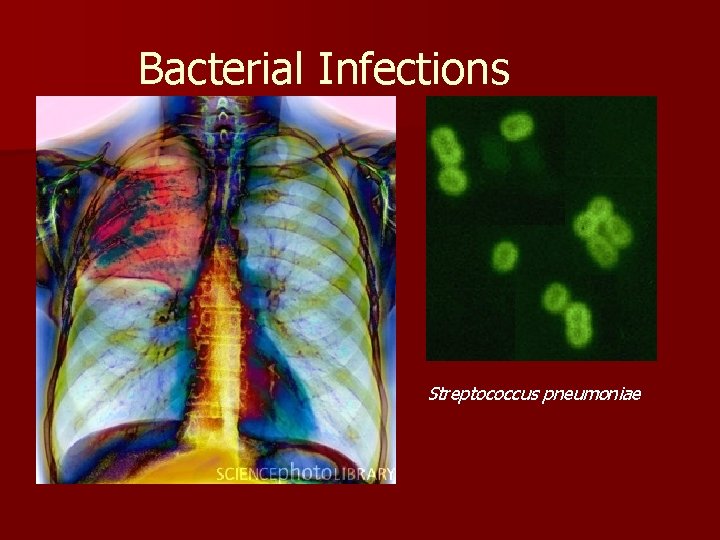
Bacterial Infections Streptococcus pneumoniae
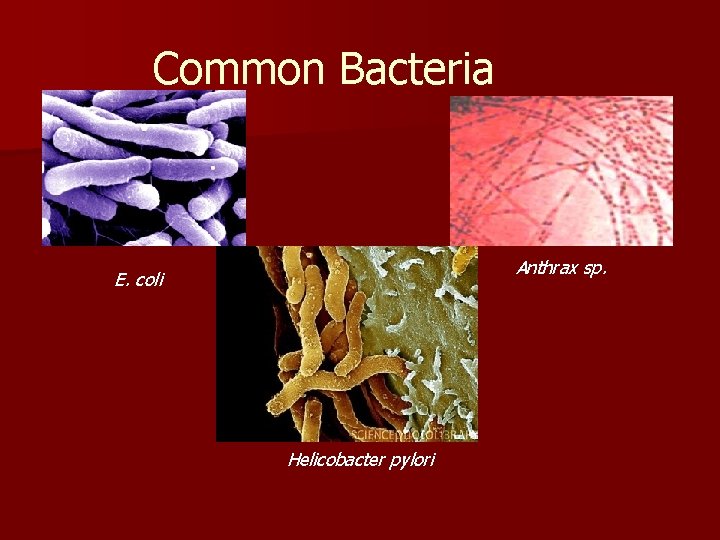
Common Bacteria Anthrax sp. E. coli Helicobacter pylori
Common Characteristics of Prokaryotes n Includes Archaea and Bacteria – Still referred to as Monerans n 3 Basic Shapes – Bacilli- rod – Cocci- round – Spirilla- spiral – Strepto- chain – Staphylo- clustered
For your chart: Eubacteria n Obtaining: n Transforming: n Transporting: n Releasing: n Eliminating: n Additional Info: – – Autotrophic (Photosynthetic/ Chemosynthetic) Heterotrophic (Decomposition/ Parasitic) – Negative energy to Positive Energy (Decomposition) – All perform Cellular Respiration or Fermentation – Absorb materials through cell membrane into cytoplasm – Release energy by cellular respiration or fermentation – Wastes move out of cell through cell membrane – Some excrete toxic gases that build up inside cell (methanogens) – – Prokaryotic, single cell, peptidoglycan Larger kingdom of bacteria than archaebacteria
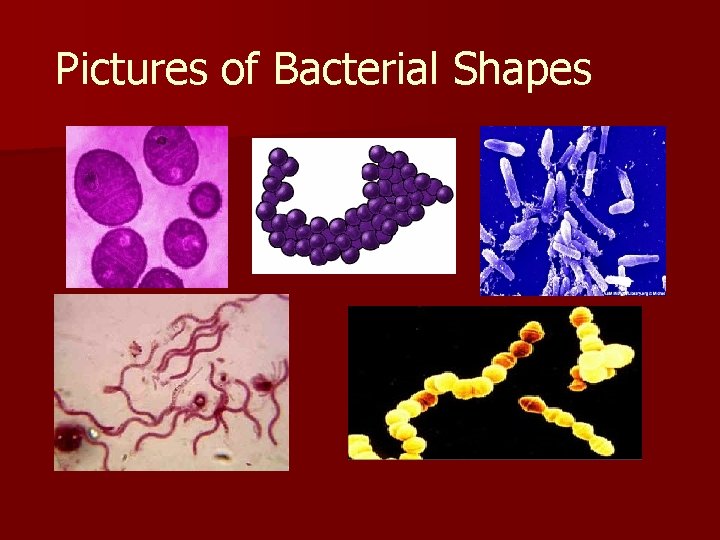
Pictures of Bacterial Shapes
Gram Staining n Technique used for identification and classification n Stains cell walls of bacteria – Cell wall with peptidoglycan § Positive reaction – stains purple – Cell wall without peptidoglycan § Negative reaction- stains red
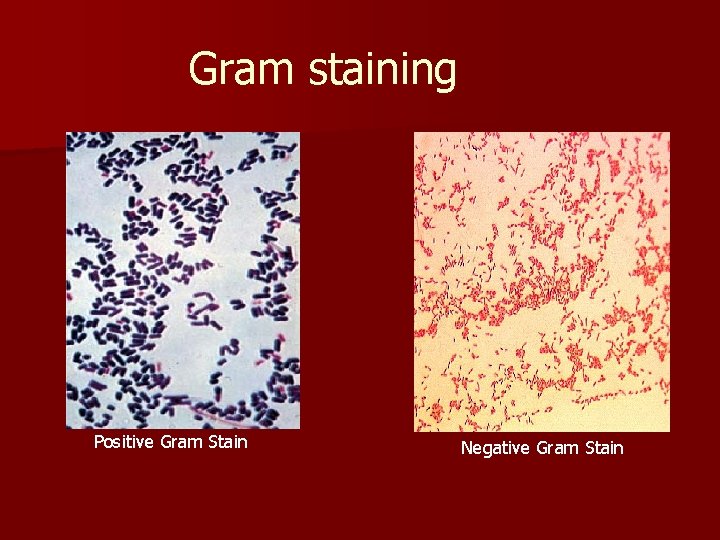
Gram staining Positive Gram Stain Negative Gram Stain
- Slides: 15