
Doing without feeling Unconscious affect controls human consumption
- Slides: 12
Doing without feeling: Unconscious affect controls human consumption Piotr Winkielman Psychology, University of Denver Kent Berridge Psychology, University of Michigan Julie Wilbarger Psychology, University of Denver SCP-2002, Austin
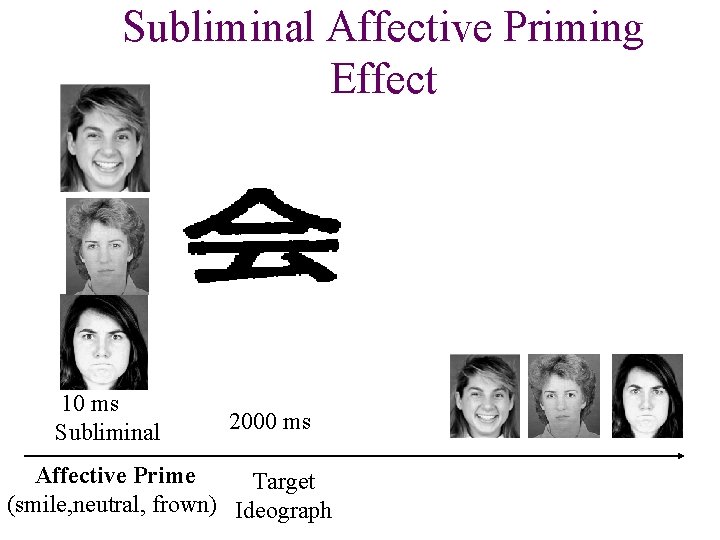
Subliminal Affective Priming Effect 10 ms Subliminal 2000 ms Affective Prime Target (smile, neutral, frown) Ideograph
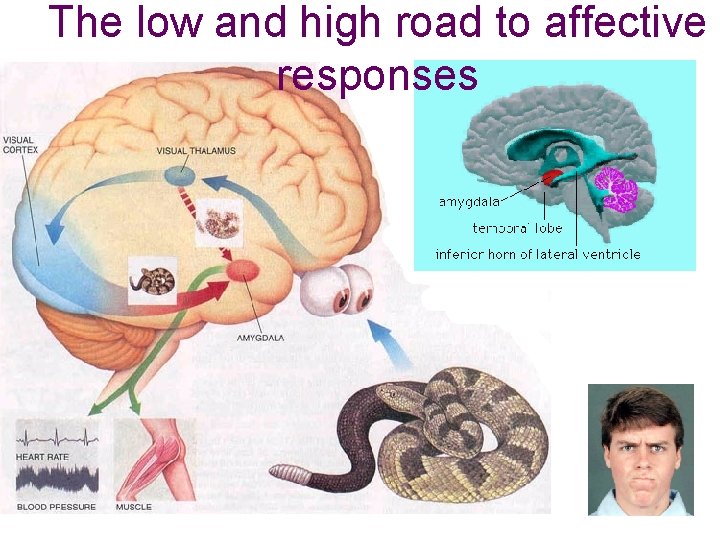
The low and high road to affective responses
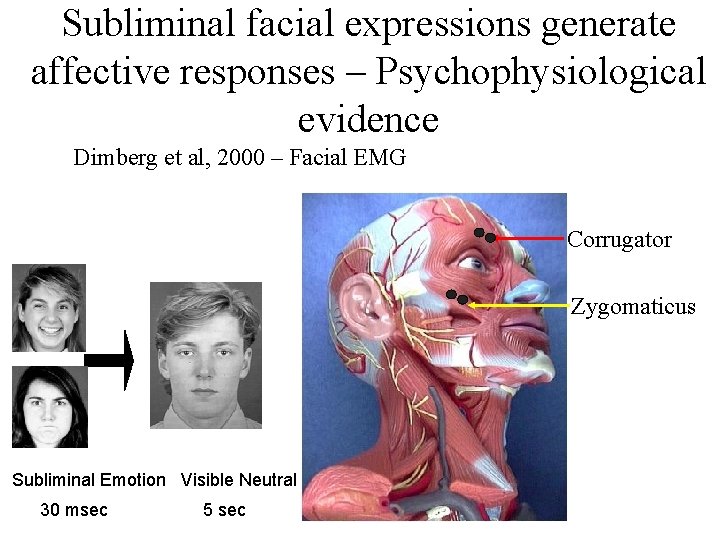
Subliminal facial expressions generate affective responses – Psychophysiological evidence Dimberg et al, 2000 – Facial EMG Corrugator Zygomaticus Subliminal Emotion Visible Neutral 30 msec 5 sec
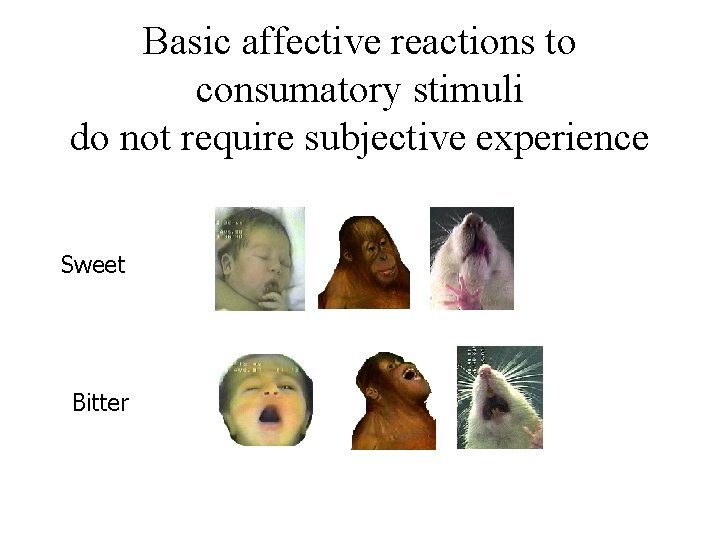
Basic affective reactions to consumatory stimuli do not require subjective experience Sweet Bitter
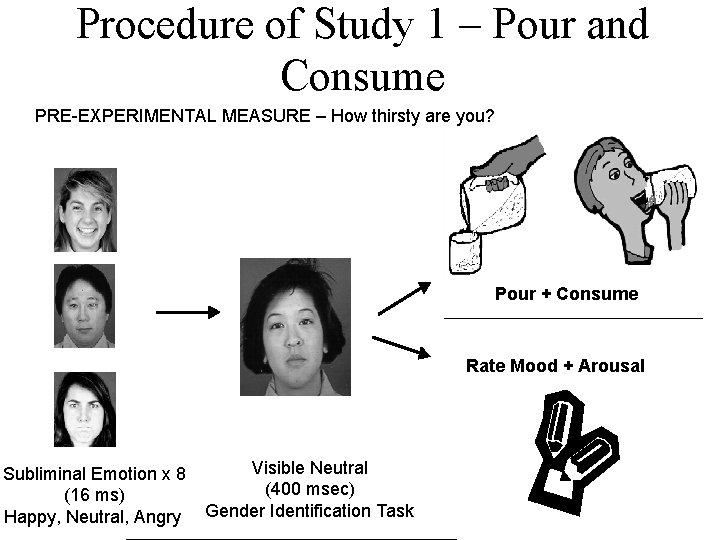
Procedure of Study 1 – Pour and Consume PRE-EXPERIMENTAL MEASURE – How thirsty are you? Pour + Consume Rate Mood + Arousal Subliminal Emotion x 8 (16 ms) Happy, Neutral, Angry Visible Neutral (400 msec) Gender Identification Task
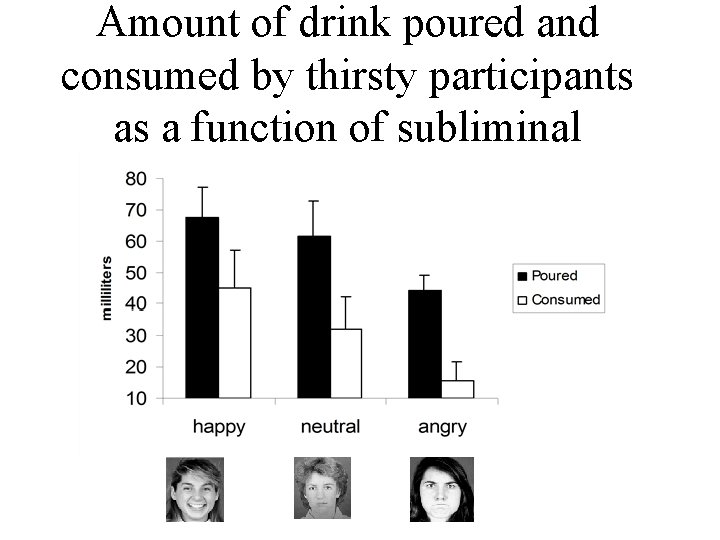
Amount of drink poured and consumed by thirsty participants as a function of subliminal expression
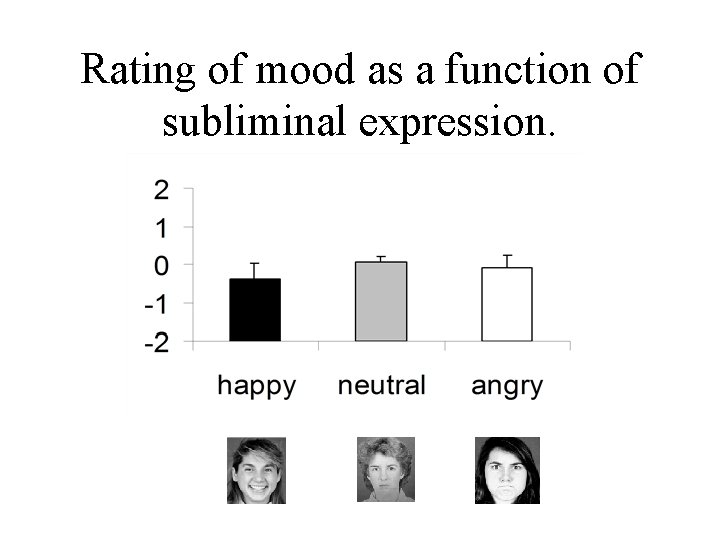
Rating of mood as a function of subliminal expression.
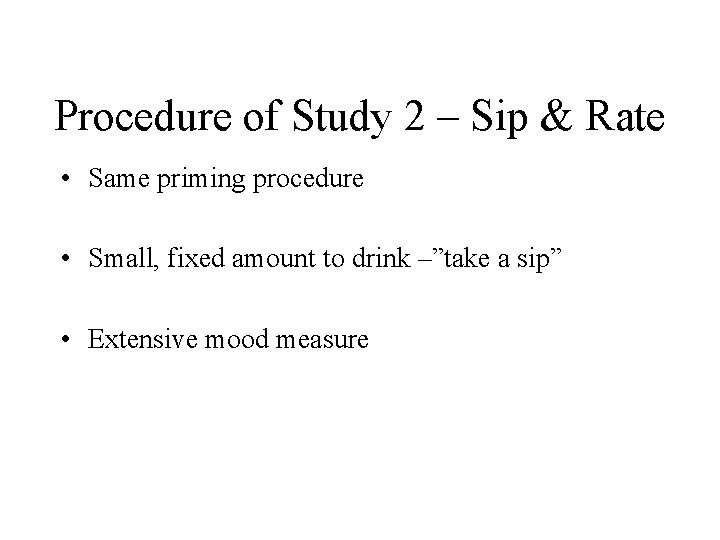
Procedure of Study 2 – Sip & Rate • Same priming procedure • Small, fixed amount to drink –”take a sip” • Extensive mood measure
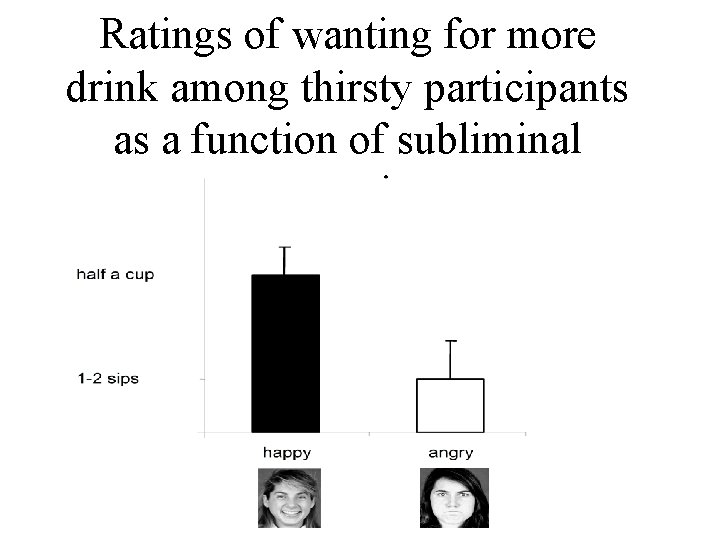
Ratings of wanting for more drink among thirsty participants as a function of subliminal expression.
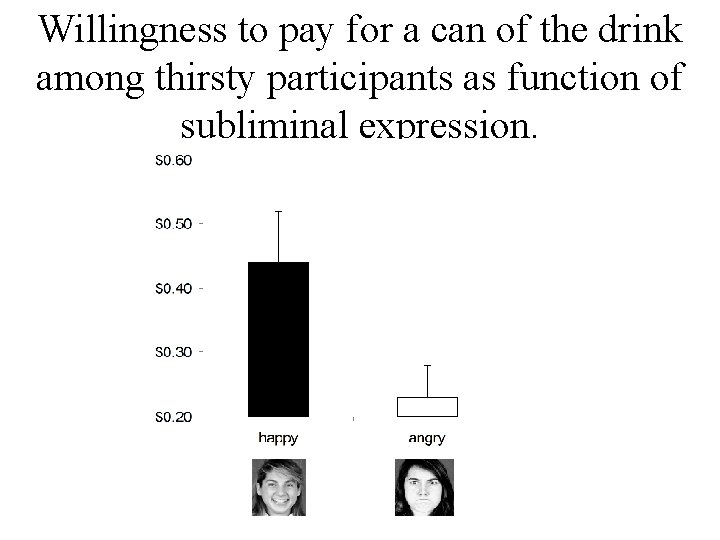
Willingness to pay for a can of the drink among thirsty participants as function of subliminal expression.
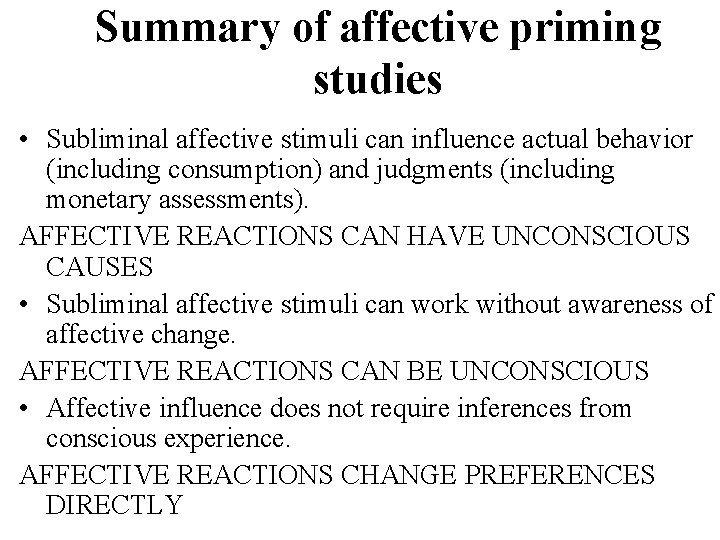
Summary of affective priming studies • Subliminal affective stimuli can influence actual behavior (including consumption) and judgments (including monetary assessments). AFFECTIVE REACTIONS CAN HAVE UNCONSCIOUS CAUSES • Subliminal affective stimuli can work without awareness of affective change. AFFECTIVE REACTIONS CAN BE UNCONSCIOUS • Affective influence does not require inferences from conscious experience. AFFECTIVE REACTIONS CHANGE PREFERENCES DIRECTLY