
DOING THEOLOGY IN A GARBAGE DUMP The Rough
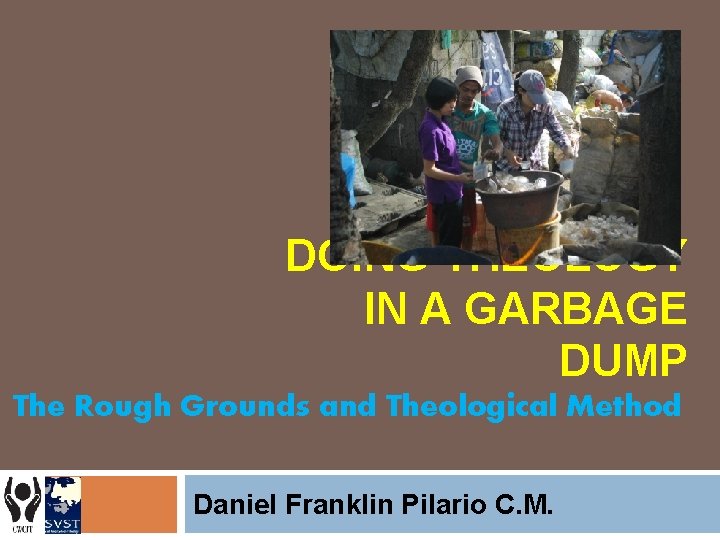
DOING THEOLOGY IN A GARBAGE DUMP The Rough Grounds and Theological Method Daniel Franklin Pilario C. M.

OUTLINE 1. 2. 3. 4. 5. The Rough Grounds of Payatas Their Lives as Painful Questions Closed Churches Closed Theologies Reflective Theologizing

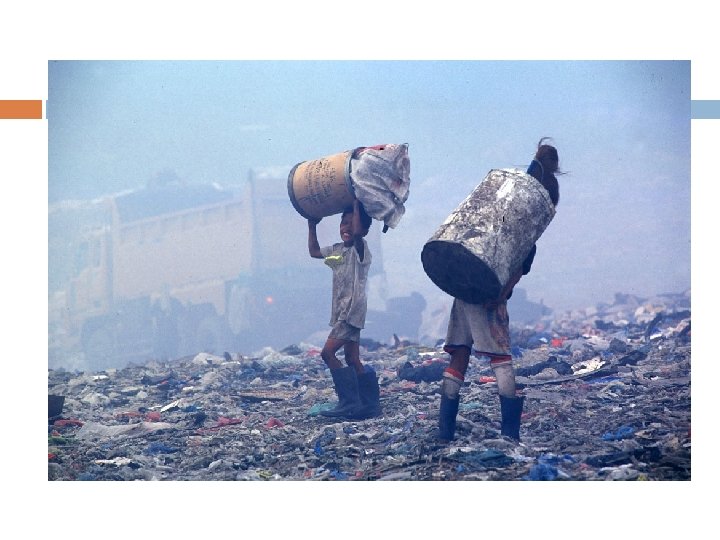
1. THE ROUGH GROUNDS OF PAYATAS

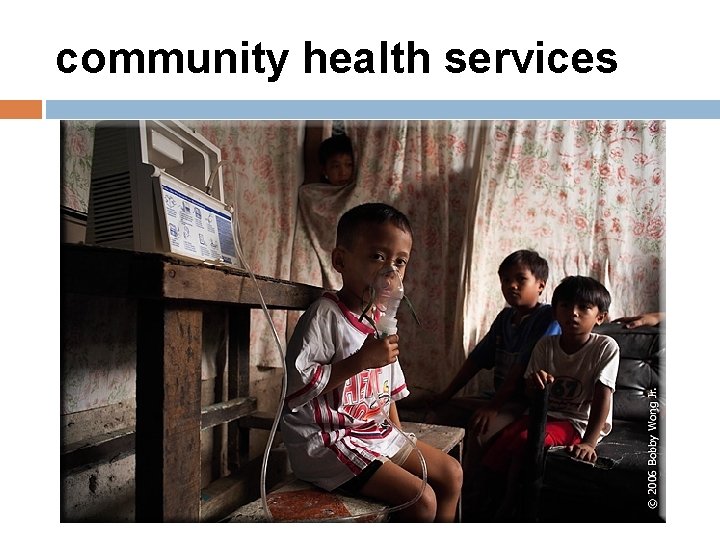
community health services
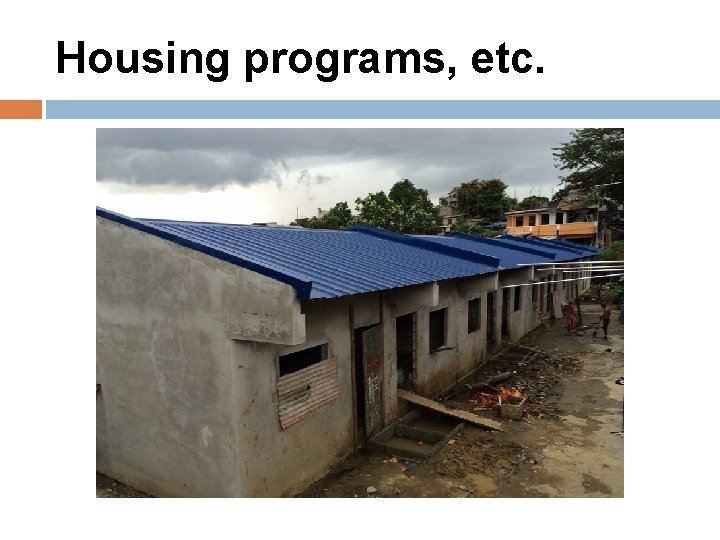
Housing programs, etc.
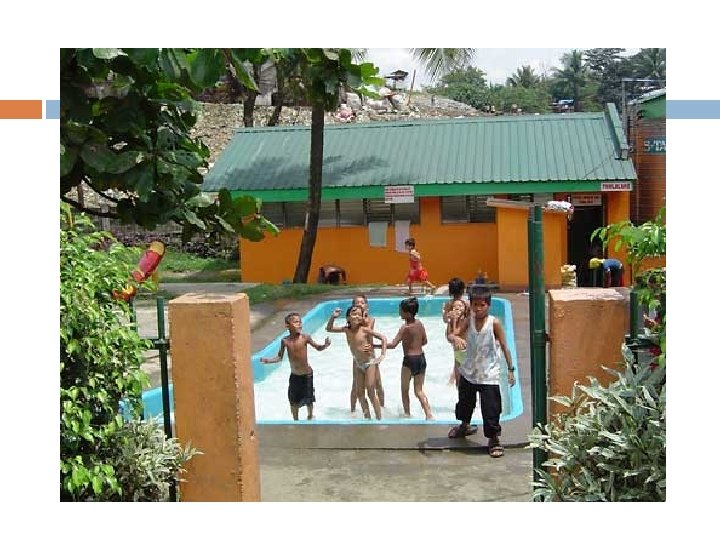
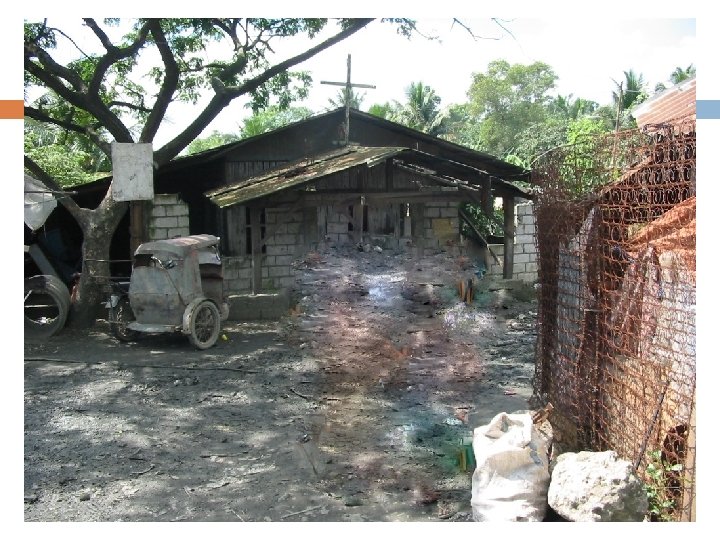
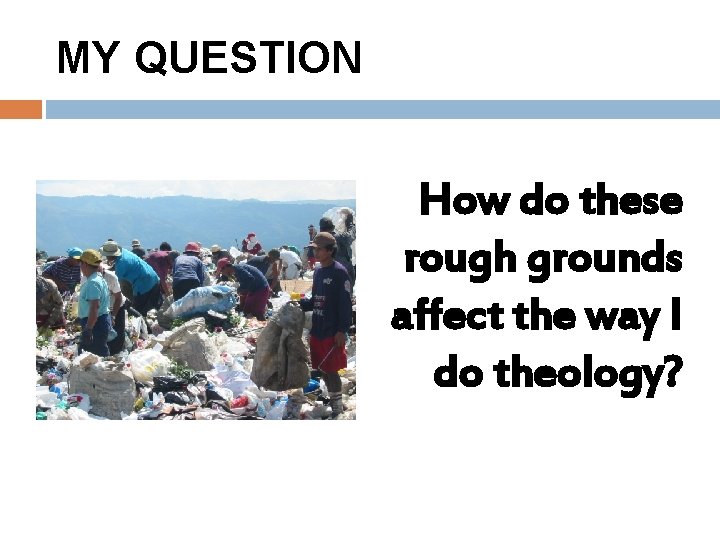
MY QUESTION How do these rough grounds affect the way I do theology?
We have got onto slippery ice where there is no friction and so in a certain sense the conditions are ideal, but also just because of that, we are unable to walk. We want to walk, so we need friction. Back to the rough ground! -Ludwig Wittgenstein Philosophical Investigations
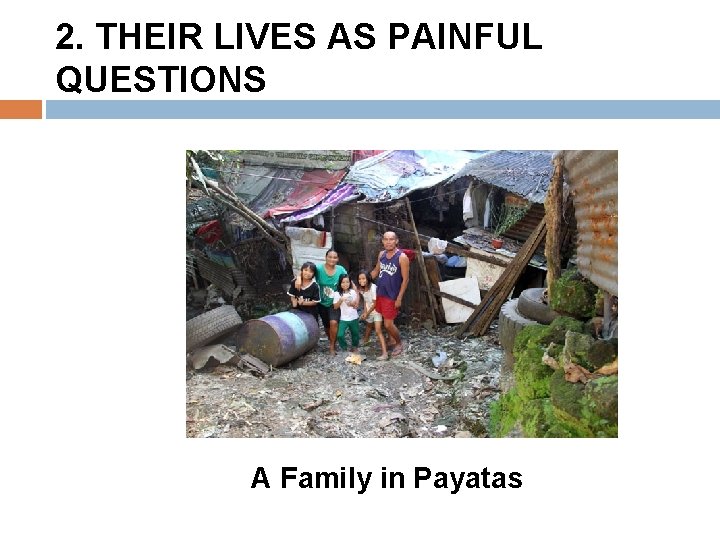
2. THEIR LIVES AS PAINFUL QUESTIONS A Family in Payatas
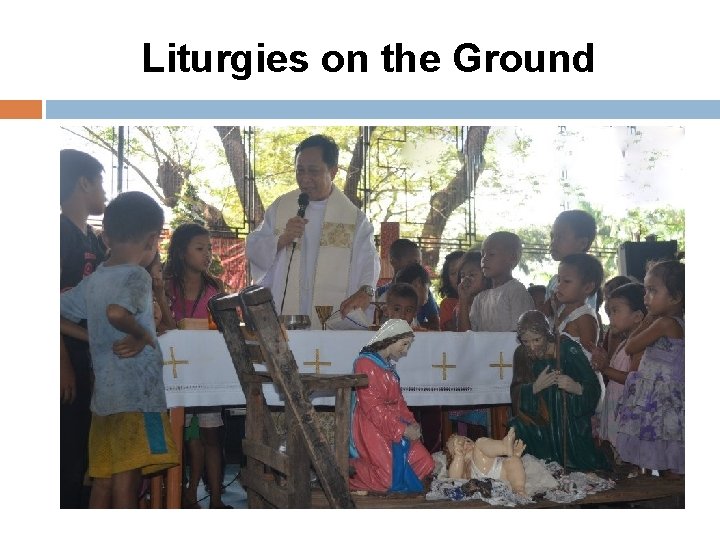
Liturgies on the Ground
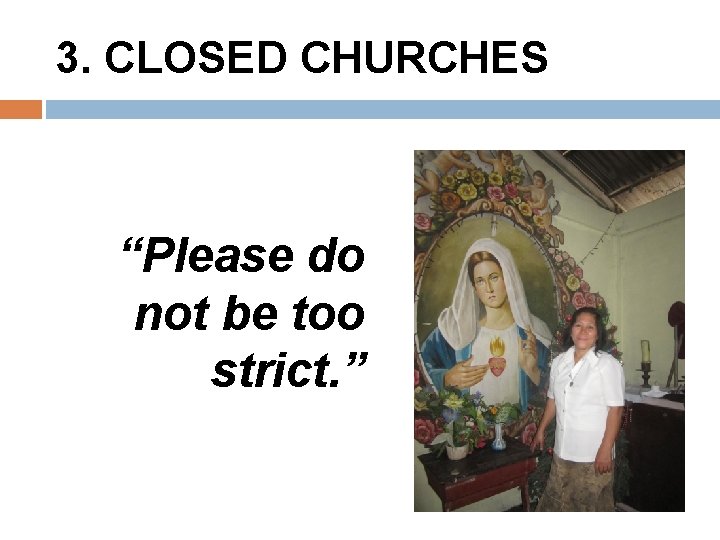
3. CLOSED CHURCHES “Please do not be too strict. ”
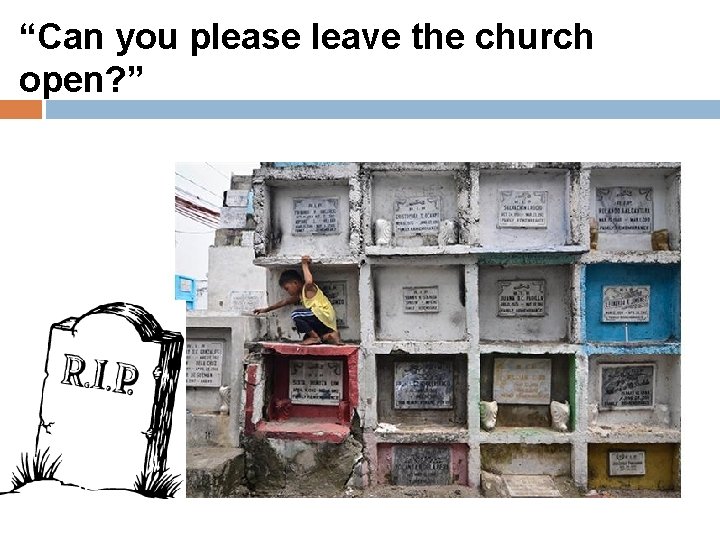
“Can you please leave the church open? ”
4. CLOSED THEOLOGIES It is not only our churches and mentalities which are closed but also the way we do theology. It is this closed methods that make the Church deaf both to people's voices and to the whispers of the Spirit. In the end, we have a dead church - so closed and so dead that God has decided to move to the cemetery.
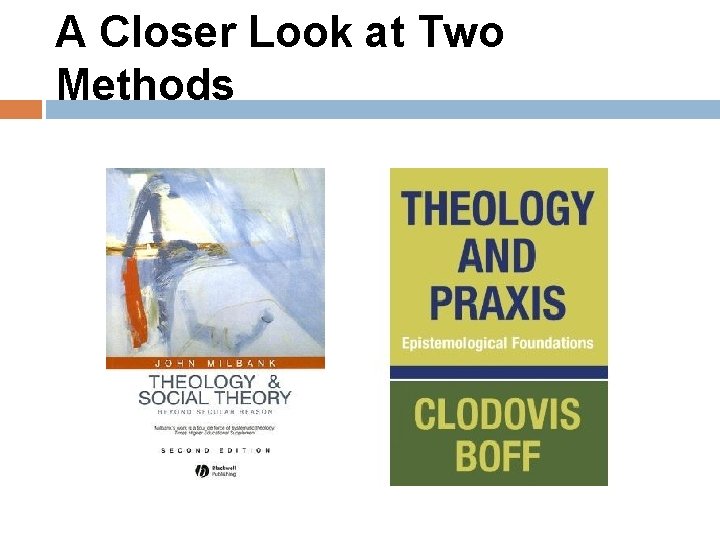
A Closer Look at Two Methods

RADICAL ORTHODOXY: John Milbank

IN QUEST OF A STOLEN CROWN Once upon a time, it was theology that wore the crown, theology that carried out most of the fundamental reading of all other interpretations and all other social formations. . . It was the master narrative. Stolen by secular reason, and worn as 'social theory', the masternarrative is now sought by its earlier owner. - Gerard Loughlin
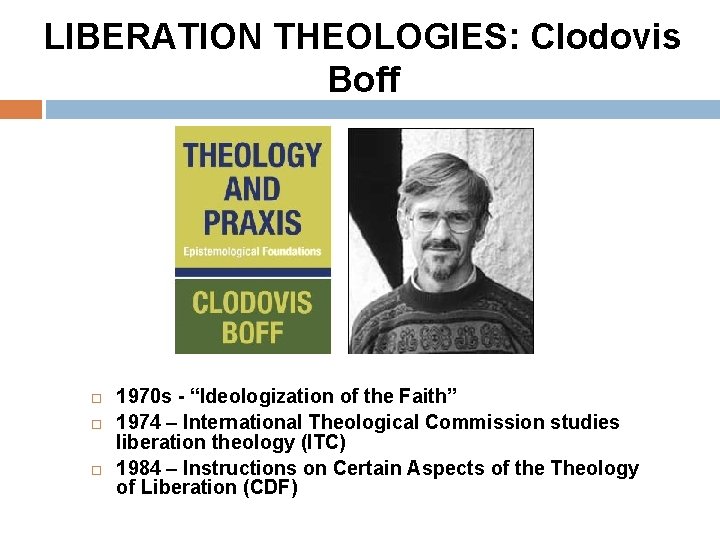
LIBERATION THEOLOGIES: Clodovis Boff 1970 s - “Ideologization of the Faith” 1974 – International Theological Commission studies liberation theology (ITC) 1984 – Instructions on Certain Aspects of the Theology of Liberation (CDF)
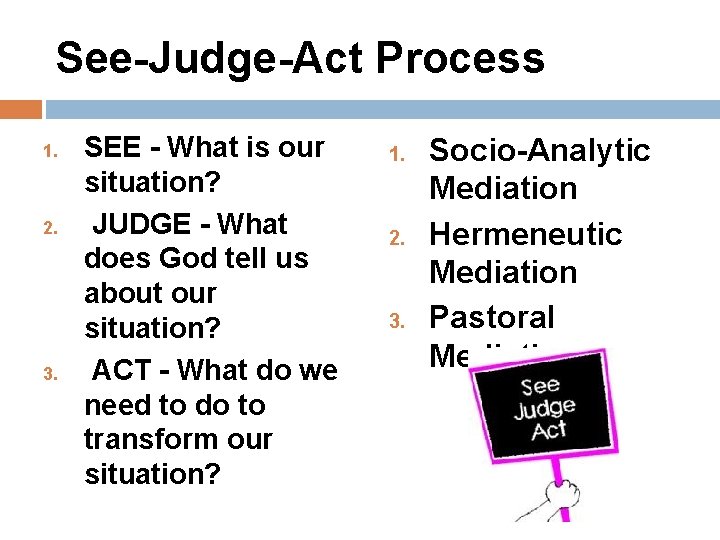
See-Judge-Act Process 1. 2. 3. SEE - What is our situation? JUDGE - What does God tell us about our situation? ACT - What do we need to do to transform our situation? 1. 2. 3. Socio-Analytic Mediation Hermeneutic Mediation Pastoral Mediation

‘PRACTICE’ IN ALTHUSSER By practice in general I shall mean any process of transformation of a determinate given raw material into a determinate product, a transformation effected by a determinate human labour, using determinate means of production. In any practice thus conceived, the determinant moment is neither the raw material nor the product but the practice in the narrow sense; the moment of the labour of transformation itself. - Louis Althusser, Reading Capital

BOFF’S THEOLOGICAL METHOD “raw materials” “pastoral practice” “content of the faith”

convergence Milbank and Boff - theologians who find themselves in opposite sides of ideological spectrum - in fact possess a common weakness. Both enthrone the "theologian" as the ultimate arbiter of theological meaning at the expense of voices from the ground.
5. REFLEXIVE THEOLOGIZING
SCIENCE VS. PRACTICE Science has a time which is not that of practice. For the analyst, time disappears: not only because the analyst cannot have any uncertainty as to what can happen, but also because he has time to totalize, that is, to overcome the effects of time. Pierre Bourdieu, The Logic of Practice
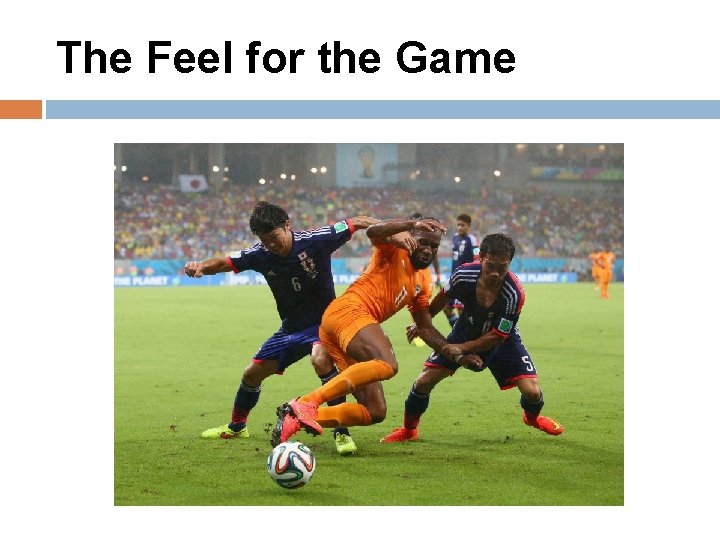
The Feel for the Game
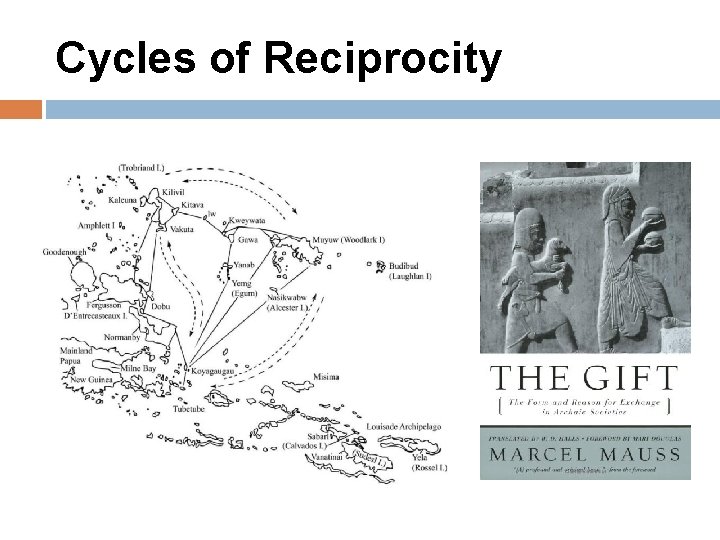
Cycles of Reciprocity
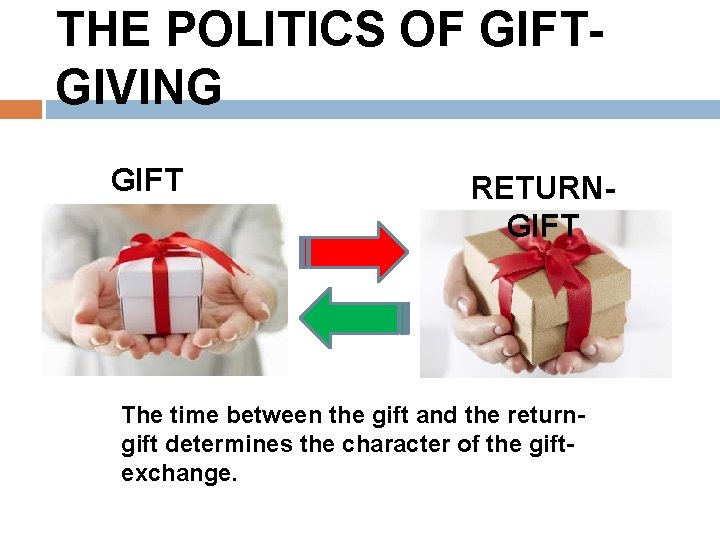
THE POLITICS OF GIFTGIVING GIFT RETURNGIFT The time between the gift and the returngift determines the character of the giftexchange.
MATHEMATICS AND REALITY “As far as the laws of mathematics refer to reality, they are not certain; and as far as they are certain, they do not refer to reality. ” Albert Einstein (Prussian Academy of Sciences - -
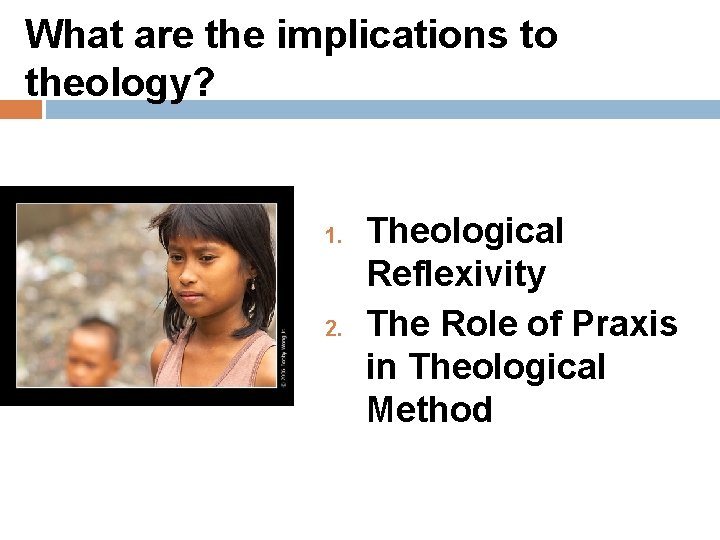
What are the implications to theology? 1. 2. Theological Reflexivity The Role of Praxis in Theological Method
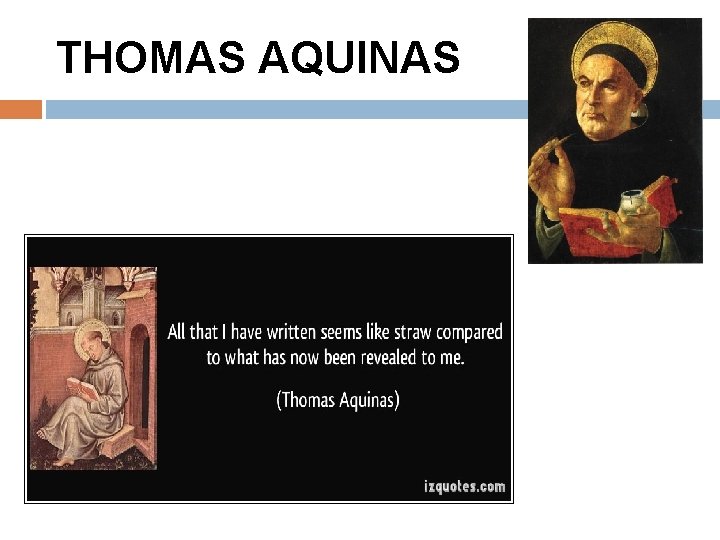
THOMAS AQUINAS
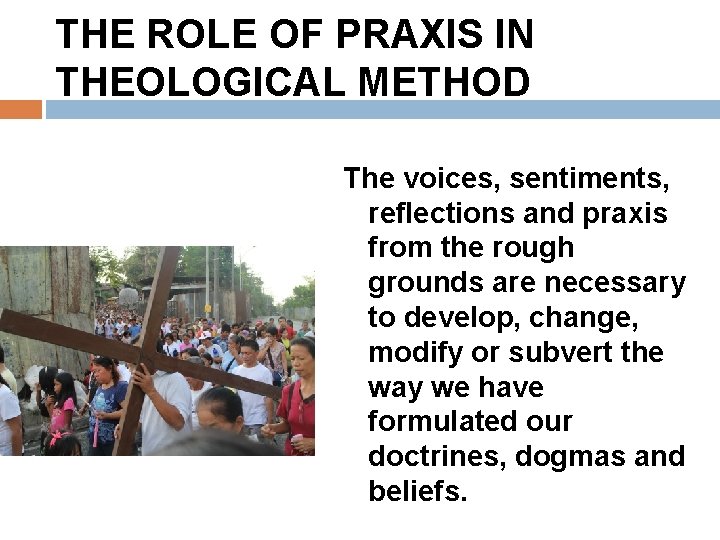
THE ROLE OF PRAXIS IN THEOLOGICAL METHOD The voices, sentiments, reflections and praxis from the rough grounds are necessary to develop, change, modify or subvert the way we have formulated our doctrines, dogmas and beliefs.

Sensus Fidei (2014) Problems arise when the majority of the faithful remain indifferent to doctrinal or moral decisions taken by the Magisterium. . . This lack of reception may indicate a weakness of lack of faith on the part of the people of God. . . But in some cases it may indicate that certain decisions have been taken by those in authority without due consideration of the experience of the faithful, or without sufficient consultation of the faithful by the Magisterium. (123)

BY WAY OF CONCLUSION Payatas Dumpsite – December 18, 2011
- Slides: 35