
Does Using a Longacting Injectable LAI Antipsychotic Medication
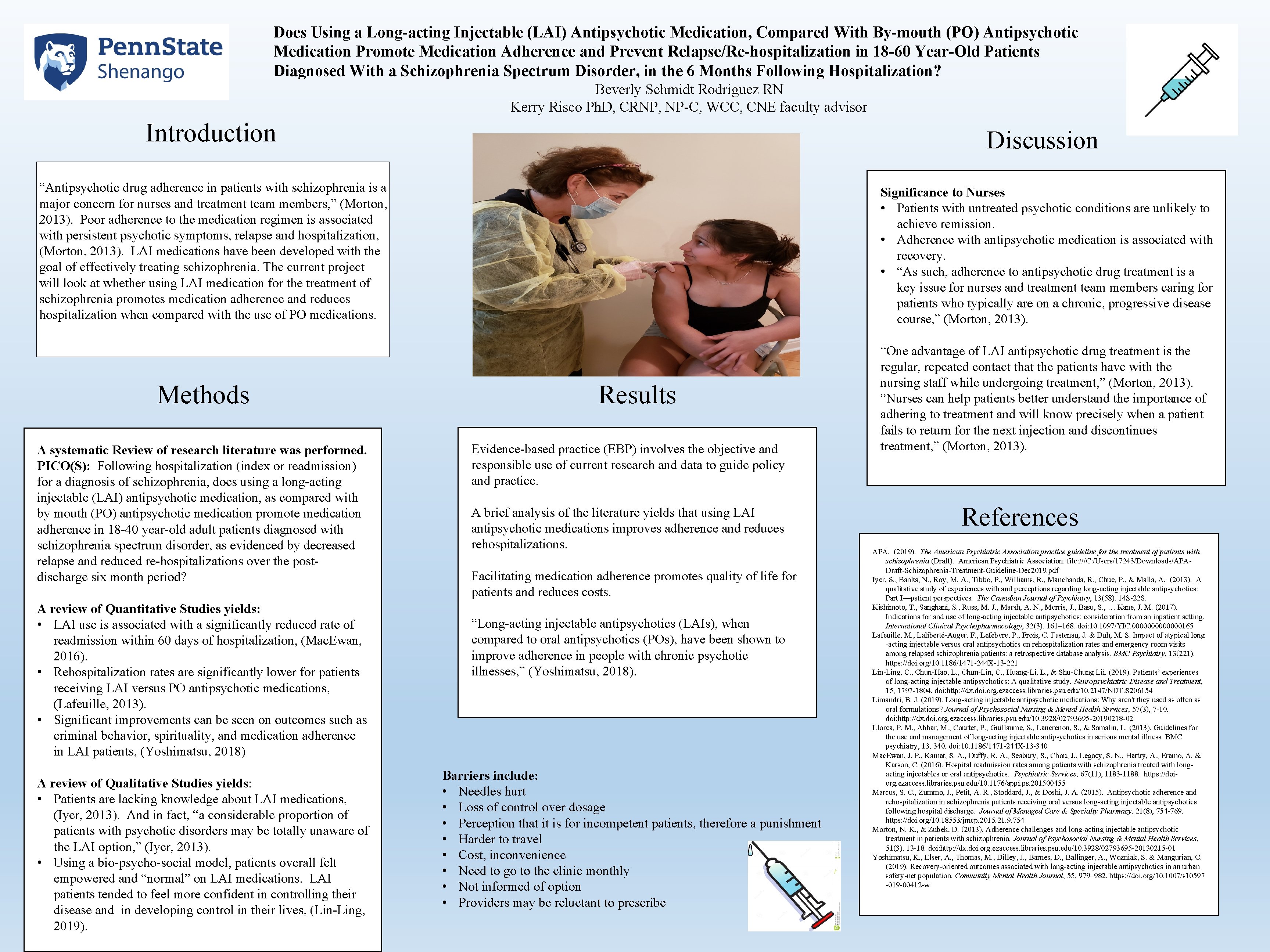
Does Using a Long-acting Injectable (LAI) Antipsychotic Medication, Compared With By-mouth (PO) Antipsychotic Medication Promote Medication Adherence and Prevent Relapse/Re-hospitalization in 18 -60 Year-Old Patients Diagnosed With a Schizophrenia Spectrum Disorder, in the 6 Months Following Hospitalization? Beverly Schmidt Rodriguez RN Kerry Risco Ph. D, CRNP, NP-C, WCC, CNE faculty advisor Introduction Picture/Graph “Antipsychotic drug adherence in patients with schizophrenia is a major concern for nurses and treatment team members, ” (Morton, 2013). Poor adherence to the medication regimen is associated with persistent psychotic symptoms, relapse and hospitalization, (Morton, 2013). LAI medications have been developed with the goal of effectively treating schizophrenia. The current project will look at whether using LAI medication for the treatment of schizophrenia promotes medication adherence and reduces hospitalization when compared with the use of PO medications. Methods A systematic Review of research literature was performed. PICO(S): Following hospitalization (index or readmission) for a diagnosis of schizophrenia, does using a long-acting injectable (LAI) antipsychotic medication, as compared with by mouth (PO) antipsychotic medication promote medication adherence in 18 -40 year-old adult patients diagnosed with schizophrenia spectrum disorder, as evidenced by decreased relapse and reduced re-hospitalizations over the postdischarge six month period? A review of Quantitative Studies yields: • LAI use is associated with a significantly reduced rate of readmission within 60 days of hospitalization, (Mac. Ewan, 2016). • Rehospitalization rates are significantly lower for patients receiving LAI versus PO antipsychotic medications, (Lafeuille, 2013). • Significant improvements can be seen on outcomes such as criminal behavior, spirituality, and medication adherence in LAI patients, (Yoshimatsu, 2018) A review of Qualitative Studies yields: • Patients are lacking knowledge about LAI medications, (Iyer, 2013). And in fact, “a considerable proportion of patients with psychotic disorders may be totally unaware of the LAI option, ” (Iyer, 2013). • Using a bio-psycho-social model, patients overall felt empowered and “normal” on LAI medications. LAI patients tended to feel more confident in controlling their disease and in developing control in their lives, (Lin-Ling, 2019). Discussion Significance to Nurses • Patients with untreated psychotic conditions are unlikely to achieve remission. • Adherence with antipsychotic medication is associated with recovery. • “As such, adherence to antipsychotic drug treatment is a key issue for nurses and treatment team members caring for patients who typically are on a chronic, progressive disease course, ” (Morton, 2013). Results Evidence-based practice (EBP) involves the objective and responsible use of current research and data to guide policy and practice. A brief analysis of the literature yields that using LAI antipsychotic medications improves adherence and reduces rehospitalizations. Facilitating medication adherence promotes quality of life for patients and reduces costs. “Long-acting injectable antipsychotics (LAIs), when compared to oral antipsychotics (POs), have been shown to improve adherence in people with chronic psychotic illnesses, ” (Yoshimatsu, 2018). Barriers include: • Needles hurt • Loss of control over dosage • Perception that it is for incompetent patients, therefore a punishment • Harder to travel • Cost, inconvenience • Need to go to the clinic monthly • Not informed of option • Providers may be reluctant to prescribe “One advantage of LAI antipsychotic drug treatment is the regular, repeated contact that the patients have with the nursing staff while undergoing treatment, ” (Morton, 2013). “Nurses can help patients better understand the importance of adhering to treatment and will know precisely when a patient fails to return for the next injection and discontinues treatment, ” (Morton, 2013). References APA. (2019). The American Psychiatric Association practice guideline for the treatment of patients with schizophrenia (Draft). American Psychiatric Association. file: ///C: /Users/17243/Downloads/APADraft-Schizophrenia-Treatment-Guideline-Dec 2019. pdf Iyer, S. , Banks, N. , Roy, M. A. , Tibbo, P. , Williams, R. , Manchanda, R. , Chue, P. , & Malla, A. (2013). A qualitative study of experiences with and perceptions regarding long-acting injectable antipsychotics: Part I—patient perspectives. The Canadian Journal of Psychiatry, 13(58), 14 S-22 S. Kishimoto, T. , Sanghani, S. , Russ, M. J. , Marsh, A. N. , Morris, J. , Basu, S. , … Kane, J. M. (2017). Indications for and use of long-acting injectable antipsychotics: consideration from an inpatient setting. International Clinical Psychopharmacology, 32(3), 161– 168. doi: 10. 1097/YIC. 0000000165 Lafeuille, M. , Laliberté-Auger, F. , Lefebvre, P. , Frois, C. Fastenau, J. & Duh, M. S. Impact of atypical long -acting injectable versus oral antipsychotics on rehospitalization rates and emergency room visits among relapsed schizophrenia patients: a retrospective database analysis. BMC Psychiatry, 13(221). https: //doi. org/10. 1186/1471 -244 X-13 -221 Lin-Ling, C. , Chun-Hao, L. , Chun-Lin, C. , Huang-Li, L. , & Shu-Chung Lii. (2019). Patients’ experiences of long-acting injectable antipsychotics: A qualitative study. Neuropsychiatric Disease and Treatment, 15, 1797 -1804. doi: http: //dx. doi. org. ezaccess. libraries. psu. edu/10. 2147/NDT. S 206154 Limandri, B. J. (2019). Long-acting injectable antipsychotic medications: Why aren't they used as often as oral formulations? Journal of Psychosocial Nursing & Mental Health Services, 57(3), 7 -10. doi: http: //dx. doi. org. ezaccess. libraries. psu. edu/10. 3928/02793695 -20190218 -02 Llorca, P. M. , Abbar, M. , Courtet, P. , Guillaume, S. , Lancrenon, S. , & Samalin, L. (2013). Guidelines for the use and management of long-acting injectable antipsychotics in serious mental illness. BMC psychiatry, 13, 340. doi: 10. 1186/1471 -244 X-13 -340 Mac. Ewan, J. P. , Kamat, S. A. , Duffy, R. A. , Seabury, S. , Chou, J. , Legacy, S. N. , Hartry, A. , Eramo, A. & Karson, C. (2016). Hospital readmission rates among patients with schizophrenia treated with longacting injectables or oral antipsychotics. Psychiatric Services, 67(11), 1183 -1188. https: //doiorg. ezaccess. libraries. psu. edu/10. 1176/appi. ps. 201500455 Marcus, S. C. , Zummo, J. , Petit, A. R. , Stoddard, J. , & Doshi, J. A. (2015). Antipsychotic adherence and rehospitalization in schizophrenia patients receiving oral versus long-acting injectable antipsychotics following hospital discharge. Journal of Managed Care & Specialty Pharmacy, 21(8), 754 -769. https: //doi. org/10. 18553/jmcp. 2015. 21. 9. 754 Morton, N. K. , & Zubek, D. (2013). Adherence challenges and long-acting injectable antipsychotic treatment in patients with schizophrenia. Journal of Psychosocial Nursing & Mental Health Services, 51(3), 13 -18. doi: http: //dx. doi. org. ezaccess. libraries. psu. edu/10. 3928/02793695 -20130215 -01 Yoshimatsu, K. , Elser, A. , Thomas, M. , Dilley, J. , Barnes, D. , Ballinger, A. , Wozniak, S. & Mangurian, C. (2019). Recovery-oriented outcomes associated with long-acting injectable antipsychotics in an urban safety-net population. Community Mental Health Journal, 55, 979– 982. https: //doi. org/10. 1007/s 10597 -019 -00412 -w
- Slides: 1