
DOES SAFETY IN NUMBERS HYPOTHESIS REALLY COME TRUE

DOES ”SAFETY IN NUMBERS ” HYPOTHESIS REALLY COME TRUE IN CYCLING? Kalle Vaismaa Tampere University of Technology, Finland
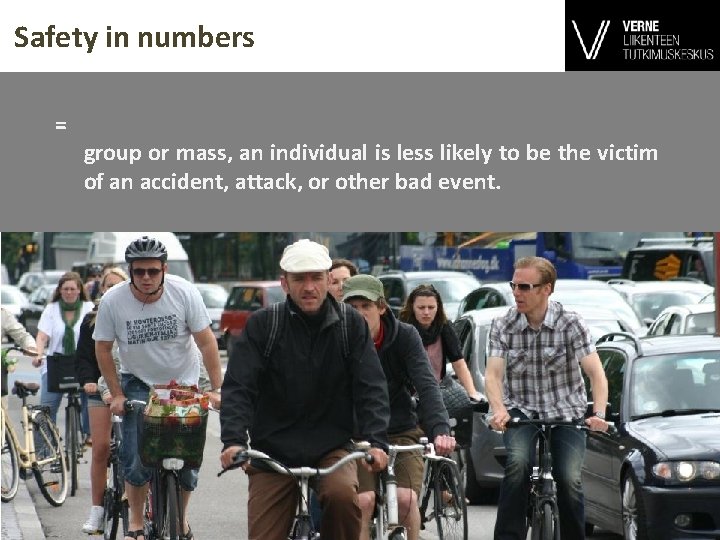
Safety in numbers = group or mass, an individual is less likely to be the victim of an accident, attack, or other bad event.

Safety in numbers Cycling in the Netherlands. Ministerie van Verkeer en Waterstaat 2009.
Previous research results Jakobsen (2003): If cycling doubles number of accidents increases only 40 % Robinson (2005): If cycling doubles risk of accidents increases only 34 % Stipdonk & Reurings (2010): If cycling substitutes short car trips number of cyclists´ accidents increases
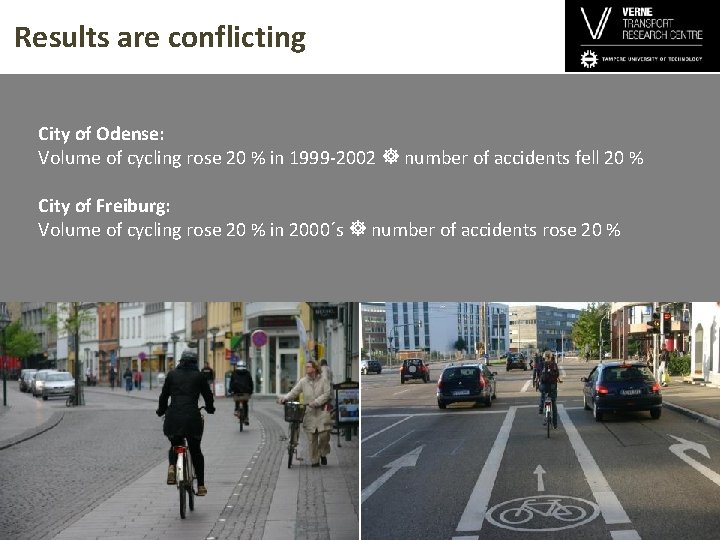
Results are conflicting City of Odense: Volume of cycling rose 20 % in 1999 -2002 number of accidents fell 20 % City of Freiburg: Volume of cycling rose 20 % in 2000´s number of accidents rose 20 %
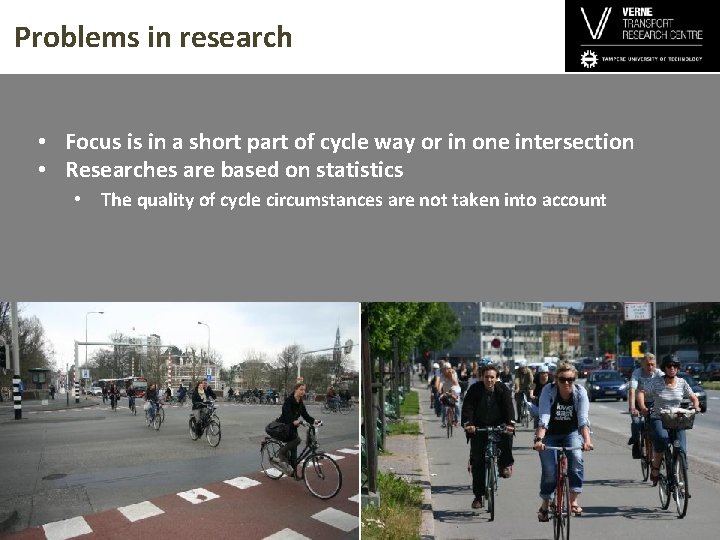
Problems in research • Focus is in a short part of cycle way or in one intersection • Researches are based on statistics • The quality of cycle circumstances are not taken into account
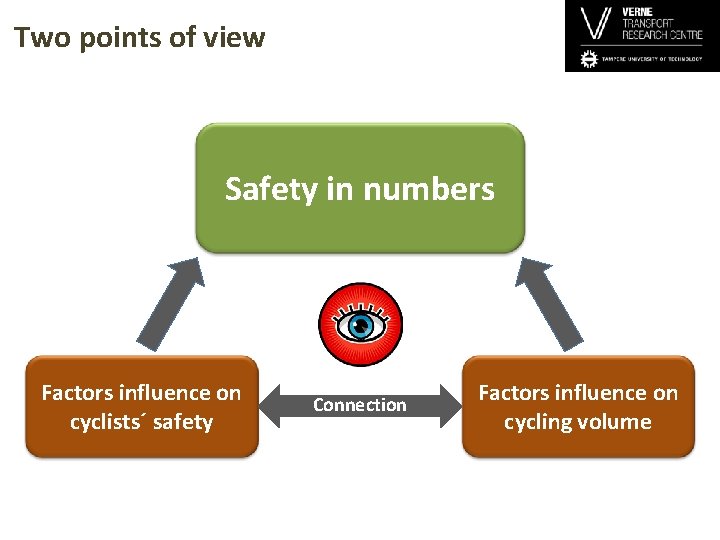
Two points of view Safety in numbers Factors influence on cyclists´ safety Connection Factors influence on cycling volume

WHICH FACTORS INFLUENCE ON CYCLISTS´ SAFETY?
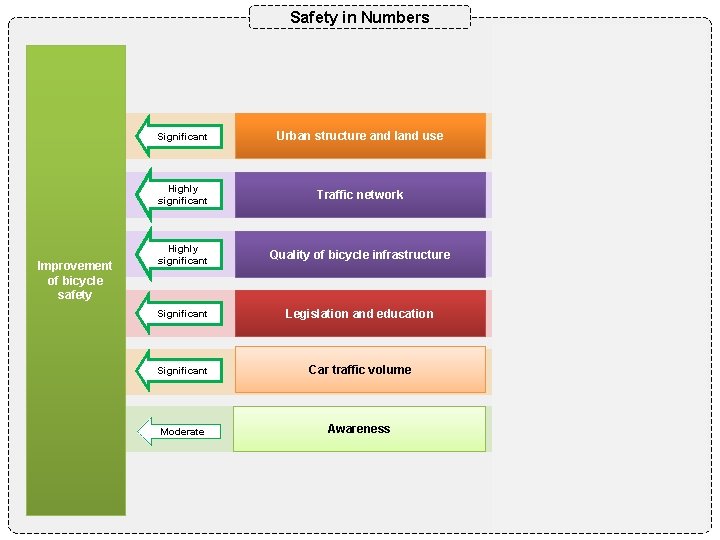
Safety in Numbers Improvement of bicycle safety Significant Urban structure and land use Highly significant Traffic network Highly significant Quality of bicycle infrastructure Highly significant Significant Legislation and education Significant Car traffic volume Moderate Awareness Moderate Growth of bicycle volume
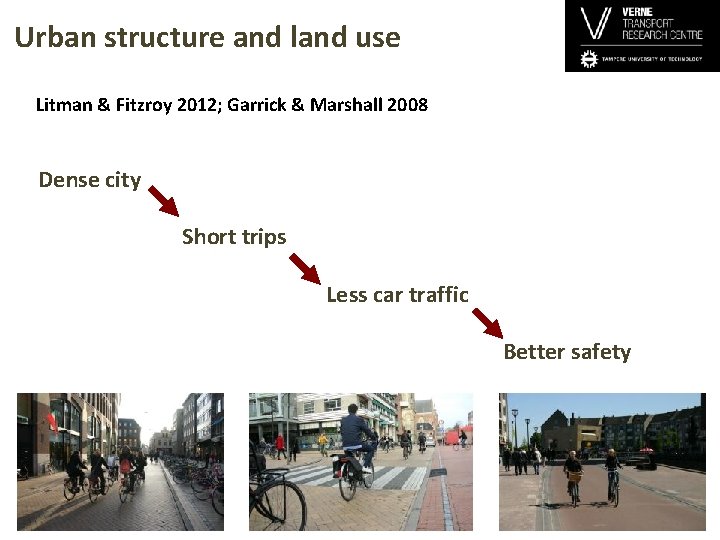
Urban structure and land use Litman & Fitzroy 2012; Garrick & Marshall 2008 Dense city Short trips Less car traffic Better safety
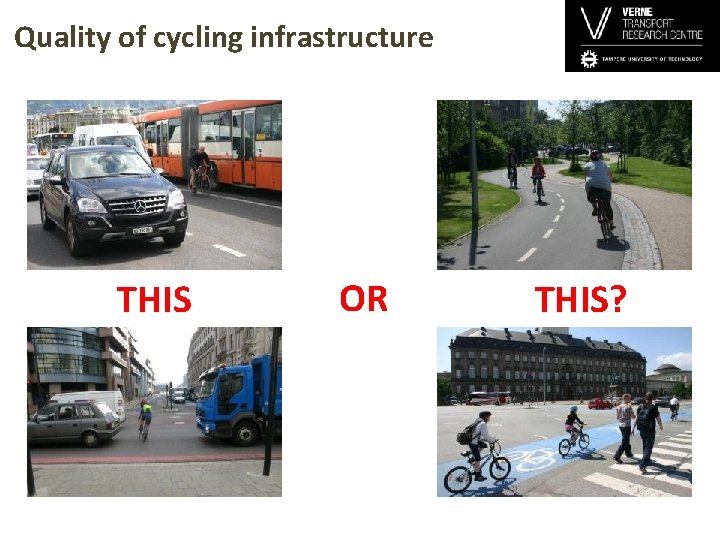
Quality of cycling infrastructure THIS OR THIS?

WHICH FACTORS INFLUENCE ON CYCLING VOLUME?
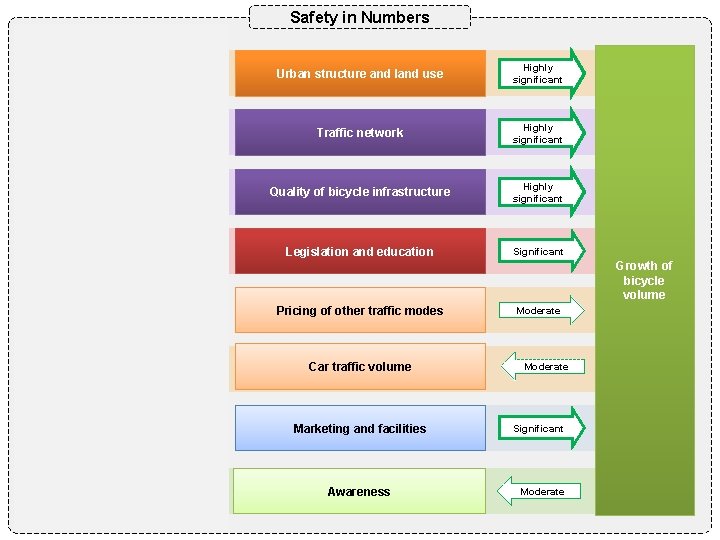
Safety in Numbers Significant Urban structure and land use Highly significant Traffic network Highly significant Quality of bicycle infrastructure Highly significant Significant Legislation and education Significant Improvement of bicycle safety Growth of bicycle volume Pricing of other traffic modes Significant Car traffic volume Marketing and facilities Moderate Awareness Moderate Significant Moderate
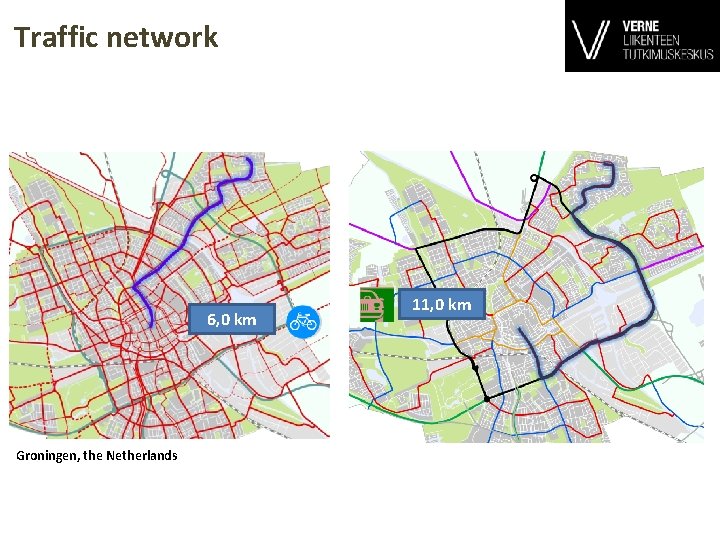
Traffic network 6, 0 km Groningen, the Netherlands 11, 0 km
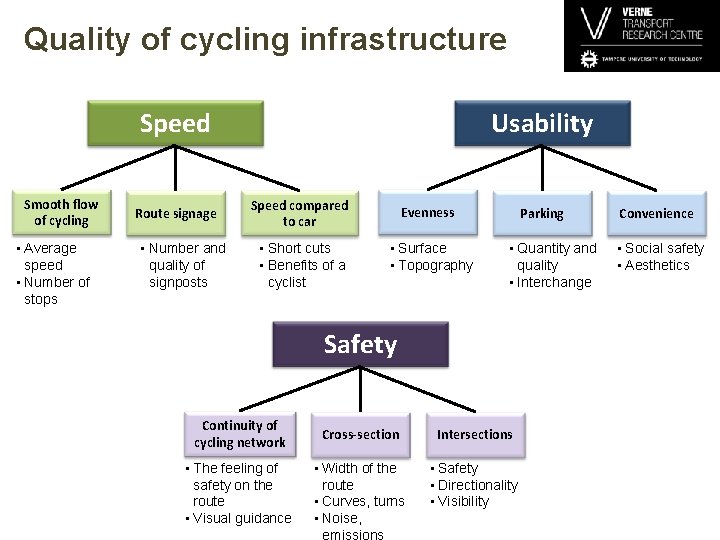
Quality of cycling infrastructure Speed Smooth flow of cycling • Average speed • Number of stops Route signage • Number and quality of signposts Usability Speed compared to car • Short cuts • Benefits of a cyclist Evenness • Surface • Topography Parking • Quantity and quality • Interchange Safety Continuity of cycling network Cross-section Intersections • The feeling of safety on the route • Visual guidance • Width of the route • Curves, turns • Noise, • Safety • Directionality • Visibility Convenience • Social safety • Aesthetics

Quality of cycling infrastructure Easy, fast, convenient and relaxing to cycle!
WHICH IS THE CONNECTION BETWEEN CYCLING SAFETY AND VOLUME?
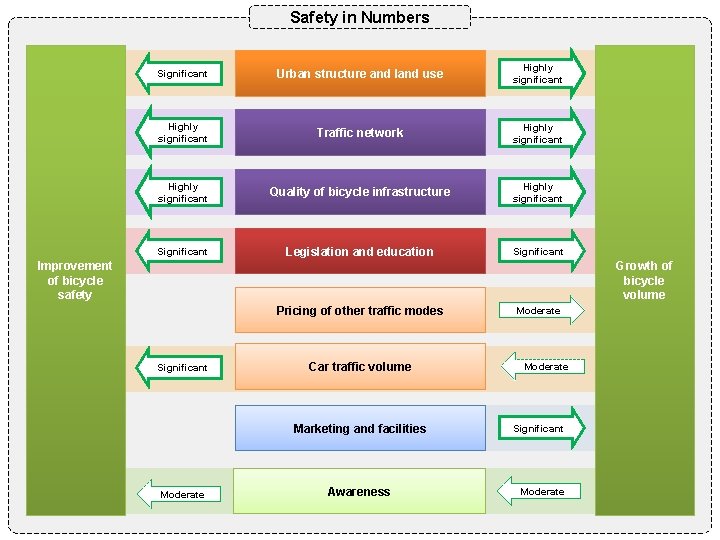
Safety in Numbers Significant Urban structure and land use Highly significant Traffic network Highly significant Quality of bicycle infrastructure Highly significant Significant Legislation and education Significant Improvement of bicycle safety Growth of bicycle volume Pricing of other traffic modes Significant Car traffic volume Marketing and facilities Moderate Awareness Moderate Significant Moderate
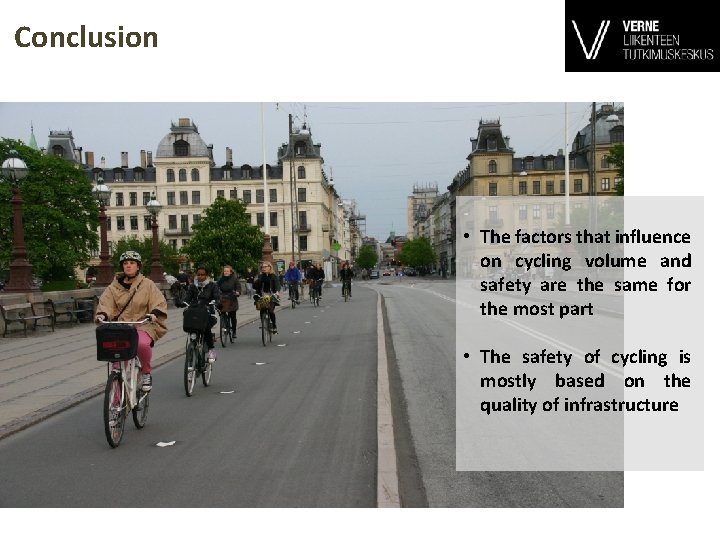
Conclusion • The factors that influence on cycling volume and safety are the same for the most part • The safety of cycling is mostly based on the quality of infrastructure
THANK YOU! Kalle Vaismaa Tampere University of Technology Transport Research Centre Verne kalle. vaismaa@tut. fi
- Slides: 20