
Does Prospect Theory Hold in Intertemporal Choice The

- Slides: 39
Does Prospect Theory Hold in Intertemporal Choice? The interaction of time and risk in preferences for gains and losses David J. Hardisty & Jeff Pfeffer SJDM presentation November 17 th, 2012 1
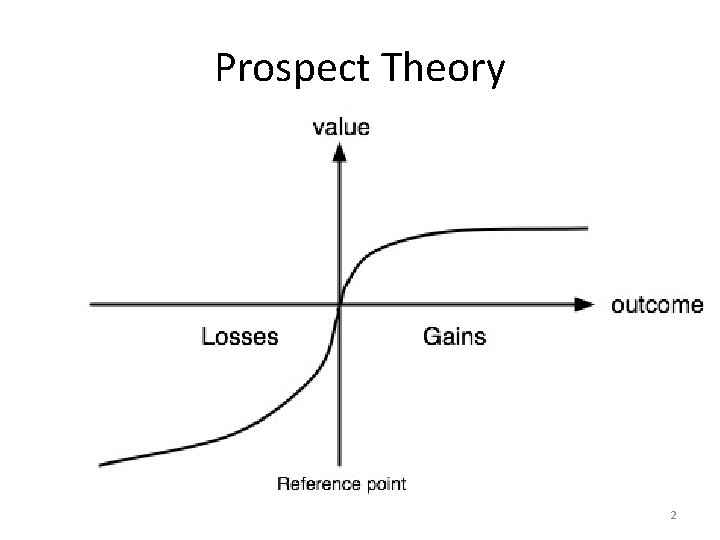
Prospect Theory 2
Uncertain Future Gains • The future is unavoidably uncertain • People are risk averse for gains (Kahneman & Tversky, 1979) • Risk aversion leads people to prefer immediate gains over future gains (Patak & Reynolds, 2007; Takahashi, Ikeda, & Hasegawa, 2007) • Examples: bonds, social security 3
Uncertain Future Losses • People are risk seeking for losses (Kahneman & Tversky, 1979) • Yet, people sometimes choose immediate losses over future losses (Thaler, 1981; Hardisty & Weber, 2009) • Examples: insurance, pre-paid phones 4
How does uncertainty affect time preferences for losses? 5
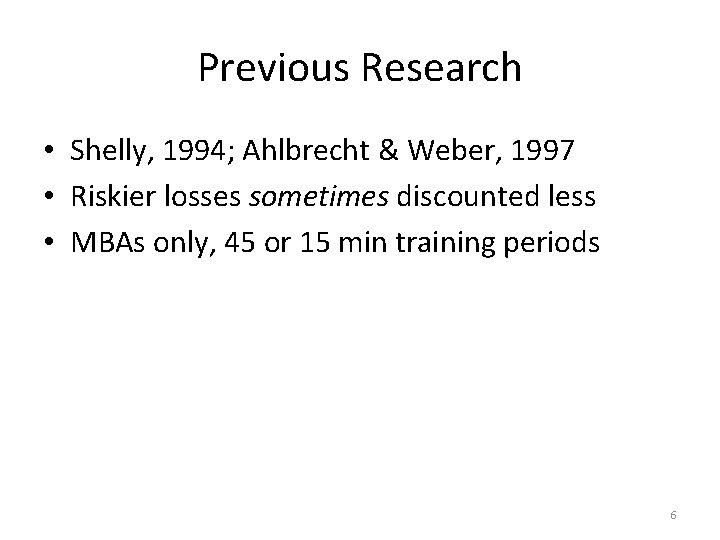
Previous Research • Shelly, 1994; Ahlbrecht & Weber, 1997 • Riskier losses sometimes discounted less • MBAs only, 45 or 15 min training periods 6
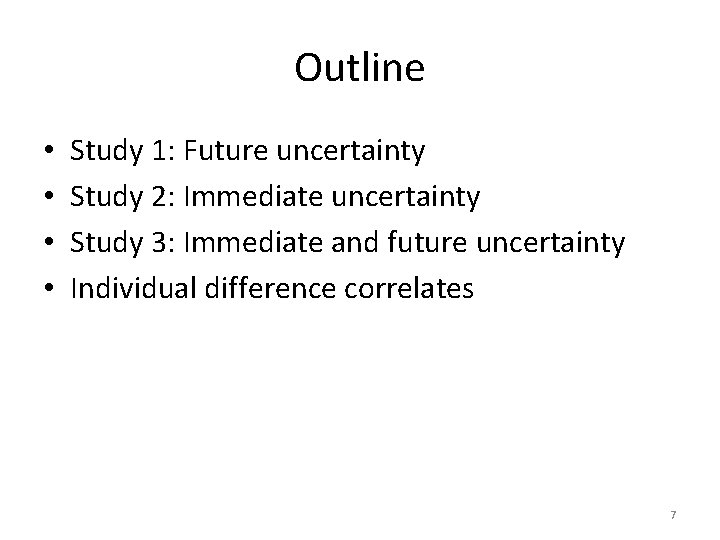
Outline • • Study 1: Future uncertainty Study 2: Immediate uncertainty Study 3: Immediate and future uncertainty Individual difference correlates 7
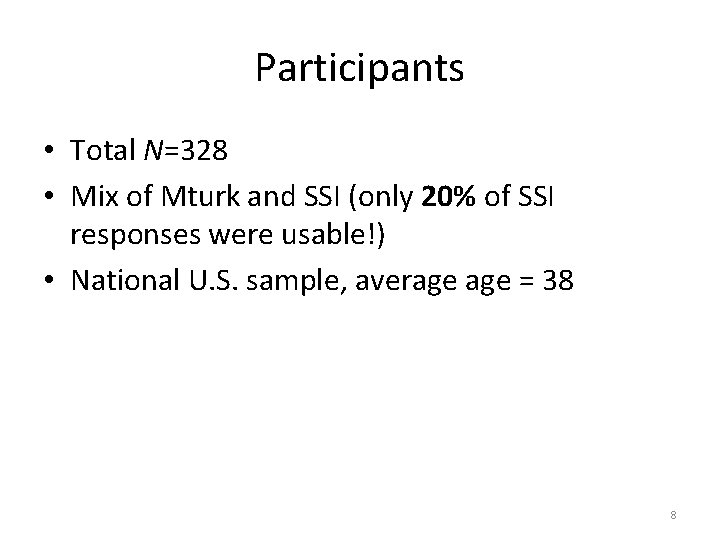
Participants • Total N=328 • Mix of Mturk and SSI (only 20% of SSI responses were usable!) • National U. S. sample, average = 38 8
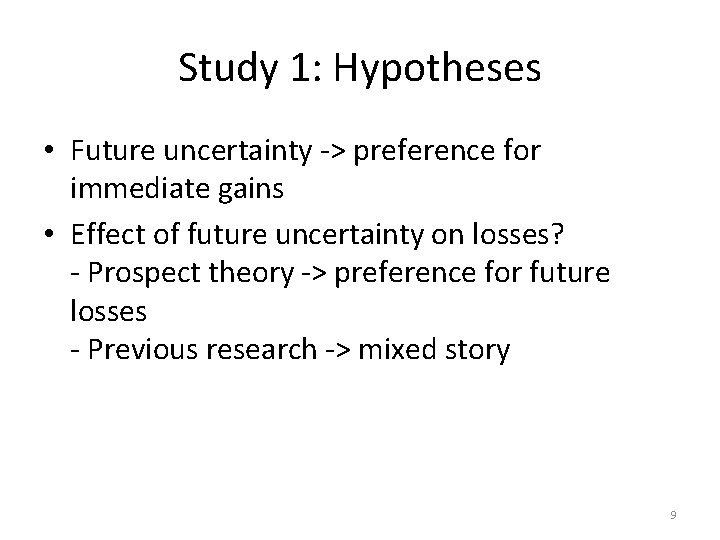
Study 1: Hypotheses • Future uncertainty -> preference for immediate gains • Effect of future uncertainty on losses? - Prospect theory -> preference for future losses - Previous research -> mixed story 9
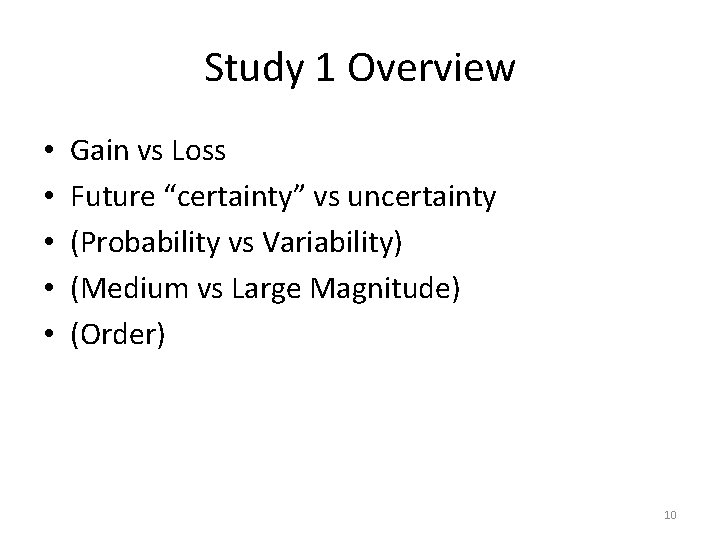
Study 1 Overview • • • Gain vs Loss Future “certainty” vs uncertainty (Probability vs Variability) (Medium vs Large Magnitude) (Order) 10
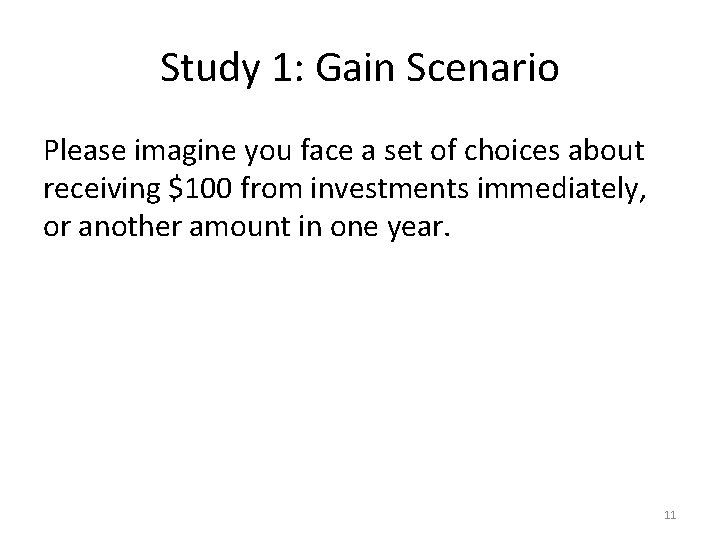
Study 1: Gain Scenario Please imagine you face a set of choices about receiving $100 from investments immediately, or another amount in one year. 11
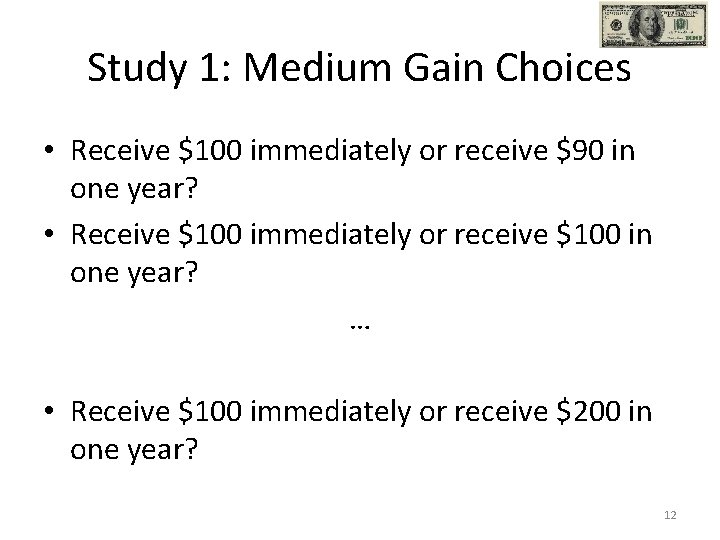
Study 1: Medium Gain Choices • Receive $100 immediately or receive $90 in one year? • Receive $100 immediately or receive $100 in one year? … • Receive $100 immediately or receive $200 in one year? 12
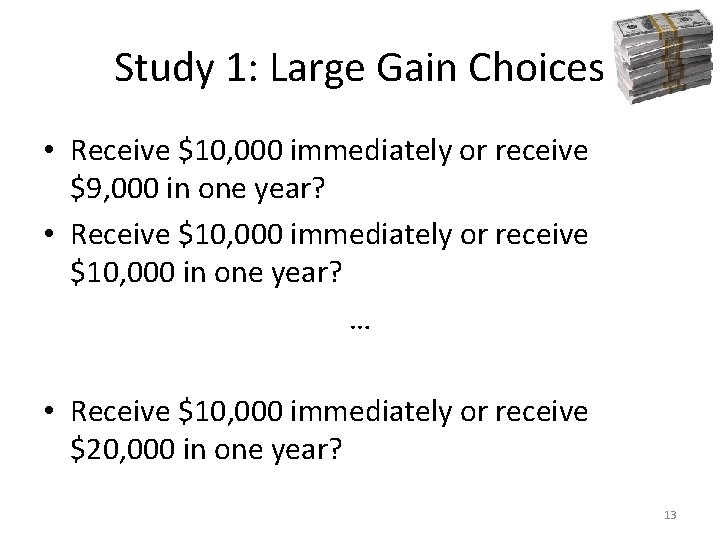
Study 1: Large Gain Choices • Receive $10, 000 immediately or receive $9, 000 in one year? • Receive $10, 000 immediately or receive $10, 000 in one year? … • Receive $10, 000 immediately or receive $20, 000 in one year? 13
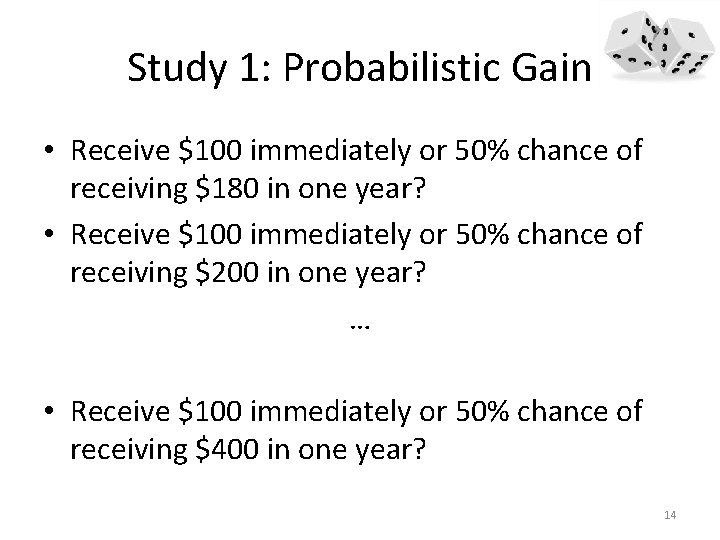
Study 1: Probabilistic Gain • Receive $100 immediately or 50% chance of receiving $180 in one year? • Receive $100 immediately or 50% chance of receiving $200 in one year? … • Receive $100 immediately or 50% chance of receiving $400 in one year? 14
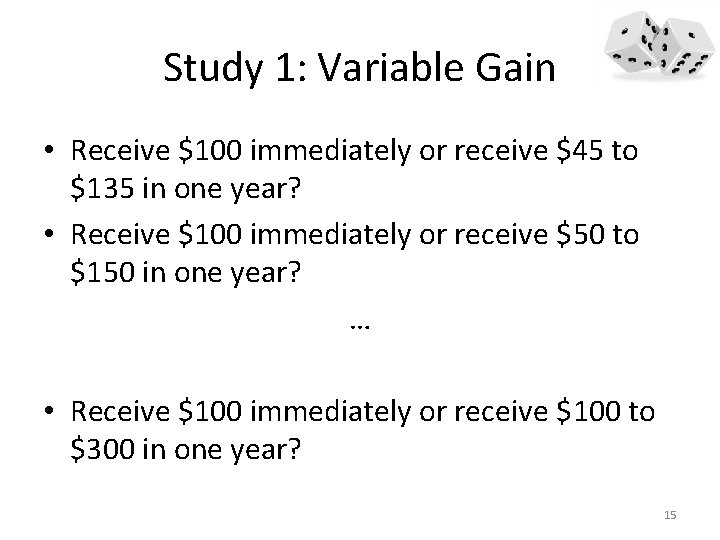
Study 1: Variable Gain • Receive $100 immediately or receive $45 to $135 in one year? • Receive $100 immediately or receive $50 to $150 in one year? … • Receive $100 immediately or receive $100 to $300 in one year? 15
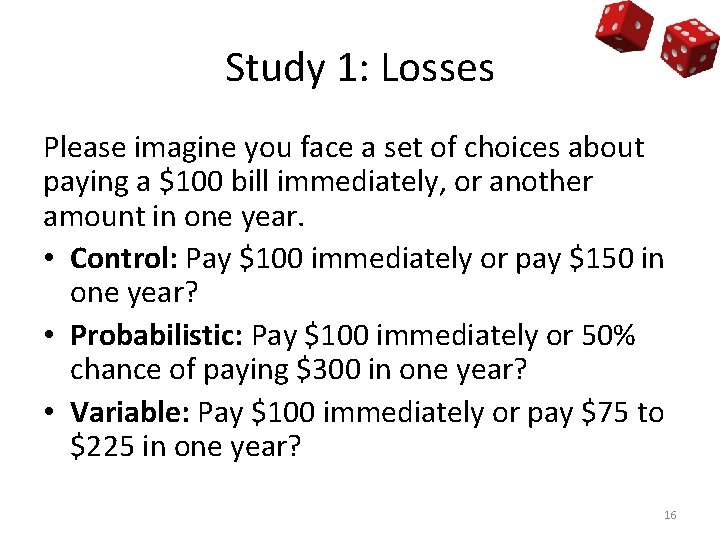
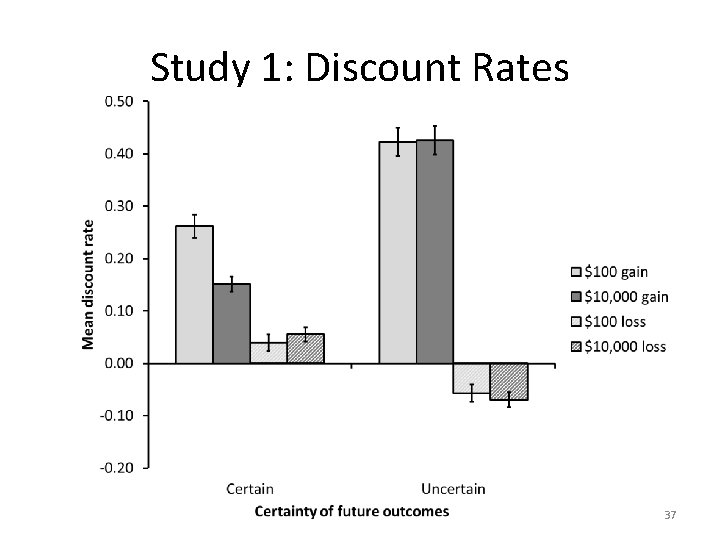
Study 1: Losses Please imagine you face a set of choices about paying a $100 bill immediately, or another amount in one year. • Control: Pay $100 immediately or pay $150 in one year? • Probabilistic: Pay $100 immediately or 50% chance of paying $300 in one year? • Variable: Pay $100 immediately or pay $75 to $225 in one year? 16
Study 1: Results 17
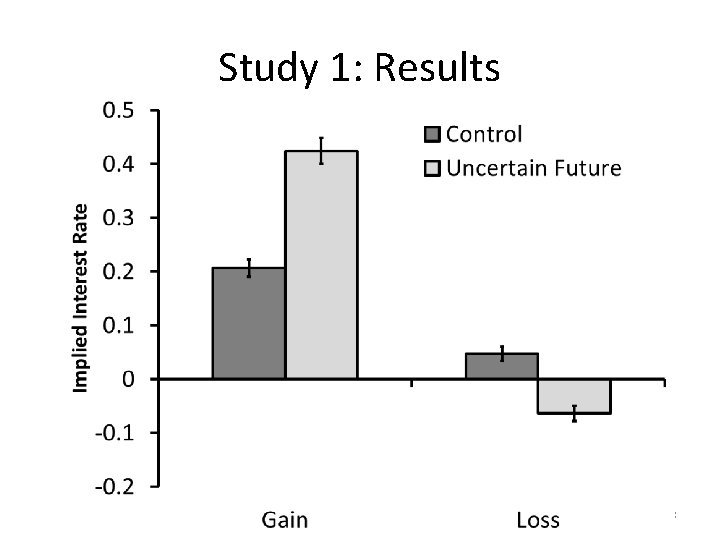
Study 1: Results 18
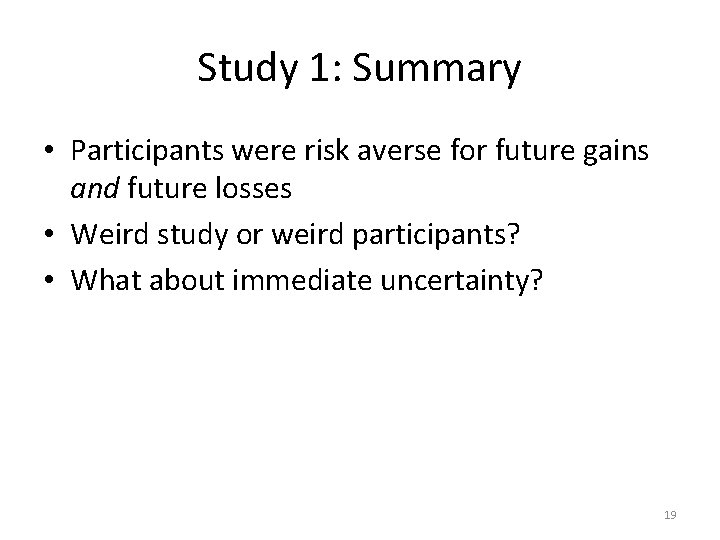
Study 1: Summary • Participants were risk averse for future gains and future losses • Weird study or weird participants? • What about immediate uncertainty? 19
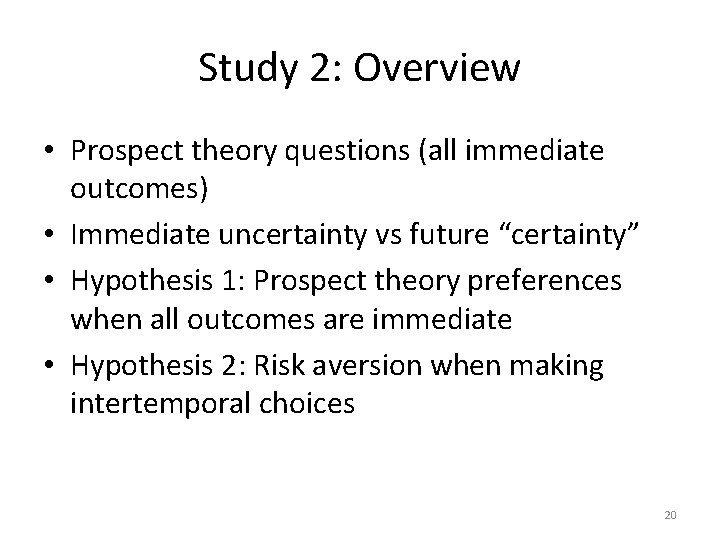
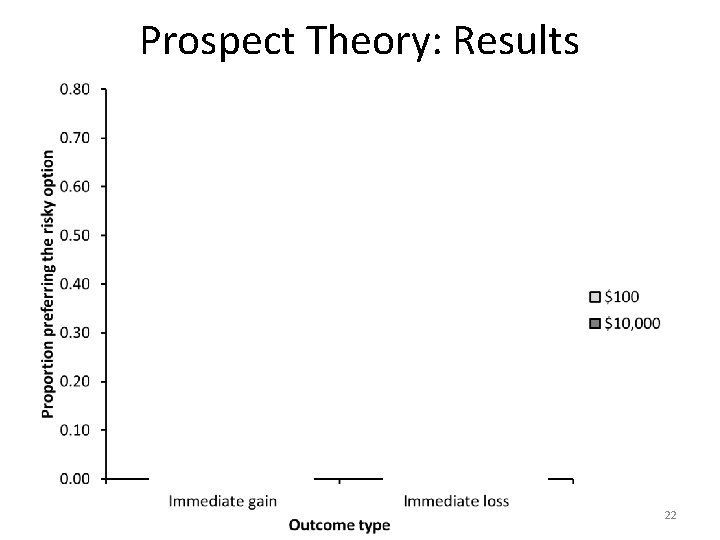
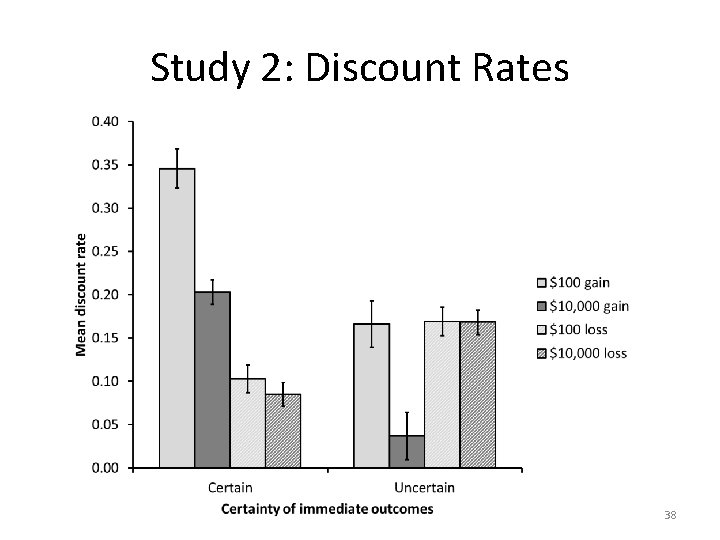
Study 2: Overview • Prospect theory questions (all immediate outcomes) • Immediate uncertainty vs future “certainty” • Hypothesis 1: Prospect theory preferences when all outcomes are immediate • Hypothesis 2: Risk aversion when making intertemporal choices 20
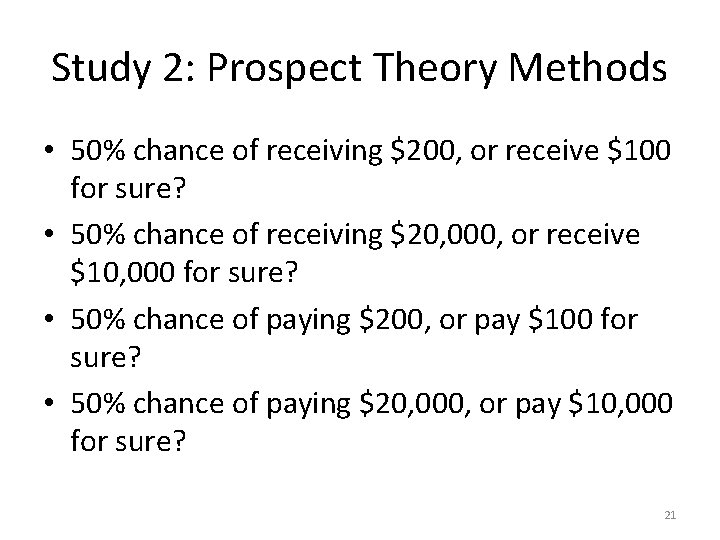
Study 2: Prospect Theory Methods • 50% chance of receiving $200, or receive $100 for sure? • 50% chance of receiving $20, 000, or receive $10, 000 for sure? • 50% chance of paying $200, or pay $100 for sure? • 50% chance of paying $20, 000, or pay $10, 000 for sure? 21
Prospect Theory: Results 22
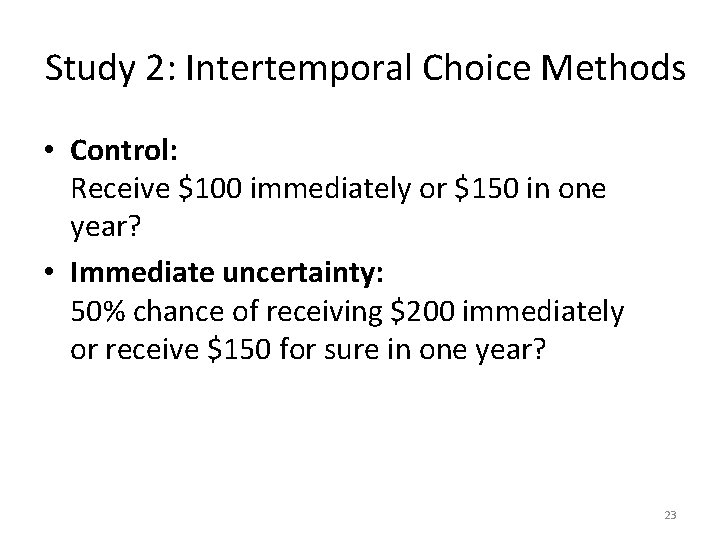
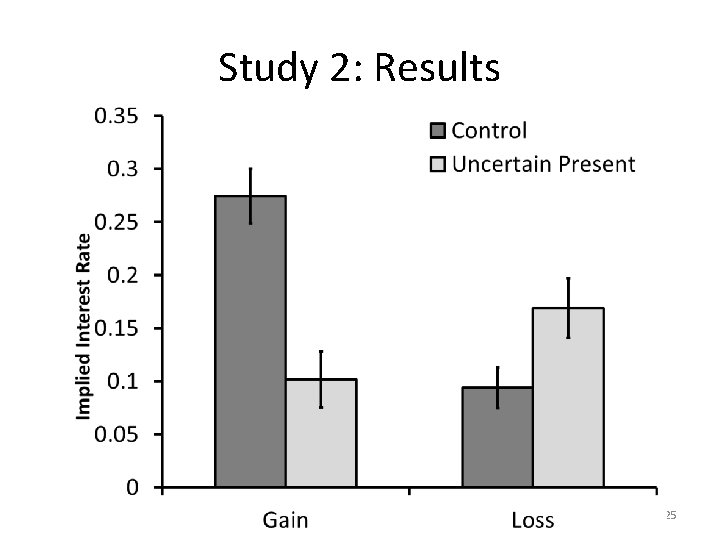
Study 2: Intertemporal Choice Methods • Control: Receive $100 immediately or $150 in one year? • Immediate uncertainty: 50% chance of receiving $200 immediately or receive $150 for sure in one year? 23
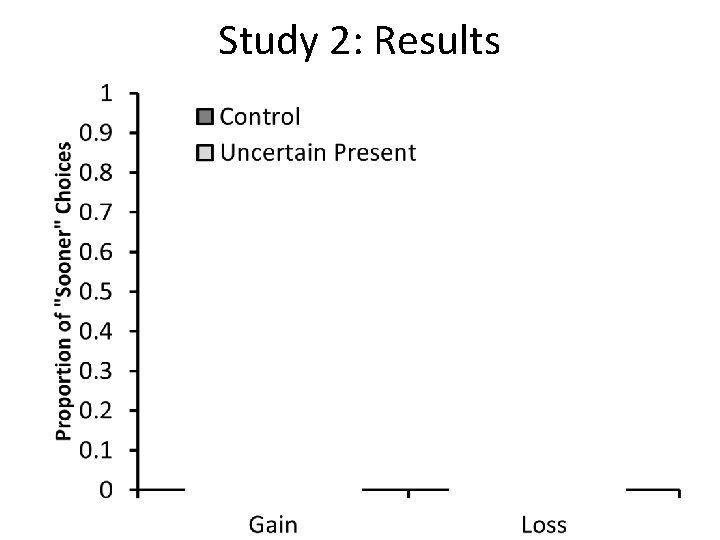
Study 2: Results 24
Study 2: Results 25
Study 2: Summary • When making intertemporal choices, participants showed risk aversion for gains and losses • What happens when both the immediate and future outcomes are uncertain? 26
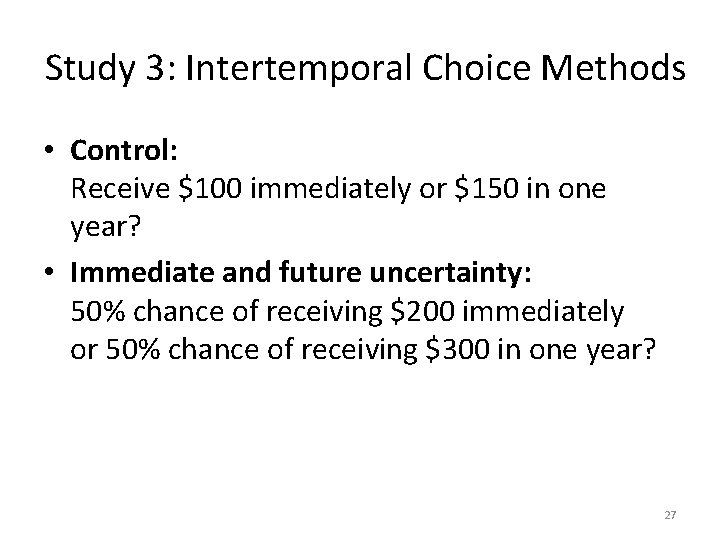
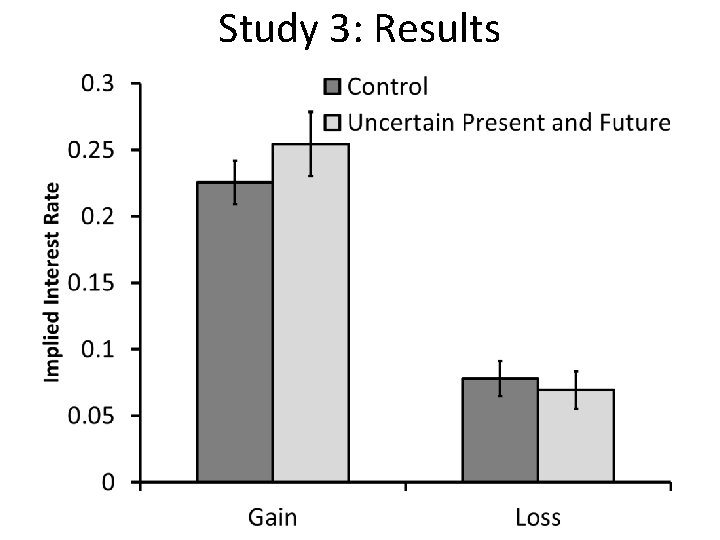
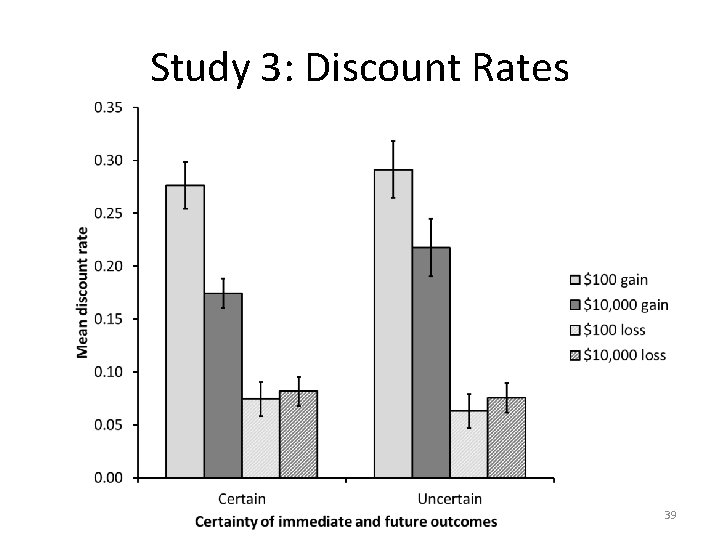
Study 3: Intertemporal Choice Methods • Control: Receive $100 immediately or $150 in one year? • Immediate and future uncertainty: 50% chance of receiving $200 immediately or 50% chance of receiving $300 in one year? 27
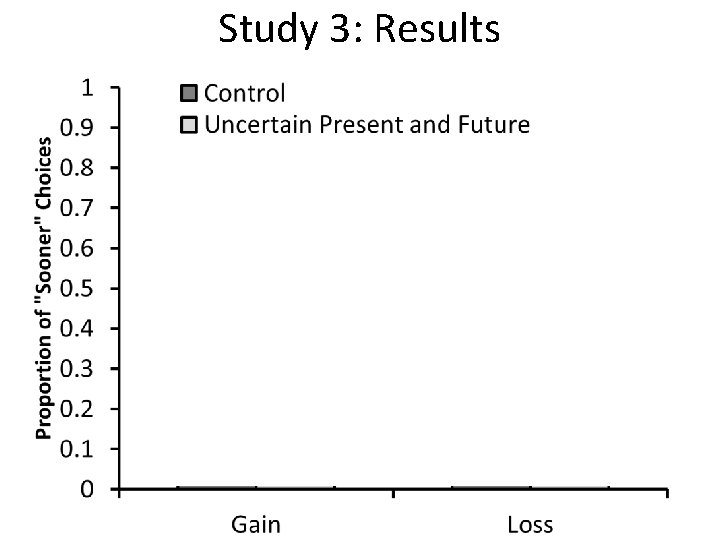
Study 3: Results 28
Study 3: Results 29
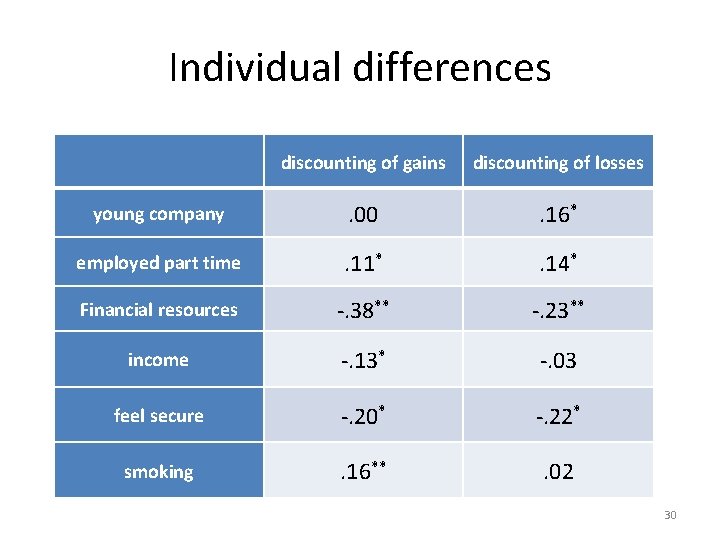
Individual differences discounting of gains discounting of losses young company . 00 . 16* employed part time . 11* . 14* Financial resources -. 38** -. 23** income -. 13* -. 03 feel secure -. 20* -. 22* smoking . 16** . 02 30
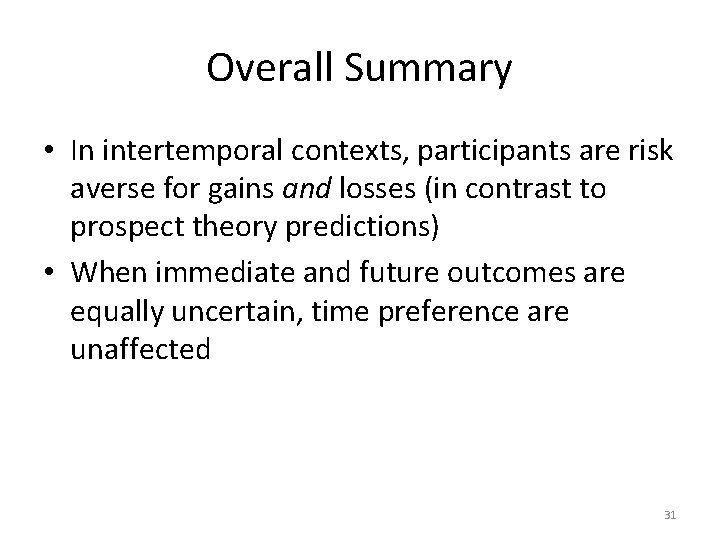
Overall Summary • In intertemporal contexts, participants are risk averse for gains and losses (in contrast to prospect theory predictions) • When immediate and future outcomes are equally uncertain, time preference are unaffected 31
Why are people risk averse in intertemporal contexts? • Planning? • Anxiety? 32
Future Directions • Replications and robustness (particularly MBAs vs general population) • Better process explanation & data 33
Implications & Applications • Implicit uncertainty may be one factor driving the “sign effect” in intertemporal choice • To delay SS claims, increase future certainty • Adjustable rate credit card payments 34
Thank You! 35
Additional Slides 36
Study 1: Discount Rates 37
Study 2: Discount Rates 38
Study 3: Discount Rates 39