
Does organisational lean maturity lead to improved project

- Slides: 25
Does organisational lean maturity lead to improved project performance? Stephen Greenhalgh Highways England & University of Salford 1
Research Objectives • How is lean maturity and project performance assessed on highways construction projects? • Determine if there is a link between lean maturity and project performance? • Can lean maturity models be used to overcome the barriers to embedding a lean approach in construction? • Why isn’t lean more widely used on highways construction projects? 2
Outline • A case study of suppliers to Highways England • Literature review • Mixed method approach • quantitative analysis of lean maturity assessments compared with project performance metrics • Qualitative analysis interviews with construction industry lean practitioners and experts 3
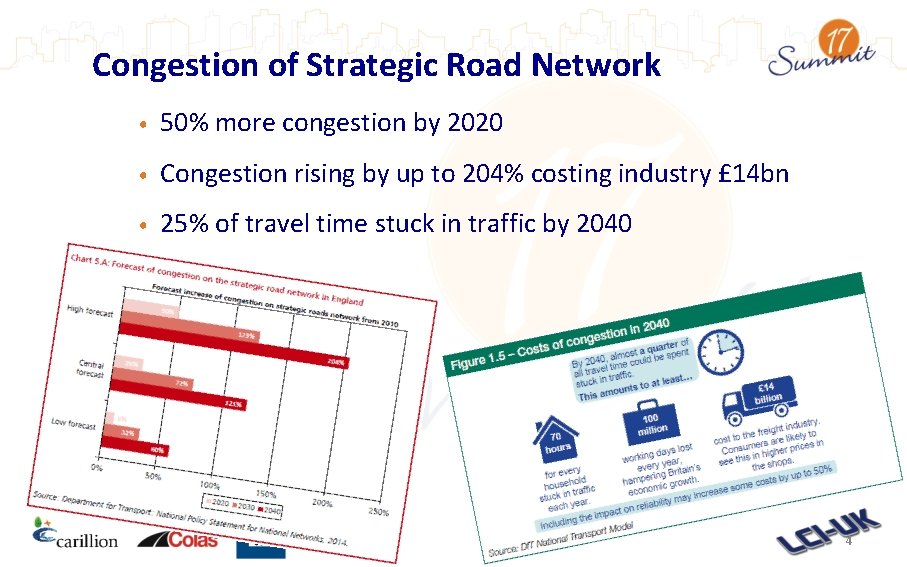
Congestion of Strategic Road Network • 50% more congestion by 2020 • Congestion rising by up to 204% costing industry £ 14 bn • 25% of travel time stuck in traffic by 2040 4
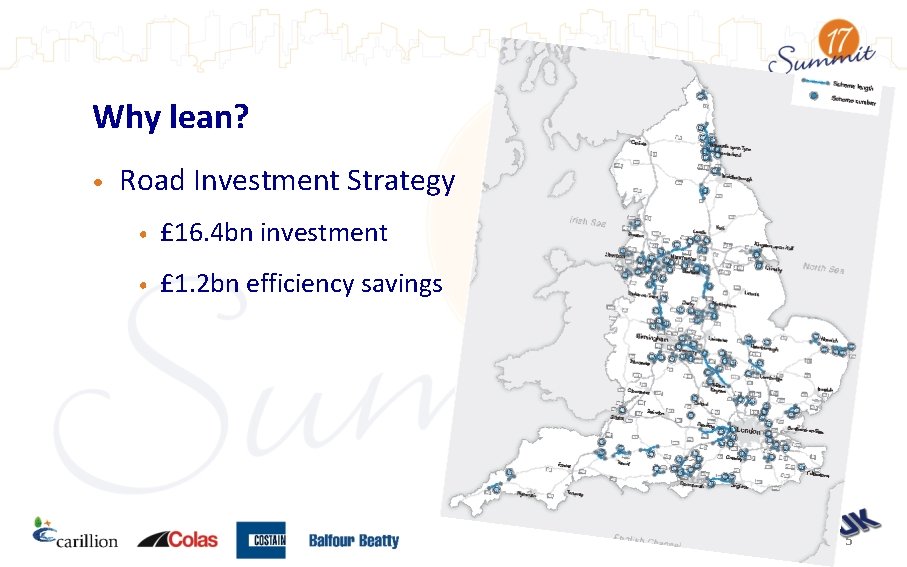
Why lean? • Road Investment Strategy • £ 16. 4 bn investment • £ 1. 2 bn efficiency savings 5
Quantitative Statistical Analysis 6
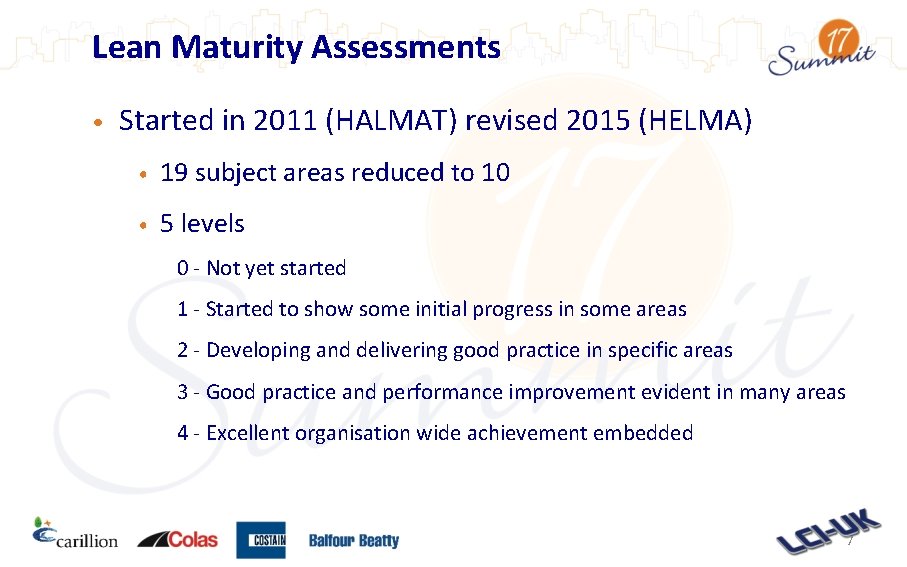
Lean Maturity Assessments • Started in 2011 (HALMAT) revised 2015 (HELMA) • 19 subject areas reduced to 10 • 5 levels 0 - Not yet started 1 - Started to show some initial progress in some areas 2 - Developing and delivering good practice in specific areas 3 - Good practice and performance improvement evident in many areas 4 - Excellent organisation wide achievement embedded 7
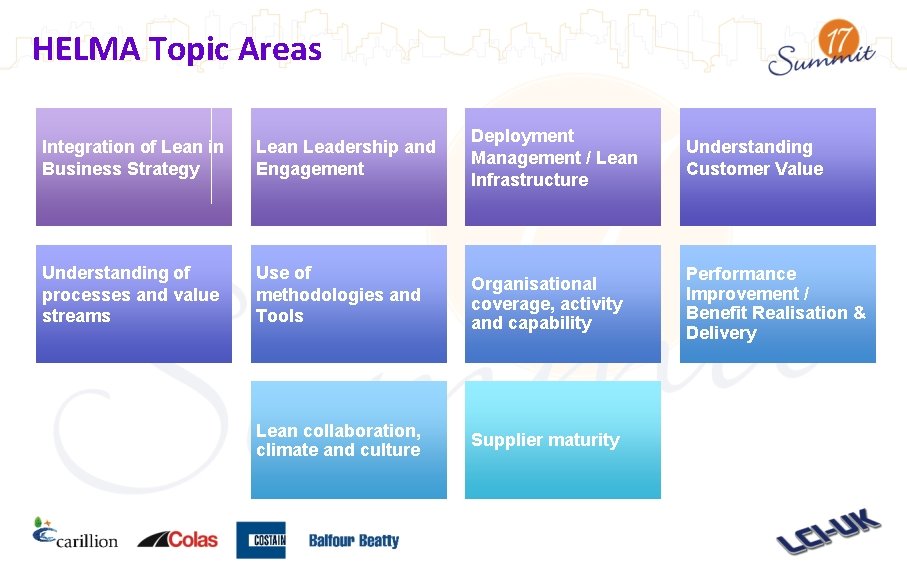
HELMA Topic Areas Integration of Lean in Business Strategy Lean Leadership and Engagement Understanding of processes and value streams Use of methodologies and Tools Lean collaboration, climate and culture Deployment Management / Lean Infrastructure Understanding Customer Value Organisational coverage, activity and capability Performance Improvement / Benefit Realisation & Delivery Supplier maturity
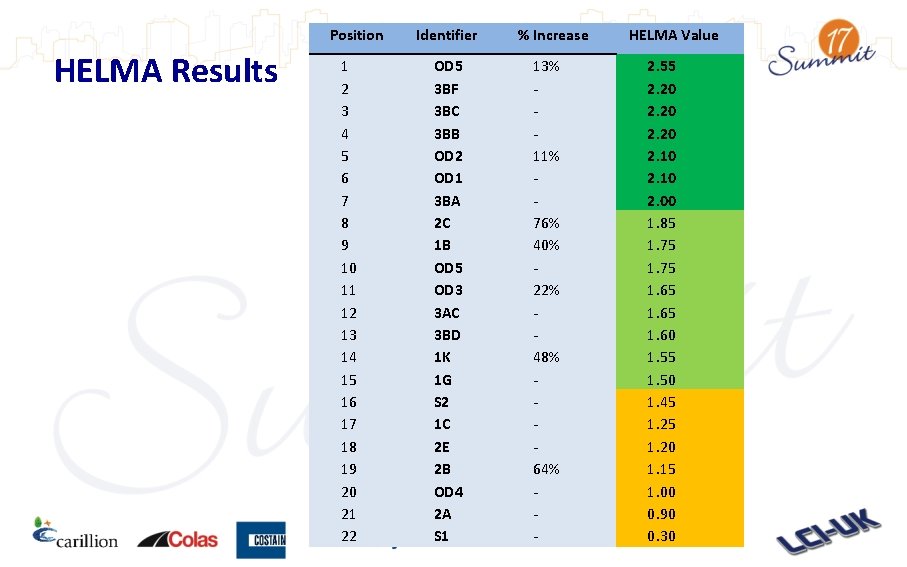
Position HELMA Results 1 2 3 4 5 6 7 8 9 10 11 12 13 14 15 16 17 18 19 20 21 22 Identifier OD 5 3 BF 3 BC 3 BB OD 2 OD 1 3 BA 2 C 1 B OD 5 OD 3 3 AC 3 BD 1 K 1 G S 2 1 C 2 E 2 B OD 4 2 A S 1 % Increase 13% 11% 76% 40% 22% 48% 64% - HELMA Value 2. 55 2. 20 2. 10 2. 00 1. 85 1. 75 1. 65 1. 60 1. 55 1. 50 1. 45 1. 20 1. 15 1. 00 0. 90 0. 30
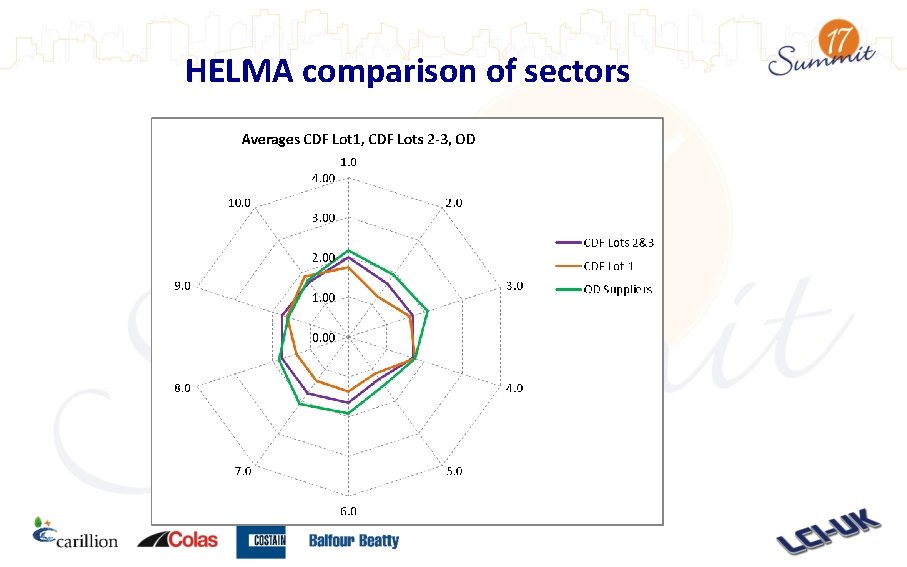
HELMA comparison of sectors
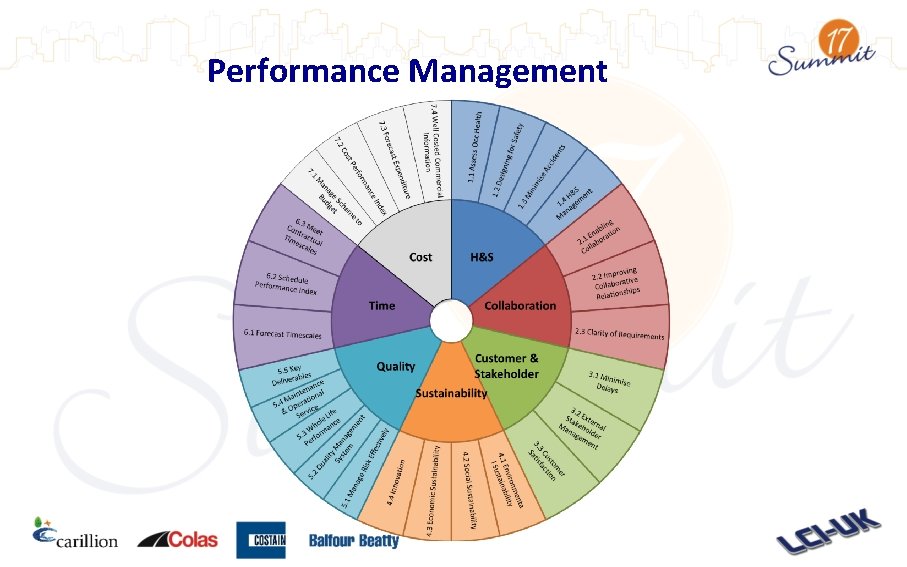
Performance Management
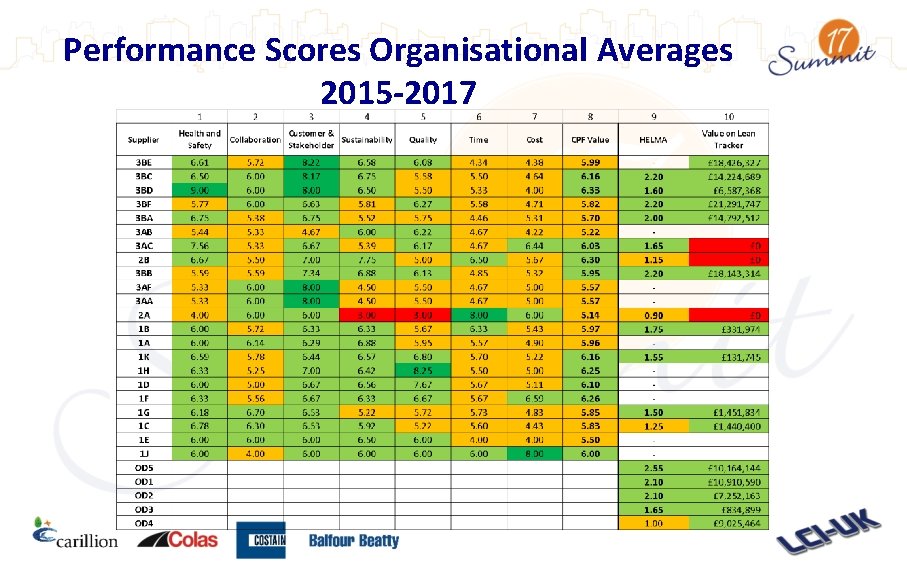
Performance Scores Organisational Averages 2015 -2017
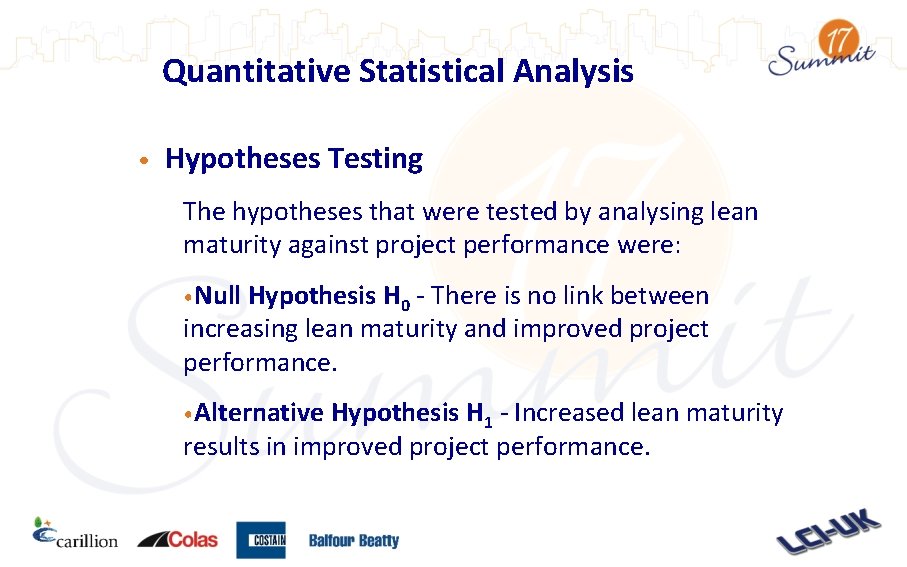
Quantitative Statistical Analysis • Hypotheses Testing The hypotheses that were tested by analysing lean maturity against project performance were: • Null Hypothesis H 0 - There is no link between increasing lean maturity and improved project performance. • Alternative Hypothesis H 1 - Increased lean maturity results in improved project performance.
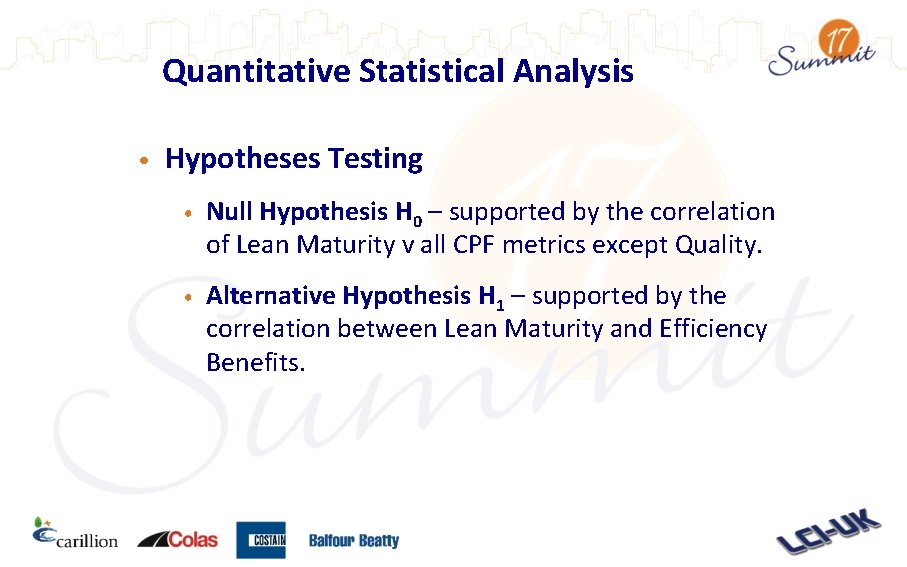
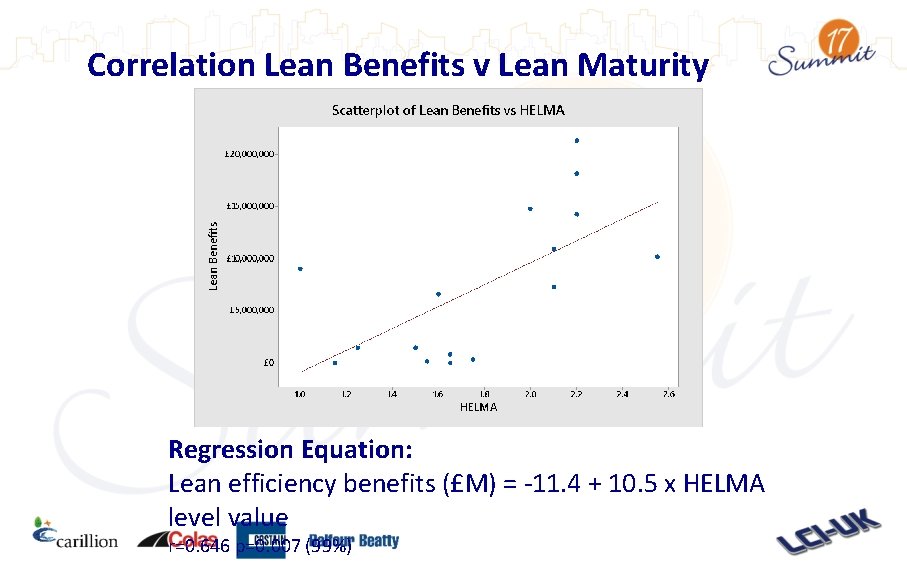
Quantitative Statistical Analysis • Hypotheses Testing • Null Hypothesis H 0 – supported by the correlation of Lean Maturity v all CPF metrics except Quality. • Alternative Hypothesis H 1 – supported by the correlation between Lean Maturity and Efficiency Benefits.
Correlation Lean Benefits v Lean Maturity Regression Equation: Lean efficiency benefits (£M) = -11. 4 + 10. 5 x HELMA level value r=0. 646 p=0. 007 (99%)
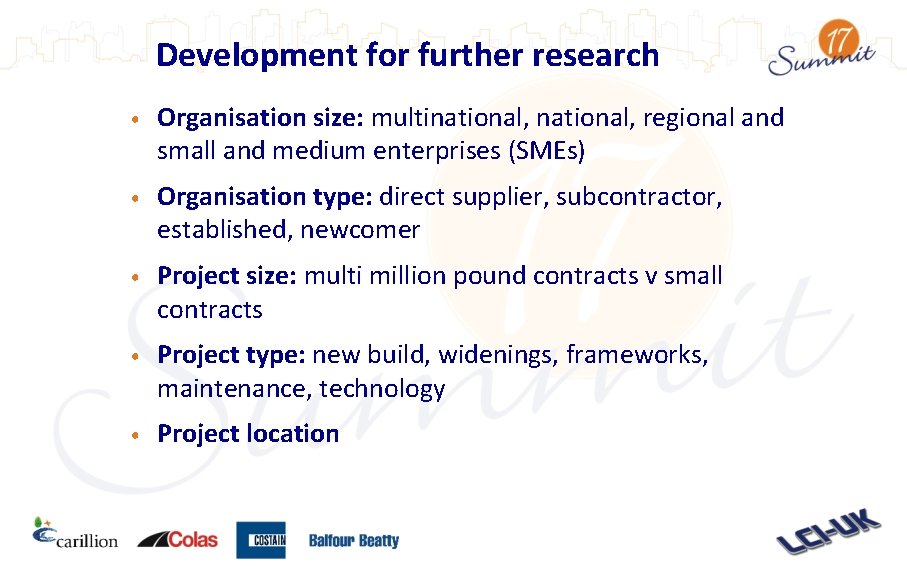
Development for further research • Organisation size: multinational, regional and small and medium enterprises (SMEs) • Organisation type: direct supplier, subcontractor, established, newcomer • Project size: multi million pound contracts v small contracts • Project type: new build, widenings, frameworks, maintenance, technology • Project location
Qualitative Analysis 17
Interview Type • Semi-structured Interviews Conversational style to elicit insightful views developed during the interviews in order to build upon the information provided during early interviews. • Participants – Selected to provide a variety of views, lean experts and practitioners from client, consultant and contracting organisations.
Interview Questions • Their role and experience in construction, design and/or building • Understanding of lean • Experience of lean construction • Examples of good practice • Experience of lean maturity assessments • Examples where lean interventions had led to improved performance • What prevented lean from being more widely adopted in construction?
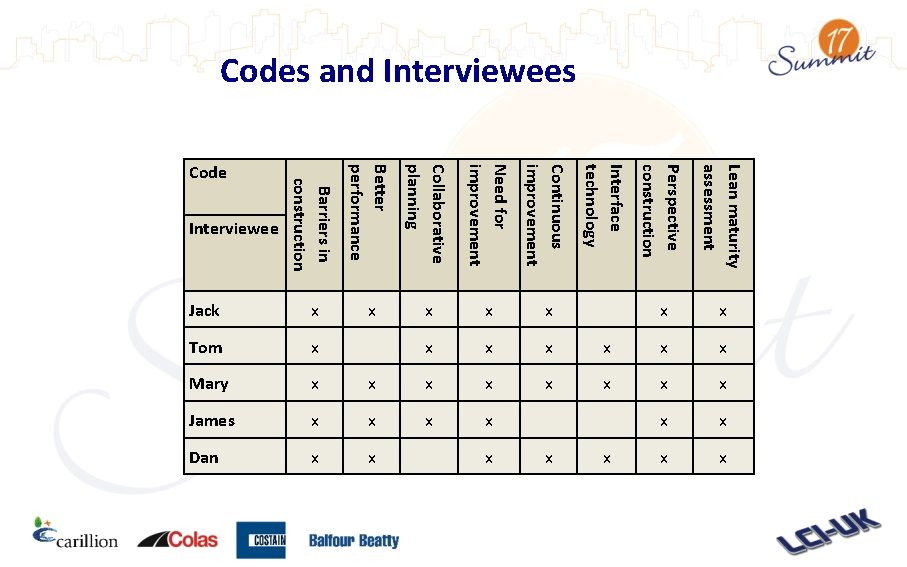
Interview Analysis • Thematic Analysis • Transcribing and become familiar with the data • Generating the initial codes • Identifying themes • Constructing thematic networks • Interpretation of the results
Codes and Interviewees Perspective construction Lean maturity assessment x x x Better performance Collaborative planning Need for improvement Continuous improvement x x x x Interviewee Barriers in construction x x x Interface technology x x Code x x Tom x Mary x James Dan x Jack
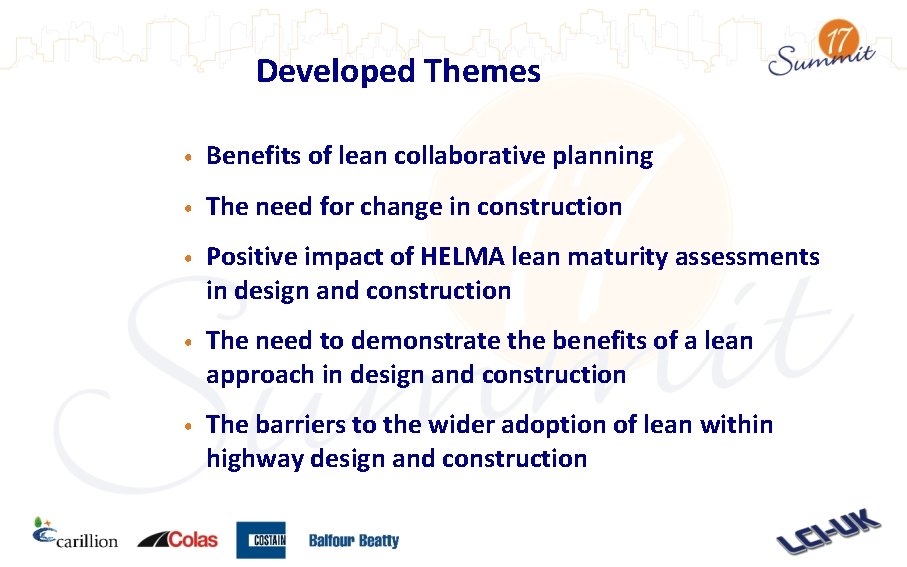
Developed Themes • Benefits of lean collaborative planning • The need for change in construction • Positive impact of HELMA lean maturity assessments in design and construction • The need to demonstrate the benefits of a lean approach in design and construction • The barriers to the wider adoption of lean within highway design and construction
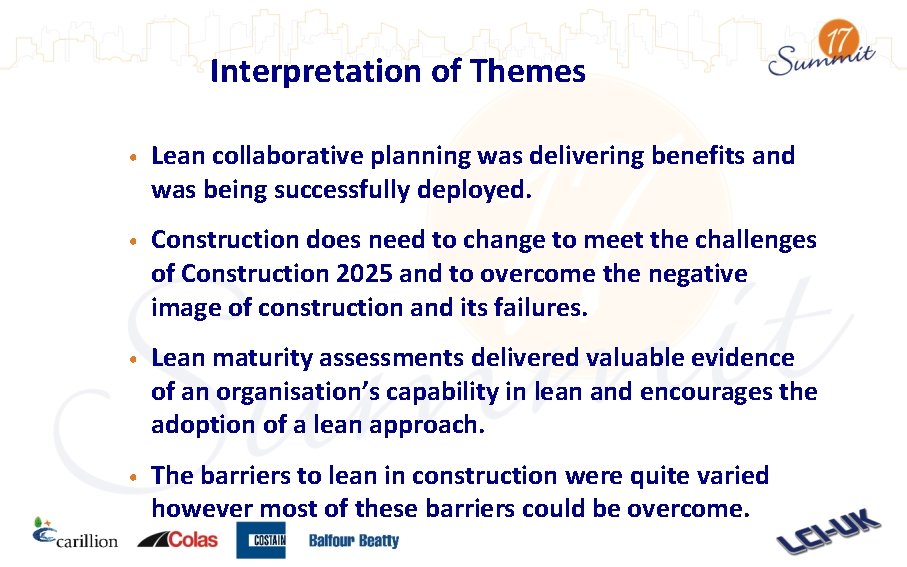
Interpretation of Themes • Lean collaborative planning was delivering benefits and was being successfully deployed. • Construction does need to change to meet the challenges of Construction 2025 and to overcome the negative image of construction and its failures. • Lean maturity assessments delivered valuable evidence of an organisation’s capability in lean and encourages the adoption of a lean approach. • The barriers to lean in construction were quite varied however most of these barriers could be overcome.
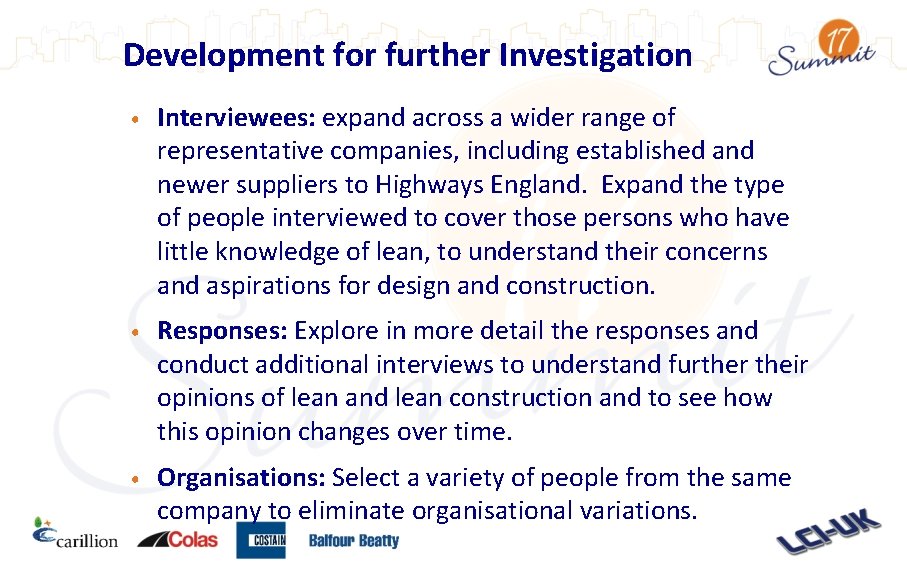
Development for further Investigation • Interviewees: expand across a wider range of representative companies, including established and newer suppliers to Highways England. Expand the type of people interviewed to cover those persons who have little knowledge of lean, to understand their concerns and aspirations for design and construction. • Responses: Explore in more detail the responses and conduct additional interviews to understand further their opinions of lean and lean construction and to see how this opinion changes over time. • Organisations: Select a variety of people from the same company to eliminate organisational variations.
What next? 25