
DOES MATERNAL HSV2 INFECTION INCREASE RISK OF INTRAPARTUM
![Results • Overall 82. 5% [95% CI 80. 6 -84. 5] of (HIV positive)](https://slidetodoc.com/presentation_image_h2/e40191a02e29a1b57ff97f374d7cea73/image-24.jpg "Results • Overall 82. 5% [95% CI 80. 6 -84. 5] of (HIV positive)")
- Slides: 30
DOES MATERNAL HSV-2 INFECTION INCREASE RISK OF INTRA-PARTUM TRANSMISSION OF HIV-1? Frances M Cowan, Jean Humphrey, Robert Ntozini, Kuda Mutasa, Peter Iliff
• Herpes simplex virus type 2 infection • Role of HSV-2 on sexual acquisition and transmission of HIV • How HSV-2 might effect intra-partum HIV transmission • Zvitambo study • Nested case control study to examine the role of HSV-2 in MTCT of HIV • Implications
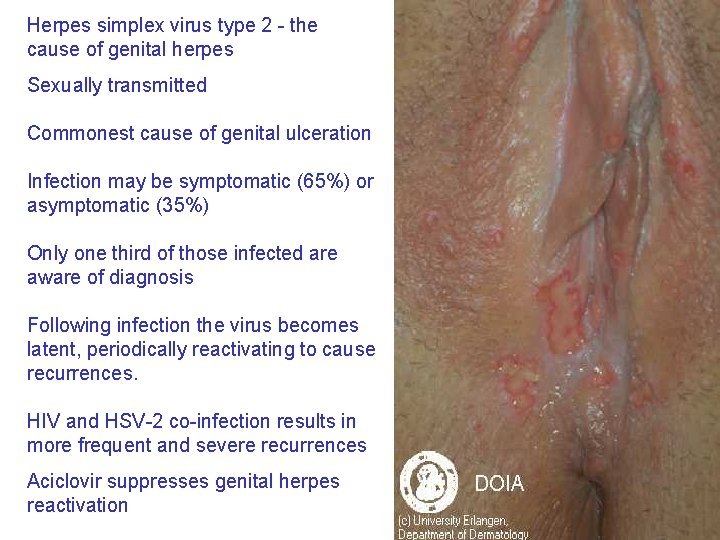
Herpes simplex virus type 2 - the cause of genital herpes Sexually transmitted Commonest cause of genital ulceration Infection may be symptomatic (65%) or asymptomatic (35%) Only one third of those infected are aware of diagnosis Following infection the virus becomes latent, periodically reactivating to cause recurrences. HIV and HSV-2 co-infection results in more frequent and severe recurrences Aciclovir suppresses genital herpes reactivation
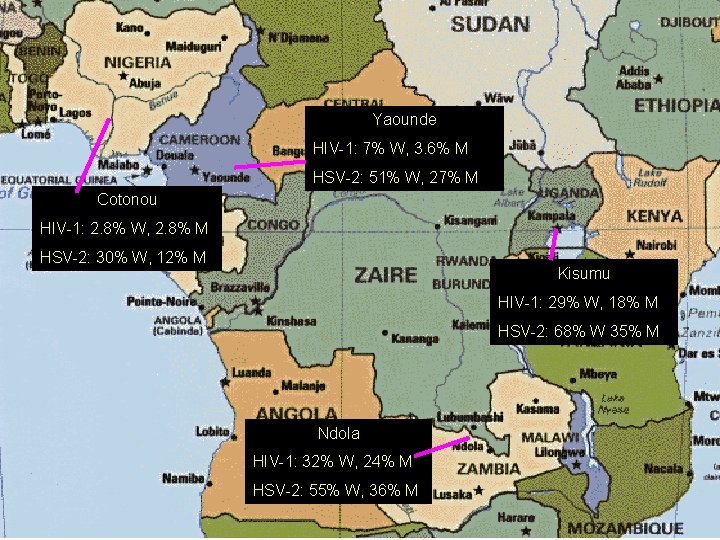
What explains the variability in rates of HIV infection in Africa? • 4 Cities Study – 2 cities in West Africa (low HIV prevalence) - 2 cities in East Africa (high HIV prevalence) AIDS 2001; 15: S 15 -30
Yaounde HIV-1: 7% W, 3. 6% M HSV-2: 51% W, 27% M Cotonou HIV-1: 2. 8% W, 2. 8% M HSV-2: 30% W, 12% M Kisumu HIV-1: 29% W, 18% M HSV-2: 68% W 35% M Ndola HIV-1: 32% W, 24% M HSV-2: 55% W, 36% M
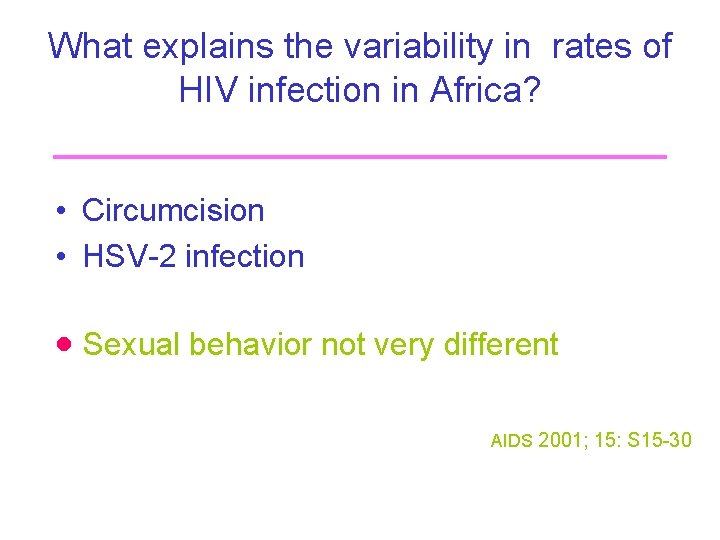
What explains the variability in rates of HIV infection in Africa? • Circumcision • HSV-2 infection · Sexual behavior not very different AIDS 2001; 15: S 15 -30
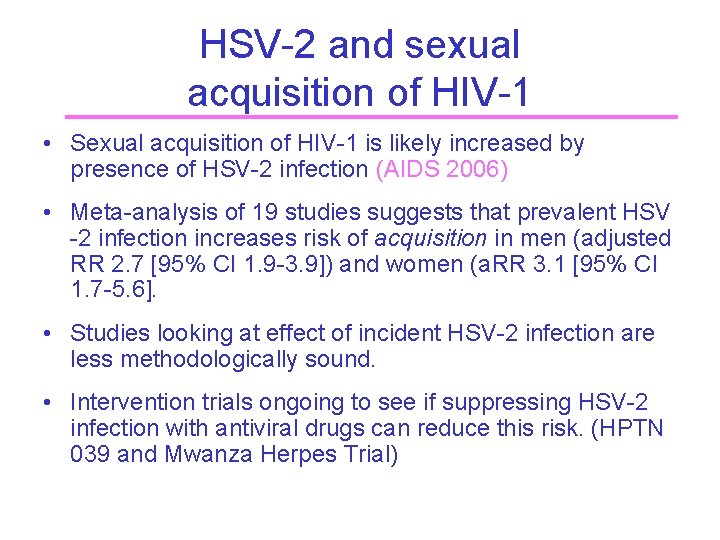
HSV-2 and sexual acquisition of HIV-1 • Sexual acquisition of HIV-1 is likely increased by presence of HSV-2 infection (AIDS 2006) • Meta-analysis of 19 studies suggests that prevalent HSV -2 infection increases risk of acquisition in men (adjusted RR 2. 7 [95% CI 1. 9 -3. 9]) and women (a. RR 3. 1 [95% CI 1. 7 -5. 6]. • Studies looking at effect of incident HSV-2 infection are less methodologically sound. • Intervention trials ongoing to see if suppressing HSV-2 infection with antiviral drugs can reduce this risk. (HPTN 039 and Mwanza Herpes Trial)
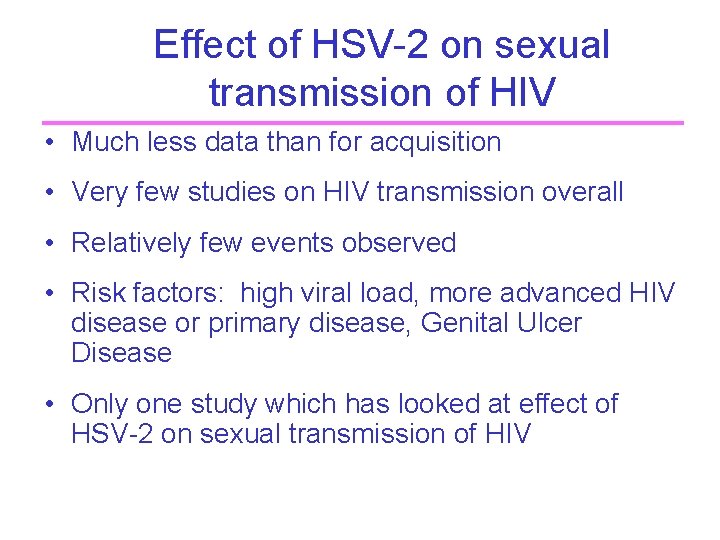
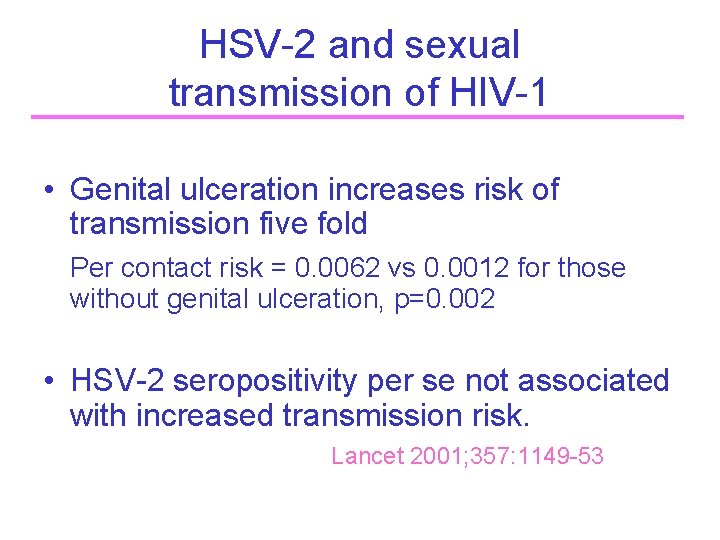
Effect of HSV-2 on sexual transmission of HIV • Much less data than for acquisition • Very few studies on HIV transmission overall • Relatively few events observed • Risk factors: high viral load, more advanced HIV disease or primary disease, Genital Ulcer Disease • Only one study which has looked at effect of HSV-2 on sexual transmission of HIV
HSV-2 and sexual transmission of HIV-1 • Genital ulceration increases risk of transmission five fold Per contact risk = 0. 0062 vs 0. 0012 for those without genital ulceration, p=0. 002 • HSV-2 seropositivity per se not associated with increased transmission risk. Lancet 2001; 357: 1149 -53
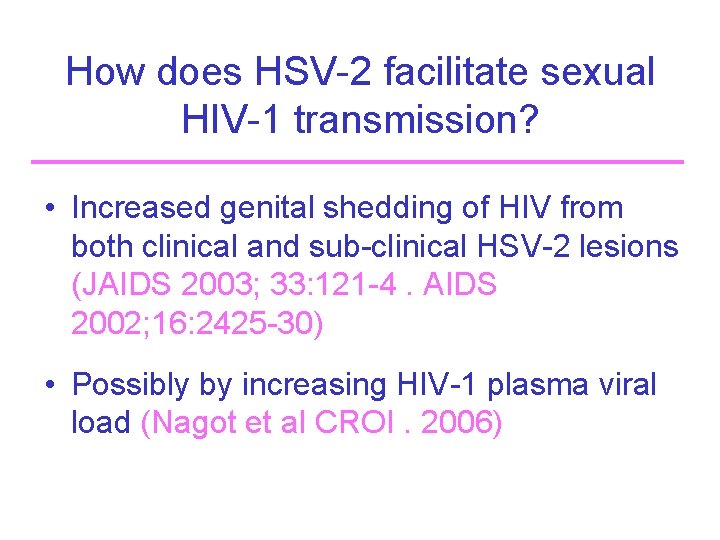
How does HSV-2 facilitate sexual HIV-1 transmission? • Increased genital shedding of HIV from both clinical and sub-clinical HSV-2 lesions (JAIDS 2003; 33: 121 -4. AIDS 2002; 16: 2425 -30) • Possibly by increasing HIV-1 plasma viral load (Nagot et al CROI. 2006)
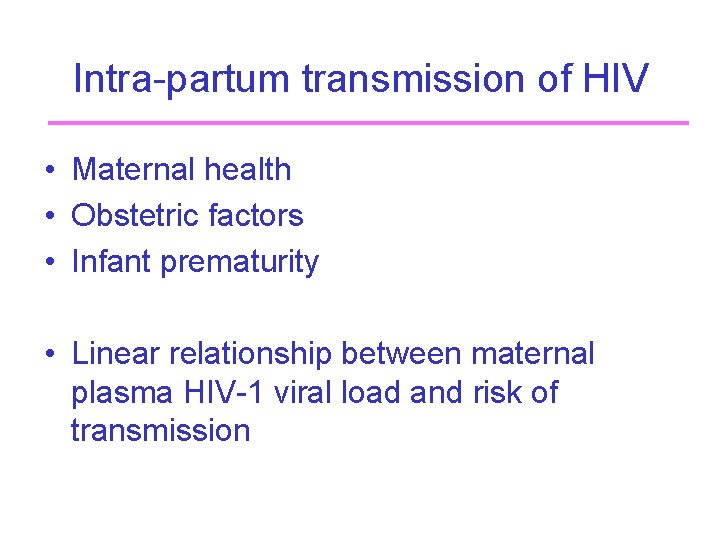
Intra-partum transmission of HIV • Maternal health • Obstetric factors • Infant prematurity • Linear relationship between maternal plasma HIV-1 viral load and risk of transmission
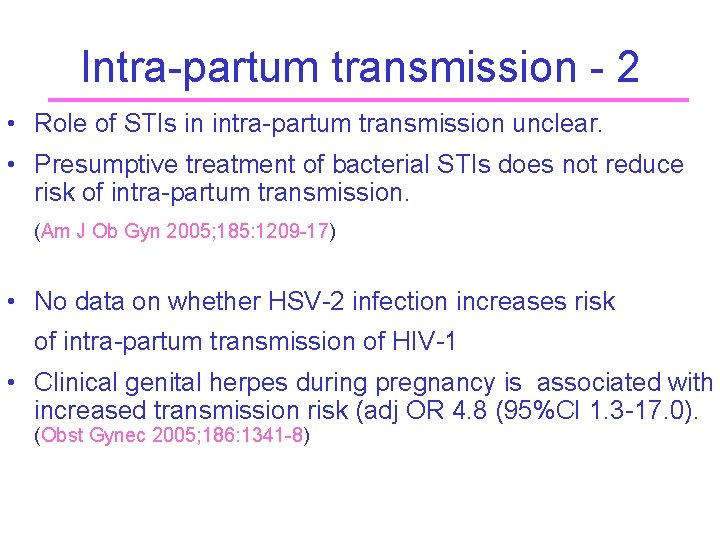
Intra-partum transmission - 2 • Role of STIs in intra-partum transmission unclear. • Presumptive treatment of bacterial STIs does not reduce risk of intra-partum transmission. (Am J Ob Gyn 2005; 185: 1209 -17) • No data on whether HSV-2 infection increases risk of intra-partum transmission of HIV-1 • Clinical genital herpes during pregnancy is associated with increased transmission risk (adj OR 4. 8 (95%CI 1. 3 -17. 0). (Obst Gynec 2005; 186: 1341 -8)
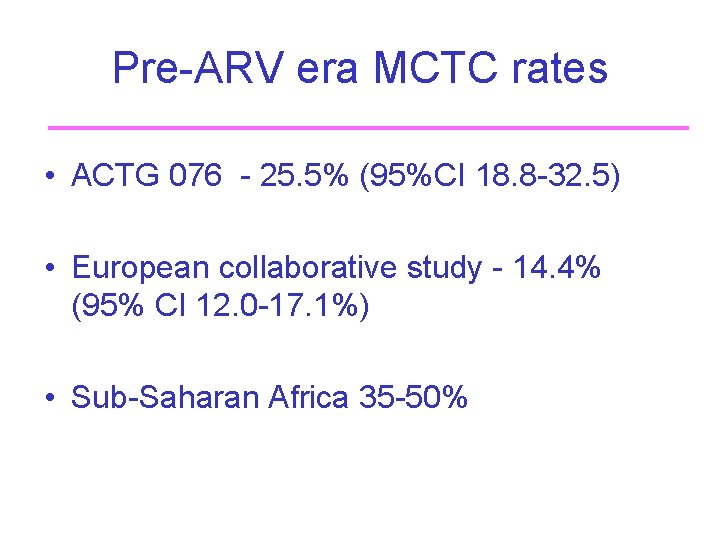
Pre-ARV era MCTC rates • ACTG 076 - 25. 5% (95%CI 18. 8 -32. 5) • European collaborative study - 14. 4% (95% CI 12. 0 -17. 1%) • Sub-Saharan Africa 35 -50%
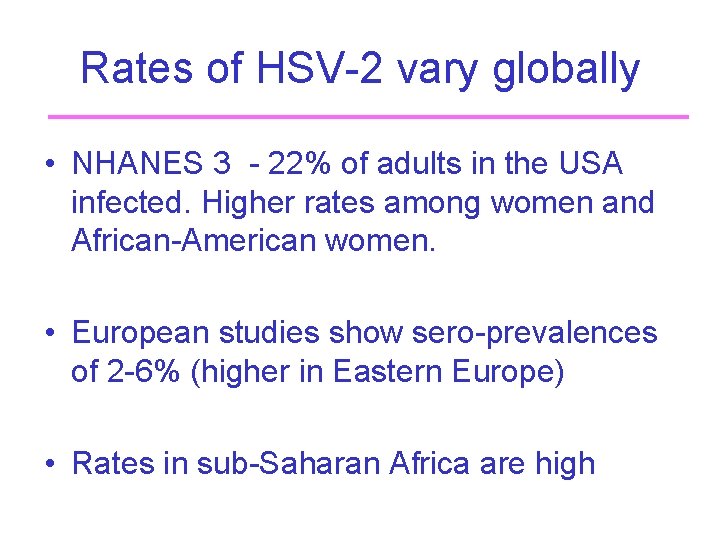
Rates of HSV-2 vary globally • NHANES 3 - 22% of adults in the USA infected. Higher rates among women and African-American women. • European studies show sero-prevalences of 2 -6% (higher in Eastern Europe) • Rates in sub-Saharan Africa are high
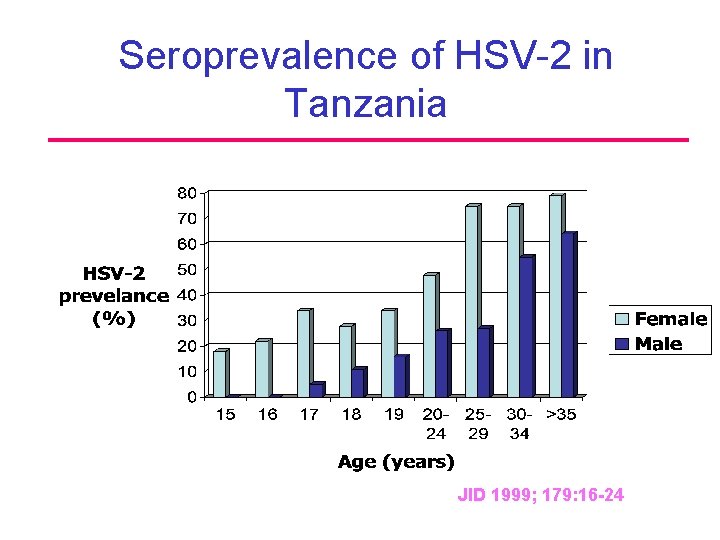
Seroprevalence of HSV-2 in Tanzania JID 1999; 179: 16 -24
DOES MATERNAL HSV-2 INFECTION INCREASE RISK OF INTRA-PARTUM TRANSMISSION OF HIV-1?
Zvitambo Study Randomised placebo controlled trial Aimed to discover if giving Vitamin A to mothers and babies in the immediate post-partum period i) improved infant mortality ii) reduced risk of mother to child transmission of HIV-1 through breast feeding iii) reduced the risk of women acquiring HIV-1 in the year after delivery. Recruitment took place in Harare, Zimbabwe from November 1997 to January 2000.
Trial design • 14, 110 mother-baby pairs recruited • Included 4, 495 HIV-1 positive mothers • HIV-1 positive mothers and their babies had blood taken at baseline, 6 weeks, 3 months then 3 monthly for 2 years • Where available specimens were archived from each visit
Objectives of nested case control study To see if: • women with prevalent HSV-2 infection at delivery had an increased risk of intra-partum transmission of HIV-1; • women who acquired HSV-2 antibodies within 6 weeks of delivery had an increased risk of intrapartum transmission of HIV-1; • women with serological evidence of active syphilis at delivery had an increased risk of intrapartum transmission. • Case control study using archived sera
Case control study design Cases: 509 HIV+ve women whose babies were presumed HIV infected intra-partum (baby HIV PCR-negative at delivery and PCR-positive at 6 weeks) Controls: 1018 HIV-positive women whose babies remained PCR-negative at 1 year
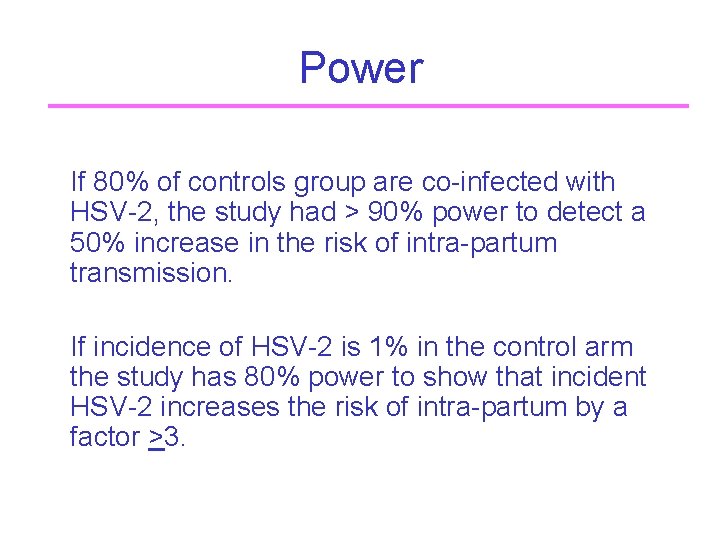
Power If 80% of controls group are co-infected with HSV-2, the study had > 90% power to detect a 50% increase in the risk of intra-partum transmission. If incidence of HSV-2 is 1% in the control arm the study has 80% power to show that incident HSV-2 increases the risk of intra-partum by a factor >3.
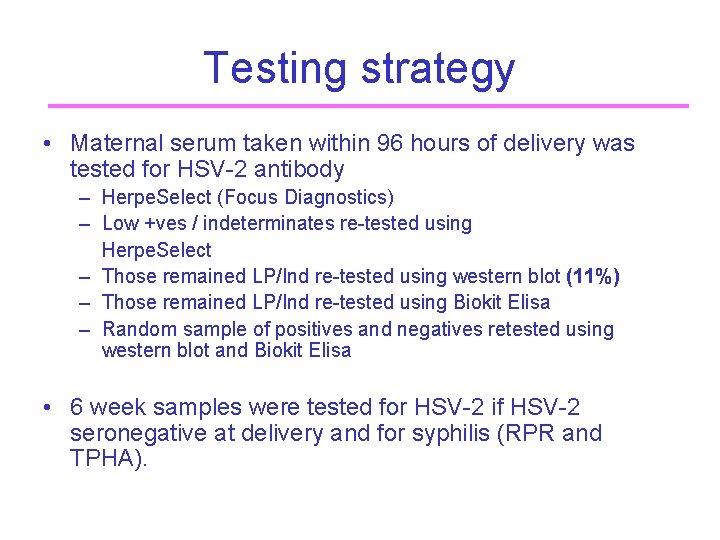
Testing strategy • Maternal serum taken within 96 hours of delivery was tested for HSV-2 antibody – Herpe. Select (Focus Diagnostics) – Low +ves / indeterminates re-tested using Herpe. Select – Those remained LP/Ind re-tested using western blot (11%) – Those remained LP/Ind re-tested using Biokit Elisa – Random sample of positives and negatives retested using western blot and Biokit Elisa • 6 week samples were tested for HSV-2 if HSV-2 seronegative at delivery and for syphilis (RPR and TPHA).
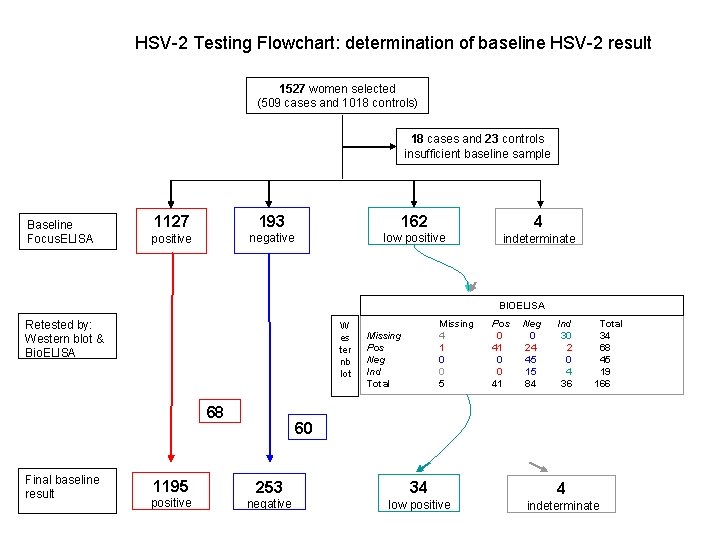
HSV-2 Testing Flowchart: determination of baseline HSV-2 result 1527 women selected (509 cases and 1018 controls) 18 cases and 23 controls insufficient baseline sample Baseline Focus. ELISA 1127 193 162 4 positive negative low positive indeterminate BIOELISA Retested by: Western blot & Bio. ELISA W es ter nb lot 68 Final baseline result Missing 4 1 0 0 5 Missing Pos Neg Ind Total Pos 0 41 0 0 41 Neg 0 24 45 15 84 Ind 30 2 0 4 36 Total 34 68 45 19 166 60 1195 253 positive 34 negative 4 low positive indeterminate
Results • Overall 82. 5% [95% CI 80. 6 -84. 5] of (HIV positive) women were HSV-2 antibody positive • Baseline Characteristics – Cases were less educated, and had more signs of advanced HIV-1 disease (lower CD 4 count, lower haemoglobin, higher viral load, smaller arm circumference) and to have to lower birth weight babies than controls.
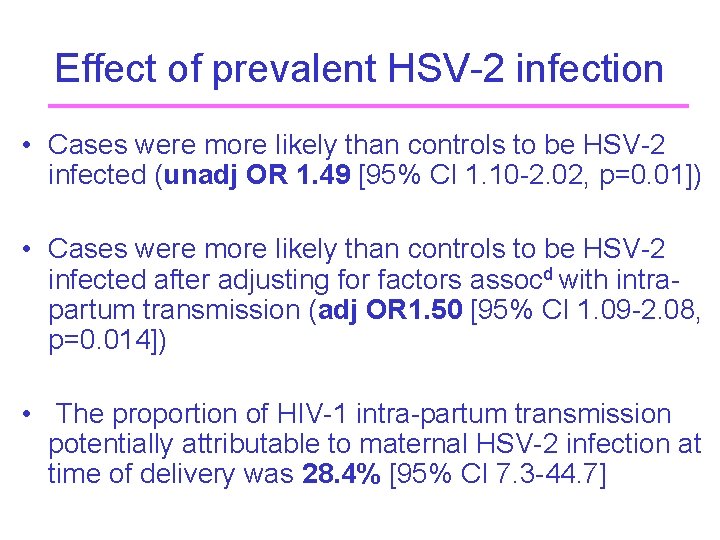
Effect of prevalent HSV-2 infection • Cases were more likely than controls to be HSV-2 infected (unadj OR 1. 49 [95% CI 1. 10 -2. 02, p=0. 01]) • Cases were more likely than controls to be HSV-2 infected after adjusting for factors assocd with intrapartum transmission (adj OR 1. 50 [95% CI 1. 09 -2. 08, p=0. 014]) • The proportion of HIV-1 intra-partum transmission potentially attributable to maternal HSV-2 infection at time of delivery was 28. 4% [95% CI 7. 3 -44. 7]
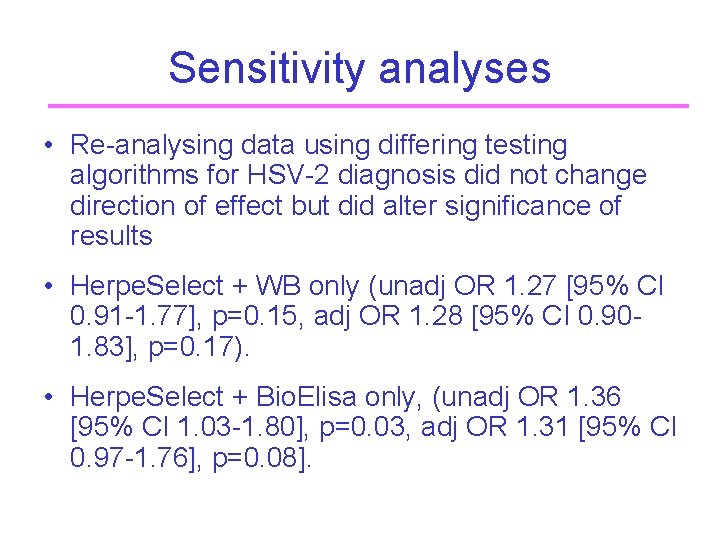
Sensitivity analyses • Re-analysing data using differing testing algorithms for HSV-2 diagnosis did not change direction of effect but did alter significance of results • Herpe. Select + WB only (unadj OR 1. 27 [95% CI 0. 91 -1. 77], p=0. 15, adj OR 1. 28 [95% CI 0. 901. 83], p=0. 17). • Herpe. Select + Bio. Elisa only, (unadj OR 1. 36 [95% CI 1. 03 -1. 80], p=0. 03, adj OR 1. 31 [95% CI 0. 97 -1. 76], p=0. 08].
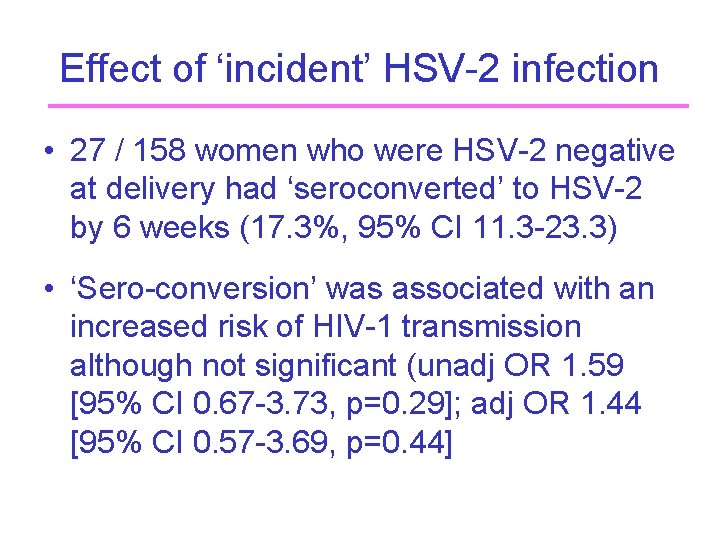
Effect of ‘incident’ HSV-2 infection • 27 / 158 women who were HSV-2 negative at delivery had ‘seroconverted’ to HSV-2 by 6 weeks (17. 3%, 95% CI 11. 3 -23. 3) • ‘Sero-conversion’ was associated with an increased risk of HIV-1 transmission although not significant (unadj OR 1. 59 [95% CI 0. 67 -3. 73, p=0. 29]; adj OR 1. 44 [95% CI 0. 57 -3. 69, p=0. 44]
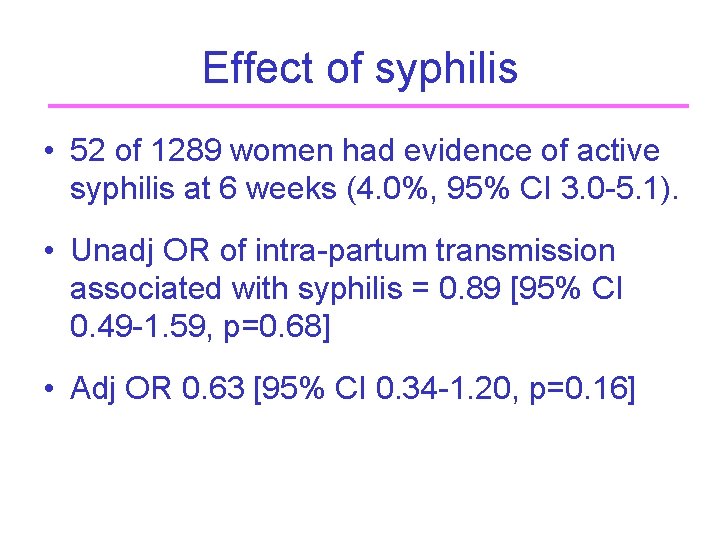
Effect of syphilis • 52 of 1289 women had evidence of active syphilis at 6 weeks (4. 0%, 95% CI 3. 0 -5. 1). • Unadj OR of intra-partum transmission associated with syphilis = 0. 89 [95% CI 0. 49 -1. 59, p=0. 68] • Adj OR 0. 63 [95% CI 0. 34 -1. 20, p=0. 16]
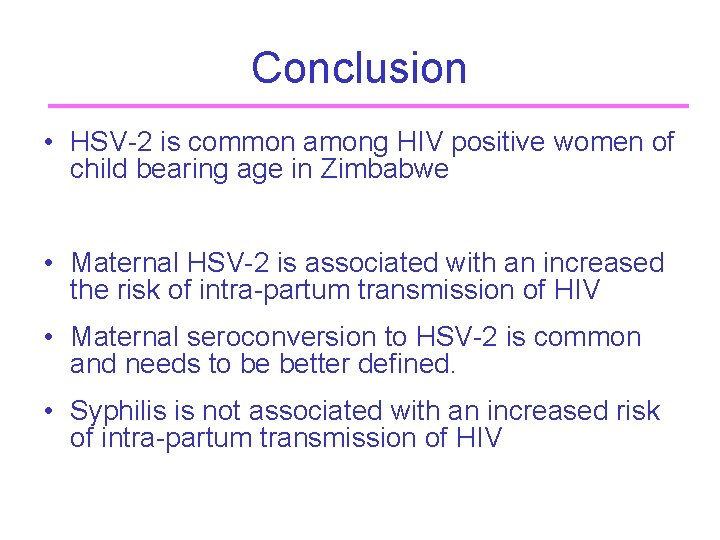
Conclusion • HSV-2 is common among HIV positive women of child bearing age in Zimbabwe • Maternal HSV-2 is associated with an increased the risk of intra-partum transmission of HIV • Maternal seroconversion to HSV-2 is common and needs to be better defined. • Syphilis is not associated with an increased risk of intra-partum transmission of HIV
Implications • Adding HSV-2 interventions to existing PMTCT programmes might further reduce intra-partum transmission of HIV • Unlikely to be worthwhile if using HAART but may have a significant impact where PMTCT uses nevaripine only approach • Trial of adding suppressive aciclovir to nevaripine only PMTCT may be warranted?